Tag: politics

Can the Middle East War Accelerate the EU Energy Transition?

March 2026: Once again, the world found itself holding its breath. The new front opened in Iran by the United States and Israel put global flows of crude oil and natural gas under immense pressure.

April 2026: One month into the conflict, the situation remains quite unchanged. Operation Epic Fury, initially intended as a swift and decisive military action, has instead dragged on far longer than anticipated, with global repercussions [1].

A new challenge now faces Europe: overcoming the Middle East energy crisis without losing sight of the sustainable transition.

With the Strait of Hormuz blocked — first by Iran and later by a U.S. naval blockade — the price of fossil fuels has skyrocketed since March. The strait, through which up to 20 million barrels of oil passed daily (worth $600 billion annually), along with 263 million cubic meters of natural gas (about 20% of global production), also carried fertilizers, chemicals, and cosmetics [2].

On March 3, 2026, following the initial diplomatic crisis, crude oil prices surpassed $80 per barrel. After two weeks of the Strait of Hormuz closure, the market price of oil reached more than $110 per barrel. Today, it fluctuates between $90 and $100 [3]. This market destabilization has reignited the debate on the European Union’s energy independence, highlighting the need for a more diversified supply chain and an accelerated transition to renewable energy.

Oil and derivatives: we are all in the same boat

Despite Arab Countries supplying only 4% of Europe’s energy needs — behind the U.S. (21%), the Commonwealth of Independent States (17%), North and East African countries (13% and 12%, respectively), and South America (10%) [4] — by early April, there was already talk of diesel, gasoline, and jet fuel shortages [5].

In Italy and the UK, some airports reduced flights due to jet fuel shortages in the first week of April [6], and Ryanair admitted it only had enough fuel to guarantee flights until mid-June, with no assurances beyond that date if the conflict continues [7]. Current difficulties stem more from logistical and economic issues than actual shortages, delaying the risk of a real shortage to a later time. However, this moment could arrive as early as summer if the Middle East crisis persists, as technical constraints prevent increased production, and each country has only about a month’s worth of reserves [8].

The only real alternative to crude oil for combustion engines is biofuels, of which Europe is one of the world’s leading producers. Germany, France, Spain, and Italy are among the top producers [9]. However, large-scale production remains insufficient. Also, many doubts are still surrounding the biofuel supply chain, concerning that its expansion could negatively impact the agri-food sector, especially when developing countries are involved, like what happened in the Congo [10]. For now, there is no viable alternative in the short or medium term: we’re all in the same boat.

Gas and electricity: Europe’s internal conflict

The natural gas landscape is more complex than that of oil but equally delicate. Only 4% of Europe’s gas comes from Gulf countries. The largest shares come from Norway (30%), the United States (26%), and Russia (13%), at least until the end of 2027, when Russian contracts expire [11]. Additionally, the share of energy produced from renewable sources has increased. In 2021, only 36% of energy came from green sources; today, that figure has reached 50% [12].

Since EU Member States have vastly different energy policies, speaking of Europe as a single entity would be a mistake. Countries like Denmark, Austria, and Portugal rely heavily on solar, wind, and hydroelectric power, which account for 92%, 83%, and 82% of their energy needs, respectively [6]. In contrast, Malta, Poland, and Ireland still rely heavily on fossil fuels, with coal and gas covering 85%, 69%, and 53% of their energy consumption, respectively [13].

Gas imports are also managed independently by each country, both in terms of quantity and suppliers. Middle Eastern countries, in particular, supply gas to Italy, Belgium, and Poland, making these states among the most exposed to the current energy crisis [11].

Can European States achieve energy independence while honoring the Green Deal?

Solar and wind energy cannot be used as tools of geopolitical pressure. The model Europe should follow to ensure energy security could be the one proposed by Spain, which has doubled its renewable energy production since 2019 [14]. While sun and wind cannot be taxed, the metals needed to build photovoltaic and wind power plants could still be used as political leverage. It is therefore likely that fossil fuels will remain a pillar of European energy production in the short term, particularly coal, which Italy and Germany still use as a last resort during energy crises [15-16].

Will the Green Transition turn out to be Blue?

As in 2022, nuclear energy is making a comeback. Ursula von der Leyen called the move away from nuclear power a “strategic mistake“, emphasizing that the EU will reinvest in this sector in the near future [17]. There are no longer doubts among experts about the safety of new-generation nuclear plants [18-19], and since 2021, nuclear energy has been included in the EU taxonomy for the Green Deal, further legitimizing this potential choice for Europe.

However, according to the Bulletin of the Atomic Scientists, investment alone may not be enough; it may be necessary to rethink the entire nuclear energy supply chain. Currently, France is the only European country with actual construction capacity, but its progress is slow and unpromising: the only plant under construction, Hinkley Point C in England, is over five years behind schedule and has already exceeded its initial budget by more than €5 billion [17].

In an increasingly unstable market, driven by an equally uncertain global situation, European leaders have already begun negotiations to secure the necessary supplies of crude oil and gas. The immediate priority is to “patch things up” in the very short term, but it is also essential to plan for the more distant future.

At this moment, the possibility of a further shift toward sustainability coincides with energy independence: what if we decided to take this path?

References

Click here to expand the references
  1. [1] Limes, Rivista Italiana di Geopolitica. (n.d.). L’America ingolfa il mondo.
  2. https://www.limesonline.com/rivista/l-america-ingolfa-il-mondo-21388569/?ref=LHHD-R
  3. [2] BBC News. (n.d.). US and UK launch strikes on Houthi targets in Yemen. https://www.bbc.com/news/articles/c78n6p09pzno
  4. [3] Il Sole 24 Ore. (n.d.). Prezzo del petrolio Brent. https://mercati.ilsole24ore.com/materie-prime/commodities/petrolio/BRNST.IPE?refresh_ce=1
  5. [4] Visual Capitalist. (2024). Europe’s crude oil imports by country in 2024. https://www.visualcapitalist.com/europes-crude-oil-imports-by-country-in-2024/
  6. [5] The Guardian. (2026, 25 marzo). Europe could face Iran war fuel rationing by April, warns Shell boss. https://www.theguardian.com/business/2026/mar/25/europe-could-face-iran-war-fuel-rationing-by-april-warns-shell-boss
  7. [6] Politico. (n.d.). Italy airport jet fuel restriction. https://www.politico.eu/article/italy-airport-jet-fuel-restriction/
  8. [7] Reuters. (2026, 1 aprile). Ryanair sees jet fuel supply disruption in May if Middle East war continues. https://www.reuters.com/business/ryanair-sees-jet-fuel-supply-disruption-may-if-middle-east-war-continues-2026-04-01/
  9. [8] Il Post. (2026, 13 aprile). Carenza carburante per aerei, allarmi: quali problemi. https://www.ilpost.it/2026/04/13/carenza-carburante-aerei-allarmi-quali-problemi/
  10. [9] Il Sole 24 Ore. (n.d.). Biocarburanti, l’Italia quarta in Europa per produzione. https://www.ilsole24ore.com/art/biocarburanti-italia-quarta-europa-produzione-AGdcn0MD?refresh_ce=1
  11. [10] Euronews. (2025, 13 luglio). EU biofuel projects in the ‘breadbasket of Congo’ could threaten food security, investigation finds. https://www.euronews.com/my-europe/2025/07/13/eu-biofuel-projects-in-the-breadbasket-of-congo-could-threaten-food-security-investigation
  12. [11] Institute for Energy Economics and Financial Analysis (IEEFA). (n.d.). European LNG tracker. https://ieefa.org/european-lng-tracker
  13. [12] Eurostat. (2026, March 19). Energy production and imports. https://ec.europa.eu/eurostat/web/products-eurostat-news/w/ddn-20260319-2
  14. [13] Consilium Europa. (n.d.). How is EU electricity produced and sold? [Infografica]. https://www.consilium.europa.eu/en/infographics/how-is-eu-electricity-produced-and-sold/
  15. [14] Politico. (n.d.). Spain’s low energy bills: A lesson for the EU? https://www.politico.eu/article/spain-low-energy-bills-eu-domestic-power/
  16. [15] Il Post. (2026, March 30). Centrali a carbone accese fino al 2038. https://www.ilpost.it/2026/03/30/centrali-carbone-accese-2038/
  17. [16] Scenari Economici. (2026). Germania: Il ritorno del re carbone. https://scenarieconomici.it/germania-il-ritorno-del-re-carbone-le-centrali-a-lignite-di-nuovo-in-utile-alla-faccia-della-transizione/
  18. [17] The Bulletin. (2026, March). Why politics, money, and construction capacity will limit any European turn toward nuclear power generation. https://thebulletin.org/2026/03/why-politics-money-and-construction-capacity-will-limit-any-european-turn-toward-nuclear-power-generation/
  19. [18] Avvocato Atomico. (n.d.). Pericolo, rischio e rischio percepito (Parte prima). https://www.avvocatoatomico.com/pericolo-rischio-e-rischio-percepito-parte-prima/
  20. [19] Avvocato Atomico. (n.d.). Pericolo, rischio e rischio percepito (Parte seconda). https://www.avvocatoatomico.com/pericolo-rischio-e-rischio-percepito-parte-seconda/

Cover and preview photo: Cargo ship at sunset. Photo by Ian Simmonds on Unsplash.

Ambler Road: Through Alaska’s Frozen Lands

The Arctic lies at the heart of a new global race. Climate change is opening new routes and making resource-rich areas accessible — lands that, once upon a time, were out of reach [1].

Beneath the layer of permafrost lie significant concentrations of metals and hydrocarbons. According to the 2008 U.S. Geological Survey — still the most recent public assessment — around 15% of the world’s undiscovered metal reserves such as nickel, cobalt and rare earth elements, 30% of natural gas, and 13% of untapped oil may be located beneath the Arctic tundra [2].

The route points North. We wrote about it in January 2025, and January 2026 brought further confirmation.

While the international focus is still on Greenland, what is happening further west is often treated as local news. Away from the geopolitical spotlight, in Alaska, the United States is moving forward with plans to explore and exploit the resources hidden beneath ice and frozen ground [3].

In June 2025, the Trump administration lifted the veto imposed by the Biden administration on oil drilling in some of Alaska’s most sensitive protected areas, while also authorising new infrastructure to transport extracted materials [3].

By February 2026, the administration further undermined climate regulations, revoking the legal basis for greenhouse gas controls under the Clean Air Act, a move that critics warn could exacerbate environmental risks across the United States [4].

In October 2025, the Ambler Road Project was officially approved, described by the White House as being of “vital importance to the defense and economic prosperity of the United States” [5].

The project consists of a 211-mile gravel road (approximately 340 km) — longer than the distance between Brussels and Paris — designed to connect the Ambler Mining District to the Dalton Highway, Alaska’s main transport artery. The route would cross Native lands and protected areas. The infrastructure is intended exclusively for industrial transport and would not be open to public use [6].


Figure 1: Site Location of the future Ambler Road. Author, 2026.

Beyond the narrative promoted by the White House, the future of the Ambler Road project is far from certain. It is still unclear who will bear the cost of the infrastructure — the federal government, private investors, or both. Also, the route crosses Native territories and protected lands, implying longer administrative procedures and the likelihood of legal challenges [7].

Environmental organisations reacted immediately. The Alaska Wilderness League described the rollback of drilling protections as a serious threat to ecosystems and local communities [8].

“The Trump administration’s move to roll back protections in the most ecologically important areas of the Western Arctic threatens wildlife, local communities, and our climate — all to appease extractive industries”.

Kristen Miller, Executive Director, Alaska Wilderness League [8].

The National Park Service also expressed concern. Although it was required by presidential order to allow the corridor to pass through the Gate of the Arctic National Preserve, the proposal had already faced strong criticism when first introduced in 2012 [9].

Several Native communities have likewise opposed the project, highlighting the risks it poses to local livelihoods, traditions and long-established ways of life [10].

In the end, Ambler Road is another chapter in a broader story: an attempt to respond to current issues with tools inherited from the past. It reflects a development model that prioritises immediate gains, while compromising territories, ecosystems and communities that may never fully recover.

In this way, the entire Far North is reduced to an accessible reserve of resources and becomes a territory serving today’s needs, at the expense of tomorrow.

References

Click here to expand the references
  1. [1] Greenmarked. (2025). The route to the north.
  2. https://greenmarked.it/the-route-to-the-north/
  3. [2] U.S. Geological Survey. (2008). Assessment of undiscovered oil and gas resources of the Arctic 2008 (Fact Sheet 2008–3049). https://pubs.usgs.gov/fs/2008/3049/fs2008-3049.pdf
  4. [3] The Guardian. (2025, June 2). Trump administration Alaska drilling and mining. https://www.theguardian.com/us-news/2025/jun/02/trump-administration-alaska-drilling-mining
  5. [4] ABC News. (2026, February 13). Trump revokes basis of US climate regulation, ends vehicle emissions rules. ABC News. https://www.abc.net.au/news/2026-02-13/trump-revokes-basis-of-us-climate-regulation-ends-vehicle-emissi/106339598
  6. [5] The White House. (2025, October). Fact sheet: President Donald J. Trump approves Ambler Road project to unlock Alaska’s mineral potential. https://www.whitehouse.gov/fact-sheets/2025/10/fact-sheet-president-donald-j-trump-approves-ambler-road-project-to-unlock-alaskas-mineral-potential/
  7. [6] Alaska Department of Natural Resources. (n.d.). Ambler Road. https://dnr.alaska.gov/mlw/ambler-road/
  8. [7] Alaska Dispatch News. (2025, October 12). Trump has given new life to the Ambler Road, but it’s still not a sure thing. https://www.adn.com/politics/2025/10/12/trump-has-given-new-life-to-the-ambler-road-but-its-still-not-a-sure-thing/
  9. [8] Alaska Wilderness League. (2025). Interior Department moves to gut protections in the Western Arctic. https://alaskawild.org/blog/interior-department-moves-to-gut-protections-in-the-western-arctic/
  10. [9] National Park Service. (n.d.). Ambler Road: Management and oversight. https://www.nps.gov/gaar/learn/management/ambler-row.htm
  11. [10] Alaska Public Media. (2025, October 23). Trump administration re-approves Ambler Road corridor. https://alaskapublic.org/news/politics/washington-d-c/2025-10-23/trump-administration-re-approves-ambler-road-corridor

Cover and preview image: Empty road in Alaska. Photo by Joris Beugels on Unsplash.

Figure 1: Lorenzo Barbieri, 2026. Cartography data from ESRI WMS services. Site location data from Wikipedia.

The Himalayan Challenge: Power for China, Tension for Everyone

China’s energy ambitions are straining relations with its neighbor, India. At the center of the tensions lies a monumental project: the construction of a 60,000 MW hydroelectric dam on the Yarlung Tsangpo River [1].

It wouldn’t be the first time Beijing has attempted an engineering feat that borders on the impossible. Back in 2006, China inaugurated the Three Gorges Dam on the Chang Jiang — still the second-largest dam in the world, with a production capacity between 20,000 and 25,000 MW, capable of covering around 3% of the country’s total energy demand [2].

The new project, however, would move to Tibet, a region already extremely sensitive from a geopolitical standpoint. To complicate matters further, the Yarlung Tsangpo doesn’t flow toward China: after crossing the Himalayas, it turns south into India and Bangladesh, where it becomes the Brahmaputra River [1].

Figure 1:Site Location of the Medog Hydropower Station on the Yarlung Tsangpo – Brahmaputra River. Author, 2025.

The first official statements about the project date back to 2023, immediately stirring both concern and controversy — not only for its delicate geopolitical implications but also for its potential environmental impacts. Despite the criticism, in 2024 the initiative was officially approved and classified as a “priority and strategic project”, aimed at helping China achieve carbon neutrality by 2060. Construction officially began on July 19, 2025 [3].

At present, many details remain undisclosed. What is known is that the Medog Hydropower Station project includes a main dam and five hydroelectric power plants distributed along a 50 km stretch of river, strategically chosen to exploit an impressive elevation drop of about 2,000 meters. To maximize energy production, the plan also involves straightening some river bends and diverting the water through specially built underground tunnels [3].

The Ecological Price of the Dam

Although several dams already exist along the Yarlung Tsangpo, the difference this time lies in the scale of the project. It has already been nicknamed “The Mother of all Dams” — a title that captures both its immense size and its potential environmental cost [1].

The first consequence would concern the river’s natural flow and seasonal floods, which are vital to downstream aquatic ecosystems. Water quality would also deteriorate: upstream, sediments and oxygen-poor zones would accumulate, while downstream soils would be deprived of nutrients and coastal erosion would intensify. Local flora and fauna would be severely affected by variations in water level, oxygen, and temperature. Fragile habitats and endemic species might not survive [4].

These damages would add to the already ongoing processes. Today, 22% of the Yarlung Tsangpo basin is under significant human pressure [5], mainly due to agricultural expansion and changes in land use. The result is a substantial loss of native vegetation and biodiversity [6].

Finally, there is the seismic risk. In January 2025, a 6.8 magnitude earthquake damaged four reservoirs in Tibet, highlighting the fragility of dams built in mountainous areas with high tectonic activity [7].

Water as a Weapon

Environmental concerns are accompanied by another major fear: that China could turn theYarlung Tsangpo dam into an instrument of political leverage. Once again, this wouldn’t be unprecedented.

In 2021, Beijing reduced the Mekong River’s water flow by 50% — officially for power line maintenance. The river, which originates in China and flows through Cambodia, Laos, Myanmar, Thailand, and Vietnam, saw millions of people across Southeast Asia directly affected by that decision. Even earlier, in 2019, Chinese dams on the Mekong retained record levels of water, triggering an unprecedented drought in downstream regions, devastating ecosystems, and undermining both local economies and food security [1].

Tensions have also surfaced along the China–India border. In 2017, in the Indian state of Assam — the first to be crossed by the Brahmaputra — the river’s water suddenly turned black and muddy following a series of debris flows in the Chinese region. It became unfit for human consumption, with severe repercussions for local ecosystems [7]. Indian authorities accused Beijing of pollution linked to the excavation of an underground tunnel meant to divert part of the river’s course. China denied the accusations, dismissing even the existence of the project [8].

The dam on the Yarlung Tsangpo is not merely an unprecedented feat of engineering; it is a symbol of the new global era, where environment, energy, and geopolitics are increasingly intertwined.

On one hand, it represents a step forward for China toward carbon neutrality and energy self-sufficiency. On the other hand, it risks igniting regional tensions and causing irreversible damage to the ecosystems of the Himalayas and the Sundarbans of Bengal.

The future of the Brahmaputra does not concern only Beijing or New Delhi, but billions of living beings who depend on that river for their very survival.

References

Click here to expand the references
  1. Scenarieconomici.it. (n.d.). India e Cina in lotta per una grande diga himalayana che può militarizzare l’acqua. Retrieved October 27, 2025, from

    https://scenarieconomici.it/india-e-cina-in-lotta-per-una-grande-diga-himalayana-che-puo-militarizzare-lacqua/

  2. Geopop.it. (n.d.). Diga delle Tre Gole: l’impianto idroelettrico più grande al mondo si trova in Cina. Retrieved October 27, 2025, from https://www.geopop.it/diga-delle-tre-gole-limpianto-idroelettrico-piu-grande-al-mondo-si-trova-in-cina/
  3. Geopop.it. (n.d.). La più grande centrale idroelettrica della Cina sarà in Tibet. Retrieved October 27, 2025, from https://www.geopop.it/diga-centrale-idroelettrica-piu-grande-cina-tibet/
  4. Institute for Energy Research (IER). (n.d.). How do dams impact the environment? Retrieved October 27, 2025, from https://iere.org/how-do-dams-impact-the-environment/
  5. PubMed. (n.d.). Human pressure on the Yarlung Tsangpo basin. Retrieved October 27, 2025, from https://pubmed.ncbi.nlm.nih.gov/40378791/
  6. MDPI. (2024). Remote Sensing – Volume 17, Issue 16, Article 2872. Retrieved October 27, 2025, from https://www.mdpi.com/2072-4292/17/16/2872
  7. Reuters. (2025, January 10). Tibet quake highlights earthquake risk for dams on the “Roof of the World”. Retrieved from https://www.reuters.com/world/asia-pacific/tibet-quake-highlights-earthquake-risk-dams-roof-world-2025-01-10/
  8. NDTV. (2017, December 6). China denies building tunnel causing pollution in the Brahmaputra. Retrieved from https://www.ndtv.com/india-news/china-denies-building-tunnel-causing-pollution-in-the-brahmaputra-1787432

When Policy Becomes the Risk: The EU’s Internal Climate Threat

Europe has been a world leader in climate regulation, with ambitious laws, clear targets, and a determined commitment to environmental protection. Today, that leadership is under pressure.
Changing political winds are creating a new climate risk from within Europe’s political system itself.

Omnibus

Since the Corporate Sustainability Reporting Directive (CSRD)came into effect in the EU on 1 January 2023,there have been increasing demands to simplify its requirements and reduce the perceived reporting burden linked to sustainability disclosures. To address this demand for simplification, the Omnibus package was introduced in February 2025, changing the requirements of the CSRD and the Corporate Sustainability Due Diligence Directive (CSDDD).The latter was meant to protect people and the planet from corporate harm [1].

What began as a technical update has turned into a clear political signal with significant consequences, as the EP adopted the following position on 13 November:

• Only a fraction of companies (i.e., 92% less ) will fall under the CSRD. • Climate transition plans are removed entirely, and civil liability under the CSDDD disappears. • Additionally, the EU Deforestation Regulation (EUDR) will be delayed for another 12 months , without cl ear evidence that would justify such a move .

The Parliament’s can easily be perceived as a betrayal of affected communities, human rights, and environmental protection, sacrificed in the name of ‘simplification’ and ‘competitiveness’.

Far Right

In April, Manfred Weber, President of the European People’s Party (EPP) – the largest party in the EP, described populists and extremists as his party’s main rivals [2]:

“As a leader, I defined a clear red line to the extremists, we will never work together with those who are not respecting my three pro’s: pro Ukraine, pro rule of law and pro Europe, these are fundamental things for us.”

The way the position of the EP was adopted is shocking. Just six months after the above statement, the red line has vanished, as the EPPdecided to align with the far to significantly water down core elements of the Omnibus package.This was the first time a major legislative file advances thanks to an EPP–far-right voting bloc.The Socialists and Democrats (S&D) drew a historical parallel with the 1930s, recalling how conservatives in Germany distanced themselves from the Social Democrats and later entered government alongside the Nazis[3].Civil society groups voiced deep concern as well. According to Nele Meyer of the European Coalition for Corporate Justice[4]:

“By aligning with the far right to push a corporate-driven agenda, the EPP has crossed a dangerous line. This isn’t just another policy setback, it’s a betrayal of Europe’s social and environmental commitments. When anti-EU parties and corporate lobbies write the rules, accountability dies and Europe’s credibility crumbles. Today’s vote shows how corporate capture and far-right politics now walk hand in hand, and it’s the victims, workers and the planet who pay the price.”

Trilogue

During the trilogue negotiations between the Parliament, the Council, and the Commission in December, the EU will “determine who sets the standards for transparency, climate transition finance and corporate accountability for European companies — and whether the EU remains a rulemaker or becomes a rule taker in a system shaped elsewhere” [5].

Transparency and consistency are essential for Europe’s sustainability agenda. Businesses need stable rules, investors rely on trustworthy data, and policymakers must ensure climate targets remain achievable. Simplifying regulations may be needed, but weakening accountability and reliability would undermine competitiveness and long-term resilience. The EU has long been a global leader through high standards and innovation. It can maintain that leadership if it chooses ambition over retreat [5].

References

Click here to expand the references
  1. [1] Grant Thornton Argentina. (2025). Further updates on Omnibus Package negotiations regarding CSRD and CSDDD.
  2. https://www.grantthornton.com.ar/en/insights/articles/2025/further-updates-on-omnibus-package-negotiations-regarding-csrd-and-csddd/
  3. [2] Euronews. (2024). Populists and extremists are EPP’s main competitors – interview with Manfred Weber [Video]. Dailymotion. https://www.dailymotion.com/video/x9iorl2
  4. [3] Politico Europe. (2025). EU conservatives vote with far right to approve cuts to green rules. https://www.politico.eu/article/epp-votes-with-far-right-to-approve-cuts-to-green-rules/
  5. [4] European Coalition for Corporate Justice. (2025). European Parliament’s far-right alliance adopts position on Omnibus I: Corporate capture on full display, written for the few not for people or planet. https://corporatejustice.org/news/press-release-european-parliaments-far-right-alliance-adopts-position-on-omnibus-i-corporate-capture-on-full-display-written-for-the-few-not-for-people-or-planet/
  6. [5] Financial Times. (2025). Europe must be a rulemaker, not a rule-taker. https://www.ft.com/content/a7ef36e6-7288-4e12-b80a-085acd6a722f

Cover and preview image: European Parliament. Photo by Christian Lue on Unsplash.

The Battle After the Bombs: Gaza’s Ecological Decline

After two long and destructive years of war, the Palestinian population now lives in a fragile truce, while Israeli troops are still stationed in the area and continue to impose restrictions and violence against civilians, according to human rights organizations [1].

In this tragic and deeply unbalanced situation— that still shows no clear end and makes any talk of reconstruction extremely difficult—a first assessment of the damage has begun. An October 2025 United Nations report estimated that rebuilding Gaza and making it safe will require at least 70 billion dollars, including 20 billion in the first three years alone, essential to launch operations and guarantee safe access for humanitarian workers [2].

The rubble—the remains of what once was, and is no longer—represents the first major obstacle to overcome. Beyond inert materials like steel or concrete, debris often contains hazardous compounds such as asbestos, or even unexploded ordnance and human remains [3].

“We’ve already removed about 81,000 tonnes. That is about…3,100 truckloads.”

(Jacom Cilliers, Special Representative of the Administrator, UNDP/PAPP [2])

Making things even more complicated, many dumping sites are located inside residential areas, where people live in tents without access to drinking water or basic sanitation. This logistical and health crisis fuels the spread of diseases such as malaria and typhoid and makes removal operations slow and extremely dangerous [4].


Figure 1: Gaza – Palestine Children among the rubble of their house. Photo by Mohammed Ibrahim on Unsplash, published on February 18, 2025.

In this landscape of devastation, human damage and environmental damage become two sides of the same crisis.

Once the surface debris is cleared, what emerges is an ecologically devastated environment. The territory is soaked with toxic substances and war residues, a problem that requires long-term efforts.

Already in 2024, researchers had shown how the war had turned agricultural and forested land into barren, uncultivable ground. Satellite images, photos and videos reveal that at least 50% of fields and orchards have been wiped out by relentless bombing, and about 23% of greenhouses have been destroyed or rendered unusable due to lack of electricity [5].

“It’s whole orchards gone, only soil left; you don’t see a single thing.”

(Dr. He Yin, assistant professor, Geography Department, Kent State University [5])

Besides the rubble from buildings and destroyed farmland, remnants of munitions—both exploded and unexploded—are scattered across the entire Gaza Strip. The whole area requires massive decontamination operations, which currently make it impossible to farm or use water safely. Not only the soil, but also surface water and groundwater may be contaminated. The ecological damage is so severe that Gaza’s case has been described as “ecocide” [5].

“What is happening is, for sure, ecocide. It is completely damaging the environment in Gaza for the long term, not only for the short term. Palestinian people have a strong relationship with the land – they are very connected to their land and also to the sea.”

(Abeer al-Butmeh, coordinator of the Palestinian Environmental NGOs Network[5])

However, “ecocide” is not an official legal term. The concept appears in international policy: the Rome Statute laid its foundations in 1998, and the European Union recognized it as a serious environmental crime in its legislation last year [6]. Yet, a clear, global, and shared definition is still missing—one that would make it possible to determine which activities qualify as ecocide and who bears direct responsibility [7].

While the Israeli–Palestinian war has been formally defined as “a genocide” by the United Nations Commission of Inquiry [8], labeling it “an ecodice” from a legal standpoint is far less straightforward.

Once again, the environment stands among the hidden and silent victims of war. Acknowledging this destruction is not just about assigning a legal label; it means understanding that without the protection of ecosystems, there is no safety and no future.

Gaza will have to start again from the land: from restoring fields, decontaminating the soil, and securing water. Ignoring environmental damage means condemning entire generations to live among the visible and invisible remnants left by war.

References

Click here to expand the references
  1. [1] BBC News. (2025). Gaza: Environmental destruction after the war.https://www.bbc.com/news/articles/c62e27j69q9o
  2. [2] UN Geneva. (2025, October). Gaza: 70 billion needed to rebuild shattered enclave, says UN.https://www.ungeneva.org/en/news-media/news/2025/10/111742/gaza-70-billion-needed-rebuild-shattered-enclave-says-un
  3. [3] Grist. (2024). From genocide to ecocide: After years of war, Gaza faces an environmental crisis above imagination.https://grist.org/international/from-genocide-to-ecocide-after-years-of-war-gaza-faces-an-environmental-crisis-above-imagination/
  4. [4] Bloomberg News. (2025). Gaza war environmental disaster.https://www.bloomberg.com/graphics/2025-gaza-war-environmental-disaster/
  5. [5] Holmes, O. (2024, March 29). Gaza’s environmental destruction raises fears of ecocide. The Guardian.https://www.theguardian.com/environment/2024/mar/29/gaza-israel-palestinian-war-ecocide-environmental-destruction-pollution-rome-statute-war-crimes-aoe
  6. [6] Geopolitica.info. (2024). L’Unione Europea introduce il crimine di ecocidio.https://www.geopolitica.info/unione-europea-introduce-il-crimine-di-ecocidio/
  7. [7] DirittoConsenso.it. (2025, August 25). Ecocidio: da crimine di guerra a sfida globale.https://www.dirittoconsenso.it/2025/08/25/ecocidio-da-crimine-di-guerra-a-sfida-globale/
  8. [8] United Nations. (2025, March 13). Report of the Commission of Inquiry on Israel: Gender-based violence.https://www.un.org/unispal/document/report-of-the-commission-of-inquiry-israel-gender-based-violence-13march2025/

Cover and preview image: A column of smoke resulting from the Israeli bombing of the Gaza Strip. Photo by Mohammed Ibrahim on Unsplash, published on March 05, 2023.

LIFE Program, Endangered: New European Budgets Neglect Biodiversity

The European Commission is already drafting the distribution of funds for the next budget period. Right now, we find ourselves in the final moments of the 2021-2027 period, and they are working on the 2028-2034 draft. The LIFE program, which has been active since 1992 and ended up with a 5.5 million euros budget during the last period, is no longer mentioned in the EU draft [1]. This has been noticed by scientists, conservation professionals and Nature associations. Now, you may wonder why this is so important.

What is the LIFE program?

The LIFE program is a tool from the EU to fund projects related to nature conservation and biodiversity protection. The two main goals from LIFE are to “create in Europe a fairer and thriving society” and to “protect, conserve and improve the natural EU capital” [2].

Let’s take a look at how it all started.

Some history and legislation

During the 1980s, an awareness regarding environmental issues started to spread among Europe’s general public, due to events such as the Chernobyl disaster or the ozone layer situation. One of the first major initiatives at an institutional level was Directive 2009/147 – or Birds Directive, as it is commonly known – which was one of the most ambitious laws for biodiversity conservation in the 1970s. It was among the first EU directives that assigned some funds for the creation of protected areas, known as Special Protection Areas (SPAs) – we will come back later.

We arrive at the year 1992 with this awareness “climate” generated during the 1980s, and it was an incredibly important year for Nature protection and conservation for several reasons. Rio’s Climate Conference was one of them, but on a European level, it was the year in which the Financial Institute for the Environment was established, known in French as L’Institut Financier pour l’Environment. LIFE I program is thus born, a series of budgets and funding tools with the main goal of conserving European biodiversity for the 1992-1995 period.

Natura 2000

Still in 1992, the European Directive 92/43/CEE, or Habitats Directive, is approved as a direct response to Bern’s Convention for European wildlife and its natural habitats. A good year, 1992. Within the Habitats Directive, there is a new protection area category called Special Area of Conservation (SACs). And SACs, along with the SPAs mentioned before, form the Natura 2000 network.

Natura 2000 is the largest protected area network in the European Union, comprising two types of protected areas [4]. Its goal is to put the brakes on biodiversity loss and to protect the most endangered habitats and species. We are talking about a major protection tool for the EU.

But how is this related to LIFE? Well, can you guess who funds Natura 2000 areas?

Some examples

Not only does it fund protected areas, but LIFE also covers funding for many other kinds of projects as well. There are some dedicated to species conservation, either animal or vegetal, projects for scientific divulgation, for research of different topics, …

In Spain, for example, LIFE program funded the LIFE Iberlince project [5], which was successful in the amazing recovery of the Iberian lynx (Lynx pardinus), and managed to go from being critically endangered in 2005 – only 168 individuals remained in the wilderness – to being considered “just” vulnerable – last monitoring assessments affirm that about 2000 individuals are now free. The LIFE Red Quebrantahuesos project [6] has also succeeded in reintroducing the bearded vulture (Gypaetus barbatus) in two Natura 2000 spaces that had declared it extinct.

As mentioned, there are many other types of projects, regarding also divulgation and awareness, such as LIFE Invasaqua [7], a project focused on raising awareness about aquatic invasive species, both animal and vegetal, in the Iberian Peninsula. There are research projects, too, such as LIFE+Respira [8], a research project about green mobility impacts in urban air quality, focused on measures to improve it by urban planning and adequate urban transport management.

Final thoughts

LIFE program is critical in the protection of Europe’s biodiversity, being a key element in several species’ reintroduction projects, environmental issues divulgation, scientific research, etc., as well as protected areas in general. It has been a cutting-edge tool regarding Nature’s conservation, and the current situation of the UE future budgets is nothing but concerning. There is no longer an explicit mention of the program because, as said by the Commission, they are looking for a simplified European bureaucracy. According to them, the goals remain the same but are encompassed inside the new Competitiveness Fund [9].

The current global situation is uncertain and insecure. The EU is going after a simplified bureaucracy and legislation to promote investments and private companies’ clean energy development, circular economy, … However, neglecting the greatest tool for biodiversity in Europe, with the pretext of pursuing these objectives, cannot be allowed. We should not forget that ecosystems – Nature – are still the foundations of it all, and if they are affected, we will be as well. Pursuing competitiveness may sound nice, but let’s just say that it’s like being concerned about the wall’s painting, while the foundations crumble. We can only hope for the Commission to realize the importance of taking care of our home.

References

Click here to expand the references
  1. [1] M.G. Sandra (2025, 18 July) La UE borra de un ‘plumazo’ el programa LIFE para la naturaleza y el clima del nuevo presupuesto comunitario. https://www.ecoticias.com/naturaleza/ue-borra-life-naturaleza-clima-presupuesto
  2. [2] MITECO (2022) Programa LIFE https://www.miteco.gob.es/es/ministerio/servicios/ayudas-subvenciones/programa-life.html
  3. [3] European Climate, Infrastructure and Environment Executive Agency (2022) History of LIFE https://cinea.ec.europa.eu/programmes/life/history-life_en
  4. [4] Blasco Hedo S., López Pérez F. (2019) Red Natura 2000: infraestructura verde y el alcance de una evaluación adecuada. Anuario de Derecho Ambiental. https://www.boe.es/biblioteca_juridica/anuarios_derecho/abrir_pdf.php?id=ANU-O-2019-10087500907
  5. [5] LIFE IberLince https://lifelynxconnect.eu/en/background/
  6. [6] LIFE Red Quebrantahuesos https://webgate.ec.europa.eu/life/publicWebsite/project/LIFE12-NAT-ES-000322/conservation-of-the-bearded-vulture-and-its-contribution-to-eco-system-services-
  7. [7] LIFE Invasaqua https://lifeinvasaqua.com/
  8. [8] LIFE+Respira https://www.liferespira.eu/
  9. [9] Thomson D. (2025, 26 June) The threat to the EU’s LIFE programme in the next budget. https://euobserver.com/eu-political/ar92e23cbb

Cover image: EU LIFE project logo. Image by Alvaro1984 18, Public domain, via Wikimedia Commons

Local Authorities and Climate Responsibility: A New Awakening?

The road to climate neutrality requires bold, effective action at every level. The ambitious goals of the Paris Agreement demand full commitment from all layers of governance to prevent global temperatures from rising beyond control [1]. This means involving a wide range of international, national, and local actors so that no opportunity for change is left unexplored.

In this context, local governments play a crucial role in implementing the massive investment plans ahead, starting with the National Recovery and Resilience Plan and beyond. Municipal and regional authorities have key responsibilities across all sectors affected by climate policy — from energy and transport planning to renewable infrastructure permits and public services.

That’s where CIRO (Climate Indicators for Italian Regions) comes in: an online database developed by Italy for Climate in collaboration with ISPRA. Its mission is to provide up-to-date information and analysis on Italy’s path toward climate neutrality, making climate and energy data accessible for public debate [2].

The database is also designed to provide regional administrations with a practical tool to monitor and access reliable information on climate and energy issues, as well as to encourage the exchange of best practices.

CIRO features 26 indicators across 8 thematic areas. In addition to the data, it collects and promotes noteworthy projects and performance examples from each region. The goal is to spotlight local initiatives driving the energy transition, recognizing them as opportunities to boost local value chains and foster technological and social progress for communities.

Through its reports, the database allows for comparison and analysis among local authorities, helping to monitor progress as we approach the critical 2030 climate deadline.

Among Italy’s 20 regions, Trentino-Alto Adige has a bittersweet profile. While the region is considered a frontrunner in renewable energy and industrial emissions, the picture is far less promising when it comes to transport and agricultural emissions.

Even its per capita greenhouse gas emissions — 7.02 tons of CO₂ equivalent per person — slightly exceed the national average of 6.96. But the region’s greatest weakness appears to lie in its limited capacity to leverage natural systems for carbon absorption. In this category, Trentino-Alto Adige records 35 tons of CO₂ absorbed per km², ranking just 16th out of 20. By contrast, Sicily and Calabria show negative absorption values, indicating that their natural systems are net emitters—typically due to forest fires.

The weak points are especially evident in agriculture and transport. Trentino-Alto Adige falls below the national average for agricultural emissions per capita (0.71 tons/person), fertilizer use, and livestock numbers. Transport-wise, it reports the second-highest per capita emissions in Italy (3.2 tons/person), despite lower-than-average car ownership and public transport use. On a brighter note, electric vehicles account for 5.2% of new car registrations in the region.

Still, Trentino-Alto Adige performs well on clean energy: it ranks sixth nationally for overall energy consumption per capita and second for renewable energy share. It also leads the country with 33 renewable energy communities.

As a mountainous region, Trentino-Alto Adige faces unique challenges that others may not. However, certain factors—like low urbanization or potential for carbon sequestration in agriculture—could work in its favor. The region’s SproSS strategy represents a promising attempt to manage these complexities through sustainable, integrated planning.

References:

Click here to expand the references
[1] Falkener R., 2016- The Paris Agreement and the new logic of international climate politics, International Affairs, Volume 92, Issue 5, Pages 1107–1125. 

[2] Alessio. (2025, April 4). CIRO – DATABASE DELLE REGIONI SUL CLIMA – Italy for Climate. Italy for Climate. https://italyforclimate.org/ciro-database-regioni-clima/

[3] SpA, T. D. (n.d.). Strategia provinciale | SproSS. Agenda 2030. https://agenda2030.provincia.tn.it/Trentino-2030/Strategia-provinciale-SproSS

Cover image: Young seedlings sprouting from rich soil, bathed in natural light. Image from onehundredseventyfive on Pixabay

This article is part of the project “Quiz Ambientali per un Trentino Più Verde!” carried out by Econtrovertia APS and sponsored by Fondazione Cassa Rurale di Trento (Notice of Approval of December 20, 2024).

The Political Identity of the Climate Crisis

Climate change is no longer an abstract problem or a distant threat; it is a reality increasingly felt in our society. While often discussed in terms of scientific facts and technological solutions, the core of the problem lies in the political domain. Climate change is essentially a political issue. This perspective provides an important lens for sustainability experts, policymakers, and activists: the key to action lies in political choices and leadership.

Climate as a Political Challenge

Solutions to climate change are technically within reach. We have the knowledge and tools to replace fossil fuels with renewable energy sources, make agricultural systems sustainable, and make cities climate-proof. Yet, the necessary large-scale changes are failing to materialise. Why?

The question of who bears the burden of climate policies – citizens, businesses, or governments – is inherently political. Fossil fuel subsidies persist because powerful interest groups defend them. Meanwhile, green alternatives are seen as more expensive, creating resistance among voters and policymakers. As a result, half-measures or postponements are often opted for, while the true costs of inaction are misleadingsly.

Frank Biermann – Professor of Global Sustainability Governance at the University of Utrecht –also believes that the reason for lacking change lies in the political arena. In October, he received a prestigious award for his research on the role of political science in global sustainability efforts [1]. Biermann and his colleagues analysed more than 3,000 scientific studies and concluded that the Sustainable Development Goals have had no transformative impacts on societies or the political system [2].

“We need better and more powerful institutions and better politics to deal with the challenges such as climate change” [3]

Biermann’s research emphasises that while global frameworks like the SDGs are valuable for steering discussions, their actual political impact remains limited without strong, binding action. He points to the need for deeper normative and institutional changes, from legislative action to resource redistribution. This demonstrates that transformation cannot be achieved through goodwill and guidelines alone, it requires political courage and collective effort [2].

“Non-binding targets have taken on a more prominent role. Countries are often allowed to determine how ambitious they want to be, [for example with] the Paris Agreement on climate change from 2015 […]. If a goal is not ambitious or not met, there may be some naming and shaming within the UN, but it has no serious consequences” [4].

The Role of Sustainability Professionals

As a sustainability professional, we should understand the political dimensions of climate change and broader sustainability challenges. Our role goes beyond developing technical solutions and CO₂ reporting; where possible, we should drive policymakers, businesses and civil society towards structural change.

The Role of Citizens and Action Groups

Public engagement plays a crucial role in shaping effective climate policies. Political choices are often influenced by social pressure, and historical changes show how powerful collective action can be. From women’s suffrage to the abolition of apartheid, social movements have repeatedly changed the political agenda [5].

At GreenMarked, we recognize the role sustainability platforms have in mobilising people, raising awareness and encouraging action. Supporting citizens’ initiatives and launching joint campaigns can put pressure on politicians to tackle climate change seriously.

The Power of Political Will

Technological innovation is a crucial part of addressing climate change but without political will, this innovation remains untapped. Climate change and sustainability demand not just new technologies but also fundamental changes to systems, power structures, and international collaboration.

Everyone, from policymakers to citizens, has a role to play in shaping a future that is sustainable and just. Let us recognize the political dimension of climate change and take the necessary steps to bring about the changes we need.

The challenge is great, but the reward is greater: a liveable planet for future generations. Together, let’s move politics and take action.

References

Click here to expand the references

[1] Garner, O. (2024, 15 October). Frank Biermann receives the Volvo Environment Prize 2024. Retrieved from https://www.sei.org/features/frank-biermann-receives-the-volvo-environment-prize-2024/

[2] Biermann, F., Hickmann, T., Sénit, CA., […] Van Vuren, D. & Wicke, B. Scientific evidence on the political impact of the Sustainable Development Goals. Nature Sustainability 5, 795–800 (2022). https://doi.org/10.1038/s41893-022-00909-5

[3] Ballard, C. (2024, 18 September). Frank Biermann awarded the Volvo Environment Prize 2024.https://www.uu.nl/en/news/frank-biermann-awarded-the-volvo-environment-prize-2024

[4] Wismans, L. (2024, 20 October). ‘Countries are saying good things about sustainability, but concretely little is being done’. [Translated by Author]. Retrieved from https://www.nrc.nl/nieuws/2024/10/20/het-klimaat-is-uiteindelijk-een-politiek-probleem-a4869956

[5] Bregman, R. (2025). Moral ambition. Bloomsbury Publishing (UK).

The “Climate Finance” COP29 in Baku

The twenty-ninth Conference of the Parties to the United Nations Framework Convention on Climate Change (COP29), held in Baku, Azerbaijan, from 11 to 22 November 2024, had as its main objective to accelerate the crucial action to combat the climate crisis [1]. With global temperatures reaching record levels this year and extreme weather events affecting people around the world (such as DANA in Spain), COP29 brought together national leaders, businesses and members of civil society to propose concrete solutions to the most important issue of our time.

One of the main topics was finance, the conference was in fact dubbed the “climate finance COP”, discussing the trillions of dollars needed to drastically reduce greenhouse gas emissions and protect lives, securing livelihoods needed to cope with the worsening impacts of climate change [2]. UN Secretary-General Antonio Guterres stated in his opening speech: “On climate finance, the world must pay, or humanity will pay the price […]. Climate finance is not charity, it is an investment. Climate action is not optional, it is an imperative. Both are indispensable: for a livable world for all humanity and for a prosperous future for every nation on Earth.” [3].

Addressing the world leaders present on the second day of the conference, UN Climate Change Executive Secretary Simon Stiell did not mince words, stating that the climate crisis is fast becoming an economic killer. Here is an excerpt of his words: “Worsening climate impacts will put inflation on steroids unless every country takes bolder climate action. Let us learn the lesson of the pandemic, when billions of people suffered because we did not take collective action fast enough. When supply chains were destroyed. Let us not repeat the mistake. Climate finance is an insurance against global inflation. Pervasive climate costs should be public enemy number one” [4].

Fig.1: Artwork at the entrance to the UN Climate Change Conference (COP 29) in Baku, Azerbaijan. Royalty-free photo by Matthew TenBruggencate on Unsplash.

The conference was also a key moment to present the updated national climate action plans under the Paris Agreement, which must be official by early 2025 [1]. These should limit global warming to 1.5°C compared to pre-industrial levels and serve as investment plans for achieving the Sustainable Development Goals (SDG’s) [1].

The first week, usually the most important one, ended with multiple unfinished business and many difficulties both inside and outside the conference. The results of the US elections, Argentina’s decision to pull out of the negotiations, the failure of developed countries to meet Adaptation Fund targets, tensions between Azerbaijan and France, and the questionable leadership of the Azerbaijani presidency all contributed to pessimism outside the capital about whether COP29 would be able to achieve its main goals as described above [5].

Encouragingly, there were some messages of solidarity and commitment in the vast majority of speeches by national leaders, who collectively recognised the recent significant impacts of climate change and called for accelerated action on a global fund for adaptation and resilience.

Climate finance is an insurance against global inflation. Pervasive climate costs should be public enemy number one.

UN Climate Change Executive Secretary Simon Stiell

An important factor complicating the negotiations was the simultaneous timing of COP29, in Baku, with the G20 (forum of leaders, finance ministers and central bank governors), in Brazil. This extremely rare event made it very difficult for some leaders to attend both conferences. However, the forum’s joint statement reaffirmed the bloc’s “commitment to multilateralism […] to the success of the Baku negotiations’ and to ‘strong, sustainable, balanced and inclusive growth” [6].

The signal on finance for the climate crisis was also very strong, the communique states that the G20 “looks forward to a successful outcome of the NCQG (Decisions on a new collective quantified target for climate finance) in Baku” and, based on the recent Climate Taskforce statement, the text contains several endorsements of initiatives to advance international finance reform, with the aim of generating more finance for climate and clean energy investments [6]. Despite these good intentions, however, no defined plan for the transition away from fossil fuels has been defined, and thus no clear path for progress on this issue has been planned. The commitment to respond positively to the call for NDCs (Nationally Determined Contributions), the efforts of each country to reduce national emissions and adapt to the impacts of climate change, aligned with not reaching the 1.5°C threshold is constructive.

The G20 countries launched new initiatives to promote the growth of renewable energy and energy efficiency; however, the report does not capture the totality of the COP28 global agreement on an energy transition package that includes the complete abandonment of fossil fuels [6].

The final proposal for the global financial agreement was already divisive and discontented from the first drafts circulated on the final day of the summit, “The text we have now … is unbalanced, unworkable and unacceptable,” said EU climate commissioner Wopke Hoekstra [7]. The two very different options offered left no one satisfied, even though this often means that at least a compromise was reached.

References

Click here to expand the references
  1. https://www.un.org/en/climatechange/cop29
  2. https://news.un.org/en/story/2024/11/1157081
  3. https://www.un.org/sg/en?_gl=1%2Al45zw0%2A_ga%2AODk3NjM3MjYuMTcyOTQ0MTQxNA..%2A_ga_S5EKZKSB78%2AMTczMjE4MjM2NS4yLjEuMTczMjE4MjM3My41Mi4wLjA.%2A_ga_TK9BQL5X7Z%2AMTczMjE4MjI3NS4zLjEuMTczMjE4MjM2Ni4wLjAuMA..
  4. https://news.un.org/en/story/2024/11/1156776
  5. “COP29: IN THE EYE OF THE STORM”, daily briefing from COP29; Global Youth Coalition; 16/12/2024
  6. https://icphub.org/api/api/files/1912
  7. https://www.reuters.com/sustainability/new-proposals-published-cop29-climate-finance-target-2024-11-21/#:~:text=The%20key%20goal%20of%20COP29,caused%20by%20rising%20global%20temperatures

Cover image: World Leaders Climate Action Summit at COP29. Photo by President.az, CC BY 4.0, https://commons.wikimedia.org/w/index.php?curid=155674286

Preview image: Artwork at the entrance to the UN Climate Change Conference (COP 29) in Baku, Azerbaijan, on the day before the beginning of the climate negotiations. Royalty-free photo by Matthew TenBruggencate on Unsplash.
Featured image: The entrance to the UN Climate Change Conference “COP 29” in Baku, Azerbaijan, on 10 November 2024. Royalty-free photo by Matthew TenBruggencate on Unsplash.

A New Life for the Italian Mountains

In November 2024, news broke that the Senate (of Italy – Ed.) had approved a new National Mountain Law, which the government and parliament have been working on for years [1].

The initiative is certainly valuable, as it brings attention to mountain areas — a type of territory that often doesn’t make it onto national political agendas, which tend to focus on issues with broader popular appeal. These agendas often address more densely populated areas, where public response is stronger, and, as a result, the issues at hand seem more urgent.

Yet the mountains — the so-called “High Lands” — are a prominent part of Italian territory. Consider that over 4,000 of nearly 8,000 municipalities in the country are classified as mountain municipalities (according to a historic legislative classification from 1952), and these areas account for 49% of the nation’s total land area [2].

However, it is undeniable that these areas have a rather sparse population, with residents making up less than 19% of the national total. These regions are characterized by highly fragmented settlements and low population densities [3].

So, what is the point of a Mountain Law if the population in these areas is so small?

Regardless of the socio-economic importance of any legislative action in support of citizens, wherever they may reside, a specific law for the High Lands is essential to manage the close, indissoluble bond between mountain dwellers and their land. This, in fact, is the major difference between policies aimed at cities or rural areas and those directed at mountain regions.

Protecting and enhancing mountain communities not only benefits the residents but also generates positive externalities for the entire surrounding area — much more so than in urban contexts. And these two aspects have always gone hand in hand. The abandonment of mountain areas is not only a social or economic issue; it leads to ecological desolation with serious consequences, of which there are countless and often well-known examples.

The abandonment of mountain areas leads to the neglect of forested lands. Where centuries of forestry, meadow and pasture management, and livestock farming shaped a typical anthropogenic landscape, the return of unmanaged forests results in unstable ecosystems, aging woodlands, and neglected hydraulic structures and roads. To nature itself, of course, this poses no problem. Nature reclaims what is of its own, often through processes still largely unknown to us. Avalanches, mudslides, flash floods, rockfalls, and fires do not irreparably disrupt the larger forest system; in fact, they are part of it. The problem, however, is that below those forests lie our towns, our homes, and our fields. Our perception of danger is completely opposite to that of nature. Nature, in one way or another, always prevails — but we do not!

We need to carefully manage our surroundings without falling into the trap of thinking that nature will take care of itself, as it often does — but not always to our benefit. When we’re shocked by the increasing frequency of natural disasters and compare them with the past, we don’t always realize that, in that past, our connection with the land was much more active and attentive. Back then, even if sometimes out of mere survival needs or recklessness, we knew how to engage with our environment.

Fig. 1: Sign in the forest: “THE FOREST DOES NOT NEED MAN; IT IS MAN WHO NEEDS THE FOREST”. Parco SelvArt, Mezzaselva di Roana – Altopiano di Asiago (Vicenza, Italy). Photo: Author. 03.07.2022

The clearing of waterways, maintenance of trails and roads, cleaning of underbrush and thorny areas, removal of dangerous trees, and mowing of meadows are all actions that, even if performed with purposes other than public benefit, inevitably result in it.

Excess biomass in forests — such as standing dry wood, fallen branches, dense shrubs, and overcrowded trees — creates ideal conditions for the spread of fires. Failure to clear or install drainage systems along forest roads leads to heavy water runoff that inevitably flows downstream. The failure to remove hazardous, old, or unhealthy trees presents a potential risk of falling during each storm, affecting roads, trails, and waterways.

This is where a Mountain Law is essential, as it can pave the way for comprehensive land management by incentivizing life in these areas.

Unlike in the past, when life in the mountains was often an obligation dictated by birth and something to escape as soon as possible, today it can — and should — also be a choice. A choice to return, for those who come from the mountains but left in search of something better. A choice to stay, for those who already live there. A choice to change, for those looking for something new. But all of this must be supported by real opportunities to live in the valleys, which translates into a need for specific welfare services, personalized social services, differentiated tax policies, digital infrastructure, accessibility, and community-building initiatives[1].

An example? The implementation of payments for Ecosystem Services, which are essentially the benefits nature provides to humanity, whether by direct or indirect intent. For instance, if preserving potable water sources and preventing hydrogeological instability must necessarily take place in mountain regions, then a portion of the water tariffs paid downstream should be fairly redistributed to benefit the areas from which that water originates. The same principle applies to timber harvesting, mushroom foraging, recreational use of forests, and any other function directly tied to mountain areas.

All of this leads to a re-centering of mountain areas to combat the depopulation and cultural, social, economic, and ecological abandonment that the High Lands have suffered over the past century. The goal is to foster concrete, effective, and forward-looking outcomes that benefit these territories and their current and future residents.

References

Click here to expand the references
  1. Unione Nazionale Comuni Comunità Enti Montani, “LEGGE NAZIONALE MONTAGNA: LE PROPOSTE UNCEM PER MIGLIORARE ALLA CAMERA DEI DEPUTATI IL DDL APPROVATO DAL SENATO,” 03 11 2024. [Online]. Available: https://uncem.it/legge-nazionale-montagna-le-proposte-uncem-per-migliorare-alla-camera-dei-deputati-il-ddl-approvato-dal-senato/. [Accessed 06 11 2024].
  2. Senato della Repubblica, Disposizioni per lo sviluppo e la valorizzazione delle zone montane – Dossier, 15.07.2022.
  3. Istat, Atlante statistico della montagna italiana – Note per la stampa, 2007.

Climate Change Redraws the Swiss-Italian Border

September 24th, 2024 is an important milestone in the history of climate change: the Federal Council of Switzerland, in fact, has decided to move the border with the neighboring country Italy as Alpine glaciers retreat [1]. This change is regarding a parcel of land in Monte Cervino (the third tallest mountain of Italy). This remarkable phenomenon shows how national boundaries, once thought to be permanently fixed by mountainous geography, are being forced to adapt to our changing climate.

The Alpine glaciers are experiencing unprecedented rates of retreat. Between 1850 and 2017, the Alps lost approximately 50% of their ice volume. The process accelerates during summer months, when temperatures can exceed 0°C even at high altitudes, causing surface melting of the glaciers, internal deformation of the ice mass and basal sliding of the glacier bed [2]. Scientists track these changes using multiple methods like satellite imagery and remote sensing as well as ground-penetrating radar to measure ice thickness and all this data shows that Alpine glaciers are losing 2-3% of their volume annually, with some locations experiencing even faster retreat rates. This loss of land is what has pushed Switzerland to re-draw its border with Italy which runs for approximately 744 kilometers, much of it following the natural watershed divide in the Alps. Traditionally, these boundaries were determined by the flow of meltwater from glaciers – water flowing north would be considered Swiss territory, while water flowing south would be Italian but now it is not possible anymore since climate change is impacting on the natural conditions.

Current models predict that 50% of the remaining Alpine glaciers will disappear by 2050 and the continuous acceleration in ice loss is contributing to an increased frequency of land loss and landslides which are creating opportunities for an even higher land scarcity.  As the glacier has melted, the highest points – and so the ridge joining them – have moved a little further into Italian territory. In other words, the Swiss will gain a bit of territory under the new border agreement. According to a report from the Swiss Academy of Sciences, Swiss glaciers have shown a loss up to 4% of their volume in 2023 with the largest decline at 6% in 2022. That is a 10%  cumulative loss of their ice volume over the past two years with further losses anticipated in the foreseeable future [3].

Other cases worldwide have called for attention, like the Chile-Argentina border in the Andes that ended with the 1984 Treaty of Peace and Friendship framework and the India-China Himalayan Border over the Siachen Glacier disputes between 1984 and 2003 [4].

Reasons underlying the need to redraw the border are mainly economical: Switzerland is known for its ski resorts which will have to be redesigned in case the country is losing land. Resorts will otherwise have to be relocated and new safety protocols will have to be issued for the changing conditions. The operation is also necessary to make sure that mountain lodges are safe and so insurance and liability considerations will have to be drafted.  Still, even with a shifting border, the neighbours will need to collaborate. Avalanches, for instance, do not respect borders but this can complicate issues when it comes to footing the bill for damage or lost lives.

The shifting Swiss-Italian border represents more than a geographical curiosity – it points to the need for international cooperation in the face of climate change. As climate change continues to reshape our physical world, the flexibility and cooperation demonstrated by Switzerland and Italy offer a model for addressing these unprecedented changes through diplomatic collaboration rather than conflict as happened in many other cases, including those outlined above.

This evolving situation reminds us that even the most fundamental aspects of nationhood – borders themselves – must adapt to our changing world. The future will likely require more such innovative approaches to traditional concepts of sovereignty and territorial boundaries.

References

Click here to expand the references
  1. Paddison, L. (2024, October 1) Italy and Switzerland have agreed to shift their shared border in the Alps. Here’s why. CNN. https://edition.cnn.com/2024/10/01/climate/melting-glaciers-border-switzerland-italy/index.html
  2. Staff, A. J. (2024, October 3). Why are Italy and Switzerland redrawing their Alpine border? Al Jazeera. https://www.aljazeera.com/features/2024/10/3/why-are-italy-and-switzerland-redrawing-their-alpine-border
  3. Harvey, C. (2024, February 20). Half of all mountain glaciers are expected to disappear by 2100. Scientific American. https://www.scientificamerican.com/article/half-of-all-mountain-glaciers-are-expected-to-disappear-by-2100/
  4. Thin Ice in the Himalayas: Handling the India-China Border Dispute. (2023, November 14). International Crisis Group. https://www.crisisgroup.org/asia/south-asia/india-china/334-thin-ice-himalayas-handling-india-china-border-dispute

Balancing Agriculture and Sustainability in the EU

The European Union (EU) stands at a crucial crossroads as it seeks to balance agriculture and food supply with sustainability and environmental preservation. This balance brings to light some of the most pressing challenges of our time: biodiversity loss, extremely polluting livestock, drought and water degradation. Despite significant regulatory frameworks and political commitments, the path to a sustainable agricultural future in Europe is complex.

New political landscape

The results of the recent European elections have significant implications for the future of EU agricultural and environmental policies​​. Despite a rise in far-right parties opposed to stringent environmental regulations, the centrist European People’s Party (EPP) remains the largest group in the European Parliament, maintaining a clear majority with the Socialists and Democrats (S&D) and the liberal Renew group [1]. However, the stronger presence of right-wing parties will likely influence the EU’s legislative agenda, potentially delaying or weakening environmental initiatives such as the Green Deal [2].

Loss of biodiversity

Biodiversity loss in Europe has reached alarming levels, with over 80% of European habitats in poor condition​​. The recently adopted EU Nature Restoration Law aims to reverse this trend by mandating the restoration of at least 20% of the EU’s land and sea areas by 2030, and all ecosystems in need of restoration by 2050. This law sets legally binding targets for restoring degraded ecosystems,requiring member states to develop national restoration plans, prioritize Natura 2000 sites, and enhance biodiversity in agricultural lands. However, translating these ambitious targets into actionable steps across diverse member states remains a significant challenge [3].

“Our global food system is the primary driver of biodiversity loss, with agriculture alone being the identified threat to 24,000 of the 28,000 (86%) species at risk of extinction.” [4]

Agricultural subsidies

The EU member states spend huge amounts to subsidize agriculture. The Common Agricultural Policy (CAP) of the EU accounted for €57 billion in 2013, making it the largest expenditure in the EU budget. A new study showed that 82% of these agricultural subsidies were allocated to livestock and fodder[5].

“People see fields full of plants without considering their purpose is to feed animals.” [5]

Most agricultural subsidies end up with large farmers and even landowners who do not even farm themselves. Small (organic) farmers are most affected, not only because they receive fewer subsidies, they also have to compete with an existing system that has many economies of scale and innovation. Moreover, all external costs (e.g., environment, climate, health) can be passed on to the taxpayer. This way, intensive livestock farming is being advantaged twiceconcludes Jeroen Candel, Associate Professor of Food & Agricultural Policy at Wageningen University [2].

Conflicting climate targets

Livestock is also responsible for the vast majority of food-related greenhouse gas (GHG) emissions in the EU. Livestock products subsidized by the CAP account for 84% of food-related GHG-emissions in the EU, with agriculture accounting for 10% of total EU GHG emissions [5]. This is in stark contrast to the EU’s climate target“Fit for 55”, which stipulates a net emissions reduction target of 55% by 2030 and climate neutrality by 2050.

Transforming food systems

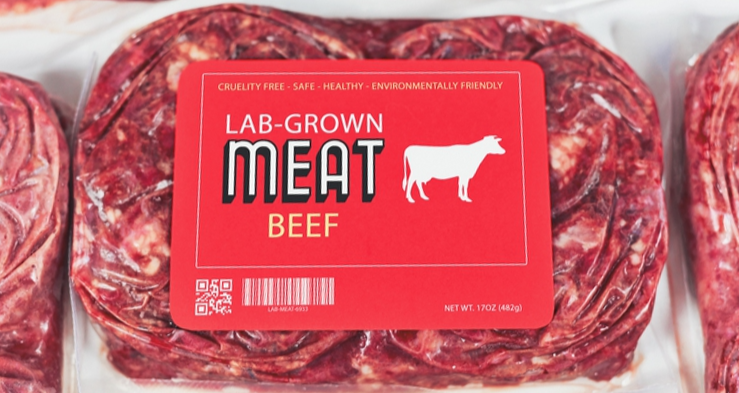
In most Member States and regions, agriculture, and especially nature, is under pressure from increasing economic activity. If 70% of that agricultural land is used for animal production, it is clear what we need to do: We need to switch to more plant-based products, because a shift in eating habits, especially a reduction in the consumption of animal products, can reduce pressure on land and natural resources [2]. Technological innovations such as lab-grown meat and precision fermentation are also leading to alternatives to livestock [6].

Fig. 1: Lab-grown meat. Royalty free photo from Getty images.

“Producers of alternative proteins receive 1,200 times less public support than intensive livestock farming.” [6]

Candel stated that these innovators in alternative protein are surrounded by uncertainty: “we don’t know if they will be successful, but expectations are high. Potentially, they are disruptive innovations that could enable us to produce more sustainably” [2]. However, governments largely ignore the climate-mitigation potential of these innovators [6]. The Dutch Liberal Party (VVD), for example, always stresses the importance of innovation, but in reality tends to support the status quo: the current dominant agricultural regime, rather than these innovative forms of food production [2].

The way forward

The future of agriculture in Europe hangs in the balance, influenced by political shifts, industrial lobbying, and societal pressures. As citizens and policymakers, the responsibility lies with us to push for changes that align agricultural practices with environmental sustainability and social equity.

Moving forward, we must advocate for policies that promote sustainable agricultural practices, support innovation, and ensure equitable distribution of resources. This includes rethinking subsidy systems, investing in new technologies, and fostering collaboration among all stakeholders—farmers, policymakers, scientists, and consumers.

Ultimately, achieving a sustainable agricultural future requires a collective effort. It demands that we remain informed, engaged, and proactive in advocating for change. By working together, we can create a resilient agricultural system that not only feeds the world but also nurtures the planet.

Sustainability Implications of Dutch Far-right Victory

Marine Le Pen in France, Giorgia Meloni in Italy, the British leaving the European Union in 2020, former Eastern Bloc countries flirting with communism again and reaching out to Vladimir Putin’s Russia. The Dutch elections, in which the far-right PVV party lead by populist Geert Wilders became the biggest party in the game, fits into the growing right-wing sentiment in Europe[1]. GreenMarked explored the implications of this election result for sustainability in the Netherlands.

Anti-sustainability by the PVV

As with the Brexit, Wilders wants a “binding referendum” on a Dutch “Nexit” [2]. Moreover, Wilders denies the urgency of climate change and wants to cancel the Paris Agreement:

“The Climate Bill, the Climate Agreement and all other climate measures go straight through the shredder. No billions wasted on pointless climate hobbies, but more money for our people.”

PVV election programme 2023 [2]

In addition, the entire energy transition should be cancelled if it is up to the PVV. Wilders wants “no more wind turbines and solar parks” as well as “eliminating all climate subsidies”. Instead, coal and gas power plants should stay open” and “new nuclear power plants should be added”, the latter then being the only low-carbon energy source. Contradicting, though, is that Wilders calls for “keeping the solar panel subsidy scheme in place” [2].

While these statements are very alarming, it is important to understand the Dutch political landscape. Dutch politics is characterised by a robust multi-party system, in which no single party traditionally achieves an absolute majority in parliament. Therefore, coalition governments are the norm, requiring parties to engage in complex negotiations to form alliances and shape policy agendas, known as the Dutch “polder model“.

Despite gaining almost a quarter of the votes, it remains questionable whether other parties are willing to enter a coalition with the PVV. Potential coalition parties have been particularly critical of PVV’s controversial anti-Islam views, which are considered unconstitutional. Instead, these potential coalition parties stated that they want to adhere to the rule of law [3]. The outcome depends on the current formation process. Last time, it took almost ten months to come up with a new cabinet.

Dutch constitution

Adhering to the constitution goes beyond freedom of speech and religion. The Dutch Constitution also includes climate policy, although not explicitly. The Constitution mentions that the government takes care of the environment (article 21), but also has to ensure security of existence (article 20) and public health and housing (article 22). All those articles relate to climate as well [3].

This is obvious where the environment is concerned. However, livelihood security, public health and housing are also threatened by floods, forest fires, dangerously high temperatures, extreme weather – in short, the effects of climate change. Severe storms destroy homes, businesses and vehicles, heat waves cost the lives of vulnerable elderly people in particular [3].

Moreover, climate change will hit the poorest parts of the world hardest – think of the devastating floods in Pakistan. This leads to more displaced people, more refugees, more international conflicts, which is terrible in itself, but on top of that, it leads to more pressure on livelihoods, healthcare and housing in our own societies [3].

Legal perspective

This has also been recognised by the Dutch courts. An example is the Urgenda case we reported on in 2021. Here, the Dutch Court and Supreme Court ruled that the Dutch State was violating human rights with insufficiently ambitious climate policies. The human rights that formed the legal basis of that judgment were the “Right to life” and the “Right to private and family life” [4]. Dutch judges are not permitted to review laws for compliance with the Constitution [3].

Fig. 1: Caretaking of the world. Copyright-free photo by Dorothe on Pixabay.

Climate dossier cannot be dismissed

In a democratic constitutional state, politicians may enact any law they want, as long as they abide by the Constitution. The fundamental rights enshrined therein require effective policies in line with the Paris Agreement [3].

As such, top advisers to the Dutch government concluded that a new Dutch cabinet cannot “put climate policy through the shredder” [5]. In addition, these advisers foresee that “applying the brakes [on climate policy] will harm business rather than help” [5].

“EU countries such as Germany and France, which are laying out roadmaps for a low-carbon economy, could be a draw for companies looking to adopt clean technology. As a result, the Netherlands may find itself ‘at the back of the bus’ in Europe, but should still join them to the final destination of a low-carbon society.” [5]

The Netherlands must do its part to keep global warming below 2 °C and should only raise its ambitions in that regard, not lower them. Which measures will be taken to achieve that goal can be negotiated, but the fact that this effective policy must be in place should not be a question at the formation table. Otherwise they risk being overruled by the judge[3].

Beyond climate targets, the Netherlands cannot ignore the consequences of global warming, being the “increasing blue risk”. Even if limited to 2 °C, the Netherlands will face a rise in sea-water way beyond the capacity of its Delta Works defence system [6]. Extreme countermeasures must be taken to prevent the majority of land from flooding [7]. However, can we expect sound water safety policies from a party that denies the root cause of the climate crises?

For both climate policy and water safety policy, doing nothing now will only make it more difficult and expensive in the future. Countering the climate crisis is not only about complying with European directives, but also about protecting their coasts, their land, their people and their future. That is why relating human rights were integrated into the Dutch Constitution.

This article is part of the project “PILLOLE D’ACQUA PIANA: seminari itineranti, blog e podcast per una gestione sostenibile delle risorse idriche in Piana Rotaliana” carried out by ECONTROVERTIA APS and supported by Fondazione Caritro (Prot. no. U445.2023/SG.386 of April 23, 2023).

EU Takes Decisive Action Against Greenwashing and Misleading Environmental Claims

The European Union (EU) has taken an important step towards promoting transparencyand consumer empowerment by agreeing on a pioneering set of measures aimed at tackling greenwashing and increasing consumer awareness about product sustainability and durability [1]. This development follows a global trend of growing environmental awareness and the need to ensure that environmental claims match real efforts to combat climate change and protect our planet [2].

In a previous blog post, we explored how internationally renowned companies often use offsettingas a way to make green claims, highlighting the importance of understanding the underlying methodologies and analyses behind such claims.

Ban on misleading practices

The EU’s latest initiative targets misleading marketing tactics, including the widespread problem of greenwashing. These new rules aim to protect consumers from misleading practices and provide them with the necessary information to make well-considered choices when buying products.

Here is what you need to know:

1. Generic Environmental Claims: The EU will ban vague and generic environmental claims such as “environmentally friendly”, “natural”, “biodegradable”, “climate neutral”, or “eco”, unless these claims can be substantiated with recognized evidence of excellent environmental performance.

2. Product Durability: Companies will be prohibited from marketing goods with features that limit their durability without providing information about these features and their impact on the product’s longevity.

3. Emissions Offsetting Claims: Claims that a product has a neutral, reduced, or positive impact on the environment through emissions offsetting schemes will be banned unless backed by credible evidence.

4. Certified Sustainability Labels: Only sustainability labels based on approved certification schemes or established by public authorities will be permitted. This move ensures that sustainability claims are validated by recognized entities.

5. Guarantee Information: The EU will make guarantee information more visible to consumers. Many people are unaware that all goods come with a two-year guarantee in the EU. This initiative aims to enhance consumer knowledge and protect their rights.

6. Extended Guarantee Label: Producers who voluntarily extend their product guarantees free of charge will be able to display a new label highlighting the quality and durability of their goods [1].

Fig. 1: Financial costs of pollution. Copyright-free photo by Lightspringon Shutterstock.

Empowering consumers

As the EU takes the lead in these efforts to promote transparency and empower consumers, it is sending a clear message to companies that greenwashing and misleading marketing practices will no longer be tolerated. This initiative is in line with a global movement towards sustainability and responsible consumption and emphasises the fundamental right of consumers to accurate and reliable information when making choices that affect our environment [1].

The EU’s proposal includes common criteria that provide consumers with greater clarity and assurance that when something is marketed as a green product, it truly lives up to that claim. This empowers consumers with better information to make environmentally friendly choices in their purchases [3].

Simultaneously, businesses are stimulated to enhance the ecological sustainability of their products, aiding consumers in recognizing these environmentally conscious choices. This supports genuine businesses in their sales efforts while combating unfair competition. Ultimately, this contributes to a level playing field regarding information on the environmental performance of products [3].

In conclusion, the EU’s proactive stance against greenwashing and deceptive marketing practices signifies a significant step toward a more transparent and sustainable future. By empowering consumers and encouraging responsible business practices, these measures create a win-win scenario where both consumers and genuine businesses benefit, setting the stage for a more environmentally conscious marketplace.

Brazil’s Transversal Approach for the Environment

The Three Pillars of Sustainability

After the anti-democracy riots in Brasília last month, the new Brazilian Ministers of the Environment and Finances, Marina Silva and Fernando Haddad commented on the country’s environmental agenda in Davos during the World Economic Forum [1].

Silva highlighted the plans of the installed government to address national environmental issues in a transversal way, which was expected from Lula’s 2022 campaign. Looking back at his proposals, the environment was placed under an interdisciplinary axis called “Economic Development and Socio-Environmental and Climate Sustainability” [2]. According to Silva, Brazil aims to tackle social inequality and environmental protection simultaneously.She emphasized, “Sustainability is not only economical or environmental, but also social”.

Lula’s victory brought up the international support that will be indispensable for the recovery of the country’s social and environmental agenda. A crucial initiative back on the radar is the Amazon Fund. The Fund was once considered the primary national strategy for the Reduction of Greenhouse Gas Emissions arising from Deforestation and Forest Degradation (REDD+) [3]. However, since June 2019, the two committees that comprised the Amazon Fund governance – the Amazon Fund Steering Committee (COFA) and the Amazon Fund Technical Committee (CTFA) – were terminated. Therefore, the supporting countries no longer issued grants for investments, and there was no resumption of approval for new projects. Nonetheless, the ongoing projects at the time proceeded with their activities.

The Fund aims to implement actions to voluntarily reduce deforestation in the Amazon forest and other biomes. To do so, it supports projects in actions to prevent, monitor and promote the conservation and sustainable use of the Brazilian Amazon in different fields, such as:

  • Management of public forests and protected areas
  • Environmental control, monitoring, and inspection, sustainable forest management
  • Economic activities developed from the sustainable use of vegetation
  • Ecological-economic zoning (ZEE), territorial planning, and land tenure regularization
  • Conservation and sustainable use of biodiversity, and recovery of deforested areas [4].

Social Development

An important social aspect of the Amazon Fund is its support of traditional communities in the Amazon region, including indigenous people, extractivists and riparian communities. For instance, 28 out of 102 projects that benefit from the Fund are directly related to indigenous people. Many of these projects aim to promote food security (food production for own consumption) of traditional peoples. To do so, they “support the implementation of agroforestry systems, the signing of fishing agreements, the installation of processing units for socio biodiversity products, certification of origin, training, and the development of business plans, as well as research to develop new products derived from the fruits, seeds, and bioactive compounds of the Amazon flora” [4].

One of the projects supported by the Amazon Fund is the Kayapó Fund. The Kayapó territories comprise about 11 million hectares and are located south of Pará and north of Mato Grosso. The territories are centred in the region known as the Arch of Deforestation, famous for the highest deforestation rates due to advances of the agricultural frontier towards the forest. The Kayapó Fund aims to support projects of indigenous organizations that operate in this region with a focus on biodiversity conservation, territorial protection, development of sustainable, productive activities and strengthening of political representation of leaders.

Fig. 1: Dried Cumaru seeds (Fred Benenson. February 1, 2007). [Source: Wikipedia]

The Kayapó people have traditionally used and marketed Cumaru seeds. The indigenous people have used the seeds of Dipteryx odorata as a pain killer. A short documentary funded by the Kayapó Fund shows how the Kayapó collect, select and prepare the seeds before selling them. Due to its unique fragrance, the seed is used in cosmetics, soaps, and as medicine for different purposes.

Amazon Fund-supported projects aim to help traditional Brazilian peoples emerge from the food and health crisis as we resume biodiversity conservation.

References

Click here to expand the references
  1. Uchoa, P. and Beltran, L. World Economic Forum. Davos 2023: Brazil on a new economic and environmental roadmap. Retrieved on 28 January 2023 from https://www.weforum.org/agenda/2023/01/key-takeaways-on-brazils-new-roadmap-davos2023/
  2. Tribunal Superior Eleitoral – TSE. Luís Inácio Lula da Silva government proposal in 2022. Retrieved on 23 October 2022 from: https://divulgacandcontas.tse.jus.br/candidaturas/oficial/2022/BR/BR/544/candidatos/893498/5_1659820284477.pdf
  3. May, H.P. et al (2016). The context of REDD+ in Brazil, Drivers, actors and institutions – 3rd Edition, pp 57 – 76. Retrieved on 28 January 2023 from https://www.cifor.org/publications/pdf_files/OccPapers/OP-160.pdf
  4. Amazon Fund. Activity Report 2021. Retrieved on 29 January 2023 from https://www.fundoamazonia.gov.br/export/sites/default/en/.galleries/documentos/rafa/RAFA_2021_en.pdf

Brazil’s 2023 Environmental Agenda: First Steps towards Reintegration

It is now official: Lula is the new president of Brazil as of first January 2023. After a very tight election, Brazil encountered resistance from pro- Bolsonaro electors that protested the results blocking federal roads. The protests lasted approximately a month [1]. However, other electors decided to take a different path to contest the election results and ask for military intervention. Camped outside military facilities all over the country they ask the Forces to take the Estate [1]. However, since last Sunday (11) the country has made the election results official, and Lula had his third diplomation ceremony in the country. A heart touching moment for democracy.

What about the Environment?

The mandate of Brazil’s new president, Lula, has not even begun and the international reaction was unanimously cheerful. Actively present on social media, right after the elections, Lula shared with his voters on Instagram the various messages that arrived from governments all around the world, such as Alberto Fernández, Emmanuel Macron and Joe Biden [2].  And the international support for the new president will be a key in the country’s new environmental agenda.

Fig 1: Lula’s caricature from @sharpon_eco

By attending the COP27, Lula legitimized his interest in the preservation of the Amazon as well as in the protection of indigenous peoples. Moreover, he stressed that with his victory also “the commitment to confront climate change with determination” [3]. In his speech, the president highlighted the world’s hurry to find solutions for our planet that is being exhausted every day, and the importance of the countries to unite among themselves otherwise we are doomed to fail.
While Lula awaits his inauguration, his transition team worked to ensure that he takes office knowing all the information about the Federal Government, the Public Administration, ongoing projects and programs, and other issues. The members of the team were selected by the elected president and were responsible for working on specific themes of the government. A notable difference between the transition team of the current government and the future one was precisely the presence of the Technical Group for the Environment [4]. The composition of the team also brightened the mood. With several academic and environmentalist members, hope has also returned to those who are seriously dedicated to environmental causes in Brazil.

Brazilian Elections: What did Bolsonaro do for the Environment in the Last Four Years?

As the second round of the Brazilian presidential electionapproaches, the fight against fake news and the publication of public data on social media is growing exponentially. In this article, we review some environmental key facts that took place during Jair Bolsonaro’s four year mandate.

Attempt to Remove the Ministry of the Environment

In 2018, Bolsonaro’s government did not present any specific environmental management plan, much less a strategy to tackle the Amazon deforestation or implement the Action Plan for the Prevention and Control of Deforestation in the Legal Amazon (“PPCDam”). Instead, it tried to remove the Ministry of the Environment (“MMA”: is one of the public agencies in charge of the PPCDam and the protection of the Amazon), and merge it into the Ministry of Agriculture, claiming that they were “inefficient and did not serve the legitimate interests of the Nation” [1]. The proposal was never really implemented, but since then the MMA had to face tough operational challenges. Its Conservation and Sustainable Use of Biodiversity and Natural Resources program was cut by 139 million reais and its servers operating hours were constrained through an amendment of the Portaria no. 491 environmental law [2].

As reported by the Amazônia Real portal, this and other political maneuvers facilitated criminal activities in the jungle because environmental inspections and law enforcement was restricted to office hours. Environmental protection officers operating outside legitimate hours risked administrative proceedings, punishments and warnings, and their own life.

Deforestation Increase in the Amazon

Despite Bolsonaro’s allegations that deforestation decreased during his government, current data from the National Institute of Spatial Research proved the opposite (Figure 1). Since 2018, the deforestation rate has grown by 73 %, passing from 7,500 km² in 2018 to 13,000 km² in 2021. Conversely, during Lula’s (Luís Inácio Lula da Silva) mandate, the deforestation rate had decreased by 67 %, going from 25,400 km² in 2003 to 4600 km² in 2011 [3].

Fig. 1: Deforestation rates in the Amazon (“Amazonia legal”) from 1988 to 2021 [3].

More Freedom to Land Owners

The current government increased the freedom of land ownersand reduced the degree of State interference on farms:

“The State must make it easier for the farmer and their families to be the managers of the rural; identify which are the areas where it really needs to be present, and at what level.”

A Growing Threat to Indigenous Areas

Two delegates of Bolsonaro were put at the head of the National Indigenous Foundation and the Ministry of Agriculture: Marcelo Xavier and Nabhan Garcia, two ruralists that strongly support agribusiness.

In April 2020, the newly approved Normative Instruction no. 9 left non-homologated indigenous areas(i.e., lands with a marked physical border not yet validated by a Federal Decree) unprotected [4]. Two years later, 415 farms, equivalent to 239,000 hectares, had been registered within non-homologated indigenous land [5].

Fortunately, in 2021 the Federal Public Ministry suspended the Normative in several Brazilian states because it violated the constitutional rights of indigenous peoples, favored the illegal occupation of public land and caused agrarian conflicts [6]. Since then, several reports and demonstrations denounced how the government was threatening the lives of indigenous people, and, consequently, threatening several areas of environmental protection  within indigenous land or land inhabited by indigenous people [7].

Hampering Family Farming

While agribusiness and illegal mining activities expanded at the expenses of deforestation and indigenous lives, family farming was severely hampered under Bolsonaro [8]. Public policies that ensured the sales and distribution of family farming products all over Brazil were modified and funding was drastically reduced. While agribusiness products are intended for export, family farming feeds a large part of the Brazilian population. Since family products are supplied in a multitude of public institutions, educational and health care centers, damaging family farming generated hunger in the country.

Violence Increase in the Amazon

In the last four years, the Amazon has seen an intensification of violence; especially murders in the states of Amazonas, Pará, Roraima, Amapá, Espírito Santo, Rio de Janeiro and Pernambuco [9]. Amazonas, in particular, has been stage of tragic stories, such as the murder of two important environmentalists on the fight for indigenous people rights: Dom Phillips and Bruno Pereira [10].

The Provincial Environmental Energy Plan 2021-2030 of the Autonomous Province of Trento.

The energy issue is in the forefront of all the news. Trentino, too, is discussing what solutions should be put in place to make the Province’s energy demands as sustainable as possible.

To this end, the Environmental Energy Plan of the Autonomous Province of Trento 2021-2030(“PEAP“), approved by Resolution No. 952 of June 11, 2021, plays a relevant and strategic role because it aims to identify the essential and necessary guidelines, and priority strategies to decarbonize the whole region. The general goal is to reduce the emissions of gases that contribute to the climate crisis by 55 % compared to 1990, thus exceeding the current 50 % cut target set by Provincial Law 19/2013. The number should not be frightening: An analysis of energy consumption in 2016 shows that Trentino has already reduced emissions by 20.6 % compared to 1990. And yet there is still a lot of work to do [1].

For this reason, the Autonomous Province of Trento has proposed the PEAP, recognizing some technological and socioeconomic trends, outlining a future energy system that cuts climate-changing emissions, introduces new efficient technologies and maintains the effective existing ones.

Specifically, the PEAP is an energy plan aimed at defining actions to save energy, make homes and industries more efficient, and increase electricity generation from renewable sources (solar, hydroelectric, fuelwood, and wind). The Plan implements many global-scale environmental goals, namely the 2030 Agenda – covering as many as 6 of the 17 Sustainable Development Goals – and the 2015 Paris Agreement, which aims to contain the global average temperature increase below 2°C compared to pre-industrial levels. Ambitious provincial-level goals also comply with the Plan: The Provincial Strategy for Sustainable Development, which defines Trentino’s position in relation to strategic sustainability goals [2], and the Provincial Urban Plan, which looks at the territory as an environmental, landscape, social and productive setting. There are also numerous references to other Provincial Plans such as the Water Protection Plan, the Waste Management Plan, and the Provincial Electric Mobility Plan.

Fig. 1: A visit to Santa Massenza lake hydropower plant (Trentino). GreenMarked. December 05, 2021.

The Plan draft was anticipated by a detailed collection of energy consumption data. In Trentino, households consume 40-43 % of the share, transportation 30-33 % and industries 24-25 %. Currently, transportation uses almost entirely oil by-products, whereas industries mostly natural gas (about 60 %) and electricity. The Autonomous Province of Trento imports about 40 % of the energy consumed (mainly in the form of natural gas and oil by-products) and exports 25 % of its hydropower-derived energy. The data thus helped define some key actions reported in the Plan:

1. Real estate energy efficiency upgrading. Insulating buildings, replacing gas and LPG-fueled boilers with natural gas-fueled condensing systems, replacing windows and doors, and replacing winter air conditioning systems with heat pumps will decrease energy consumption by more than 35 %, and considerably increase the number of solar panel systems.

2. More sustainable mobility. Reducing the need of internal combustion engine vehicles, promoting bike/pedestrian mobility, increasing transportation efficiency, and expanding the electric fleet of vehicles will go a long way toward reducing the huge non-renewable energy demand of the transportation sector. In this regard, the Plan calls for the installation of 283 fast and ultrafast electric charging points and an additional 707 “accelerated mode” charging points.

3. To encourage local renewable energy production and increase self-consumption, the Plan considers implementing a number of energy communities – that is a group of citizens who agree to produce and consume renewable energy together. Through a shared photovoltaic system, such communities can share energy and have more ways to adapt to different energy loads through collective storage systems.

These are just a few of the PEAP actions, which actually comprises 12 strategic guidelines (i.e., objectives) and 83 environmental actions, each of them belonging to a specific guideline. They will lead to a significant reduction in carbon dioxide emissions and improvement in air quality. Through biannual monitoring it will be possible to assess the Plan effectiveness and thus obtain another evidence of Trentino’s commitment to becoming a sustainable land, where man and the environment can coexist in harmony.

An organic district for the Province of Trento: rejected, but…

On Sunday, 15.58 % of Trentino voters voted: participation was much lower than the 40 % required by the quorum. Let’s look at the mathematics: of the 437,113 voters, 68,081 went to the polls. Specifically, 31,185 males and 36,896 females [1]. Of these, 65,652 voted in favor. In other words, 96.96 % of those who voted crossed the “yes” box [2].

Let us now look at the geographical position of municipalities with higher and lower turnouts. Looking at districts or macro areas the highest is Val di Sole (21.37 % of the electorate), then the Giudicarie (17.35 % of the electorate) and the Alta Valsugana and Bernstol (17.25 % of the electorate).Whereas looking at the large pool of votes, 16.26 % and 16.48 % of voters respectively voted in the cities of Trento and Rovereto, equivalent to 14,964 and 5,152 citizens [3].

The defeat is clear but it gives hope that more than 65,000 Trentino citizens have confidence and want a more sustainable type of agriculture in this area. Personally, I did not expect more than a 10 % turnout at the polling stations, given the deafening silence of Trentino politics [4]. As stated by Lucia Pavesi [2], the reasons for the defeat could also be technical-strategic (e.g., the lack of initial involvement of producers and some existing organic farming districts and insufficient publicity). Nevertheless, the courage of the proposers of the initiative was enormous. Publicly addressing one of the most consolidated (contaminating) sectors of Trentino was a heroic gesture.

Fig. 1: Land use in Piana Rotaliana is mainly wine and apple farms alternated with light industrial districts and urban settlements (photo by © Matteo Ianeselli / Wikimedia Commons, CC BY-SA 3.0, https://commons.wikimedia.org/w/index.php?curid=15615268).

Web references:

[1] Scozzari, C. (2021, September 27). Trento, flop del referendum sul biodistretto. Il passaggio al biologico può attendere. la Repubblica. https://www.repubblica.it/green-and-blue/2021/09/27/news/trento_flop_del_referendum_sul_biodistretto_il_passaggio_al_biologico_puo_attendere-319636683/

[2] Pianesi, L. (2021, September 27). Referendum per il Biodistretto, una sconfitta senza appello che affonda il biologico per il futuro? Come un autogol può trasformarsi in un’opportunità. il Dolomiti. http://www.bkoffice.ildolomiti.it/societa/referendum-per-il-biodistretto-una-sconfitta-senza-appello-che-affonda-il-biologico-per-il-futuro-come-un-autogol-puo-trasformarsi-in-unopportunita

[3] Andreazza, L. (2021, September 26). Referendum biodistretto del Trentino, l’affluenza si ferma lontana dal quorum: Alle urne il 15,58% degli aventi diritto. il Dolomiti. https://www.ildolomiti.it/politica/2021/referendum-biodistretto-del-trentino-laffluenza-si-ferma-lontana-dal-quorum-alle-urne-il-1558-degli-aventi-diritto

[4] Miller, M. L. (2021, September 24). Who stands for the organic district referendum? GreenMarked. https://greenmarked.it/it/standing-for-the-organic-district/

Cover photo: free-source photo by sweetlouise on Pixabay.

This article is part of the project “Environmental Blogging Boost 4 Students”, aimed at increasing the spread of agroecology and sustainable water management in Trentino. The project is financed by the BIM Adige Water Catchments Consortium (grant approved by provision n. 100 of June 06, 2021).

Who stands for the organic district referendum?

Two days before the referendum on the establishment of an organic district in the Province of Trento, the media coverageto remind Trentino’s citizens to exercise their right-duty remains scandalously low. It is sad that an independent Province governed through a democratic regime wants to encourage abstentionism in a referendum, which is the highest representation of people’s participation in the political debate. In fact, this situation is rather understandable, almost logical, since very few political parties have publicly and clearly declared their position on the referendum.

Only the Greens, Futura and the Five Stars Movement have unequivocally invited citizens to come to the polls on Sunday and vote in favor of the district. Lega, Fratelli D’Italia, Onda Civica, PATT and the Democratic Party have not made any official declaration on their stand, leaving freedom of choice to citizens [1]. A deafening silence. Is there fear of losing votes and strategic friendships? The absenteeism of politics and the social effects of the pandemic on an initiative born more than two years ago will strongly affect public participation and consequently the achievement of the quorum set at 40 %.

A clear advice to vote “no” was given by the farming lobby. The Italian Confederation of Farmers (“Confederazione Italiana Agricoltori – CIA“) of Trentino as well as Italy’s Farming Confederation (“Confederazione Generale dell’Agricoltura Italiana – Confagricoltura”) have deliberately taken sides against the organic district referendum, pointing out the disappointing approach with which the debate on organic farming was started. For the two organizations, it is an initiative that favors clashes between citizens and farmers and forgetting or failing to involve producers in the initial stages was a serious mistake [2]. The National Confederation of Direct Producers (“Coldiretti”) also aligns itself with the two other farming institutions, stressing out that only certain Provincial areas are suitable for organic. “You can’t force things”, criticized President Gianluca Barbacovi [3].

A week before the referendum, also the main worker unions of Trentino – CGIL, CISL and UIL – have finally taken part in the public debate. The unions unanimously took position in favor of the referendum and the referendum question, affirming that it represents the first step to establish a “quality food chain centered on people’s health, the preservation Trentino’s natural environment and the work welfare of those involved in farming” [4].

Also ACLI, a historical catholic association of Trentino committed to “promoting the common good, peace and the integral development of people following the values of the Gospel, democracy and labour”, has openly expressed its support for the public poll and invited citizens to vote in favor of the organic district establishment[5].

Fig. 1: The Prosecco Hills of Conegliano and Valdobbiadene in neighboring Veneto region was recently added to UNESCO World Heritage list (2019) as a cultural landscape, where the work of the winemakers and their positive interaction with the natural environment contributed to create a unique scenario of outstanding universal value. May the successful story of the Conegliano and Valdobbiadene hills be an example for Trentino’s farming development? (Free-source photo by Vincenzo Tabaglio on Unsplash).

There are also many environmental associations that officially support the referendum committee: associations for the protection of the environment (e.g., Legambiente) and animals (e.g., LIPU Trentino), and the promotion of sustainable farming (e.g., L’Ortazzo). There are fishermen and beekeepers’ associations (e.g., Federazione Pescatori Trentini), Solidarity Purchasing Groups and organizations advertising for and marketing local, eco- or fairtrade products (e.g., Comitato di Salvaguardia l’Olivaia). Finally, there are NGOs promoting a more sustainable society and economy (e.g., Alta Val di Non Futuro Sostenibile), safeguarding public health (e.g., Medici per l’ambiente ISDE Trentino), and preserving the local landscape or the natural and cultural heritage (e.g., Italia Nostra Sezione trentina) [6].

There are also other NGOs, environmentalist or not, that have not yet been added to the official page of the promoting committee’s website but that support the initiative on their own digital platforms.

Considering now media resonance, the absence of the political parties weighs much more than the support of the various NGOs mentioned above and will affect public participation heavily. Nevertheless, the movement and public discussion about sustainable, organic and agroecological farming will not be damaged in the aftermath of the vote.On the contrary, it will be strengthened and will begin to network in an organized and strategic manner. In the same way that the Fridays For Future movement was born and grew big to fight the climate crisis on a global level, movements and social networks fighting for more nature-friendly farming methods may grow and solidify in the Province of Trento.

Bibliography:

[1] Patruno, L. M. (2021, September 13). Distretto biologico su tutto il territorio agricolo provinciale, i partiti non si scaldano per il voto—Cronaca | l’Adige.it. l’Adige. https://www.ladige.it/cronaca/2021/09/13/distretto-biologico-su-tutto-il-territorio-agricolo-provinciale-i-partiti-non-si-scaldano-per-il-voto-1.2993607

[2] Andreazza, L., & Todarello, M. (2021, September 24). Referendum Biodistretto, le ragioni del “‘No’” (IL VIDEO): “ ‘Molti pensano che il biologico non sia trattato ma le piante vanno aiutate. Insetti e parassiti ci mettono in difficoltà.’” il Dolomiti. https://www.ildolomiti.it/ambiente/2021/referendum-biodistretto-le-ragioni-del-no-il-video-molti-pensano-che-il-biologico-non-sia-trattato-ma-le-piante-vanno-aiutate-insetti-e-parassiti-ci-mettono-in-difficolta

[3] Ghezzi, P. (2021, September 23). Bioreferendum, la congiura del silenzio. Salto.bz. https://www.salto.bz/de/article/23092021/bioreferendum-la-congiura-del-silenzio

[4] L’Adige. (2021, September 20). Referendum sul biodistretto, sindacati per il sì: “Occasione unica per valorizzare il territorio” – Cronaca | l’Adige.it. l’Adige. https://www.ladige.it/cronaca/2021/09/20/referendum-sul-biodistretto-sindacati-per-il-si-occasione-unica-per-valorizzare-il-territorio-1.3000371

[5] Oliver, L. (2021, September 17). Referendum: Le Acli per il Si. https://www.aclitrentine.it/news/2021/09/referendum-le-acli-per-il-si/

[6] Distretto Biologico Trentino. (2021, April 7). Unisciti a noi. DISTRETTO BIOLOGICO TRENTINO. https://bio.trentino.it/365-2/unisciti-a-noi/

This article is part of the project “Environmental Blogging Boost 4 Students”, aimed at increasing the spread of agroecology and sustainable water management in Trentino. The project is financed by the BIM Adige Water Catchments Consortium (grant approved by provision n. 100 of June 06, 2021).

Trentino and its farming sector. Time to return the favor for cleaner water courses

Many City Plans have been blocked to secure farming zones and tamper industrial expansion, substantial incentives have been provided by the Province of Trento to increase the competitiveness and welfare of farming enterprises, and large-size social events focused on local agricultural goods and traditions have been favored and helped to grow thanks to public provincial funds. Strategic deals with neighboring networks have been opened to promote food & wine destinations, and huge amounts of money have been spent to launch attractive marketing campaigns that sponsor agricultural products from Trentino.

Trentino has done a lot for its farming sector. Can the people of Trentino now ask for help in return? The provincial environment and health need it. The water courses of Trentino need it.

Looking at the groundwater and surface waters geoportal of the National Institute for Environmental Protection and Research (Istituto Superiore per la Protezione e la Ricerca Ambientale – ISPRA), it is disturbing to see that several monitoring stations in the Adige and Non Valleydetected exceedances of the admissible contamination thresholds[1]. AMPA, glyphosate, and metolachlor-ESA are the most commonly detected contaminating substances in surface waters. Atrazine desis, flonicamid, and metolachlor-ESA, instead, are those that are most frequently detected in groundwater [2].

When related to the hectares of utilized agricultural area (“UAA”), the amount of active ingredients contained in plant protection products distributed in Trentino is much higher than the national one [3]. More than 9 kg/hectare compared to the national average of 4 kg/hectare! This environment liability compromises the ecological state of Trentino’s surface and groundwaters, harms public health, and thus represents a cost in the Provincial balance sheet.

We really need Trentino’s farming sector to look for strategic solutions to lower its environmental impact, especially on public waters and health. The Province and community of Trento have done so much to promote its farming sector. It would be fair if it now returned the favor.

Fig. 1: vineyards and the irrigation channel “Fossa di Caldaro” in the rural area of Mezzocorona (Trento) Italy. (Author, September 21, 2021).
Fig. 2: a detail of the Natura 2000 site “La Rupe” in Mezzolombardo (Trento), Italy. Located along the Noce river, the site is one of the few left natural places in the contaminated Adige valley bottom. (Author, December 06, 2021).

Bibliography:

[1] ISPRA. (n.d.). Geoportale di monitoraggio ambientale [Map]. Retrieved December 10, 2021, from https://sinacloud.isprambiente.it/portal/apps/webappviewer/index.html?id=a38bab6b0aee4464ade50d6cbe2e3bbc

[2] Paris, P., Pace, E., Maschio, G., & Ursino, S. (2020). Rapporto nazionale pesticidi nelle acque—Dati 2017-2018 (2020th ed.). ISPRA. https://www.isprambiente.gov.it/files2020/pubblicazioni/rapporti/rapporto_334_2020.pdf

[3] Menapace, E., Ferrari, C., Mantoan, J., Dallafior, V., & Martinelli, R. (2020). Rapporto sullo stato dell’ambiente 2020—Agricoltura (No. 9). APPA. http://www.appa.provincia.tn.it/rapporto_ambiente_2020/rapamb_2020_pressioni/-Agricoltura/pagina19.html

This article is part of the project “Environmental Blogging Boost 4 Students”, aimed at increasing the spread of agroecology and sustainable water management in Trentino. The project is financed by the BIM Adige Water Catchments Consortium (grant approved by provision n. 100 of June 06, 2021).

Running in the usual direction

They’re running at this time of night.

The empty ones on the tractors, return to the family depots, the full ones are loaded onto trucks to the warehouses of the whole of Europe and beyond. Apple crates that make the economy of Trentino run.

They’re still moving at this time of night.

Lights lit both in the cellars of the cooperatives and the independent winemakers. The production of prosecchi and wines has begun. The smell of must is in the air of the entire Adige Valley.

While we wish all Trentino farmers occupied in this busy period a prosperous grape- and apple harvest, we hope that the wealth generated is also used to make those courageous choices that the Trentino environment needs.

Examples? Drastic reduction of synthetic fertilizers and plant protection products, optimization of water resources, especially groundwater, increase in crop diversity, maintenance of green hedges and creation of buffer zones in the vicinity of forests, increase of biodiversity in the field, placing beehives onsite to encourage pollination, promotion of sustainable practices such as green manure and green pruning, etc. The possibilities are countless and fall within the range of possibilities addressed by the proposal to establish a provincial organic farming district.

Yet, the Provincial Council prefers mere modernization to revive agriculture in Trentino. With an tender notice of € 3 million, the Province aims to redevelop existing structures in the wine and wine tourism sector of Trentino that have been affected by the effects dictated by Covid 19. A very fragile justification to legitimize a substantial support to operations of “renovation, modernization, extension, renewal of furniture and equipment, qualification or construction of outdoor spaces, tasting and didactic rooms, product sales points, energy and technological improvements” [1] in a sector that has suffered very little from the effects of the pandemic. Is it possible that the only intervention to improve the environmental sustainability of the winery industry is hidden behind the “energy improvement”?

At both the political and business levels, Trentino’s agriculture remains on the conventional approach. It runs but continues to run in the usual direction, not caring about all the environmental objectives provided for by the European Directives, the Paris Agreement, the provincial strategic objectives regarding the conservation of environmental heritage.

Fig. 1:Manual wine harvest on Guyot wine training system (free-source photo by Lasseter Winery on Unsplash).
Fig. 2:view of the Piana Rotaliana (Trento), famous for its vineyards and wine culture (free-source photo by Yerpo – Own work, CC BY-SA 3.0, https://commons.wikimedia.org/w/index.php?curid=25796670).

Web references:

[1] Infotn. (2021, September 17). In arrivo 3 milioni di euro per il settore vitivinicolo ed enoturistico. Ufficio Stampa Provincia Autonoma di Trento.

Cover image: free-source photo by Lasseter Winery on Unsplash.

This article is part of the project “Environmental Blogging Boost 4 Students”, aimed at increasing the spread of agroecology and sustainable water management in Trentino. The project is financed by the BIM Adige Water Catchments Consortium (grant approved by provision n. 100 of June 06, 2021).

Applying the European Green Deal. Is the Netherlands Fit for 55?

On July 14, the European Commission will present the long-awaited “Fit for 55” legislative package. It is the first legal stipulation supporting the European Green Deal climate actions aimed at making Europe the first climate-neutral continent by 2050. “Fit for 55” will “update the EU’s 2030 climate and energy laws to reflect the 55% net emissions reduction target that the EU set for 2030” [1].

Some countries are already on the right track to meet the necessary emissions reduction, whereas others face a relatively large task to achieve the European climate objectives. Per capita emissions in the Netherlands, for example, are a third higher than the EU average, and double that of Sweden [2]. The Dutch Environmental Assessment Agency (“PBL”) compared the reduction in emissions between 1990 and 2019 in the Netherlands with results in Germany, Belgium, Denmark, Sweden, France, and the United Kingdom. The Netherlands was the only country that did not manage to reduce emissions to a level below 1990 levels during that period, concluded PBL [3].

Author, July 2021

In the verdict of the famous Urgenda case in 2018, the Dutch National Government was ordered to do more to limit the emission of greenhouse gases in the Netherlands [4]. The Dutch Court of Appeal required a 25% reduction in 2020 compared to 1990. However, preliminary figures from the Dutch Statistics have shown that even in Corona year 2020, which was characterised by less traffic and economic activity, estimated emissions reduction was only 24.5% lower compared to 1990[5].

Last month, the newly appointed Dutch State Secretary for Economic Affairs and Climate Change Dilan Yesilgöz presented a long list of measures that should finally meet the 25% reduction target. It applies to various sectors, such as industry, agriculture, transportation, and energy [6].

Since it has become apparent that the required target has not been achieved on time, plaintiff Urgenda will impose a penalty payment on the Dutch state through the court. Director of the Dutch NGO Marjan Minnesma expects a claim between 100 million and 2 billion euros. Yesilgöz regrets that Urganda will not await the implementation of the listed measures, but it can be concluded that the Dutch state missed its opportunity to adapt its policy to meet its target on time [5].

Ultimately, this disadvantages everyone, including the Dutch state, because quick measures to increase sustainability are more expensive than measures included in long-term policy objectives.

Bibliography

[1] European Commission. (2021, 8 June). Fit for 55 package’: local leaders ready to take the helm as Council adopts a €17.5 billion Just Transition Fund. Retrieved 29 July 2021, from https://cor.europa.eu/en/news/Pages/ENVE-COMMISSION-Fit-for-55-package.aspx

[2] Maree, K. (2021, 29 June). PBL: klimaataanpak Nederland loopt achter bij buurlanden. NRC Handelsblad. Retrieved 29 June 2021, from https://www.nrc.nl/nieuws/2021/06/29/pbl-klimaataanpak-nederland-loopt-achter-bij-buurlanden-a4049138

[3] Boot, P. (2021, June). Ervaringen met energie-en klimaatbeleid in omringende landen: Wat kunnen we ervan leren? Centraal Planbureau. Downloaded 29 June 2021, from https://www.pbl.nl/sites/default/files/downloads/pbl-2021-ervaringen-met-energie-en-klimaatbeleid-in-omringende-landen-wat-kunnen-we-ervan-leren-4647.pdf

[4] Hoekstra, E. (2021, 16 April). Climate justice as a human right.Retrieved 29 June 2021, from https://greenmarked.it/climate-justice-as-a-human-right/

[5] Van der Walle, E. (2021, 28 June). Urgenda weigert ‘genaaid’ te worden en voert bij kabinet druk op. NRC Handelsblad. Retrieved 29 June 2021, from https://www.nrc.nl/nieuws/2021/06/28/urgenda-weigert-genaaid-te-worden-en-voert-bij-kabinet-druk-op-a4049097

[6] Rijksoverheid. (2021, 25 June). Kamerbrief over uitvoering motie Thijssen over Urgendavonnis en langetermijn-klimaatbeleid. Downloaded 30 June 2021, from https://www.rijksoverheid.nl/ministeries/ministerie-van-economische-zaken-en-klimaat/documenten/kamerstukken/2021/06/25/kamerbrief-over-uitvoering-motie-thijssen-over-urgendavonnis-en-langetermijn-klimaatbeleid

Bio-botta e risposta

A carnevale il bio-distretto provinciale crea il bio-scontro frontale.

Lo scorso 11 febbraio il Comitato promotore per il referendum per la creazione di un bio-distretto provinciale ha annunciato di aver già raccolto circa 6000-6200 firme. L’obbiettivo di raccoglierne 8000 entro fine marzo sembra dunque vicino. Trattandosi di referendum provinciale propositivo, la Provincia avrà l’obbligo di fissare una data in cui i trentini saranno chiamati a votare [1]. Il propositivo è un tipo di referendum presente in Trentino e finora assente in Italia. O meglio, in Italia si sta cercando di introdurlo proprio in questi giorni [2]. In Trentino un referendum propositivo è approvato quando viene raggiunto un quorum del 40% e la maggioranza (50% + 1) dei votanti esprime un parere positivo. A quel punto il verdetto diventa vincolante e la Provincia è costretta a legiferare verso tale scopo [1]. La proposta di un bio-distretto provinciale è quindi un’iniziativa che parte dal basso ma è di fatto un provvedimento top-down. Perché? Capiamolo mettendo alcuni punti del quesito sotto la lente.

La lente puntata sul quesito

“Volete che, al fine di tutelare la salute, l’ambiente e la biodiversità, la Provincia Autonoma di Trento disciplini l’istituzione su tutto il territorio agricolo provinciale di un distretto biologico, adottando iniziative legislative e provvedimenti amministrativi – nel rispetto delle competenze nazionali ed europee – finalizzati a promuovere la coltivazione, l’allevamento, la trasformazione, la preparazione alimentare e agroindustriale dei prodotti agricoli prevalentemente con i metodi biologici, ai sensi dell’articolo 13 del decreto legislativo 228/2001, e compatibilmente con i distretti biologici esistenti?”

“[…] la Provincia Autonoma di Trento disciplini l’istituzione su tutto il territorio agricolo provinciale di un distretto biologico”

Il soggetto della proposizione è la Provincia Autonoma di Trento. Sarà la Provincia a dover ideare e organizzare le modalità di attuazione e amministrazione dell’eventuale futuro bio-distretto. Per tale motivo, il referendum sul bio-distretto conduce a provvedimenti top-down, ovvero da chi è al potere.

Il bio-distretto è “un’area geografica naturalmente vocata al biologico dove agricoltori, cittadini, operatori turistici, associazioni e pubbliche amministrazioni stringono un accordo per la gestione sostenibile delle risorse, partendo dal modello biologico di produzione e consumo” [3].

“[…] nel rispetto delle competenze nazionali ed europee”

Premesso che il bio-distretto provinciale dovrà rispettare le competenze nazionali ed europee, quali sono gli attuali provvedimenti amministrativi provenienti dall’Italia e dall’UE?

Dall’Italia

Già approvato dalla Camera l’11 dicembre 2018, il disegno per la legge nazionale sul biologico è ora bloccato al Senato. Entrerà probabilmente in vigore nel 2020 [4]. La legge disciplinerà la produzione agricola, agroalimentare e dell’acquacoltura con metodo biologico nei seguenti punti:

  • Il sistema delle autorità nazionali e locali e degli organismi competenti
  • I distretti biologici e l’organizzazione della produzione e del mercato
  • Le azioni per la salvaguardia, la promozione e lo sviluppo delle produzioni biologiche
  • Un marchio nazionale per prodotti biologici realizzati con materie prime coltivate e allevate in Italia [5].

Dall’UE

Per la PAC 2021-2027 (i.e. Politica Agraria Comune) è prevista una riduzione del budget totale a causa della Brexit e della decisione di spostare alcuni fondi dall’agricoltura a tematiche strettamente ambientali. Anche all’interno della nuova PAC, ciò nonostante, accresce la spinta a favore dell’ambiente, tramite finanziamenti di supporto ad agricoltori e istituzioni agricole che s’impegnano a contrastare la crisi climatica, tutelare l’ambiente, preservare il paesaggio e la biodiversità [6].

[…] ai sensi dell’articolo 13 del decreto legislativo 228/2001

Il bio-distretto non coinvolgeràsolo gli agricoltorima anche tutti quegli attori che lavorano in attività agrituristiche,
elencati, appunto, nell’art. 13 del decreto legislativo 228/2001.
Ovvero, “[attività] svolte ancorché all’esterno dei beni fondiari,

l’organizzazione di attività ricreative, culturali e didattiche, di pratica sportiva, escursionistiche e di ippoturismo finalizzate ad una migliore fruizione e conoscenza del territorio, nonché la degustazione dei prodotti aziendali”.

[…] compatibilmente con gli altri distretti biologici esistenti

Quali sono gli altri bio-distretti in Trentino?

  • Bio-distretto di Trento
  • Bio-distretto della Valle Dei Laghi
  • Bio-distretto Val di Gresta
  • Bio-distretto Valle del Vanoi [7].

Quali sono gli altri bio-distretti in Italia?

Quali sono gli altri bio-distretti nel resto del mondo?

  • Portogallo: Bio-região Idanha-A-Nova, bio-região Alto Tamega, bio-região São Pedro do Sul, Torres Vedras
  • Spagna: Tenerife – Canarie
  • Catalogna: Ecoregió Catalunya
  • Francia: BioVallèe, GIEE
  • Austria: Mühlvierterl
  • Svizzera: Valposchiavo
  • Germania: Regionalwert-AG Freiburg, Regionalwert-AG Hamburg, Regionalwert-AG Berlin, Regionalwert-AG Colonia
  • Slovacchia: Tatra
  • Polonia: Dolina Ekologicznej Zywnosci
  • Canada: Organic Valley
  • Indonesia: Eco Region [7].

I bio-distretti funzionano?

Alcuni risultati dal primo bio-distretto d’Italia: il bio-distretto del Cilento, nato nel 2004.

  • Coinvolgimento di 30 amministrazioni comunali
  • Coinvolgimento di 400 aziende agrarie iscritte al Registro Regionale degli Operatori dell’Agricoltura Biologica
  • Estensione totale della Superficie Agricola Utilizzata: 2000 ha (coltivazioni arboree – specialmente olivo, vite e fico: 32%; seminati/ortive: 22%; prati e pascoli: 46%)
  • Incremento di fatturato del 20% negli ultimi due anni delle aziende commercianti (mercatini del biologico, fiere, promozioni estive negli stabilimenti balneari)
  • Collocazione dell’intera produzione sul mercato del biologico anziché in parte o in toto sui mercati del convenzionale
  • Creazione di cooperazioni tra 20 ristoranti e 10 stabilimenti balneari
  • Apertura di Gruppi d’Acquisto Solidale nel bio-distretto
  • Creazioni di panieri contenenti eccellenze alimentari per commercializzare prodotti locali sinergicamente
  • Apertura di bio-sentieri e bio-spiagge
  • Assistenza tecnica e finanziaria gratuita da parte dell’Associazione Italiana per l’Agricoltura Biologica – Campania per tutte le aziende agricole biologiche del bio-distretto [9]

Il botta-risposta sul bio-distretto

Alla luce dell’assai probabile referendum venturo, sono innumerevoli gli incontri informativi organizzati in tutto il territorio provinciale. Il bio-distretto fa discutere. Fa discutere specialmente gli agricoltori locali, i quali sarebbero direttamente colpiti dal provvedimento. Il Comitato promotore è chiamato a rispondere alle numerose perplessità degli agricoltori, ammortizzare le accuse, difendere la propria tesi. Segue qui sotto il botta-risposta emerso durante la serata dell’11 febbraio, organizzata dall’assessore all’ambiente di Lavis, Franco Castellan.

Botta

Alcuni agricoltori locali tra il pubblico:

  • hanno mostrato rancore verso un’iniziativa che vuole screditare i benefici ambientali che l’agricoltura integrata già comporta (e.g. riduzione dei fitofarmaci grazie a pratiche ben consolidate quali la confusione sessuale)
  • temono che tale iniziativa comporterà l’obbligatorietà di effettuare la conversione al biologico
  • temono che il quesito nasconda obblighi aggiuntivi e che il bio-distretto non sia semplicemente un motore di sviluppo per chi sceglierà di passare al biologico (“Questa cosa mi puzza”)
  • criticano tale iniziativa perché inciterà lo scontro tra chi produrrà col metodo biologico e chi con quello integrato
  • hanno sottolineato che l’iniziativa non è partita dai contadini, ovvero chi verrà direttamente colpito dai provvedimento, qualora il quesito venisse accolto dal referendum
  • hanno sottolineato che non è giusto scaricare il peso della transizione verso un tipo di produzione agraria a minor impatto ambientale quando i consumatori stessi e i mercati non la promuovono: la produzione deve semplicemente seguire l’andamento del mercato.

Un amministratore locale tra il pubblico

  • ha evidenziato, citando protocolli locali e provinciali passati, che l’iniziativa non dà giusto peso a chi ha portato avanti azioni politiche per l’ambiente in agricoltura in passato.

I referenti di alcune istituzioni agrarie (cooperative frutticole, Coldiretti, ecc.)

  • si sono alterati perché non sono stati chiamati al confronto prima dell’apertura del Comitato per la proposta referendaria
  • hanno evidenziato che i trattamenti chimici non possono essere messi in croce. Servono a prevenire o guarire le piante (per esempio dalla cimice asiatica e drosophila suzukii), così come i farmaci [chimici] servono a prevenire o guarire una persona umana
  • sono disposti a sedersi a una tavola rotonda portando idee propositive qualora il referendum fosse approvato [10]

Risposta

Alcuni spettatori tra il pubblico:

  • hanno plaudito la presentazione e i contenuti dell’iniziativa
  • hanno firmato la proposta referendaria una volta terminato l’incontro
  • hanno sottolineato che con una produzione biologica inferiore al 4%, il Trentino esce largamente sconfitto da altri stati europei (per esempio l’Austria è al 20%)
  • hanno sottolineato che l’iniziativa è un bellissima opportunità per tutelare maggiormente l’ambiente. La Provincia dovrà aiutare gli agricoltori a sostenere (in termini di assistenza tecnica ed economica) la conversione al biologico.

Rispondendo agli interventi del pubblico, il Comitato promotore ha sottolineato che

  • il Trentino rimane il fanalino di coda in Italia per la produzione biologica
  • alcune mense scolastiche trentine sono state costrette a comprare prodotti biologici da regioni italiane limitrofe (e.g. mele biologiche dall’Emilia-Romagna)
  • il Consiglio della Provincia di Trento ha fatto davvero poco per l’agricoltura biologica e per il supporto all’ambiente negli ultimi anni
  • sarà lieto di partecipare a tavole rotonde con le istituzioni agricole una volta che saranno state raccolte le 8000 firme, ovvero quando avrà “qualcosa da portare al tavolo”
  • il bio-distretto non obbligherà gli agricoltori a convertirsi al biologico ma darà supporto a chi lo vorrà fare. Finora, gli agricoltori e le cooperative che producono con metodo biologico sono stati lasciati soli.
  • il bio-distretto permetterà al Trentino di iniziare un percorso di trasformazione culturale verso un modello di sviluppo più green. Con il tempo, un numero crescente di aziende e operatori economici confluirà nel bio-distretto e renderà il sistema produttivo più competitivo in Europa e pronto alle sfide del futuro
  • dietro il bio-distretto si celano ulteriori tipi di azioni per l’ambiente: la filiera corta, i gruppi di acquisto e le mense pubbliche bio
  • l’attuale sistema produttivo in Trentino, basato sui consorzi e sulle cooperative (“che con il sudore e la fatica i nostri padri sono riusciti a costruire in maniera lungimirante”) non è abbastanza forte per le nuove sfide del mercato globale
  • molti prodotti da agricoltura integrata già rispettano severi criteri ambientali. Tuttavia tale rispetto per l’ambiente non può essere promosso efficacemente perché non è “bio”. Tale mancanza sfavorisce la competitività dei prodotti trentini (e.g. le mele trentine contro quelle polacche) in un mercato sempre più globalizzato e attento all’ambiente e ai marchi ambientali
  • la conversione di alcuni prodotti trentini da integrato a biologico sarà molto semplice perché già rispettano numerosi criteri ambientali.

Riflessioni conclusive

Così come ogni settore della nostra società, l’agricoltura trentina farà il proprio dovere per proteggere e guarire l’ambiente. L’ha fatto in passato e lo sta facendo oggi. Così come ogni altro settore, tuttavia, dovrà fare molto di più in futuro. E’ l’urgenza della crisi climatica e del collasso ambientale a richiederlo. Sarà il bio-distretto provinciale la formula giusta che permetterà il Trentino di “fare di più”? Sarà il bio-distretto quel tassello che permetterà il Trentino di accelerare la propria conversione ad una società più attenta alla salvaguardia dell’ambiente? Certamente, quello che pareva essere uno scherzo di carnevale, è divenuto un grido di battaglia ambientale. Un lampo a ciel sereno in queste disperatamente torride e ventose giornate invernali.

Punti raccolta firme

  • In ogni Comune della Provincia durante gli orari d’apertura al pubblico
  • Nei negozi Natura Sì di Trento, Rovereto e Mezzolombardo, Pergine Valsugana
  • Nei punti vendita:La Minela – Cles, via Trento 76/A; Cuorebio Naturarco – Arco, via S. Caterina 49; Mandacarù– Lavis, Via Giacomo Matteotti 15
  • Durante le fiere e i mercati:Biocesta di Trento – Trento, via dei Solteri 41/2 (tutti i venerdì dalle 16.00 alle 19.00); Trento, via Milano 62/64 (tutti i sabato dalle 10.00 alle 13.00); Bio-Expo – Trento, via Torre Verde 52 (venerdì dalle 15:30 alle 19:00 e sabato dalle 9.00 alle 12.30); Bioladen– Riva del Garda, viale Rovereto 101; Mercato Biologico di Trento – Trento, Piazza S. Maria Maggiore (ogni giovedì mattina); Trento, Piazza Dante (ogni sabato mattina)

Sitografia:

[1] PAT, 2003. Legge sui referendum provinciali. Legge provinciale 5 marzo 2003, n. 3.

[2] La Repubblica, 2019. Riforme, primo sì della Camera al referendum propositivo. la Repubblica.

[3] Bio-distretto Trentino, n.d. BIO DISTRETTO TRENTINO [WWW Document]. BIO DISTRETTO TRENTINO. URL https://bio.trentino.it/ (accessed 2.23.20).

[4] Maresca, A., 2019. Legge nazionale sul bio all’ultimo miglio. Terra e Vita. URL https://terraevita.edagricole.it/biologico/legge-nazionale-sul-biologico-allultimo-miglio/ (accessed 2.23.20).

[5] Gadda, 2018. Disposizioni per la tutela, lo sviluppo e la competitività della produzione agricola, agroalimentare e dell’acquacoltura con metodo biologico. Disegno di Legge 988.

[6] European Commission, n.d. Future of the common agricultural policy [WWW Document]. European Commission – European Commission. URL https://ec.europa.eu/info/food-farming-fisheries/key-policies/common-agricultural-policy/future-cap_en (accessed 2.23.20).

[7] Portale dei Bio-distretti [WWW Document], n.d. URL http://biodistretto.net/ (accessed 2.23.20).

[8] Sturla, A., 2019. Biodistretti: nuova forma di governance territoriale per lo sviluppo locale. https://www.pianetapsr.it PianetaPSR.

[9] Basile, S., Cuoco, E., n.d. I BIO-DISTRETTI TERRITORIALI per potenziare le produzioni alimentari biologiche. IDEASS Italia.

[10] Grottolo, T., 2020. Referendum bio-distretto, il Comitato: “Nessun allarmismo sarà l’inizio di un percorso”. Coldiretti: “Al tavolo saremo propositivi.” il Dolomiti.

Il Superbowl dei Superbowls

Ogni quattro anni, negli States si svolge il Superbowl
dei Superbowls
: le elezioni del presidente! Misto tra folklore e sfide all’ultimo discorso, la corsa per la Casa Bianca inizia un anno prima con le primarie dei due partiti americani: i repubblicani e i democratici. Nel 2020 gli occhi di tutto il mondo sono rivolti al futuro sfidante di Trump. In questo articolo verranno elencate le proposte ambientali dei vari candidati. Sui loro
siti internet ufficiali, i programmi per il prossimo mandato 2020-2024
sono infiniti e contorti, qui, invece, concisi e ordinati.

Amy Klobuchar (democratici) [1]

Fonte: [1]

● Rientrare nell’accordo internazionale di Parigi sul clima

● Ripristinare il Clean Power Plan

● Dirigere gli Stati Uniti sulla strada del “100% emissioni nette zero” entro il 2050

● Mettere fine alla censura della scienza sul clima da parte dell’Amministrazione Trump

● Ripristinare il comitato consultivo nazionale di valutazione del clima per affrontare immediatamente la crisi climatica

● Ridurre l’impronta di carbonio del governo federale

● Vietare nuove autorizzazioni per estrazioni di combustibili fossili su terreni federali

● Cessare i sussidi federali per attività petrolchimiche

● Modernizzare le reti e le infrastrutture di stoccaggio di energia

● Ridurre le perdite di metano da produzione di petrolio e gas

● Sostenere la ricerca per migliorare le tecnologie con alte emissioni

● Promuovere l’industria automobilistica elettrica

● Rafforzare le reti ferroviarie per merci e passeggeri

● Creare un sistema di etichettatura “Buy Clean” per prodotti

● Introdurre una tassa d’importazione su merci con un’elevata impronta di carbonio

● Aiutare le aziende americane a diventare green leader.

Bernie Sanders (democratici) [2]

Fonte: [2]

● Convertire il 100% del sistema energetico al rinnovabili, creando 20 milioni di posti di lavoro per risolvere la crisi climatica

● Garantire le comunità locali e i lavoratori, compresi quelli del settore petrolifero, una giusta transizione al rinnovabile

● Investire nella impermeabilizzazione delle case e nei trasporti pubblici

● Fornire $ 200 miliardi al Green Climate Fund, aderire all’accordo di Parigi sul clima e riaffermare la leadership degli Stati Uniti nella lotta globale contro la crisi climatica

● Responsabilizzare e sanzionare le industrie petrolifere.

Donald J. Trump (repubblicani) [3]

Fonte: [3]

● Ridurre i gas serra, rinforzare gli stati, promuovere l’autonomia energetica e facilitare lo sviluppo economico e la creazione di posti di lavoro tramite l’Affordable Clean Energy Rule.

Elizabeth Warren (democratici) [4]

Fonte: [4]

● Pianificare un Blue New Deal per mari e oceani

● Costruire un economia green al 100%

● Azzerare le emissioni nette di carbonio delle basi militari non da combattimento entro il 2050

● Contrastare le false dichiarazioni delle multinazionali sui cambiamenti climatici

● Diventare leader in agricoltura ecologica

● Proteggere gli spazi pubblici dagli abusi edilizi.

Joe Biden (democratici) [5]

Fonte: [6]

● Introdurre limiti di inquinamento da metano in operazioni industriali

● Raggiungere l’obbiettivo “100% energia pulita e veicoli a emissioni zero” entro il 2050

● Garantire che tutte le strutture materiali e immateriali del governo siano più efficienti, resilienti e pronti alle sfide determinate dalla crisi climatica

● Ridurre le emissioni di gas serra provenienti dai trasporti preservando e implementando l’attuale Clean Air Act

● Far sì che gli investimenti su infrastrutture federali siano sempre integrati ad autorizzazioni che calcolino l’impronta di carbonio dell’investimento e il suo contributo ai cambiamenti climatici

● Sviluppare nuovi strumenti per gestire e ridurre il rischio causato dai cambiamenti climatici e i costi di trasferimento del rischio

● Sviluppare il sistema ferroviario

● Migliorare il dialogo internazionale per riportare il clima al centro

● Ridurre l’abuso di potere dei grandi inquinatori nei confronti delle comunità di colore e di basso reddito.

Mike Bloomberg(democratici) [6]

Fonte: [6]

● Ridurre del 50% le emissioni di gas serra di tutta l’economia americana entro il 2030

● Ridurre l’inquinamento da edifici e trasporti

● Aderire all’accordo di Parigi sul clima

● Aiutare le comunità locali a contrastare i cambiamenti climatici

● Prioritizzare la lotta e la prevenzione degli incendi boschivi.

Tutti i programmi presentati sono ambiziosi. Il problema sta nel attuare le promesse. Le promesse elettorali dovranno essere attuate per il rispetto sia degli elettori e del clima. Il cambiamento climaticoè una strada senza ritorno e, come tale, deve essere risolto il prima possibile e al meglio. Il 13 febbraio l’Antartide ha raggiunto per la prima volta i 20 gradi centigradi [8], come a dimostrazione che il problema esiste ed è sempre più urgente.

Bibliografia:

[1] Amy for America, n.d. Climate · Amy Klobuchar for President: Let’s Get to Work! [WWW Document]. Amy Klobuchar for President: Let’s Get to Work! URL https://amyklobuchar.com/issue/climate/ (accessed 2.15.20).

[2] BernieSanders, n.d. The Green New Deal [WWW Document]. Bernie Sanders – Official Campaign Website. URL https://berniesanders.com/issues/green-new-deal/ (accessed 2.15.20).

[3] Promises Kept, n.d. Energy And Environment | President Donald J. Trump’s Accomplishments [WWW Document]. URL https://www.promiseskept.com/achievement/overview/energy-and-environment/ (accessed 2.15.20).

[4] ElizabethWarren, n.d. Plans | Elizabeth Warren [WWW Document]. URL https://elizabethwarren.com/plans (accessed 2.15.20).

[5] Biden President, n.d. Plan for Climate Change and Environmental Justice | Joe Biden [WWW Document]. Joe Biden for President. URL https://joebiden.com/climate/ (accessed 2.15.20).

[6] Mike Bloomberg 2020, n.d. Climate Change | Mike Bloomberg for President [WWW Document]. URL https://www.mikebloomberg.com/policies/climate-change (accessed 2.15.20).

[7] Pete for America, n.d. Pete Buttigieg for President – Climate Change [WWW Document]. Pete For America. URL https://peteforamerica.com/policies/climate/ (accessed 2.15.20).

[8] Watts, J., 2020. Antarctic temperature rises above 20C for first time on record. The Guardian.

[9] Zurcher, A., 2020. Who are the Democrats vying to take on Trump? BBC News.

The History of International Sustainability Policy

A historical perspective on the impact of sustainability issues in science, and how they have been incorporated into policy-making and international sustainability policy.

“Unless special action is taken, human resource use and emissions will continue to increase as a consequence of growth in population and human activity. Importantly, this “human footprint” – if unchecked – will grow beyond the carrying capacity of the globe, that is beyond what the globe can provide on a sustainable basis. If such expansion into unsustainable territory is allowed to happen, decline – or collapse – in human resource use and emissions become unavoidable”.

(Meadows et. al., 1972, p. 26-27)

The above statement was published in 1972by the Club of Romein the book “Limits to growth”. It was the first warning on climate change by a non-governmental organization (NGO). Imposing limits to industrial growth was “a novel and even controversial idea at the time” (Meadows et. al, 1972, p.1), whereas today it seems to be the starting point.

The Club of Rome consisted of an international group of businessmen and scientists that used a scientific method for analysing different scenarios to predict environmental outcomes from 1900 to 2100 (Meadows et. al, 1972). The mission of the Club was to “promote the understanding of the global challenges facing humanity and purpose solutions through scientific analysis, communication and advocacy” (Club of Rome, 2019).

From the example of the Club of Rome one can conclude that factual scientific data has been the basis for creating awareness of the sustainability issues we are facing today.

In order to practically influence and determine major decisions and actions, policies – that depend largely on scientific research – had to be designed and implemented (Dilling & Lemos, 2011). However, successfully implementing scientific conclusions – like those of the Club of Rome – directly into policy-making is extremely difficult and requires long time horizons (Klauer et. al., 2013).

“It ought to be remembered that there is nothing more difficult to take in hand, more perilous to conduct, or more uncertain in its success, than to take the lead in the introduction of a new order of things. Because the innovator has for enemies all those who have done well under the old conditions, and lukewarm defenders in those who may do well under the new.”

(Machiavelli, 1515, chapter 6)

Machiavelli’s quote gives an idea of the opposing interests of different parties, i.e. conservative and progressive. From the perspective sketched by Machiavelli, it seemed that early international sustainability policy was faced with a strategic dilemma in an attempt to address contradictions between ecology and economy in the industrialized society: either (1) reforming the world economy by enforcing caps to meet with ecological requirements of bio-capacity, or (2) reforming sustainability principles to meet with economic requirements of growth(Gómez-Baggethun & Naredo, 2015).

In order to appropriately cope with the consequences of sustainability issues (e.g. “Limits to growth”), reaching consensus on both the nature of the issue and the solution is essential (US Congress House, 1972). The emotional quality of a policy idea determines its attractiveness, which is called valence. When a policy idea matches the mood of a target population it generates strong attractiveness – or high valence – and has a greater potential to influence policy change (Cox & Béland, 2013).

The oil crisis in the 1970s caused uncertainty and fear for the future. An increasing uncertainty regarding economic circumstances results in a growing public support for sustainability against globalization, as sustainability offers a way to carefully plan and preserve what seems threatened from globalization (Butler, 2017). Therefore, the valence of sustainability suits better to this public fear (Cox & Béland, 2013).

International sustainability policy

The United Nations Conference on Human Environment – hosted in Stockholm in 1972– acknowledged “Limits to growth” and emphasized the urgency to avert comprehensive ecological degradation (UN, 1973). The preamble of the summit declaration put public planning and regulation forward to take action to halt the process of ecological degradation. It stated that “governments will bear the greatest burden for large scale environmental policy and action” (US Congress House, 1972, p.21).

After the conference, the UNEP – the United Nations Environmental Program – was established to monitor the process above and maintain consensus (Ivanov, 2018). The UNEP aimed at incorporating environmental concerns into economic goals and defined eco-development as follows:

“Development at regional and local levels, consistent with the potentials of the area involved, with attention given to the adequate and rational use of natural resources, technological styles and organizational forms that respect the natural ecosystems and local social and cultural patterns.”

(UNEP, 1975)

This definition inclined towards strategy (1) of the strategic dilemma, aiming at reforming the world economy. In the subsequent years, “eco-development” was commonly used within both the development and environmental policy domain (Gómez-Baggethun & Naredo, 2015). The definition was an indispensable part of the Cocoyoc symposium on “Patterns of Resource Use, Environment and Development Strategies” that was organized by UNEP and UNCTAD (the United Nations Commission on Trade and Development). The symposium concluded the Cocoyoc Declaration, which stressed environmental limits and social justice:

“We reject the unilinear view which sees development essentially and inevitably as the effort to initiate the historical model of the countries that for various reasons happen to be rich today. […] The task of statesmanship is to guide the nations towards a new system more capable of meeting the inner limits of basic human needs for all the world’s people and of doing so without violating the outer limits of the planet’s resources and environment.”

(UNEP/UNCTAD, 1974, Article 2)

Despite the prevailing view that ecological requirements of bio-capacity had to be respected, the U.S. rejected the entire Cocoyoc declaration days after the symposium, reversing all results. In fact, the term eco-development was banned and could not be used anymore in official international conferences (Galtung, 2010; Naredo, 1996).

Instead, the American president Ronald Reagan together with the British conservative prime minister Margaret Thatcher imposed liberal radicalism in the late 1970’s, when the oil price declined and the fear for economic uncertainty was diminished (Butler, 2017). Government intervention was replaced by liberalisation, deregulation and privatisation, with major consequences for the environment and international sustainability policy (Mak, 2019).

In 1983, the World Commission on Environment and Development (WCED) was established, an independent commission focusing on environmental and developments issues. In 1987, “Our common future” or the “Brundtland report” was presented, in which WCED defined sustainable development as follows:

“A development model able to meet the needs of present generations without compromising the capacity of future generations to meet their own needs.”

(WCED, 2018)

The WCED moved away from the UNEP’s principle of reforming the world’s economy by respecting ecological requirements of bio-capacity. Instead, international sustainability principles had to suit economic requirements of growth, i.e. strategy (2) of the above mentioned strategic dilemma.In fact, it became a general principle in sustainability conferences that economic growth and liberalization of international trade are good for the environment (Arrow et al. 1995).

“By shifting the focus of the problem from growth to poverty and by presenting the former as the solution to the latter, sustainable development [liberated] growth from the stigma that had plagued it over the 1970s to be reframed as a necessary step towards the solutions to environmental problems.”

(Gómez-Baggethun & Naredo, 2015, p.389)

This paved the way to turn the social market economy of the 1970s and 1980s into a capitalist market economy of the 1990s, and into a neo-liberal and hyper-globalized economy of the new millennium (Mak, 2019). (Mak, 2019).

A radical change in international sustainability policy is needed to tackle the economic roots of ecological and social decline, and make up for the previous lost decades (Gómez-Baggethun & Naredo, 2015). However, only economic uncertainty seems able to reawaken society’s awareness of the unsustainability of capitalism, explaining the rise of sustainability after the credit crisis (Cox & Béland, 2013).

Conclusion

The above changes in international sustainability policy related to growth reflect the adaptation of international environmental governance to the dominant expansive economic policies.

Bibliography

Arrow, K., Bolin, B., […] Perrings, C. & Pimentelet, D. (1995, 28 April) Economic growth, carrying capacity, and the environment. Science 268 (5210), pp. 520.

Butler, C.D. (2017, April). Limits to growth, planetary boundaries, and planetary health.Current Opinion in Environmental Sustainability 25, pp. 59-65 Retrieved on 3 January 2020, from https://doi.org/10.1016/j.cosust.2017.08.002

Club of Rome (2019). Home.Retrieved on 7 December 2019, from https://www.clubofrome.org/

Cox, R.H. & Béland, D. (2013, April). Valence, Policy Ideas, and the Rise of Sustainability. Governance 26 (2), pp. 307-328. Retrieved on 24 December 2019, from https://doi.org/10.1111/gove.12003

Dilling, L., Lemos, M.C., (2011). Creating usable science: opportunities and constraints for climate knowledge use and their implications for science policy. Global Environmental Change 21 (2), pp. 680–689

Galtung, J. (2018, 29 March). The Cocoyoc Declaration. TRANSCEND Media Service. Retrieved on 29 December 2019, from https://www.transcend.org/tms/2010/03/the-cocoyoc-declaration/

Gómez-Baggethun, E. & Naredo, J.M. (2015, 22 May). In search of lost time: the rise and fall of limits to growth in international sustainability policy. Sustainability Science 10 (3), pp. 385–395. Retrieved on 24 December 2019, from https://doi.org/10.1007/s11625-015-0308-6

Ivanov, A. (2018, November). The Internationalization of the Environmental Protection and Creation of the United Nations Environment Program. Horizons Series A. Vol. 22, pp. 7-20. Retrieved on 28 December 2019, from https://doi.org/10.20544/HORIZONS.A.22.1.18.P01

Klauer, B., Manstetten, R., Petersen, T. & Schiller, J. (2013, 23 April). The art of long-term thinking: A bridge between sustainability science and politics. Ecological Economics 93, pp. 79-84. Retrieved on 24 December 2019, from https://doi.org/10.1016/j.ecolecon.2013.04.018

Machiavelli, N. (1513). The Prince.Retrieved on 3 January 2020, from https://www.gutenberg.org/files/1232/1232-h/1232-h.htm

Mak, G. (2019, November). Grote verwachtingen In Europa – 1999-2019. Atlas Contact: Amsterdam

Meadows, D.H., Meadows, D.L. & Randers, J. (1972) Limits to growth. Universe books: New York

Naredo, J.M. (1996). Sobre el origen, el uso y el contenido del término sostenible. Retrieved on 5 January 2020, from http://www.buyteknet.info/fileshare/data/ambides_lect/Sostenible.pdf

UN (1973, November). United Nations Conference on the Human Environment (Stockholm Conference). Downloaded on 24 December 2019, from https://sustainabledevelopment.un.org/milestones/humanenvironment

UNEP (1975). Report of the Governing Council. Downloaded on 24 December 2019, from https://wedocs.unep.org/bitstream/handle/20.500.11822/17274/75_0304_GC3_Report_K7510025.pdf?sequence=3&isAllowed=y

UNEP & UNCTAD (United Nations Development Programme/United Nations Commission on Trade and Development) (1974). Patterns of resource use, environment and development strategies. Cocoyoc. Mexico, October 8–12, 1974

United States Congress House (1972). Report on the United Nations Conference on the Human Environment. Downloaded on 3 January 2020, from

https://play.google.com/store/books/details?id=zfEDx9M-TfgC&rdid=book-zfEDx9M-TfgC&rdot=1

WCED (World Commission on Environment and Development). (1987). Our Common Future. Retrieved on 29 December 2019, from https://sustainabledevelopment.un.org/content/documents/5987our-common-future.pdf

White House (2009, 9 March). Memorandum for the Heads of Executive Departments and Agencies 3-9-09. Retrieved on 14 December 2019, from https://obamawhitehouse.archives.gov/the-press-office/memorandum-heads-executive-departments-and-agencies-3-9-09

Tra il dire e il fare c’è di mezzo il mare (pieno di plastica?)

Così dice il famoso detto. Tutti sono coscienti che il cambiamento climatico sta diventando la priorità per le politiche future, ma con fatica, e con la paura di perdere voti, si sta cercando di ostacolare ogni possibile misura che aiuti l’ambiente. Coraggio, bisogna avere coraggio, niente di più. E così, in Italia, nelle ultime settimane, è arrivata nella scena politica il clamoroso dibattito sulla Plastic Tax. La Plastic Tax è la tassa sulla plastica monouso, una misura che esiste già in vari altri paesi europeicome la Francia e la Danimarca [1]. Oltre a cercare di ridurre l’uso di plastica nella vita quotidiana, e quindi di promuovere tipi di imballaggi più eco-friendly, la Plastic Tax permetterebbe di portare circa 3 miliardi nelle casse dello stato. Soldi che potrebbero essere utilizzati per incentivare la ricerca, la produzione di materiali biodegradabili e aiutare le aziende di settore ad ammortizzare il colpo [2]. Questa tassa recepirebbe la direttiva europea di questa primavera, che porta alla riduzione (e per alcuni prodotti all’eliminazione) della plastica monouso, con eccezion fatta per le siringhe. In più, la Plastic Tax incentiverebbe l’economia circolare, ridurrebbe la quantità di rifiuti e l’inquinamento, tutelando così l’ambiente.

Credo che la discussione politica sulla Plastic Tax sia stata ridicola [3]. Ancora più ridicola trovo la visione di certi politici, i quali perdono il coraggio per avere sicura la propria poltrona. Sì, coraggio; quello che ci vuole oggi per avere un mondo più green e più equo. Il coraggio di non fermarsi a previsioni economiche di breve termine, il coraggio di pensare alle generazioni future, ai giovani e al nostro pianeta. Quindi, tra dire e il fare c’è di mezzo il mare. Esatto, cari politici; prima di dire e metterci la bella faccia per far felice Greta (Fig.1), attivatemi! Noi giovani vogliamo solo questo: più coraggio.

Fig.1: Greta oggi a Torino con i Fridays For Future per il 69° sciopero per il clima. Fonte: https://twitter.com/GretaThunberg

Referenze:

[1] Foderi, A., 2019. Come funziona la plastic tax fuori dall’Italia. Wired. URL https://www.wired.it/attualita/politica/2019/12/09/plastic-tax-italia-europa/ (accessed 12.13.19).

[2] Fortuna, G., 2019. Italy’s plastic tax proposal angers “packaging valley” before crucial regional vote. www.euractiv.com. URL https://www.euractiv.com/section/energy-environment/news/plastic-tax-proposal-angers-italys-packaging-valley-before-crucial-regional-vote/ (accessed 12.13.19).

[3] Open, 2019. Dalla sugar alla plastic tax: ecco come cambia la Manovra 2020 [WWW Document]. Open. URL https://www.open.online/2019/12/07/manovra-cosa-cambia-slittano-sugar-e-plastic-tax-nuove-accise-sulla-benzina/ (accessed 12.13.19).

Il Nuovo Deal

Per far fronte al cambiamento climatico che, oltre ad avere serie conseguenze sulla salute e sulla vita di ognuno di noi, ha effetti IRREVERSIBILI sul nostro pianeta (migrazioni forzate e significative perdite economiche), un gruppo di studiosi, scienziati e politici, principalmente sostenitori del partito democratico americano, hanno scritto il “Green New Deal”[1]. Ispirato dal New Deal che portò gli Stati Uniti fuori dalla crisi economica del ‘29, questo piano prevede misure per modificare e migliorare radicalmente l’economia e la società americana, attuando politiche economiche che cercano di ridurre al minimo le emissioni di CO2. Considerato come il “First Step”, il Green New Deal cerca di proporre un nuovo modello economico e sociale più sostenibile e a impatto zero per il nostro ambiente.

Guarda il video [2] per scoprire di più su come il cambiamento climatico non è un problema ma solo una grande opportunità per migliorare le nostre vite!

Sitografia:

[1] Wikimedia Foundation. [online] Available at: https://en.wikipedia.org/wiki/Green_New_Deal(Accessed 2019.06.21)

[2] VOX (2019). [online] Available at: https://www.youtube.com/watch?time_continue=3&v=GxIDJWCbk6I(Accessed 2019.06.21)

Let’s talk, strike and vote for the environment

Today’s calls for better climate change policies and actions have been roaring around the globe and have already reached 136 countries. I am happy to have given my contribution to the strike by speaking in Mezzocorona about the new friendship between the environmental movements and the Catholic Church. A friendship that started in 2015, when Pope Francis published the Laudato Si’ enciclica, and continued on April 17, when he met Greta Thunberg in Rome.

These days, the environmental crises is not only discussed in the Laudato Si’ or at the 2nd Global Climate Strike but also in the EU election campaigns. These elections are not only about immigrants. The EU has been one of the greatest leaders and pioneers to set new environmental protection laws and conservation goals. Think about how limited the impact of our environmental measures would be, if they were restricted to our environmental measures would be, if they were restricted to our national borders. How effective would national river pollution measures be, if a river passed through five or six different EU states? And take the EU
Water Framework into account. It’s an outstanding achievement that was obtained only thanks to the EU.
For me, the EU is the most powerful institutionalized protector of the environment.
For me, the EU means that no matter if I’m in Veneto, Trentino, Tyrol or Upper Austria, there will always be some basic environmental protection laws that guarantee my right to have a clean and livable environment.

Veneto – Lessinia. Monte Carega
Trentino. Monte Bondone
Tyrol. Brenner highway
Upper Austria. Linz

A short COP24 review

COP24 went as expected. And it’s not a great news

On the 14th of December the COP24, the United Nation Convention on Climate Change has come to an end. The big news – or no-news, as it came as a surprise to nobody – is the decision of US representatives not to promote sustainable energy resources, focusing instead on coal. The commitment to invest in coal mines has been described by officials as a necessary, pragmatic move to fight climate change. It should be kept in mind that this is the explanation provided only in international fora: internally, the US administration has always framed it as a way to protect US jobs. After all, President Trump doesn’t believe in climate change, despite the numerous reports provided by numerous panels – even from the US. From this point of view, it would be interesting to understand his administration’s position on nuclear power – a lobby group quite present and vocal in the past COPs.

But what about the rest of the world?

The bright side is that China seems to be willing to insist on renewable energy. The country has invested a significant amount of money in R&D, and it aims to gain a technological lead and create new jobs.  Predictably, Europe is still a driving force in the promotion of environmental policies. We are getting close to the 2020 deadline, and the Continent seems on the right track to meet many of its objectives. Still, many environmental threats, such as the emission of pollutants, need to be addressed.

On the other hand, developing countries still face the challenges they have always faced: to achieve growth without jeopardizing the environment by relying on unsustainable development. The Paris Agreement had promised to find a solution to the matter: unfortunately, the system designed to do so is now politically and economically crippled by the absence of the US. In this sense, the COP24 has been relatively useful for planning new methods and strategies, but the results are only mixed. Besides, a few countries, such as Russia and many oil exporters, have decided not to support the conclusions and the objectives set by the COP24.

All in all, this year’s COP has not been very consequential; but, again, this had to be expected. More than ever, there is a profound divide between the US and the rest of the world. Unfortunately, it seems safe to assume that no big advancements in the fight against climate change can be achieved in the near future. The environment is a common good, and much is at stake: unless all the parties work together, the new policies will always be limited in scope.

No merit for environmental activism under ideal circumstances

In truth, joining the enormous company of Syria and Nicaragua will take time: Why U.S. Can’t Withdraw From Paris Deal for 3 YearsBloomberg New Energy Finance’s Justin Wu discusses the legal fallout from President Donald Trump pulling the U.S. out…www.bloomberg.com And it’s not just a matter of diplomatic and legal issues, it’s also about increasing international and internal divisions.

Honestly, I was glad to hear the reaction of the President of France E. Macron on US withdrawal: Yes, let’s make ours his ironic and intentionally provocative motto “Make the planet great again”. Also, the reaction of former US President Barack Obama, under whose administration the Agreement was signed, should be mentioned. Obama called out for personal activism and spirit of initiative in favor of the environment. “But even in the absence of American leadership; even as this Administration joins a small handful of nations that reject the future; I’m confident that our states, cities, and businesses will step up and do even more to lead the way, and help protect for future generations the one planet we’ve got ”. I guess somebody already listened to him: Elon Musk to Trump: You quit Paris, so I quit you“Am departing presidential councils. Climate change is real. Leaving Paris is not good for America or the world,” Musk…money.cnn.com …and hopefully the Climate Alliance between California, New York and Washington will also gain more members in the future. This whole story should remind all environmental managers and policymakers that the road towards an eco-friendlier future will keep on being difficult. As global environmental awareness will constantly increase and pro-environment decisions will gain more and more consensus, opposition by those against climate change will become more extreme. People, including our own governments in which we should trust, do not always share our ideas and there will never be perfect conditions to carry on the environmental fight. In Isaac Asimov’s Foundation trilogy, Hober Mallow, first merchant prince of the Foundation, affirmed in a very delicate situation

“There’s no merit in discipline under ideal circumstances. I’ll have it in the face of death, or it’s useless”. The real test for environmental activism is in the absence of the ideal.

The dynamics of the sustainable transition and why sustainable innovation is lacking

E debbesi considerare come non è cosa più difficile a trattare, nè più dubbia a riuscire, nè più pericolosa a maneggiare, che farsi capo ad introdurre nuovi ordini. Perchè l’introduttore ha per nimici tutti coloro che degli ordini vecchi fanno bene; e tepidi difensori tutti quelli che degli ordini nuovi farebbono bene; la qual tepidezza nasce, parte per paura degli avversari, che hanno le leggi in beneficio loro, parte dalla incredulità degli uomini, i quali non credono in verità le cose nuove, se non ne veggono nata esperienza ferma.

“It ought to be remembered that there is nothing more difficult to take in hand, more perilous to conduct, or more uncertain in its success, than to take the lead in the introduction of a new order of things. Because the innovator has for enemies all those who have done well under the old conditions, and lukewarm defenders in those who may do well under the new. This coolness arises partly from fear of the opponents, who have the laws on their side, and partly from the incredulity of men, who do not readily believe in new things unless they have tested them by experience”.

(Machiavelli, 1515, Il Principe, Chapter 6)

Nowadays, both our economies and societies depend heavily on the environment and the world, in general, is faced with a multitude of sustainability challenges. In order to tackle the consequences of climate change, fundamental modifications and radical sustainable innovations are required. Therefore, sustainability transitions are necessary. Companies need to implement the triple bottom line, which is an accounting framework that includes a social, environmental and financial part, to meet the needs of today’s society without compromising the needs of the society of tomorrow. Nevertheless, studies show that companies alone are not able to overcome environmental challenges. Conversely, a comprehensive approach is required and both companies and governments need to shift their focus away from their financial interests and towards sustainable interests in order to achieve a successful transition to sustainability. Finally, the power of big companies should be reduced to stimulate sustainable innovation.

Telegram: @greenmarked
LinkedIn: @greenmarked
Instagram: @greenmarked.it

Facebook:  @greenmarked.it


© GreenMarked.it is managed by ECONTROVERTIA APS — Via Alcide De Gasperi 1, 38015 Lavis (TN), Italy — VAT IT02667560227