Author: Sarah Santos Ferreira

To ensure nature’s safeguard we have to educate people. That’s my mission at GreenMarked. I dedicate my articles to discuss the social- ecological issues of Brazil. My goal is to help our readers understand that Brazilian biodiversity goes far beyond the Amazon forest.

The Hidden World of Brazilian Ponds: The Battle of Cloud Fish

During the rainy seasons in Brazil, temporary puddles form, creating small habitats where Cloud fish can survive and reproduce. These annual fish belong to the Rivulidae family and are named Killifish,representing Brazil’s most endangered freshwater fish. They are known for their beautiful colors, shapes, small size, and, most notably, their life cycle in their temporary aquatic environments. This tiny fish, which rarely reaches five centimeters in total length, evolved with an amazing survival strategy called diapause, which is a period of suspended development that occurs in many groups of animals. Rivulid fish are the only vertebrate animals that have this characteristic. In the case of the annual fish, the eggs diapause during dry seasons all over the six Brazilian biomes. After a year, when the rainy season strikes again, they complete their development, and the eggs hatch, giving birth to a new generation of individuals [1].

This natural cycle is essential for the perpetuation of these species, which depends on the occurrence of these puddles to complete their life cycle. The formation of these puddles is closely linked to the intense rains that occur in all regions of Brazil. However, it is known that climate change in the country can alter the rainfall regime, influencing the seasonal dynamics of these environments. That, together with habitat destruction by agriculture, urban expansion, landfilling and illegal capture, poses a big threat to the fish of the Rivulidae family. According to Ward (2016, as cited by Da Silva, 2024), climate change has a significant impact on these freshwater ecosystems primarily by altering rainfall patterns. This can lead to variations in water depth and flow, and in some cases, can even cause the disappearance of small water bodies [2].

Figure 1:Male individual of Hypsolebias janaubensis (Davi Hincannds de Oliveira. Pirassununga, 2023).

To understand more about the species importance and conservation in Brazil, I interviewed Davi Hinncands de Oliveira, biologist, Master in biodiversity conservation and Aquaculture technician at ICMBio/ CEPTA (Chico Mendes Institute for Biodiversity Conservation / National Center for Research and Conservation of Continental Aquatic Biodiversity).

What’s the significance of fish from the Rivulidae family in freshwater ecosystems?

Killifish are omnivorous fish with a preference for a carnivorous diet in the environments where they occur, and can feed on small organic matter debris and aquatic invertebrates. For this reason, in nature they act as biological controllers, capable of reducing infestation rates of eggs and larvae of species of mosquitoes that transmit contagious diseases, as well as combating the proliferation of different pests and other pathogens.

What are some of the challenges in the conservation of these animals?

Because these animals live in microhabitats, they are threatened by several problems. However, they are very common in private properties such as farms, large houses and even large plots of land in cities. This is one of the biggest challenges for their conservation, as many owners destroy their microhabitats, judging them to be dirty and without any productive potential. However, these locations are monitored annually by PAN… [The National Action Plan (PAN) of the Chico Mendes Institute for Biodiversity Conservation (ICMBio) which aims to protect and preserve fish from the Rivulidae family… and in conjunction with this monitoring, there is an environmental education work with the owners to make these people aware that these microhabitats, are not actually a problem; they contain life and species that are critically endangered. Our work consists of making these people understand that in nature everything is important and interconnected. Therefore, a Pantera onca is no more important than a killifish because the richness of fauna and flora in those environments is connected to an entire chain of organisms. Another problem that is illegal wildlife trade…

How does the illegal wildlife trade affect their populations?

The aquarium hobby market generates a lot of money. In Brazil, for example, fish rank third among the most traded animals, with dogs and cats coming first. It is a hobby practiced by many people. And in other countries they may even rank first. For this reason, some aquarists are fascinated by Rivulidae’s fish life cycle and want to obtain these animals. These people acquire the eggs of these fish through smuggling and have contact with other people who also breed them through clandestine groups. From this, they exchange information about the reproduction and maintenance of the fish. They even exchange species through eggs, which unfortunately facilitates smuggling, so that the animals have genetic viability. But many also act directly in the puddles, capturing adult individuals using information passed on by the clandestine groups.

In conclusion, killifish, or, “cloud fish,” are vital components of freshwater ecosystems, but the general population is often unaware of their significance. These small fish utilize a unique survival strategy called diapause, allowing their eggs to remain dormant during dry seasons and hatch when rains return. However, climate change and human activities like habitat destruction and illegal wildlife trade threaten their existence. The public must be aware of the importance of these species and the impact of illegal trade. Before acquiring any exotic animals, always check the IUCN’s red list to ensure they are not endangered. By raising awareness and making informed decisions, we can protect our fauna and maintain the delicate balance of our ecosystems, preserving both biodiversity and cultural heritage.

Cover image: Temporary puddle located in the northern region of Minas Gerais, Brazil. Davi Hinncands de Oliveira, March 2023.

Preview image and figure 1: Male individual of Hypsolebias janaubensis (Davi Hincannds de Oliveira. Pirassununga, 2023).

The Brazilian Apocalypse

Brazil faces one of the worst droughts in its history, with 59% of the country under water stress[1]. This severe drought began to intensify earlier this year when I published my first article about the Caatinga.

Along with drought, it came fire.Since January, more than 180,000 fires have been recorded [2]. The most affected regions include the Amazon, the Cerrado, and the Pantanal. This is no coincidence, as these country areas are home to major agribusiness production. However, transitional forest zones in other states are also burning.

On September 13, I landed in Guarulhos after a two-day exhausting trip. The air in São Paulo has never been good, but that day it was even worse. Not even a car’s air conditioning could hide the smell of smoke. When I finally arrived at my parents’ house in the countryside of São Paulo, I was completely drained. All I wanted was a good shower and a fresh bed. But when I came in, I was greeted with such a strong smell of burning that, for a moment, I thought I had walked into the wrong house, a stranger’s home filled with smokers.

The next morning, the news reported that some areas could have been at risk of dark rain — precipitation transporting soot particles. In my mind, several questions echoed: “What risks does this pose? Do we need to take any precautions?”

I asked my mother, and she knew nothing. I decided to step outside, and when I looked up, the sky was grey and the sun looked like a car’s headlight in the fog. Blue patches were the best way to describe the sky that morning.

In the following days, my throat felt scratchy and I had occasional aches. I thought it was a cold, but I just needed to drink more water. And I, who have always struggled to meet the one-liter-per-day goal, started drinking two.

But what I felt is nothing compared to prolonged exposure to smoke causes. Smoke from forest fires contains a mixture of fine particles and toxic gases like carbon monoxide and nitrogen dioxide, which penetrate deep into the lungs. Moreover, this air pollution worsens respiratory diseases, such as asthma and bronchitis, and increases the risk of cardiovascular diseases.

One day, I decided to go out to walk the dog, before 8 a.m., to make sure the asphalt did not burn his paws. I had forgotten the beauty of Brazil’s native plants. The diversity is simply incredible. I started collecting flowers, pods, and seeds that had fallen along the path. I recalled names and major families of Brazilian flora. At a certain moment, as I was filled with peace, I took a deep breath and realized that my sense of smell had been numbed and that Brazil had lost its scent.

At the end of that afternoon, a brief rain watered the red soil of Pirassununga. I went to bed happy, thinking that the weather would be better in the morning and that I could see the blue sky and smell the scents of my homeland. I woke up excited, opened the windows, and was hit by more and more smoke.

Fig 1: The Brazilian way of dealing with the lack of humidity in the air in my house, we hung up wet towels on the windows. Author, Sept 30, 2024.

The situation is truly alarming and desperate, especially for those who are less aware of the subtleties that affect our psychological and physical well-being. Fortunately, or unfortunately, Brazilians carry hope in their DNA, never give up, and know how to live one day at a time with a smile on their face and lots of faith. But what we need here is educational content during commercial hours on free TV that teaches Brazilians about the consequences of deforestation. In my view, we also need incentives and compensation for preservation practices that could encourage the population—often ignorant and complicit in the situation—to act differently. But it’s regional election season, and (almost) all we see are campaigns and promises where the environment is left out of the agenda.

If you’ve made it this far in this article, whether you’re Brazilian or not, share it so that these ideas can spread.

Share other content about Brazil on fire on social media and tell us about your country’s efforts in combating forest fires. We Brazilians are intelligent, innovative, and open to exchange.

Send your suggestions and demand updates from our responsible agencies and leaders: @lulaoficial, @marinasilvaoficial, @ibamagov, @icmbio, @censipam. The world belongs to everyone, the climate is everyone’s responsibility, and together we are stronger.

References

Click here to expand the references
  1. Instituto Nacional de Meteorologia. (n.d.). Retrieved September 26, 2024, from https://portal.inmet.gov.br/
  2. . Instituto Nacional de Pesquisas Espaciais. (n.d.). Current situation – Fire monitoring. Retrieved September 26, 2024, from https://terrabrasilis.dpi.inpe.br/queimadas/situacao-atual/situacao_atual/

Drowned by the Climate: Brazil’s Flooding Nightmare

Flooding in Rio Grande do Sul

The most recent flooding in Rio Grande do Sul, between late April and early May 2024, was caused by heavy rains that hit the state, resulting in the largest climatic catastrophe in local history. More than 400 cities were affected, with some regions, such as Santa Maria, recording rainfall volumes 3.5 times higher than expected for the entire month [1]. The tragedy profoundly impacted a region with strong Italian ancestry, where many families preserve traditions and cultural ties inherited from their immigrant ancestors. Various meteorological factors contributed to the intensity of the rains.

Meteorologists identified three main factors that intensified the rains: a trough, which is an intense wind current that provided unstable weather conditions; a moisture corridor from the Amazon, which enhanced precipitation; and a heatwave in the central region of the country, which blocked the cold front, preventing it from dissipating and spreading to other locations [2]. These meteorological factors combined to create ideal conditions for intense and continuous rains.

The social and environmental impacts were devastating. More than 100 deaths were recorded, and hundreds of thousands of people were left homeless. The destruction of homes, roads, and bridges compromised the functioning of public institutions. Additionally, there was significant environmental damage that had long-lasting effects on the population and nature of Rio Grande do Sul [1].

Extensive damage

The environmental damage caused by the flooding was extensive and varied. The inundation destroyed vast areas of native vegetation, including forests and protected areas. The force of the waters uprooted trees, plants, and soil, causing significant erosion and loss of biodiversity. Many wild animals lost their natural habitats, increasing the number of displaced and at-risk species. The contamination of water bodies was another severe environmental impact, with rivers and lakes receiving large amounts of debris, sewage, and chemicals, compromising water quality and affecting aquatic life [2].

The social impacts were also profound and long-lasting. The destruction of homes left thousands of families homeless, forcing them to seek shelter in schools, gyms, and other community centers. The loss of material goods, such as furniture, appliances, and vehicles, further aggravated the situation of these families, many of whom were already living in vulnerable conditions. The interruption of public services, such as water supply, electricity, and transportation, further hindered the recovery of affected communities. Additionally, the destruction of essential infrastructure, such as hospitals and schools, compromised access to basic health and education services [3].

Amidst this tragedy, numerous individuals and organizations emerged as key players in assisting those affected. Volunteers from across the state joined forces to distribute food, clothing, and hygiene items to homeless families. Non-governmental organizations (NGOs) like the Brazilian Red Cross and Civil Defense worked tirelessly to coordinate rescue and assistance efforts. Furthermore, local and national companies donated financial and material resources to support relief operations. Public figures, including artists and athletes, utilized their platforms to raise funds and awareness about the importance of solidarity during this critical moment [1].

The response from civil society was crucial in mitigating the immediate impacts of the flooding and initiating the recovery process. However, the reconstruction of affected areas and the restoration of damaged ecosystems will require continuous and coordinated efforts in the long term. The tragedy in Rio Grande do Sul serves as a reminder of the importance of effective public policies for the prevention and mitigation of natural disasters, as well as the need for concrete actions to address climate change and protect the environment. At the end of this article, we provide contacts for small institutions that collect various types of donations to help those impacted by the floods. Your contribution can make a difference in the lives of many families and the recovery of the state.

As the Rio Grande do Sul moves forward in rebuilding and supporting the affected communities, several organizations are actively providing aid and assistance. Here are a few to which you can contribute:

  • Transforma RS NGO is working tirelessly to support recovery efforts. Learn more about their initiatives and how to get involved on their Instagram page or visit their website.
  • SOS Cozinhas is offering crucial support to feed those in need. Check out their Instagram for volunteer opportunities and sign-up links available in their bio.
  • Vó Maria Escolinha, a school and nonprofit organization, is dedicated to assisting affected children. For more information and support, visit their website or follow them on Instagram.
  • Instituto Ampara Animal is focused on helping abandoned animals affected by floods. Support their efforts through adoptions and donations or contribute via their support page.

For any doubts or questions reach out to the author.

References

Click here to expand the references
  1. Casemiro, P. (2024, May 2). Chuvas no RS: entenda as causas de uma das maiores tragédias climáticas no estado e por que a situação deve piorar. G1. Retrieved from https://g1.globo.com/meio-ambiente/noticia/2024/05/02/chuvas-no-rs-entenda-as-causas-de-uma-das-piores-tragedias-climaticas-no-estado-e-por-que-a-situacao-deve-piorar.ghtml
  2. Biernath, A., Costa, C., & Souza, C. (2024, May 6). Inundações no Rio Grande do Sul: os gráficos e imagens que mostram a dimensão da tragédia. BBC News Brasil. Retrieved from https://www.bbc.com/portuguese/articles/c72p96eqkvxo
  3. Organização Meteorológica Mundial. (2024, May 8). Relatório revela que Brasil teve 12 eventos climáticos extremos em 2023. ONU News. Retrieved from https://news.un.org/pt/story/2024/05/1831366

Three Environmental Initiatives Making a Difference in Brazil

Today, we are going to shift our perspective and look at things that are going right. Specifically, we are going to explore projects taking care of our planet and gaining momentum. As you know, my focus is on Brazil — and it should be yours too, as much of what happens in Europe, climate-wise, is a reflection of what occurs there. That is why I have decided to highlight some initiatives in Brazil that stand out for their environmental preservation efforts.

1. “Eco-barreira”

The first initiative is Eco-barreira, developed by Diego Saldanha. Eco barreira aims to prevent plastic and other garbage from reaching the ocean by trapping trash in rivers.

Fig. 1: Instagram Feed pictures of the page @ecobarreiradiegosaldanha showing two projects.

In 2016, Diego Saldanha, a fruit seller inspired by his childhood memories and the need to improve the natural conditions of the Atuba River in Paraná state, installed an eco-barrier behind his house to collect the trash flowing through the water. Initially, the barrier was a simple, homemade system composed of 20-liter plastic jugs wrapped in a protective net and secured with ropes. You can find a video report by Climatempo on YouTube where Diego was hired to apply this technique to two other rivers in Paraná.

Diego’s project has gained significant visibility in recent years, allowing him to continuously improve the system in the Atuba River behind his house. For more updates on the eco-barrier’s progress, check out his Instagram @ecobarreiradiegosaldanha. But the project didn’t stop there; Diego also developed eco-sieves, wheeled sieves that collect solid waste from Brazilian beaches that you can see on the top right picture of his Instagram feed.

2. “Formigas-de-Embaúba”

Another initiative highlighted by the World Economic Forum is “Formigas de Embaúba”, a non-profit organization that promotes environmental education by planting native mini-forests with students in public schools in Brazil. During a semester their team works with the school members preparing the soil for the planting and instructing the community on the Atlantic Forest biome.

Fig. 2: Instagram Feed pictures of the page @formigasdeembauba.

Co-founded by Rafael Ribeiro, the project encompasses several objectives, including contributing to the greening and air quality improvement of São Paulo, restoring the Atlantic Forest biome by planting native species, educating children and adults about conservation, and promoting health through contact with nature. The expectation is that with the growth of the forest, it becomes an outdoor classroom that also enhances the well-being of the community surrounding it.

This project wouldn’t be possible without MapBiomas, a collaborative network, made up of NGOs, universities and technology startups that use satellite images to produce highly-detailed land use maps of Brazil. Together these initiatives are mapping the city of São Paulo to find suitable spots for the mini-forests.

To follow the development of the mini-forests throughout São Paulo and see participant testimonials, check out their Instagram page @formigasdeembaúba.

3. “A Floresta Encantada”

Finally, another noteworthy initiative in the countryside of São Paulo state is “A Floresta Encantada”. This socio-environmental education project was developed by Naativa, a socio-environmental business based in Sorocaba/SP, specializing in strategic solutions for the environmental licensing of business activities.

A Floresta Encantada is a project developed through partnerships with companies, organizations, and Municipal Education Secretariats. Its primary goal is to reconnect society with nature through theoretical classes and outdoor experiences that allow students to interact with nature. In 2022, the project won the Atlantic Forest Legacy Award from the Institute for Social Entrepreneurship.

Fig. 3: Children observing the bamboo forest with binoculars behind the SymHouse. Photo courtesy of Vitor Hugo, 2022.

The focus is on providing this transformative experience to students from public schools in Cotia and region. This is the seventh consecutive year of the project, which takes place annually at SymHouse, a space built exclusively for the project in partnership with Symrise AG.

These initiatives exemplify how local efforts can contribute significantly to environmental preservation and education, inspiring others to act for the planet. And they rely on partnerships to exist and expand. So, if you are interested in collaborating with them or would like to donate, reach out to me or get in contact with them directly through the links shared in this article.

References

Click here to expand the references

References

Click here to expand the references
  1. https://www.instagram.com/ecobarreiradiegosaldanha/
  2. https://www.instagram.com/formigasdeembauba/
  3. https://www.instagram.com/naativaprojetos/

Brazilian Biomes – Chapter 2: Cerrado The Inverted Forest

The Cerrado is a vast ecoregion of tropical savanna in eastern Brazil. It characterizes several states including Goiás, Mato Grosso do Sul, Tocantins, Maranhão, Piauí, Bahia, Minas Gerais, São Paulo, Paraná, and the Federal District. It covers approximately 23% of Brazil’s land area and extends marginally into Paraguay and Bolivia.

Unique vegetation types, including forest savanna, wooded savanna, park savanna, and gramineous-woody savanna characterize the Cerrado. It also includes savanna wetlands and gallery forests. With over 10,000 plant species, of which 45% are exclusive to the biome, it is considered the world’s most biologically rich savanna. However, currently only less than 3% of its area is protected by law [1].

Although access to scientific research becomes increasingly difficult for those without formal credentials, my determination remains unwavering. To illustrate the importance of the Brazilian Cerrado in academic circles, I conducted a comparative analysis using the BASE database. The results were striking as expected: 13,923 hits for Caatinga-related papers versus 52,117 hits for the Cerrado. These figures encompassed articles published in journals, newspapers, academic reviews, and theses spanning from 1960 to 2024. Clearly, the Cerrado is a focal point for scholarly investigation.

Fig. 1:  Results of a search for the Caatinga and Cerrado articles on BASE (Accessed on April 25, 2024).

“Why should I care about it?”

Despite its ecological importance, the Brazilian Cerrado feeds 3 of the major water basins in South America – the Amazon, Paraguay and São Francisco rivers – and 8 out of the 12 most important Brazilian hydrographic basins. Moreover, 25 million people live in this area amongst whom 80 indigenous ethnicities and many quilombola communities.

However, in the mid-20th century, the Cerrado’s nutrient-rich soils became a prime target for agribusiness expansion. Since then the implementation of large-scale monocultures of soybean and cattle in the region resulted in a drastic decrease of natural vegetation. Currently, only 20% of the original Cerrado vegetation remains intact [2]. Needless to say, due to the extensive deforestation and intensive irrigation of crops water and land conflicts arise as traditional communities and smallholders struggle against powerful agribusiness interests in the biome.

Inverted thinking for inverted forests

The 15-meter-deep roots of the typical Cerrado trees carry rainwater deep into the ground and promote the flow between the major rivers cited before. The disruption of this delicate balance, precipitated by deforestation, disrupts the natural capacity of the land to absorb water. Consequently, surface runoff increases, exacerbating erosion and contributing to a cycle of excessive flooding during rainy seasons and water scarcity during droughts. [3]

Studies have already shown the link between the production of agricultural commodities and water scarcity. Hence, what seemed to be the solution for the Caatinga also applies to the Cerrado: increase the integral protection of the biome and regulate the land-use agreements in the biome. However, people all over the world can also improve the statistics for the future of the Cerrado by reducing their meat consumption, since Brazil is responsible for 20% of the beef and 42% of the soybeans consumed in the world.

References

Click here to expand the references
[1] WWF Brasil. (n.d.). Cerrado. Cerrado | WWF Brasil

[2] Food and Agriculture Organization of the United Nations (FAO). (n.d.). Protection of the upside-down forest – monitoring and sustainable use of the Cerrado. Protection of the upside-down forest – monitoring and sustainable use of the Cerrado | REDD+ Reducing Emissions from Deforestation and Forest Degradation | Food and Agriculture Organization of the United Nations (fao.org) 

[3] Agência Brasil. (2023, September). Deforestation in Brazil’s Cerrado threatens water security countrywide. https://agenciabrasil.ebc.com.br/en/geral/noticia/2023-09/deforestation-brazils-cerrado-threatens-water-security-countrywide

References

Click here to expand the references
  1. WWF Brasil. (n.d.). Cerrado. Cerrado | WWF Brasil
  2. Food and Agriculture Organization of the United Nations (FAO). (n.d.). Protection of the upside-down forest – monitoring and sustainable use of the Cerrado. Protection of the upside-down forest – monitoring and sustainable use of the Cerrado | REDD+ Reducing Emissions from Deforestation and Forest Degradation | Food and Agriculture Organization of the United Nations (fao.org)
  3. Agência Brasil. (2023, September). Deforestation in Brazil’s Cerrado threatens water security countrywide. https://agenciabrasil.ebc.com.br/en/geral/noticia/2023-09/deforestation-brazils-cerrado-threatens-water-security-countrywide

Tales from the Caatinga: The Vision of an Expert

Continuing the series of articles on Brazilian biomes, I invited Professor Francisca Soares de Araújo, a biologist with a Master’s Degree in Botany and a PhD in Plant Biology, to discuss the challenges of the Caatinga and its inhabitants in the face of climate change. In this conversation, we revisited the biome’s history from a local perspective and talked about the danger involved in the new vegetation dynamics of the Brazilian semiarid region.

Tell us a bit about the history of neglect of the Caatinga.

The [Brazilian] semi-arid climate […] is one of the poorest regions in a developing country. As a result, we had fewer universities and consequently fewer researchers. From the 1990s onwards, we saw an increase in researchers in the region due to the expansion of universities, which began in 2002 with the center-left government in Brazil […].I’m not endorsing any political party, this is a fact […] to give you an idea of where I was born, electricity only arrived in the last 10 – 15 years. Without electricity, you cannot access communication means like TV, phone… The Caatinga biome corresponds to 11% of the national territory, encompassing 28 million inhabitants. And the question now is what do you do with them?

In your perception, is the Caatinga still a little-known biome?

No, we already have a lot of scientific information; what I notice is that this information is not reaching decision-makers, and that’s the big problem. […] Isolated initiatives from institutions and NGOs do not generate significant impacts to popularize this knowledge. There is a need for government programs on a national scale [for] this knowledge to reach society and change the way natural resources are used, at all levels, all social classes. Because nationally, we are major exporters of agribusiness, agriculture, soy, and food [but] at very high costs of land degradation. The Northeast is not a major exporter because there are production difficulties, but the Northeast uses the land similarly to other biomes with more humid climates, however, we don’t have water [for that].

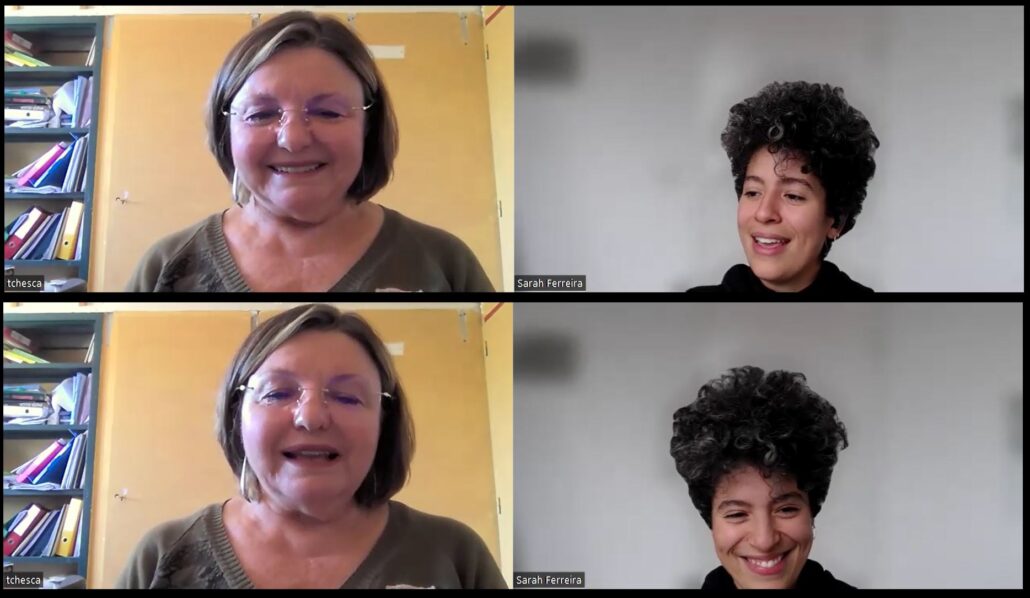
Fig. 1: Screenshot of the conversation between the Author and interviewed via Zoom. Reproduction authorized.

What impacts of climate change have you identified on the biodiversity and ecology of the Caatinga?

The increase in temperature and decrease in water mainly affect small animals and plants. Plants have roots, they are fixed, therefore […] they cannot migrate. However, our studies indicate that most of the plants inhabiting the Brazilian semiarid region today will expand their distribution area. This may seem good, but it is not.These plants are smaller, deciduous and [have] thinner leaves. Producing leaves is costly for plants that need water, nutrients, and light. Larger trees, with thicker leaves and greater carbon sequestration potential, will be restricted to mountainous regions, which are small areas in the Brazilian semiarid region. This means that the wetter areas we have in the Caatinga today will become drier. Overall, we will have a loss of biodiversity. At the feet of the mountains, which are the wettest regions, we have the sources of the hydrographic basins, so this will have a huge impact on water availability for humans.

What are the main challenges of the Caatinga in the face of global warming?

The main challenge is a change in land use culture.
Because most farmers and livestock farmers use the land as if we were in a climate without water restrictions – which will increase even more with global warming. It’s not [a climate] suitable for raising large animals. And there are livestock farmers who want to irrigate pastures. [We need] this change in land use culture and a planned action that integrates permanent preservation areas, currently only 20% like the Cerrado. We have to think about crops that are not irrigated and that can produce in a short period of rainfall, which will decrease even more, and in the raising of small animals. From a conservation standpoint, to minimize desertification, we need to restore the hydrographic basins and reforest them. Because historically [these areas] were the first to be deforested and degraded. [The ideal would be] to integrate: permanent preservation areas (APPs), legal reserve areas, areas to be restored, and public areas of environmental preservation to minimize desertification. The Caatinga is one of the least protected biomes. The government’s goal is to protect 30% of each biome by 2030, but the Caatinga doesn’t even have 10%. It’s possible to minimize the impacts, but not to reverse them. [Apart from all this] we should also make cities friendlier, with tree planting, alternative constructions, and better use of wind. This has to be a national initiative involving state and local governments.

Reading suggestions from the expert

Carvalho, C. E., Sfair, J. C., Eller, C. B., Menezes, B. S., Menezes, M. O. T., & Araújo, F. S. (2023). Tree height, leaf thickness and seed size drive Caatinga plants’ sensitivity to climate change. Journal of Biogeography, 50(12), 2057-2068. https://doi.org/10.1111/jbi.14717

Xavier, S. A. S., Araújo, F. S. de, & Ledru, M. P. (2022). Changes in fire activity and biodiversity in a Northeast Brazilian Cerrado over the last 800 years. Anthropocene, 40, 100356. https://doi.org/10.1016/j.ancene.2022.100356

Brazilian Biomes – Chapter 1: Caatinga

In my last article, I talked about the unprecedented heatwave and water scarcity Brazil has been facing since November last year.
I took advantage of that to introduce you to one of the most interesting and I dare to say neglected biomes of Brazil: the Caatinga. Which could be the first to completely disappear due to a process of desertification as a consequence of global warming. Considering data released by the Copernicus Satellites this Tuesday (09/01), which shows that we could have arrived at the point of irreversible damage to planetary systems, I thought this would be the time for a series of articles about the Brazilian Biomes. To preserve their memory and hopefully also their integrity.

“Os últimos serão os primeiros”

The Caatinga was by far the most misinterpreted biome of Brazil. Judged by its natural semi-arid characteristics, once it was thought to be a place of scarcity in all aspects, both in fauna and flora. Vidas Secas, one of the most famous national literary works, written by Graciliano Ramos in 1938 tells the miserable life story of a family located in part of the Caatinga known as sertão nordestino. In the book, the characters are depicted as living a harsh and impoverished existence in the arid sertão of northeastern Brazil. Their struggle for survival is marked by constant hunger, thirst, and the relentless heat. And their only way to survive is to move regularly to areas less affected by drought. For a long time, the reality of Vidas Secas was the image that Brazilians held of this natural environment.

Though it is hard to pinpoint exactly when our perspective about the Caatinga started to shift, a brief search on the Web of Science portal reveals how recent is the research interest in this biome. Using its advanced search tool, the query ALL= (caatinga) searches among all of the searchable fields in papers and results in a total of 5904 scientific articles, from 1960 to the present. However, it was only in 2009 that papers containing the subject grew above two digits with an impressive difference of 155 papers between 2008 and 2009. The same search applied to the Amazon ( query : (ALL= (amazon and brazil)) found 27346 articles starting in 1902, and with a significant increase starting in 1995.

Fig. 1:Screenshot of query search on the topic Caatinga at Web of Science’s Core Collection (Sarah Santos Ferreira. 11/01/2024).

Complexity unfolded

With time the Caatinga, the only biome exclusively found in Brazil, was found to be a complex and diverse environment. Contrary to the perception of it being a homogeneous landscape with little life and diversity, research revealed that the Caatinga holds unique characteristics, dynamics and species [1].

Fig. 2:Puma concolor at Johannesburg Zoo South Africa, Johannesburg, South Africa. Photo by Priscilla Du Preez on Unsplash

Environmental variations may occur over small geographical distances in the Caatinga. This phenomenon is responsible for the formation of micro-habitats with different floristic compositions. Topography is a physical variable that is extremely influential in such environmental heterogeneity, as it can alter the dynamics of rainfall distribution and intensity. As a consequence, precipitation levels also vary. However, whereas in Europe we observe a decrease of species with the increase of altitude levels, in this biome this variable plays the opposite effect. Studies say that at altitudes above 750 m, there is greater vegetation heterogeneity in Caatinga fragments with large plants [2].

On the other side, in the lowest dry landscapes, the thin and thick vegetation is highly adapted to its semi-arid climate. In periods of drought, many plants lose their foliage, giving the landscape a white appearance, which gave it its name from the Tupi-Guarani language which means “white forest”. However, with a little rain, the landscape quickly turns green all over as plants germinate and flower.

Preservation at stake

When it comes to fauna, the Caatinga is all the same diverse and unique, composed of approximately 1,307 animal species, of which 327 are exclusive to the biome – as of 2020. Many of these animals have adapted to the harsh climatic conditions of the Caatinga in various ways, such as hiding from the sun during the day, migrating during periods of intense drought, or developing more resistant armor to prevent water loss. However, those who rely on migration to ensure their survival face additional challenges: wind farms, roads and other anthropogenic disturbances to the landscape [3].

The northeast of the country is an ideal place for wind towers. However, as shown by the journalist Suzana Camargo [3] in an interview with researchers from the Environmental Protected Areas Boqueirão da Onça in Bahia the big cats – already on the verge of extinction- need to expend a much bigger amount of energy to reach water points to take alternative routes. Although Science has demonstrated the incredible amount of life and diversity of this biome, the Caatinga still carries a bad reputation and it is not in the media as the other biomes, which does not help in the improvement it most needs: public policies of protection.

References

Click here to expand the references
[1] Instituto Sociedade, População e Natureza. Fauna and Flora of Caatinga. 2020. Retrieved on 11 January 2024, from https://ispn.org.br/biomas/caatinga/fauna-and-flora-of-caatinga/

[2] Santos, W. B. dos, Marangon, L. C., Freire, F. J., Braz, R. L., Torres, J. E. de L., & Santos, J. N. B. (2020). Vegetação lenhosa de regiões semiáridas em diferentes altitudes. Ciência Florestal, 30(1), 161–175. Retrieved on 11 January 2024, from https://doi.org/10.5902/1980509836803 

[3] Camargo, Suzana.For Caatinga’s last jaguars and pumas, wind farms are the newest threat (2023). Mongabay. Retrieved on 11 January 2024, from https://news.mongabay.com/2023/08/for-caatingas-last-jaguars-and-pumas-wind-farms-are-the-newest-threat/

References

Click here to expand the references
  1. Instituto Sociedade, População e Natureza. Fauna and Flora of Caatinga. 2020. Retrieved on 11 January 2024, from https://ispn.org.br/biomas/caatinga/fauna-and-flora-of-caatinga/
  2. Santos, W. B. dos, Marangon, L. C., Freire, F. J., Braz, R. L., Torres, J. E. de L., & Santos, J. N. B. (2020). Vegetação lenhosa de regiões semiáridas em diferentes altitudes. Ciência Florestal, 30(1), 161–175. Retrieved on 11 January 2024, from https://doi.org/10.5902/1980509836803
  3. Camargo, Suzana.For Caatinga’s last jaguars and pumas, wind farms are the newest threat (2023). Mongabay. Retrieved on 11 January 2024, from https://news.mongabay.com/2023/08/for-caatingas-last-jaguars-and-pumas-wind-farms-are-the-newest-threat/

Brazil’s Burning Beats

Brazil is grappling with an unprecedented heatwave and water scarcity, particularly in the Northern region, where the Caatinga biome, a unique ecosystem, is undergoing desertification for the first time. Here, local communities are strongly affected by these events. How is the climate crisis reshaping Brazilian lands and communities?

Brazilian Heat

Brazil has been experiencing unprecedented heatwaves, with the thermal sensation reaching a staggering 52 degrees Celsius at Rio de Janeiro this week [1]. This extreme temperature, unheard of in the country’s history, has posed significant challenges to the population and the environment.

In response to the soaring temperatures, Brazilians have been advised to take several safety measures, with hydration being paramount. Drinking plenty of water helps regulate body temperature and prevent heat-related illnesses. However, access to clean drinking water is not universal across the country.

Water Access: A historical challenge in the Northern region

While hydration is a crucial safety measure, not all Brazilians have equal access to water. This is especially true for the Northern region of the country, where water scarcity is a significant issue. Many communities in this region struggle with inadequate water supply, affecting their ability to cope with the heatwave.

To address this issue, several programs have been initiated to guarantee water to the population [2]. These programs aim to improve water infrastructure, increase the availability of clean drinking water, and promote sustainable water management practices. Despite the challenges, these initiatives represent a beacon of hope for many communities.

Fig.1:Caatinga in Paraíba (Jaime Dantas. Paraíba, November 10 2020). Source: Unsplash.com

Caatinga: A unique ecosystem under threat

Located in the interior northeastern part of Brazil, Caatinga is a unique ecosystem characterized by semi-arid tropical vegetation. It covers 850,000 km², nearly 10% of Brazil’s territory. The name “Caatinga” is a Tupi word meaning “white forest” or “white vegetation”. The Caatinga is a xeric shrubland and thorn forest, which consists primarily of small, thorny trees that shed their leaves seasonally. Cacti, thick-stemmed plants, thorny brush, and arid-adapted grasses make up the ground layer. Most vegetation experiences a brief burst of activity during the three-month-long rainy season [3].

Despite its resilience, the Caatinga biome is now facing a significant threat – desertification. This process of environmental degradation is common in arid, semi-arid, and dry sub-humid areas under climate change. In Brazil, 62% of the areas susceptible to desertification were originally occupied by this biome many of which have already been significantly altered [4].

Impact on Local Communities

The desertification of the Caatinga biome has a profound impact on the local communities that inhabit this region. These communities, primarily composed of smallholder farmers, rely heavily on the land for their livelihoods. They practice dry farming and cattle raising, and there is also a great dependency on forestry products.

The desertification process directly affects these communities, particularly those that depend on agriculture and livestock for their survival. The transformation of the biome into a desert environment results in a decline in vegetation productivity, which in turn impacts agricultural output. This environmental change also increases the climatic vulnerability of the affected regions, making them more prone to climatic changes that affect all segments of society: from the agricultural industry to the trade, service, and industrial sectors.

The ongoing environmental changes in Brazil, particularly the desertification of the Caatinga biome, pose significant challenges for the local communities. These changes not only threaten the unique biodiversity of the region but also jeopardize the livelihoods of millions of people who depend on this land. It underscores the urgent need for comprehensive climate action and sustainable water management strategies in Brazil. The resilience of these communities and the future of this unique biome depend on our collective ability to mitigate these environmental changes and adapt to a new climate reality.

This article is part of the project “PILLOLE D’ACQUA PIANA: seminari itineranti, blog e podcast per una gestione sostenibile delle risorse idriche in Piana Rotaliana” carried out by ECONTROVERTIA APS and supported by Fondazione Caritro (Prot. no. U445.2023/SG.386 of April 23, 2023).
Eyes on Fire

Economic Disparities and Media Silence

On September 21, a video of the smog-covered skies in Manaus went viral, drawing attention to the poor air quality caused by forest fires. The manauara influencer Bea Araújo’s impassioned denouncement of the city’s dire conditions also highlighted the silence of national media on the issue. A week before that, the State had declared an emergency situation [1]. One month later, things still look the same.

Economic disparities across Brazilian states are a key factor in media silence. States with greater economic power and influence, like São Paulo and Rio de Janeiro, often receive more media coverage and attention due to their profitable significance. In contrast, states facing greater economic challenges,like those in the north and northeast, often do not receive the same level of attention.

Furthermore, historical and political factors play a crucial role in shaping media coverage. States with a historical legacy of political power, such as those in the South and Southeast, may have more influence in national politics and media circles. As a result, events in these states tend to receive more attention. In contrast, regions that have historically been marginalized or underrepresented may struggle to get their issues noticed by the national media. Such disparities across states further exacerbate the unequal distribution of media attention and resources, creating a situation where crises like the one in Manaus may go unnoticed by the broader public for extended periods.

Fire in the Amazon

These disparities in media coverage can hinder efforts to address the root causes of environmental crises, such as the current forest fires. Every year, from July to November, the Amazon region experiences what is referred to as the“fire season”. This period marks the biome’s dry season and is associated with the highest occurrence of forest fires. However, this issue only persists due to the use of fire in agricultural practices and deforestation processes [2].

Adding to the complexity of the situation, the dynamics of forest fires in the region is exacerbated by climate change and El Niño. Climate change has significantly altered the rainfall pattern in the Amazon, with a trend towards a reduced duration of the rainy season and an increase in the duration of the dry season, particularly in the south of the biome. Moreover, the periodic warming of sea surface temperatures in the central and eastern tropical Pacific Ocean, known as El Niño, also has a pronounced effect on weather patterns in the Amazon. This phenomenon can lead to prolonged and severe droughts, resulting in reduced rainfall and decreased water levels in rivers and streams. This affects aquatic ecosystems and leads to water scarcity for local and traditional communities, not to mention the life risk the fires impose on them. Furthermore, the drier conditions increase the vulnerability of the Amazon forest to fires, creating a vicious cycle of environmental degradation and economic disparities that often remains underreported in the national media.

Despite the social and environmental repercussions of the on-going forest fires, numbers released back in August showed that deforestation in the Amazon fell by 66% in July. It was a historic record that marked 500 km² of degraded area compared to 1,487 km² in July 2022 [3]. These number seem to confirm the importance of the PPCDAm (Action Plan for the Prevention and Control of Deforestation in the Legal Amazon) reinstalled in the country as of June this year. However, the current situation might hurt this initiative in the long run.

From Crisis to Culture: The Birth of Ribeirinho Communities

Ribeirinhos are a traditional population that lives near the rivers and survives from artisanal fishing, hunting, clearing and extractivism. Due to the geographic aspects of Brazil, it is in the Amazon that most of this population lives. In addition to natives, these populations also include descendants of migrants from the Northeast of the country [1].

These populations were born during the late 50s when Brazil went through the rubber crisis. Brazil was a significant player in the rubber industry during the late 19th and early 20th centuries. At that time, the demand for natural rubber, mainly used in tire manufacturing, had driven economic growth in the Amazon region. Then, the development and widespread adoption of synthetic rubber triggered the crisis. During World War II, advances in chemistry led to the creation of synthetic alternatives to natural rubber and after the war, the dependency on natural rubber was indeed significantly reduced. Consequently, this led to a sharp decline in the price of natural rubber in the global market, severely affecting Brazil’s rubber-based economy.

As the rubber economy collapsed, many individuals and families from rubber-producing areas were forced to migrate to urban centers in search of alternative sources of income. However, a significant portion of these individuals chose to remain close to their ancestral lands along the riverbanks. This decision led to the formation of the Ribeirinho communities.

New home, old habits

The establishment of Ribeirinho communities was not only a response to economic hardship but also a reflection of their deep cultural ties to the Amazon environment. These communities maintained traditional practices, knowledge, and customs, while also integrating new elements influenced by the changing economic landscape.

Ribeirinhos adapted to their changing circumstances by adopting a lifestyle that combined elements of traditional subsistence activities with new economic endeavors. They engaged in fishing, small-scale agriculture, gathering of forest resources, and other activities that allowed them to make use of the rich natural resources provided by the Amazon ecosystem. Over time, these communities developed a unique way of life that revolved around their close connection to the rivers and forests.

Fig. 1: Household by the Amazon river. (Nareeta Martin, May, 2, 2019. Amazon, Brazil). Source: unsplash.com

Lifestyle and challenges

The inhabitants of the Amazon region have developed a way of life that revolves around the cyclical patterns of river floods and droughts, which occur annually. The majority of ribeirinhos’ households are situated in remote rural zones, often widely dispersed from one another. Notably, certain houses might shift locations periodically, owing to the unique characteristics of the area: floating houses and houseboats. These innovative structures, constructed from wooden planks and supported by logs, rest upon the rivers and adapt to the changing water levels.

For the Brazilian Institute of Geography and Statistics (IBGE) this isolation represents a big challenge for the annual data survey that composes the Demographic Census. However, the same challenge faced by their agents is also the challenge these communities face when trying to have access to health, potable water and education: travelling many kilometers into the river, and also on foot and dealing with drought and heat [2].

Beyond the difficulties in accessing basic needs, Ribeirinhos are directly affected by the increasing environmental disasters in the Amazon basin and its surroundings. In late June this year, a shocking complaint revealed the devastating consequences of pollution and irresponsible activity of the EDP Energias do Brasil in northern Brazil [3]. In that episode, more than 45 traditional quilombolaand riverside communities in the Floodable Natural Fields of Maranhão were affected. But the consequences are way larger for the country. These wetlands are protected by the Ramsar Convention, an international treaty aimed at the conservation and sustainable use of these vital ecosystems. They play a key role in preserving biodiversity, regulating the climate, storing water and providing essential environmental services to society.

This article is part of the project “PILLOLE D’ACQUA PIANA: seminari itineranti, blog e podcast per una gestione sostenibile delle risorse idriche in Piana Rotaliana” carried out by ECONTROVERTIA APS and supported by Fondazione Caritro (Prot. no. U445.2023/SG.386 of April 23, 2023).

Quilombola Communities: the resilience of a contemporary past

The Origin of Quilombola communities

The story of Quilombola communities dates back to the period of colonial slavery in Brazil. Many enslaved individuals escaped captivity and sought refuge in remote and inaccessible regions. Their settlements in these areas came to be known as Quilombo (place of rest in quimbundo language). These communities, known as Quilombolas, were safe havens where freedom fighters resisted oppression by colonizers and created a unique blend of African, Indigenous, and Portuguese cultures. However, despite their efforts to protect and hide their communities, quilombolas were constantly hunted and attacked by colonizers which compelled them to fight and escape to find new settlement locations.

Cultural Heritage and Traditions

The heart and soul of Quilombolas lie in their cultural heritage, which has been passed down through generations. Music, dance, storytelling, and oral traditions play a vital role in preserving their identity.

Quilombolas’ cultural expressions are characterized by a fusion of African rituals, indigenous knowledge, and Brazilian folk traditions, creating a distinctive tapestry of customs and practices. Some quilombola communities are also a space of religious reference, acting as terreiros.

The Quilombola way of living

The Quilombola communities are made up mostly of a rural black population. The Quilombos primarily rely on family farming as their main source of livelihood, while also diversifying their income through various other activities.

The most common quilombola rural practices are agriculture, extractivism, livestock and fishing. Many communities preserve sustainable cultivation practices such as the “coivara” system [1]. This comprises the rotation of areas for planting, allowing the recovery of the “capoeiras” (tall types of grasslands) which soon become secondary forests.

Artisanal crafts are also another vital aspect of their heritage and a secondary source of income for quilombolas. Skilled artisans create beautiful handcrafted products, that vary from sewn textiles, quilts, baskets, and pottery, using traditional techniques that have been safeguarded for centuries [2].

Challenges and Struggles

Despite their rich heritage, Quilombola communities face numerous challenges in the modern era. Land rights remain a pressing issue, as many of these communities still do not possess legal ownership of the land they have inhabited for generations. Encroachments by agricultural interests, infrastructure projects, and mining activities threaten their ancestral territories, leading to displacement and loss of cultural identity.

Additionally, socioeconomic disparities and limited access to education and healthcare often leave Quilombola communities marginalized and vulnerable. Language barriers, discrimination, and lack of representation exacerbate their struggles, making it difficult to overcome systemic challenges.

Fig. 1: Children playing around the atabaques at the Quilombo Cafundó (Author. Salto de Pirapora, 2016).

Preserving Cultural Identity

In the face of these challenges, Quilombola communities have shown remarkable resilience in preserving their cultural identity. Grassroots movements, supported by national and international organizations, have been instrumental in advocating for land rights, promoting cultural heritage, and empowering community members.

Education and awareness programs have been launched to foster pride in their cultural heritage and ensure the passing down of traditions to younger generations. One example of this is the connection between the University of São Carlos campus Sorocaba and the Quilombo Cafundó. Together, the academic and quilombola communities have been organizing events to promote the cultural activities developed in the Quilombo with the goal to increase visibility and inspire their youngsters to preserve their ancestral culture.

Caiçara People: Guardians of Brazil’s Coastal Heritage

The Caiçara People: Origins and Heritage

Nestled along the breathtaking Brazilian coastline, a vibrant and resilient community known as the Caiçara people has thrived for centuries. With deep roots in the land and a profound connection to water, the Caiçara people embody a unique cultural heritage that intertwines traditional practices with modern influences.

The Caiçara people trace their ancestry back to a diverse mix of indigenous tribes, European settlers, and African slaves who settled along Brazil’s coastal regions [1]. This blend of cultures and influences has given rise to a distinct identity that distinguishes the Caiçara from other communities in the country. Water has been a central element in their lives, shaping their traditions, livelihoods, and cultural practices.

Caiçaras have developed a lifestyle that revolves around sustainable fishing, agriculture, and small-scale craftsmanship. Their deep connection to the sea has enabled them to adopt practices that ensure the preservation of marine ecosystems for future generations. From handcrafted wooden canoes to intricate fishing techniques passed down through generations, the Caiçara people’s traditional knowledge serves as a testament to their deep understanding of the ocean and its resources [2].

Fig. 1: Fishermen selling the catch of the day. Free-source photo by Tadeu Jr from  Unsplash (Manaus, Brazil. April 12, 2018).

Water is the source of Caiçaras’ sustenance, livelihood, and spiritual connection. Passed down through generations, their traditional fishing practices rely on the abundance of marine resources. The rhythms of the tides and seasons guide their daily lives, influencing fishing patterns, agriculture, and community celebrations. Water serves as a symbol of unity, linking the Caiçara people to their ancestral heritage and the natural world.

Environmental Challenges: Threats to Livelihood and Culture

Today, the Caiçara people face numerous environmental challenges, mainly water-linked, that directly affect their livelihoods and cultural preservation efforts [3]. Uncontrolled urbanization, inadequate waste management, and industrial activities contribute to water pollution along Brazil’s coastlines. Pollutants and waste find their way into rivers, estuaries, and the ocean, endangering the delicate ecosystems that support marine life. As water quality deteriorates, the Caiçara people’s ability to sustain their traditional fishing practices is compromised. Their health, economic stability, and cultural practices suffer as they are forced to navigate polluted waters.

In addition to water pollution, overfishing and habitat destruction present significant challenges for the Caiçara people. Large-scale commercial fishing operations employ unsustainable practices, depleting fish stocks and damaging vital habitats such as coral reefs and mangroves. The Caiçara people, who have long understood the importance of ecological balance, find themselves in conflict with these destructive practices. The diminishing fish populations not only threaten their way of life but also undermine the delicate harmony they have maintained with the marine environment for generations.

By acknowledging these challenges and supporting sustainable initiatives, we can help ensure the resilience and preservation of the Caiçara people’s rich coastal heritage for generations to come. Let us stand as allies to the guardians of Brazil’s coastal heritage, the Caiçara people, in their quest to protect the waters that define their identity and sustain their communities.

This article is part of the project “PILLOLE D’ACQUA PIANA: seminari itineranti, blog e podcast per una gestione sostenibile delle risorse idriche in Piana Rotaliana” carried out by ECONTROVERTIA APS and supported by Fondazione Caritro (Prot. no. U445.2023/SG.386 of April 23, 2023).

Social-Ecological Legacies of African-Brazilian Religions

Brazil is a country famous worldwide for its environmental and cultural diversity. Historically, it was the stage of invasions and exploitation by several European countries. Each one left its mark on the Brazilian territory and population: linguistic nuances, festivities, and religious beliefs that distinguish and characterize the Brazilian people in their uniqueness.

One of the most significant cultural impacts of the colonial period was the migration of enslaved African people to Brazil. Coming from different African regions and being sent to several Brazilian states, they sought ways to preserve their identity and culture, and resist the spiritual hegemony imposed by the Catholic Church. They resorted to Brazilian natural resources, and the result of their interaction with Brazilian ethnicities culminated in the formation of today’s traditional terreiro communities.

Terreiros are religious temples of African origin that have specific ethnicity and culture. In Brazil, two religious groups predominate: Candomblé and Umbanda. They have a monotheistic liturgical structure, so they believe in one supreme and unique God, Olórun. But they are also polytheistic, for they believe that beneath God there are other divinities called orixás or orisà. While Olórun is a figure distant from humans, the orixás are directly linked to the mortal world. Each orixá is associated with an element of the natural order: aeolian, aquatic, telluric, igneous, animal, mineral, and vegetal. For example, the forests belong to Oxóssi, the mountains to Xangô, the sea to Yemanjá, and the winds to Iansã. Each element – or deity – has a symbolic meaning of a positive or negative quality of being [1].

Traditional terreiro communities are recognized by National Decree No. 6040 of 2007 for being “communities that have common characteristics, such as the maintenance of traditions of African origin, respect for ancestors, the values of generosity and solidarity, the broad concept of family and a close relationship with the environment” [2].

The sacred value of Nature

Nature is an inexorable foundation of the terreiros culture because the orixás represent the vital energy of the different natural elements and vice versa. The filhos-do-santo (i.e., the disciples of the African-brazilian religions) are taught to revere and respect natural spaces for their intrinsic and sacred value. Furthermore, terreiro communities believe that the flora has deep meaning and value. It is used as fodder in rituals, offerings, and also as resources for healing and purification.
The African ancestors of the terreiro communities were able to adapt their original rituals and customs thanks to their ethnobotanical knowledge. In their new environment, African immigrants identified botanical families that they could use for religious purposes as in their homeland. Until today, this knowledge represent the foundation of the communities. As examples, we can mention akoko (Newbouldia laevis), sword of Ogum/Saint George (Sansevieria trifasciata) and peregum (Dracaena fragrans) [3].
The immigrants’ religious adaptation was facilitated by the flora homogeneity of Brazil and West Africa. At the beginning of the 18th century, many Brazilian species such as maize (Zea mays L.) had already been introduced to African lands. Similarly, African species, such as the Dendê palm (Elaies guineenses Jacq.) had already been successfully brought to Brazil.

Fig. 1: Garments of orixás in the Umbanda terreiro (Rio de Janeiro, Brazil). Photo by Giulio Genova (April 2019).

Ancestral knowledge

Due to their deep relationship with nature, terreiros were established near forests and natural areas. House leaders and their adepts were responsible for preserving the health and conserving the natural resources of the terreiro.
At the same time,
terreiros are essential for food security.
In these areas marked by social solidarity, it is common practice to distribute food to the community and visit the community areas during rituals (i.e., giras). Thanks to their close relationship with natural resources, terreiro communities highly value human health and diversified and culturally appropriate food.

Due to the urbanization of the Brazilian territory, however, many terreiros were incorporated into urban centers that developed in their surroundings and lost their subsistence capacity. Luckily, in 2013 the Brazilian federal government recognized the cultural importance of terreiros and throughout Brazil began removing several buildings and infrastructures adjoining the communities.
As dictated by African traditions, the terreiro’s traditional ecological knowledge has been passed on orally through generations. But, unfortunately, much of it has been lost as urban spaces and the Brazilian culture have changed over the years. Legally protecting these the terreiros areas and communities will contribute to guaranteeing the continuity and survival of such ancestral knowledge.

Brazil’s Transversal Approach for the Environment

The Three Pillars of Sustainability

After the anti-democracy riots in Brasília last month, the new Brazilian Ministers of the Environment and Finances, Marina Silva and Fernando Haddad commented on the country’s environmental agenda in Davos during the World Economic Forum [1].

Silva highlighted the plans of the installed government to address national environmental issues in a transversal way, which was expected from Lula’s 2022 campaign. Looking back at his proposals, the environment was placed under an interdisciplinary axis called “Economic Development and Socio-Environmental and Climate Sustainability” [2]. According to Silva, Brazil aims to tackle social inequality and environmental protection simultaneously.She emphasized, “Sustainability is not only economical or environmental, but also social”.

Lula’s victory brought up the international support that will be indispensable for the recovery of the country’s social and environmental agenda. A crucial initiative back on the radar is the Amazon Fund. The Fund was once considered the primary national strategy for the Reduction of Greenhouse Gas Emissions arising from Deforestation and Forest Degradation (REDD+) [3]. However, since June 2019, the two committees that comprised the Amazon Fund governance – the Amazon Fund Steering Committee (COFA) and the Amazon Fund Technical Committee (CTFA) – were terminated. Therefore, the supporting countries no longer issued grants for investments, and there was no resumption of approval for new projects. Nonetheless, the ongoing projects at the time proceeded with their activities.

The Fund aims to implement actions to voluntarily reduce deforestation in the Amazon forest and other biomes. To do so, it supports projects in actions to prevent, monitor and promote the conservation and sustainable use of the Brazilian Amazon in different fields, such as:

  • Management of public forests and protected areas
  • Environmental control, monitoring, and inspection, sustainable forest management
  • Economic activities developed from the sustainable use of vegetation
  • Ecological-economic zoning (ZEE), territorial planning, and land tenure regularization
  • Conservation and sustainable use of biodiversity, and recovery of deforested areas [4].

Social Development

An important social aspect of the Amazon Fund is its support of traditional communities in the Amazon region, including indigenous people, extractivists and riparian communities. For instance, 28 out of 102 projects that benefit from the Fund are directly related to indigenous people. Many of these projects aim to promote food security (food production for own consumption) of traditional peoples. To do so, they “support the implementation of agroforestry systems, the signing of fishing agreements, the installation of processing units for socio biodiversity products, certification of origin, training, and the development of business plans, as well as research to develop new products derived from the fruits, seeds, and bioactive compounds of the Amazon flora” [4].

One of the projects supported by the Amazon Fund is the Kayapó Fund. The Kayapó territories comprise about 11 million hectares and are located south of Pará and north of Mato Grosso. The territories are centred in the region known as the Arch of Deforestation, famous for the highest deforestation rates due to advances of the agricultural frontier towards the forest. The Kayapó Fund aims to support projects of indigenous organizations that operate in this region with a focus on biodiversity conservation, territorial protection, development of sustainable, productive activities and strengthening of political representation of leaders.

Fig. 1: Dried Cumaru seeds (Fred Benenson. February 1, 2007). [Source: Wikipedia]

The Kayapó people have traditionally used and marketed Cumaru seeds. The indigenous people have used the seeds of Dipteryx odorata as a pain killer. A short documentary funded by the Kayapó Fund shows how the Kayapó collect, select and prepare the seeds before selling them. Due to its unique fragrance, the seed is used in cosmetics, soaps, and as medicine for different purposes.

Amazon Fund-supported projects aim to help traditional Brazilian peoples emerge from the food and health crisis as we resume biodiversity conservation.

References

Click here to expand the references
  1. Uchoa, P. and Beltran, L. World Economic Forum. Davos 2023: Brazil on a new economic and environmental roadmap. Retrieved on 28 January 2023 from https://www.weforum.org/agenda/2023/01/key-takeaways-on-brazils-new-roadmap-davos2023/
  2. Tribunal Superior Eleitoral – TSE. Luís Inácio Lula da Silva government proposal in 2022. Retrieved on 23 October 2022 from: https://divulgacandcontas.tse.jus.br/candidaturas/oficial/2022/BR/BR/544/candidatos/893498/5_1659820284477.pdf
  3. May, H.P. et al (2016). The context of REDD+ in Brazil, Drivers, actors and institutions – 3rd Edition, pp 57 – 76. Retrieved on 28 January 2023 from https://www.cifor.org/publications/pdf_files/OccPapers/OP-160.pdf
  4. Amazon Fund. Activity Report 2021. Retrieved on 29 January 2023 from https://www.fundoamazonia.gov.br/export/sites/default/en/.galleries/documentos/rafa/RAFA_2021_en.pdf

Brazil’s 2023 Environmental Agenda: First Steps towards Reintegration

It is now official: Lula is the new president of Brazil as of first January 2023. After a very tight election, Brazil encountered resistance from pro- Bolsonaro electors that protested the results blocking federal roads. The protests lasted approximately a month [1]. However, other electors decided to take a different path to contest the election results and ask for military intervention. Camped outside military facilities all over the country they ask the Forces to take the Estate [1]. However, since last Sunday (11) the country has made the election results official, and Lula had his third diplomation ceremony in the country. A heart touching moment for democracy.

What about the Environment?

The mandate of Brazil’s new president, Lula, has not even begun and the international reaction was unanimously cheerful. Actively present on social media, right after the elections, Lula shared with his voters on Instagram the various messages that arrived from governments all around the world, such as Alberto Fernández, Emmanuel Macron and Joe Biden [2].  And the international support for the new president will be a key in the country’s new environmental agenda.

Fig 1: Lula’s caricature from @sharpon_eco

By attending the COP27, Lula legitimized his interest in the preservation of the Amazon as well as in the protection of indigenous peoples. Moreover, he stressed that with his victory also “the commitment to confront climate change with determination” [3]. In his speech, the president highlighted the world’s hurry to find solutions for our planet that is being exhausted every day, and the importance of the countries to unite among themselves otherwise we are doomed to fail.
While Lula awaits his inauguration, his transition team worked to ensure that he takes office knowing all the information about the Federal Government, the Public Administration, ongoing projects and programs, and other issues. The members of the team were selected by the elected president and were responsible for working on specific themes of the government. A notable difference between the transition team of the current government and the future one was precisely the presence of the Technical Group for the Environment [4]. The composition of the team also brightened the mood. With several academic and environmentalist members, hope has also returned to those who are seriously dedicated to environmental causes in Brazil.

Brazilian Elections: What did Bolsonaro do for the Environment in the Last Four Years?

As the second round of the Brazilian presidential electionapproaches, the fight against fake news and the publication of public data on social media is growing exponentially. In this article, we review some environmental key facts that took place during Jair Bolsonaro’s four year mandate.

Attempt to Remove the Ministry of the Environment

In 2018, Bolsonaro’s government did not present any specific environmental management plan, much less a strategy to tackle the Amazon deforestation or implement the Action Plan for the Prevention and Control of Deforestation in the Legal Amazon (“PPCDam”). Instead, it tried to remove the Ministry of the Environment (“MMA”: is one of the public agencies in charge of the PPCDam and the protection of the Amazon), and merge it into the Ministry of Agriculture, claiming that they were “inefficient and did not serve the legitimate interests of the Nation” [1]. The proposal was never really implemented, but since then the MMA had to face tough operational challenges. Its Conservation and Sustainable Use of Biodiversity and Natural Resources program was cut by 139 million reais and its servers operating hours were constrained through an amendment of the Portaria no. 491 environmental law [2].

As reported by the Amazônia Real portal, this and other political maneuvers facilitated criminal activities in the jungle because environmental inspections and law enforcement was restricted to office hours. Environmental protection officers operating outside legitimate hours risked administrative proceedings, punishments and warnings, and their own life.

Deforestation Increase in the Amazon

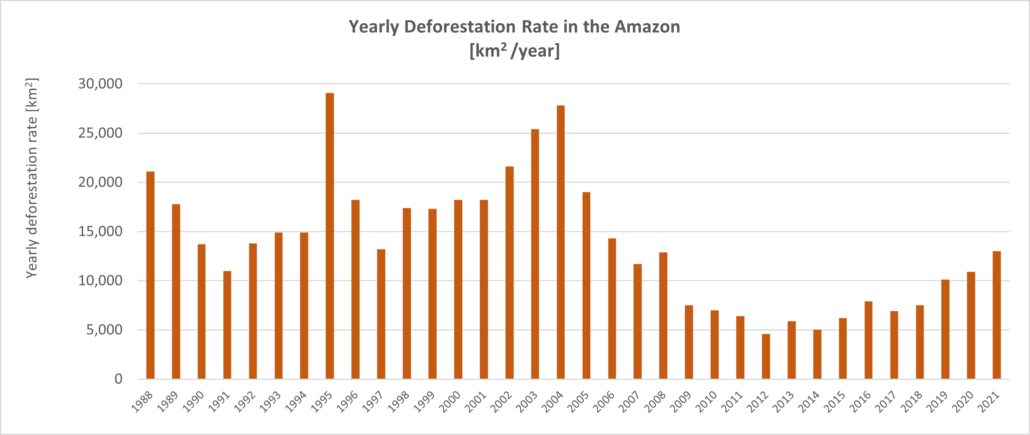
Despite Bolsonaro’s allegations that deforestation decreased during his government, current data from the National Institute of Spatial Research proved the opposite (Figure 1). Since 2018, the deforestation rate has grown by 73 %, passing from 7,500 km² in 2018 to 13,000 km² in 2021. Conversely, during Lula’s (Luís Inácio Lula da Silva) mandate, the deforestation rate had decreased by 67 %, going from 25,400 km² in 2003 to 4600 km² in 2011 [3].

Fig. 1: Deforestation rates in the Amazon (“Amazonia legal”) from 1988 to 2021 [3].

More Freedom to Land Owners

The current government increased the freedom of land ownersand reduced the degree of State interference on farms:

“The State must make it easier for the farmer and their families to be the managers of the rural; identify which are the areas where it really needs to be present, and at what level.”

A Growing Threat to Indigenous Areas

Two delegates of Bolsonaro were put at the head of the National Indigenous Foundation and the Ministry of Agriculture: Marcelo Xavier and Nabhan Garcia, two ruralists that strongly support agribusiness.

In April 2020, the newly approved Normative Instruction no. 9 left non-homologated indigenous areas(i.e., lands with a marked physical border not yet validated by a Federal Decree) unprotected [4]. Two years later, 415 farms, equivalent to 239,000 hectares, had been registered within non-homologated indigenous land [5].

Fortunately, in 2021 the Federal Public Ministry suspended the Normative in several Brazilian states because it violated the constitutional rights of indigenous peoples, favored the illegal occupation of public land and caused agrarian conflicts [6]. Since then, several reports and demonstrations denounced how the government was threatening the lives of indigenous people, and, consequently, threatening several areas of environmental protection  within indigenous land or land inhabited by indigenous people [7].

Hampering Family Farming

While agribusiness and illegal mining activities expanded at the expenses of deforestation and indigenous lives, family farming was severely hampered under Bolsonaro [8]. Public policies that ensured the sales and distribution of family farming products all over Brazil were modified and funding was drastically reduced. While agribusiness products are intended for export, family farming feeds a large part of the Brazilian population. Since family products are supplied in a multitude of public institutions, educational and health care centers, damaging family farming generated hunger in the country.

Violence Increase in the Amazon

In the last four years, the Amazon has seen an intensification of violence; especially murders in the states of Amazonas, Pará, Roraima, Amapá, Espírito Santo, Rio de Janeiro and Pernambuco [9]. Amazonas, in particular, has been stage of tragic stories, such as the murder of two important environmentalists on the fight for indigenous people rights: Dom Phillips and Bruno Pereira [10].

Telegram: @greenmarked
LinkedIn: @greenmarked
Instagram: @greenmarked.it

Facebook:  @greenmarked.it


© GreenMarked.it is managed by ECONTROVERTIA APS — Via Alcide De Gasperi 1, 38015 Lavis (TN), Italy — VAT IT02667560227