Author: Mark L. Miller

My name is Mark L. Miller and I am the founder of GreenMarked. As an MSc graduate in Environmental Sciences and Management, I am happy to spend time and energy on this environmental platform to coordinate our ongoing activities, design new green initiatives and turn successful projects into real jobs.

A Summary of our Agrecol Trees Project Planting Activities in 2024

It is relatively easy to plant trees: find a place, dig a hole, put the tree in without cutting the roots, cover the hole, pour some water on it, let the tree grow. Yet, it is not easy at all to keep a tree planting or reforestation project alive over the years. Not only does the farming or forestry design be well planned but also, and much more, the project monitoring and the social designbehind it. That is key to guarantee the project medium-term duration and resilience.

Especially when your project links two continents, a lot of time and effort must be put into communication and coordination. For instance, planning the tree inspections and deliveries to the planting sites, organizing the training courses, making sure all the trees are correctly labelled, the tree guardians are photographed and the database is thoroughly updated, maintaining a regular communication with the community representatives. All this requires time and work diligence.

“Work” is per se an extremely powerful term and it can be seen in very different and respectful ways. For us, the Agrecol Tree Project is non-profitable work mainly based on volunteering and donors. Our sales’ income is used to buy new trees and cover some travel expenses, but all of the desktop and on-site activities are based on the love for agroecology of Econtrovertia APS volunteers. And yet, we cannot let the project run only through spontaneous volunteering work. Without thoroughly planned and implemented volunteering work the project would have been doomed long ago. Looking back at our 2024 delivery activities and new collaborations, we look forward to the new challenges and achievements awaiting us.

Except for the farming community of Sacaba-Corralones, where we donated 31 fruit seedlings directly to the community members, this year we focused on the social and educational communitiesinvolved in the project. Nine saplings found a home in the schoolyard of Taquiña A, twenty in the Caramarca retirement home, fifteen in the “Maria Cristina” center for young people with disabilities, and fifteen in the women support center “Centro Esperanza”, in Quillacollo. By adding these 90 new saplings to those planted in past years, we have now reached 330
overall planted trees.

By organizing group activities for planting and labeling the saplings, and training courses to ecologically manage the orchard, the Agrecol Trees Project draws strength from its social capital to help local communities and encourage local authorities to promote agroforestry initiatives.

Taquiña A secondary school

Fig. 1: The tree planting group activity at the “Taquiña A” secondary school (Cochabamba – Taquiña district). Photo taken by author.

After a renewed agreement with the school principal, in mid-April we organized a day of group tree planting and farming at the Taquiña A secondary school. Around 35 students learnt how to prune and treat ecologically the 26 existing fruit trees and planted  9 new seedlings. New apples, lemons and peaches, as well as pacay and quince trees, will form a wonderful and diverse fruit orchard within the schoolyard.

Maria Cristina educational center

Fig. 2: The tree planting group activity at the “Maria Cristina” educational  center (Cochabamba – Villa Bush). Photo taken by author.

Some of them planted them for themselves, others for their secret crushes. Some jealously tagged their fruit tree to secure their future harvests and sales within the center. Thanks to the hard work of manually mowing the grass, preparing the holes, planting the seedlings, watering them, adding organic fertilizer, covering the holes, pruning and labeling them, 15 new lemons, apples, pomegranates, peaches, and quince and pacay trees were added to the 17 of last year. That is a beautiful, diverse and growing fruit orchard of 32 trees within the perimeter of the center

Caramarca retirement home

Fig. 3: The invaluable help from gate keeper Don Carlos and  home guest Don Elmo (Cochabamba – Caramarca) during the tree planting day. Photo taken by author.

Having lost all of their close relatives, the Caramarca retirement home staff virtually becomes the new family of the elderly guests. Psychotherapists, cleaning ladies, nurses, gate keepers, administrators and guests form together a beautiful and caring community.

The frosts of last year’s (Bolivian) winter halted the growth of the cherimoyas and lemon trees, so we decided to plant
more cold-resistant fruit treesthis year. After a long pruning and green maintenance session, last April we therefore added 20 new apples, peaches, pomegranates, and quince and pacay trees all along the home’s perimeter wall

Thanks to a successful collaboration with Cochabamba’s Department of Social Affairs, a stronger communication with our point of contact and excellent teamwork with the home’s staff, a total of 47 lovely fruit trees are now growing healthy in the home’s garden. We can’t wait to try the first fruits of this rising orchard!

Sacaba-Corralones farming community

Fig. 4: Community representative, director Don Edgard (right), and three happy members of the Sacaba-Corralones farming community receive their new fruit trees (Cochabamba, Sacaba-Corralones). Photo taken by author.

After a first plant health checkup in 2023, we delivered 31 new tree saplings to members of the farming community of Sacaba-Corralones, a fast-growing satellite city of Cochabamba. Lemon trees, apples, quince and pacay trees will become new green spots in an area subject of major urban expansion.

Women support center “Centro Esperanza”

Fig. 5: Intense farming work by all the staff of “Centro Esperanza (Cochabamba, Quillacollo). Photo taken by author.

The women support center “Centro Esperanza” of Quillacollo is a recovery and protection center for victims of violence and abuse. After a first contact with representatives from Cochabamba’s Department of Social Affairs, we inspected the site and delightfully signed a collaboration agreement. In the eyes of the center’s leaders, taking care of the trees will help the guests win back their self-esteem. We are moved to see that our love for agroecology and the natural environment can also have provide relief and psychological benefits to others.

On a bright sunny Saturday at the end of April, a dynamic group of doctors, psychotherapists, nurses, sociologists and assistants rolled their sleeves up to mow and hoe the soil of an unused cattle ranch. Fifteen holes were dug and fifteen beautiful fruit trees – apples, lemons, pomegranates and quinces – were planted. After a joyful and productive morning in the garden, the  homemade lunch and fresh fruit juice at the end were just the cherry on top.

The first results from our 2024 Agrecol Trees Project activities give us the proper boost to plan the next activities in 2025. Nonetheless, an important social appointment will come up first this Fall. A group call among all Tree Guardians, that is members of Econtrovertia, tree donors and adopters, is due in November. You are very welcome to join the call and see how much your tree has grown!

Cover and preview image: The staff of the “Centro Esperanza” women support center of Quillacollo at the end of the tree planting day. Photo by author.

2023: A Year to Strengthen our Socio-Environmental Activities!

Mark L. Miller

January 02, 2024

The Christmas season has arrived at the end of this 2023, recorded as the hottest year in history since the industrial revolution (+ 1.46 °C compared to the average temperature for the period 1850-1900, Copernicus Climate Change). We have lived this unbalanced 2023 of wars and ecological collapses by publishing 52 environmental articles on the greenmarked.it blog, managing three environmental projects (“Fumetti e Podcast ambientali: L’Avisio nel Tempo,” “Pillole d’Acqua Piana,” “Hydro Comics & Podcast – Piana Rotaliana) and a digital detox project (“Detox challenge – Val di Fiemme”), planting 82 new fruit trees in Bolivia and telling the stories of the eight communities of Ecological Tree Guardians. The year 2023 was an industrious year that strengthened us and added momentum to our socio-environmental activities.

GreenMarked Blog

Fig. 1: The 2023 GreenMarked bloggers team.

1) “The Environmental Policies of the World Economic Forum: Conspiracy or Salvation?” (@RiccardoCodevilla)

2) “The Bark Beetle: A Threat for Trentino’s Forests” (@BarbaraCentis)

3) “Catalyzing Environmental Changes: The Potential of Literature” (@PaulaRuizDelCoro).

The Agrecol Trees project

Fig. 2: The Bolivian Agrecol Trees community of Saltivañez adopting 20 new tree seedlings in April 2023.

With the 82 new saplings planted in March-April 2023in the Cochabamba metropolitan area (Bolivia), we are up to 240 total trees planted since January 2020. Not only do we know in which of Cochabamba’s eight communities each plant was distributed but also the name of the person who donated it and who adopted it. They are our Guardians of Ecological Trees and are the vital social foundation and driving force behind this environmental project.

In addition to offering agronomic consulting for pruning older fruit trees and replacing saplings dried up by the severe period of water shortage that has affected the region, we organized a group video call among Guardians of Ecological Trees in mid-December. The aim was not only to get to know each other but also to share critical issues and strengths and give new impulse to the project.

To maintain our commitment to plant more ecological trees in Bolivia, we will donate a tree to each member and continue to sell them at city fairs, as we did in early December at the Ciucioi Fair in Lavis. If you would also like to become a Guardian of Ecological Trees, buy a fruit sapling from our online shopor become an ECONTROVERTIA APS 2024 member!

Eco-Comics And Podcast

Fig. 3: Some snaps from the Hydro Comis & Podcast project activities in the Fall 2023.

From the outstanding outcomes of the environmental storytelling project “Fumetti e Podcast ambientali: L’Avisio nel Tempo” carried out in 2022-2023, in Lavis (Trento, Italy), with our partner organization Associazione Alla Ribalta APS, we have started a new environmental education project with three schools in Piana Rotaliana (Trento, Italy). Titled “Hydro Comics & Podcast,” the project brings into the spotlight three major environmental events related to the water that occurred in the Piana Rotaliana. Thanks to educational field trips, storytelling, audiodrama, comics, recording and public speaking workshops, fourteen environmental stories, created and developed by 60 local students, will be turned into a full-fledged podcast and environmental comics book in March 2024!

Social Media Detox

Fig. 4: A photograph and an artwork from the Detox challenge project in Val di Fiemme (Trento, Italy)

In addition to on-time and consulting initiatives, such as geocaching races, old-fashioned traditional games and dating app seminars, which we have held throughout the year and always welcome, the real Detox project carried out this year was the Detox Challenge in Val di Fiemme (Trento, Italy). A two-week digital detox challenge for about 100 kids, followed by a discussion workshop and an art workshop. The products were showcased to the local community in an art exhibition
along with very valid data and results drawn from questionnaires on digital lifestyles in today’s teenagers.

Thanks to obtaining a work space in Palazzo Benvenuti in the city center of Trento and advice from Impact Hub Trentino, we look forward to boosting the entire Social Media Detox project throughout 2024!

A first taste of the new Detox? Go to https://socialmediadetox.it and find out about the Winter Detox program coming up on January 27-28 in Val di Cembra!

2024 Membership Card

Fig. 6:The GreenMarked / ECONTROVERTIA APS membership card template.

Our biggest incomes come from public funds or contests that we win, but ordinary organization activities and maintenance depend on a good amount of volunteering and membership card incomes. If you really like what we are doing, join our journey and get your 2024 membership card for only 30 Euro.

By becoming an ECONTROVERTIA member you will:

Be greenmarked. Become an ECONTROVERTIA member

Becoming a non-profit organization in March 2022 was a bold move and our organization economic budget will only become truly sustainable from the third year. However, with strengthened workflows, new bloggers, increased public funding for our projects, and thanks to the energy of our working groups, we look forward to 2024 and all the new initiatives ready to be launched in this new year!

Born in 2022. Officially Building Up our Environmental Organization

Born on March 17, ECONTROVERTIA APS became the official house of the GreenMarked platform. While our projects were running and spreading out, we firmly decided to open up an official and legally recognized non-profit organization to better support our activities. Aimed at providing the right space to both our environmental and digital detox initiatives, the name ECONTROVERTIA perfectly synthesizes our mission. While “ECO” refers to all our environmental activities (the blog, the Agrecol Trees project, the Eco-Comics and Green Talks), “CONTROVERTIAL” provocatively refers to our constant and coherent effort to tackle critical and conflicting environmental and social issues – for example, the climate crisis or digital addiction in young people – to find a consistent balance between the different needs of human society.

With a new house, let us see what we were able to accomplish in 2022.

Fig. 1: The GreenMarked bloggers team.

With new bloggers joining our team and a consolidated workflow, in 2022 our GreenMarked blog was able to cover more environmental topics and keep a regular pace throughout the year. All 52 weeks were covered by blog articles in both English and Italian and integrated by short weekly updates. Articles can also be read directly on our Telegram channel via our beautiful “Instant view” feature.

While our most popular article in terms of views is still “A case study on the success of The Ocean Cleanup” written in 2021 (1265 views), our top three articles published in 2022 are:

1) “Adapt or burn. A look at the dramatic increase of wildfires in Italy to get ready for summer 2022”

2) “How much water does your 24-hours day consume?”

3) “Agroecology and social tree-planting to tackle the climate crisis. The story and view of a Bolivian agroecological producer”

Fig. 2: A collage of some of the Agrecol Trees beneficiaries.

With two additional tree orders submitted in 2022, our  “Agrecol Trees” project successfully delivered 40 plants to 40 additional farmers of two new farming communities of Cochabamba, Bolivia: the communities of “Sacaba – Corralones” and “Santivañez”. In our revamped Agrecol Trees page you can find plenty stories related to the project and the people behind it. Do not forget to click on the FAQ button to read all the detailed information about agroecology and our tree planting work scheme!

Our second tree planting site, in the Chiquitanía (Bolivian Amazon), started well but it is currently facing very tough times. Although we managed to plant 310 trees of more than ten different fruit species in four Chiquitanía communities, we are far behind from reaching the 2000 intended trees. Our effort to plant trees is confronted by the interest of local agribusinesses to expand their farms and uncontrolled forest fires. To support our initiative and our local project partner struggles, the Voices for Climate Action platforms, coordinated by the WWF – The Netherlands, financed the publication of two articles and a video-story, which was then showcased at COP 27 in Sharm-el-Sheikh. 

To keep up our commitment to plant more ecological trees in Bolivia, we will donate a tree to each of our organization members and will sell more trees at local fairs, like we did at the Fiera dei Ciucioi in Lavis, last December.

Fig. 3: The cover image of “Red Skies” eco-battles comic, part #1.

Two inflamed adventures of Green Wolf and the Eco-Team sparked our website in March 2022. In “Red Skies”, we added real environmental facts and data to our fictional Eco-Battles comic. And with the new WordPress plugin, flipping from one page to the next became so entertaining!

The Eco-Battles template allowed us to design with NGO Alla Ribalta APS a successful environmental storytelling project plan for the secondary school of Lavis, Trento. About 120 teens learned how to draw comics and designed 15 picture stories about the past, present and future of the Avisio river. All products will be launched on February 10 on our website!

Fig. 4: The Green Talks logo.

Although our Green Talks were put on hold in 2022, we do have an approved and a planned Green Talks project for 2023. While regular meetings with members and GreenMarked collaborators occurred regularly online to facilitate participation, we agreed that we must put effort in organizing our environmental debates and discussions outdoor and in presence. That shall be also in 2023!

Communication is still our Achilles but the impact of our projects is attracting more and more people on our digital platforms. That is our website, which receives approximately 1500 monthly views, our two Telegram public accounts (@greenmarked and @socialmediadetox) and our social media channels: Instagram and Twitter. Recently, we also opened up a LinkedIn account and we are constantly looking for more and better ways to improve our communication. Thanks to the strong communication means of our allies, our project outcomes can be globally widespread. Just think of our Agrecol Trees video that was broadcasted to hundreds at COP 27! If you like what we do, invite your potentially interested friends to follow us on their favorite platform!

Fig. 5: Teenagers play with the augmented reality e-sports gym in Trento during the “CyberGulliver in the Metaverse” detox initiative.

We carried out three main Detox projects this year. The first as ECONTROVERTIA APS, the latter, as collaborators of Alla Ribalta APS, reflecting our belief that joining forces with GOOD business partners more than doubles the impact of your actions.

The Social Media Detox – Sports & Fun at the end of August on Monte Bondone, Trento, brought back to our Camp that energy level that we had left in 2019 before the pandemic hit us and the whole world. It also served to test specific Detox activities that we could offer to schools and social groups.

The “Detox challenge” project was indeed conducted in a high school. About 40 students of Mezzolombardo (Trento) were first involved in a Detox Day Camp and asked to complete a Detox challenge for two weeks. An easy challenge was to limit the use of TikTok to an hour a day, a medium level one was to charge your phone every three days, a hard one was to use your phone only for calls and WhatsApp messages. The outcomes and the emotions felt during the Detox challenge period were first analyzed, then represented through theatrical workshops and finally showcased through a rehearsal during a conference-show open to public. You can look at some theater sketches and key results about digital use and addiction in young people on our Social Media Detox Telegram group!

“CyberGulliver’s Travels to the islands of the Metaverse” was the second Detox event organized in December. Through four interactive stations set in the city center of Trento, 40 students and 10 adults learned about the new opportunities and dark sides of the incumbent metaverse. Dystopian theater performances, virtual geocaching races, emotional Virtual Reality experiences and sports in augmented reality powerfully showed our most innovative Detox tools. We look forward to organizing more top-quality Detox events!

Fig. 6: The GreenMarked / ECONTROVERTIA APS membership card template.

Our biggest incomes come from public funds or contests that we win, but ordinary organization activities and maintenance depend on a good amount of volunteering and membership card incomes. If you really like what we are doing, join our journey and get your 2023 membership card for only 30 Euro. You can make a direct transfer to:

IBAN: IT 08 F 08304 34930 000060409404

BANK: Cassa Rurale di Trento, Lavis, Mezzocorona, Valle di Cembra e Alta Vallagarina – Banca di Credito Cooperativo

BIC/SWIFT: CCRTIT2T76A

Don’t forget to write “2023 membership card” and your full name in the transfer subject!

With a consolidated board and work teams, we are more than thrilled to start this 2023 with a whole lot of new ideas to BUILD UP new environmental and detox projects. That is what we love and that is what we do. And we will keep doing it for the whole year.

By becoming an ECONTROVERTIA member you will:

Climate-Friendly Bolivian Urban Agroecology to Achieve Local Food Security and Sovereignty in Bolivia

Today’s global food crisis forces us to rapidly find solutions that can guarantee local food security and sovereignty. Despite being embedded in the country’s constitution, Boliviakeeps promoting the production of commodity crops (e.g., transgenic soybeans) at the expense of cereals, tubers and vegetables used in the citizens’ daily diet [1][2].

In Cochabamba, one of the most polluted cities of the Bolivian Andes, a solution that tackles these issues whilst protecting the farmers’ health, preserving agricultural competitivity and contrasting urban sprawling is urban agroecology.

“Agroecology” is a regenerative, “more than sustainable” form of agriculture that applies ecological principles within the farming system so that local ecosystem and farm development dynamics are intrinsically integrated. Rather than only preserving, it aims to increase the environmental, social, and economic capital of future generations.

Started 20 years ago by the “AGRECOL Andes” foundation, urban agroecology in Cochabamba has supported the creation of ten certified agroecological communities in the city and its suburban districts. Every community grows vegetables and fruits locally, thus helping reduce carbon emissions from food transport and import. Consisting of 20 families each, every farming community must pass the national Participatory Guarantee System (“PGS”) agroecological assessment. Built on trust, transparency, social network, and knowledge exchange [3], the locally focused PGS certificate requires the active participation of stakeholders [4]. This includes regular meetings to discuss and organize farming activities, sales, training courses and paperwork for State agencies.

Communities are mostly made up and led by women. In a society where gender inequality, discrimination and violence against women are widespread, agroecology has also become a mean of empowerment for marginalized women. Switching from conventional to uncontaminated agroecological farming helped them obtain a better work-family balance and protect their children’s health.

Communities organize their activities independently but are supported by the international funds conveyed through AGRECOL Andes. For example, the “Ferias agroecologicas” project helped them open city markets specifically dedicated to agroecology, and the “Bolsaludable” farm-to-fork project (Figure 1) allowed them to start a weekly door-to-door delivery service of pre-ordered agroecological bags. The social tree planting “Agrecol Trees” project, instead, allowed international donors to plant a fruit tree in Bolivian agroecological parcels.

Fig. 1:The “Bolsaludable” truck leaves an agroecological home garden full of grocery bags to distribute around the city (Author, October 2022).

Climate-friendly agroecological farming can be scaled up in Cochabamba. Not only new members can join the existing communities and follow the agroecological principles and standards, but also new communities in the city satellite towns can be established. AGRECOL Andes will follow them in the three-years long ecological transitionand until they can conduct all farming and administrative activities independently.

Cochabamba’s climate-friendly urban agroecological farming is a nature-based solution and a future-proof form of agriculture that helps establish food security and sovereignty in Bolivia. It also preserves human health, contrasts the climate crisis, provides social and economic benefits to farmers and protects city green areas from urban sprawling.

Bolivia’s Chiquitanía Running Out of Water

Intensive monocultural farming based on agrochemicals and transgenic crops is provenly unsustainable and has a great impact on worldwide forests [1] [2]. As never before, the Chiquitanía, a tropical region in the Bolivian department of Santa Cruz de la Sierra, has been hit by severe droughts caused by the catastrophic 2018-2019 wildfires. Large areas of forestland were burnt and hundreds of local communities devasted because their lifestyles and food supply depended on forests.

The droughts and fires continue also today and are linked to a growing deforestation activity in the region. Worsened by Evo Morales’ (2015-2019) laws and decrees that favor land trafficking, the expansion of the agricultural frontier has kept destroying forested areas through slash-and-burn practices. Land is deforested, soil eroded, water courses are dried out.

In the Chiquitanía region, rivers, streams and lakes are literally disappearing. Illegal damns put up by cattle and agribusiness farms have made the San Lorenzo river so dry that hardly any water arrives to the communities. Lake Cáceres in Puerto Suarez is also drying out. Lake Concepción has practically disappeared because its tributaries have been diverted and contaminated by agrochemicals used for transgenic soybeans. Lake Guapomo, in San Ignacio de Velasco, and the river at Aguas Calientes keep receiving untreated sewage inputs [3].

Authorities have not made enough effort to tackle the issue. Although the misuse or contamination of environmental elements has been verified and confirmed by official public report [4], no sanction or countermeasure against agribusiness and cattle farmers has been enforced. This forced communities to buy what little water is left and share it with their animals and crops.

Undoubtedly, this situation cannot continue. Access to water is a human right and pursuing illegal actions that hinder the access to water by downstream communities is a crime that cannot be allowed and that must be denounced.

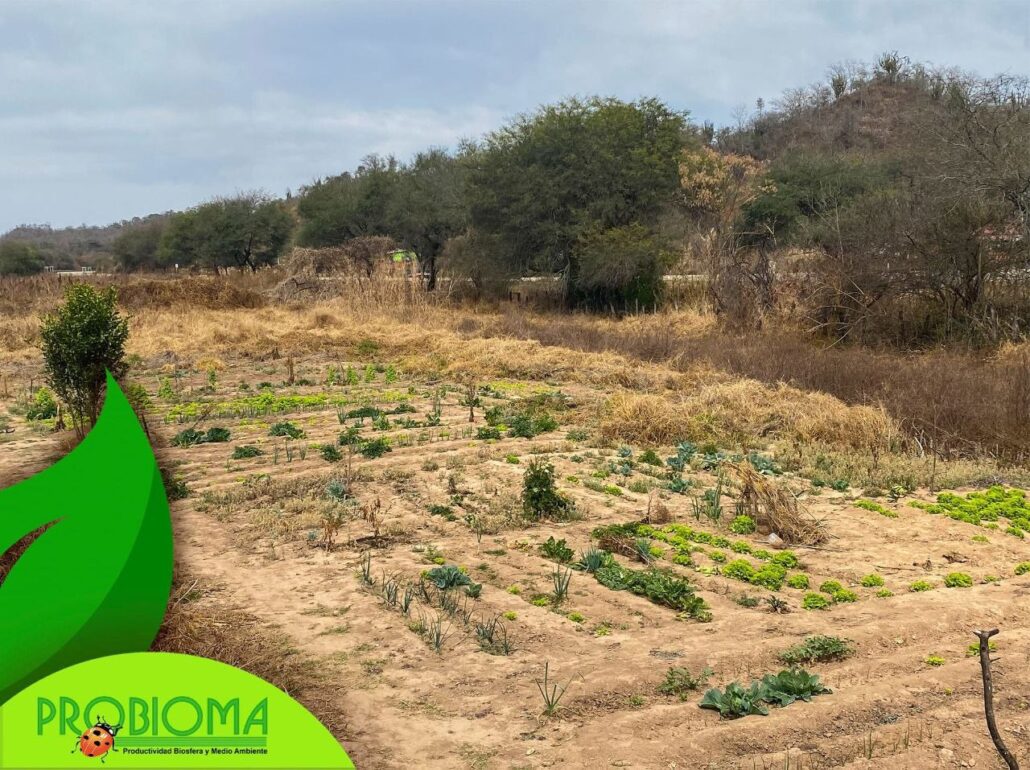
Fig. 1:A dry agroecological parcel in the Chiquitanía (Probioma, August 2022).

Cover image: Typical landscape of the Chiquitanía region at San Jose de Chiquitos (David Lazarus, February 20, 2014. CC BY-SA 4.0, https://commons.wikimedia.org/w/index.php?curid=61382172).

Preview image: A dry agroecological parcel in the Chiquitanía (Probioma, August 2022).

Agroecology in Brazil: From the Fields to University

Many Brazilian universities have Centers for the Study of Agroecology and Organic Production (NEAs).These Centers allow students to live agroecological experiences led by farmersthroughout Brazil [1]. NEAs are typically coordinated by professors of institutions working on sustainable production research projects. One of them is Prof. Dr. Fernando Silveira Franco, an engineer and PhD in Agroforestry Systems for Family Agriculture at the Federal University of Viçosa. As professor of forest engineering, biology and agroecology at the Federal University of São Carlos, Professor Fernando manages the agroecology study center “Núcleo de Agroecologia Apetê-Caapuã (NAAC)”. The center develops participatory research and dissemination projects and supports forest restoration organizational processes in the Sorocaba region, focusing on agroforestry and biodynamic systems.

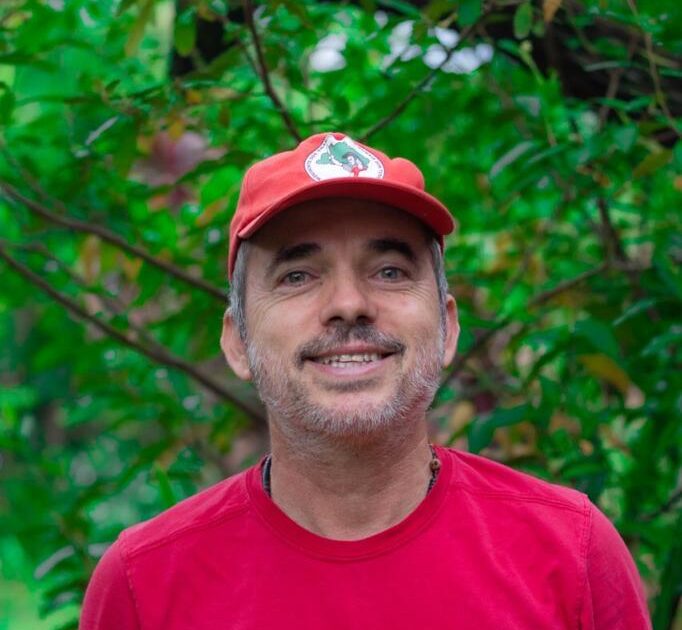
Fig. 1: Agroecology Professor Dr. Fernando Silveira Franco.

Fernando, how was the NAAC agroecology study center established at the university?

“The idea was not mine. When I was a bachelor’s student in the 1980s, there were “alternative agriculture” study groupsthat aimed to bring the national and global debate on agrifood systems into the academia. [They were] seeking viable technical alternatives from the social and environmental perspective to support farming families in dealing with food production challenges. In the late 1980s and early 1990s, with the contributions of several authors such as Ana Primavesi, Miguel Altieri and Stephen Gliesmann, alternative agriculture was acknowledged as Agroecology in Brazil. Now it was no longer just about ecology of the rural ecosystem, but of society [together] with it, as a whole”.

During that time, the non-profit civil law association Advisory on Alternative Technology Projects (“ASPTA”) had already promoted initiatives to strengthen family farming and sustainable rural development in Brazil. One of these initiatives included the translation of Miguel A. Altieri’s book “Agroecology”, which was later subtitled “the scientific basis of alternative agriculture”. This translation marked the paradigm shift between alternative agriculture and agroecology in the country [2].

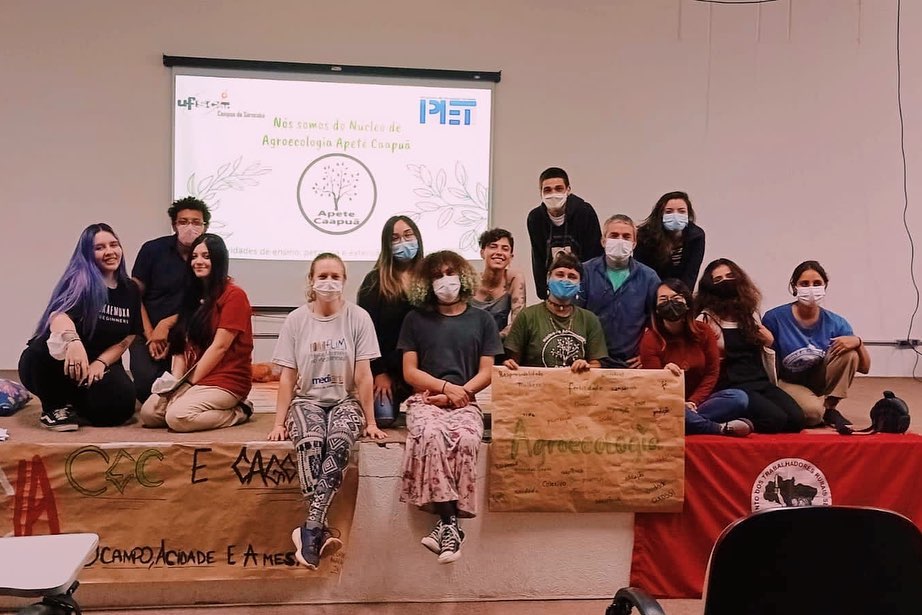
Fig. 2: NAAC agroecology group presentation in the University’s aula magna. July 2022.

“Before [the creation of the NEAs], a network of NGOs created by the ASPTA collaborated with university professors who believed in alternative sustainable production models and developed research projects in alternative agriculture. Thanks to the [effort of the] NGOs, our scientific projects were soon after financed by European organizations such as GTZ, Misereor and ASHOKA. That’s how we started”.

The incorporation of the new terminology took place between the 1980s and 1990s and was facilitated by the Brazilian Meetings of Alternative Agriculture (“EBAAS”). At the beginning of the 90s, Agroecology was widespread in the academic community, but it was only in the 2000s that it officially gained space in public policies and Brazilian universities. In 2004, a national policy for technical assistance and rural extension (“Ater”) of the Ministry for Agrarian Development (“MDA”) – incorporated agroecology for the first time. The policy’s general objective was “to stimulate, encourage and support sustainable rural development initiatives, involving agricultural and non-agricultural activities […] adopting the principles of Agroecology as the guiding axis of the actions”.It also stressed that Brazilian farming should “[…] adopt a multidisciplinary and interdisciplinary method, encouraging the adoption of new participatory methodological approaches and a technological paradigm based on the principles of Agroecology”. [3]. Finally, in 2010 the first NEAs were created in Brazilian Universities through the funding of the public call no. 58/2010 MDA/SAF/CNPq [1].

What is the importance of Agroecology in Higher Education?

“The experiences that a NEA can provide to a student are the most precious thing. It is when the student goes from theory to practicethat learning becomes concrete, because what is read takes shape and gains another dimension. Especially in Brazil, the reality of family farming is very distant from the eyes of the urban population. Nonetheless, it is not only the contact with reality [..] that summarizes the importance of this discipline but rather the connections that it weaves. In Latin America, agroecology is science, social and political movement, and practice. So, without people, the last two steps cannot happen”.

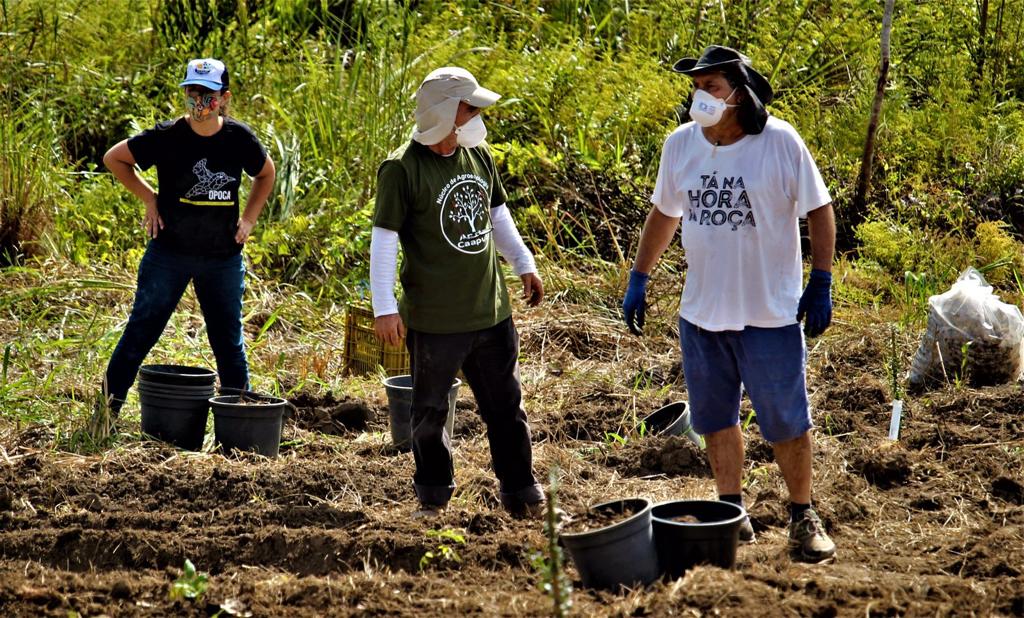
Fig. 3: Professor Dr. Fernando and students implementing an agroforestry system in Registro-SP, in collaboration with the State University of São Paulo (Aline Gomes, 2022).

Professor Dr. Fernando also stresses the fundamental role of agroecological studies in universities to link teaching, research and dissemination. In Brazil, this concept is in fact a duty decreed by the 1988 Federal Constitution (art. 207) that university must comply to. This means that all Brazilian higher education institutions should provide professional training (teaching) based on an ethical-political-social duty. For the production of knowledge (research) must be intended for the direct use of the Brazilian society (dissemination) [4].

What are the current challenges of teaching agroecology in a Brazilian public university?

“Today’s challenges are operational. Our budget has been drastically cut in the last years of the current government and […] we are at risk of collapseand not being able to pay the bills by the end of the year. This is something I had never imagined I would experience in a State University. So, with the lack of resources coming from the university, NAAC project experiences – that were regularly carried out throughout the year – have been significantly reduced. Currently they only count on the support of the Tutorial Education Program (“PET”) from the Ministry of Education, because there are no more calls coming from the National Council for Scientific and Technological Development (“CNPq”) – and other public policy programs created previously”.

Fig. 4: Students protesting in the city center of Sorocaba. July 2022.

Bolivian Agroecology in Harmony with Forest Conservation

For seven years, PROBIOMA-PROBIOTEC has managed to establish a link between agroecology and forest conservation and restoration. This link has become a priority objective after the socio-environmental disaster brought by the 2018-2019 fires in Chiquitanía, in the Bolivian Amazon. Large areas of forestland were burnt and hundred of local communities were devasted: their lifestyles and food supply depended on forests, which provided food, generated water and regulated the climate.

The Covid-19 pandemic worsened an already fragile situation and increased the risk of communities isolating themselves, in order to protect their people from the disease. Under these conditions, PROBIOMA-PROBIOTEC started to support ecological home gardens and forest restoration in the Chiquitanía. The ecological gardens proved to be the best response against the pandemic. It provided locally grown healthy and nutritious food that strengthened their immune system and reduced people moving outside the community. The restoration of the forested areas, however, was still unsolved.

To tackle the issue, PROBIOMA and GreenMarked decided to set up a plant nursery at PROBIOTEC’s agroecological center in San Luis (Santa Cruz de la Sierra) to grow local tree species and transfer them to the Chiquitanía communities. Planting forest species, fruit trees and medicinal plants may recover part of the lost biodiversity and contribute to the long-term wellbeing of the communities. It can also help local producers in recovering and strengthening that traditional vision of forest management and care.

Fig. 1: Tree planting activity at Portón community in Chiquitania. Author, August 2022.

Mainly determined by deforestation, one of the greatest challenges of the project is water scarcity. The forest restoration process had to be accelerated to take advantage of the first rains of August, which can consolidate the newly transferred plants. The first 75 forest trees
(tajiboand mara), 145 fruit trees (achachairu, pacay, acerola
cherry and orange) and 380 medicinal plants (mint, rosemary, oregano, peppermint) were planted in small-scale forest patches.

With the help of local nurseries from the Chiquitanía, some forest seeds and seedlings were collected and grown locally, thus accelerating the process. The process is also expected to become sustainable when the incentives from GreenMarked and PROBIOMA-PROBIOTEC will stop. Even after the project touch-down, the communities will have a diversified pool of forest seedlings that will allow them to continue the restoration process independently, following their management decision and as long as necessary for the conservation of their forest.

Cover image: A view of the citric fruits orchard at the agroecological center of San Luis, Santa Cruz de la Sierra (Bolivia). Mark L. Miller, January 2022.

Preview image: Tree planting activity at Portón community in Chiquitania. Author, August 2022.

Agroforestry to Fight Food Insecurity in Brazil

During the last two years food insecurity levels have severely increased in Brazil. According to the second National Survey of Food Insecurity in the Context of the Covid-19 Pandemic in Brazil, conducted by the PENSSAN Research Network, 33.1 million Brazilians do not have sufficient food supplies. Compared to 2021, that means that an additional 14 million people suffer from severe food insecurity [1].

The escalation of hunger in the country started in 2018, but it was awfully aggravated during the pandemic. Since then, the wave of high unemployment rates imposed by the pandemic together with precariousness of work, loss of social rights and reduced purchasing power put many Brazilian lives at stake [1].

This situation was Brazil’s normality in the 80s but an outrageous reality today. Food distribution initiatives were raised all over the country by agroecological farmerslike Ana Bovoy. Holding a Bachelor’s in environmental engineer and as a future Master’s in Forest Restoration, Ana was one of the many Brazilians behind the distribution of food supplies to families in need in the state of São Paulo.

Ana, how can agroecology and agroforestry help provide food security in Brazil?

“During the pandemic, farmers of the Brazilian Landless Workers Movement (“MST”) were unable to sell their products and there were many people in a condition of food vulnerability. Together with the Agroforestry Network of Ribeirão Preto we therefore created a campaign called Agroecological Food for All. Through this campaign, we raised money from civil society, purchased agroecological products from MST communities and donated them to people who were starving. This showed us the great potential of agroforests. First, they provide food security for the farmers. Second, they are a form of (self-)sustainable production method that respects the environment. And third, their production is abundant. All this was directly reflected in the campaign. Although we had bought a certain amount of food supplies, the farmers donated much more. In total, we donated 85 tons of agroforestry foodstuff over a year. Our campaign ended after the third distribution round but others, like the Marmita Solidária initiative in Recife, are still running”.

Fig. 1:Left: Part of the food collected in the “Alimentos agroecológicos para todos” campaign. Right: People in line waiting for their food donation package (Ana Bovoy, 2021).

Ana fell in love with agroforestry during her bachelor’s after taking a course with Manfred Müller, one of Ernst Götsch’ apprentices. After her studies, she used her savings to travel around Brazil as a volunteer in agroforestry farms to learn how to create an agroforest and how to live from it. Nowadays she assists in the implementation of agroforestry systems (“AFS”) in Brazilian farms and holds bee keeping course to integrate stingless bees in agroforestry systems.

What are the biggest challenges of agroforestry in Brazil?

“One of the biggest challenges of agroforestry is knowledge. We are talking about an agricultural method made through processes and this involves a lot of studying. We still know very little about the plants in Brazil and how to intercrop them. In addition, there is a need to make it viable on a large scale and for that, the development of specific agroforestry machinery. This is currently taking place and in my point of view it is of fundamental importance for the environmental recovery and farming substantiality in Brazil.”

Fig. 2: Left: Ana thinning an agroforestry system in Brazil (Ana Bovoy, 2021). Right: Ana teaching a course on bee keeping (Escola de Meliponicultura, Brazil).

What is the best way to start an agroforestry system?

“The best way to start is through an AFS vegetable garden because we are going to cultivate short-cycle species.Therefore, we can learn faster. For example, to make a vegetable patch we can combine plants with different life cycles in the same space: arugula (45 days), lettuce (60 days), cabbage (90 days) and corn (120 days). In four months, we already have the first experiences of what it is like to make a plant consortium and succession. After that, it is all about study and dedication. Nature teaches us and we learn from it.”

References:

[1] Brazilian Research Network on Food Sovereignty and – PENSSAN, 2022. Second National Survey of Food Insecurity in the Context of the Covid-19 Pandemic in Brazil, p.73. Retrieved on July 3 from:  https://static.poder360.com.br/2022/06/seguranca-alimentar-covid-8jun-2022.pdf

Cover photo: View of a typical Brazilian agroforestry system (Ana Bovoy, 2021).

Preview photo: People in line waiting for food donation packages supplied by the “Alimentos agroecológicos para todos” campaign (Ana Bovoy, 2021).

An Agroecological Farm in Santa Cruz de la Sierra, Bolivia


Today, agriculture’s global and national context forces the whole civil society to reflect about the present and future of food production. The paradigm of what food security and sovereignty means need to be understood and put into practice beyond the talks and recommendations that are repeatedly mentioned in international forums and policies.

Despite it is embedded in the country’s constitution and stressed by several national laws and regulations, Bolivia’s food security and sovereignty is not fulfilled and seem to remain only on paper. Bolivia is and continues to be an agroextractivist country that promotes the production of commodity crops. Soybean is one of them. Transgenic soybeans occupy 35 % of the total cultivated area in Bolivia [1] at the expense of other more importantcropsfor the internal market and the nutrition of the population (i.e., cereals, tubers, fruits, vegetables, energizers).

Paradoxically, Bolivia imports these foods for a value of approximately US$ 773 million [2]. In a country considered among the 11 richest countries for biodiversity, this scandal reflects how international corporations owning transgenic seeds and agrochemical products have subordinated Bolivian policies to their interests.

Unfortunately, schools and educational centers also seems to have been affected by the interests of agribusinesses [3], testified by a high number of students being in favor of the use of transgenic seeds and agrochemicals.

Worsened for several decades, this situation has led to food production failure and global market speculation but paved the way for a strong outburst of agroecology. The non-governmental organization PROBIOMA-PROBIOTEC is one of the institutions that has been supporting and promoting this new type of farming. Accredited by the International Network of Analog Forestry (“RIFA”), its agroecological farm established in San Luís, about 50 kilometers from Santa Cruz de la Sierra, has become an important reference for agroecological production in the Bolivian Amazon.


Fig. 1: View of the agroecological farm in San Luís on a bright sunny day (GreenMarked. San Luís – Santa Cruz de la Sierra, Bolivia. June 2022).

During the last six years, PROBIOMA-PROBIOTEC has been promoting agroecological field practices to agronomy students from public and private universities. Thanks to an intense field-based traineeship program of four-to-five months at the farm, students can prepare their thesis on a specific agroecological crop or process. In this way, students can experience innovative and ecofriendly agricultural and forestry practices – not only theories – and acquire new technical skills to become competent ecological agronomists, environmental engineers and biotech researchers of the future.

An example of traineeship experience we should mention is the work carried out by two students from the private University of UCEBOL. In May, students Dora Cruz Coronado and Christian Zabala supported the establishment of an agroecological plant nursery for the production of fruit and native forest trees. The trees will be transferred in September – December to the farming communities of the Chiquitanía region, which has been severely hit by recent forest fires and lost hundreds of forest hectares [3]. Financially sustained by GreenMarked’s “Agrecol Trees – Chiquitanía” project, this initiative not only supports agroecological education but also responds to local society’s social and environmental needs.

Thanks to the differentiation of organic trees and by embodying the agroecological approach and vision, this new type of Bolivian-Italian collaboration effectively tackles both biodiversity conservation and food security and sovereignty.


Fig. 2: Organic soybean in association with organic vegetables at PROBIOMA-PROBIOTEC’s agroecological farm(GreenMarked. San Luís – Santa Cruz de la Sierra, Bolivia. June 2022).

Cover photo:Front view of PROBIOMA-PROBIOTEC’s agroecological farm(GreenMarked. San Luís – Santa Cruz de la Sierra, Bolivia. June 2022).

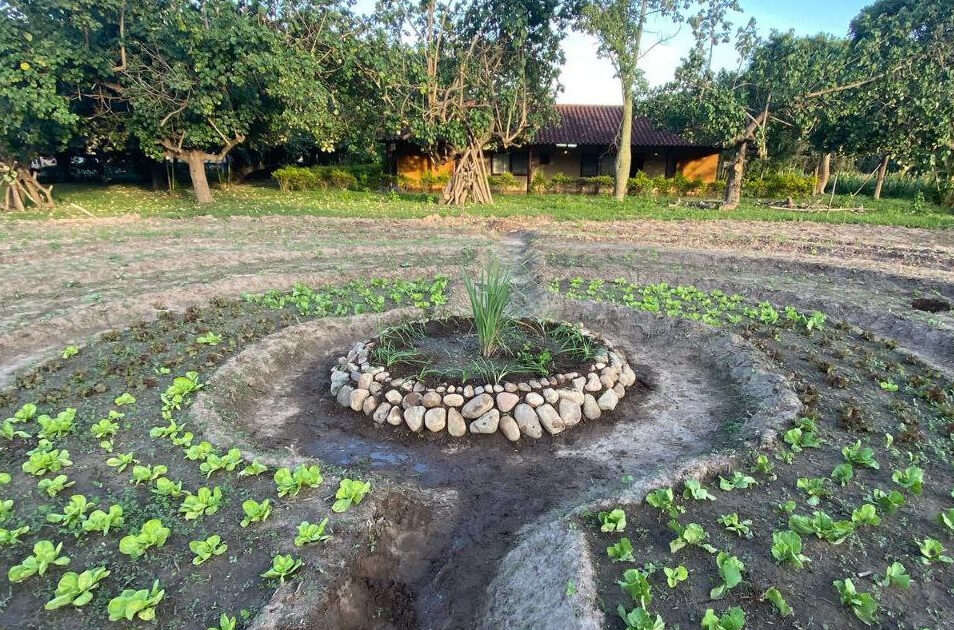
Preview photo:View of the mandala vegetable garden at PROBIOMA-PROBIOTEC’s agroecological farm (GreenMarked. San Luís – Santa Cruz de la Sierra, Bolivia. June 2022).

References:

[1] PROBIOMA. (2021, December). PROBIOMA impulsa el fortalecimiento de la producción de alimentos desde las comunidades. Agroeco noticias. https://web.probioma.org.bo/index.php/component/joomdoc/doc_download/275-agroeconoticias-15

[2] Miller, M. L., Santos Ferreira, S., Löbmann, M., Schermer, M., Foschiera, A., & Zerbe, S. (2022). An outlook on the future of Brazilian agriculture: how farming students of Tocantins perceive sustainability in the Cerrado. Brazilian Journal of Environmental Sciences (Online), 57(2), 215-229. https://doi.org/10.5327/Z2176-94781328

[3] PROBIOMA. (2020). El modelo agropecuario global que enferma, contamina y no alimenta. https://web.probioma.org.bo/index.php/component/joomdoc/doc_download/251-probioma-bolivia

[4] ABT. (2021, May 11). Audiencia Pública Final de Rendición de Cuentas Gestión 2020. http://abt.gob.bo/images/stories/audienciaPublica/2020/final2020/informe.pdf

This article was written for the “Agrecol Trees – Chiquitanía” project, funded by GreenMarked and implemented by PROBIOMA-PROBIOTEC.

A traineeship in agroecology. The review of two Bolivian university students

At the state of art, conventional farming based on agrochemicals and transgenic crops is provenly unsustainable and has a great impact on forests. Since the agricultural frontier must keep moving forward, forested areas are destroyed year after year through slash-and-burn practices and intentional and accidental forest fires. Reforesting areas burned by direct or indirect farming activities is meaningless without the consolidation of nature-friendly farming methods, such as agroecology, which respects forests, biodiversity, the soil, and water resources.

For these reasons, two agronomy students at the University of Santa Cruz de la Sierra chose agroecology for the mandatory traineeship. They opted for the agroecology training program of PROBIOMA–PROBIOTEC, GreenMarked’s business partner for the “Agrecol Trees – Chiquitanía” project, and among the biggest actors in agroecology and organic pest control in the department of Santa Cruz, Bolivia.

This interview recounts their first month experience in the traineeship program and their views on Bolivian agroecology.

Why did you decide to do your traineeship and write your thesis on agroecology and the ecological management of crops and fruit trees?

Christian: I’ve always been interested in organic products and always wanted to learn about agroecology and the ecological management of organic crops. PROBIOMA – PROBIOTEC has plenty years of experience in the field, and I think it will help me write an interesting thesis that can give a valid contribution [to the scientific community].

Dora: To complete my university curriculum, I am conducting a research study that evaluates how agroecological farming affects the agroeconomic factors and thus yield potential of potato cultivation (Solanum tuberosum). Additionally, it will analyze the impact of agroecological management on pests and diseases severity in order to promote agroecology as a mean to optimize potato farming (Figure 1). I chose PROBIOMA-PROBIOTEC to carry out this study because I was very eager to investigate on agroecological management, and to learn about organic production and pest control methods.

Fig. 1:Agronomy student Dora Cruz Coronado treating seed potatoes with TRICODAMP, a microorganism that protects potatoes from soil diseases (GreenMarked. San Luís – Santa Cruz de la Sierra, Bolivia. March 2022).

Why did you decide to do your traineeship and write your thesis on agroecology and the ecological management of crops and fruit trees?

Christian: Crops and fruit trees ecological pest management tries to avoid the damage caused by agrochemicals using organic products based on mineral broths, traps, pheromones or even microorganisms like entomopathogenic or microparasitic fungi, and beneficial bacteria. These more environmentally and soil friendly products are prepared and used at the PROBIOMA-PROBIOTEC site at San Luís – approximately 55 kilometers from Santa Cruz de la Sierra – under the names of “Probiobass”, “Tricodamp”, “Biosulfocal”, “Biofrut”, “Biogal” (Figure 2).

Dora: Agroecological farming is based on the ecological management of crops, fruit trees, fruit and forest trees seedlings. It aims to produce high quality food, restore farm and forest biodiversity, respect the natural environment and preserve soil fertility. One of its main strategies is to avoid soil deterioration through crop rotation and use organic fertilizers and plant protection products. At the PROBIOMA-PROBIOTEC production site, we learned to apply “Biogal”, an organic foliar fertilizer, “Biosulfocal”, an acaricide and fungicide that respects beneficial biodiversity, and Trichoderma spp., a mycoparasite that protects against fungal diseases. All these organic products are key for agroecological substrate preparation and seed treatment. They help making agriculture sustainable in the long term, contribute to biodiversity conservation and support true sustainable rural development.

Fig. 2:Agronomy student Christian Zabala spraying organic product PROBIOBASS on vegetables to prevent insects damage (GreenMarked. San Luís – Santa Cruz de la Sierra, Bolivia. March 2022).

What did you learn in your first period of agroecological farming traineeship?

Christian: From my experience, these organic products have given excellent results. They have fulfilled their function of controlling pests without harming crops and they can be applied in every plant growing stage: from substrate preparation to harvest. Results were very positive in both horticultural fields and fruit tree orchards (Figure 3), and the organic products prevented and controlled both soil diseases and foliar pests.

Besides ecological pest control what else are you doing in your traineeship?

Christian: I am currently helping put up a plant nursery for fruit and native forest trees, whose seedlings will be transferred to fire-affected farming communities of the Chiquitanía region. To establish a new plant nursery, you must have proper shading conditions, fertilized soil for seedling growth, and sufficient water availability for irrigation. Additionally, you must know how to use organic products responsibly to prevent diseases and pests. All these elements guarantee a good production within the plant nursery. The new healthy, strong and disease-free plants will then be easily transferred to the Chiquitanía region and they will help restore the burned areas and improve the farming activities of local communities.

Dora: Apart from my research on agroecological management impacts, I am learning how to establish a plant nursery for the production of fruit and native forest seedlings. The plants will be transferred to the fire-affected communities of the Chiquitanía region, thus helping will help forest restoration and supporting local food security in the medium term.

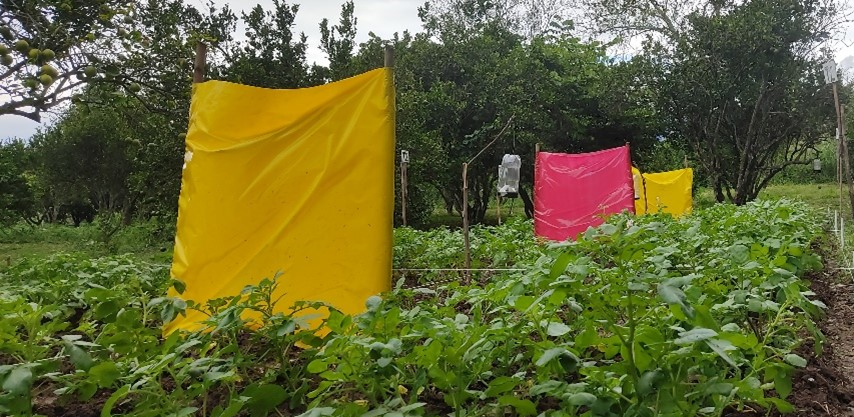
Fig. 3:The “Ethological traps” (colored) capture insects that determine plant diseases (GreenMarked. San Luís – Santa Cruz de la Sierra, Bolivia. March 2022).

So, all in all what do you think about your traineeship in agroecology?

Christian and Dora: It is giving us the foundation for our university thesis and qualifies us as professionals specialized in agroecology and ecological pest management. It is a great contribution to implementing forest-friendly sustainable agriculture.

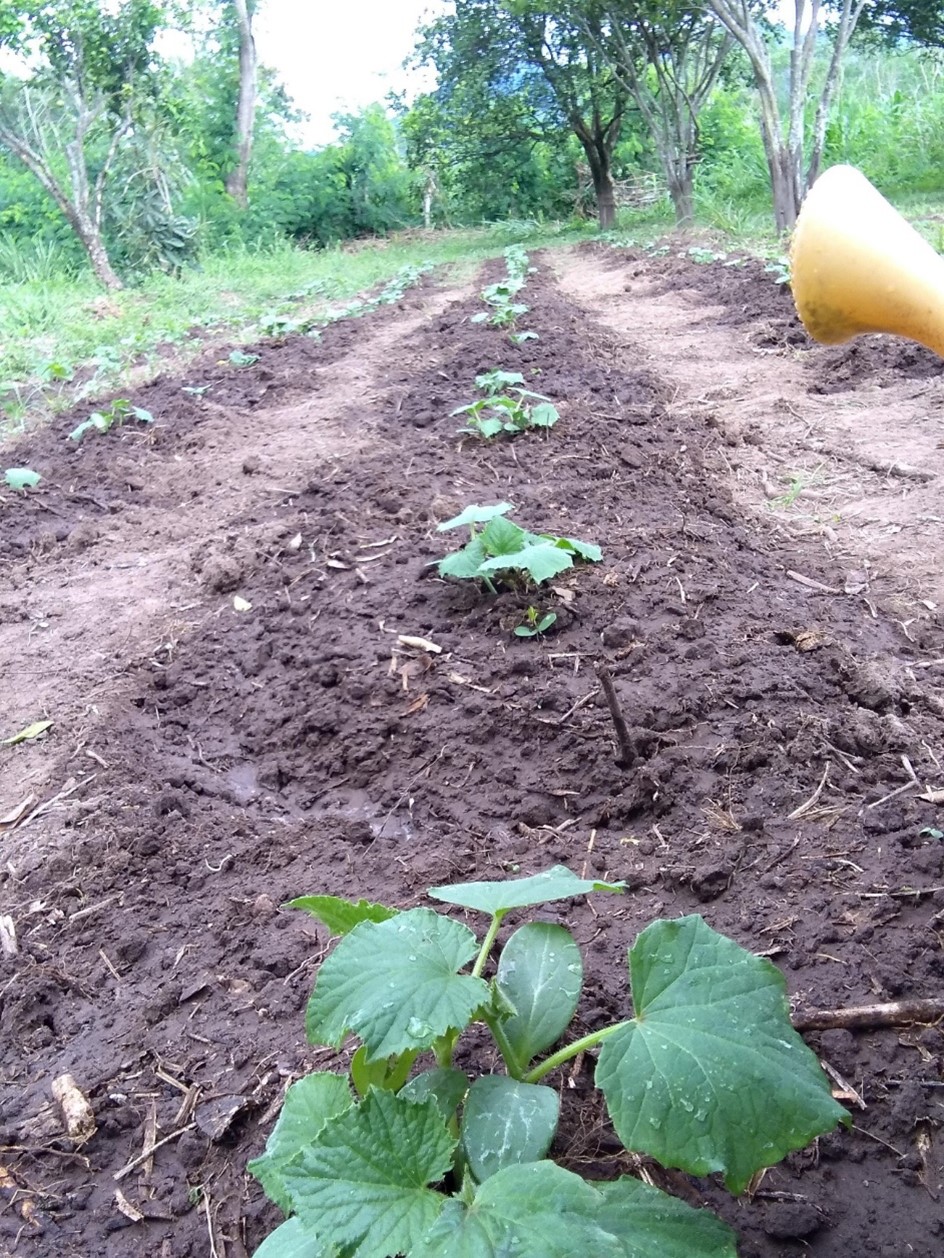
Fig. 4:Ecological cultivation of zucchini (GreenMarked. San Luís – Santa Cruz de la Sierra, Bolivia. March 2022).

Cover photo: Ecological cultivation of tomatoes (GreenMarked. San Luís – Santa Cruz de la Sierra, Bolivia. March 2022).

Preview photo: Agronomy student Dora Cruz Coronado treating seed potatoes with TRICODAMP, a microorganism that protects potatoes from soil diseases (GreenMarked. San Luís – Santa Cruz de la Sierra, Bolivia. March 2022).

This article was written for the “Agrecol Trees – Chiquitania” project, funded by GreenMarked and implemented by PROBIOMA-PROBIOTEC.

Agroecology and social tree-planting to tackle the climate crisis. The story and view of a Bolivian agroecological producer

The challenge

Farming is a crucial factor in the overall carbon budget. With emissions ranging between 450 and 500 million tons of CO2 every year [1], European farming accounts for about 10 % of the EU’s total greenhouse gas emissions (2005 dataset). However, at a global level, farming, together with forestry and other land use, accounts for up to 24 % of global greenhouse gas emissions (2010 dataset) [2]. These numbers highlight the importance of increasing the environmental sustainability of this economic sector. Shifting away from high climate-impact agribusiness farming towards more sustainable forms of agriculture, such as modern agroecology, can reduce the environmental impact of global farming.

“Agroecology” is a form of agriculture that applies ecological principles within the farming system so that local ecosystems’ dynamics and enterprise development dynamics are intrinsically integrated. Agroecology is a “more than sustainable” farming type. It is a type of regenerative farming because rather than merely preserving, it aims to increase the environmental, social, and economic capital of future generations, and, in practice, it represents a concrete action to tackle the climate crisis.

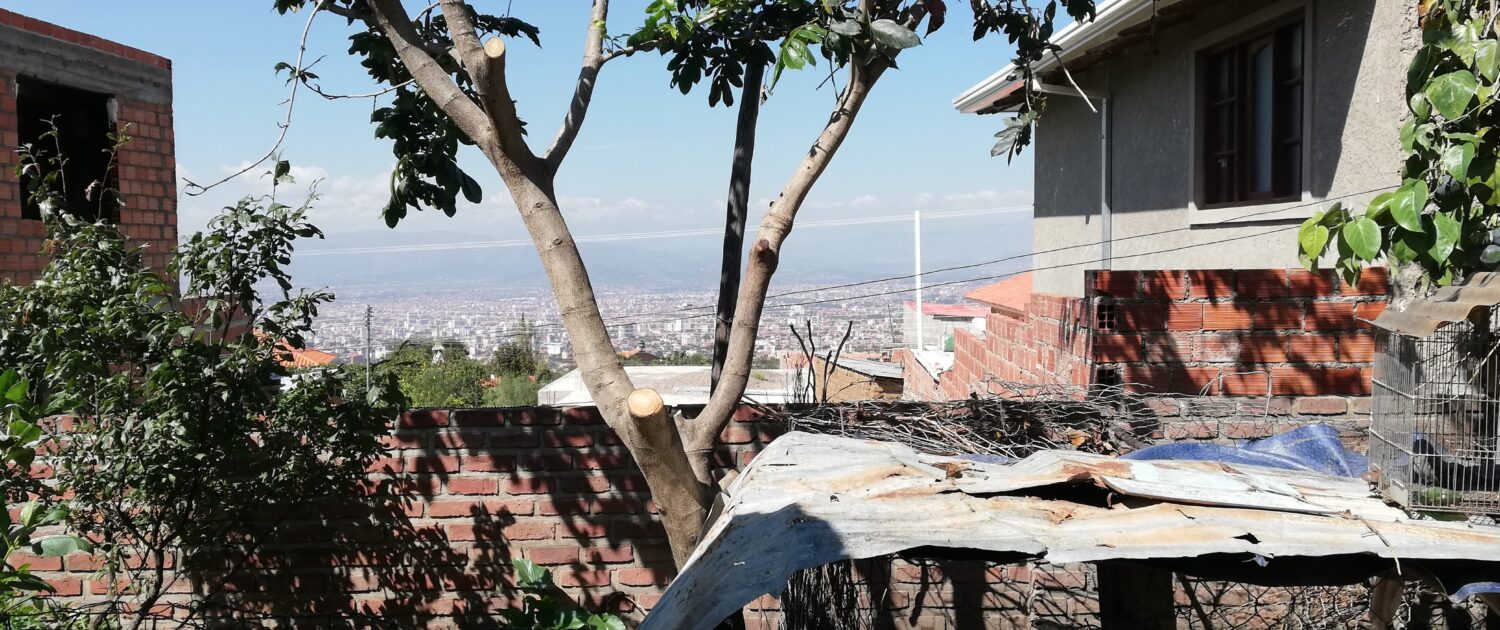
Fig. 1:A urban farming parcel overlooking the polluted city of Cochabamba (Author. January 2022).

Taking action

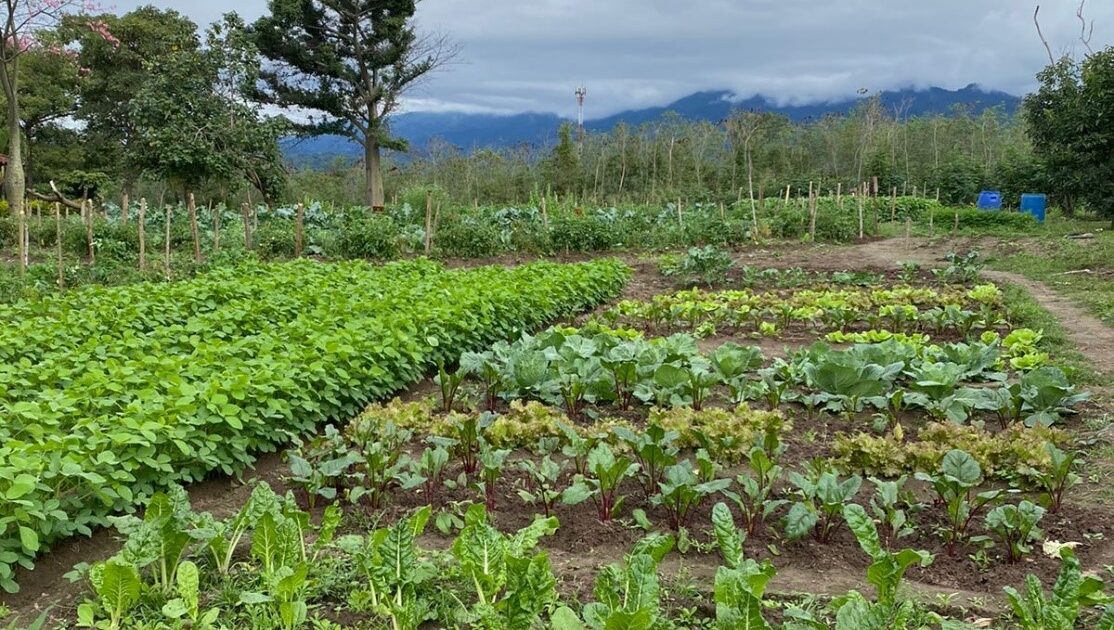
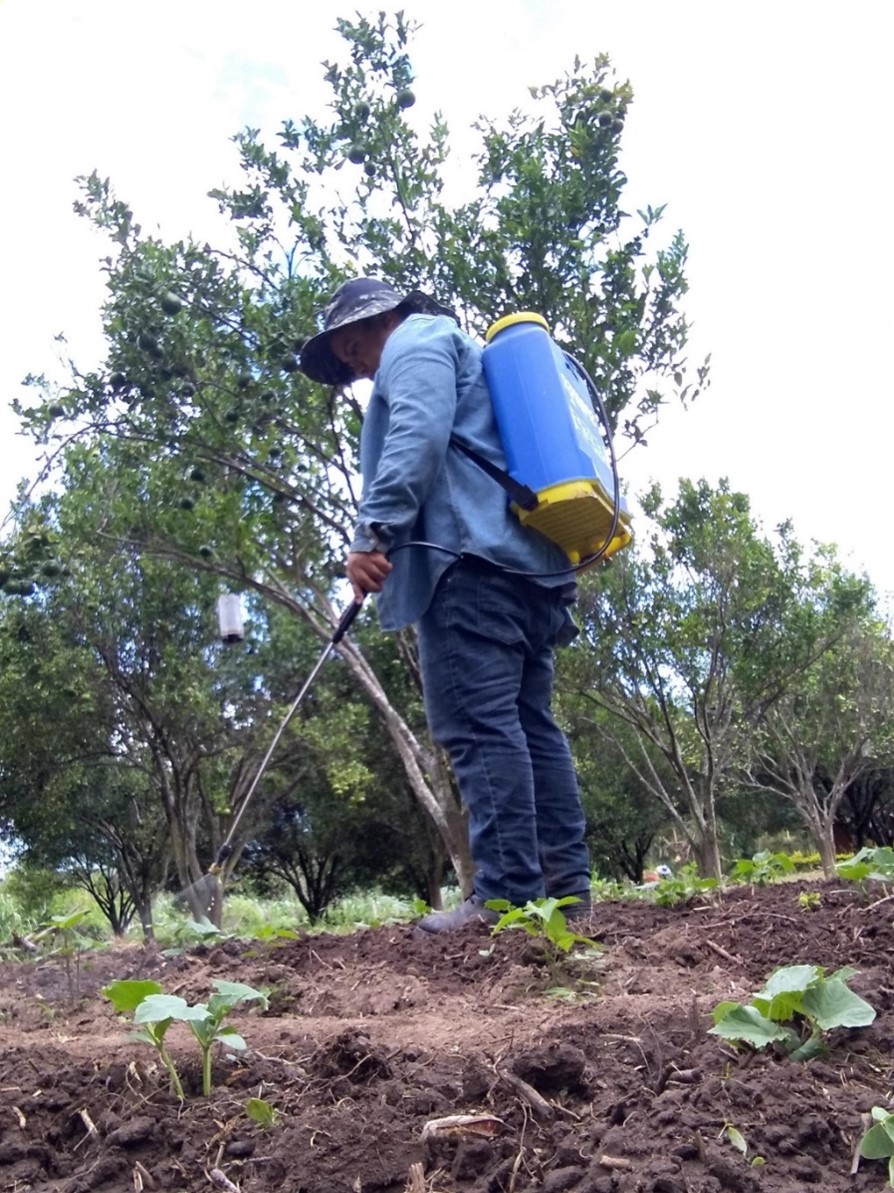
From December 2020, our Agrecol Trees project set up a workflow to donate and deliver agroecological trees to farming communities of Cochabamba (Bolivian Andean region), supervised by our local business partner AGRECOL Andes. Once the carbon trees arrive at the farming community, the community leader distributes them to members who have volunteered to adopt them. They represent the true tree guardian who plant the tree in their parcel and manage it with love and consolidated agroecological practices acquired at AGRECOL Andes workshops. The tree grows healthy, productive, and without synthetic pesticides or fertilizers.

Every tree is co-owned by the donor and the tree guardian. The tree is labelled with an identity card specifying the order and donation number, species, location, and the guardian/caretaker’s name. Every tree is finally geolocated and photographed, and photos and details are sent to the donor to monitor its growth throughout the year until the first fruits appear.

We specifically selected three fruit species for this project because of their environmental, social, and commercial benefits: the cherimoya tree (Annona cherimola), the avocado tree (Persea Americana) and four cultivars of lemon tree (Citrus limon, Citrus aurantiifolia, Citrus × latifolia and Citrus × limonia).

Cherimoyas are one of the native fruit trees in the Bolivian Andes. Well known for their delicious fruit, cherimoya trees are relatively small (5 to 10 metres) but have a significant air carbon sequestration capability thanks to their high foliage density.

Although avocado trees are from tropical and subtropical regions of Bolivia, they are highly adaptable and can grow in Cochabamba (up to 2600 m a.s.l.) thanks to natural and intentional adaptations. Growing up to 20 metres, these leafy and evergreen trees can captureconsiderable amounts of CO2. Their seeds are used as a treatment for headaches in local traditional medicine, and the commercial value of their fruits makes them a significant source of income for local farmers.

Lemon trees are not endemic to Bolivia but grow fabulously in many farming parcels, gardens, and street corners of Cochabamba. They are evergreen, require minimal pest-control treatments and provide fruit throughout the year, making them an attractive solution in agroecology, carbon sequestration and farming business.

Solutions: outcomes and learnings

Since the beginning of the project, our Bolivian social tree-planting activity successfully planted 111 agroecological trees in seven sites in the metropolitan area of Cochabamba. Through seven orders (six in 2021 and one in 2022), the trees were delivered to three certified agroecological farming communities, two schools (a secondary school and a primary school for kids with disabilities) and an Alzheimer’s care centre and retirement home. Although its environmental impact is small, the social impact of the Agrecol Trees project, considering its micro-funding, is immense. Involving111 Bolivian tree guardians and 68 European donors, the strength of our project lies in the people. Local smallholders, students and teachers, elderly and care centre workers, friends, environmentalists, and environmental supporters chose to share a tree-ownership to sustain Bolivian agroecology and the global fight against the climate crisis.

Fig. 2:The “Cercado” certified agroecological farming community at the Agrecol Trees project kick-off meeting in Cochabamba (Author. January 2021).
The voice of a climate crisis fighter

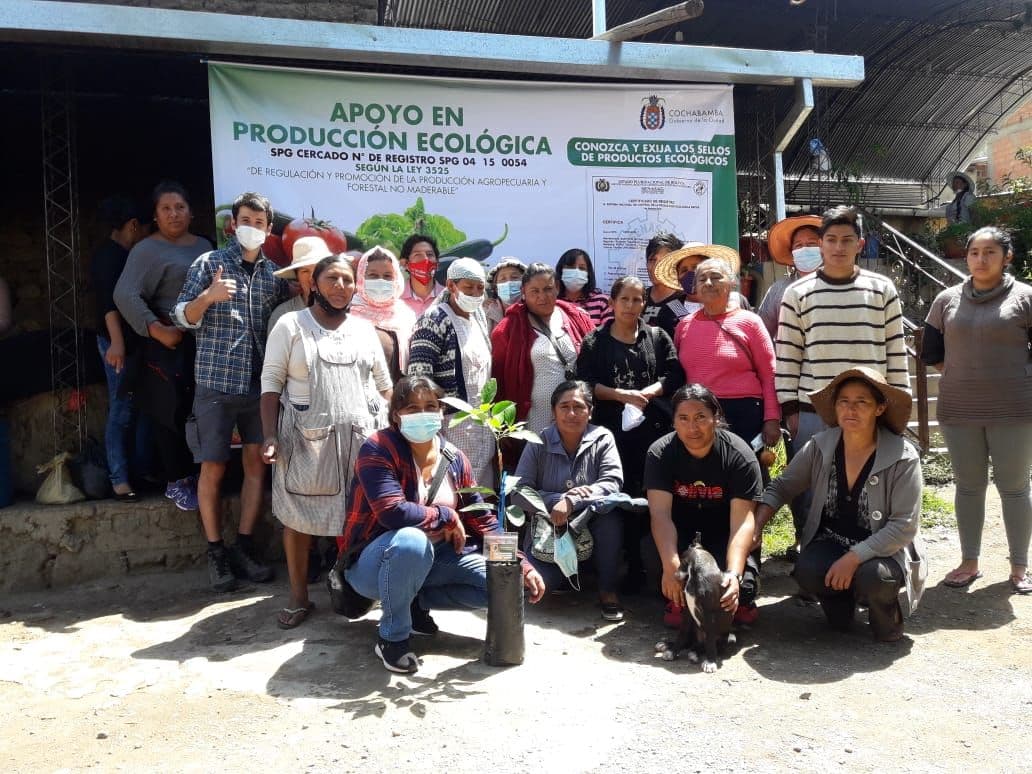
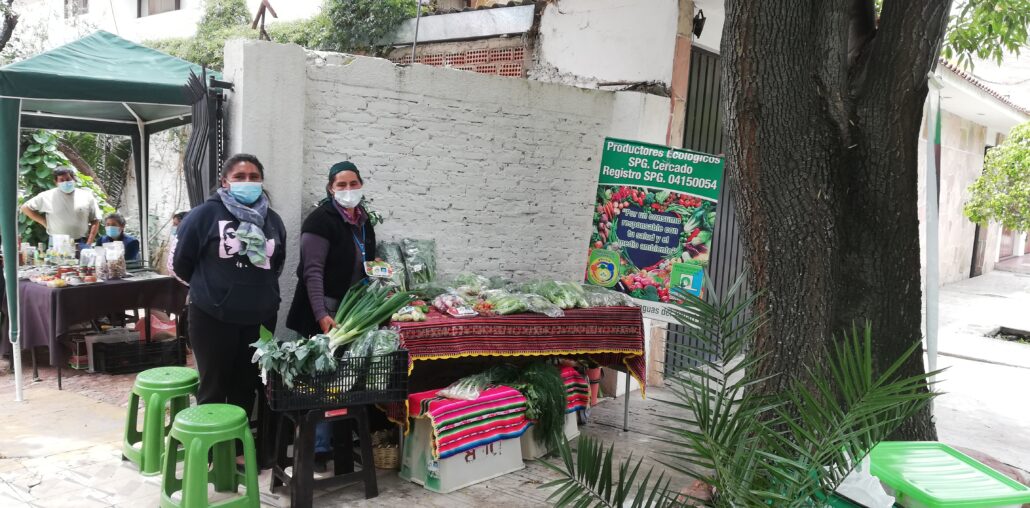
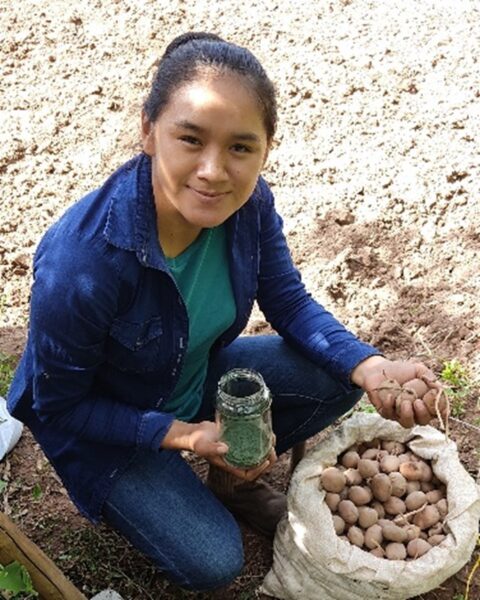
Nelly is one of the certified agroecological producers of Cochabamba that joined our Agrecol Trees project. As a leader of the farming community “Cercado”, Nelly coordinated the distribution of 50 plants to the community members of the two city districts of Taquiña and Tirani. On a typical Saturday ecological fair in Cochabamba’s city centre – where certified farming communities can sell and promote their unambiguously marked agroecological products – we interviewed Nelly about agroecology in Cochabamba, the challenges behind it and the story of how she became an agroecological farmer.

You understand things when you fall and when you get sick. I used to grow flowers in the Tunari Park and sell them at the city markets. I would fumigate my fields with insecticides and fungicides and contaminate the Park, which represents the lungs and water reserve of Cochabamba. I was only concerned about selling my flowers and gaining enough money. After I fell, my health and the health of
my family and my children became my first and uttermost concern.

Health and family protection are perhaps the strongest motherly feelings. Unsurprisingly, most of the “Cercado” community members are women with a story similar to the one of Nelly. Either they got sick, or their children did from eating dishes full of chemicals and inhaling pesticides used in the flower farming activities. That is when they and their families switched from treated flowers to healthy vegetables. Besides four newcomers, all the other men in the group are their sons. As mothers, they were able to pass on the importance of agroecology and agroecological knowledge and know-how to their future generations.

“We left them a heritage” declared Nelly.

Three years ago, Nelly decided to switch from flower growing to agroecological farming, thus beginning the procedure of becoming an official Bolivian agroecological farmer. This involves going through the bureaucratic steps of the national Participatory Guarantee Systems (“PGS”) certification: a “locally focused quality assurance system [that] certifies producers based on active participation of stakeholders” [3]. A PGS certification is built on trust, transparency, social network, and knowledge exchange, which altogether reduce certification costs and time [4]. With the support of AGRECOL Andes, Nelly embarked on the three-year conventional-to-agroecological farming conversion and PGS certification process and began creating a future-proof form of agriculture together with other former flower growers.

In 20-30 years, I will not be around, but my children and food products will still be. As women, our job is to keep our loved ones healthy; as producers, our job is to produce in a way that our children can eat healthy food and breath uncontaminated air. We must think and farm with the future on our mind… and prevent that urban sprawling takes away all the green and farming spaces.

Fig. 3:Nelly (leftside) and members of the “Cercado” certified farming community at the ecological fair in Cochabamba’s city center (Author. February 2022).

While strongly upholding the ideal of healthy future-proof farming and loyally following the mission and requirements of agroecology, Nelly admits that agroecological production remains a niche in Cochabamba and Bolivia.

We are still a long way from having a real social and environmental impact in the city. Our dream is to promote ecological fairs and disseminate agroecological products in the city. We would like the citizens of Cochabamba to know more about agroecology, that there is an ecological fair in their city, and about us. People of the city, the region and the whole country must be able to recognize agroecological products from the official agroecological symbol and must know that we, agroecological producers, use only natural fertilizers and plant protection products on our fields, and avoid any type of chemical treatment. It is frustrating to carry all the burden of respecting agroecological standards, and nobody knows about it. There is still a lot to do to promote our work and increase the public conversation about agroecology.

And what about those that do know about the labor and values behind agroecology? Are they willing to pay more for healthier and more environmental – and climate-friendly products?

In truth, many of our products are sold at about the same price as the conventional ones. When they are slightly more expensive, it is because we also value the increased complexity of agroecological production. Firstly, agroecological production implies satisfying all of the considerable requirements set by the National Service of Agricultural Health and Food Safety (SENASAG), the city administration and the ecological evaluation committee. Secondly, our crops are vulnerable to many plant diseases, which means sometimes we have to discard our entire harvest because we cannot take certain preventative measures that conventional agriculture uses. It is rather upsetting to see a plant disease hitting your field and hampering your production. As a countermeasure, we decided to diversify our products and incorporate poultry farming. When our vegetables are adversely affected, we can still rely on our chickens and ducks.

To tackle all these challenges, agroecological producers need administrative help to deal with the bureaucracy, agronomical expertise to eradicate diseases naturally and public promotion to boost a little-known farming method. While joyfully praising the excellent help offered by the AGRECOL Andes Foundation, Nelly denounces the lack of meaningful support from local public authorities.

We need a lot more help from the authorities to achieve significant results. Most people in the city do not care about agroecology. They live one day to the next. They do not think of human health, the climate, and the natural environment. The city administration should help us spread the word of agroecology and help us create a secure space dedicated to agroecology in local markets. We would be much more encouraged if we had one. But we are still a long way from having one.

Nelly’s views on our Agrecol Trees project are very different.

Receiving a tree as a gift is a blessing. Never in our life has somebody gifted us a fruit tree. You plant it, and you will see and collect its fruits in two or three years. And you are adding oxygen to the local atmosphere.

Fig. 4:Three tree guardians of the “Cercado” agroecological farming community in the district of Taquiña – Cochabamba. (GreenMarked & Fundación Agrecol Andes, May 2021).

As one of our main project contributors, we highly appreciate Nelly’s words. We attach great value to her analyses to provide concrete support to Bolivian agroecology, Cochabamba’s agroecological producers and the global climate crisis fight. As Nelly highlights, this project does not only affect the people and environment of today but also of tomorrow.

We receive a lemon tree, plant, cultivate it and we sell its fruits to the market in two-three years. Our kids look at us, and they also want to do it! They also want to receive a tree as a gift and take care of it. With this project, we are showing them agroecology and transmitting agroecological values to the future generation.

Listen to the original interview in Spanish

Cover photo: An “untidy” and highly diverse farming parcel in the backyard of a “Cercado” community member (Author. January 2022).

Preview photo: Nelly (leftside) and members of the “Cercado” certified farming community at the ecological fair in Cochabamba’s city center (Author. February 2022).
References:

[1] https://www.eea.europa.eu/ims/greenhouse-gas-emissions-from-agriculture

[2] https://www.epa.gov/ghgemissions/global-greenhouse-gas-emissions-data

[3] https://www.ifoam.bio/our-work/how/standards-certification/participatory-guarantee-systems

[4] https://www.unrisd.org/en/library/blog-posts/participatory-guarantee-systems-a-transformative-public-policy-to-boost-organic-farming-in-bolivia.

Starting, shaping and consolidating projects: our 2021 year review


Gathering at a roundtable to brainstorm and discuss ideas for future activities can be a magical moment. While coffee mugs and water glasses are being filled, a cocktail of emotions and feelings is poured into the (virtual) room. The initial boredom turns into excitement, the social pressure discomfort for waiting your turn to speak and the frustration for hearing your idea being spoken by another participant turns into relief and joy when your words are heard and appreciated by the group. And when your idea is shared and agreed upon and everybody starts thinking how to make it happen, your heart thrills. That thrill is exactly what you need to remember when the time comes to write down that idea with clear words and to design a project plan. Project planning is a harsh and unfeeling process that can kill all the joy that triggered the approval of your idea but it represents one of the most effective and efficient way to make it real. Are you real doer? A true environmental doer? Then keep hold of that initial thrill to plan your project and steer it well when the first challenges pop out. Looking back at your achieved goals, you will be eternally grateful for having designed and managed your idea with a project-based method: it led you to concrete and successful results. The gratification of achieving what you had dreamt is as big and far bigger of the one you felt for getting your idea approved.

As GreenMarked, that is exactly what we did and felt. Our ideas became projects and with gratitude and satisfaction we here present to you our 2021 project results.

GreenMarked blog


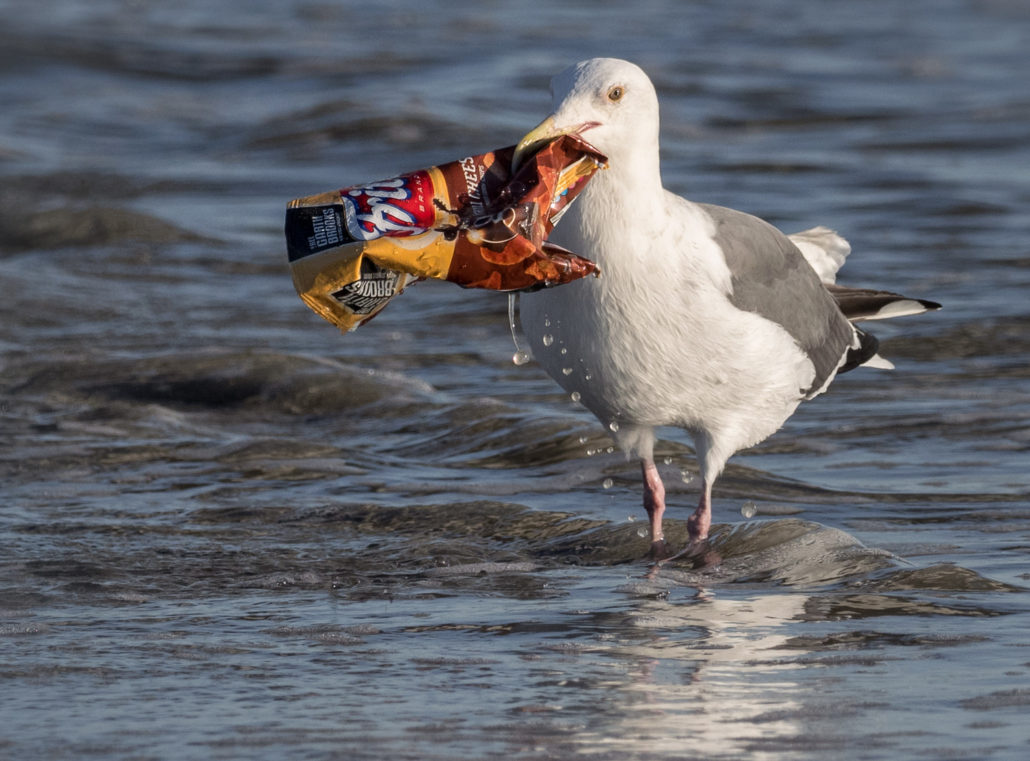
A seagull holding a plastic package in its peak (Ingrid Taylar, 2016).

The blog remains our core project. By defining article standards and guidelines, revamping our blog page, and winning a fund to increase agroecological knowledge and know-hows in Trentino, our environmental blogging activity was significantly boosted in 2021. Overall, we published 78 posts on our Telegram channel and 32 blog articles on our website. Thanks to the integration of a WordPress translation plugin, the article language can now be instantly switched from Italian to English, and vice versa. Our top three articles in terms of views are “A case study on the success of The Ocean Cleanup” (799 views), “2020: Turning a Personal Blog into a Business (213 views), and “The Interest of Fossil Fuel Corporations and Agribusiness Enterprises in Climate Policies” (188 views). The views count is only approximate because articles and posts were also read directly on our Telegram channel via our beautiful “Instant view” feature.

Our blog boost attracted new story writing collaborations: one with the “Martino Martini” high school of Mezzolombardo (Trento), one with the “Edmund Mach” farming school of San Michele all’Adige (Trento) and one with the Free University of Bolzano-Bozen (Bolzano). After a short trial, external authors can become permanent collaborators. We constantly crave for environmental articles to publish, so if you like writing and have an environmental passion and background, contact us at our email address info@greenmarked.it or at our Telegram InfoPoint @greenmarked_info.

Communication

Besides our website, the blogging activity increased also on our Telegram channel, Instagram and Twitter accounts, and on our newsletter. Due to the “Instant view” feature and its versatility of media type content, our Telegram channel kept its position of first social media platform. Annexed to our articles and updates, we posted photos, videos, documents, links, polls, audio recordings and developed stickers (Green Wolf), animated stickers (Lupus Ecologicus), and environmental GIFs. The channel counts 127 subscribers and each posts is averagely viewed 120 times with peaks up to 527.

Telegram is not only the home of our channel, but also of our InfoPoint account, Social Media Detox public group, and GreenMarked Discussion group. Disconnectedly from our Tuesdays’ project update and Fridays’ article routine, we publish here environmental news and green jobs offers or calls. Join the group if you are looking for employment in the environmental sector!Differently from our Twitter account which never really lift off the ground, our Instagram grew steadily throughout the year thanks to our new communication manager. Today our account counts 135 followers.Finally, we introduced a monthly newsletter for our group members and friends. Thanks to our stylish MailChimp template, the newsletter provides quality updates on the monthly upcoming events and a review on the past month project developments.

Social Media Detox


In terms of social and economic relevance, the 2021 Social Media Detox season can be seen as the point of time where non-project-based Detox initiatives closed the gap with the project-based ones. Welcoming a total of 410 participants, we developed five major Detox initiatives: the Detox @ School collaboration with high school “Da Vinci” of Trento, the Social Media Detox – Work & Focus camp for young adults, the “Ri-Generazione Detox in Piana” for teens and young people of Trentino, the “Digital Gym & Geocaching race” combo for firefighter trainees of Trentino and a private company of South Tyrol, and the “Digital detox and education” training program for Trentino sports teachers.

The different goals and target audience of the five different Detox initiatives highlight the versatility of our Social Media Detox. It has been a constant and regular evolution and a forced adaption to the new social mechanisms brought by the pandemic crisis. While evolving to new horizons, our Social Media Detox will always maintain its prime mission of being an amazing get-together moment.

Read here the comprehensive review of our 2021 season.

Agrecol Trees project


Started in January 2021 with the name of “Native Carbon Trees” project, our Bolivian tree-planting project successfully planted 81 agroecological trees in six sites of the metropolitan area of Cochabamba. Through six annual orders, we delivered the trees to three certified agroecological farming communities, two schools and a retirement home. Although the environmental impact of our (later renamed) Agroecol Trees project is minor, its social impact–project fund ratio is immense. With a total expenditure of 2,499.00 BOB equivalent to approximately 363.32 USD we involved 81 Bolivian recipients and 67 European donors. While a lot of stories should be written about both adopters and donors, the reason of their tree shared ownership and their interest in agroecology, you can read more about the technical details of our project implementation in our FAQ section.

To increase our environmental impact, we already placed a first order in 2022 of 30 trees and we designed a new tree planting project in the Amazon region of Bolivia. You will soon have the possibility to buy from our shop three native Amazon Forest tree species and seven new tropical fruit species!

Read the comprehensive 2021 review of the project at this link.

Green Talks

Formerly called “Green Webinars”, our Green Talks project developed seven different green webinars throughout the year. “Lie To Me”, “A Rigenerative EU”, “An Ecological Catechesis”, “An Environmental Time Voyage”, “The World Economic Forum’s Great Reset Initiative”, “Urban greening in Cochabamba”, and “COP 26 Highlights from Glasgow” were the seven titles. First broadcasted on the Zoom and Meet video sharing platforms, we eventually switched our Green Talks onto Telegram. In 2022 they will be streamed directly on our Telegram channel! Thanks to established collaborations and new partnership, we will invite new speakers to help us deliver environmental knowledge and news.

Eco-Battles comic

Committed to the delivery of sound environmental education, we are continuously looking for new and innovative media types to spread environmental knowledge and know-hows more effectively and to a larger audience. In the fashion of a fictional war battle between made-up environmentalists and polluting characters, we experimented with five comic chapters last November. The adventures and battles of Green Wolf and the Eco-Team received 277 views on our website and the HQ version of the five chapters were downloaded several times from our online shop. Following a public poll result, we will continue this new way of storytelling and integrated into our blogging activity. Stay tuned for the next Eco-Battles!

2022 GreenMarked Membership card

There is quite a lot to tell when you have to review a whole year of activity. This projects review gives you a good hint of who we are and what we do, but you can see a lot more on our website, Telegram channel and social media platforms. If you like what we are doing, want to support us or share the journey with us, get your 2022 membership card.

By purchasing the 2022 membership card you will concretely support independent environmental blogging, and you will get:

1.Free access to our Green Talks discussion moments

2.A 10 % discount on the Social Media Detox camps and initiatives

3.A personalized agroecological Bolivian tree.

Project planning, steering and reviewing is our modus operandi. We leave space for free experimentation but when the game gets real, we turn thoughts and ideas into projects. Project management is key to tackle environmental issues that often lead to CONTROVERSIAL dynamics both in the behavior of an individual and community. Solutions may not so straightforward and multi-dimensional problem-solving approaches require management methods of higher complexity. That is where project-based methods come in. The environment, individuals and societies need project-based initiatives to find and apply effective and COHERENT environmental solutions.

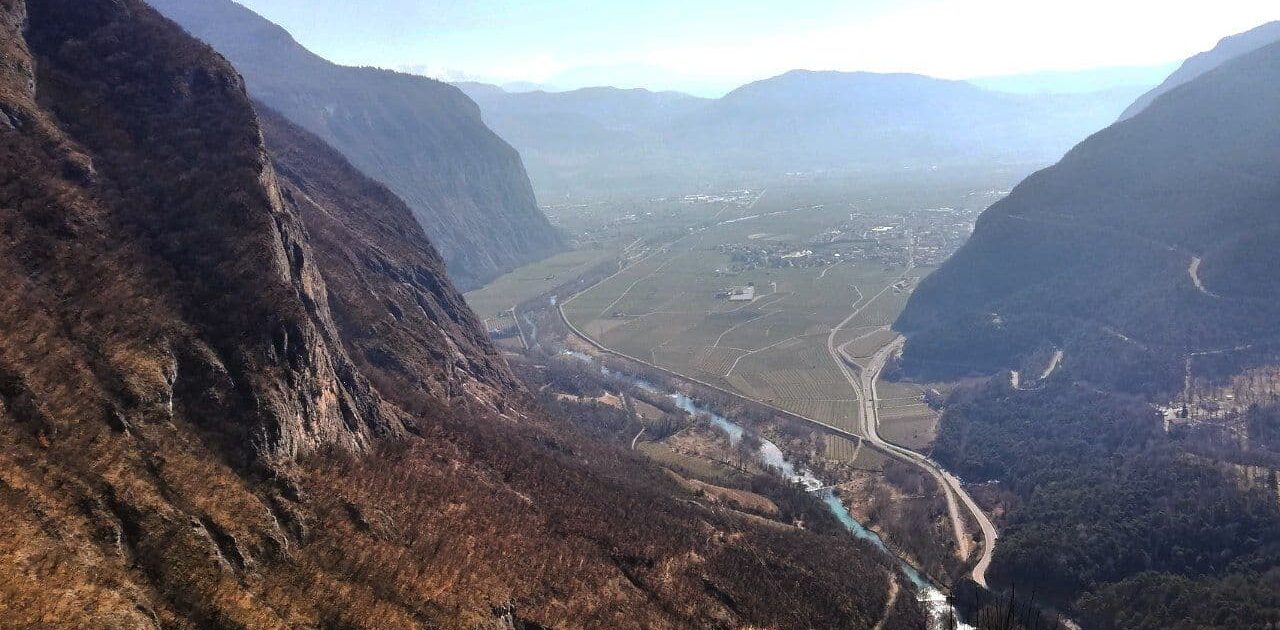
Cover and preview photo: South Tyrolean Dolomites seen by the Rittner Horn mountain (Bolzano, Italy). (Author, January 15, 2022).

A school, windstorm Vaia and Alpine forests restoration

The second grade students of the “LOS4” four-years teaching program at Martino Martini high school, Mezzolombardo (Trento), Italy, took part in a project called “Windstorm Vaia and Environmental Sustainability”. A two-years school initiative aimed at raising awareness about the impact of human activities and land use change on Alpine forests[1].

Windstorm Vaia was obviously the first topic to be tackled. The last week of a hot October 2018, a huge meteorological depression unleashed a storm of wind and rain that devastated the woods of three northern Italian regions. In Veneto, Lombardy and Trentino – South Tyrol, Vaia razed more than 40,000 hectares of marvelous Norway spruces, firs and larches. Yet, the number of damaged forest hectares is much greater: 12 million. Sadly, Vaia’s impact was not equally distributed. Approximately 26 % of the overall damage was recorded in the Fiemme valley, Trentino, where about 1.3 of the overall 4 million trees fell. Consequently, 50 forest paths and 145 roads, equivalent to 140 km, were destroyed [2].

These dramatic numbers and the shocking footages of Vaia’s impact bounced quickly from on media to the other saddening millions of people and triggering a strong wish to support the forest restoration in the hearts of plenty. Fundraising campaigns appeared on social media, bottom-up reforestation initiatives such as South Tyrol Plants were organized [3] and ethical start-ups such as VAIA Cube were born. The desire to join the restoration activities and contribute in a practical manner erupted also in local schools of Trentino. Not only did the Martino Martini students participate to seminars and educational workshops but also actively at a tree-planting campaign on October 16, 2021. “All 20 students and the 4 professors leading the project, planted a tree, either a larch or a spruce, in a forest site once devasted by Vaia and now designed for reforestation” affirmed Professor Alhena Piazzi.

Fig. 1:Students and professors of the “Windstorm Vaia and Environmental Sustainability” project actively planting larch and spruce seedlings in a forest site destroyed by Vaia (courtesy of Alhena Piazzi).

During the storm, the wind reached bewildering speeds of 180/190 km/h (maximum speed verified at Manghen pass) and about 60 cm of rain fell in only three days. That accounts to 60 % of the yearly rainfall rate (i.e., one meter of water). Luckily, the Fall and winter of 2018 were not harsh and allowed local forest rangers to take immediate action. Thanks to its secular heritage in forest management, the Fiemme valley forestry agency was on the forefront to remove the first trees obstructing the major roads and later to reestablish the entire road network [2].

Unremoved fallen trees can be infected by forest pests, such as the bark beetle (Ips typographus). The beetles can penetrate into the bark and feed on the meristem, the only living tissue of plants. Once it takes over the tree, it can then attack neighboring trees, and spread also to standing trees, thus augmenting the damage. This happened also after Vaia [2].

“Given their high vulnerability to bark beetles, the number of Norway spruce forests should be reduced and replaced by more diversified forest types” admitted forest ranger Ilario Cavada during the field trip. “Both Trentino’s forests and the 20,000 hectares of forests managed by the Fiemme valley forest agency house too many Norway spruces, which can live up to 500 years but are more exposed to dangerous forest infections and can therefore weaken the entire ecosystem” continued Cavada.

Integrating larches and spruces can be a optimum strategy against bark beetle infections and was the solution adopted by the Fiemme agency to restore the damaged areas. All available Italian forestry companies were first contacted, then also foreign companies because the workload to recover the fallen trees and plant the new ones is immense. Currently, the agency is growing about 600,000 seedlings of different species that will replace the fallen trees. To date, only 60 hectares of woods have been restored.

Forest conservation is perhaps the most known and appreciated form of environmental protection. Indeed, forests provide dozens of forest services but it is commonly said that they have a double purpose: they secure the soil hydrogeological stability, and they favor the biodiversity and the ecosystem.

Understanding the importance of forests and sustainable forest management was a key result of the project. It is hard to say, but “thanks” to Vaia, 20 students were given a down-to-earth learning experience about reforestation. They could broaden their knowledge and perspective on the impact of human activities on Alpine forests and all the living beings that depend on it.

Bibliography:

[1] Piazzi, A. (2021, December 6). Windstorm Vaia and Environmental Sustainability—Interview with the Martino Martini project leaders [Email].

[2] Cavada, I. (2021, October 16). Windstorm Vaia and Environmental Sustainability — Interview with the Fiemme Valley forest agency [Personal communication].

[3] Cologna, M. (2020, October 16). Let’s re plant South Tyrol! GreenMarked. https://greenmarked.it/ri-piantiamo-altoadige/

Cover photo: courtesy of Alhena Piazzi.

The article has been drafted by the 2nd grade students of the “LOS4” four-years teaching program at Martino Martini high school (Mezzolombardo – Trento, Italy) and edited by the GreenMarked Team.

This article is part of the project “Environmental Blogging Boost 4 Students”, aimed at increasing the spread of agroecology and sustainable water management in Trentino. The project is financed by the BIM Adige Water Catchments Consortium (grant approved by provision n. 100 of June 06, 2021).

Agroecology for a better water management in Trentino

Trentino has an average year precipitation of more than 1000 mm with obvious differences in space and time as some areas of the territory receive more rain than others. All in all, the yearly volume of water from precipitation accounts to 11.7 billion m3 since 2.3 billion are lost through evaporation and evapotranspiration [1]. In Trentino, there are 14,000 capture points catching water from springs and wells, waterways (rivers and lakes) and underground. In addition to them, there are plenty of “artificial lakes” (reservoirs) that have been set up for hydroelectric purposes to supply for the ever increasing need of water. They provide for 394 million m3 of water which accounts for 8 % of the needs. Just to compare Trentino with the “rest of the world”, while irrigated land accounts for only 20 % of the global cultivated area, it contributes to about 40 % of crop production [2]. These numbers prove that Trentino enjoys a good availability of water but particularly in the plain areas of the territory, in the last years, the situation has started to change due to changes in weather and climate regimes.

Fig. 1:lakes and water reservoirs are important capture points in Trentino (photo by shogun on Pixabay).

Several reports by Meteotrentino prove that the last two years have been warmer and drier: 2019, for instance, has been the second warmest year ever recorded (after 1850), and Trentino has registered temperatures higher than 1.5 – 2 °C, if compared to the period 1961-1990. The year 2020 has not been different: monthly data show higher temperatures (particularly in the Fall) and lower precipitation as well as the first months of 2021. In particular, March 2021 has been characterized by particularly strong winds and zero precipitations. This inevitably translates in the global warmer and drier climatic regimes happening worldwide, meaning that Trentino is no different than other areas [3].

Withstanding the complexity of the situation, we need to envisage a versatile strategy that takes into serious considerations the weather patterns while posing alternatives to catching water from sources commonly used in irrigation and perhaps making irrigation more sustainable (for instance, by making crops more efficient). One viable solution could be the use of crops which are less greedy of water or promote the use of varieties that require less irrigation. Irrigation, on the other hand, must be efficient through the use of digitalization and the conversion to sustainable methods (drip irrigation, micro-irrigation and precision irrigation). A complex strategy like this must be based on funds and agreements between the different stakeholders but above all on instilling an education in the public and private sector, acting also on the younger generations. The European Common Policy (CAP) can surely be the way to make it happen. While farmers consider irrigation to be sustainable when it provides uninterrupted access to water resources at a price not exceeding the marginal revenue that they generate (clearly without accounting for environmental externalities), from the standpoint of water resources, irrigation is sustainable if it does not deplete freshwater stocks or environmental flows [4]. It is thus crucial to take into account the strong link between territory and agriculture, as expressed by ecological status of the waterbody and the hydraulic risk.

Fig. 2: drip irrigation can be used in different vine training systems and represents a more sustainable irrigaton method (figure edited from the photos by Markus Winkler on Unsplash and Fotokalde on Pixabay).

Agriculture is an important sector in Trentino’s economy and farmers have made it possible to preserve the territory while agricultural practices aimed at food production were taking place. This delicate connubium happened for many years but now climate change is calling for more action and this will be possible with the implementation of the Agenda 2030 and the Sustainable Development Goals. Trentino has made a major effort to implement them through the definition of a Provincial Strategy for Sustainable Development and in particular for the Goal no. 6 that refers to Water (Clean Water and Sanitation). The participation of citizens and stakeholders in the implementation of the Agenda, has proposed some priorities for the future years and this is a milestone and a virtuous example for their bigger involvement in the res publica [5]. Here are some ideas to make Trentino more sustainable for water use:

•   Rationalize the use of water in the sectors that use a lot of water, like agriculture with a common focus on the sustainable use of the resource. This action would start from a proper education of the stakeholders.

•   Promote a common culture of water by involving citizens with meaningful initiatives (e.g., citizen science events). This would inform the general public about the need of preserving the resource.

•   Enhance the availability and accessibility of water data in the territory, involving all the stakeholders. The implementation of such data would help set up monitoring and research studies.

•   Evaluate the caption of water by private citizens and require their action with initiatives that benefit the territory to promote, once more, the importance of water and good water management.

Fig. 3: typical apple orchards in Trentino-South Tyrol in winter time(photo by 12019 on Pixabay).

Bibliography:

[1] Provincia Autonoma di Trento (2006) Piano Generale di Utilizzazione delle Acque Pubbliche.

[2] Chartzoulakis K.  and Bertaki M. (2015) Sustainable water management in agriculture under climate change. Agric. Agric. Sci. Procedia 4, 88-98.

[3] Meteotrentino (2019, 2020, 2021) Analisi metereologica mensile.

[4] Borsato E., Rosa L., Marinello F., Tarolli P. and D’Odorico P. (2020) Weak and strong sustainability of irrigation: a framework for irrigation practices under limited water availability. Frontiers in sustainable food systems 4, 1-16.

[5] Provincia Autonoma di Trento (2021) Report del processo partecipativo con cittadinanza ed associazioni Trentino Agenda 2030.

This article is part of the project “Environmental Blogging Boost 4 Students”, aimed at increasing the spread of agroecology and sustainable water management in Trentino. The project is financed by the BIM Adige Water Catchments Consortium (grant approved by provision n. 100 of June 06, 2021).

A stakeholder analysis to spread agroecology in Trentino

A stakeholder analysis is a preliminary assessment prepared prior to the drafting (or evaluation) of a project proposal. As the terms “stake” and “holder” undoubtedly explain, the analysis assesses the view of all parties interested in or affected by the project goal and implementation. Our latest project “Environmental Blogging Boost 4 Students”, carried out with “Association Alla Ribalta”, A.P.S.” and financed by the Adige Water Catchments Consortium (grant approved by provision n. 100 of June 06, 2021), also requires a stakeholder analysis to kickoff. To reach our goal of increasing the spread of agroecological knowledge and practices in Trentino, we created a stakeholder list and assessed their view on the goal.

Agroecology: ecology in agriculture

“Agroecology” is a form of agriculture that applies ecological principles within the farming system, so that local ecosystems dynamics and enterprise development dynamics are intrinsically integrated. Agroecology is a “more than sustainable” farming type. It is type of regenerative farming because rather than to preserve, it aims to increase the environmental, social and economic resources of future generations.

Spreading agroecology in Trentino

In Trentino, sound local practices of natural resource management often lack a solid and widespread ecological knowledge base. In both farming and water management, today’s citizens are unaware of the ecological-environmental reasons behind certain actions. In agriculture, for example, few citizens understand why certain winegrowers in the Cembra valley keep hedges along their vineyard boundary adjoining busy roads or sensitive areas. Or why during spring time, many farmers in Piana Rotaliana place beehives in the inter-rows of their apple orchards. Or why farmers in Rovereto cannot cultivate on the bed and banks of the Adige River.

This knowledge cannot be restricted to only experts working in the field or students of agricultural studies. To the contrary of what many believe, a basic environmental education is easily acquired through easy logical sequences and a few simple illustrations. Above all else, a more outdoor-based lifestyle can truly incentive a general understanding of environmental dynamics. Due to Trentino’s society transition towards more urbanized and nature-disconnected lifestyles, this culture has dramatically deteriorated over the decades. Once widespread in our grandparents’ generation, it has become niche knowledge, accessed and preserved only by field experts.

The recent “Fridays For Future” environmental campaigns have revived young people’s desire to reconnect with nature. In thousands of squares around the globe, young environmental protesters shouted out their anger towards current minuscule, ineffective, and often hypocritic climate crisis actions by international politics, and their request to preserve the natural environment in order to protect their future. Yet, the environmental activism of such campaigns must be accompanied by a more solid ecological-environmental awareness and culture so that concrete and feasible solutions can be found to safeguard present ecosystems.

Increasing the agroecological knowledge and know-hows of Trentino’s citizens and competent local authorities can enhance Trentino’s natural capital. It represents both a noble goal and a necessary effort to regain that lost and widespread environmental education and culture.

A blog and a collaboration with schools of Trentino

In order to increase the spread of agroecological knowledge in Trentino, we have started publishing educational articles on agroecology. Our blog will also be opened to selected students living and/or studying in the Province of Trento. Articles will therefore be cowritten and the blog will be used as a platform that stimulates digital and cooperative forms of environmental education. The content of the articles will depend on the literature findings, the stakeholder analysis and on eventual interview with relevant stakeholders.

A stakeholder analysis to select the articles content

Each stakeholder was examined according to its influence on the project goal (i.e., direct or indirect), its position (i.e., positive, neutral, or negative) and its impact (i.e., small, medium, or significant) on it. By assigning each criterion a score, the overall stakeholder relevance on the project goal achievement was finally calculated.

With respect to the stakeholder’s influence, a score of 2 was assigned if the stakeholder had the potential to directly influence the project objective, and 1 if it influenced it indirectly. With respect to the stakeholder’s position on the project goal, a score of +1 was given if it was positive, – 1 if negative, and 0 if neutral.  With respect to the potential impact of the stakeholder on the goal pursuit and achievement, a score of 1 was assigned if it was small, 2 if medium, and 3 if significant. Finally, the overall stakeholder relevance score was calculated by multiplying the three scores.

Fig.1: extract of the stakeholder analysis to increase the spread of agroecology in Trentino. The table includes 80 stakeholders divided into 18 categories.

Download the complete stakeholder analysis (Italian only)

This analysis and report are part of the project “Environmental Blogging Boost 4 Students”, aimed at increasing the spread of agroecology and sustainable water management in Trentino. The project is financed by the BIM Adige Water Catchments Consortium (grant approved by provision n. 100 of June 06, 2021).

The Social Media Detox – A 2021 season review

We started the Social Media Detox back in 2017 when I was still studying at the University of Milano-Bicocca. Even though it consisted of summer camp in the mountains near Trento, it never was a mere holiday retreat. Since the very beginning it embodied the essence of a project, and every year it was intended as a one-year project reserved to specific targets. Year after year, we wrote a Social Media Detox project proposal and sent it to financing institutions that could support our initiative. Our Detox projects started to become bigger, more consolidated, more professional. Slowly, its project-essence was contaminated by other types of undertakings: paid Detox educational courses, self-sustained camps, collaborations with associations and businesses, school joint projects, assigned work for specific Detox activities. In terms of social and economic relevance, the 2021 Social Media Detox season can be seen as the point of time where non-project-based Detox initiatives closed the gap with the project-based ones. Overall, 410 participants joined our 2021 Social Media Detox, of which 370 in non-project-based Detox initiative and 40 in a Detox project.

1. Detox @ School

–Type of initiative:school collaboration

–Location: Liceo Da Vinci high school of Trento, Albere Park of Trento, Trento city center, Candriai (Monte Bondone)

–No. of participants: 65 high school students

–Duration: five overall weeks.

The 2021 season started in mid-April thanks to a collaboration with the Liceo Da Vinci high school of Trento. The five-weeks collaboration was called “Detox @ School” and its goal was to involve two 3rd grade classes in interactive and English-taught Detox activities. About 45 teens of 15-17 y/o participated to our half-day Detox activities in the school gym, the Albere Park and Trento city center. Our Detox program included the theater workshop “Black Mirror in the Covid-19 era”, the sensorial experience “Ministry of Nature”, the emotional intelligence lab “Emotional intelligence and mindfulness for a better social media life”, a Geocaching race both in the school courtyard as in the city center and reaching up to the Doss Trento hilltop.

The second “Detox @ School” event occurred at the end of August and beginning of September. It involved 20 first and second grade students of, once again, the Liceo Da Vinci high school. Its goal was to promote social interactions and friendships between high school freshers by organizing dynamic and outdoor activities. This time, the students took part in the musical workshop “Lion King – reprise”, a theater workshop focused on emotions, a Geocaching race in the woods of Candriai, and a “Digital Gym” competition, which we will explain better in the next article section.

Previous
Next


2. Social Media Detox – Work & Focus

–Type of initiative: self-financed camp

–Location: Candriai (Monte Bondone, Trento)

–No. of participants: 15 young adults

–Duration: one weekend.

Our second Detox initiative took place on June 12-13 at the AERAT holiday-center of Candriai (Mount Bondone, Trento), and launched the 2021 AERAT summer camps season. Our “Work & Focus” weekend Detox involved 15 people, mostly young adults from Trentino both also three participants from Bologna, Monza-Branza and Innsbruck. It was a self-financed camp aimed to help participants detox from social media and recover their concentration. In this Detox training weekend smartphones and social media were replaced by focus-oriented seminars, networking moments, interactive outdoor activities, artistic workshops, and recreational night activities. Specifically, the first day included the theater workshop “Waiting for Godot in Lockdown”, a Geocaching-race in the woods of Candriai, the “Digital Carbon Footprint” seminar, the networking lab “How to transfer work outdoor”, and the “Lion King – Reprise” dance course. On the second day, the “Stress-killer” yoga course was followed by the “Digital Diet” seminar. After the delicious and highly appreciated lunch meal, the “Digital Gym” concluded the camp. This precious gem of the AERAT center stimulates participants to play in a digital world while keeping an analogic mind and body. Together with the Geocaching race, it represents a possible balanced relation with digital technologies.

Previous
Next


3. Ri-Generazione Detox in Piana

–Type of initiative: project financed by a Youth Initiative Fund

–Location: Mount Mezzocorona (Trento), Località ai Piani of Mezzolombardo (Trento), Faedo – località Masetto (Trento)

–No. of participants: 35 young people + 5 elderly

–Duration: April – December 2021.

Our third Detox initiative, the “Ri-Generazione Detox in Piana”, was a project supported by the Piano Giovani di Zona (“Youth Initiative Fund”) of Piana Rotaliana – Königsberg. It consisted of three Detox Day Camp in three municipalities of Piana Rotaliana (Trento). Namely, in nature areas located in the outskirts of Mezzocorona, Mezzolombardo and Faedo. The Day Camps took place on July 24, August 21, and September 4 and involved a total of 35 young people, as well as 5 elderly people of the retirement home “San Giovanni” of Mezzolombardo. Indeed, young and old participants were put together by the most relevant activity of the project: a theater workshop focused on digital and analogic memories which analyzed the relation, resistance and resilience towards digital addiction of different generations. The first short-video of the workshop was already published on our Telegram channel and our other digital platforms. Besides the theater workshops, the three Day Camps included an “Emotional intelligence” lab, a geocaching race in the woods of Monte di Mezzocorona, a yoga course, the “Digital Diet” workshop, the “Ministry of Nature” sensorial experience, and an literary aperitif and cheese tasting with a digital escaper. A more detailed review of the “Ri-Generazione Detox in Piana” can be found on our GreenMarked blog together with a three photo-galleries. If you know Italian you can also read the local newspaper article that was written about our project!

Read our review

Look at our photo-galleries

4. Digital Gym & Geocaching race combo

–Type of initiative: business collaboration

–Location: Candriai, Trento

–No. of participants: 250 firefighters + 20 employees

–Duration: July and August + one day in September.

The fourth Detox initiative was organized by the AERAT center and its format alternated the “Digital Gym” activity and the Geocaching race. We were thus assigned to prepare, organize, manage and maintain the Geocaching race for about 250 firefighter trainees of Trentino and approximately 20 employees of a third-sector South Tyrolean company. The “Geocaching race – Digital Gym” comboproved to be a successful format, it consolidated our collaboration with the AERAT center and provided fruitful outcomes. We look forward to using this Detox format with more social group next year!

5. Digital detox and education for sports teachers

–Type of initiative: assigned undertaking for training course

–Location: Candriai, Trento

–No. of participants: 20 sports teachers

–Duration: one day.

Our final Detox initiative was a Detox camp sustained by and organized for the Sports Teachers Association of Trentino (“Associazione Trentina Insegnanti Educazione Fisica – ATIEF”). The Day Camp took place on September 7 at the AERAT Center of Candriai. For the second year in a row, sports teachers of Trentino gathered in Candriai for one of their annual training courses. Indeed, digital addiction and the enforced quarantine periods have strengthened sedentarism, one of the biggest threats to students that sports teachers fight against. Learning more about digital addiction and digital education helped them in their battle. The Camp included a yoga course, an emotional intelligence lab and a mindfulness session, a “Digital Diet” workshop, and an exciting Brännbol game!

Every Detox initiative of 2021 had its goals and its target audience. The different nature of the five different Detox initiatives highlights the versatility of our 2021 Social Media Detox. It has been a constant and regular evolution and a forced adaption to the new social mechanisms and difficulties brought by the Coronavirus crisis. While evolving to new horizons, our Social Media Detox will always maintain its prime mission of being a wonderful get-together moment. With that in mind, we will keep on showing the world how magical it is to socialize and interact with others, when, for a specific period of time, somebody takes your phone away.

In order to let the Social Media Detox keep on growing it its flexible way, we decided to start the process of turning it into a standalone project / entity. Although it will remain a brand of the GreenMarked Team, the Social Media Detox will soon have its independent digital platform. Content-wise the GreenMarked digital platforms will stay focused on environmental blogging and education whereas the Social Media Detox platforms will be dedicated to digital addiction and education. In Telegram, subscribe to the @greenmarked channel if you are interested into the environmental topics, and join the @socialmediadetox public group if you are interested into the digital detox topics. We are convinced that this strategic communication separation will help both platform to improve their outreach and help the Social Media Detox reach higher heights and new places.

Subscribe to the GreenMarked Telegram channel

Join our Social Media Detox Telegram group

Analisi dello stato delle dipendenze digitali – Rapporto 2021

“Ri-Generazione Detox in Piana” è stato molto di più di tre giornate di divieto d’utilizzo di telefoni e social media. Il progetto di disintossicazione digitale, con finalità la lotta contro le dipendenze digitali nelle generazioni di oggi e domani, la riappropriazione di spazi naturali periurbani e la programmazione di una società futura necessariamente più digitalizzata ma non succube degli algoritmi, ha visto l’organizzazione di tre campi diurni ricchi di attività dinamiche e laboratori di educazione digitale, un percorso teatrale intergenerazionale in collaborazione con l’APSP “San Giovanni” di Mezzolombardo e l’analisi dello stato dell’arte delle dipendenze digitali nei giovani d’oggi.

Per partecipare ai campi Detox, i candidati hanno compilato un questionario su Google Form in cui venivano fatte domande circa il proprio stato di dipendenza da smartphone e social media. Le risposte sono state elaborate, aggregate con i dati di altri campi Detox svolti nel 2021 e analizzate tramite Microsoft Excel. I risultati dell’analisi sono illustrati qui di seguito e rappresentano informazioni rilevanti per comprendere lo stato e l’evoluzione delle dipendenze digitali nei giovani di oggi e per pianificare percorsi di disintossicazione ed educazione digitale venturi.

RISULTATI DELL’ ANALISI

Dipendenza da cellulare e social media

In una scala da 1 a 5, dove “1” è equivalente “per nulla dipendente” e “5” a “molto dipendente”, i giovani intervistati si sentono mediamente dipendenti da telefono e social media, attribuendo un valore pari a 3.1 alla dipendenza da smartphone e 2.8 alla dipendenza da social media.

Utilizzo temporale del cellulare

In media, gli intervistati hanno ricevuto il primo cellulare a 13 anni e 10 mesi e trascorrono circa 3:48 ore della propria giornata con esso. Mediamente, lo ricaricano 1.1 volta al giorno e lo spengono circa 2.4 giorni alla settimana. Difatti, un giovane su tre tocca il proprio cellulare entro i primi cinque minuti dal suo risveglio. I restanti, invece, toccano il proprio telefono entro venti minuti dal risveglio (Tab.1).

Tab.1: utilizzo temporale del cellulare da parte degli intervistati.

Finalità, circostanza e casualità dell’utilizzo del cellulare

Le tre principali finalità del cellulare sono l’utilizzo di app di messaggistica istantanea, di social media e la riproduzione di musica, rispettivamente con il 25.0 %, 21.4 % e 17.9 % delle risposte. La navigazione in internet e lo scatto di fotografie, invece, sono state selezionate da circa il 10 % delle risposte. L’utilizzo di app per lavorare o studiare è stato invece selezionato da meno del 4 % delle risposte (Fig.1).

Rispetto alla circostanza d’utilizzo del telefono, più della metà degli intervistati (57.1 %) ha dichiarato di utilizzare il proprio smartphone in bagno e appena prima del riposo notturno. Inoltre, più di un terzo degli intervistati (35.7 %) lo utilizza durante i pasti e quasi il 30 % lo utilizza quando esce con amici (Fig.2).

In merito all’utilizzo casuale del cellulare, più di un terzo (35.3 %) degli intervistati ha dichiarato di prendere in mano il proprio smartphone quando si trova intorno ad estranei e circa il 30 % quando è in metropolitana o in autobus. In più, il 23.5 % lo prende in mano quando altri fanno e poco più del 10 % quando è passata mezz’ora dall’ultimo utilizzo. Circa il 30 % degli intervistati non effettua alcuno dei precedenti utilizzi casuali (Fig.3).

Fig.1: principali finalità di utilizzo del cellulare secondo gli intervistati.
Fig.2: principali circostanze di utilizzo del cellulare secondo gli intervistati.
Fig.3: principali momenti di utilizzo casuale del cellulare secondo gli intervistati.

Effetti del cellulare

Per quanto riguarda gli effetti psicoemotivi del cellulare, più del 60 % degli intervistati ha dichiarato di agitarsi quando esce di casa senza cellulare o con il cellulare quasi scarico. Aspettare a lungo la risposta di una chat agita il 27.3 % degli intervistati mentre quasi un giovane su dieci si agita se non ha risposto immediatamente a una chat. Per quasi il 30 % degli intervistati le precedenti condizioni non sono fonte di nervosismo (Tab.2).

A più della metà degli intervistati è capitato di perdere la cognizione del tempo perché occupato sul cellulare. A quasi il 20 % di essi è capitato di perdere il filo della conversazione per colpa di una notifica o di commettere un grave errore per essere stata/o distratta/o dal telefono. Quasi il 40 % degli intervistati non è mai stato in una delle precedenti condizioni (Tab.2).

In merito al disturbo alla concentrazione durante lo studio o il lavoro, tutti i partecipanti hanno indicato i messaggi e le chat quali maggiori fonti di distrazione e il 42.9 % le notifiche da social media (Tab.2).

Tab.2: effetti psicoemotivi e attitudinali del cellulare e cause di distrazione da cellulare secondo gli intervistati.

Utilizzo dei social media

I tre social media più utilizzati dai giovani intervistati sono Instagram, Facebook e WhatsApp (rispettivamente 33.3 %, 25.0 % e 16.7 %). YouTube ha ricevuto quasi il 10 % delle risposte mentre i restanti (Tik Tok, LinkedIn, Twitter e Telegram) poco più del 4 % (Fig. 4). Sui propri social media più utilizzati, gli intervistati hanno una media di 439 amici o follower.

Fig.4: social media più utilizzati da parte degli intervistati.

Sensazioni quando si è online e offline

Quasi il 30 % dei giovani intervistati ha dichiarato di sentirsi libero da alcuni problemi della vita reale quando si trova online sui social media. Circa il 15 % ha dichiarato di controllare l’incremento di “likes” del proprio ultimo post, di rattristarsi se il numero dei followers diminuisce e di stressarsi a leggere i post o guardare le fotografie dei propri amici. Più del 70 % degli intervistati non è affetto da alcuna delle precedenti sensazioni (Tab.3).

Quasi il 30 % dei giovani intervistati ha dichiarato di sentire il bisogno di esaminare il profilo online di una persona dopo averla conosciuta nella vita reale. Circa il 15 % ha dichiarato di preferir esaminare il profilo social di una persona prima di conoscerla nella vita reale e di pensare spesso alla propria vita online. Più del 40 % degli intervistati non è affetto da alcuna delle precedenti sensazioni (Tab.3).

Tab.3: sensazioni degli intervistati quando sono sui social media e quando sono offline.

INTERPRETAZIONE DEI RISULTATI E DISCUSSIONE

Prima di procedere con l’interpretazione dei risultati e la discussione vorremmo ampliare il nostro campione e acquisire maggiori dati.

Aiutaci a farlo compilando il nostro Google Form!

Compila il questionario sulle dipendenze digitali

Periodo acquisizione dati:

15 ottobre 2021 – 30 dicembre 2021

Tre fotogallerie per raccontare il progetto “Ri-Generazione Detox in Piana”

Si è concluso lo scorso 4 settembre, l’ultimo Detox Day Camp del nostro progetto “Ri-Generazione Detox in Piana” organizzato dall’Associazione “Alla Ribalta”, A.P.S. e dal GreenMarked Team e finanziato dal Piano Giovani di Zona della Piana Rotaliana – Königsberg.

Tramite tre campi diurni in tre comuni della Piana Rotaliana (TN), il progetto ha visto l’alternarsi di giochi di orientamento ed esperienze sensoriali, laboratori di educazione e dieta digitale, un corso di yoga antistress e un aperitivo letterario con un “fuggitivo digitale”; ha unito vecchie e nuove generazioni in un percorso teatrale di scambio di conoscenza analogica-digitale e ha gettato le basi teoriche dell’intelligenza emotiva e alcune tecniche, quali la mindfulness, di difesa contro le dipendenze digitali.

Il riassunto visivo del progetto lo trovi qui sotto nelle nostre tre fotogallerie!

Fotogalleria del Detox Day Camp avvenuto il 24 luglio 2021 sul Monte di Mezzocorona.

Fig.1: vista di Mezzocorona e della Piana Rotaliana dal Monte di Mezzocorona
Fig. 1: vista di Mezzocorona e della Piana Rotaliana dal Monte di Mezzocorona
Fig.2: laboratorio teatrale “Mio nonno usa WhatsApp” della regista Jennifer Miller per creare un personaggio d’altri tempi alle prese con la tecnologia.
Fig.3: laboratorio di intelligenza emotiva e mindfulness con il sociologo Riccardo Codevilla.
Fig.4: scorcio del paesaggio boschivo utilizzato per la gara di Geocaching.

Fotogalleria del Detox Day Camp avvenuto il 21 agosto 2021 in Località ai Piani di Mezzolombardo.

Fig. 5: vista dell’area utilizzata per le attività Detox in Località ai Piani di Mezzolombardo.
Fig. 6: partecipanti al secondo laboratorio teatrale “”Ricordi: le mie storie sono online, le tue sono un racconto”della regista Jennifer Miller.
Fig.7: dettaglio del laboratorio teatrale sui ricordi (analogici).
Fig.8: dettaglio del laboratorio teatrale sui ricordi (analogici).
Fig.9: dettaglio del laboratorio teatrale sui ricordi (analogici).
Fig.10: dettaglio del laboratorio teatrale sui ricordi (analogici).
Fig.11: dettaglio del laboratorio teatrale sui ricordi (analogici).
Fig.12: dettaglio del laboratorio teatrale sui ricordi (analogici).
Fig. 13: laboratorio “Una Dieta Digitale” della psicologa Laura Endrighi.
Fig. 14: alcuni dei partecipanti al corso di yoga antistress di Melissa Scommegna.
Fig.15: Francesco Piazza, ideatore dell’esperienza sensoriale “Il Ministero Della Natura”.

Fotogalleria del Detox Day Camp avvenuto il 04 settembre 2021 presso il Bici-Grill di Faedo, località Masetto.

Fig. 16: vista del Bici-Grill di Faedo – Località Masetto, utilizzato per le attività Detox del terzo Camp.
Fig. 17: laboratorio teatrale “Dialogo a due” della regista Jennifer Miller. Riflessione performativa su una video-intervista agli anziani dell’APSP “San Giovanni” di Mezzolombardo.
Fig. 18: dettaglio del laboratorio teatrale “Dialogo a due”.
Fig. 19: aperitivo letterario con il dottor agronomo e “fuggitivo digitale” Francesco Gubert.
Fig.20: panoramica della Piana Rotaliana, dove si è svolto il Progetto “Ri-Generazione Detox in Piana”.

Materiale visivo addizionale


Alcuni esercizi del Ministero della Natura dell’esperto Francesco Piazza presso la Località ai Piani di Mezzolombardo.

Un estratto dell’aperitivo letterario con l’agronomo e “fuggitivo digitale” Francesco Gubert presso il Bici-Grill di Faedo.

Una “Bolla Detox” di successo alla ricerca di normalità

Si è concluso lo scorso 4 settembre, l’ultimo Detox Day Camp del nostro progetto “Ri-Generazione Detox in Piana” sostenuto dal Piano Giovani di Zona della Piana Rotaliana – Königsberg.

Tramite tre campi diurni in tre comuni della Piana Rotaliana (TN), il progetto ha visto l’alternarsi di giochi di orientamento ed esperienze sensoriali, laboratori di educazione e dieta digitale, un corso di yoga antistress e un aperitivo letterario con un “fuggitivo digitale”; ha unito vecchie e nuove generazioni in un percorso teatrale di scambio di conoscenza analogica-digitale e ha gettato le basi teoriche dell’intelligenza emotiva e alcune tecniche, quali la mindfulness, di difesa contro le dipendenze digitali.

I tre campi hanno avuto luogo il 24 luglio sul Monte di Mezzocorona, il 21 agosto in Località ai Piani di Mezzolombardo e il 4 settembre presso la località Masetto di Faedo, coinvolgendo 27 giovani e cinque anziani dell’APSP “San Giovanni” di Mezzolombardo. La scelta di tali località era volutamente finalizzata ad incentivare la riappropriazione di spazi naturali periurbani, lo svolgimento di attività dinamiche all’aperto, la riaccensione del desiderio di esplorare il territorio circostante e conseguentemente la cura del bene comune. Difatti, “Ri-generazione Detox in Piana” ha voluto sviluppare un’esperienza di Detox Digitale utilizzando spazi aperti, fuori dagli edifici scolastici e lontano da schermi e lavagne interattive. In un’ottica di continuità con i percorsi educativi relativi ai rischi online tenute dai comandi di polizia locali nelle scuole superiori, il progetto ha scelto di affrontare il problema delle dipendenze digitali nei giovani tramite metodi didattici innovativi ed efficaci, quali laboratori interattivi e forme di arte performativa.

I casi di dipendenza digitale sono aumentati negli ultimi due anni perché la convivenza col virus ha costretto la collettività a rimanere in casa per lunghi periodi e ha mutato, talvolta permanentemente, le abitudini sociali delle persone. Dobbiamo tornare ad uscire ed esplorare (in sicurezza) tanti spazi pubblici del nostro comune, specialmente quelli naturali periurbani. Le nostre
gare di Geocaching, una sorte di caccia al tesoro moderna che utilizza “tesori” georeferenziati, lo permettono perché aiutano a riscoprire l’ambiente naturale circostante e sensibilizzano i giocatori verso l’appartenenza al proprio territorio. In più, le esperienze sensoriali proposte dall’attività
“Il Ministero della Natura” di Francesco Piazza
hanno permesso ai partecipanti non solo di riappropriarsi del proprio territorio ma di immergersi corporalmente nella sfera ambientale per ripristinare quella connessione con la natura che la vita moderna ha degradato. Sulla stessa linea d’onda, il corso yoga antistress di Melissa Scommegna ha aiutato i partecipanti a ritrovare quel benessere psico-fisico spesso messo a dura prova dai ritmi del mondo digitale iperconnesso. Riflettendo, i nostri campi Detox promuovono uno stile di vita offline basato su attività all’aria aperta, che ben si integra con lo stile richiesto a gran voce da chi proclama una maggiore sostenibilità ambientale nella vita di tutti i giorni.

Il concetto di sostenibilità, fondato sull’equità intergenerazionale di disposizione di capitale, ricade nel progetto “Ri-generazione Detox in Piana” anche dal punto di vista sociale perché finalizzato alla lotta contro le dipendenze digitali nelle generazioni di oggi e anche di domani. Nell’era post-Covid19 la società diventerà sempre più digitalizzata e occorrerà pianificare e applicare buone pratiche sociali per contrastare le dipendenze digitali e dare sostegno a chi già sarà dipendente. Per favorire la creazione di una comunità più resistente e resiliente rispetto alle dipendenze digitali e dunque più duratura e sostenibile, “Ri-generazione Detox in Piana” ha voluto utilizzare il sussidio del passato. Solo conoscendo i valori e le tradizioni analogiche del passato si possono pianificare le buone abitudini analogiche e digitali del futuro. Grazie ai laboratori teatrali di Jennifer Miller e le storie raccontate dagli anziani dell’APSP “San Giovanni” di Mezzolombardo, i partecipanti si sono interrogati sull’utilità delle tecnologie digitali nel passato, presente e futuro, sviluppando in prima persona la fase di realizzazione e di ideazione dei laboratori. Nella fattispecie, le interviste svolte agli ospiti dell’APSP “San Giovanni” di Mezzolombardo sono state preparate nel primo Detox Day Camp di Mezzocorona, quindi riprese nel secondo Day Camp di Mezzolombardo e infine analizzate nell’ultimo Camp di Faedo. Il percorso teatrale è stato documentato tramite una videoripresa
che verrà pubblicato a breve sulle piattaforme digitali dell’Associazione “Alla Ribalta”, A.P.S., e del “GreenMarked Team”.

Laboratorio teatrale durante il terzo campo Detox svolto presso il Bici Grill di Faedo (Autore, 04 settembre 2021)

Affrontare il problema dell’iper-connessione e delle dipendenze digitali nelle generazioni di oggi e domani è dunque un obbligo improrogabile delle comunità del mondo moderno. Dal punto di vista psicologico, la dipendenza da social media è equivalente alla dipendenza da alcool. Lasceresti mai tuo figlio/a, nipote, fratellino o sorellina più piccola girare con una bottiglia di vino in tasca? No. Proprio per questo le comunità e le famiglie hanno il dovere di dare ai giovani un’educazione d’igiene digitale prima di fornire loro un qualunque device con connessione internet.

L’analogia tra gli effetti dell’alcool e dei social media calza perfettamente il contesto della Piana Rotaliana, dove il progetto è stato sviluppato e dove il vino è principalmente un indicatore di cultura agricola e gastronomica piuttosto che di alcolismo. Per raggiungere questo traguardo, le amministrazioni della Piana Rotaliana, le proloco e le cooperative vitivinicole hanno investito, negli anni, significative quantità di tempo e capitale per promuovere politiche atte al radicamento di una buona cultura vitivinicola sul territorio. Similmente, il progetto “Ri-generazione Detox in Piana” vuole fornire spunti per iniziare un processo di educazione verso una buona cultura digitale in Trentino e nella Piana Rotaliana, in cui i giovani d’oggi possano raggiungere una relazione sana, consapevole e proficua con i social media, anziché di dipendenza. Una cultura digitale in cui i “nativi digitali” della Piana Rotaliana possano essere buoni utenti e cittadini sui social media piuttosto che schiavi degli algoritmi e delle male-abitudini che essi comportano.

Non per nulla, le buone e cattive abitudini digitali sono state il focus del laboratorio “Una dieta digitale” di Laura Endrighi, avvenuto durante il secondo campo diurno a Mezzolombardo. Durante il laboratorio si è riflettuto sul parallelismo tra dipendenza alimentare e dipendenza digitale, analizzando, grazie ad attività manuali e interattive, le similitudini e le differenze tra i due tipi di dipendenza e le dinamiche psicologiche alla loro base.

Rimanendo in ambito alimentare, durante il terzo Day Camp presso il Bici-Grill di Faedo è stato organizzato un aperitivo letterario con Francesco Gubert, un “fuggitivo digitale” che ha lasciato il suo lavoro da ricercatore per diventare prima casaro e poi consulente tecnico per malghe e divulgatore della cultura dell’alpeggio e relativa ai prodotti lattiero-caseari di montagna. L’intervista a Francesco sul suo libro “Novanta giorni, diario di una stagione in alpeggio” seguita da una degustazione di formaggio di malga, hanno stimolato i partecipanti a interrogarsi sulla necessità di ricercare un equilibrio tra analogico e digitale sul posto di lavoro e a scuola, sull’importanza di separare la vita professionale da quella privata anche dentro le piattaforme digitali, sull’utilità di trasmettere cultura agro-gastronomica sia offline che online, sul valore di chiedersi continuamente se il proprio lavoro, esercitato in maniera digitale o analogica, ci aiuti davvero a mantenere un sano livello di benessere mentale ed emotivo.

L’intelligenza emotiva è stata un’altra importante tematica trattata dal progetto. Da sempre surclassata dall’intelligenza cognitiva (“IQ”), l’intelligenza emotiva (“EQ”) ha finalmente iniziato a ricevere più rilevanza mediatica e attenzione da parte delle imprese. D’altronde, alcuni studi scientifici hanno affermato che chi detiene un buon livello d’intelligenza emotiva ha statisticamente più probabilità di fare carriera, raggiungere successo e vivere una vita gratificante. Il laboratorio di Riccardo Codevilla sull’intelligenza emotiva e la mindfulness durante il primo Day Camp sul Monte di Mezzocorona si è incentrato sul senso di connessione e disconnessione, sull’ansia, sulla motivazione e la concentrazione: tutti argomenti che ci toccano direttamente quando sfogliamo distrattamente le pagine web o saltiamo da un post all’altro sui social media. Perché ci comportiamo così? Sono forse gli algoritmi alla base di queste piattaforme digitali che vogliono che ci comportiamo in tale maniera? Grazie ai laboratori Detox di Riccardo i partecipanti del progetto hanno appreso le basi dell’intelligenza emotiva e alcune tecniche di difesa dalle dipendenze digitali.

In generale, tutte le attività Detox inserite nel progetto “Ri-Generazione Detox in Piana” ambiscono a promuovere un ambiente libero da distrazioni e dipendenze socialmediatiche, favorevole alla socialità all’aria aperta, alla concentrazione e al ragionamento profondo. Certamente le tre giornate Detox del progetto sono state in grado di promuovere tale ambiente ma sono rimaste “bolle isolate”, realtà separate dalla normalità. È dunque forte per molti la tentazione di ritornare alla “normalità” o, nei più volenterosi, di cedere alla “normalità” incalzante e martellante. In futuro, i campi e le esperienze Detox devono tentare di entrare nella normalità, aiutando in maniera continua le comunità a costruire un presente e un futuro in cui le sempre più onnipresenti tecnologie digitali trovino un sano equilibrio con la realtà offline e la mente analogica delle persone.

Laboratorio di intelligenza emotiva durante il primo campo Detox sul Monte di Mezzocorona (Autore, 24 luglio 2021)

An organic district for the Province of Trento: rejected, but…

On Sunday, 15.58 % of Trentino voters voted: participation was much lower than the 40 % required by the quorum. Let’s look at the mathematics: of the 437,113 voters, 68,081 went to the polls. Specifically, 31,185 males and 36,896 females [1]. Of these, 65,652 voted in favor. In other words, 96.96 % of those who voted crossed the “yes” box [2].

Let us now look at the geographical position of municipalities with higher and lower turnouts. Looking at districts or macro areas the highest is Val di Sole (21.37 % of the electorate), then the Giudicarie (17.35 % of the electorate) and the Alta Valsugana and Bernstol (17.25 % of the electorate).Whereas looking at the large pool of votes, 16.26 % and 16.48 % of voters respectively voted in the cities of Trento and Rovereto, equivalent to 14,964 and 5,152 citizens [3].

The defeat is clear but it gives hope that more than 65,000 Trentino citizens have confidence and want a more sustainable type of agriculture in this area. Personally, I did not expect more than a 10 % turnout at the polling stations, given the deafening silence of Trentino politics [4]. As stated by Lucia Pavesi [2], the reasons for the defeat could also be technical-strategic (e.g., the lack of initial involvement of producers and some existing organic farming districts and insufficient publicity). Nevertheless, the courage of the proposers of the initiative was enormous. Publicly addressing one of the most consolidated (contaminating) sectors of Trentino was a heroic gesture.

Fig. 1: Land use in Piana Rotaliana is mainly wine and apple farms alternated with light industrial districts and urban settlements (photo by © Matteo Ianeselli / Wikimedia Commons, CC BY-SA 3.0, https://commons.wikimedia.org/w/index.php?curid=15615268).

Web references:

[1] Scozzari, C. (2021, September 27). Trento, flop del referendum sul biodistretto. Il passaggio al biologico può attendere. la Repubblica. https://www.repubblica.it/green-and-blue/2021/09/27/news/trento_flop_del_referendum_sul_biodistretto_il_passaggio_al_biologico_puo_attendere-319636683/

[2] Pianesi, L. (2021, September 27). Referendum per il Biodistretto, una sconfitta senza appello che affonda il biologico per il futuro? Come un autogol può trasformarsi in un’opportunità. il Dolomiti. http://www.bkoffice.ildolomiti.it/societa/referendum-per-il-biodistretto-una-sconfitta-senza-appello-che-affonda-il-biologico-per-il-futuro-come-un-autogol-puo-trasformarsi-in-unopportunita

[3] Andreazza, L. (2021, September 26). Referendum biodistretto del Trentino, l’affluenza si ferma lontana dal quorum: Alle urne il 15,58% degli aventi diritto. il Dolomiti. https://www.ildolomiti.it/politica/2021/referendum-biodistretto-del-trentino-laffluenza-si-ferma-lontana-dal-quorum-alle-urne-il-1558-degli-aventi-diritto

[4] Miller, M. L. (2021, September 24). Who stands for the organic district referendum? GreenMarked. https://greenmarked.it/it/standing-for-the-organic-district/

Cover photo: free-source photo by sweetlouise on Pixabay.

This article is part of the project “Environmental Blogging Boost 4 Students”, aimed at increasing the spread of agroecology and sustainable water management in Trentino. The project is financed by the BIM Adige Water Catchments Consortium (grant approved by provision n. 100 of June 06, 2021).

Who stands for the organic district referendum?

Two days before the referendum on the establishment of an organic district in the Province of Trento, the media coverageto remind Trentino’s citizens to exercise their right-duty remains scandalously low. It is sad that an independent Province governed through a democratic regime wants to encourage abstentionism in a referendum, which is the highest representation of people’s participation in the political debate. In fact, this situation is rather understandable, almost logical, since very few political parties have publicly and clearly declared their position on the referendum.

Only the Greens, Futura and the Five Stars Movement have unequivocally invited citizens to come to the polls on Sunday and vote in favor of the district. Lega, Fratelli D’Italia, Onda Civica, PATT and the Democratic Party have not made any official declaration on their stand, leaving freedom of choice to citizens [1]. A deafening silence. Is there fear of losing votes and strategic friendships? The absenteeism of politics and the social effects of the pandemic on an initiative born more than two years ago will strongly affect public participation and consequently the achievement of the quorum set at 40 %.

A clear advice to vote “no” was given by the farming lobby. The Italian Confederation of Farmers (“Confederazione Italiana Agricoltori – CIA“) of Trentino as well as Italy’s Farming Confederation (“Confederazione Generale dell’Agricoltura Italiana – Confagricoltura”) have deliberately taken sides against the organic district referendum, pointing out the disappointing approach with which the debate on organic farming was started. For the two organizations, it is an initiative that favors clashes between citizens and farmers and forgetting or failing to involve producers in the initial stages was a serious mistake [2]. The National Confederation of Direct Producers (“Coldiretti”) also aligns itself with the two other farming institutions, stressing out that only certain Provincial areas are suitable for organic. “You can’t force things”, criticized President Gianluca Barbacovi [3].

A week before the referendum, also the main worker unions of Trentino – CGIL, CISL and UIL – have finally taken part in the public debate. The unions unanimously took position in favor of the referendum and the referendum question, affirming that it represents the first step to establish a “quality food chain centered on people’s health, the preservation Trentino’s natural environment and the work welfare of those involved in farming” [4].

Also ACLI, a historical catholic association of Trentino committed to “promoting the common good, peace and the integral development of people following the values of the Gospel, democracy and labour”, has openly expressed its support for the public poll and invited citizens to vote in favor of the organic district establishment[5].

Fig. 1: The Prosecco Hills of Conegliano and Valdobbiadene in neighboring Veneto region was recently added to UNESCO World Heritage list (2019) as a cultural landscape, where the work of the winemakers and their positive interaction with the natural environment contributed to create a unique scenario of outstanding universal value. May the successful story of the Conegliano and Valdobbiadene hills be an example for Trentino’s farming development? (Free-source photo by Vincenzo Tabaglio on Unsplash).

There are also many environmental associations that officially support the referendum committee: associations for the protection of the environment (e.g., Legambiente) and animals (e.g., LIPU Trentino), and the promotion of sustainable farming (e.g., L’Ortazzo). There are fishermen and beekeepers’ associations (e.g., Federazione Pescatori Trentini), Solidarity Purchasing Groups and organizations advertising for and marketing local, eco- or fairtrade products (e.g., Comitato di Salvaguardia l’Olivaia). Finally, there are NGOs promoting a more sustainable society and economy (e.g., Alta Val di Non Futuro Sostenibile), safeguarding public health (e.g., Medici per l’ambiente ISDE Trentino), and preserving the local landscape or the natural and cultural heritage (e.g., Italia Nostra Sezione trentina) [6].

There are also other NGOs, environmentalist or not, that have not yet been added to the official page of the promoting committee’s website but that support the initiative on their own digital platforms.

Considering now media resonance, the absence of the political parties weighs much more than the support of the various NGOs mentioned above and will affect public participation heavily. Nevertheless, the movement and public discussion about sustainable, organic and agroecological farming will not be damaged in the aftermath of the vote.On the contrary, it will be strengthened and will begin to network in an organized and strategic manner. In the same way that the Fridays For Future movement was born and grew big to fight the climate crisis on a global level, movements and social networks fighting for more nature-friendly farming methods may grow and solidify in the Province of Trento.

Bibliography:

[1] Patruno, L. M. (2021, September 13). Distretto biologico su tutto il territorio agricolo provinciale, i partiti non si scaldano per il voto—Cronaca | l’Adige.it. l’Adige. https://www.ladige.it/cronaca/2021/09/13/distretto-biologico-su-tutto-il-territorio-agricolo-provinciale-i-partiti-non-si-scaldano-per-il-voto-1.2993607

[2] Andreazza, L., & Todarello, M. (2021, September 24). Referendum Biodistretto, le ragioni del “‘No’” (IL VIDEO): “ ‘Molti pensano che il biologico non sia trattato ma le piante vanno aiutate. Insetti e parassiti ci mettono in difficoltà.’” il Dolomiti. https://www.ildolomiti.it/ambiente/2021/referendum-biodistretto-le-ragioni-del-no-il-video-molti-pensano-che-il-biologico-non-sia-trattato-ma-le-piante-vanno-aiutate-insetti-e-parassiti-ci-mettono-in-difficolta

[3] Ghezzi, P. (2021, September 23). Bioreferendum, la congiura del silenzio. Salto.bz. https://www.salto.bz/de/article/23092021/bioreferendum-la-congiura-del-silenzio

[4] L’Adige. (2021, September 20). Referendum sul biodistretto, sindacati per il sì: “Occasione unica per valorizzare il territorio” – Cronaca | l’Adige.it. l’Adige. https://www.ladige.it/cronaca/2021/09/20/referendum-sul-biodistretto-sindacati-per-il-si-occasione-unica-per-valorizzare-il-territorio-1.3000371

[5] Oliver, L. (2021, September 17). Referendum: Le Acli per il Si. https://www.aclitrentine.it/news/2021/09/referendum-le-acli-per-il-si/

[6] Distretto Biologico Trentino. (2021, April 7). Unisciti a noi. DISTRETTO BIOLOGICO TRENTINO. https://bio.trentino.it/365-2/unisciti-a-noi/

This article is part of the project “Environmental Blogging Boost 4 Students”, aimed at increasing the spread of agroecology and sustainable water management in Trentino. The project is financed by the BIM Adige Water Catchments Consortium (grant approved by provision n. 100 of June 06, 2021).

Trentino and its farming sector. Time to return the favor for cleaner water courses

Many City Plans have been blocked to secure farming zones and tamper industrial expansion, substantial incentives have been provided by the Province of Trento to increase the competitiveness and welfare of farming enterprises, and large-size social events focused on local agricultural goods and traditions have been favored and helped to grow thanks to public provincial funds. Strategic deals with neighboring networks have been opened to promote food & wine destinations, and huge amounts of money have been spent to launch attractive marketing campaigns that sponsor agricultural products from Trentino.

Trentino has done a lot for its farming sector. Can the people of Trentino now ask for help in return? The provincial environment and health need it. The water courses of Trentino need it.

Looking at the groundwater and surface waters geoportal of the National Institute for Environmental Protection and Research (Istituto Superiore per la Protezione e la Ricerca Ambientale – ISPRA), it is disturbing to see that several monitoring stations in the Adige and Non Valleydetected exceedances of the admissible contamination thresholds[1]. AMPA, glyphosate, and metolachlor-ESA are the most commonly detected contaminating substances in surface waters. Atrazine desis, flonicamid, and metolachlor-ESA, instead, are those that are most frequently detected in groundwater [2].

When related to the hectares of utilized agricultural area (“UAA”), the amount of active ingredients contained in plant protection products distributed in Trentino is much higher than the national one [3]. More than 9 kg/hectare compared to the national average of 4 kg/hectare! This environment liability compromises the ecological state of Trentino’s surface and groundwaters, harms public health, and thus represents a cost in the Provincial balance sheet.

We really need Trentino’s farming sector to look for strategic solutions to lower its environmental impact, especially on public waters and health. The Province and community of Trento have done so much to promote its farming sector. It would be fair if it now returned the favor.

Fig. 1: vineyards and the irrigation channel “Fossa di Caldaro” in the rural area of Mezzocorona (Trento) Italy. (Author, September 21, 2021).
Fig. 2: a detail of the Natura 2000 site “La Rupe” in Mezzolombardo (Trento), Italy. Located along the Noce river, the site is one of the few left natural places in the contaminated Adige valley bottom. (Author, December 06, 2021).

Bibliography:

[1] ISPRA. (n.d.). Geoportale di monitoraggio ambientale [Map]. Retrieved December 10, 2021, from https://sinacloud.isprambiente.it/portal/apps/webappviewer/index.html?id=a38bab6b0aee4464ade50d6cbe2e3bbc

[2] Paris, P., Pace, E., Maschio, G., & Ursino, S. (2020). Rapporto nazionale pesticidi nelle acque—Dati 2017-2018 (2020th ed.). ISPRA. https://www.isprambiente.gov.it/files2020/pubblicazioni/rapporti/rapporto_334_2020.pdf

[3] Menapace, E., Ferrari, C., Mantoan, J., Dallafior, V., & Martinelli, R. (2020). Rapporto sullo stato dell’ambiente 2020—Agricoltura (No. 9). APPA. http://www.appa.provincia.tn.it/rapporto_ambiente_2020/rapamb_2020_pressioni/-Agricoltura/pagina19.html

This article is part of the project “Environmental Blogging Boost 4 Students”, aimed at increasing the spread of agroecology and sustainable water management in Trentino. The project is financed by the BIM Adige Water Catchments Consortium (grant approved by provision n. 100 of June 06, 2021).

Running in the usual direction

They’re running at this time of night.

The empty ones on the tractors, return to the family depots, the full ones are loaded onto trucks to the warehouses of the whole of Europe and beyond. Apple crates that make the economy of Trentino run.

They’re still moving at this time of night.

Lights lit both in the cellars of the cooperatives and the independent winemakers. The production of prosecchi and wines has begun. The smell of must is in the air of the entire Adige Valley.

While we wish all Trentino farmers occupied in this busy period a prosperous grape- and apple harvest, we hope that the wealth generated is also used to make those courageous choices that the Trentino environment needs.

Examples? Drastic reduction of synthetic fertilizers and plant protection products, optimization of water resources, especially groundwater, increase in crop diversity, maintenance of green hedges and creation of buffer zones in the vicinity of forests, increase of biodiversity in the field, placing beehives onsite to encourage pollination, promotion of sustainable practices such as green manure and green pruning, etc. The possibilities are countless and fall within the range of possibilities addressed by the proposal to establish a provincial organic farming district.

Yet, the Provincial Council prefers mere modernization to revive agriculture in Trentino. With an tender notice of € 3 million, the Province aims to redevelop existing structures in the wine and wine tourism sector of Trentino that have been affected by the effects dictated by Covid 19. A very fragile justification to legitimize a substantial support to operations of “renovation, modernization, extension, renewal of furniture and equipment, qualification or construction of outdoor spaces, tasting and didactic rooms, product sales points, energy and technological improvements” [1] in a sector that has suffered very little from the effects of the pandemic. Is it possible that the only intervention to improve the environmental sustainability of the winery industry is hidden behind the “energy improvement”?

At both the political and business levels, Trentino’s agriculture remains on the conventional approach. It runs but continues to run in the usual direction, not caring about all the environmental objectives provided for by the European Directives, the Paris Agreement, the provincial strategic objectives regarding the conservation of environmental heritage.

Fig. 1:Manual wine harvest on Guyot wine training system (free-source photo by Lasseter Winery on Unsplash).
Fig. 2:view of the Piana Rotaliana (Trento), famous for its vineyards and wine culture (free-source photo by Yerpo – Own work, CC BY-SA 3.0, https://commons.wikimedia.org/w/index.php?curid=25796670).

Web references:

[1] Infotn. (2021, September 17). In arrivo 3 milioni di euro per il settore vitivinicolo ed enoturistico. Ufficio Stampa Provincia Autonoma di Trento.

Cover image: free-source photo by Lasseter Winery on Unsplash.

This article is part of the project “Environmental Blogging Boost 4 Students”, aimed at increasing the spread of agroecology and sustainable water management in Trentino. The project is financed by the BIM Adige Water Catchments Consortium (grant approved by provision n. 100 of June 06, 2021).

Healthier agroecosystems for the whole community

A vineyard or an apple orchard in Trentino is not just a land of lot to exploit for food production or the livelihood and profits of farmers. Vineyards and apple orchards are actually AGROECOSYSTEMS, which means “anthropized ecosystems that, while aimed at the production of energy or biomass for economic purposes, include a biocenosis and a certain degree of biodiversity”. Forgetting that these spaces should not evolve into purely agroindustrial areas is a serious degradation of our perception of an agroecosystem identity and functionality.

The objection that agriculture must only think about the harvest and the economic viability of the farm business, and that protecting the landscape or preserving the biodiversity is a task of protected areas, is a clear evidence of a dramatically selfish view of the world and a total lack of the importance of the common good. This way of thinking and therefore of acting sacrifices thousands of animal and plant species that do not live in the habitats included in the present protected areas and threatens the health of the local community. Contaminating the agroecosystem abiotic factors affects the quality of the underlying soil, the purity of surface and groundwater, the health of the air above and, consequently, the health and quality of life of local citizens.

Just as any citizen must not contaminate or degrade a common good, be it a city square, a playground or a wooded area of public domain, also farmers and farm cooperatives have an ethical and legal obligation not to damage the environmental elements of the community. Otherwise, the “polluter pays” principle applies and should be enforced.

The establishment of a provincial organic district is a true chance to incentive the abandonment of the degradation of environmental elements by Trentino’s farming sector. While I remain skeptical that the 40 % quorum required by the referendum norms will actually be met, I am convinced that voting on September 26 in favor of the district will increase the relevance of environmental protection in many provincial economic sectors. It will also put pressure on farm cooperatives. Even though the farming sector is deeply consolidated and inclined towards extra-provincial and national markets, it will not be able to escape the public opinion of thousands of local citizens, including members of local banks and credit institutions, who are often strongly connected to the administrative and accounting offices of cooperatives.

Fig. 1:vineyards and apple orchards surrounded by steep tree-covered mountain slopes in Piana Rotaliana (Trento, Italy). River banks are among the few places in the Adige valley that agro-industrial farming could not occupy. At the bottom, the “Rocchetta” Natura 2000 site stretches along the Noce river (Author, March 2021).

This article is part of the project “Environmental Blogging Boost 4 Students”, aimed at increasing the spread of agroecology and sustainable water management in Trentino. The project is financed by the BIM Adige Water Catchments Consortium (grant approved by provision n. 100 of June 06, 2021).

The “Native Carbon Tree” Project Kick-off

The pandemic is still raging in several countries of the world, and the climate crisis effects are increasingly tragic. These two global problems are linked with each other, and thousands of non-governmental organizations, public institutions, and private companies are brainstorming ideas to tackle them together. Replanning a healthy, sustainable, and climate friendly post-Covid19 society is one of the possible ideas. Large Tech companies have already started setting medium and long-term goals to reduce their impact on the climate and to decarbonize their business. Both Microsoft, Apple, Google, Facebook, and Amazon have openly declared that they will become carbon neutral or negative by 2030, 2040, or 2050.

As a developing environmental private business, the GreenMarked Team must also strive to reduce the impact of its activities on the climate. Our blog, Telegram and social media accounts rely on third-party servers that drain electricity generated with fossil-fuels. Our detox camps in the mountains force dozens of participants to use their carbon-emitting vehicles to reach the destination. We must also do our part to help the environment. We have not set any 2030, 2040 or 2050 climate goals like Microsoft and Co., but our effort to reduce our ecological footprint has already started.

Last December 15, we signed a partnership with the Bolivian environmental Foundation AGRECOL Andes to support the plantation of local Bolivian trees in the city of Cochabamba (BO). The partnership aims to offset carbon emissions and fight the global climate crisis, and it officially marked the kick-off of our “Native Carbon Tree” project that will last the whole year.

Fig.1 & 2: Mark L. Miller, head of the GreenMarked Team, and German Jarro, Executive Director of the AGRECOL Andes foundation signing the letter of partnership (photo to the left). Mark L. Miller in the middle, Alexander Espinoza and Alberto Cárdenas, agronomists at the AGRECOL Andes Foundation, to the sides (photo to the right). Photo source: AGRECOL Andes Foundation, 2020.

For every GreenMarked member registered in 2021, a local and/or native Bolivian tree will be planted in the metropolitan area of Cochabamba, specifically in the farm parcels of the SPG-certified agroecological producers supervised by AGRECOL Andes. Both new GreenMarked members and Bolivian producers will be taught about the importance of planting local and/or native trees, every time a membership card is sold, and a seedling is delivered.

The selected tree varieties will contribute to clean-up the air of one of the most polluted areas of Bolivia and will sustain the already existing local agroecological production. As a matter of fact, we have chosen two fruit varieties and a native tree to kick-off the project: the cherimoya (Annona cherimola), avocado tree (Persea Americana), and the American false pepper (Schinus molle). We still must calculate the exact amount of carbon sequestrated by the three varieties, but taking other reforestation projects as reference, we estimated that each planted avocado tree can absorb up to 500 kg of carbon in 10 years, meaning approximately 50 kg of carbon per year. As each avocado fruit is then sold at local markets for at least 3 BOB (the Bolivian currency), the benefits of supporting the plantation of local fruit trees are easy to see even without the math.

Fig. 3: a newly planted cherimoya seedling. Photo source: AGRECOL Andes Foundation, 2020.

The tree seedlings are bought and consigned to the farming community leader, who redistributes them to those farmers who want to adopt them. Farmers are deliberately let free to decide where the tree should be planted on their property, as they will be the ones directly managing its growth and well-being. In fact, AGRECOL Andes will provide free technical assistance for the tree management and seed regeneration when needed. The GreenMarked Team, instead, will dedicate 10% of its 2021 membership card sales income to the “Native Carbon Trees” project and will consign it to AGRECOL Andes for the tree purchase, delivery, and supervision. In truth, the GreenMarked Team will deliver an additional 1€ per membership card sold to help covering the first-year project management costs.

To bridge the GreenMarked members to the local producers, each planted tree will be labelled with the membership card of the tree donator, and will be photographed at the beginning, middle and end of the year to monitor its growth.

Fig. 4 & 5: the labelled cherimoya seedling no. 5 (photo to the left). Seedlings planted on the edge of an agroecological parcel (photo to the right). Photo source: AGRECOL Andes Foundation, 2020.

On December 17, the first seven cherimoya seedlings were delivered to the farming communities of Taquiña and Tirani, in the north of Cochabamba. All trees were labelled with the membership card of the first seven GreenMarked members.

Today, the number of membership cards has risen to sixteen and we have also started selling individual trees for 10€: six were sold, so far. Consequently, fifteen new seedlings will be bought, delivered, and planted by the end of the month: one per each new sale.

Fig. 6: the first seven cherimoya seedlings delivered to the first seven agroecological producers on December 17, 2020. Photo source: AGRECOL Andes Foundation, 2020.

We cannot wait 2030, 2040 or 2050 to tackle the climate crisis. We must and will start now.

If you are interested in buying a Bolivian carbon tree (10€), click here to pay quickly on PayPal. Type in “Native Carbon Tree” project in the message box, as well as the preferred tree variety (cherimoya, avocado or American false pepper), and the name to write on the tree label. Text us at @greenmarked_info if you do not have a PayPal account, you want to pay through IBAN or need more info.

2020: Turning a Personal Blog into a Business

2020 finally ended. We have been roller-coastering through this first Covid year, struggling to keep our head above water. We have changed habits, canceled traditional festivities, postponed social events to better times. It has been a frustrating year with many hard pills to swallow. Yet, 2020 also gave us extraordinary high-quality reflexive moments. We used those moment to understand where we are on our life path, critically assess our business strengths and weakness, look for new work opportunities, and pick-up new hobbies.

For the GreenMarked Team, 2020 has marked an importance benchmark: the decision of turning a personal blog into a business. In March, we signed the first draft of our Common Vision:

We are willing to create an online and offline platform focused on environmental sustainability.

The platform:

  • Will be a professional environment where to work for and have fun with the environment. It will represent a sharing place that stimulates environmental innovation.
  • Will be legally recognized […] and will be able to apply to tenders and calls, be paid and conquer market shares. With the results and an efficient work style, it will incentive stakeholders to invest time, energy, capital, and other resources.
  • Will build its business network and will be able to affect business, administrative and political decisions at local, regional, Italian, or international level.

Since March, this generic Common Vision has helped us deciding our upcoming activities and remembered us where we are heading to.

With all the difficulties of merging our main job, our university tasks, family duties and Covid-conditioned free-time, we were able to set important puzzle pieces that will help us becoming an official business.

Blogging activity

Following Greta Thunberg’s Friday strikes, we decided to keep a Friday blog posting habit. In our Telegram Channel, we posted 38 Friday posts and a dozen unofficial posts in 2020, thus getting close to a regular one-post-per-week frequency. Thanks to the variety of content supported by Telegram, posts comprised both brief environmental text, audio, or video messages, as well as longer, articulated and scientifically proven articles. All articles can be read directly in Telegram in a deliciously focus-friendly manner thanks to the “Instant View” feature. In fact, they were also published onto our website blog page, to favor all those who are not Telegram geeks like us. The blog page was revamped, and articles were better organized, thus following now a standard template. Articles were written in two main languages – Italian and English – but we also included Dutch, German and Spanish written articles. To reward the hard work required for a well-written environmental article, we decided to give the authors 25€ compensation for every piece. If you like writing and have a passion for the environment, apply at @greenmarked_info to write and work with us.

On the blog, articles were viewed from a minimum of 11 to a maximum of 253 times. These numbers, however, must be integrated with the views directly on the Telegram channel, where sharing is easier, and views of every post easily exceed 100.

Our Telegram channel now counts 94 subscribers, and we are proud to use such an amazingly versatile, secure, and private-friendly digital platform as main business communication mean.

Communication

Now that Mark Zuckerberg will force WhatsApp users to share their data with the other Facebook apps, we are happy to be one of the few groups that does not greatly rely on Facebook. Our effort to bring more people away from Facebook apps, and onto less manipulative platforms is constant.

Nonetheless, in August we landed on Instagram and re-opened our Twitter account. This was our step towards our friends and business partners, who are much more active on Facebook apps rather than Telegram. We started using these platforms to increase our outreach and improve our environmental awareness spreading. Our profiles now count 61 and 17 followers, respectively. We will use these and other social media to convince more people to move away from Facebooks apps and rely more on Telegram and similar media. If you have experience with social media managing or a degree in communication and you are looking for a stimulating volunteering / side-job activity focused on the environment, send us your application to @greenmarked_info. Full application details are in our freshly opened @greenmarked_discussion group.

Social Media Detox

The fight against digital addiction is one of our core activities. In 2020 we organized online and offline events to tackle one of the biggest plagues of these fist two decades of the century.

In September, we organized on Mount Bondone a social media detox day-camp dedicated to sports teachers of Trentino. The benefits of nature and outdoor activities helped teachers reflect on students digital addiction and healthy digital education strategies to apply in the Covid-era.

In November, we organized a three-day social media detox camp aimed to improve the concentration, productivity, and the well-being of university students and young workers. Unfortunately, we had to cancel the camp a week before its kick-off due to the second pandemic wave in Italy, but all camp activities are ready. We will pull them out again in March or April. Check our freshly updated Social Media Detox webpage to see the upcoming camps!

Since our detox camps are highly social events and could not take place, we organized three “Detox in Lockdown” webinars. The webinars illustrated work productivity and well-being detox tips, such as the Konmari method and mindfulness sessions, to adopt during the quarantine period.

Our activities against digital addiction does not end here. By the end of 2020, our @socialmediadetox public group reached 86 members and is used to conversate about social media issues and provide #DetoxPills.

Environmental digital games

One of our #DetoxPills was the Telegram “Digital Carbon Quiz” that we rolled out in September. The 30 quiz questions allowed players to learn about the environmental impact of their digital activities. The Telegram “Advanced Sustainability Quiz”, instead, allowed players to go in depth into the world of sustainability. We rolled out this first quiz in May for the Telegram Education Quiz Contest, and Telegram rewarded us with a price of 500€ because of the quality of our product.

Besides the Telegram quizzes, we tried out the Geocaching platform to make our environmental updates more dynamic. Geocaching is a modern treasure hunt that uses GPS coordinates to find treasures (“geocaches”) hidden around the world. In November, we placed four green geocaches in different places of Mezzocorona (TN, Italy) that highlighted environmental qualities and criticalities within the municipality.

Reaching out politicians, credit institutions and private businesses

Our impact on political and private business agendas has been tiny in 2020. In February and October, we wrote two comprehensive articles to denounce the deforestation of the Paganella highland in favor of ski resorts. Although both articles were read more than 150 times and were shared with the Paganella Ski Area company directors, our words were left unheard and more deforestation activities are currently ongoing.

To the contrary, our words were listened when we openly debated with three Italian food retailers about their seemingly unsustainable food packaging. Although one retailer claimed that the packaging recycling should be a responsibility of the consumer, the other two agreed with us that continuous efforts must be made to improve the recycling level of their products.

We did not expect to be listened when we asked the “Cassa Rurale di Trento” credit institution about their measures to reduce their environmental impact. The answer from one of the managers was comprehensive and was published on the institution associates magazine.

Finally, our “environmental sling shot” has had another good shot this year. In May, we participated to a public debate on future of the European Union organized by the townhall of Lavis (TN, Italy). Our talk about the “Happy Degrowth and the Ecological Transition of Europe” on Zoom and Live Facebook was seen by 864 people, and lead to a positive exchange with the head of the Italian Degrowth Movement.

Planting trees

In September, one of our GreenMarked Team volunteers co-organized a Reforestation Day in Obereggen (South Tyrol, Italy) in area devasted by the windstorm Vaia back in October 2018. During the Day, approximately 500 local Norway spruces, larches, and mountain-ashes were planted on the mountain slope. The new seedlings will help accelerate the reforestation dynamics, decrease the soil erosion process, and reduce the hydrogeological risk.

Following the South Tyrolean good example, we recently opened-up the “Native Carbon Trees” project in Cochabamba (Bolivia), partnering up with a local agroecological NGO. In one of the most polluted and water-scarce areas of Bolivia, we have started planting the first 10 chirimoya, avocado, and American pepper trees in the agroecological patches of local farmers. The trees will help sequestrate atmospheric carbon and support local agroecological production. Each tree is personalized with the name tag of a GreenMarked member… but more details will soon be published on our website, so stay tuned!

2021 GreenMarked Membership card

The “Native Carbon Trees” project is a spoiler of the numerous activities that we will organized and roll out in 2021.

If you like what we have organized so far in 2020 and would like to sustain our activities, buy your 2021 GreenMarked Membership card for 30€.

Besides supporting us, you will get

  • Free access to our webinars on environmental matters and digital detox strategies such as the “Detox in Lockdown” seminar
  • Great discounts on the Social Media Detox camp and the other ecotourism events
  • A native Bolivian carbon tree (, chirimoya, avocado or American pepper) with your name on.

Click here to pay quickly on PayPal. Write “2021 GreenMarked Membership card” in the message box. If you are buying it for a friend do not forget to type his/her name in! Text us at @greenmarked_info if you do not have a PayPal account, you want to pay through IBAN or need more info.

After this outstanding 2020, we warmly welcome 2021 and all the great news it will bring, we are very happy to have you onboard, and we are looking forward to seeing you in one of our next events!

Let’s re plant South Tyrol!

This is a story of a group of young people from Bolzano who organised the first participatory forest planting in South Tyrol.

In October 2018, a strong disturbance hit the Alps. It has been later called “Vaia storm“. Alpine areas including South Tyrol experienced wind gusts of up to 200 km/h, which caused very serious environmental damage and razed entire forest areas to the ground. In the Province of Bolzano, 5918 hectares of forest were completely destroyed, which is about twice the amount of wood that should be harvested annually to ensure sustainable forest management [1].

Seeing these beautiful areas destroyed by storm called ‘Vaia’, we asked ourselves and some friends how we could help Mother Nature to recover as quickly as possible. At the same time we wanted to highlight the importance of the forest ecosystem and alert everyone to the dangers of global warming and its devastating effects.

Moving from the simple idea of doing something to an actual project took months, full of stimuli and challenges. First of all, the Forestry Corps was contacted and, having taken an interest in the issue from the outset, provided the first operational and background information. The Corps pointed out, for example, that only a fraction of the damaged slopes are reforested: these are those subject to hydro-geological risk or close to infrastructures such as houses and ski slopes. On the other hand, for the other slopes, we rely on mother nature, which – also thanks to a favorable pollination period in 2019 – has already managed to give birth to many new saplings without altering the forest’s DNA.

Despite the operational practices used by the Corps, an area in Obereggen was jointly identified where spruce, larch and rowan trees from the provincial nursery can be planted. These will speed up the reconstitution of the forest and stabilize the slope.

Fig. 1: small spruces transplanted in Obereggen.

“We didn’t want to plant trees just among friends. We wanted to share this active citizenship experience with as many people as possible and educate the population about the importance of the forest ecosystem” explains Greta, one of the organizers.

For this reason, the group decided to organize South Tyrol’s first woodland planting open to everyone under the name“South Tyrol Plants”. Thanks to the group’s various skills, it was possible to set up a website to register for the initiative and various social media profiles to promote the project and publish short ‘information pills’ on the function of the forest. At the same time, the long-awaited planting day was organized in detail.

Fig. 2: the organisational team of “South Tyrol Plants” and the Forestry Department of the Autonomous Province of Bolzano.

“The response from the people was extraordinary, beyond all expectations. Because of Covid-19 we could only accept 70 people, but we received 200 applications!” rejoices Anna, PhD student in forestry science and member of the organising team.

And indeed, on 5 September 2020, the long-awaited day was a real success. The smiling faces of the young people and families testified to their happiness at being able to give real help to the forest ecosystem. The happiness of having participated in this unique day, knowing that they had left a tangible mark for future generations.

Fig. 3: the 70 participants at the planting day in Obereggen.

Fig. 4: planting days are tangible actions that help the forest ecosystem and leave a mark on the ecological spirit and heart of the organizers and participants.

“In addition to the plentiful participation in the event, we had a real media boom, with press, radio and TV interviews, even with national TV! We are really pleased with the interest shown and that we managed to convey the importance of the role of the forest to so many people” explains Ariane, who has already participated in several other plantings.

This project has left its mark not only on the hearts of the eight young organizers but also on the many participants, some of whom have come from outside the province. For this reason, a second participatory planting is already being planned for the spring. But in the meantime, let the first snowflakes fall on the leaves and needles of the 500 saplings that have just found a new home.

Fig. 5: in Obereggen 500 saplings have found a new home to spend this winter season and the next decades.

Source of photos and photo-cover: the South Tyrol Plants organisation team (Matthias, Ariane, Greta, Tommaso, Anna, Johannes, Giulia and Felix). Obereggen, 5 September 2020.

For more information about South Tyrol Plants go to
www.southtyrolplants.org

Sitography:

[1] http://www.provincia.bz.it/agricoltura-foreste/servizio-forestale-forestali/downloads/2020_IT_VII_Situationsbericht_Vaia.pdf

Un Fico Secco

“Non ne capisco un fico secco” penso, seduta e affranta nel mio giardino davanti al fico (ficus carica) enorme, immobile e pieno di ferite. Lui e il mio bisnonno devono essere stati giovani insieme. Durante la guerra il mio bisnonno alzava le tavole che coprivano i canali d’irrigazione e ci si nascondeva sotto, aspettando che passasse la ronda fascista che cercava gli anarchici. Poteva passarci ore lì sotto, a volte giorni. Lui non vedrà la fine della guerra e morirà di crepacuore poco dopo, distrutto da quella vita vissuta nel terrore, ma il fico no. Lui ne uscirà indenne per vedere la nascita di mia mamma in quella casa e poi ancora, il mio arrivo in fasce e le mie capanne sotto i suoi rami.

C’era la pandemia e tutti avevano problemi più seri del mio fico. Il lavoro che non ripartiva, compreso il mio, e poi il numero crescente di contagiati e il terrore di spostarsi, ammalarsi, infettare. Sarei dovuta partire il 9 marzo per una missione di un anno in Cambogia, ma la pandemia aveva bloccato anche me e adesso mi ritrovavo ad affrontare una strana primavera per la prima volta dopo anni, nel giardino di casa.

Il mio fico non è particolarmente bello né armonico. È storto e ritorto. È cresciuto in un angolo e si allunga verso il centro del giardino e, come tutti i fichi, sembra avere un innato attaccamento alla vita. Qualcuno della mia famiglia molti anni fa, per impedire che si espandesse troppo nel giardino, deve avergli piegato un ramo ancora tenero verso l’interno ed è cresciuto così, con una forma innaturale che poi ha trovato il suo equilibrio e ora si allunga verso l’alto.

È una pianta rustica dicono tutti, non ha bisogno di cure e dà frutti completamente “biologici” senza nessun bisogno di trattamenti. Difficilmente viene attaccata da malattie e parassiti e si cicatrizza con velocità. Sarà per quello che da anni sta nell’angolo del mio giardino senza che nessuno veramente si accorga di lui se non a settembre, quando ci riempie di piccoli succosissimi frutti dalla buccia viola.

Il fico sporca, il fico infesta, il fico ricresce anche se lo tagli cento volte, il suo latte è irritante e poi non ci salire sopra perché il fico è traditore. Lo sento ripetere da anni eppure non riesco a far finta di niente pensando che, anche se dovesse morire, ributterebbe. Gli ho visto quei buchi nel tronco e mi rendo conto che il ritardo nelle foglie non è dovuto ad un’annata un po’ infelice per tutti ma deve esserci qualcosa di più. Sarà per il mio attaccamento a lottare per quelle cause che alcuni definiscono perse o sarà perché mi rendo conto che quel fico ha assistito a tutta la mia vita e a buona parte di quella della mia famiglia che non riesco proprio a non fare niente, mentre so che qualcosa lo sta logorando da dentro.

A questo punto, come ogni umano disorientato e impaurito del nuovo millennio che si rispetti, chiedo aiuto a Google indicando i sintomi, l’area geografica e la problematica. Google si rivela un prezioso alleato, suggerendomi l’infestazione da punteruolo nero.

So di non essere una botanica, né un’agronoma e, a dirla tutta, so di avere una predilezione solo per le piante grasse che notoriamente non richiedono grandi doti a chi le cura. Penso che non so niente di entomologia e che al massimo ho letto dei pannelli informativi in un museo in Thailandia, che sono laureata in scienze politiche ed ho una specializzazione in storia delle religioni, e che tutto questo fa di me una completa inetta davanti ad un albero attaccato da una specie alloctona che lo divora da dentro. Dalla mia ho solo una forte attitudine a lottare contro le ingiustizie. Si, le ingiustizie, perché per me è di questo che si sta parlando.


Fig. 1: adulto di punteruolo del fico. Fonte: autrice.

Stando a quel poco che si sa, l’alees cribratus(per i nemici “punteruolo nero del fico”) arriva sui nostri lidi con un carico di fichi infetti al porto di Genova, trova un clima abbastanza gradevole per i suoi gusti e si insedia. Piano pianino, larva dopo larva, fico dopo fico esce dalla Liguria ed approda in Toscana. Dove arriva distrugge una coltura dopo l’altra e poi avanti nella sua conquista potenzialmente illimitata visto che al momento non ha antagonisti naturali (se non consideriamo me e qualche altro valoroso combattente chiaramente).

Il fico è completamente indifeso e questo lo rende, ai miei occhi, meritevole di tutti gli sforzi possibili. La femmina adulta del punteruolo depone una sola larva alla fine di un minuscolo forellino generalmente nel colletto dell’albero. La larva per nutrirsi e crescere comincia la sua lenta e inarrestabile risalita del tronco dove scava profondi cunicoli masticando e digerendo la polpa dell’albero. Il tutto avviene praticamente senza che dall’esterno si noti nulla, finché la larva non è ormai insetto e riemerge più in alto nel tronco per poi uscire e continuare il suo ciclo indisturbata. Nella maggior parte dei casi ci si accorge dell’infestazione quando l’albero è talmente svuotato da spezzarsi alla base.


Fig. 2: colature di segatura lasciate sul tronco dal punteruolo del fico. Fonte: autrice.

Dal poco che emerge da internet non ci sono grandi ricerche in merito e, ad oggi, non ci sono rimedi efficaci, ma solo qualche palliativo che ci si passa come raccomandazione tra un blog di agricoltura e l’altro. Vista la situazione penso che qualunque cosa possa fare la differenza e comincio con quello che mi suggerisce l’intuito. Tra i consigli più gettonati c’è quello di lavare l’albero con dei forti getti d’acqua per infastidire gli insetti adulti e farli uscire allo scoperto nel tentativo di catturali. È così che mi ritrovo faccia a faccia con il primo punteruolo nero. Ho delle reazioni simil-isteriche perché non so bene come comportarmi e non so bene quali siano le sue armi. Ci guardiamo sospettosi ma poi, mossa da disperazione, lo fermo tra pollice ed indice. Le sue zampe fortissime si attaccano e cercano di liberarsi dalla presa delle mie dita senza riuscirci. Mi rendo conto con gli esemplari successivi che non è dotato di particolare velocità, che non cerca di volare e che se si sente preso in trappola si lascia cadere fingendosi morto. In una giornata ne catturo 12, ma non basta perché le larve sono il mio vero problema.

Per cercare le larve parto dalle “colature di segatura” che trovo sul tronco e seguo il cunicolo che prosegue in profondità dentro il tronco con un pezzetto di fil di ferro.Procedo a tentoni svuotando pazientemente tutto il cunicolo senza sapere se arriverò mai a qualcosa finché la segatura non finisce e il fil di ferro riemerge umido e con della colatura bianca. Ho trovato la mia prima larva. La aggancio con l’estremità del fil di ferro e quando esce sento un pezzetto del peso che mi porto dentro staccarsi. Forse ce la possiamo fare.

In realtà in breve tempo mi rendo conto che le larve sono molto più di quello che si vede. È bastato scavare un po´attorno alle radici per accorgersi che sono tutte piene di cunicoli, martoriate e in alcuni punti già cicatrizzate. Il fil di ferro non mi basta più e allora prendo un cacciavite ed un martelletto e comincio a scavare dove il tronco è più morbido e questo mi permette di trovare una ventina di larve cicciotte, affamate e distruttrici. Ad ogni estrazione sento di alleviare un po’ il dolore dell’albero ma cresce anche la consapevolezza che le ferite sono molte più di quello che pensavo e l’infestazione più profonda.

In breve tempo l’albero diventa il luogo di un delitto efferato e attorno a lui la scena del crimine si sviluppa e gli oggetti d’indagine si moltiplicano: vasetti di alcool dove gettare le larve e gli insetti raccolti, pinzette, martelli, fil di ferro, guanti e pennelli.
Le ferite vengono disinfettate con del verderame e la terra attorno alle radici smossa e ripulita per assicurarsi che non ci siano insetti interrati.

In breve, capisco che non solo quello che sto facendo ha un impatto ma che può essere anche utile ad altre persone che potrebbero avere lo stesso problema e magari può anche servire per creare una rete dove scambiarsi consigli. Così comincio a fare video di tutti i ritrovamenti, dell’estrazione delle larve, delle tracce che lasciano, dell’azione di scavare con un cacciavite al buio nel tronco di un albero e creo un canale YouTube “lalarvainseno”nel quale non tardano ad arrivare consigli, suggerimenti e richieste di aiuto. Fra i più utili quello di un signore che mi suggerisce di coprire il tronco con una rete per impedire a nuovi esemplari di raggiungerlo e ad eventuali adulti che nascano dalle larve di andare a nutrirsi di foglie e frutti sulla chioma.


Fig. 3: indagini e scene del crimine sul fico del bisnonno. Fonte: autrice.

Alla fine anche la mia laurea e i miei anni di esperienza nel mondo della cooperazione inaspettatamente si rivelano utili. Ho pensato di adattare un software che si usa per fare questionari nei villaggi sperduti dell’Africa, per creare una mappa locale degli esemplari infetti, di quelli morti e di quelli in salute cercando allo stesso tempo di classificarne la specie e l’età per creare una banca dati di quello che sembra stia andando perduto, nel tentativo di rallentarne il processo.

Ad oggi l’albero si presenta con un delizioso tutù verde attorno al tronco, e, come se dovessimo compensare anni di noncuranza, non passa giorno in cui non venga controllato ed ispezionato per intercettare il più velocemente possibile eventuali nuove larve. Non possiamo dire ancora se è salvo,

le radici e parte del tronco sono profondamente solcate ma non mostra ancora segni di cedimentoe nonostante tutto, come ogni settembre che si rispetti da cent’anni a questa parte, ha qualcosa in serbo per noi: viola, piccolino e succosissimo.

Sitografia:

‘Armonia Verde’: “Ecco i rimedi contro il punteruolo nero”. (2017, July 28). Luccaindiretta. https://www.luccaindiretta.it/in-azienda/2017/07/28/armonia-verde-ecco-i-rimedi-contro-il-punteruolo-nero/99224/

Gargani Elisabetta, & Benvenuti Claudia. (2017, February 14). Il punteruolo nero del fico: Un’emergenza in Toscana; si cercano soluzioni. Rivista di Agraria.org. https://www.rivistadiagraria.org/articoli/anno-2017/punteruolo-nero-del-fico-unemergenza-toscana-si-cercano-soluzioni/

Bibliografia:

Ciampolini, Farnesi, Scarselli, & Lorenzi. (2008). Contro il curculionide del fico decisiva la lotta agli adulti.

Ciampolini, M., Perrin, H., & Regalin, R. (2005). Aclees Cribratus, nuovo per l’Italia nocivo per il fico allevato in vivaio. 4.

Ciampolini, Regalin, R., Ivano, F., & Claudio, C. (2007). Prime osservazioni sulla bio-etologia di Aclees sp. (Curculionidae, Molytinae) esiziale a Ficus carica L. in Italia. ResearchGate.

La sensibilità ambientale dell’agricoltura trentina

Di certo l’agricoltura trentina non spicca per la sua eco-sostenibilità.

Tralasciando per ora la letteratura scientifica, gli esempi di danni e noncuranza verso l’ambiente naturale trentino e le specie che lo abitano sono lampanti. Quasi trenta trattamenti fitosanitari all’anno nei meleti, nitrificazione dei corsi d’acqua adiacenti i vigneti, disboscamento di foreste di montagna di protezione.

La sensibilità media di un agricoltore trentino verso dell’ambiente è relativa quanto la teoria di Einstein: esiste nelle chiacchiere in piazza e scompare appena varcato il confine del campo. Un vedo/non-vedo incredibile quanto il mantello regalato a Harry da Silente. Entrando alle 7:30 del mattina nella prima tessera o nel primo filare, s’indossa il mantello dell’invisibilità che vela completamente quella scomoda sensibilità all’ambiente e si mette in mostra l’efficiente produttività agro-industriale. Una pratica frutto dell’ammirevole e brusca operosità trentina che purtroppo impatta notevolmente sull’ambiente.

Eppure alcuni agricoltori trentini provano a imbastire azienda agricole più eco-friendly. In viticoltura, la potatura Simonit-Sirch allunga la durata della vite, il sovescio interfilare riduce l’utilizzo di Nitrophoska e altri concimi sintetici, la confusione sessuale abbassa l’utilizzo di fitosanitari, così come un’adeguata sgarzatura e sfogliatura pre-vendemmia. Questi agricoltori lungimiranti sono quattro gatti, e tre di loro applicano pratiche rispettose dell’ambiente principalmente per motivi economici o di marketing. Poco importa, l’importante è che le applichino: in un modo o nell’altro bisogna convincere tutti i trentatré gatti trentini a fare lo stesso. Bisogna convincere sia i dirigenti aziendali sia i “comuni agricoli”. Difatti non stupisce che tra i 46 comuni convenzionati con l’iniziativa Spighe Verdi per valorizzare l’agricoltura sostenibile, neanche uno sia trentino [1].

Convincere agricoltori, dirigenti e comuni, sarà un’impresa ardua; complicata persino per Saul Goodman con la sua dialettica manipolatrice. Nessuno verrà manipolato, ad ogni modo. Si discuterà invece a più livelli: con gli operai agricoli, i manager delle aziende agricole, i dirigenti delle cooperative, i direttori delle associazioni agricole e i rappresentanti politici comunali e provinciali di settore. Alcuni spartani della Piana Rotaliana già hanno iniziato a discutere a livello politico, portando avanti la proposta di referendum per un bio-distretto provinciale.

La discussione dovrà tenere contro dell’importanza dell’agricoltura trentina per la Provincia di Trento (“PAT”). Essa incide fortemente sul PILprovinciale, fornisce impiego per migliaia di residenti e vicini est-europei,
influenza significativamente le dinamiche socialidi innumerevoli comunità, preserva tradizionali paesaggi del territorio montano, alimenta le competenze locali e conserva storici valori culturali. Sono punti che non solo gli agricoltori e i decision makers dovranno considerare, bensì anche gli ambientalisti promotori di sistemi di produzione eco-sostenibili.

Invito tutti gli “ambientalisti da ufficio” a fare un’immersione nel mondo contadino per comprendere meglio le sue basi ed essere maggiormente preparati ai tavoli di discussione venturi. Comprendere meglio chi siede sull’altro lato del tavolo, migliorerà l’incisività delle proprie argomentazioni e aiuterà al raggiungimento di difficili compromessi. Invito tutti i simpatizzanti ambientali trentini e italiani a fare un’esperienza di lavoro stagionale nelle campagne provinciali. Un’esperienza che può aiutare ad individuare le caratteristiche motivo di orgoglio e di vergogna di questo settore, rispetto alla cura del territorio. Una stagione in campagna sporcandosi le mani di terra, allenando la propria resistenza fisica sotto il sole di agosto e rinforzando la propria resilienza mentale contro la ripetitività degli incarichi. Un lavoro che ti permette di costruire nuove relazioni autentiche, che ti richiede di aiutare i colleghi anche in situazioni di stress e stanchezza, che ti obbliga a mostrare senza filtri quanto vali.  La persistenza a settimane di duro lavoro tempra sia il fisico che il carattere. Per lo meno ti fa guadagnare un’invidiatissima abbronzatura estiva.

Registrati al portale dell’Agenzia del Lavoro della PAT
e dai la tua disponibilità a lavorare come operaio agricolo durante questa stagione di raccolta. Registrati anche se non hai esperienze pregresse e non hai molta manualità. Ti basta essere in forma e in grado di stare otto ore in piedi all’aperto. Provaci perché quest’anno la vendemmia e la raccolta di mele in trentino è carente di numerosi braccianti agricoli bulgari e rumeni [2], a cui è stato imposto uno sconveniente periodo di quarantena di 14 giorni dall’entrata in Italia. Provaci e quando avrai finito raccontaci la tua esperienza e tutte le tue scoperte sulla sensibilità ambientale dell’agricoltura trentina.

Clicca qui per registrarti all‘Agenzia del Lavoro della PAT per lavorare nell’agricoltura trentina

Fig. 1: Viticoltura in Piana Rotaliana, Trentino. Mark L. Miller, 2019.

Bibliografia e sitografia:

Immagine copertina: vigneto in Valle di Cembra, Trentino. Mark L. Miller, 2019.

  1. Redazione ANSA. (2020, July 28). Agricoltura virtuosa, Spighe verdi a 46 Comuni—Terra & Gusto. it. https://www.ansa.it/canale_terraegusto/notizie/mondo_agricolo/2020/07/28/agricoltura-virtuosa-spighe-verdi-a-46-comuni_7cd3a256-f254-46d0-92be-6590f91c6bfc.html
  2. L’Adige. (2020, July 25). Quarantena per Rumeni e Bulgari L’allarme della Coldiretti: «vendemmia e mele a rischio». l’Adige.it.

Replanning post-Covid19 society

GreenMarked is not the only fish in the pond. While we roll out all our environmental articles and sustainability educational quiz, our degrowth and European Green New Deal talks, our eco-videogames post and eco-movies list, many other green players in the world are rolling out their beautiful initiatives and contributions to the environment.

During the Corona era, we decided to gather some petitions and collections of ideas and that aim at replanning today’s society and greenifying post-Covid19 society. We put them altogether in one single post, so that you can look at them all at once and within half hour. Environmental conscious boost done right and quickly.

Go to the Italian version.

Il mondo che verrà

  • Type of action: collection of ideas
  • Url:
    https://www.wwf.it/il__mondo_che_verra.cfm
  • Organizer: WWF
  • Language: Italian
  • Target location: worldwide
  • Description: “How can we plan together the after Covid19 world?”. The collected ideas will create a to-do agenda that will direct WWF initiatives and WWF’s requests to the leaders of the after Covid19 world.

Sustainable mobility for Bolzano/Bozen in phase 2

Terra Libera

  • Type of action: Manifesto with possibility to sign and join the community
  • Url:
    https://terralibera.eu
  • Organizer: members of +Europa, Giovani Europeisti Verdi/Europa Verde, Team K, Volt, Figli Costituenti and others
  • Language: Italian
  • Target location: Italy
  • Description: sign the manifesto of a newborn environmental community that develops and shares a new ecological perspective for Italy. An ecological perspective that embraces technological development, the entrepreneurial spirit, civil rights and european integration.

New Roots for the Economy

  • Type of action: read and share the signed Open Letter
  • Url:
    https://www.degrowth.info/en/open-letter/
  • Organizer: Degrowth.info
  • Language: Italian, English and other 16 languages
  • Target location: global
  • Description: read, promote and share the Open Letter “New Roots for the Economy ”. The Letter offer five principles for the recovery of our economy and the basis of creating a just society. 1)  Put life at the center of our economic systems; 2) Radically reevaluate how much and what work is necessary for a good life for all; 3) Organize society around the provision of essential goods and services; 4) Democratize society; 5) Base political and economic systems on the principle of solidarity. Degrowth.info invites the readers to share their ideas at Degrowth Vienna 2020 and the Global Degrowth Day.

Stop Global Warming

  • Type of action: petition
  • Url:
    https://www.stopglobalwarming.eu/
  • Organizer: EUMANS & Science for Democracy
  • Language: English
  • Target location:the EU
  • Description: ask the European Commission to propose a EU legislation that discourages the consumption of fossil fuels, encourages energy saving and the use of renewable sources to fight global warming and limit the temperature rise to 1.5°C.

Save bees and farmers

  • Type of action: petition
  • Url:
    https://www.savebeesandfarmers.eu/eng/
  • Organizer: The “Save Bees and Farmers!” European Citizens’ Initiative alliance
  • Language: Italian/English/German/French/Spanish
  • Target location: Europe
  • Description: call for a bee-friendly agriculture to the benefit of farmers, health and the. Call on the European Commission to support an agricultural model that allows farmers and biodiversity to thrive in harmony.

Mountain hut on Monte Baldo (TN), Italy.
Settling in the mountains, integrating traditional and digital lifestyles, could be a solution to decrease the social pressure of urban areas and increase the resilience of post-Covid19 societies. Photo source: Michele Claus.

La Decrescita Felice e il Green Deal Europeo per la Transizione Ecologica dell’Europa

La quarantena sta finendo ed è il momento giusto per riprogrammare la nostra società. Siamo pronti per imboccare meno timidamente la strada della transizione ecologica? Siamo pronti a decrescere felicemente e all’arrivo del Green Deal Europeo? La Decrescita Felice e il Green Deal Europeo saranno abbastanza per compiere la transizione dell’UE?

Guarda la diretta su IlMulo.it


Eco-videogames

Undoubtedly, video-gaming is one of the fastest developing sector of our world. It’s hard to believe how advanced they have become. Thousands of programmers, graphic designers and servers working to power up the coolest and smoothest game experience. Besides consuming energy [1], can videogames contribute to the environment?

yes

Some city-building games touch environmental issues from the side. If you decide to dive into Cities Skyline, Anno 2070 or Sim City you’ll soon have to learn how to deal with appropriate land use and extraction of (non) renewable resources to make your city prosper. That’s a good start to start thinking about sustainable city management!

Government simulation games also deal with green stuff. In Democracy 3, oil protests, air quality and other environmental factors affect the happiness of your voters, and thus your success as leading party. Fate of the World brings government simulation to a greener level. Balancing the protection of the Earth’s resources and climate versus fulfilling the needs of a growing world population, is the goal of the game. So go on and greenify the the fate of the world!

The plot of many adventure games unfolds in dystopian environments. Devastated or deadly landscapes caused by human-triggered ecological breakdown. A new beginning is a point-and-click adventure game, where the two main characters have to travel back in time to stop the ecological disaster, save the human race and many other lifeforms. Botanicula, instead, is the adventure of five little tree creatures who set out a journey to save the last seed from their home tree which is infested by evil parasites.

Journey gamesbring the attention to the travel experience of the character. The environment where the journey takes place becomes the most important element of the game. For example, the vast, void and mysterious desert environments in Journey; or the astonishing, deep blue and diverse oceanic ecosystems in Abzu. The first is an unbelievable emotional traveling experience through infinite sand dunes; the second an amazing journey to explore underwater wonders.

Pixels can be so beautifully inspiring also for environmentalists!

Take a deep breath and pick your favorite eco-videogame for your quarantine period.
Of course, we advice Journey and Abzu as first choice. Take a look at the trailers!


Ecologisti incoronati

Ok, Covid-19. Sei più veloce ed ecologista di noi. L’abbiamo capito. In una maniera molto più efficace della nostra, hai ridotto le concentrazioni di NO2 in atmosfera e restituito habitat naturali a specie animali e vegetali cacciate da Homo Sapiens [1]. Complimenti, infame. Il tuo successo è legato alle relazioni di causa-effetto “presenza di attività antropiche inquinanti – elevato livello di inquinamento atmosferico” e “dominio spaziale dell’uomo – presenza di habitat per altre specie animali e vegetali”. La crisi climatica è però più complessa. Costituita da relazioni dirette, indirette e indirettissime, la lenta e inesorabile crisi climatica [2] ci sarà anche quando te ne sarai andato via. Sì, ti cacceremo. Non abbiamo nessuna intenzione di lasciare che sia tu a fermare l’innalzamento dei mari, a proteggere i fragili ecosistemi montani e insulari dall’incremento di fenomeni atmosferici catastrofici, a trovare soluzioni ingegneristiche per ridurre le concentrazioni di CO2 in atmosfera [3]. E probabilmente non ne saresti in grado. Per questo i FridaysForFuture, e adesso iTalksForFuture, continueranno settimanalmente [4] anche durante questo periodo in cui stai ammazzando i nostri nonni, cioè il nostro patrimonio di saggezza, e i nostri eroi ospedalieri.

Fonte: [4]

Il nostro atteggiamento ecologista non andrà in stand-by durante questi tempi incoronati. Nemmeno l’economia. Per mantenere salda l’economia americana durante l’emergenza sanitaria, l’Environmental Protection Agency del governo statunitense ha tolto alcune restrizioni e monitoraggi ambientali per permettere alle industrie di produrre e inquinare di più[5]. Alcune compagnie aeree hanno fatto volare aerei fantasma, ovvero completamente vuoti, per evitare di cedere rotte di volo importanti alla concorrenza [6]. Questo non è smartworking ma smartsabotaging. Per alcuni l’economia di una società non si può fermare. Condivido. Seppure una quarantena di sola meditazione farebbe bene a molte persone, mangiare, bere e dormire tutto il giorno pregando che Covid-19 scompaia presto, non è l’atteggiamento giusto. Oltre che pregare, anche Papa Francesco si è rimboccato le maniche mostrando la sua vicinanza ai fedeli e all’umanità con gesti pratici. Neppure i nostri avi, durante la seconda guerra mondiale, sono rimasti immobili tutti i giorni dal 1939 al 1945. L’economia non si può fermare e dunque nemmeno la nostra battaglia per un’economia più ecologica, equa e solidale.

In Inghilterra, prima del lockdown, alcuni giornalisti ambientali promuovevano l’utilizzo della bicicletta come misura anti-Corona. Si rimane a più di un metro di distanza gli uni dagli altri e si evitano sintomi legati alla sedentarietà [7]. Nell’Italia barricata in casa da qualche settimana, molti si sono lanciati nell’educazione e divulgazione ambientale online. Noi di GreenMarked in primis. Internet, Telegram e gli altri social sono strumenti eccezionali in questo momento ma ricordiamoci che l’ICT e tra i settori più inquinanti al mondo [8]. Le emissioni globali dell’ICT
sono pari a quelle del traffico aereo, e un quarto rispetto a quelle del traffico automobilistico [9].

Dunque come possiamo contemporaneamente indebolire Corona e ridurre la nostra impronta ecologica digitale?

  • Evitare lo streaming H24
  • Disattivare l’autoplay su FB, Insta e Telegram
  • Scaricare le nostre playlist Spotify preferite sul nostro computer
  • Evitaredi caricare ogni bit della nostra vita digitale su cloud
  • Porre un limite
    al nostro screen time.

Altri trucchi? Ce li fornisce Mozilla.

  • Regolare le impostazioni di sistema del nostro computere della nostra stampantein modo tale che possano andare in ibernazione
    automaticamentequando noi andiamo a pranzare
  • Abbassare la luminosità dello schermo
  • Attivare l’impostazione “blocco tracciamento dati” di Firefox o Chrome
  • Digitare l’indirizzo preciso del sito(ovvero il “www”) anziché chiedere a Google di cercarlo. Se non ti ricordi come si chiama esattamente quel bel sito dove hai imparato a fare le brioches, puoi usare i segnalibri del tuo browser, Pocket o Evernote
  • Usareil motore di ricerca Ecosia. Dagli incassi pubblicitari piantano alberi in giro per il mondo
  • Annoiarsi. Anziché tirar fuori il cell ogni qualvolta non si sa cosa fare, guarda quello che succede dentro e intorno alla tua casa. Regala un po’ di spazio alla noia. Quello spazio temporale ti aiuterà a rilassarti e stimolerà la tua creatività e innovazione [10].

Schermi, noia e smartworking a parte quali potrebbero essere le altre attività “casalinghe” ed eco-friendly da fare in questi tempi incoronati?

  • Finire quel libro cartaceo che un amico ti ha regalato tre mesi fa
  • Preparare croissant e pane fatti in casa
  • Curare il proprio orto e potare le piante del proprio giardino
  • Riordinareil proprio appartamento seguendo il metodo KonMari [11]
  • Ripararela radio e tutti gli altri attrezzi della cantina a cui non non sei mai riuscito a dedicare molto tempo.

Ne avete in mente altre da fare nella vostra vera “home”? Scrivetele nella pagina dedicata ai commenti.

Per concludere, caro Covid-Carogna. Sei ecologista come noi ma non saremo mai compagni di squadra. Goditi il tuo momento perché prima o poi ti spazzeremo via. Durante questo periodo dai la possibilità a noi ecologisti umani di rafforzare la nostra battaglia ambientale. Ci dai lo spazio per equipaggiare la nostra fionda ecologica [12]. Sfrutteremo il tuo periodo di egemonia per testare la nostra fionda. Quando ti avremo annientato, la useremo seriamente.

Sitografia:

  1. Miller, M.L., 2020b. Spazio vitale contro COVID-20. Da Wuhan a Codogno, da Shanghai a Mezzocorona. Telegraph. URL https://telegra.ph/COVID-19-Spazio-ai-nostri-compagni-di-squadra-per-combatterlo-03-22 (accessed 3.29.20).
  2. Claus, M., 2020. Zero compensazione per la Zima Pù Bela. Telegraph. URL https://telegra.ph/Compensazione-zero-per-la-zima-pù-bela-02-28 (accessed 3.29.20).
  3. Smith, B., 2020. Microsoft will be carbon negative by 2030 [WWW Document]. The Official Microsoft Blog. URL https://blogs.microsoft.com/blog/2020/01/16/microsoft-will-be-carbon-negative-by-2030/ (accessed 2.7.20).
  4. Thunberg, G., 2020. School strike week 84. Twitter. URL https://twitter.com/gretathunberg/status/1243488184178180096 (accessed 3.29.20).
  5. Milman, O., Holden, E., 2020. Trump administration allows companies to break pollution laws during coronavirus pandemic. The Guardian.
  6. Bienkov, A., 2020. Le compagnie fanno volare aerei vuoti (che bruciano carburante) per mantenere gli slot di volo. Business Insider Italia. URL https://it.businessinsider.com/coronavirus-le-compagnie-aeree-fanno-volare-aerei-fantasma-vuoti-slot-di-volo-carburante/ (accessed 3.29.20).
  7. Walker, P., 2020. Why not encourage cycling during the coronavirus lockdown? The Guardian.
  8. Claus, M., 2017. The entire Information and Communications Technology world (alias ICT) is responsible of the same amount of greenhouse gases production as the one produced by airplanes. GreenMarked. URL https://t.me/GreenMarked/213 (accessed 3.29.20).
  9. Bawden, T., 2016. How liking something on Facebook can damage the planet. The Independent.
  10. Kelly, M.J., 2019. Eight ways to reduce your digital carbon footprint | The Firefox Frontier [WWW Document]. Mozilla. URL https://blog.mozilla.org/firefox/digital-carbon-footprint/?utm_source=desktop-snippet&utm_medium=snippet&utm_campaign=carbon-foot-print-blog-2019&utm_term=22222&utm_content=BETA (accessed 3.29.20).
  11. Miller, M.L., 2017. Less Is More — Reducing Consumerism To Save Nature [WWW Document]. Medium. URL https://medium.com/@MarkLawMiller/less-is-more-reducing-consumerism-to-save-nature-a73ad3c02e59 (accessed 3.29.20).
  12. Miller, M.L., 2020a. Preparing our environmental slingshot. GreenMarked. URL https://telegra.ph/Preparing-our-environmental-slingshot-01-31 (accessed 3.29.20).

Spazio vitale contro COVID-20. Da Wuhan a Codogno, da Shanghai a Mezzocorona

Siamo stati colpiti. Il nemico un tempo dall’altra parte del mondo, tra muraglie e dragoni, ora ce l’abbiamo in ogni comune trentino da Storo a San Michele All’Adige.

Wuhan e Codogno, nomi di due comuni che non avevo mai sentito fino a qualche mese fa. Due comuni ora assurdamente uniti da un legame concesso e timbrato dalla globalizzazione. Nel mondo globalizzato, Mezzocorona, il mio comune natale nella Provincia di Trento, è gemellato con Düßlingen, un altro piccolo paese della Germania. Un legame politico che permette a Mezzocorona di espandere il proprio raggio politico in Baden-Württemberg. Eppure la capitale del Teroldego Rotaliano è legata apoliticamente a centinaia di altri paesi e città del mondo. Intrecci commerciali, campi e flagship stores che passano dalla Sicilia, alla Germania, alla Shangai cinese [1]. Wuhan e Codogno. Non potevano essere Shanghai e Mezzocorona? Sì. COVID-19 è un effetto collaterale della nostra globalizzazione e dello scippo di spazi naturali da parte dell’uomo. COVID-19 potrebbe essere la punta dell’iceberg che preannuncia le emergenze pandemiche dei prossimi anni [2]. La globalizzazione ha fatto splendere il nostro Made in Italy e Made in Mezzo. Accordo economico win-win, stretta di mano, tutti contenti e di ritorno a casa propria. Quello che poi succede nelle rispettive case per portare buon frutto e profitto, ovvero le modalità di produzione, le condizioni ambientali e sanitarie, importa relativamente. Strumenti come il Life-Cycle Assessment sono cose da nerd ecologisti e poco interessano ai veri clienti. Eppure le condizioni di lavoro ambientali e sanitarie dei nostri partner commerciali devono interessarci da vicino. Anzi, essendo l’Italia un Paese che sussiste grazie all’export agricolo e al turismo globale, devono interessarci le condizioni ambientali e sanitarie di ogni lavoratore del mondo. Potremmo egoisticamente fregarcene soltanto se scegliessimo di uscire dal mercato globale e perseguire la strada adottata dal Bhutan qualche decennio fa, con la restrizione dei turisti e il pagamento smisurato per visti giornalieri. Vivere nella globalizzazione significa convivere sia con i suoi benefici che con i suoi effetti collaterali. Promuovere l’export italiano ma fregarcene delle condizioni ambientali e sanitarie in Cina, sarebbe ipocrita quanto l’atteggiamento di quei dirigenti di scuole e centri educativi che incentivano l’acquisto di materiali didattici nei bazar cinesi delle nostre città a prezzi stracciati. Prezzi che nascondono la manodopera sottopagata, le condizioni ambientali e sanitarie indecenti, i turni di lavoro disumani. Per fare felici i nostri bambini e i nostri bilanci scolastici, ammazziamo di lavoro uomini e bambini dall’altra parte del mondo. Grandioso. Per vivere adeguatamente nel mondo globalizzato dobbiamo acquisire un’empatia globalizzata [3]. Se le condizioni ambientali e sanitarie nel mercato di Wuhan sono pessime e incentivano il contatto tra ceppi patogeni e l’uomo, dobbiamo interessarci e indignarci. Se la commercializzazione di fauna selvatica in Gabon presso luoghi ad alta densità umana facilita i contagi patologici [2], dobbiamo pensare a soluzioni ad hoc per evitare l’innesco di quel contagio. Per evitare le prossime pandemie, le condizioni ambientali e sanitarie in China, Gabon, Nord Sumatra e Guinea Equatoriale devono interessarci quanto quelle a Roverè della Luna.

“Sì, ma i cinesi dovrebbero smettere di mangiare cani, gatti, topi e serpenti”.

Per una frase del genere il governatore Zaia sì è beccato una bacchettata durissima dall’ambasciata cinese [4]. Delle diete altrui non possiamo discutere troppo. Certamente possiamo dire che i roditori sono tra i principali vettori di patogeni verso l’uomo. Tuttavia, quello su cui si può e si deve lavorare è la modalità di conservazione della selvaggina. Noi cervi e caprioli li refrigeriamo prontamente; la maggior parte dei commercianti del mercato di Wuhan, invece, non ha soldi per comprarsi frigoriferi o freezer. Aiutiamoli.

“Perché diavolo dovrei aiutare i cinesi a compare frigoriferi e freezer se sono una superpotenza economica e hanno già comprato mezza Italia?”

E’ il modo in cui opera la cooperazione internazionale, ovvero la concretizzazione dell’empatia globalizzata. Ci si dà una mano a vicenda per risolvere problemi dentro e fuori i propri confini nazionali. L’Italia è la settima economia mondiale e non è ancora riuscita a debellare la povertà e la mafia in alcuni comuni del Meridione. Ci sono alcune ONG tedesche che si sono prese la responsabilità di aiutarci. Perché dovrebbe importare a loro l’infiltrazione della mafia in alcuni comuni della Basilicata? Perché i confini nazionali sia per la mafia che per COVID-19 non sono poi così difficili da oltrepassare. E poi, comprare alcune decine di frigoriferi e freezer è sicuramente meno costoso di curare qualche decina di migliaia di italiani colpiti dal Corona.

Dunque serve empatia verso uomini e collettività di altre parti del mondo, ed empatia verso altre specie intorno a noi. Così come possiamo vedere il patogeno non-vivente COVID-19 come nostro maledetto predatore, possiamo vedere le specie animali, vegetali e la stragrande maggioranza delle specie fungine, come nostri compagni di squadra contro i patogeni virali, dei prioni e dei domini filogenetici degli archea e dei batteri. In verità siamo dei pessimi compagni di squadra. Pensiamo soltanto a competere e predare i nostri compagni. Non pensiamo ai rapporti uni- e bilaterali che potremmo avere con loro. Non pensiamo al loro prezioso contributo nel regolare il funzionamento degli ecosistemi in cui viviamo. Ammazzando i nostri compagni di squadra o rimuovendo i loro habitat naturali favoriamo l’azione dei nostri nemici. E’ una specie di autogol. La scarsità di vettori animali favorisce la predisposizione dei patogeni ad effettuare “salti” interspecifici; generalmente verso la specie simile più abbondante, ovvero Homo Sapiens attualmente. In più, la migrazione della fauna selvatica da aree naturali verso zone urbane, causata dalla perdita di habitat o di risorse alimentari, aumenta il numero di contatti tra gli uomini e i potenziali vettori patogeni, e dunque aumenta la probabilità di contagio [2]. Dobbiamo dare ai nostri compagni di squadra più spazio!
Ci aiuteranno a contrastare i nostri nemici e serviranno da tampone. Il concetto è molto semplice. Noi abbiamo bisogno della nostra casa con un letto, un bagno e una cucina, i panda hanno bisogno delle loro foreste di eucalipto, gli elefanti selvatici dello Yunnan di riprendersi i propri habitat rubati dall’agricoltura cinese [5], i lupi e le linci delle Alpi di parchi naturali senza cacciatori e agricoltori montani col grilletto facile, i pipistrelli hanno bisogno di foreste intatte sufficientemente lontane dai rumori dell’urbanizzazione selvaggia. Diamo a questi chirotteri il loro spazio vitale e avremo meno pandemie simili al COVID-19. Noi ci togliamo un po’ di spazio e i nostri compagni di squadra se ne riappropriano pian piano. Guardate il ritorno dei cigni e dei pesci a Venezia [6]. La bonifica ambientale è estremamente facile da comprendere perché è una chiara relazione causa-effetto. Chiudi i canali alle gondole, ai motoscafi e alle crociere, la fauna ritorna. Una relazione facile quasi quanto quella tra lo stop dell’uso delle automobili e la riduzione delle concentrazioni di inquinanti atmosferici sopra Wuhan [7] e la Pianura Padana [8]. In questi giorni di quarantena, in cui l’utilizzo dell’auto è concesso solo per fondamentali necessità, le concentrazioni di NO2 nell’aria sono drasticamente diminuita. Di fatto, limitare fortemente le abitudini e lo spazio d’azione dell’uomo ha benefici ambientali incredibilmente superiori all’incentivo di azioni ambientali quali l’acquisto di auto elettriche o Euro 6. Ovvio, non è solo merito del blocco delle auto. La chiusura di fabbriche, come quelle di carbone nella regione di Wuhan, hanno contribuito al successo di queste “pulizie primaverili” dell’atmosfera [9].

Riduzione delle concentrazioni di NO2 in Cina tra dicembre 2019 e marzo 2020. Fonte [9].

E’ tuttavia triste che un virus abbia aiutato l’atmosfera, la flora, la fauna e l’ambiente in generale, molto meglio di noi. COVID-19 ci sta rubando il posto nella squadra! Le nostre misure ambientalistiche finora adottate sono di un’ordine di grandezza inferiore rispetto a quelle portate avanti dal nemico. E’ un punto di riflessione interessantissimo. Se un virus avvantaggia così tanto l’ambiente limitando le nostre abitudini, allora, una volta terminata l’emergenza pandemica, dovremmo pensare a modi e misure per autolimitarci al fine di salvaguardare l’ambiente e la nostra stessa specie. A maggio dell’anno scorso abbiamo citato una parte del rapporto dell’ONU in cui viene messa in luce l’inefficienza della realizzazione di parchi naturali per la salvaguardia della biodiversità [10]. Sono misure “ben intenzionate ma inadeguate”. I palesi effetti ambientali delle misure draconiane adottate dell’Italia e della Cina per contenere il Corona mettono in discussione questa affermazione. Generalmente, parchi naturali dove l’accesso all’uomo è vietato sono comuni solo nell’emisfero meridionale della Terra. Spesso, la delineazione di tali aree causa conflitti con le popolazioni native, abituate ad accedere senza vincoli a luoghi famigliari sin dalla nascita. Per di più la cultura di queste popolazioni native è talvolta intrinsecamente legata con questi luoghi. L’applicazione di aree con divieto d’accesso deve dunque essere cautamente e strategicamente pianificato. Come dimostra questa pandemia, vietare ingressi e spostamenti degli uomini comporta vantaggi. La delineazione di tali aree anche nel Mondo Occidentale, dove gli spazi dedicati principalmente alla natura, sono sempre meno, potrebbe avere più successo che nell’emisfero australe. I cigni son tornati a Venezia. Potremmo pensare ad aree all’interno della Laguna, in cui nessun uomo, se non ricercatori e guardie “lagunari”, possa accedere? Potremmo pensare e pianificare aree ad accesso vietato nelle nostre costose e super-turistiche Alpi europee? Potremmo pensare, pianificare e creare tali aree nei nostri inquinati e affollati fondovalli trentini? Aree in cui lasciare che sia la natura, la sua flora e la sua fauna nativa, a decidere come progredire nel futuro, seguendo le proprie dinamiche anziché quelle antropiche.

Certo che possiamo. Sembrano idee impossibili eppure abbiamo visto in queste settimane che nemmeno rivoluzionare completamente le nostre abitudini è impossibile. Siamo da una, due, tre settimane in quarantena; facciamo fatica, il nostro sistema economico fa fatica e molti dei nostri concittadini sono stati uccisi dal nemico. Eppure siamo riusciti a cambiare le nostre abitudini per combatterlo, a iniziare e valorizzare altre attività, le quali non ci mettono sotto il tiro maledetto del nemico. Dobbiamo essere orgogliosi di essere una specie con tale capacità di adattamento. Pazzesco. L’idea di creare aree ad accesso vietato non è perciò impossibile. Ci saranno conflitti? Certo. Amen. Sappiamo comunque che tutti saremo in grado di adattarci. Ci sarà la volontà pubblica e politica di realizzare tali aree? Dubito. Terminata l’emergenza la collettività e il sistema produttivo ed economico sarà spronato a lavorare, rimboccarsi le maniche, ripristinare e recuperare le perdite economico private e nazionali. Gli impatti ambientali torneranno con voga, e forse si chiuderà un occhio su certi comportamenti impattanti grazie alla scusa “bisogna lavorare e recuperare”. E’ un discorso che funziona nel breve termine ma ci frega di nuovo nel lungo termine. In un modo o nell’altro dobbiamo metterci in testa il discorso dell’empatia globalizzata e dobbiamo pensare velocemente ad aree e a modalità per autolimitarci. Dobbiamo limitare la nostra egemonia per concedere più spazio vitale alle altre specie animali e vegetali, ai nostri compagni di squadra. Restituiamogli i loro habitat, diamogli più libertà e, in squadra, riusciremo a prevenire o limitare il prossimo COVID-20 nel mondo, a Wuhan e a Codogno, a Shanghai e a Mezzocorona.

Bibliografia:

[1] Gruppo MezzaCorona, 2016. MezzaCorona ha lanciato a Shanghai il primo flagship store di una cantina italiana su Alibaba [WWW Document]. URL https://www.mezzacorona.it/it/news/2016/mezzacorona-ha-lanciato-a-shanghai-il-primo-flagship-store-di-una-cantina-italiana-su-alibaba (accessed 3.22.20).

[2] Vidal, J., 2020. “Tip of the iceberg”: is our destruction of nature responsible for Covid-19? The Guardian.

[3] Seghesio, S., Miller, M.L., 2019. Empathy towards Australia and its koalas. GreenMarked. URL https://t.me/GreenMarked/604 (accessed 3.22.20).

[4] Corriere del Veneto, 2020. Coronavirus, Zaia: «I cinesi mangiano topi». Pechino protesta – CorrieredelVeneto.it.

[5] Özdemir, D., 2020. Wild “Sober” Elephants Break Into Village, Searching for Food in Southwest China. Interesting Engineering. URL https://interestingengineering.com/wild-sober-elephants-break-into-village-searching-for-food-in-southwest-china (accessed 3.22.20).

[6] Brunton, J., 2020. “Nature is taking back Venice”: wildlife returns to tourist-free city. The Guardian.

[7] Future US, n.d. Air pollution over China dropped in January, rebounding in March – Satellite Data [WWW Document]. Space Showcase. URL http://videos.space.com/m/6Ve0Xx6J/air-pollution-over-china-dropped-in-january-rebounding-in-march-satellite-data (accessed 3.22.20).

[8] ESA, 2020. Coronavirus: nitrogen dioxide emissions drop over Italy.

[9] Patel, K., 2020. Earth Matters – How the Coronavirus Is (and Is Not) Affecting the Environment [WWW Document]. Earth Observatory. URL https://earthobservatory.nasa.gov/blogs/earthmatters/2020/03/05/how-the-coronavirus-is-and-is-not-affecting-the-environment/ (accessed 3.22.20).

[10] Miller, M.L., 2019. UN Report Assessment. GreenMarked. URL https://t.me/GreenMarked/533 (accessed 3.22.20).

Dalle parole alle leggi – decisioni politiche che tengono all’ambiente

In questi giorni la corte inglese ha emesso una sentenza storica; la prima basata sull’accordo di Parigi per il clima. Infatti, ha stabilito che il progetto per la costruzione della terza pista di decollo/atterraggio di Heathrow, il famoso aeroporto di Londra, non è consuetudinario con il diritto internazionale[1]; in particolar modo con l’accordo di Parigi. La sentenza potrebbe avere ripercussioni sia nel Regno Unito che in altre parti del mondo, ispirando associazioni ambientaliste e gruppi politici verdi a sfidare progetti per la costruzione d’infrastrutture con un’alta impronta di carbonio.

La sentenza ha una portata epocale perché:

“For the first time, a court has confirmed that the Paris agreement temperature goal has binding effect. This goal was based on overwhelming evidence about the catastrophic risk of exceeding 1.5C of warming. Yet some have argued that the goal is aspirational only, leaving governments free to ignore it in practice.”

Il problema è che l’interesse economico ha spesso la voce più grossa nei momenti decisivi per l’approvazione di un progetto di sviluppo. Ovvero, in quelle tavole rotonde in cui i membri del governo, gli esperti tecnici e i vari stakeholder discutono e approvano i progetti portati al tavolo. Nel caso della terza pista di Heathrow, i suoi sostenitori avevano brillantemente spinto in avanti l’approvazione del progetto, esponendo i suoi benefici commerciali e turistici in maniera convincente. Non sono però riusciti a convincere la corte inglese e sembra che il suo verdetto non sarà messo in discussione dal governo Johnson. Alok Sharma, il ministro inglese per gli affari economici nonché presidente del summit per il clima COP26, ha dichiarato che:

“The only economy which can avoid the worst effects of climate change, and thus continue to deliver growth, is a decarbonised economy. Our choices will make or break the zero-carbon economy.”

Per grandi opere così impattanti dal punto di vista ambientale, avere il governo dalla propria parte è un asso nella manica. Il blocco dell’espansione di Heathrow è una notizia splendida e una conquista storica per l’ambiente. I movimenti ambientalisti devono avere il coraggio di appellarsi alla neutrale giustizia delle corti e l’astuzia per giocare bene le proprie carte alle tavole rotonde. Sono rotonde perché danno ai “giocatori” pari opportunità per presentare le proprie argomentazioni. E’ proprio durante questi “momenti rotondi” che il “giocatore” più convincente si spiana la strada per portarsi successivamente a casa il proprio bottino di fiche. Sono questi momenti “rotondi” quelli in cui si deve tirar fuori la scala reale o mantenere la poker face avendo in mano solo una coppia di due. Sono questi i momenti decisivi.

Fig.1: le due piste di decollo/atteraggio dell’aeroporto di Heathrow. Fonte [2].

Sitografia:

[1] Carrington, D., 2020. Heathrow third runway ruled illegal over climate change. The Guardian.

[2] Capper, P. 2010. – Take off queue, Heathrow, 10 Sept. 2010, CC BY 2.0. [online] Available at: https://commons.wikimedia.org/w/index.php?curid=18438982

[3] Salard, E. – EI-DWI LHR, CC BY-SA 2.0. [online] Available at: https://commons.wikimedia.org/w/index.php?curid=29388588

Bio-botta e risposta

A carnevale il bio-distretto provinciale crea il bio-scontro frontale.

Lo scorso 11 febbraio il Comitato promotore per il referendum per la creazione di un bio-distretto provinciale ha annunciato di aver già raccolto circa 6000-6200 firme. L’obbiettivo di raccoglierne 8000 entro fine marzo sembra dunque vicino. Trattandosi di referendum provinciale propositivo, la Provincia avrà l’obbligo di fissare una data in cui i trentini saranno chiamati a votare [1]. Il propositivo è un tipo di referendum presente in Trentino e finora assente in Italia. O meglio, in Italia si sta cercando di introdurlo proprio in questi giorni [2]. In Trentino un referendum propositivo è approvato quando viene raggiunto un quorum del 40% e la maggioranza (50% + 1) dei votanti esprime un parere positivo. A quel punto il verdetto diventa vincolante e la Provincia è costretta a legiferare verso tale scopo [1]. La proposta di un bio-distretto provinciale è quindi un’iniziativa che parte dal basso ma è di fatto un provvedimento top-down. Perché? Capiamolo mettendo alcuni punti del quesito sotto la lente.

La lente puntata sul quesito

“Volete che, al fine di tutelare la salute, l’ambiente e la biodiversità, la Provincia Autonoma di Trento disciplini l’istituzione su tutto il territorio agricolo provinciale di un distretto biologico, adottando iniziative legislative e provvedimenti amministrativi – nel rispetto delle competenze nazionali ed europee – finalizzati a promuovere la coltivazione, l’allevamento, la trasformazione, la preparazione alimentare e agroindustriale dei prodotti agricoli prevalentemente con i metodi biologici, ai sensi dell’articolo 13 del decreto legislativo 228/2001, e compatibilmente con i distretti biologici esistenti?”

“[…] la Provincia Autonoma di Trento disciplini l’istituzione su tutto il territorio agricolo provinciale di un distretto biologico”

Il soggetto della proposizione è la Provincia Autonoma di Trento. Sarà la Provincia a dover ideare e organizzare le modalità di attuazione e amministrazione dell’eventuale futuro bio-distretto. Per tale motivo, il referendum sul bio-distretto conduce a provvedimenti top-down, ovvero da chi è al potere.

Il bio-distretto è “un’area geografica naturalmente vocata al biologico dove agricoltori, cittadini, operatori turistici, associazioni e pubbliche amministrazioni stringono un accordo per la gestione sostenibile delle risorse, partendo dal modello biologico di produzione e consumo” [3].

“[…] nel rispetto delle competenze nazionali ed europee”

Premesso che il bio-distretto provinciale dovrà rispettare le competenze nazionali ed europee, quali sono gli attuali provvedimenti amministrativi provenienti dall’Italia e dall’UE?

Dall’Italia

Già approvato dalla Camera l’11 dicembre 2018, il disegno per la legge nazionale sul biologico è ora bloccato al Senato. Entrerà probabilmente in vigore nel 2020 [4]. La legge disciplinerà la produzione agricola, agroalimentare e dell’acquacoltura con metodo biologico nei seguenti punti:

  • Il sistema delle autorità nazionali e locali e degli organismi competenti
  • I distretti biologici e l’organizzazione della produzione e del mercato
  • Le azioni per la salvaguardia, la promozione e lo sviluppo delle produzioni biologiche
  • Un marchio nazionale per prodotti biologici realizzati con materie prime coltivate e allevate in Italia [5].

Dall’UE

Per la PAC 2021-2027 (i.e. Politica Agraria Comune) è prevista una riduzione del budget totale a causa della Brexit e della decisione di spostare alcuni fondi dall’agricoltura a tematiche strettamente ambientali. Anche all’interno della nuova PAC, ciò nonostante, accresce la spinta a favore dell’ambiente, tramite finanziamenti di supporto ad agricoltori e istituzioni agricole che s’impegnano a contrastare la crisi climatica, tutelare l’ambiente, preservare il paesaggio e la biodiversità [6].

[…] ai sensi dell’articolo 13 del decreto legislativo 228/2001

Il bio-distretto non coinvolgeràsolo gli agricoltorima anche tutti quegli attori che lavorano in attività agrituristiche,
elencati, appunto, nell’art. 13 del decreto legislativo 228/2001.
Ovvero, “[attività] svolte ancorché all’esterno dei beni fondiari,

l’organizzazione di attività ricreative, culturali e didattiche, di pratica sportiva, escursionistiche e di ippoturismo finalizzate ad una migliore fruizione e conoscenza del territorio, nonché la degustazione dei prodotti aziendali”.

[…] compatibilmente con gli altri distretti biologici esistenti

Quali sono gli altri bio-distretti in Trentino?

  • Bio-distretto di Trento
  • Bio-distretto della Valle Dei Laghi
  • Bio-distretto Val di Gresta
  • Bio-distretto Valle del Vanoi [7].

Quali sono gli altri bio-distretti in Italia?

Quali sono gli altri bio-distretti nel resto del mondo?

  • Portogallo: Bio-região Idanha-A-Nova, bio-região Alto Tamega, bio-região São Pedro do Sul, Torres Vedras
  • Spagna: Tenerife – Canarie
  • Catalogna: Ecoregió Catalunya
  • Francia: BioVallèe, GIEE
  • Austria: Mühlvierterl
  • Svizzera: Valposchiavo
  • Germania: Regionalwert-AG Freiburg, Regionalwert-AG Hamburg, Regionalwert-AG Berlin, Regionalwert-AG Colonia
  • Slovacchia: Tatra
  • Polonia: Dolina Ekologicznej Zywnosci
  • Canada: Organic Valley
  • Indonesia: Eco Region [7].

I bio-distretti funzionano?

Alcuni risultati dal primo bio-distretto d’Italia: il bio-distretto del Cilento, nato nel 2004.

  • Coinvolgimento di 30 amministrazioni comunali
  • Coinvolgimento di 400 aziende agrarie iscritte al Registro Regionale degli Operatori dell’Agricoltura Biologica
  • Estensione totale della Superficie Agricola Utilizzata: 2000 ha (coltivazioni arboree – specialmente olivo, vite e fico: 32%; seminati/ortive: 22%; prati e pascoli: 46%)
  • Incremento di fatturato del 20% negli ultimi due anni delle aziende commercianti (mercatini del biologico, fiere, promozioni estive negli stabilimenti balneari)
  • Collocazione dell’intera produzione sul mercato del biologico anziché in parte o in toto sui mercati del convenzionale
  • Creazione di cooperazioni tra 20 ristoranti e 10 stabilimenti balneari
  • Apertura di Gruppi d’Acquisto Solidale nel bio-distretto
  • Creazioni di panieri contenenti eccellenze alimentari per commercializzare prodotti locali sinergicamente
  • Apertura di bio-sentieri e bio-spiagge
  • Assistenza tecnica e finanziaria gratuita da parte dell’Associazione Italiana per l’Agricoltura Biologica – Campania per tutte le aziende agricole biologiche del bio-distretto [9]

Il botta-risposta sul bio-distretto

Alla luce dell’assai probabile referendum venturo, sono innumerevoli gli incontri informativi organizzati in tutto il territorio provinciale. Il bio-distretto fa discutere. Fa discutere specialmente gli agricoltori locali, i quali sarebbero direttamente colpiti dal provvedimento. Il Comitato promotore è chiamato a rispondere alle numerose perplessità degli agricoltori, ammortizzare le accuse, difendere la propria tesi. Segue qui sotto il botta-risposta emerso durante la serata dell’11 febbraio, organizzata dall’assessore all’ambiente di Lavis, Franco Castellan.

Botta

Alcuni agricoltori locali tra il pubblico:

  • hanno mostrato rancore verso un’iniziativa che vuole screditare i benefici ambientali che l’agricoltura integrata già comporta (e.g. riduzione dei fitofarmaci grazie a pratiche ben consolidate quali la confusione sessuale)
  • temono che tale iniziativa comporterà l’obbligatorietà di effettuare la conversione al biologico
  • temono che il quesito nasconda obblighi aggiuntivi e che il bio-distretto non sia semplicemente un motore di sviluppo per chi sceglierà di passare al biologico (“Questa cosa mi puzza”)
  • criticano tale iniziativa perché inciterà lo scontro tra chi produrrà col metodo biologico e chi con quello integrato
  • hanno sottolineato che l’iniziativa non è partita dai contadini, ovvero chi verrà direttamente colpito dai provvedimento, qualora il quesito venisse accolto dal referendum
  • hanno sottolineato che non è giusto scaricare il peso della transizione verso un tipo di produzione agraria a minor impatto ambientale quando i consumatori stessi e i mercati non la promuovono: la produzione deve semplicemente seguire l’andamento del mercato.

Un amministratore locale tra il pubblico

  • ha evidenziato, citando protocolli locali e provinciali passati, che l’iniziativa non dà giusto peso a chi ha portato avanti azioni politiche per l’ambiente in agricoltura in passato.

I referenti di alcune istituzioni agrarie (cooperative frutticole, Coldiretti, ecc.)

  • si sono alterati perché non sono stati chiamati al confronto prima dell’apertura del Comitato per la proposta referendaria
  • hanno evidenziato che i trattamenti chimici non possono essere messi in croce. Servono a prevenire o guarire le piante (per esempio dalla cimice asiatica e drosophila suzukii), così come i farmaci [chimici] servono a prevenire o guarire una persona umana
  • sono disposti a sedersi a una tavola rotonda portando idee propositive qualora il referendum fosse approvato [10]

Risposta

Alcuni spettatori tra il pubblico:

  • hanno plaudito la presentazione e i contenuti dell’iniziativa
  • hanno firmato la proposta referendaria una volta terminato l’incontro
  • hanno sottolineato che con una produzione biologica inferiore al 4%, il Trentino esce largamente sconfitto da altri stati europei (per esempio l’Austria è al 20%)
  • hanno sottolineato che l’iniziativa è un bellissima opportunità per tutelare maggiormente l’ambiente. La Provincia dovrà aiutare gli agricoltori a sostenere (in termini di assistenza tecnica ed economica) la conversione al biologico.

Rispondendo agli interventi del pubblico, il Comitato promotore ha sottolineato che

  • il Trentino rimane il fanalino di coda in Italia per la produzione biologica
  • alcune mense scolastiche trentine sono state costrette a comprare prodotti biologici da regioni italiane limitrofe (e.g. mele biologiche dall’Emilia-Romagna)
  • il Consiglio della Provincia di Trento ha fatto davvero poco per l’agricoltura biologica e per il supporto all’ambiente negli ultimi anni
  • sarà lieto di partecipare a tavole rotonde con le istituzioni agricole una volta che saranno state raccolte le 8000 firme, ovvero quando avrà “qualcosa da portare al tavolo”
  • il bio-distretto non obbligherà gli agricoltori a convertirsi al biologico ma darà supporto a chi lo vorrà fare. Finora, gli agricoltori e le cooperative che producono con metodo biologico sono stati lasciati soli.
  • il bio-distretto permetterà al Trentino di iniziare un percorso di trasformazione culturale verso un modello di sviluppo più green. Con il tempo, un numero crescente di aziende e operatori economici confluirà nel bio-distretto e renderà il sistema produttivo più competitivo in Europa e pronto alle sfide del futuro
  • dietro il bio-distretto si celano ulteriori tipi di azioni per l’ambiente: la filiera corta, i gruppi di acquisto e le mense pubbliche bio
  • l’attuale sistema produttivo in Trentino, basato sui consorzi e sulle cooperative (“che con il sudore e la fatica i nostri padri sono riusciti a costruire in maniera lungimirante”) non è abbastanza forte per le nuove sfide del mercato globale
  • molti prodotti da agricoltura integrata già rispettano severi criteri ambientali. Tuttavia tale rispetto per l’ambiente non può essere promosso efficacemente perché non è “bio”. Tale mancanza sfavorisce la competitività dei prodotti trentini (e.g. le mele trentine contro quelle polacche) in un mercato sempre più globalizzato e attento all’ambiente e ai marchi ambientali
  • la conversione di alcuni prodotti trentini da integrato a biologico sarà molto semplice perché già rispettano numerosi criteri ambientali.

Riflessioni conclusive

Così come ogni settore della nostra società, l’agricoltura trentina farà il proprio dovere per proteggere e guarire l’ambiente. L’ha fatto in passato e lo sta facendo oggi. Così come ogni altro settore, tuttavia, dovrà fare molto di più in futuro. E’ l’urgenza della crisi climatica e del collasso ambientale a richiederlo. Sarà il bio-distretto provinciale la formula giusta che permetterà il Trentino di “fare di più”? Sarà il bio-distretto quel tassello che permetterà il Trentino di accelerare la propria conversione ad una società più attenta alla salvaguardia dell’ambiente? Certamente, quello che pareva essere uno scherzo di carnevale, è divenuto un grido di battaglia ambientale. Un lampo a ciel sereno in queste disperatamente torride e ventose giornate invernali.

Punti raccolta firme

  • In ogni Comune della Provincia durante gli orari d’apertura al pubblico
  • Nei negozi Natura Sì di Trento, Rovereto e Mezzolombardo, Pergine Valsugana
  • Nei punti vendita:La Minela – Cles, via Trento 76/A; Cuorebio Naturarco – Arco, via S. Caterina 49; Mandacarù– Lavis, Via Giacomo Matteotti 15
  • Durante le fiere e i mercati:Biocesta di Trento – Trento, via dei Solteri 41/2 (tutti i venerdì dalle 16.00 alle 19.00); Trento, via Milano 62/64 (tutti i sabato dalle 10.00 alle 13.00); Bio-Expo – Trento, via Torre Verde 52 (venerdì dalle 15:30 alle 19:00 e sabato dalle 9.00 alle 12.30); Bioladen– Riva del Garda, viale Rovereto 101; Mercato Biologico di Trento – Trento, Piazza S. Maria Maggiore (ogni giovedì mattina); Trento, Piazza Dante (ogni sabato mattina)

Sitografia:

[1] PAT, 2003. Legge sui referendum provinciali. Legge provinciale 5 marzo 2003, n. 3.

[2] La Repubblica, 2019. Riforme, primo sì della Camera al referendum propositivo. la Repubblica.

[3] Bio-distretto Trentino, n.d. BIO DISTRETTO TRENTINO [WWW Document]. BIO DISTRETTO TRENTINO. URL https://bio.trentino.it/ (accessed 2.23.20).

[4] Maresca, A., 2019. Legge nazionale sul bio all’ultimo miglio. Terra e Vita. URL https://terraevita.edagricole.it/biologico/legge-nazionale-sul-biologico-allultimo-miglio/ (accessed 2.23.20).

[5] Gadda, 2018. Disposizioni per la tutela, lo sviluppo e la competitività della produzione agricola, agroalimentare e dell’acquacoltura con metodo biologico. Disegno di Legge 988.

[6] European Commission, n.d. Future of the common agricultural policy [WWW Document]. European Commission – European Commission. URL https://ec.europa.eu/info/food-farming-fisheries/key-policies/common-agricultural-policy/future-cap_en (accessed 2.23.20).

[7] Portale dei Bio-distretti [WWW Document], n.d. URL http://biodistretto.net/ (accessed 2.23.20).

[8] Sturla, A., 2019. Biodistretti: nuova forma di governance territoriale per lo sviluppo locale. https://www.pianetapsr.it PianetaPSR.

[9] Basile, S., Cuoco, E., n.d. I BIO-DISTRETTI TERRITORIALI per potenziare le produzioni alimentari biologiche. IDEASS Italia.

[10] Grottolo, T., 2020. Referendum bio-distretto, il Comitato: “Nessun allarmismo sarà l’inizio di un percorso”. Coldiretti: “Al tavolo saremo propositivi.” il Dolomiti.

Il Superbowl dei Superbowls

Ogni quattro anni, negli States si svolge il Superbowl
dei Superbowls
: le elezioni del presidente! Misto tra folklore e sfide all’ultimo discorso, la corsa per la Casa Bianca inizia un anno prima con le primarie dei due partiti americani: i repubblicani e i democratici. Nel 2020 gli occhi di tutto il mondo sono rivolti al futuro sfidante di Trump. In questo articolo verranno elencate le proposte ambientali dei vari candidati. Sui loro
siti internet ufficiali, i programmi per il prossimo mandato 2020-2024
sono infiniti e contorti, qui, invece, concisi e ordinati.

Amy Klobuchar (democratici) [1]

Fonte: [1]

● Rientrare nell’accordo internazionale di Parigi sul clima

● Ripristinare il Clean Power Plan

● Dirigere gli Stati Uniti sulla strada del “100% emissioni nette zero” entro il 2050

● Mettere fine alla censura della scienza sul clima da parte dell’Amministrazione Trump

● Ripristinare il comitato consultivo nazionale di valutazione del clima per affrontare immediatamente la crisi climatica

● Ridurre l’impronta di carbonio del governo federale

● Vietare nuove autorizzazioni per estrazioni di combustibili fossili su terreni federali

● Cessare i sussidi federali per attività petrolchimiche

● Modernizzare le reti e le infrastrutture di stoccaggio di energia

● Ridurre le perdite di metano da produzione di petrolio e gas

● Sostenere la ricerca per migliorare le tecnologie con alte emissioni

● Promuovere l’industria automobilistica elettrica

● Rafforzare le reti ferroviarie per merci e passeggeri

● Creare un sistema di etichettatura “Buy Clean” per prodotti

● Introdurre una tassa d’importazione su merci con un’elevata impronta di carbonio

● Aiutare le aziende americane a diventare green leader.

Bernie Sanders (democratici) [2]

Fonte: [2]

● Convertire il 100% del sistema energetico al rinnovabili, creando 20 milioni di posti di lavoro per risolvere la crisi climatica

● Garantire le comunità locali e i lavoratori, compresi quelli del settore petrolifero, una giusta transizione al rinnovabile

● Investire nella impermeabilizzazione delle case e nei trasporti pubblici

● Fornire $ 200 miliardi al Green Climate Fund, aderire all’accordo di Parigi sul clima e riaffermare la leadership degli Stati Uniti nella lotta globale contro la crisi climatica

● Responsabilizzare e sanzionare le industrie petrolifere.

Donald J. Trump (repubblicani) [3]

Fonte: [3]

● Ridurre i gas serra, rinforzare gli stati, promuovere l’autonomia energetica e facilitare lo sviluppo economico e la creazione di posti di lavoro tramite l’Affordable Clean Energy Rule.

Elizabeth Warren (democratici) [4]

Fonte: [4]

● Pianificare un Blue New Deal per mari e oceani

● Costruire un economia green al 100%

● Azzerare le emissioni nette di carbonio delle basi militari non da combattimento entro il 2050

● Contrastare le false dichiarazioni delle multinazionali sui cambiamenti climatici

● Diventare leader in agricoltura ecologica

● Proteggere gli spazi pubblici dagli abusi edilizi.

Joe Biden (democratici) [5]

Fonte: [6]

● Introdurre limiti di inquinamento da metano in operazioni industriali

● Raggiungere l’obbiettivo “100% energia pulita e veicoli a emissioni zero” entro il 2050

● Garantire che tutte le strutture materiali e immateriali del governo siano più efficienti, resilienti e pronti alle sfide determinate dalla crisi climatica

● Ridurre le emissioni di gas serra provenienti dai trasporti preservando e implementando l’attuale Clean Air Act

● Far sì che gli investimenti su infrastrutture federali siano sempre integrati ad autorizzazioni che calcolino l’impronta di carbonio dell’investimento e il suo contributo ai cambiamenti climatici

● Sviluppare nuovi strumenti per gestire e ridurre il rischio causato dai cambiamenti climatici e i costi di trasferimento del rischio

● Sviluppare il sistema ferroviario

● Migliorare il dialogo internazionale per riportare il clima al centro

● Ridurre l’abuso di potere dei grandi inquinatori nei confronti delle comunità di colore e di basso reddito.

Mike Bloomberg(democratici) [6]

Fonte: [6]

● Ridurre del 50% le emissioni di gas serra di tutta l’economia americana entro il 2030

● Ridurre l’inquinamento da edifici e trasporti

● Aderire all’accordo di Parigi sul clima

● Aiutare le comunità locali a contrastare i cambiamenti climatici

● Prioritizzare la lotta e la prevenzione degli incendi boschivi.

Tutti i programmi presentati sono ambiziosi. Il problema sta nel attuare le promesse. Le promesse elettorali dovranno essere attuate per il rispetto sia degli elettori e del clima. Il cambiamento climaticoè una strada senza ritorno e, come tale, deve essere risolto il prima possibile e al meglio. Il 13 febbraio l’Antartide ha raggiunto per la prima volta i 20 gradi centigradi [8], come a dimostrazione che il problema esiste ed è sempre più urgente.

Bibliografia:

[1] Amy for America, n.d. Climate · Amy Klobuchar for President: Let’s Get to Work! [WWW Document]. Amy Klobuchar for President: Let’s Get to Work! URL https://amyklobuchar.com/issue/climate/ (accessed 2.15.20).

[2] BernieSanders, n.d. The Green New Deal [WWW Document]. Bernie Sanders – Official Campaign Website. URL https://berniesanders.com/issues/green-new-deal/ (accessed 2.15.20).

[3] Promises Kept, n.d. Energy And Environment | President Donald J. Trump’s Accomplishments [WWW Document]. URL https://www.promiseskept.com/achievement/overview/energy-and-environment/ (accessed 2.15.20).

[4] ElizabethWarren, n.d. Plans | Elizabeth Warren [WWW Document]. URL https://elizabethwarren.com/plans (accessed 2.15.20).

[5] Biden President, n.d. Plan for Climate Change and Environmental Justice | Joe Biden [WWW Document]. Joe Biden for President. URL https://joebiden.com/climate/ (accessed 2.15.20).

[6] Mike Bloomberg 2020, n.d. Climate Change | Mike Bloomberg for President [WWW Document]. URL https://www.mikebloomberg.com/policies/climate-change (accessed 2.15.20).

[7] Pete for America, n.d. Pete Buttigieg for President – Climate Change [WWW Document]. Pete For America. URL https://peteforamerica.com/policies/climate/ (accessed 2.15.20).

[8] Watts, J., 2020. Antarctic temperature rises above 20C for first time on record. The Guardian.

[9] Zurcher, A., 2020. Who are the Democrats vying to take on Trump? BBC News.

Detto e fatto

L’ambiente ha bisogno di azioni concrete. Azioni di qualità. Decisioni che mettono in pratica ciò che è stato pensato, riflettuto, discusso nelle nostre teste.

In risposta ai cambiamenti climatici, la rivista giornalistica “The Guardian” aveva già iniziato a sostituire il termine “climate change” con “climate crisis” [1] . A gennaio ha fatto di più. Stop agli inserti pubblicitari provenienti da aziende petrolifere [2]. Stop al greenwashing. Una scelta coraggiosa dato che solo l’anno scorso il suo bilancio è andato in pareggio, dopo anni in rosso, proprio grazie a quel 40% di entrate dagli inserti. In un periodo storico che vede il giornalismo arrancare, The Guardian punta sull’ambiente e sulla coerenza tra i suoi contenuti e le sua strategia finanziaria. Crede che i suoi lettori apprezzeranno la decisione. Io l’ho apprezzata. Dopo quasi un anno che leggo e inoltro i suoi articoli nel blog, ho deciso di provare la versione premium. Letture lunghe e di qualità, alternative allo scrollingda un tweet all’altro.

Sicuramente i tweet, i post e gli articoli di giornale non gli bastavano. Voleva vederli con i suoi occhi. Voleva fotografarli e mostrarne gli effetti ai suoi amici e parenti appassionati di montagna e outdoorscome lui. Non conosciamo vita, morte e miracoli di Mattia Fiaschini, 24 anni. Sappiamo però che era un’escursionista esperto, morto sulle Blue Mountains australiane, divorate dagli incendi [3]. Grazie Mattia per aver voluto testimoniare la potenza e la distruzione della natura e di questo “environmental breakdown” del 21° secolo. Grazie a te, forse riusciremo ad essere più empaticicon uno degli stati più lontani dalla nostra Italia.

https://donate.google.com/home/donationWidgetPopup?name=Australia+bushfires&description=Google+provides+this+donations+service+to+help+you+direct+your+funds+for+effective+local+impact&more=https://support.google.com/donations/answer/7177969&campaignid=6272587719901184&h=AJWtUEB3_nDFIDwId0Snaa606E2M&tab=1&hl=it-AT&authUser=0

Un piano di azioni concrete viene invece da una delle più grandi global corporationsdel mondo IT. Microsoft ambisce a diventare carbon-negative entro il 2030 [4]. Mancano dieci anni e Microsoft ha le dimensioni per e l’obbligo di programmare obbiettivi a lungo termine come questo. Greta, al World Economic Forum, ha detto che queste ambizioni su carta per il 2030 o 2050 sono solo propaganda [5]. Le azioni devo essere oggi e concrete. E’ vero. E questo genere di linguaggio ha risonanza negli adolescenti e nei giovani. E’ anche vero che le azioni bisogna studiarle e pianificarle. E questo genere di linguaggio ha più effetto negli adulti e negli anziani. Il compromesso è di applicare entrambe le strategie. Azioni concrete qui et ora e piani ambizioni e ben strutturati per il futuro.

Fonte: [4]

Oltre a questa iniziativa della Microsoft e il New Green Deal for Europe citato nello scorso post, aggiungo qui un’altra iniziativa concreta e top-down: il referendum per il bio-distretto in Trentino.

Fonte: [6]

Anche se parte dal basso, l’iniziativa propone provvedimenti che toccherà alla Provincia di Trento in primis far valere sui propri cittadini e contadini. Prima di darvi il mio parere, vi lascio tre articoli di approfondimento. Ne parliamo di nuovo il prossimo venerdì!

https://www.salto.bz/de/article/31012020/biologico-usciamo-dal-conflitto [7]

Fonte: [8]
Fonte: [9]

Bibliografia:

[1] Carrington, D., 2019. Why the Guardian is changing the language it uses about the environment. The Guardian.

[2] Rice-Oxley, M., 2020. In the ground and off the page: why we’re banning ads from fossil fuels extractors. The Guardian.

[3] La Repubblica, 2020. Australia, trovato morto il ragazzo di Cesenatico scomparso mercoledì sulle Blue Mountains [WWW Document]. la Repubblica. URL https://bologna.repubblica.it/cronaca/2020/02/02/news/australia_morto_il_ragazzo_scomparso-247377139/ (accessed 2.7.20).

[4] Smith, B., 2020. Microsoft will be carbon negative by 2030 [WWW Document]. The Official Microsoft Blog. URL https://blogs.microsoft.com/blog/2020/01/16/microsoft-will-be-carbon-negative-by-2030/ (accessed 2.7.20).

[5] World Economic Forum. Greta Thunberg on Averting a Climate Apocalypse | DAVOS 2020. Davos.

[6] Bio distretto Trentino, 2019. REFERENDUM. BIO DISTRETTO TRENTINO. URL https://bio.trentino.it/referendum/ (accessed 2.7.20).

[7] Voltolini, S., 2020. Biologico, usciamo dal conflitto. Salto.bz.

[8] S, Do., 2020. Biodistretto “Questito generico e divisivo.” L’Adige 16.

[9] L’Adige, 2020. Distretto biologico, si raccolgono le firme. L’Adige.

Preparing our environmental slingshot

One of our goals is to bring the environmental breakdown discourse from the academic and political stages of the world into our homes. This means to make the discourse tangible, and apply it in our daily lives. That’s why we roll out environmental blog posts and initiatives every Friday.

To make sure that our posts and initiatives have the biggest impact with the minimum effort, we must learn from King David. Young King David killed heavily armed Goliath with nothing else than a slingshot. Just like King David, we don’t have many weapons. We are economically, socially and legally disarmed. Yet, our environmental culture can be a strong weapon. Through strategic planning we can turn it to one of the most accurate and deadliest environmental slingshot in Trentino. Remember the Wonder of Malls story? The story about a small village in Upper Vinschgau that stopped the apple orchards invasion and banned pesticides? Malls is the model we look at. Malls is our King David.

To learn how to be strategic and prepare that slingshot, we must analyze and learn from other environmental initiatives. Let’s start in Davos.Less than two weeks ago the famous Swiss town hosted the World Economic Forum. Three great speakershold the floor. Their language style can help us improve our communication and equip our slingshot. Let’s have an analytical look at their speeches and the language they used.

Donald Trump

Current US President

  • Use of detailed economic data trends and statistics to argument his thesis
  • Optimistic view about global development
  • Rejection of pessimistic views
    of some environmentalist movements: Radical socialism that tries to manipulate heads
  • Metaphoric language to link beauty of the past with the potential beauty of the present and future
  • Concrete plan for the environment: US will join the One Trillion Trees Initiative
  • Take home message: US economy is prospering and it will propel the prospering of the world’s economy.

Greta Thunberg

2019 person of the year for TIME Magazine

  • Use of science based facts (e.g. the IPCC)
  • Direct criticism against the inaction of major economic institutions of the world
  • Disenchantment from environmental ambitions of politicians and world’s businessmen
  • Apocalyptic language style promoting sense of guilt and panic
  • Concrete plan for the environment: continue on criticizing until something is actually done. She does not mention any concrete plan, but her Fridays For Future strikes keep on occurring every Friday around the world
  • Take home message: You are not doing enough.

Ursula von der Leyen

President of the EU commission

  • Less use of data and monitoring programs, only some examples (e.g. California and China)
  • View on the climate crisis: We can still make it through this enormous issue but the window to solve it is getting narrower
  • Future oriented speech: possible EU strategies, solutions and goals
  • Concrete plan for the environment:
    New Green Deal for Europe
  • Take home message: We must act now and we must act together.

During the World Economic Forum there was an outrageous discrimination event against African environmental activist Vanessa Natake [4].

This bring us to an another thought that we will consider while building up our slingshot. Although Europe is indeed pushing more than others to tackle the environmental breakdown, environmentalism cannot be tagged as a topic for “rich, white European socialists”. Environmentalism must be decoupled both from wealth status, skin color and political belonging. That’s why we encouraged and will continue encouraging environmental lovers around the world to join us and
become environmental bloggers.

Bibliography:

[1] CNBC TV. Watch President Donald Trump’s full speech at the Davos World Economic Forum. Davos.

[2] World Economic Forum. Greta Thunberg on Averting a Climate Apocalypse | DAVOS 2020. Davos.

[3] World Economic Forum. Special Address by Ursula von der Leyen, President of the European Commission. Davos.

[4] Okereke, C., Busari, S., 2020. She was cropped out of a photo of white climate activists. Now, she says it’s time to stop erasing African voices [WWW Document]. CNN. URL https://www.cnn.com/2020/01/30/africa/uganda-activist-vanessa-nakate-cropped-intl/index.html (accessed 1.31.20).

Background and preview image: Royalty free photo by Evangeline Shaw on Unsplash

Telegram: @greenmarked
LinkedIn: @greenmarked
Instagram: @greenmarked.it

Facebook:  @greenmarked.it


© GreenMarked.it is managed by ECONTROVERTIA APS — Via Alcide De Gasperi 1, 38015 Lavis (TN), Italy — VAT IT02667560227