Author: Etienne Hoekstra

Through travel and working experiences around the world, I witnessed the devastating effects of climate change on humanity and its ecosystem. It motivated me to enhance my business background with a master’s degree in sustainability science and pursue a sustainability career.

Before the Flames: How Water and Soil Shape Wildfire Risk

The summer of 2026 brought another season of major wildfires across Europe. Between 1 July and 31 August, fires larger than 30 hectares affected extensive areas across the Iberian Peninsula, southern France, Italy, Greece, the Balkans, Ukraine and Algeria. Across Europe and North Africa, more than 1.2 million hectares were affected, including 19 individual fires larger than 10,000 hectares (1).

For the European Union alone, 692,419 hectares had burned by early October. That was less than during the record-breaking 2025 season, but almost twice the 2006–2025 average of 360,510 hectares (2).

When fires reach this scale, the obvious questions are about heat, drought and climate change. And rightly so. But there is another factor that deserves more attention, namely water. Not the water used by firefighters to extinguish a fire, but the water present (or missing) in the landscape during the months before it started.

A fire starts long before the first flame

For vegetation to burn, it first has to become sufficiently dry. How quickly that happens depends on much more than air temperature alone. Water stored in the soil helps determine how much moisture remains available to vegetation. Soil moisture therefore affects both the amount of vegetation that can grow and how dry and flammable that vegetation eventually becomes. That makes the relationship between water and wildfire more complicated than simply saying “less water means more fire” (3).

A global study of 9,840 large wildfire events found an interesting pattern. In relatively humid regions, major fires were generally preceded by unusually dry soils. In arid regions, however, wetter-than-normal conditions several months earlier could contribute to greater vegetation growth. When those landscapes subsequently dried out, that additional biomass could become additional fuel. Across climate regions, soil moisture generally declined during the months leading up to major fires (3).

In other words, the conditions for a wildfire can develop months before anything starts burning. The match or lightning strike may ignite the fire. The landscape determines what happens next.

Landscapes are also water systems

Healthy landscapes do something we do not always notice: they manage water. Vegetation intercepts rainfall, while soils store water and influence how it moves through the landscape. Some water becomes available to plants, while some water moves deeper underground or eventually reaches streams and rivers (4).

When these systems are disturbed, the relationship between rainfall, soils and vegetation changes.

And fire itself can make the problem worse. A global analysis found that fire altered plant–soil water relations, accelerating soil-moisture loss and changing vegetation water uptake. The effects increased with fire severity and were strongest in forests (5).

That creates important feedback. A dry landscape can become more susceptible to fire, while a fire can subsequently alter the landscape’s hydrology. So perhaps we should stop thinking about wildfire exclusively as a fire-management problem. It is also a landscape-management problem.

From fighting fires to building resilience

Europe monitors wildfires through systems such as the European Forest Fire Information System, which combines satellite observations with expert mapping to track burnt areas and provide updated information on the fire season (2).

That information is essential. But monitoring and firefighting address only part of the problem. Soil moisture influences both vegetation growth and how dry and flammable that vegetation becomes (3). Building wildfire resilience therefore also means looking at conditions long before ignition, including how we manage soils, forests, wetlands, agricultural land and water across entire catchments.

Forests and their soils influence how rainfall is intercepted, stored and released (4). This raises practical questions, such as: Can soils absorb and retain rainfall? Can vegetation access enough water during prolonged dry periods? What role can wetlands and other naturally wet areas play? And are we designing landscapes primarily to drain water away, or also to store it for when conditions become dry?

These questions connect wildfire prevention with issues often discussed separately: regenerative agriculture, wetland restoration, biodiversity, drought resilience and climate adaptation. The NBS4Drought project, for example, is investigating wetlands as nature-based solutions for resilience to extreme drought (6). Looking at these issues together offers a broader perspective on how landscapes regulate water, without assuming that drought measures automatically reduce wildfire risk.

Fire is not simply a symptom of bad water management

There is an important caveat. Wildfires have many causes and controls. Ignition can come from people or lightning, while weather and climate strongly affect how fires spread. Vegetation type, land use and human activity matter too. Soil moisture does not by itself cause fires. Instead, it influences whether sufficient biomass is present and whether that biomass is dry enough to burn (3).

Nor is fire inherently unnatural. Fire is part of the ecology of many ecosystems (3). The aim is therefore not to create landscapes that never burn. It is to avoid landscapes becoming unnecessarily vulnerable to severe fires. And that requires looking beyond the fire itself to the conditions that develop long before it starts.

Learning to keep water in the landscape

I find this particularly interesting because water connects so many environmental issues that we often discuss separately:

  • Healthy soils are discussed in regenerative agriculture.
  • Wetlands are discussed in biodiversity restoration.
  • Forests are discussed in relation to carbon sequestration.
  • Water retention is discussed as climate adaptation.
  • Wildfires are discussed as natural disasters.

But these systems do not recognize those categories. Forest vegetation and soils influence how rainfall is intercepted, stored and released (4). Soil moisture also affects vegetation growth and the conditions that allow it to burn (3). Research into wetlands as nature-based solutions for drought resilience illustrates another connection between ecosystems and water management (6).

Perhaps that is the more interesting lesson from another summer of European wildfires. Obviously, we need to become better at detecting and fighting fires. But resilience starts much earlier. It starts with a more fundamental question:

“How do we create landscapes that are better able to hold water, sustain vegetation and regulate themselves when the next period of extreme heat and drought arrives?”

Because by the time the flames appear, much of the story has already been written.

References

Click here to expand the references

(1) European Union Agency for the Space Programme. (2026, September 2). Severe fires affected Europe and North Africa in July and August 2026. https://eu-space.europa.eu/components/earth-observation-copernicus/image-of-the-day/severe-fires-affected-europe-and-north-africa-july-and-august-2026

(2) Joint Research Centre. (2026, October 8). Current wildfire situation in Europe. European Commission. https://joint-research-centre.ec.europa.eu/scientific-activities/natural-and-man-made-hazards/forest-fires/current-wildfire-situation-europe_en

(3) O, S., Hou, X., & Orth, R. (2020). Observational evidence of wildfire-promoting soil moisture anomalies. Scientific Reports, 10, Article 11008. https://doi.org/10.1038/s41598-020-67530-4

(4) European Environment Agency. (2015). Water-retention potential of Europe’s forests (EEA Technical Report No. 13/2015). https://www.eea.europa.eu/en/analysis/publications/water-retention-potential-of-forests

(5) Baur, M. J., Friend, A. D., & Pellegrini, A. F. A. (2024). Widespread and systematic effects of fire on plant-soil water relations. Nature Geoscience, 17. https://doi.org/10.1038/s41561-024-01563-6

(6) European Commission. (2025). Demonstrating wetlands as Nature-Based Solutions on resilience development to extreme drought across European cities and landscapes (NBS4Drought). CORDIS. https://cordis.europa.eu/project/id/101181351

Cover image: Forest, Vuur, Brandend bos. Photo from Vlad_Aivazovsky on Pixabay

An Updated Case Study on the Ocean Cleanup

Over the past seven decades, global plastic production has grown dramatically. In 1950, annual production amounted to approximately two million tonnes, whereastoday it exceeds 450 million tonnes [1]. This quantity is comparable to the combined weight of the world’s human population, and is projected to grow [2].

Plastic packaging truly exemplifies the characteristics of the linear economy: fossil-based, single-use, short-lived, with very low recycling rates and high rates of mismanaged waste [3]. Current estimates suggest that only around 9% of plastic waste is effectively recycled, and approximately 19% is incinerated. Nearly half is sent to sanitary landfills, while the remainder is either dumped in landfills, openly burned, or released into the natural environment [4].

More plastic than fish

Only 0.5% of the yearly plastic production eventually ends up in the ocean. That might seem marginal, but the ocean plastic pollution problem is not small at all. Over 1 million metric tons is still a massive amount of pollution [5]. In fact, academics claim that plastic pollution in the marine environment is “nearing planetary boundary threat conditions” [6].

The accumulation of floating plastics in the marine environment is particularly concerning due to their widespread distribution across the ocean surface. In addition to facilitating the transport of invasive species, plastic debris can threaten vulnerable habitats and negatively affect communities that depend on healthy marine ecosystems. Plastic pollution can harm marine life through ingestion and entanglement, while microplastics and associated pollutants enter and accumulate in the food chain [6].

In a business-as-usual scenario, the total mass of plastic will exceed the biomass of fish in the ocean by 2050. Reducing production through regulation, alongside improved waste management and circular solutions, is essential to limit both new plastic flows and environmental leakage [7].

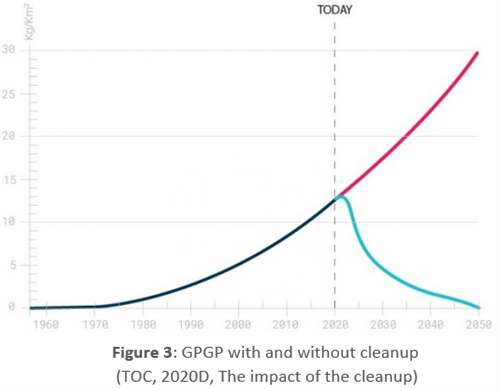
However, these measures won’t affect the plastic that has already accumulated in the ocean over decades, also called “legacy pollution”. While part of this material may return to coastlines and can be addressed through coastal cleanups, large accumulations in remote ocean currents, such as the Great Pacific Garbage Patch (GPGP), will require targeted and sustained cleanup efforts [7].

The Ocean Cleanup

One prominent initiative tackling this challenge is The Ocean Cleanup(TOC), a Netherlands-based non-profit founded in 2013 by Boyan Slat, who was just 18 at the time. TOC’s mission is to develop technologies that both remove existing plastic accumulated in ocean garbage patches and intercept new waste in rivers before it reaches the sea. This dual strategy reflects scientific findings that suggest that roughly 1% or 1,000 rivers worldwide are responsible for close to 80% of plasticentering the oceans [8].

To guide its long-term vision, TOC set an ambitious objective:toreduce 90% of floating ocean plastic by 2040, through a combination of scaled ocean cleanup systems, targeted river interventions, and broader reductions in plastic use supported by improved waste management worldwide [9].

When the first GreenMarked case study on The Ocean Cleanup was published in 2020, the initiative was still in an experimental phase, focused on demonstrating that large-scale plastic removal at sea was technically possible. In the subsequent years, TOC has undergone a clear shift from concept validation to sustained operations. Early offshore trials revealed both the complexity of open-ocean cleanup and the need for rapid design iteration. After initial setbacks with its first system in 2018, subsequent designs demonstrated increasing reliability, leading to towed, U-shaped systems capable of consistently capturing plastic in the GPGP [10].


Figure 1: The Ocean Cleanup (n.d.) is cleaning up plastic in the Great Pacific Garbage Patch, the largest known accumulation zone of plastic. Retrieved from The Ocean Cleanup Media Gallery and available for editorial use.

At the same time, the scope of operations expanded upstream, reflecting the dual strategy it adopted in response to early criticism highlighted in the first case-study as well as emerging scientific evidence. As such, river interception systems were deployed alongside offshore cleanup to address concerns that ocean cleanup alone would focus on symptoms rather than sources. By combining these approaches, TOC significantly accelerated its impact. In 2025 alone, the organization removed over 25 million kilograms of plastic, which is more than the total collected in all previous years combined [11]. This momentum continued into March 2026, when TOC reached a landmark milestone of50 million kilograms of trash removed worldwide [10].

Recent critique

Recent scientific research has focused on the potential ecological consequences and uncertainties surrounding large-scale cleanup activities. Marine biologists have investigated the risks to neuston (organisms living at the water’s surface) and unintended bycatch in open ocean systems, and warn that remediation operations could have varying impacts on these vulnerable communities [11].

Others stress the importance of weighing the net environmental benefits of removing concentrated patch plastics against the costs and unintended effects, and call for robust environmental impact assessments and better governance for high-seas cleanup interventions [12].

TOC has responded by integrating scientific oversight into its projects by commissioning independent environmental impact assessments, adjusting system design to limit incidental bycatch, and actively contributing to open-access research. Recent studies using TOC’s operational data suggest that, targeting plastic hotspots can limit interactions with neuston and improve overall environmental outcomes [13]. Together, these efforts indicate that cleanup can be an environmentally responsible complementto prevention, provided it continuously adapts based on scientific guidance.

Future

With its dual strategy now fully implemented and key milestones achieved, The Ocean Cleanup appears on track to reach its long-term objectives. The rapid scaling of offshore cleanup systems, combined with targeted river interception, has translated ambition into measurable impact, demonstrating that large-scale removal of legacy ocean plastic is technically and operationally feasible.

At the same time, the case study reinforces a central reality: cleanup alone is not sufficient. Lasting success will depend on parallel progress in source reduction, regulatory change, and improved waste management worldwide. Within this broader context, TOC’s work represents a critical and increasingly mature contribution to reducing ocean plastic pollution, complementing prevention rather than replacing it.

References

Click here to expand the references
  1. [1] Ritchie, H., Samborska, V., & Roser, M. (2026). Plastic pollution. Our World in Data. Retrieved from https://ourworldindata.org/plastic-pollution
  2. [2] The Ocean Cleanup. (n.d.). Ocean plastic pollution explained. Retrieved from https://theoceancleanup.com/ocean-plastic-pollution-explained/
  3. [3] Ellen MacArthur Foundation. (n.d.). Plastics – Overview. Retrieved from https://www.ellenmacarthurfoundation.org/topics/plastics/overview
  4. [4] Organisation for Economic Co-operation and Development (OECD). (2022). Global plastics outlook: Economic drivers, environmental impacts and policy options. Downloaded from https://www.oecd.org/content/dam/oecd/en/publications/reports/2022/02/global-plastics-outlook_a653d1c9/de747aef-en.pdf
  5. [5] Sainte-Rose, B., Lebreton, L., Pham, Y., Tjallema, A., & Maes, C. (2026). Modelling the cleanup of the North Pacific Garbage Patch based on 3 years of operational experience. Scientific Reports, 16, 8050. https://doi.org/10.1038/s41598-026-40859-y
  6. [6] Ellen MacArthur Foundation. (2021). The solution to plastic pollution. Retrieved from https://www.ellenmacarthurfoundation.org/articles/the-solution-to-plastic-pollution
  7. [7] Meijer, L. J. J., van Emmerik, T., van der Ent, R., Schmidt, C., & Lebreton, L. (2021). More than 1000 rivers account for 80% of global riverine plastic emissions into the ocean. Science Advances, 7(18), eaaz5803. https://doi.org/10.1126/sciadv.aaz5803
  8. [8] The Ocean Cleanup. (n.d.). The Ocean Cleanup. Retrieved from https://theoceancleanup.com/
  9. [9] The Ocean Cleanup. (n.d.). Milestones. Retrieved from https://theoceancleanup.com/milestones/
  10. [10] The Ocean Cleanup. (2025–2026). 2025 in review: The Ocean Cleanup. Retrieved from https://theoceancleanup.com/updates/2025-in-review-the-ocean-cleanup/
  11. [11] Spencer, M., Culhane, F., Chong, F., Powell, M. O., Roland Holst, R. J., & Helm, R. (2023). Estimating the impact of new high seas activities on the environment: The effects of ocean-surface macroplastic removal on sea surface ecosystems. PeerJ, 11, e15021. https://doi.org/10.7717/peerj.15021
  12. [12] Bergmann, M., Arp, H. P. H., Carney Almroth, B., Dey, T., Farrelly, T., Gündoğdu, S., Helm, R. R., Krieger, A., Syberg, K., Tekman, M. B., Thompson, R. C., Villarrubia-Gómez, P., & Wang, M. (2024). Ocean plastic cleanups need a global framework with science-based criteria. Science, https://epic.awi.de/id/eprint/58076/1/e_Letter_PRT_Final_exclEndnote.pdf
  13. [13] Egger, M., van Vulpen, M., Spanowicz, K., Wada, K., Pham, Y., Wolter, H., Fuhrimann, S., & Lebreton, L. (2024). Densities of neuston often not elevated within plastic hotspots territory inside the North Pacific Garbage Patch. Environmental Research: Ecology, 3, 035002. https://doi.org/10.1088/2752-664X/ad4f92

Cover image: The Ocean Cleanup (n.d.) Boyan Slat, founder and CEO of The Ocean Cleanup, is pictured on a beach in Honduras. Retrieved from The Ocean Cleanup Media Gallery and available for editorial use.

When Policy Becomes the Risk: The EU’s Internal Climate Threat

Europe has been a world leader in climate regulation, with ambitious laws, clear targets, and a determined commitment to environmental protection. Today, that leadership is under pressure.
Changing political winds are creating a new climate risk from within Europe’s political system itself.

Omnibus

Since the Corporate Sustainability Reporting Directive (CSRD)came into effect in the EU on 1 January 2023,there have been increasing demands to simplify its requirements and reduce the perceived reporting burden linked to sustainability disclosures. To address this demand for simplification, the Omnibus package was introduced in February 2025, changing the requirements of the CSRD and the Corporate Sustainability Due Diligence Directive (CSDDD).The latter was meant to protect people and the planet from corporate harm [1].

What began as a technical update has turned into a clear political signal with significant consequences, as the EP adopted the following position on 13 November:

• Only a fraction of companies (i.e., 92% less ) will fall under the CSRD. • Climate transition plans are removed entirely, and civil liability under the CSDDD disappears. • Additionally, the EU Deforestation Regulation (EUDR) will be delayed for another 12 months , without cl ear evidence that would justify such a move .

The Parliament’s can easily be perceived as a betrayal of affected communities, human rights, and environmental protection, sacrificed in the name of ‘simplification’ and ‘competitiveness’.

Far Right

In April, Manfred Weber, President of the European People’s Party (EPP) – the largest party in the EP, described populists and extremists as his party’s main rivals [2]:

“As a leader, I defined a clear red line to the extremists, we will never work together with those who are not respecting my three pro’s: pro Ukraine, pro rule of law and pro Europe, these are fundamental things for us.”

The way the position of the EP was adopted is shocking. Just six months after the above statement, the red line has vanished, as the EPPdecided to align with the far to significantly water down core elements of the Omnibus package.This was the first time a major legislative file advances thanks to an EPP–far-right voting bloc.The Socialists and Democrats (S&D) drew a historical parallel with the 1930s, recalling how conservatives in Germany distanced themselves from the Social Democrats and later entered government alongside the Nazis[3].Civil society groups voiced deep concern as well. According to Nele Meyer of the European Coalition for Corporate Justice[4]:

“By aligning with the far right to push a corporate-driven agenda, the EPP has crossed a dangerous line. This isn’t just another policy setback, it’s a betrayal of Europe’s social and environmental commitments. When anti-EU parties and corporate lobbies write the rules, accountability dies and Europe’s credibility crumbles. Today’s vote shows how corporate capture and far-right politics now walk hand in hand, and it’s the victims, workers and the planet who pay the price.”

Trilogue

During the trilogue negotiations between the Parliament, the Council, and the Commission in December, the EU will “determine who sets the standards for transparency, climate transition finance and corporate accountability for European companies — and whether the EU remains a rulemaker or becomes a rule taker in a system shaped elsewhere” [5].

Transparency and consistency are essential for Europe’s sustainability agenda. Businesses need stable rules, investors rely on trustworthy data, and policymakers must ensure climate targets remain achievable. Simplifying regulations may be needed, but weakening accountability and reliability would undermine competitiveness and long-term resilience. The EU has long been a global leader through high standards and innovation. It can maintain that leadership if it chooses ambition over retreat [5].

References

Click here to expand the references
  1. [1] Grant Thornton Argentina. (2025). Further updates on Omnibus Package negotiations regarding CSRD and CSDDD.
  2. https://www.grantthornton.com.ar/en/insights/articles/2025/further-updates-on-omnibus-package-negotiations-regarding-csrd-and-csddd/
  3. [2] Euronews. (2024). Populists and extremists are EPP’s main competitors – interview with Manfred Weber [Video]. Dailymotion. https://www.dailymotion.com/video/x9iorl2
  4. [3] Politico Europe. (2025). EU conservatives vote with far right to approve cuts to green rules. https://www.politico.eu/article/epp-votes-with-far-right-to-approve-cuts-to-green-rules/
  5. [4] European Coalition for Corporate Justice. (2025). European Parliament’s far-right alliance adopts position on Omnibus I: Corporate capture on full display, written for the few not for people or planet. https://corporatejustice.org/news/press-release-european-parliaments-far-right-alliance-adopts-position-on-omnibus-i-corporate-capture-on-full-display-written-for-the-few-not-for-people-or-planet/
  6. [5] Financial Times. (2025). Europe must be a rulemaker, not a rule-taker. https://www.ft.com/content/a7ef36e6-7288-4e12-b80a-085acd6a722f

Cover and preview image: European Parliament. Photo by Christian Lue on Unsplash.

Sustainability at a Crossroads between Resistance and Resilience

For more than a decade, sustainability has held a prominent place on the global agenda. From the signing of the Paris Agreement to the rise of Fridays for Future strikes, which inspired us to start this GreenMarked blog. The world seemed to be moving steadily toward a greener, fairer future. But today, the story is more complex.

Is sustainability losing momentum, or are we seeing a quieter, deeper rooting in politics, business and everyday life?

Resistance

Across Europe and beyond, signs of resistance are hard to ignore. Political leaders have scaled back or postponed important environmental commitments, often in response to public protests and pressure from industries concerned about their competitive position [1]. Targets once considered non-negotiable have been watered down or postponed. At the same time, the way business talks about sustainability has changed. Where sustainability was once praised as a source of innovation and growth, it is now often seen as an additional regulatory burden.

In the United States, Donald Trump’s renewed political influence has led to renewed resistance to environmental regulation and climate policy. This shift was also evident during the most recent shareholder meeting season, when investors did not support a single climate resolution, a clear signal that investor pressure has eased [2]. Meanwhile, global attention is focused primarily on war, energy shocks, inflation, and migration, pushing sustainability further down the political and media agenda.

Omnibus

The EU’s Green Deal Omnibus Regulation captures the crossroads sustainability faces. Framed as a way to streamline rules and ease business burdens, it has been widely perceived as a political compromise that weakened environmental goals [3]. It reveals both the Green Deal’s resilience and its vulnerability, not a complete withdrawal, but a recalibration, with sustainability still on the agenda, yet filtered through the lens of political feasibility and short-term economics.

Nevertheless, under the CSRD, large companies have already reported on 2024, with thousands more due from 2026 onward. In parallel, the Due Diligence Directive adds obligations on human rights and environmental risks in their supply chains, while the EU Deforestation Regulation – although controversial and subject to delays – is moving forward and set to reshape global procurement. Beyond Europe, the United States has launched record levels of clean energy investment through the Inflation Reduction Act [4], while China and India are pushing ahead with massive expansions in solar, batteries, and electric vehicles [5].

Resilience

Technology and society are also driving the shift. Renewable energy is no longer an expensive alternative; in many places, it is the cheapest option, even without subsidies [6]. Solar panels, batteries, and heat pumps are breaking records year after year, making the transition to cleaner energy harder to reverse. Financial markets, despite political debates, are still channeling huge amounts into green bonds and sustainable finance [7]. Citizens remain engaged as well. Eurobarometer surveys from the European Commission consistently show that Europeans continue to view climate change as one of the most pressing global challenges [8].

Figure 1: A group of people holding signs at a climate parade. Photo by Markus Spiske on Unsplash.

“84% of companies globally are maintaining or accelerating their climate action goals, despite political and economic headwinds”.

PwC, Annual State of Decarbonization 2025

The business world is also a crucial part of this picture. While some companies are slowing their public messaging, more are embedding sustainability into strategy. As of mid-2025, more than 7,000 companies worldwide have validated science-based climate targets through the Science Based Targets initiative, directly linking their decarbonization goals to science [9]. And according to PwC, 84 percent of companies worldwide are either maintaining or accelerating their climate action goals [10]. This shows that despite political pushback, most businesses see climate commitments as central to their long-term competitiveness.

Looking Ahead

The reality is not simply a story of setback or victory, but of resistance and resilience co-existing. Political theater and financial skepticism may suggest a step backwards, but beneath the surface, deeper forces of legislation, corporate strategy, technology, and public concern are weaving sustainability more deeply into the systems that shape our economies and societies.

The task ahead is less about chasing rapid breakthroughs than about consolidating gains, closing gaps, and ensuring that ambition survives political cycles. If the past decade was defined by raising awareness and sparking momentum, this one is about institutionalization.

Progress will be slower, but also harder to reverse. At this crossroads, sustainability is no longer just a movement; it is becoming infrastructure, quietly shaping the foundations of our future, even when the spotlight fades.

References

Click here to expand the references
  1. Carnegie Endowment for International Peace. (2025, September). Confronting backlash against Europe’s green transition. Carnegie Endowment. https://carnegieendowment.org/research/2025/09/climate-backlash-europe-green-transition-farmers-protests
  2. Nijssen, T. (2025, September 2). Investors do not support any climate resolutions during US earnings season [Translated by author]. NRC. https://www.nrc.nl/nieuws/2025/09/02/beleggers-steunen-geen-enkele-klimaatresolutie-tijdens-amerikaans-cijferseizoen-a4904724
  3. Finance Watch. (2025, June 20). How the Omnibus proposal sets the foundation for a deregulation agenda. Finance Watch. https://www.finance-watch.org/blog/how-the-omnibus-proposal-sets-the-foundation-for-a-deregulation-agenda
  4. Rhodium Group & Massachusetts Institute of Technology Center for Energy and Environmental Policy Research. (2025). U.S. clean investment monitor. Rhodium Group. https://rhg.com/research/u-s-clean-investment-monitor
  5. International Energy Agency. (2025). India – World energy investment 2025. IEA. https://www.iea.org/reports/world-energy-investment-2025
  6. International Renewable Energy Agency. (2024). Renewable power generation costs in 2024. IRENA. https://www.irena.org/-/media/Files/IRENA/Agency/Publication/2025/Jul/IRENA_TEC_RPGC_in_2024_2025.pdf
  7. Climate Bonds Initiative. (2025). Sustainable debt market update Q1 2025. Climate Bonds Initiative. https://www.climatebonds.net/resources/reports/sustainable-debt-q1-2025
  8. European Commission. (2025, June). Climate change: Special Eurobarometer survey. European Commission. https://europa.eu/eurobarometer/surveys/detail/3472
  9. Science Based Targets initiative. (2025). Ambitious corporate climate action. SBTi. https://sciencebasedtargets.org/companies-taking-action
  10. PwC. (2025). Annual state of decarbonization 2025. PwC. https://www.pwc.nl/nl/themas/sustainability/documents/annual-state-of-decarbonization-2025.pdf

Cover image: A Man standing in the middle of the woods. Photo by Vladislav Babienko on Unsplash.

Fast Fashion Plants: The Pretty Garden Trend That’s Hurting the Planet

As more people turn to their gardens for joy, biodiversity, and a touch of green serenity, an important question arises: Where do our garden plants come from—andat what cost?

Much like the food we eat, the origins of our plants matter. Many plants sold in mainstream garden centers may look vibrant and healthy, but they are often the result of
energy-intensive, chemically dependent production systems. Grown under artificial lighting, accelerated with synthetic fertilizers, and grown in heated greenhouses with peat-based soil, these plants often appear healthy at first glance—but are poorly equipped for survival in real garden conditions.

It is not uncommon to see flowering perennials in full bloom weeks before their natural season, with plants that typically flower in May or June already lining shop displays in early spring. This rush to visual perfection may be pleasing to the eye, but it masks a deeper issue: these plants are grown rapidly and artificially, prioritizing looks over resilience, biodiversity, or ecological value[1].

Therefore, such plants are increasingly referred to as “fast fashion plants” –a term that highlights their cheap, decorative appeal, much like fast fashion clothing. In Dutch, the term plofplant is used, inspired by the plofkip—a factory-farmed cut-price chicken bred for unnatural speed of growth. Like their poultry counterparts, fast fashion plants prioritize speed and looks over resilience, biodiversity, or ecological value[1].

What Makes Fast Fashion Plants Harmful?

Despite their popularity, fast fashion plants carry significant environmental and ecological downsides:

  • Peat use: Still common in potting soils, peat extraction destroys peatlands, which are critical carbon sinks and support unique biodiversity [2].
  • Chemical inputs: Fertilizers and pesticides damage soil health, pollute waterways, and harm beneficial insects.
  • High energy demand: Heated greenhouses and artificial lighting increase the carbon footprint of every plant grown this way [3].
  • Fragility: Grown in controlled environments, these plants often struggle when exposed to insects, wind, and natural garden conditions [1].

While they may provide instant visual appeal, fast fashion plants are often short-lived and ill-suited to natural environments. Many quickly wilt, fall prey to pests, or struggle to adapt to changing weather conditions [1].

The Better Alternative: Naturally Grown, Biodiverse Plants

In contrast, a growing number of small-scale, sustainable growers offer a better option. Their plants are:

  • Grown in open-air, seasonal conditions using natural light.
  • Cultivated without synthetic fertilizers or pesticides.
  • Potted in peat-free, organic compost.
  • Focused on native species that support pollinators and biodiversity

As a result, these naturally grown plants are more robust, wildlife-friendly, and adapted to your local environment. They live longer, support pollinators, and contribute to a healthier ecosystem overall [2].

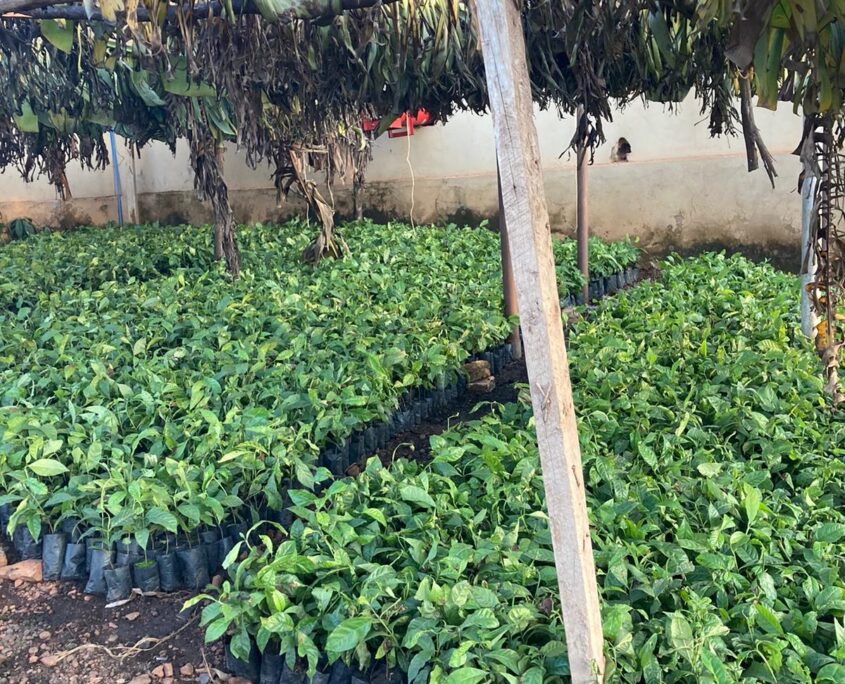
Figure 1: Agrecol Tree Planting at the certified agroecological community in Taquiña

How to Avoid Fast Fashion Plants

You don’t have to be a gardening expert to make better choices. Here are a few practical steps:

  • Buy from local, independent, or natural growers: These often work without harmful chemicals and grow plants that are adapted to real-life conditions. Ask where and how the plants were grown. Many sustainable growers are proud to share their methods.
  • Look beyond perfect appearances: If the plants are identical in shape, size, and colour, and come in light, dry potting mix, they may be mass-produced under artificial conditions.
  • Choose native and insect-friendly plants: These plants are lower in maintenance and help support biodiversity right in your backyard.

The Industry Is Beginning to Shift

While fast fashion plants still dominate the shelves, the tide is slowly turning, as leading retailers are beginning to change course. In the Netherlands, Intratuin, the country’s largest garden center chain, has committed to selling mostly pesticide-free plants, seeds, and bulbs by 2030. This marks a significant shift in an industry long reliant on conventional practices [4].

The transformation began after a Greenpeace report exposed widespread pesticide use . Initially met with denial, the report eventually triggered internal change [5]. Since then, Intratuin has phased out products like glyphosate-based weed killers and has replaced pesticides with natural pest control, such as ladybirds. More garden centers are now offering biological and native plants, and there’s growing consumer demand for greener alternatives.

Still, challenges remain. Fungal treatments are sometimes hard to replace, and chemical traces can drift in from nearby agriculture. The transition has also had financial consequences—Intratuin lost millions in revenue by removing non-sustainable products from its offering. Yet the company’s decision to prioritize long-term ecological value over short-term profit sets a powerful example for the rest of the sector [4].

The lesson: change is possible,even in an industry built on convenience and aesthetics—if companies have the courage to lead it.

Let Your Garden Be Part of the Solution

By choosing naturally grown, ecologically valuable plants, you are not only creating a beautiful outdoor space—you’re supporting soil health, insect life, carbon storage, and biodiversity.

Next time you visit a garden center, look beyond appearances. Ask questions. Choose wisely. Every plant you bring home is a chance to grow not just your garden, but a greener future.

No Garden? You Can Still Grow Something That Matters

These trees are grown without synthetic pesticides or fertilisers, using consolidated agroecological practices. After three years, they begin producing fruit—providing not just climate resilience, but also a new source of income for the farmers who care for them.

Adopt a tree today and plant the roots of long-term change.

References:

Click here to expand the references
[1] NRC. (2025, 14 April). Avoid fast fashion plants from garden centers and choose natural growers. (Translated by Author). Retrieved from https://www.nrc.nl/nieuws/2025/04/14/vermijd-plofplanten-uit-tuincentra-en-kies-voor-natuurlijke-kwekers-a4889870

[2] BNNVARA Vroege Vogels. (2012, 3 April). Don’t plant fast fashion plants.(Translated by Author). Retrieved from https://www.bnnvara.nl/vroegevogels/artikelen/plant-geen-plofplant

[3] MAX Vandaag. (n.d.). Tip 9: fast fashion plants. (Translated by Author) https://www.maxvandaag.nl/sessies/themas/huis-tuin-hobby/tip-9-plofplanten/

[4] Volkskrant. (2025, 7 May). Van gifspuit naar lieveheersbeestjes: het tuincentrum wordt steeds duurzamer. https://www.volkskrant.nl/binnenland/van-gifspuit-naar-lieveheersbeestjes-het-tuincentrum-wordt-steeds-duurzamer~b8c71019/

[5] Greenpeace Nederland. (2018). Gifplanten in het tuincentrum: Sierteelt als sluiproute voor pesticiden. Downloaded from https://www.greenpeace.org/static/planet4-netherlands-stateless/2018/06/GP_Bijenrapport_sierteelt.pdf

Cover image: Garden wall in Córdoba captured by Author in spring 2025

This article is part of the project “Quiz Ambientali per un Trentino Più Verde!” carried out by Econtrovertia APS and sponsored by Fondazione Cassa Rurale di Trento (Notice of Approval of December 20, 2024).

The Political Identity of the Climate Crisis

Climate change is no longer an abstract problem or a distant threat; it is a reality increasingly felt in our society. While often discussed in terms of scientific facts and technological solutions, the core of the problem lies in the political domain. Climate change is essentially a political issue. This perspective provides an important lens for sustainability experts, policymakers, and activists: the key to action lies in political choices and leadership.

Climate as a Political Challenge

Solutions to climate change are technically within reach. We have the knowledge and tools to replace fossil fuels with renewable energy sources, make agricultural systems sustainable, and make cities climate-proof. Yet, the necessary large-scale changes are failing to materialise. Why?

The question of who bears the burden of climate policies – citizens, businesses, or governments – is inherently political. Fossil fuel subsidies persist because powerful interest groups defend them. Meanwhile, green alternatives are seen as more expensive, creating resistance among voters and policymakers. As a result, half-measures or postponements are often opted for, while the true costs of inaction are misleadingsly.

Frank Biermann – Professor of Global Sustainability Governance at the University of Utrecht –also believes that the reason for lacking change lies in the political arena. In October, he received a prestigious award for his research on the role of political science in global sustainability efforts [1]. Biermann and his colleagues analysed more than 3,000 scientific studies and concluded that the Sustainable Development Goals have had no transformative impacts on societies or the political system [2].

“We need better and more powerful institutions and better politics to deal with the challenges such as climate change” [3]

Biermann’s research emphasises that while global frameworks like the SDGs are valuable for steering discussions, their actual political impact remains limited without strong, binding action. He points to the need for deeper normative and institutional changes, from legislative action to resource redistribution. This demonstrates that transformation cannot be achieved through goodwill and guidelines alone, it requires political courage and collective effort [2].

“Non-binding targets have taken on a more prominent role. Countries are often allowed to determine how ambitious they want to be, [for example with] the Paris Agreement on climate change from 2015 […]. If a goal is not ambitious or not met, there may be some naming and shaming within the UN, but it has no serious consequences” [4].

The Role of Sustainability Professionals

As a sustainability professional, we should understand the political dimensions of climate change and broader sustainability challenges. Our role goes beyond developing technical solutions and CO₂ reporting; where possible, we should drive policymakers, businesses and civil society towards structural change.

The Role of Citizens and Action Groups

Public engagement plays a crucial role in shaping effective climate policies. Political choices are often influenced by social pressure, and historical changes show how powerful collective action can be. From women’s suffrage to the abolition of apartheid, social movements have repeatedly changed the political agenda [5].

At GreenMarked, we recognize the role sustainability platforms have in mobilising people, raising awareness and encouraging action. Supporting citizens’ initiatives and launching joint campaigns can put pressure on politicians to tackle climate change seriously.

The Power of Political Will

Technological innovation is a crucial part of addressing climate change but without political will, this innovation remains untapped. Climate change and sustainability demand not just new technologies but also fundamental changes to systems, power structures, and international collaboration.

Everyone, from policymakers to citizens, has a role to play in shaping a future that is sustainable and just. Let us recognize the political dimension of climate change and take the necessary steps to bring about the changes we need.

The challenge is great, but the reward is greater: a liveable planet for future generations. Together, let’s move politics and take action.

References

Click here to expand the references

[1] Garner, O. (2024, 15 October). Frank Biermann receives the Volvo Environment Prize 2024. Retrieved from https://www.sei.org/features/frank-biermann-receives-the-volvo-environment-prize-2024/

[2] Biermann, F., Hickmann, T., Sénit, CA., […] Van Vuren, D. & Wicke, B. Scientific evidence on the political impact of the Sustainable Development Goals. Nature Sustainability 5, 795–800 (2022). https://doi.org/10.1038/s41893-022-00909-5

[3] Ballard, C. (2024, 18 September). Frank Biermann awarded the Volvo Environment Prize 2024.https://www.uu.nl/en/news/frank-biermann-awarded-the-volvo-environment-prize-2024

[4] Wismans, L. (2024, 20 October). ‘Countries are saying good things about sustainability, but concretely little is being done’. [Translated by Author]. Retrieved from https://www.nrc.nl/nieuws/2024/10/20/het-klimaat-is-uiteindelijk-een-politiek-probleem-a4869956

[5] Bregman, R. (2025). Moral ambition. Bloomsbury Publishing (UK).

Renewable Revolution in the EU


Never before has the European Union relied so little on fossil fuels as in the first half of 2024, even as global demand for energy increases and gas prices return to pre-war levels. This milestone is largely due to the rapid expansion of wind and solar energy. For the first time, these renewable sources generated more electricity than fossil fuels in the EU, covering 30% of the energy mix compared to fossil fuels’ 27% [1].

This transition was driven by record solar and wind capacity additions, which together accounted for a significant share of the EU’s energy mix. Solar power increased by 21%, and wind by 9%, helping renewables meet a slight rebound in electricity demand while pushing fossil fuel generation to historic lows. However, despite this success, the shift has not been without challenges [1].


Fig 1:A lone wind turbine stands before a Dutch coal power plant, highlighting the ongoing journey towards a fully green energy transition. Photo by Tim van der Kuip on Unsplash.

Dutch Paradox

The Netherlands, despite being a leader in solar adoption and having the highest number of solar panels per capita in Europe, faces unique issues that highlight the complexity of integrating renewables into the grid [2]. With a climate that results in fluctuating solar energy production due to irregular weather patterns, the country struggles to manage both supply and demand effectively. On particularly sunny days, the Netherlands has experienced negative electricity prices for almost 4% of the time in 2023!

This is a situation where excess generation overwhelms demand and energy producers are forced to pay to offload surplus electricity. This problem is exacerbated by grid congestion, where the existing transmission infrastructure cannot handle the influx of energy, leading to bottlenecks and inefficient distribution [3].

“Welcome to the Dutch power market, where you can now make money by leaving your fridge open” [4]

This dynamic contrasts sharply with countries like Spain, where energy supply and demand align more predictably. Spain’s electricity demand peaks during hot summer days when air conditioning use is high, directly coinciding with maximum solar output. In the Netherlands, however, peak solar production often occurs during spring and summer months, when overall energy demand is lower, creating a mismatch that complicates grid management and results in inefficiencies [4].

Future Outline

Despite these challenges, the shift is still viewed as a positive trajectory for the EU’s energy system. With nearly half of EU Member States now generating more power from renewables than from fossil fuels, it signals a turning point. However, maintaining this pace will require new strategies to avoid the pitfalls seen in high-renewable regions like the Netherlands, where the focus should shift from simply increasing capacity to managing when and where energy is used and produced [3].

Overall, the EU’s success in integrating renewables will depend on its ability to balance supply and demand more effectively, expand cross-border transmission, and incentivize the development of storage solutions. The rapid transformation of the energy market offers a glimpse of what is possible but also serves as a reminder of the complexities involved in building a truly resilient and sustainable energy system [3].

References

Click here to expand the references

[1] Graham, E., & Fulghum, N. (2024, July 30). Wind and solar overtake EU fossil fuels in the first half of 2024. Ember Climate. Retrieved from https://emberclimate.org/app/uploads/2024/07/Report_Wind-and-solar-overtake-EU-fossil-fuels-in-the-first-half-of-2024.pdf

[2] Dutch Statistics: Centraal Bureau voor de Statistiek (CBS). (2023, 19 June). 46 percent more solar energy production in 2022. Retrieved from https://www.cbs.nl/en-gb/news/2023/24/46-percent-more-solar-energy-production-in-2022

[3] Çam, E., Hungerford, Z., Schoch, N., Pinto Miranda, F., & Yáñez de León, C. D. (2024, January). Electricity 2024: Analysis and forecast to 2026. International Energy Agency. Retrieved from https://iea.blob.core.windows.net/assets/18f3ed24-4b26-4c83-a3d2-8a1be51c8cc8/Electricity2024-Analysisandforecastto2026.pdf

[4] Frederik, J. (2024, October 8). Welcome to the Dutch electricity market, where you can now earn money by leaving your refrigerator door open [Translated by Author]. De Correspondent. Retrieved from https://decorrespondent.nl/15595/welkom-op-de-nederlandse-stroommarkt-waar-je-nu-geld-kunt-verdienen-door-je-koelkast-open-te-laten/ac43d35e-ef7b-06fc-0474-2204e3842168

Balancing Agriculture and Sustainability in the EU

The European Union (EU) stands at a crucial crossroads as it seeks to balance agriculture and food supply with sustainability and environmental preservation. This balance brings to light some of the most pressing challenges of our time: biodiversity loss, extremely polluting livestock, drought and water degradation. Despite significant regulatory frameworks and political commitments, the path to a sustainable agricultural future in Europe is complex.

New political landscape

The results of the recent European elections have significant implications for the future of EU agricultural and environmental policies​​. Despite a rise in far-right parties opposed to stringent environmental regulations, the centrist European People’s Party (EPP) remains the largest group in the European Parliament, maintaining a clear majority with the Socialists and Democrats (S&D) and the liberal Renew group [1]. However, the stronger presence of right-wing parties will likely influence the EU’s legislative agenda, potentially delaying or weakening environmental initiatives such as the Green Deal [2].

Loss of biodiversity

Biodiversity loss in Europe has reached alarming levels, with over 80% of European habitats in poor condition​​. The recently adopted EU Nature Restoration Law aims to reverse this trend by mandating the restoration of at least 20% of the EU’s land and sea areas by 2030, and all ecosystems in need of restoration by 2050. This law sets legally binding targets for restoring degraded ecosystems,requiring member states to develop national restoration plans, prioritize Natura 2000 sites, and enhance biodiversity in agricultural lands. However, translating these ambitious targets into actionable steps across diverse member states remains a significant challenge [3].

“Our global food system is the primary driver of biodiversity loss, with agriculture alone being the identified threat to 24,000 of the 28,000 (86%) species at risk of extinction.” [4]

Agricultural subsidies

The EU member states spend huge amounts to subsidize agriculture. The Common Agricultural Policy (CAP) of the EU accounted for €57 billion in 2013, making it the largest expenditure in the EU budget. A new study showed that 82% of these agricultural subsidies were allocated to livestock and fodder[5].

“People see fields full of plants without considering their purpose is to feed animals.” [5]

Most agricultural subsidies end up with large farmers and even landowners who do not even farm themselves. Small (organic) farmers are most affected, not only because they receive fewer subsidies, they also have to compete with an existing system that has many economies of scale and innovation. Moreover, all external costs (e.g., environment, climate, health) can be passed on to the taxpayer. This way, intensive livestock farming is being advantaged twiceconcludes Jeroen Candel, Associate Professor of Food & Agricultural Policy at Wageningen University [2].

Conflicting climate targets

Livestock is also responsible for the vast majority of food-related greenhouse gas (GHG) emissions in the EU. Livestock products subsidized by the CAP account for 84% of food-related GHG-emissions in the EU, with agriculture accounting for 10% of total EU GHG emissions [5]. This is in stark contrast to the EU’s climate target“Fit for 55”, which stipulates a net emissions reduction target of 55% by 2030 and climate neutrality by 2050.

Transforming food systems

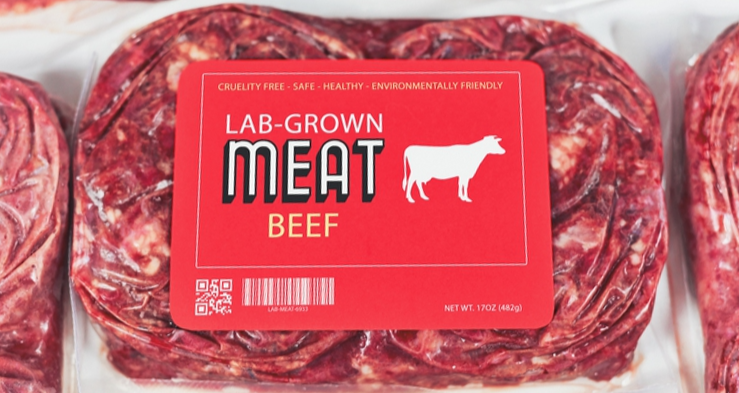
In most Member States and regions, agriculture, and especially nature, is under pressure from increasing economic activity. If 70% of that agricultural land is used for animal production, it is clear what we need to do: We need to switch to more plant-based products, because a shift in eating habits, especially a reduction in the consumption of animal products, can reduce pressure on land and natural resources [2]. Technological innovations such as lab-grown meat and precision fermentation are also leading to alternatives to livestock [6].

Fig. 1: Lab-grown meat. Royalty free photo from Getty images.

“Producers of alternative proteins receive 1,200 times less public support than intensive livestock farming.” [6]

Candel stated that these innovators in alternative protein are surrounded by uncertainty: “we don’t know if they will be successful, but expectations are high. Potentially, they are disruptive innovations that could enable us to produce more sustainably” [2]. However, governments largely ignore the climate-mitigation potential of these innovators [6]. The Dutch Liberal Party (VVD), for example, always stresses the importance of innovation, but in reality tends to support the status quo: the current dominant agricultural regime, rather than these innovative forms of food production [2].

The way forward

The future of agriculture in Europe hangs in the balance, influenced by political shifts, industrial lobbying, and societal pressures. As citizens and policymakers, the responsibility lies with us to push for changes that align agricultural practices with environmental sustainability and social equity.

Moving forward, we must advocate for policies that promote sustainable agricultural practices, support innovation, and ensure equitable distribution of resources. This includes rethinking subsidy systems, investing in new technologies, and fostering collaboration among all stakeholders—farmers, policymakers, scientists, and consumers.

Ultimately, achieving a sustainable agricultural future requires a collective effort. It demands that we remain informed, engaged, and proactive in advocating for change. By working together, we can create a resilient agricultural system that not only feeds the world but also nurtures the planet.

The Dirty Water Dilemma

The health of our oceans and rivers is an indicator of the well-being of our planet. But beneath their serene surfaces, lie complex ecosystems threatened by pollution. In this blog post, we dive into the interwoven threads of sewage pollution, eco-activism and chemical pollution to understand the challenges facing our waterways today.

Surface water

Surface water in the Netherlands contains many chemical substance, in particular many flame retardants. Only 4% of Dutch streams and rivers meet European water quality standards. By 2027, every ditch, river and stream across Europe must comply with the European Water Framework Directive [1].

Sewage Spills

Also on the other side of the North Sea, a worrying development is emerging. Reports indicate a trend of sewage discharges into the rivers and seas of the United Kingdom (UK), raising concerns about the safety of waterways. England and Wales are the only countries in the world to have fully privatised its water and sewage system. Consequently, these companies discharged the equivalent of 450 years of untreated wastewater in 2023, an increase of 54% compared to 2022 [2].

“80% of the world’s sewage is dumped untreated into our oceans”[3]

Sewer overflow poses a serious risk to public health by contaminating drinking water, spreading pathogens through the air, transferring diseases through the food chain, and exposing people to polluted water during recreational activities [4].

There is an urgent need for better environmental monitoring, upgrading water treatment facilities, and improving infrastructure to reduce the spread of diseases, including the risk of Covid-19 transmission. Ensuring public safety requires a concerted effort to enhance the management of water and sewage systems [4]. However, upgrading wastewater treatment plants in England and Wales to remove the chemical pollution will cost roughly €50 billion, approx. 8% of the annual GDP of London [5].

Eco-activism

“The Dirty Protest” stated that they had “enough of all this shit”, and came up with a “petition against shit in our ocean signed with shit from our ocean” [3]:

Drugged fish

If human waste alone was not enough, researchers found a wide variety of prescription and illegal drugs plus a variety of pesticides in coastal waters and marine organisms [6]. Sewage treatment plants do not filter these chemicals out, as they were never designed for it [5]. Consequently, wildlife living in rivers and coastal waters where sewage is discharged are exposed to cocktails of drugs [6].

“In the marine life we’re finding they’re full of drugs, they’re full of contraceptive pills, anti-depressants, anti-anxiety medication, every single marine species we’ve looked at so far is full of cocaine.”

[Professor Alex Ford – University of Portsmouth]

Drug exposure affects not only the fish themselves but also their offspring. In fish, addiction can be inherited over several generations. This can have long-term effects on ecosystems even if the problem were to be solved now. However, the wider effects of those drugs remain largely unknown [5].

Regulation

UK law relating to sewage discharges largely derived from EU law, but its language is imprecise. Moreover, key legislation in this area has been costly and difficult to apply. As mentioned above, the Netherlands is among many EU countries failing to timely implement EU wastewater legislation [7].

The EU recognised that there are still sources of pollution that are not yet adequately addressed by the current regulation, including sewage spills. In March 2024, the Council and the European Parliament reached a provisional agreement to review the urban wastewater treatment directive. The directive is among the key deliverables under the EU’s zero-pollution action plan [8].

If we want to tackle the amount of drugs in our waterways, we need to do more to improve filtration in sewage treatment plants and force water companies to take more responsibility for ensuring that wastewater does not harm wildlife [5].

How the EU is Revising its 2040 Climate Targets amid Farmers’ Strikes

Earlier this month, the European Commission(EC) presented recommendations for cutting greenhouse gas emissions by 90 % by 2040 [1], building on the EU’s 2030 Fit for 55objective, and part of the broader goal of reaching climate neutrality by 2050. Notably, however, while the report states a target of less than 850 MtCO₂-eq remaining at 2040, the scope of the final document was reduced. Reuters reported that the EU’s draft target required agriculture to reduce non-CO₂ emissions by 30% compared to 2015 to meet the overall climate target, but claimed that this section was removed from the final draft [2]. Moreover, emissions from the land use, land use change, and forestry (LULUCF) sector are not included [1], as well as the 90% reduction being reliant on 400 MtCO₂ being extracted through both land based and industrial forms of carbon capture.

Changing frames

The report stated that its purpose was solely “to initiate the political debate and inform the preparation of the post-2030 framework”, with no new policy propositions or sector-specific targets set according to the EC [1]. However, the creative accounting of the report puts a particular frame on climate change, and the solutions to it. Frames have been described to have the power to define problems, diagnose causes, make moral judgements and from there suggest remedies [3]. Thinking of the recommendations in this light, shows how the chosen framing can lead the political debate to focus less on animal agriculture, and more on carbon capture and storage (CCS), producing policies to this effect.

This particular framing is alarming for several reasons. Firstly, while atmospheric levels of CO₂ have increased by roughly 50 %, atmospheric methane levels have seen a much greater increase of 162 % [4]. These exceptions create a framing where National energy and Climate plans (NECPs) are not encouraged to recognise agricultural emissions, particularly methane which the European Environment Agency (EEA) states is 80 times more potent than CO₂ over a 20 year period [5].

Nevertheless, in the EC’s report, they account for GHG emissions with an adjustment of Global Warming Potentials (GWPs)over a 100 year period. For this timeframe, the potency of methane drops to 27 times the equivalent of CO₂, thus diminishing the perceived threat. The IPCC has also recognised this misapplication of GWPs, stating:

“GWP100 is not well-suited to estimate the cumulative effect on climate from sustained SLCF emissions [Short-lived climate forcers, including aerosols, methane and nitrogen oxides] and the resulting warming at specific points in time” [6].

Accounting for SLCFs in such a way, will protract their effect over time under the proposed recommendations, and misrepresents the scale of their impact in the short-term, leading to the illusion of far more time to offset the emissions than is available. When adjusting EU GHG emissions data for 2021 [7] to a 20 year warming period, methane accounts for 1.52Bt of CO₂e with CO₂ at 2.76Bt for the same year. Measured this way, methane is shown to be a compound that demands far more attention than the EC affords it, representing 55 % of its prominent counterpart CO₂’s environmental impact. When considering a shorter term perspective, this highlights the dangers of the EC’s oversight when considering SLCFs.

The dangers of neglecting methane however, does not only lead to a miscalculation of warming potential. Elevated atmospheric methane levels can increase all-cause mortalities, particularly through promoting cardiovascular and respiratory problems [8]. Methane itself is also a marker of the volume of animal agriculture in a society, which not only causes the suffering of billions of sentient animals, but also contributes to poor public health through the risk of zoonotic diseases [9]. From a localised perspective, animal agriculture typically causes the degradation of soil and water quality, requiring significant treatment for bacteria and pathogens [10].

Fig. 1: Farmers protest in Berlin on 18 December 2023. Editorial Use Only photo by Jakob Berg on Shutterstock

The decision to tactically disclude agricultural emissions and the withdrawal of the planned halving of pesticide use demonstrates the success of recent farmer protests sparking across Europe [11]. Excluding agricultural emissions means that GHG emissions far more potent than CO₂ are excluded from the climate target. Emissions such as methane (CH4) and nitrous oxide (NO₂), are largely caused by farm animals and fertiliser runoff.

Leading to the second issue of GHG capture, methane capturespecifically has been found to be particularly ineffective [12], while also often using methods that do not negate emissions altogether, but rather transform the methane, into the less potent CO₂ and water. Achieving the aforementioned target of 400 MtCO₂ is stated in the report to require “faster investments for deployment of novel low carbon technologies such as hydrogen production by electrolysis, carbon capture and use and industrial carbon removals between 2031 and 2040”. While there is recognised future potential for various carbon capture and storage methods, their benefits are likely to appear in the  second half of the century, due to both recognised legislative barriers [13], as well financial barriers and a lack of political will, stunting the R&D of high performance CCS solutions [14].

Proposal to final targets

Greenpeace’s EU climate and energy campaigner Silvia Pastorelli stated: “Without honesty about an end to fossil fuels and finally tackling farming emissions, it’s hard to see how the EU will even clear this too-low bar it’s setting itself” [12].

The EC’s recent recommendations for cutting greenhouse gas emissions represent a significant step toward combating climate change. However, the decision to exclude agricultural emissionsfrom the final draft and the reliance on carbon capture and storage (CCS) solutions raises concerns about the effectiveness of the proposed measures.

By framing the climate debate in a way that prioritises certain emissions over others, there is a risk of overlooking critical contributors to global warming, and other societal ills, which demands urgent attention. This should be considered when the new EC and European Parliament (EP) are to pass the final emission target for 2040 after the EP elections in June.

References

Click here to expand the references
  1. Entman, R. M. (1993). Framing: Toward clarification of a fractured paradigm. Journal of communication, 43(4), 51-58. [4] NASA. (2024). Vital signs. Retrieved from https://climate.nasa.gov/vital-signs/.

    [5] European Parliament, EP. (2023, 28 March). Greenhouse gas emissions by country and sector. Retrieved from  https://www.europarl.europa.eu/topics/en/article/20180301STO98928/greenhouse-gas-emissions-by-country-and-sector-infographic

    [6] Intergovernmental Panel on Climate Change, IPCC. (2022). AR6 Climate Change 2022: Mitigation of Climate Change. Technical Summary. Downloaded from  https://www.ipcc.ch/report/ar6/wg3/downloads/report/IPCC_AR6_WGIII_TechnicalSummary.pdf

    [7] Ritchie, H., Rosado, P. & Roser, M. (2023). CO₂ and Greenhouse Gas Emissions. Retrieved from https://ourworldindata.org/co2-and-greenhouse-gas-emissions

    [8] West, J. J., Fiore, A. M., Horowitz, L. W., & Mauzerall, D. L. (2006). Global health benefits of mitigating ozone pollution with methane emission controls. Proceedings of the National Academy of Sciences, 103(11), 3988-3993. https://doi.org/10.1073/pnas.0600201103

    [9] Chakravorty, U., Fisher, D. K., & Umetsu, C. (2007). Environmental effects of intensification of agriculture: livestock production and regulation. Environmental economics and policy studies, 8, 315-336. https://doi.org/10.1007/BF03353963

    [10] Akinbile, C. O., Erazua, A. E., Babalola, T. E., & Ajibade, F. O. (2016). Environmental implications of animal wastes pollution on agricultural soil and water quality. Soil and Water Research 11(3). https://doi.org/10.17221/29/2015-SWR

    [11] European Commission, EC. (2024, 6 February). Speech by President von der Leyen at the European Parliament Plenary on the conclusions of the European Council meetings, in particular the special European Council meeting of 1 February 2024. Retrieved from https://ec.europa.eu/commission/presscorner/detail/en/speech_24_661

    [12] Carbon Offset Guide. (n.d.) Methane Capture. Retrieved from https://www.offsetguide.org/avoiding-low-quality-offsets/vetting-offset-projects/methane-capture/

    [13] Tysoe, S. (2009). Carbon capture and storage: pulling down the barriers in the European Union. Proceedings of the Institution of Mechanical Engineers, Part A: Journal of Power and Energy, 223(3), 281-291. https://doi-org.mu.idm.oclc.org/10.1243/09576509JPE626

    [14] Rubin, E. S., Mantripragada, H., Marks, A., Versteeg, P., & Kitchin, J. (2012). The outlook for improved carbon capture technology. Progress in energy and combustion science, 38(5), 630-671. https://doi-org.mu.idm.oclc.org/10.1016/j.pecs.2012.03.003
  2. Niranjan, R. (2023, 6 February). EU lays out plan to cut greenhouse emissions by 90% by 2040. Retrieved from https://www.theguardian.com/environment/2024/feb/06/eu-lays-out-plan-to-cut-greenhouse-emissions-by-90-by-2040

Sustainability Implications of Dutch Far-right Victory

Marine Le Pen in France, Giorgia Meloni in Italy, the British leaving the European Union in 2020, former Eastern Bloc countries flirting with communism again and reaching out to Vladimir Putin’s Russia. The Dutch elections, in which the far-right PVV party lead by populist Geert Wilders became the biggest party in the game, fits into the growing right-wing sentiment in Europe[1]. GreenMarked explored the implications of this election result for sustainability in the Netherlands.

Anti-sustainability by the PVV

As with the Brexit, Wilders wants a “binding referendum” on a Dutch “Nexit” [2]. Moreover, Wilders denies the urgency of climate change and wants to cancel the Paris Agreement:

“The Climate Bill, the Climate Agreement and all other climate measures go straight through the shredder. No billions wasted on pointless climate hobbies, but more money for our people.”

PVV election programme 2023 [2]

In addition, the entire energy transition should be cancelled if it is up to the PVV. Wilders wants “no more wind turbines and solar parks” as well as “eliminating all climate subsidies”. Instead, coal and gas power plants should stay open” and “new nuclear power plants should be added”, the latter then being the only low-carbon energy source. Contradicting, though, is that Wilders calls for “keeping the solar panel subsidy scheme in place” [2].

While these statements are very alarming, it is important to understand the Dutch political landscape. Dutch politics is characterised by a robust multi-party system, in which no single party traditionally achieves an absolute majority in parliament. Therefore, coalition governments are the norm, requiring parties to engage in complex negotiations to form alliances and shape policy agendas, known as the Dutch “polder model“.

Despite gaining almost a quarter of the votes, it remains questionable whether other parties are willing to enter a coalition with the PVV. Potential coalition parties have been particularly critical of PVV’s controversial anti-Islam views, which are considered unconstitutional. Instead, these potential coalition parties stated that they want to adhere to the rule of law [3]. The outcome depends on the current formation process. Last time, it took almost ten months to come up with a new cabinet.

Dutch constitution

Adhering to the constitution goes beyond freedom of speech and religion. The Dutch Constitution also includes climate policy, although not explicitly. The Constitution mentions that the government takes care of the environment (article 21), but also has to ensure security of existence (article 20) and public health and housing (article 22). All those articles relate to climate as well [3].

This is obvious where the environment is concerned. However, livelihood security, public health and housing are also threatened by floods, forest fires, dangerously high temperatures, extreme weather – in short, the effects of climate change. Severe storms destroy homes, businesses and vehicles, heat waves cost the lives of vulnerable elderly people in particular [3].

Moreover, climate change will hit the poorest parts of the world hardest – think of the devastating floods in Pakistan. This leads to more displaced people, more refugees, more international conflicts, which is terrible in itself, but on top of that, it leads to more pressure on livelihoods, healthcare and housing in our own societies [3].

Legal perspective

This has also been recognised by the Dutch courts. An example is the Urgenda case we reported on in 2021. Here, the Dutch Court and Supreme Court ruled that the Dutch State was violating human rights with insufficiently ambitious climate policies. The human rights that formed the legal basis of that judgment were the “Right to life” and the “Right to private and family life” [4]. Dutch judges are not permitted to review laws for compliance with the Constitution [3].

Fig. 1: Caretaking of the world. Copyright-free photo by Dorothe on Pixabay.

Climate dossier cannot be dismissed

In a democratic constitutional state, politicians may enact any law they want, as long as they abide by the Constitution. The fundamental rights enshrined therein require effective policies in line with the Paris Agreement [3].

As such, top advisers to the Dutch government concluded that a new Dutch cabinet cannot “put climate policy through the shredder” [5]. In addition, these advisers foresee that “applying the brakes [on climate policy] will harm business rather than help” [5].

“EU countries such as Germany and France, which are laying out roadmaps for a low-carbon economy, could be a draw for companies looking to adopt clean technology. As a result, the Netherlands may find itself ‘at the back of the bus’ in Europe, but should still join them to the final destination of a low-carbon society.” [5]

The Netherlands must do its part to keep global warming below 2 °C and should only raise its ambitions in that regard, not lower them. Which measures will be taken to achieve that goal can be negotiated, but the fact that this effective policy must be in place should not be a question at the formation table. Otherwise they risk being overruled by the judge[3].

Beyond climate targets, the Netherlands cannot ignore the consequences of global warming, being the “increasing blue risk”. Even if limited to 2 °C, the Netherlands will face a rise in sea-water way beyond the capacity of its Delta Works defence system [6]. Extreme countermeasures must be taken to prevent the majority of land from flooding [7]. However, can we expect sound water safety policies from a party that denies the root cause of the climate crises?

For both climate policy and water safety policy, doing nothing now will only make it more difficult and expensive in the future. Countering the climate crisis is not only about complying with European directives, but also about protecting their coasts, their land, their people and their future. That is why relating human rights were integrated into the Dutch Constitution.

This article is part of the project “PILLOLE D’ACQUA PIANA: seminari itineranti, blog e podcast per una gestione sostenibile delle risorse idriche in Piana Rotaliana” carried out by ECONTROVERTIA APS and supported by Fondazione Caritro (Prot. no. U445.2023/SG.386 of April 23, 2023).

Dutch Cities to Hit 50 Degrees?

As a delta country, climate plays an important role in the Netherlands. For an accessible, liveable and safe country, knowledge about the future climate is very important. With coastal defences, dykes and infrastructure projects, the Dutch became known for their water management. The large investments involved require foresight. This is why the Royal Netherlands Meteorological Institute (KNMI) provides
climate scenarios for a possible future climate in the Netherlands. In October, the KNMI scenarios for 2023 were published [1].

Future scenarios

Using the latest findings of the international climate panel IPCC on the situation in the Netherlands, KNMI’s future scenarios provide insight into the extent of heat, drought, precipitation and sea level rise in 2050, 2100 and 2300. All future scenarios reflect a changing climate in the Netherlands, with warmer temperatures in all seasons. Winter becomes wetter with fewer frost days, summer becomes drier with more tropical days, heavier showers occur, and the sea level continues to rise —the extent largely on the amount of (global) CO₂ emissions [1].

Dutch temperatures already increased by 2 degrees since the KNMI started measuring in 1901, while the amount of precipitation has increased by over 20%. Precipitation falls in more extreme showers and the likelihood of extreme heat has already increased [1].

Fig. 1: People attending a climate march to stand up against climate change. Copyright-free photo by Nicole Glass Photography on Shutterstock.

50 degrees

“In [Dutch] cities, we can no longer rule out 50 degrees”

KNMI climate scientist Karin van der Wiel [2].

When talking about the scenario in which the world has little or no success in reducing GHG emissions, the2019 Dutch heat record of over 40 degrees could occur every other year by the end of this century. Assuming a 2 to 4-degree temperature rise by the end of the 21st century, extreme conditions in the Netherlands would not be limited to 40 degrees as in 2019, instead Dutch cities could face temperatures up to 50 degrees (given that cities retain more heat due to urban asphalt and concrete) [1].

“Following the warm, dry scenario, an average summer around 2100 is about as dry as an extremely dry summer today.”

KNMI [1]

It should be noted that KNMI’s high scenario assumes the IPCC’s controversial emission pathway RCP8.5 (with an increase in emissions at the current rate until 2080 and then only level off), which is no longer considered plausible or realistic by many scientists. Although this is not considered “business as usual”, KNMI project leader Rob van Dorland argued the exceptional emissions scenario was chosen due to potential unforeseen events in the changing climate [2].

Water rise

When staying within the boarders of the Paris Agreement, the Dutch will see their North Sea risingbetween 26 and 73 centimetres, compared to 59 to 124 centimetres in a high scenario [1]. However, due to uncertainties about the stability of the Antarctic ice mass, sea level rise could accelerate. Some observations go faster than the climate models, up to 17 metres in 2300. This is why KNMI has assumed RCP8.5 [2].

In “An Increasing Blue Risk”, we already pointed out that the Delta North Sea Protection Works only anticipated a 40 cm rise in seawater, but the
KNMI no longer rules out a 2.5-metre rise when certain tipping points are exceeded [1].

According to KNMI’s chief executive Van Aalst, one conclusion is clear: “We must do all we can to reduce our greenhouse gas emissions as quickly as possible, even if the Netherlands contributes very little to global emissions. After all, per capita [the Dutch] still emit almost double the world average. Historically, too, we have a responsibility as Europe. And it is in our own interest as the Netherlands to push the world in the right direction” [2].

For more information, read the English report “KNMI National Climate Scenarios 2023 for the Netherlands”.

This article is part of the project “PILLOLE D’ACQUA PIANA: seminari itineranti, blog e podcast per una gestione sostenibile delle risorse idriche in Piana Rotaliana” carried out by ECONTROVERTIA APS and supported by Fondazione Caritro (Prot. no. U445.2023/SG.386 of April 23, 2023).

EU Takes Decisive Action Against Greenwashing and Misleading Environmental Claims

The European Union (EU) has taken an important step towards promoting transparencyand consumer empowerment by agreeing on a pioneering set of measures aimed at tackling greenwashing and increasing consumer awareness about product sustainability and durability [1]. This development follows a global trend of growing environmental awareness and the need to ensure that environmental claims match real efforts to combat climate change and protect our planet [2].

In a previous blog post, we explored how internationally renowned companies often use offsettingas a way to make green claims, highlighting the importance of understanding the underlying methodologies and analyses behind such claims.

Ban on misleading practices

The EU’s latest initiative targets misleading marketing tactics, including the widespread problem of greenwashing. These new rules aim to protect consumers from misleading practices and provide them with the necessary information to make well-considered choices when buying products.

Here is what you need to know:

1. Generic Environmental Claims: The EU will ban vague and generic environmental claims such as “environmentally friendly”, “natural”, “biodegradable”, “climate neutral”, or “eco”, unless these claims can be substantiated with recognized evidence of excellent environmental performance.

2. Product Durability: Companies will be prohibited from marketing goods with features that limit their durability without providing information about these features and their impact on the product’s longevity.

3. Emissions Offsetting Claims: Claims that a product has a neutral, reduced, or positive impact on the environment through emissions offsetting schemes will be banned unless backed by credible evidence.

4. Certified Sustainability Labels: Only sustainability labels based on approved certification schemes or established by public authorities will be permitted. This move ensures that sustainability claims are validated by recognized entities.

5. Guarantee Information: The EU will make guarantee information more visible to consumers. Many people are unaware that all goods come with a two-year guarantee in the EU. This initiative aims to enhance consumer knowledge and protect their rights.

6. Extended Guarantee Label: Producers who voluntarily extend their product guarantees free of charge will be able to display a new label highlighting the quality and durability of their goods [1].

Fig. 1: Financial costs of pollution. Copyright-free photo by Lightspringon Shutterstock.

Empowering consumers

As the EU takes the lead in these efforts to promote transparency and empower consumers, it is sending a clear message to companies that greenwashing and misleading marketing practices will no longer be tolerated. This initiative is in line with a global movement towards sustainability and responsible consumption and emphasises the fundamental right of consumers to accurate and reliable information when making choices that affect our environment [1].

The EU’s proposal includes common criteria that provide consumers with greater clarity and assurance that when something is marketed as a green product, it truly lives up to that claim. This empowers consumers with better information to make environmentally friendly choices in their purchases [3].

Simultaneously, businesses are stimulated to enhance the ecological sustainability of their products, aiding consumers in recognizing these environmentally conscious choices. This supports genuine businesses in their sales efforts while combating unfair competition. Ultimately, this contributes to a level playing field regarding information on the environmental performance of products [3].

In conclusion, the EU’s proactive stance against greenwashing and deceptive marketing practices signifies a significant step toward a more transparent and sustainable future. By empowering consumers and encouraging responsible business practices, these measures create a win-win scenario where both consumers and genuine businesses benefit, setting the stage for a more environmentally conscious marketplace.

Extreme summer heat as the ‘new normal’?

Never such a hot day. Never such a hot week. Never such a hot month. World heat records keep falling – and by wide margins. The oceans are exceptionally hot, and the South Pole has never had so little sea ice. Big chance that 2023 will be the warmest year on record [1].

Hundreds of millions of people worldwide are being warned. Drink plenty of water, and do not go out at the heat’s peak. In the US, there are calls to include “smoke forecasts” in the weather forecast as the smoke from unprecedentedly fierce Canadian wildfires returned. It already enveloped New York in June in a toxic orange glow [2].

In July, Italy reported a settimana infernale (a week from hell) [3]. Greece evacuated 19,000 people because of ongoing fires in Rhodes. Cities in China opened their shelters so people could find refreshments. On the news, we see floods in India, the US, Japan, South Korea, Afghanistan, and closer to home, in Slovenia. The weather phenomenon El Niño is driving temperatures up further this year. However, behind that natural variation is a global trend: extremes will increase as long as we continue to emit greenhouse gases [1].

The link between climate change and extreme weather

Because weather is inherently inconsistent, climate scientists used to be cautious about directly connecting individual weather extremes and overall warming. The world is too complex; therefore, you can never say extreme weather is entirely and solely caused by climate change. For example, a heat wave is not just caused by high temperatures (more likely due to climate warming), but there must also be a high-pressure area. If an area dries out, a heat wave becomes more likely. So does if there is a lot of asphalt [4].

Coincidence and local conditions also play an important role in heavy rains, floods, droughts and fires. Who is most vulnerable is not determined by climate but by policy and poverty [4]. Nowadays, climate scientists can calculate for each extreme weather event what the contribution of global warming was and what role natural variation played. Their findings show that the world would not have looked so battered in the summers if we had not stoked the planet 1.2 degrees warmer [5].

Fig. 1: Attributing extreme weather to climate change. Source: Carbon Brief

We also know that some recent temperatures would have been downright impossible without human-caused warming. The trend is inevitable: climate warming is making disruptive outliers more likely and severe. Climate scientists sometimes cannot believe the extremes we now see in summer, even though they predicted that more unprecedented extremes would occur [1].

What can we expect?

We can expect more extreme heat, heavy rainfall and periods of unprecedented drought in the coming decades. When floods or droughts occur in the future, they will be more severe and damaging than today, thanks to climate change.

The summers of the future will resemble today’s, but more extreme and disruptive. People sheltering inside from heat and smoke or fleeing from water and fire, cities, fields and stables hit by floods. Outbreaks that are now expected once every three hundred years will be commonplace on 20 per cent of the earth’s surface by 2040 [1].

Humanity must adapt to the new climate reality, and we are already doing so. Better predictions, warnings, behavior modification, and air conditioning save lives but can never entirely remove the pain. Moreover, never forget poor communities that contributed least to the problem but are hit hardest. They cannot turn on the air conditioning. Neither can fish. Nor can crops. Without substantially reducing emissions and CO₂ in the atmosphere, we will continue mopping [1].

Hence, climate change is not an abstract or future problem – it is an accumulation of extremes and pulverized records, often with profound effects that continue for the coming years. Harvests become slimmer, and food supplies may be jeopardized. Care and education are disrupted, and people lose loved ones, homes, income and land. Not in the future, but now. Last summer in Europe, 61,000 people met an early death due to extreme heat [6]. In Pakistan, millions are still recovering from last year’s floods – while new floods and heat waves are already ravaging the country. And still, far from all the damage caused by warming is making the news [1].

With rapid, massive and far-reaching sustainability, we can ensure that warming does not get much further out of hand. Enough goals and ambitions have been set. What matters now is their implementation. And in the run-up to the next elections, voters can judge parties on this issue. We are not defenceless against global warming. Optimism about the sustainable revolution is justified, but warming only stops when emissions stop. Thus, no “new normal” for now. It will get worse before it gets better [1].

This article is part of the project “PILLOLE D’ACQUA PIANA: seminari itineranti, blog e podcast per una gestione sostenibile delle risorse idriche in Piana Rotaliana” carried out by ECONTROVERTIA APS and supported by Fondazione Caritro (Prot. no. U445.2023/SG.386 of April 23, 2023).

The Dark Side of AI

Artificial intelligence (AI) has gradually become more prevalent in our daily lives. We ask Siri about the weather or have Chat GPT type our work emails. But what does it take to make all these AI-driven devices work?

The hidden work behind AI

First things first: what we call ‘artificial intelligence’ today is neither artificial nor intelligent. Indeed, early AI systems were strongly driven by rules and programmes, but today’s systems (including the beloved ChatGPT) do not rely on abstract rules. Instead, it claims the work of real people – artists, musicians, programmers and writers – in the name of saving civilization. At best, this can be called ‘non-artificial intelligence’ [1].

“What we are witnessing is the wealthiest companies in history (Microsoft, Apple, Google, Meta, Amazon …) unilaterally seizing the sum total of human knowledge that exists in digital, scrapable form and walling it off inside proprietary products, many of which will take direct aim at the humans whose lifetime of labor trained the machines without giving permission or consent.”

Naomi Klein, Professor of Climate Justice [2]

The (big) data of these and many other people are like fuel for AI systems, with the Internet of Things (IoT) being a gas station providing exponentially increasing amounts of data. At the same time, the dimensionality of the data (the quality of having many different features) has also been expanded. These large amounts of high-dimensional data make the data more comprehensive and sufficient to support AI development [3].

AI programmers discovered that larger datasets could generate more interesting and smarter outcomes, thus moving to massive, automatically collected datasets like the Common Crawl [5]. The underlying sources, however, are full of racism, sexism and homophobia, along with other ideologies and social orientations that are unacceptable today. These databases require extensive filtering to match the sensibilities and moral agendas of our time and as a necessary corrective to many existing prejudices [4].

Ghost workers

Training and filtering of datasets cannot be done automatically.This work is outsourced to “ghost workers” hired by BPOs (Business Process Outsourcing companies, red). They transcribe conversations, review images, and label, categorize and clean up data. Despite their crucial role, they usually earn less than the legal minimums wage, with no health benefits, and risk being fired at any time [5].

“[Big Tech] companies are very reluctant to disclose the mere presence of human workers. They don’t disclose the presence of data workers, they don’t talk about how much these workers are getting paid, where they are, and under which conditions they work. […] Our fancy new chatbot is trained on the labour of workers in Syria, who not only live in a war-rhythm place, but also they are paid by task. They never know what they will make at the end of the month. There is no way for these workers to tell us we did them wrong. Who wants to disclose that? Nobody.”

Milagros Miceli, sociologist and computer scientist [6]

Ghost workers exposed to psychologically disturbing content sometimes work up to 10 hours daily. Psychological support seems to fall short, as the client’s interests tend to prevail:

“You are able to take well-being time. They tell us to take as much as we need, but on the other hand, we have key performance indicators. I have to
fulfil these targets and stay in production. They do not argue about mental health. They don’t care”.

Anonymous ghost worker in Germany [6]

Meanwhile, The Washington Post revealed that the content of numerous pornographic, white supremacy, anti-immigration websites were fed to AI systems. Even the content of the anonymous message board 4chan.org was used, which is known for organizing targeted harassment campaigns against individuals. Anti-Muslim bias also emerged as a problem in some language models.

“Systematic systems tend towards a kind of statistical average. We move towards the greatest common denominator, the statistical mean. Then we lose all the nuances. Everyone who is different adds to the nuance. Systematic systems tend towards a kind of statistical averaging.

Vladan Joler, professor of new media [6].

Hence, stereotypes are
genuinely ingrained
in automatically collected datasets. The harms, biases and injustices resulting from algorithmic systems vary and depend, among other things, on the training and validation data used, the underlying design assumptions and the specific context in which the system is used. However, one thing remains constant: individuals and communities at the margins of society are disproportionately affected [7].

“AI will solve the climate crisis”

We already saw that AI has many social implications. How about the environment? Proponents argue that AI could combat climate change, referring to the potential for mitigation (e.g. measurement, reductions and removal) as well as adaptation and resilience (hazard forecasting and vulnerability and exposure management) [8]. A study from accounting firm PwC commissioned by Microsoft claimed that AI could facilitate a 4% reduction of total GHG emissions in 2030, whereas the Boston Consultancy Group estimated it at 5-10%.

With the number of calculations to improve AI systems constantly increasing, the amount of computation has been doubling every six months in recent years, compared to every 18 months at the beginning [6]. The production of chips and semiconductors required to keep up with the increasing computing demand is highly energy-intensive, expensive and has a carbon impact at every step. The rise of computing is also reflected in significant growth in data centers. The power consumption and CO₂ emissions from such centers doubled between 2017 and 2020 [9].

ChatGPT 4 artificial intelligence circuit board

Fig. 1: ChatGPT 4 artificial intelligence circuit board from D koi on Unsplash.

According to Vladan Joler, one model like ChatGPT-4 requires about 25,000 chips to work, with the next generation requiring about 100 times as many. The training of ChatGPT-3 alone caused about 550 metric tonnes of CO₂ – approximately 250 return flights between Amsterdam and New York [10]. Open AI, the company behind ChatGPT, refused to disclose how long and where its new GPT-4 has been trained or disclose anything about the data used, making it impossible to estimate emissions [11].

The amount of water consumed in creating and using AI models is even more unclear. Data centres use water in evaporative cooling systems to avoid overheating. The amount of freshwater needed to train GPT3 in Microsoft’s US data centres is estimated at 700,000 litres [11].

Naomi Klein concluded that AI is far more likely to be marketed in ways that actively exacerbate the climate crisis. The giant servers that enable instant essays and artwork from chatbots are a vast and growing source of carbon emissions. Moreover, she sees companies like Coca-Cola making considerable investments to use generative AI to sell more products. It becomes all too clear to her that this new technology will be used in the same way as the previous generation of digital tools: that what starts with lofty promises of spreading freedom and democracy ends in micro-targeted advertising so that we buy more useless, carbon-spewing stuff [2].

To live in a world of AI is to live in a world of statistical mediocrity. Do we want to live in that world, and who and what determines that? That the processes behind AI do not just fall from “the cloud” is given. It always comes with a price tag of blood, sweat and metals [6].

Even the Netherlands Faces Imminent Shortage of Drinking Water

The history of the Netherlands is inextricably linked to water. The country maintains an international reputation for innovative, integrated and inclusive solutions that protect people and infrastructure from flooding, prevent water scarcity and ensure clean and safe water [1]. For more than a century, it has been taken for granted that clean drinking water flows from the tap in Dutch households, but that time seems to be ending. What is happening in the water country per excellence?

According to a report by the Dutch National Institute for Public Health and the Environment (RIVM), the demand for drinking water in the Netherlands is expected to be much greater in 2030 than in 2020 [2]. On one hand, the Dutch economy and number of inhabitants continue to grow. On the other hand, the changing climate is causing more frequent and severe droughts, which are reducing the amount of drinking water available.

By 2030, the demand for freshwater in the Netherlands is likely to exceed the available supply by up to 30 %. Without immediate action by the national government, provinces, water boards and consumers, these extra cubic meters of water cannot be extracted, and drinking water shortages will arise, the RIVM warns. This shortfall could significantly affect the country’s economy, environment and public health [2].

Four Dutch provinces already struggle with insufficient water reserves to guarantee drinking water at peak times in the summer months. They would be powerless in the face of unexpected increases in drinking water demand. In other Dutch provinces, drinking water companies are called to find additional water sources within the next few years to continue satisfying the increasing demand of water [2].

Nonetheless, these water companies are already facing their own challenges. Often, they use all surface- or groundwater they are licenced to extract, thus resulting in insufficient reserves. And yet, recent nature protection agreements with the government should prevent extraction of the total quantity of water permitted under older licences [2].

Fig. 1: A sailing ship on the Dutch Ijsselmeer during sunset. Free source photo by Alfred Grupstra from Pixabay.

To tackle current and future shortages, the Netherlands needs a new water system that is able to cope with both drought and prolonged wet periods. Possible solutions include reducing rainwater run-off and building up larger water reserves in the dunes and the Ijsselmeer, a closed-off inland bay in the central Netherlands. Meanwhile, water stakeholders are working to raise public and industry awareness about water use and conservation. Work is also being done to find new extraction sites and expand the range of existing licences. For instance, new licences will include different source types, such as brackish groundwater, which is a hybrid water type between freshwater and seawater often found in river estuaries [2].

Besides these radical measures, the RIVM stressed the importance of raising awareness among consumers and industry that drinking water cannot be taken for granted [2]. Read How much water does your 24-hours day consume? on GreenMarked to learn how you can decrease your own water consumption.

This article is part of the project “PILLOLE D’ACQUA PIANA: seminari itineranti, blog e podcast per una gestione sostenibile delle risorse idriche in Piana Rotaliana” carried out by ECONTROVERTIA APS and supported by Fondazione Caritro (Prot. no. U445.2023/SG.386 of April 23, 2023).

What are Companies’ Green Claims Built On?

You have most likely seen internationally renowned companies’ claims that their products are “carbon neutral” or have heard that you can fly, buy new clothes or eat certain foods without exacerbating the climate crisis. But what are these green claims built on?

Consumer pressure

Due to increased pressure from consumers, markets and governments, companies feel pressured to demonstrate their active contribution to solving the climate crisis. As a result, more and more companies set carbon reduction targets. Credible targets require clear pathways towards reducing greenhouse gas (GHG) emissions aligned with the Paris Agreement [1].

Even though consumers sometimes tend to believe that carbon-neutral claims imply an absolute reduction in carbon emissions, most companies rely on carbon offsetting
as part of their net-zero strategies[2].

What is carbon offsetting?

Offsetting cannot replace emission reduction efforts but is supposed to compensate for residual, unavoidable emissions. Companies buy carbon credits for every ton of residual greenhouse gas (GHG) emissions [1]. Demand quadrupled the value of the Voluntary Carbon Market (VCM) to $2 Billion in 2021, while prices of carbon credits grew by nearly 60% [3].

To generate carbon credits, VCM projects must demonstrate that their activities lead to GHG emission reductions and removals beyond those that would have occurred without the carbon activity, commonly referred to as “additionality”. These emission reductions or removals are quantified against a baseline or reference level, a counterfactual scenario of what would have occurred without the VCM project or program. Conservative reference scenarios are essential for the credibility of baselines, but what does the practice look like? [1]

Fig. 1: An AI-generated image of carbon emission at sunset from DALL·E on OpenAI.

How credible are carbon standards?

The VCM is built on trust. Transactions between buyers and sellers of carbon credits mainly occur over-the-counter, as there is no central regulatory body governing the market. Instead, certification programmes and standards have been developed to promote transparency, credibility, and accountability in the VCM.

While the rapidly increasing value of VCMs reflects the high confidence of corporate buyers, criticism is growing, especially towards avoided deforestation projects – with 30% the most prominent single offset type (in 2020) [2]. Based on a joint scientific study on the majority of forest offset projects (commonly known as REDD+ schemes) certified by Verra, the world’s leading carbon standard for the VCM, the Guardian concluded the following [4]:

“[M]ore than 90% of [Verra’s] rainforest offset credits – among the most commonly used by companies – are likely to be “phantom credits” and do not represent genuine carbon reductions.”

The Guardian also encountered severe human rights issues on-site at Verra’s flagship project in Peru, where
smallholder farmers claimed to be victims of land grabswhile park guards and police cut down their homes with chainsaws and ropes. They spoke of forced evictions and tensions with park authorities [4].

The responsibility of companies buying carbon credits

Dozens of companies and organisations have bought rainforest offsets approved by Verra for environmental claims. In reaction, some companies simply stated that the credits bought were certified by Verra, the “world’s leading certification organisation” [4].

However, relying on Verra’s approval and the certifying agencies is insufficient. According to Thales West, a lead environmental economist at the Free University in Amsterdam, Verra’s “methodologies are based on fragile assumptions. That, makes them fundamentally unreliable. There is much room to game the system” [5].

Moreover, Verra has a conflicting interest: on the one hand, it wants to maintain a reliable reputation and intervene in case of possible overestimation of carbon credits; on the other hand, it gets a commission per verified credit. In other words, Verra has to verify offset calculations, but it benefits when estimating the number of carbon credits higher [5].

Therefore, companies buying carbon credits should find out for themselves whether the projects they are leaning on actually offset emissions. West, who previously worked as a certifier of forest projects, stated that “buyers themselves need to have a good understanding of the underlying methodologies and analyses. Because depending on how you calibrate the models,you can trigger an explosion of [supposedly avoided] deforestation – exactly what we see happening in some projects” [5].

In response to misleading or socially irresponsible advertising concerning the environment, the Advertising Standards Authority set out new, significantly stricter standards for net-zero and sustainability claims [6].

The role of climate consultants

While Verra denied all allegations and questioned the research methodology of The Guardian’s research group, Follow the Money revealed that South Pole, the world’s most influential climate consultancy, sold fictitious (mainly avoided deforestation) emissions allowances certified by Verra. Follow the Money’s perusal of internal documents from South Pole and interviews with multiple sources reaffirmed that many green claims by the world’s leading climate consultant clients appear to exist only on paper [5].

Moreover, South Pole employs many climate consultants. Follow the Money stated that they are part of the climate solutions department, which has a joint turnover with carbon credit traders. As a result, they risk wearing multiple hats. When a company inquires how to reduce its climate footprint, South Pole’s climate consultants may be more inclined to advise carbon offsets and refer the customer to their colleagues in sales, while the climate would benefit more from advice that helps the company to mitigate not compensate its emissions[5].

According to South Pole, there is a clear demarcation between advisers and vendors, as clients would enter into separate sales agreements for climate advice and carbon credits. No other guarantees are mentioned. However, South Pole does stress that providing climate advice and selling carbon credits are both necessary to meet climate targets [5].

In short, internationally renowned companies extensively use (rainforest) offsetting to make green claims. However, many resulting credits do not represent genuine carbon reductions. Verra showcased that leading certification standards can have a conflicting role by profiting from inflating the impact of offset projects certified by them. Similarly, leading climate consultants do not always seem to put climate first in their advice. Buyers should be aware that they cannot blindly rely on these parties. Instead, they must understand the underlying methods and work with parties offering complete transparency to add credibility to their green claims.

The EU Climate Agreement: Making the Polluter Pay

Earlier in December, the European Parliament and the EU member states took a major step towards a more ambitious climate policy. After 30 hours of continuous negotiations, they reached an agreement on aligning national climate plans to ensure that greenhouse gas (“GHG”) emissions fall faster to meet “Fit for 55”. The goal is to reduce GHG emissions in the EU by at least 55 % by 2030 compared to 1990, despite the difficult economic circumstances [1].

More companies paying for carbon emissions

At the heart of the measures is the expanded scope and strictness of the EU’s Emissions Trading System (“ETS”). Since 2005, the ETS has forced companies in the energy sector and heavy industry to pay for their CO₂ emissions, meaning that they need a certificate for every emitted ton. There are still free CO₂ allowances available, but they will be phased out
gradually by 2026. Thus, the companies concerned will have to emit less or pay more through the ETS [1].

The EU will also establish an additional and separate ETS for fuel used in road transport and buildings, which puts a price on emissions from these sectors by 2027. Citizens and companies will have to pay for CO₂ coming from their exhaust pipe and chimney, which will be done through energy companies and gas stations. They will have to pay for emission rights and then pass on the cost to customers who refuel their cars or turn on gas heater [1].

Fig. 1: A polluted industrial landscape. Free-source photo by jplenio on Pixabay.

Diederik Samsom, Frans Timmermans’ chief of cabinet in Brussels, is optimistic and believes that calling the agreement a “breakthrough” would be an understatement [2]:

“With this agreement, we can change everything of the path towards a sustainable future. Polluters will pay. Big companies, because they pollute more, but also we, for using heaters and cars. But it can become a two-sided sword, because the proceeds of those payments – tens of billions a year – will we spent on both stimulating sustainability and compensating people who cannot bear higher costs so easily.”

Vulnerable households

In a time when everything, energy in particular, is getting more expensive, many households struggle to make ends meet. The Commission acknowledged that its new climate policy could be an additional burden. Hence, it proposed the introduction of a Social Climate Fund to finance temporary direct income support for vulnerable households. The Fund will amount to over 86 billion euro and will run for five years from 2027 onwards [3].

Avoiding carbon leakage

There is a risk that companies under the ETS will leave the EU to avoid paying for their CO₂, commonly referred as “carbon leakage”. To prevent unfair competition between Europe and the rest of the world, the EU has set up the Carbon Border Adjustment Mechanism(“CBAM”). Companies exporting iron and steel, cement, aluminium, fertilizers and electricity to Europe will also be obliged to pay for their CO₂ emissions. In other words, the EU links the rest of the world to its European ETS. The pilot phase of the CBAM will start in October 2023. By 2030, all goods covered by the ETS should be included [4].

The EU hopes that the CBAM will lead to more ambitious climate policy in the three biggest economies, China, India, and the United States [2]. Critics have warned of the potential economic harm of the CBAM to the Global South. Developing countries may struggle to decarbonize quickly enough to remain competitive in the global market, as the transition to a low-carbon economy requires technology and investment beyond the resources of many countries. Technology transfer and green financing are possible solutions [5].

Who Compensates for Forest Fires?

Carbon offsetting has become a popular means for corporates to compensate for their greenhouse gas (“GHG”) emissions. Corporate interests and investments in carbon offsetting grew tremendously last year, quadrupling the Voluntary Carbon Market value towards $2 billion. The biggest boost came from an accelerated trading volume in Nature-based Solutions and higher prices [1]. Nature-based Solutions are defined as:

“Actions to protect, sustainably manage and restore natural or modified ecosystems that address societal challenges effectively and adaptively, simultaneously providing human well-being and biodiversity benefits” [2].

It sounds like a win-win: more nature and fewer greenhouse gases, while companies can affordably meet their environmental obligations and polish their ‘green’ image. But what happens if such an offset forest goes in flames, so that all the stored CO₂ goes back up in the atmosphere? Wouldn’t the company still have to include the released CO₂ in its carbon accounting? And if not, are corporate net-zero pledges still credible? [3].

Critics partly reject this carbon compensation mechanism because the CO₂ emitted by companies stays in the atmosphere for centuries. Offset forests must be maintained for many generations to really offset those emissions. There are many risks, too. Trees are sometimes cut down (legally or illegally), they can get sick, and the CO₂ is slowly rereleased when they die. A forest fire can immediately wipe out all climate gains [3].

The total amount of CO₂ released from forest fires is exceptionally severe. The European Union’s Copernicus Atmosphere Monitoring Service (“CAMS”) calculated that in 2021, fires in the Northern Hemisphere released as much as 1.76 gigatons of CO₂, more than double the CO₂ emissions of Germany [4]. This year again, forest fires in Europe were responsible for many additional GHG emissions. Precise figures are not yet available, but CAMS argued it is inevitable that emissions from forest fires this summer were the highest in the last 15 yearsdue to numerous fires in Spain, Portugal and France [5].

Other parts of the Northern Hemisphere face similar issues. Californian wildfires caused over 90 million tonnes of emitted CO₂, rounded up to twice the CO₂ emissions of California’s entire energy sector. Despite the wildfires, emissions trading based on forest certificates took off in California. To compensate for potential losses from forest fires, pests and other tree diseases, and human risks (e.g., illegal logging), forest companies selling emissions certificates must maintain a 20 % buffer of trees from which they cannot trade stored CO₂ [6]. According to NASA:

“Wildfires release carbon emissions that affect climate and drive climate change-related events that contribute to even more wildfires.”[6]

The question is whether forest certificates are sustainable over time. Critics have warned that buffer pools are “not large enough to cover the increased risk of the carbon benefits being reversed because of climate change” [7]. A recent scientific study revealed that California’s buffer pools have depleted nearly a fifth in less than a decade. At the same time, forest mortality from wildfires, diseases and insects, and droughts are likely to get significantly worse in our century, not better [8].

And who will account for the remaining gigatons of CO₂ caused by annual wildfires? The Paris Agreement has not yet established specific rules or guidance on how countries may account for natural disturbances in achieving their Nationally Determined Contributions [9]. The EU allows member states to exclude emissions resulting from natural disturbances such as forest fires from accounting [10]. However, only with full GHG accounting can the world manage its GHG emissions to achieve atmospheric concentrations that can support a stable climate [11].

The Aftermath of Exceptional Droughts

The hot and dry summer seems to have ended in the Netherlands and neighboring countries. Sunbeams have given way to raindrops and rainbows again, while nature looks as green as ever. Below the “green” surface, however, the impact of this year’s exceptional drought is still visible.

Dutch groundwater levels reached historic lows this summer [1]. In neighboring Germany, a study from the Karlsruhe Institute of Technology showed that the drought effects have accumulated over the years, as winter precipitation can no longer compensate for summer shortages. This particularly affects groundwater resources, Germany’s main source of drinking water [2].

Declining groundwater levels due to a reduced refilling rate, and the increased water demand in summer, made water utility companies struggle to meet demand. Several countries even experienced water shortages [2]. The Head of Policy and Development of one of the Dutch water utility companies told GreenMarked that “water boards are in transition. For centuries, the policy was to drain water to the sea as quickly as possible. Instead, we now need to hold it and “conserve” it as best as we can”.

If the climate crisis is not addressed, Germany’s groundwater levels are expected to drop “significantly” by the end of the century. Such a scenario will put enormous pressure on local water resources, threatening the country’s water and food security even more [2].

“During future dry periods, strong usage conflicts can be expected in areas of low water availability between water suppliers and industry (process and cooling water), additionally amplified by increasing agricultural irrigation demand.”[2]

In Mexico, one of the world’s water quality hotspots regions [3], water overuse is extreme, reaching can be up to 300 % in certain areas. It means that three times more water is extracted than what can naturally be replenished. A documentary from Deutsche Welle reveals that excessive water extraction in Mexico City causes subsidence of up to 40 cm every year, bursting underground water pipes. Millions of Mexicans have already been directly affected, leaving them dependent on private water companies delivering drinking water with trucks. However, storing water in domestic storage tanks can pose crucial risks to water quality, and requires consistent monitoring [4].

“Competition with nature for water has become a battle for human existence”[5]

Worldwide, about 4 billion people face severe water shortages for at least one month a year [4]. The case of Mexico City shows that the problem is not limited to water availability alone. The usability of water for human purposes and the health of ecosystems depends on both sufficient water quantity and appropriate water quality [3].

Fig. 1: The effect of exceptional drought on an ecosystem. Free photo from Patleem on Pixabay.

Sustainable Development Goal no. 6 aims to achieve “safe and affordable drinking water for all” and to “reduce the number of people suffering from water scarcity” [6]. Meeting these goals requires a shift in focus from solutionsthat look exclusively to water quantity (e.g. increasing water use efficiency) to those that contribute to both water quantity and water quality improvements[3].

Read How much water does your 24-hours day consume? on GreenMarked to find out how you can contribute.

Creating Water in the Desert: An Innovation to Fight Water Shortages in Extreme Droughts

It is an image that plagues large parts of Europe: extreme drought. Even the Netherlands, known for its exceptional water management, is facing an official water shortage [1]. Research by Dutch newspaper NRC has shown that Western Europe hot temperatures have moved 500 kilometres north in the last 50 years, increasing summer air temperatures by more than 1°C [2].

The current Dutch summer now resembles a French summer of yesteryear. In the past decade, temperatures in the Netherlands were equivalent to those in large parts of central France in the 1970s. Instead, summers in central France are now roughly as warm as in northern Spain in the 1970s, which in turn now features southern Spain temperatures [2].

The climate crisis, severe droughts and population growth has put pressure on the scarce global freshwater resources and led to severe water shortages in many regions
of the world. At the same time, global water demand is expected to rise by 55 % by 2050, and 25 % of large cities already suffer from water stress [3]. Likewise, many municipalities in Spain and France had to cut off households’ drinkable water this summer.

To find a solution, we need a different approach. Crossovers between art and science allow to break through established patterns and can lead to radical innovations. This mentality enabled Dutch artist Ap Verheggen to develop SunGlacier, an innovative company specialized in solar-powered sculptures that can produce water from thin air [4]. His “counter-intuitive aim” [was] to create ice and water in the desert by making use of solar energy” [5]. “Sun, gravity and air are widely and freely available everywhere. They do the work.” [6].

SunGlacier is in fact a water multiplier. It blows outdoor air through an artificial cold rain shower. The water vapor of the outdoor air condenses against the cold falling water droplets and increases their volume. The result is a growing waterfall, as depicted in Figure 1. The air cooler and the water pump ensure that water is regularly pumped to the rain shower [6].

Fig. 1: SunGlacier’s Growing Waterfall Technology. Source: SunGlacier.

From the beginning, the company has focused on a portable size off-grid application, powered by solar energy. This led to the creation of an incredibly efficient system capable of producing large amounts of water with low energy consumption [5].

SunGlacier is planning to build an industrial prototype with a Dutch mechanical engineering corporation and have ongoing negotiations with a company supplying horticultural greenhouse system. With SunGlacier’s technology, they intend to make closed ecosystem greenhouses.

The potential impact of Verheggen’s water machine is immense. If his now patented invention can be applied worldwide, millions of people in arid regions could gain access to drinking water. It would also make farming possible in places where this is now unthinkable. Verheggen is however more cautious: “Hopefully, in five years, tens of thousands of SunGlaciers will have been sold. This will not solve any immediate global problems, but this invention can help take the pressure off drinking water and food supply problems in the long run” [6].

Climate friendly post-COVID traveling

Cheap flight tickets from budget airlines allowed everyone to discover other parts of the world without spending half their monthly salary. This habit, a sign of an excessive and unsustainable lifestyle, became especially evident when national borders closed during the Corona pandemic. We even believed that this extraordinary time of history would increase people’s awareness of the resource depletion of our planet. Yet, how did our travelling habits change now that many countries are slowly readapting to a post-COVID era?

“Since the Corona measures were largely lifted and we are going on holiday en masse again, it is chaos at Schiphol: long queues, threatened airline staff, strikes and cancelled flights.”

The above headliner in a Dutch newspaper reflects a business-as-usual perspective at Europe’s busiest airport [1]. The International Air Transport Association (“IATA”) expects the total number of air passengers in 2023 to be close to pre-COVID levels, and raise from 2024 onwards [2].

This does not mean that people are not receptive to change. To fight the climate crisis, an overwhelming 87 % of EU citizens are willing to replace short-distance flights with fast, low-polluting trains together with neighboring countries, compared to 71 % in the US [3].

The main benefits of rail traveling compared to other means of transportation are that: (1) Travel time can be used differently (e.g., for working, sleeping, or reading); (2) You can see more of the journey (e.g., scenery); (3) Trains are safer; and (4) Trains produce less greenhouse gas emissions [4].

Night trains are making a comeback in Europe. After decades of closing night train lines, European governments and railway companies and actors have chosen a different path now. The Austrian railway company ÖBB is expanding its NightJet network across Europe, the French government announced the reintroduction of ten night-train lines, and the Swedish government wants to run a night train to Brussels [4]. The already existing Italian night railway is shown here.

However, the rail sector also faces the consequences ofthe war in Ukraine. The higher energy prices lead to increasing purchasing costs of electricity for companies without long-term contracts. Moreover, SCI Verkehr claims that train wagon manufacturers will increase their prices by 30 %, which would have severe drawbacks for the operators who will not be able to pass on these costs in full to the market [5].

Fig. 1: Austrian Railjet train crossing a bridge (free-source photo by Florian Kropshofer from Pixabay).

The European Commission (“EC”) aims to boost long-distance and cross-border passenger rail transport with a new action planpresented in December 2021. Passengers should be able to buy tickets more easily, international timetables will be improved, more fast lines will become available, and passenger rights will be strengthened [6].

In addition, the EC is working towards a level playing field for train travel by considering the abolishment of country-specific VAT on international train tickets and, at the same time, increasing flight ticket prices. The European Green Deal stipulates that the aviation industry must (finally) pay taxes on kerosene, a higher tariff on CO₂ emissions and is obliged to use more expensive and sustainable fuel. National governments like the Netherlands and Belgium also started charging a ticket tax, making air travel more expensive [6].

Dutch newspaper NRC investigated international trains as an alternative to popular short flights from Amsterdam. Using flight data, emission figures and other data, it concluded that trains could effectively replace planes, especially to destinations within 500 kilometres of Amsterdam. Eight of the seventeen destinations studied within this distance are even cheaper to reach by rail [7].

Are you going on holiday within Europe this summer? Check EcoPassenger to find out the most environmentally friendly means of transportation, or read Climate change – A new way of traveling for additional tips.

Cover and preview photo: Empty train tracks cutting though a green field at sunset. Free source photo by Konstantin Planinski on Unsplash (Karnobat, Bulgaria. September 2017).

REFERENCES:

[1] König, E. & Benjamin, J. (2022, 4 June). #34 Political flight shame [Translated by Author]. Retrieved 4 June 2022, from https://www.nrc.nl/nieuws/2022/06/04/34-politieke-vliegschaamte-a4132268

[2] International Air Transport Association (IATA). (2022, 1 March). Air Passenger Numbers to Recover in 2024. Retrieved on 6 June 2022, from https://www.iata.org/en/pressroom/2022-releases/2022-03-01-01/

[3] European Investment Bank (EIB). The EIB Climate Survey 2021-2022.
https://doi.org/10.2867/414948

[4] Germanwatch. (2021, March). European public opinion poll shows support for shifting flights to rail.Downloaded 6 June, from https://germanwatch.org/sites/default/files/2021-03-26_EU%20Rail_polling%20report_final-1.pdf

[5] IRJ Staff. (2022, 27 April). Rising energy prices a challenge for European rail sector.Retrieved 7 June 2022, from https://www.railjournal.com/analysis/rising-energy-prices-a-challenge-for-european-rail-sector/

[6] European Commission (EC). New Action Plan: boosting long-distance and cross-border passenger rail. Retrieved on 6 June 2022, from https://transport.ec.europa.eu/news/action-plan-boost-passenger-rail-2021-12-14_en

[7] Benjamin, J., Van Gameren, E. & Molijn, C. (2022, 20 January). Is the international train really a reasonable alternative to short air travel? Retrieved on 6 June 2022, from https://www.nrc.nl/nieuws/2022/01/20/is-de-internationale-trein-echt-een-redelijk-alternatief-voor-korte-vliegreizen-a4081166

Transparency in the Voluntary Carbon Market

The voluntary carbon market (“VCM”) offers companies and organizations striving to improve their carbon footprint a low-cost solution to achieve their emission reduction targets. After cutting CO₂ emissions wherever is possible, such a party can choose to offset them with an equivalent of CO₂ reduction, avoidance or removal elsewhere. This is called “carbon credit” and each credit stands for 1000 kg CO₂e.

As discussed in a previous blog post, Rabobank is developing a platform to unlock the voluntary carbon market for smallholder farmers in the Global South. The platform is called ACORN: Agroforestry Carbon Removal Units for the Organic Restoration of Nature. ACORN wants to provide a fully traceable, ex-post solution, meaning that the source of each Carbon Removal Unit (“CRU”) is linked to an existing piece of land with trees that have already removed carbon from the atmosphere.

“In the absence of quality regulations, pricing is considered the only quality indicator for CRUs.”

This approach is unique according to ACORN’s strategy lead Emma van de Ven. She points out that carbon offsetting projects usually sell their carbon credits ex-ante, before a single tree has been planted and way before the actual storage occurs, usually without providing any insight into the calculations applied. When asked how quality is measured in the carbon market, Van de Ven replied that pricing is considered a key quality indicator due to the absence of quality regulations and transparency. In terms of accounting, however, it currently does not matter whether one buys high or low-quality credits since they theoretically compensate for the same amount of carbon and thus represent the same value.

“As the price for a credit is fixed for each project without a market-based price, buyers are left with the idea that a good price equals to good quality, which perpetuates a total lack of transparency.”

Fig. 1:carbon offsetting trees in an ACORN plant nursery in Tanzania (Jelmer van de Mortel).

Certifiers of carbon credits maintain the status quo by approving CRUs with different quality standards. Van de Ven acknowledged that there is not much incentive for certifiers to discard lower quality credits in their current portfolio in favour of quality improvement. This would deprive them of revenue, but more importantly, of their credibility. Hence, how can the market be segmented to make transparency key and create incentives to purchase higher-priced credits?

Van de Ven argues that the only way to achieve a change in the status quo is to differentiate the quality of carbon credits. Besides the addition of the credit type (reduction, removal, avoidance), the accounting taxonomy(ex-ante or ex-post) and the credit origin (renewable energy, nature-based, etc.), another essential factor for this segmentation would be the specification of the number of additional benefits provided by the carbon offsetting project. A hydropower plant, for example, does not contribute to any SDGs in addition to its carbon benefits compared to e.g. coal-based electricity. At the same time, ACORN is said to contribute to five SDGs.

Credits with low or zero additional benefits need not be banned from the market. Take cut-price chicken, for example. They are pumped up with antibiotics, such as avoparcin, that speed up their growth, and water that increases their weight. “Yes, it’s cheaper, and it’s in the supermarket so you can eat it, but you cannot find a [healthy] justification for buying it all the times [you go shopping]”. If we had a “cut-price credit” that companies and organizations could not justify buying it all the time, they will “die out on their own (no offence to chicken)”.

Fig. 2:ACORN carbon offsetting meeting in Tanzania (Jelmer van de Mortel).

When factors such as additional benefits are made transparent, the quality of CRUs can be defined on a protocol basis and categorized with comparable prices. “Only then you can start working towards a market price per segment. Currently, there is no market price for carbon in the VCM because we don’t yet have categories like “organic”, “free-range”, or “better life”, let alone that transparency is considered within the VCM.

But who should promote this change? Van de Ven claims that “neither will it be the credit buyers because they want to pay as little money as possible, nor the certifiers.” This is somewhat contradictory because all VCM party’s actions are voluntary, “driven by an external incentive, especially consumer perception.” If these parties want to show consumers that they are doing good, they must be transparent about the nature of their carbon credits. If they cannot tell what their net-zero claims are based on, it may well be that their commitments are causing destruction rather than providing a solution for the climate crisis. Consumers must be informed about these practices so that they can leverage change.

ACORN demonstrates that full transparency within the VCM is possible. Their best practice approach is based on protocols that require a detailed understanding of carbon storage and value distribution. When, where, and by whom carbon is stored, who ultimately pays, and where the money comes from must be clear. Van de Ven concludes that “regardless of the cost to Rabobank, the farmer always gets 80 % of the returns, regardless of whether the price of the credit is 20 € or 50 €.”

Fig. 3:ACORN’s carbon credits provide additional environmental benefits (Jelmer van de Mortel).

This article is based on an interview with Emma van de Ven, Strategy Lead at ACORN (Rabobank), conducted on 15 February 2022, and originally appeared on the website of the Fair & Smart Data Spearhead of Maastricht University’s School of Business and Economics.

Cover and preview photo: scenic surroundings of ACORN’s pilot test site in Tanzania (Jelmer van de Mortel – Head of ACORN, Rabobank).

How much water does your 24-hours day consume?

Following the latest IPCC report, Climate Change 2022:
Impacts, Adaptation and Vulnerability, 3.3 billion people are highly vulnerable to climate impacts, and half of the world’s population experiences severe water shortages for at least a month per year [1]. In Southern Europe, more than a third of the population will face water shortages if global warming reaches + 2°C [2].

Due to its potential impact, the water crisis constantly ranks in the top five risks to the global economy, according to the World Economic Forum [3]. Understanding our water consumption is crucial to ensure that we have sufficient water to sustain all the world’s living beings.

A research study by the Dutch University of Twente has shown that the indirect water consumption of many households is 50 to 100 times higher than the direct household consumption. An average person uses 5000 liters of water daily, equivalent to 50 bathtubs, but depending on where you live and what you eat, your water usage will range from 1500 to 10000 liters a day [4].

How is all this possible?

Personal water consumption is not limited to direct household water consumption but also the indirect one. The Water Footprint Network (“WFN”) defined the personal water footprint as “the amount of water you use in your daily life, including the water used to grow the food you eat, to produce the energy you use and for all the products in your daily life – your books, music, house, car, furniture and the clothes you wear” [4].

Our diet has the most significant impact on our water footprint. Livestock farming accounts for 20 to 33 % of all freshwater consumption in the world, mainly due to water usage for animal feed. A kilogram of meat requires five to ten kilograms of feed, whereas the production of a hamburger from farm to fork is equivalent to having 35 showers. In terms of feed and water footprint, it would thus be way more efficient to eat the same amount of maize or soy eaten by a cow, by ourselves. Different diets have therefore different water footprints. In the Netherlands, a vegetarian diet (2700 liters per day) uses 40 % less water than a carnivorous diet (4300 liters per day), while a vegan diet saves even more.

Another major consumer of water is coffee because it is grown in tropical fields prone to severe water evaporation. Producing sufficient coffee beans for one cup of coffee requires 140 liters of water which are equivalent to 1000 coffee cups of filtered water. Additionally, water resources in these areas are limited available and cannot be used for other purposes simultaneously.

And what about the clothes we wear? Cotton is the raw material used for most clothing and is significantly water-intensive. According to the world average, the process to make a pair of jeans (cultivation of cotton, dyeing and production) requires about 8000 liters of water. In some parts of the world, the same pair of jeans requires as much as 12,000 liters, indicating considerable differences in effective production processes (e.g., adopting sustainable irrigation methods). It is easy to imagine the enormous impact of fast fashion.

Figure 1:Rough water footprint estimation of a Western European consumer. Source: Mekonnen & Hoekstra – National Water Footprint Accounts, 2011 [5].

While most people – especially in developed regions – live in urban areas, most water is used in farming and, to a lesser extent, in industrial and mining activities of rural areas. Urban people cannot see the water consumption and pollution associated with the goods consumed in their everyday life because water exploiting activities take place far away from cities or are practically hidden from their view. Besides, the cost of water consumption and pollution is not or hardly included in the price of the goods produced, resulting in a lack of awareness and lack of true pricing [6].

People living in rainy regions like the Netherlands may see water scarcity as a distant problem. However, Dutch people are more closely connected to water shortages than they might think. Only a fraction of the Dutch water footprint originates from its territory, leaving 89 % to foreign sources [7].

“A surprising 40 % of the water footprint of European consumers lies outside of the continent, often in places facing severe water problems. Much of our food and many other goods are imported from countries with water-stressed catchments.”

(Hoekstra, 2020, p.VIII)

As the Dutch water footprint is relatively large, it requires a disproportionate amount of water to maintain its lifestyle. The fragmentation of our worldwide water usage can have huge impacts on local water resources. The growing demand for water and the overexploitation of scarce freshwater supplies lead to water scarcity, economic decline and water disputes in many parts of the world [8].

What can we do about it?

Everybody can make a positive impact on their personal water footprint. Awareness is the first step towards change, so a good way to start is to measure your own water footprint using WFN’s personal calculator. Our daily life actions can enhance living conditions and preserve water-dependent plants and animals worldwide [4].

Of course, we cannot do it alone. The water footprint of corporate production processes also plays an important role. Yet, relevant information in this field is entirely lacking [6]. As companies increasingly focus on their indirect supply chain (scope 3) emissions, it is time that they start disclosing their water footprint. Such disclosure would allow consumers to buy water-friendly products and encourage responsible water usage.

Let’s work together towards a fair and efficient use of freshwater resources worldwide!

Bibliography:

[1] IPCC. (2022). Technical Summary IPCC WGII Sixth Assessment Report (FINAL DRAFT). Downloaded 1 March 2022, from https://report.ipcc.ch/ar6wg2/pdf/IPCC_AR6_WGII_FinalDraft_TechnicalSummary.pdf

[2] IPCC. (2021). Fact sheet – Europe. Downloaded 1 March 2022, from https://report.ipcc.ch/ar6wg2/pdf/IPCC_AR6_WGII_FactSheet_Europe.pdf

[3] World Economic Forum. (2021). The Global Risk Report 2021. Downloaded 1 March 2022, from https://www3.weforum.org/docs/WEF_The_Global_Risks_Report_2021.pdf

[4] The Water Footprint Network. (n.d.). Personal water footprint. Retrieved 1 March 2022, from https://waterfootprint.org/en/water-footprint/personal-water-footprint/

[5] Mekonnen, M. M., & Hoekstra, A. Y. (2011). National water footprint accounts: The green, blue and grey water footprint of production and consumption. Volume 1: Main Report. Downloaded 1 March 2022, from https://digitalcommons.unl.edu/cgi/viewcontent.cgi?article=1077&context=wffdocs

[6] Hoekstra, A. Y. (2020). The Water Footprint of Modern Consumer Society (2nd edition) London: Routledge. https://doi.org/10.4324/9780429424557

[7] Van Oel, P. R., Mekonnen, M. M., & Hoekstra, A. Y. (2008). The external water footprint of the Netherlands. Downloaded 1 March 2022, from https://www.waterfootprint.org/media/downloads/Report33-ExternalWaterFootprintNetherlands.pdf

[8] Hogeboom, R. J., De Bruin, D., Schyns, J. F., Krol, M. S., & Hoekstra, A. Y. (2020). Capping human water footprints in the world’s river basins. Earth’s Future, 8(2). https://doi.org/10.1029/2019EF001363.

Cover- and preview image: globe in a waterdrop. Free-source photo by TeGy on Pixabay.

An increasing blue risk – The Netherlands and the rising sea level

The Netherlands has always been known for its water management. Approximately 70 % of the Dutch people live in a flood-sensitive area[1], and the engineering works to make it all possible are looked with worldwide amazement. More international fame was gained through the construction of the Delta Works. Consisting of a series of dams, sluices and storm surge barriers [2], the Delta Works has been voted one of the seven modern world wonders.

Recognizing the need for such a defence system did not go without a struggle. Despite numerous warnings, a flood disaster had to occur before politicians approved the construction of the Delta North Sea Protection Works. The tragedy of 1953 took nearly two thousand people’s lives and flooded 1290 km², four times the size of Malta. In fact, also Amsterdam and the entire province of Zuid Holland (including cities such as The Hague and Rotterdam) were close to being flooded [3].

“The problem of the Dutch is that they are so self-effacing, so modest, that they no longer believe their own history.”

Johan van Veen (1893–1959)

The Delta Works defence system anticipated a 40 cm rise in sea-water, a value which is unfortunately much lower than the expected rise foreseen by the climate crisis. If the world’s greenhouse gas (“GHG”) emissions do not decline unprecedentedly, the sea level could rise by almost three meters within 2100. Even if the Paris Agreement target of keeping the average global temperature increase under 2 °C is met before the end of the century, the Royal Netherlands Meteorological Institute (KNMI) still predicts a sea-level rise of two meters [4].

Dutch scientists have considered a scenario where the next generation has to give up cities like Amsterdam, Rotterdam, and The Hague. Some even state that the Dutch newborns “will not be able to be Dutch anymore, because the country of the Netherlands will no longer be there” [3]. Is there still hope? In the end, Dutch people would not be Dutch if they did not fight water. Yet hope seems limited to engineers that believe in a makeable world while ecologists have given up already.

Rutger Bregman interviewed seven leading Dutch scientists for his book “Het water komt” (The water is coming). To deal with a sea-level rise up to two meters, they suggested extreme countermeasures which go far beyond the current Delta program. The country would need to build the world’s largest pumping stations to coninuously pump water from the low rivers into the high sea. Furthermore, it would require 25 times more sand to strengthen the coast and a permanent fleet of dredging ships to continuously spray sand upon the North Sea coast. And this would only be the beginning [3].

“If the earth warms by more than 2 degrees, sea levels will continue to rise, requiring us to think even bigger.” [3]

Bas Jonkman, professor of Hydraulic Engineering at Delft University, sees possibilities even beyond a 2 meters sea-level rise. He envisions the displacement of Amsterdam’s Schiphol Airport into the sea, and construction of artificial islands in front of beaches. Housing dozens of wind turbines, they will break the incoming waves. To boost their effect against an additional sea-level rise, the island could connected with one big ring dyke. Ecologists foresee environmental disasters, but Jonkman argued that “nature is dynamic, with the potential to restore. Despite the discrepancies, both ecologists and engineers agree that it is fundamental that a scenario of more than 2 meters sea-level rise must be avoided at all costs. That would require to push down GHGs to absolute zero (not net-zero) as soon as possible.

The Dutch Climate Agreement aims at a GHG reduction of 49 % by 2030 compared to 1990, followed by 95 % by 2050 [5]. To meet these targets, some eight million buildings must become gas-free, nine million cars must run on electricity or hydrogen, the electricity grid capability must become at least three times bigger, a quarter of the North Sea must be filled with wind turbines, 75 million solar panels must be connected, and 100 thousand hectares of forest must be planted [3]. The cost of the operation has been roughly estimated at € 500 to 700 billion, which is 70 to 100 % of the Dutch GDP, and five times as much as the Delta Works [6].

“This will be the largest reconstruction of our country. Ever.” [3]

To achieve the GHG objectives, everyone has to do their part but the government has a guiding and exemplary role. Its decarbonizing attempt must not lead to adverse effects elsewhere, but rather contribute to a more sustainable world as a whole. In Renewable energy at what price?, I explained that base metals mining needed for the Global North energy transition leads to ecological destruction in the Global South, destroying the habitat of the local population, often without compensation. The Dutch government should acknowledge this and act accordingly [7].

Estimates by PBL Netherlands Environmental Assessment Agency suggest that GHGs will be cut by only 38 to 48 % within 2030, much lower than the EU’s Fit for 55. The Dutch Council of State – the highest advisory body of the government and House of Representatives – concluded that Dutch climate policy is “not enough to meet the climate targets”, even though “the nature and extent of the climate crisis require immediate action” [8].

The coalition of the new Rutte IV cabinet has made the climate crisis fight a top priority. By earmarking € 35 billion over the next ten years and appointing a special Minister of Climate and Energy, Dutch climate policy should align itself with the EU’s directive of achieving a 55 % GHG reduction compared to 1990 by 2030. In addition, an independent scientific council will be established to evaluate and advise on the required new climate policy [9].

The Rutte IV coalition, however, has not specifically explained how it will tackle the climate crisis effects and especially the upcoming sea-level rise, which will hit hard on the Dutch coasts. It remains unclear how Dutch water engineers and managers are preparing for the outlined sea-level rise scenarios, as current policies are still too often focused on the short term. Both in the short and long term, the Netherlands must counteract the climate crisis not only to abide by European directives but to protect their coasts, their land, people and future.

Figure 1: Delta North Sea Protection Works (source: Deltawerken | 18 August 2015 | Mirko Tobias Schäfer | Flickr)

Bibliography:

[1] PBL. (2014). Small chances – big consequences: casualties and social disruption as a focus for water safety policy.[Translated by Author]. Retrieved 11 December 2021, from https://www.pbl.nl/publicaties/kleine-kansen-grote-gevolgen

[2] BenDor, T.K. (n.d.) Flood Control. Downloaded 11 December 2021, from https://todd.bendor.org/media/Flood_Control_BenDor.pdf

[3] Bregman, R. (2020). The water is coming: a letter to all Dutch people. [Translated by Author]. De Correspondent. Downloaded 6 December 2020, from https://decorrespondent.fetchapp.com/files/a8a80f35

[4] Haasnoot, M., Bouwer, L., […] Sloff, K. & Mosselman, E. (2018). Possible consequences of accelerated sea level rise for the Delta Programme: an exploration.[Translated by Author]. Downloaded 11 December 2021, from https://www.deltares.nl/app/uploads/2018/08/Deltares_Mogelijke-gevolgen-van-versnelde-zeespiegelstijging-voor-het-Deltaprogramma.pdf

[5] Klimaatakkoord. (2019). National Climate Agreement – The Netherlands.Downloaded 13 December 2021, from https://www.klimaatakkoord.nl/binaries/klimaatakkoord/documenten/publicaties/2019/06/28/national-climate-agreement-the-netherlands/20190628+National+Climate+Agreement+The+Netherlands.pdf

[6] Borst, T. & Keulemans, M. (2019, 10 October). Will climate policy really cost the Netherlands 1,000 billion euros?[Translated by Author]. Retrieved 13 December 2021, from https://www.volkskrant.nl/nieuws-achtergrond/gaat-het-klimaatbeleid-nederland-echt-1-000-miljard-euro-kosten~bd4fe21a/

[7] Hoekstra, E. (2019, 21 February). Renewable energy at what price?Retrieved 13 December 2021, from https://greenmarked.it/renewable-energy_price/

[8] Raad van State. (2021, 30 September). Advice on the Climate Memorandum 2021. [Translated by Author]. Downloaded 15 December 2021, from https://www.rijksoverheid.nl/binaries/rijksoverheid/documenten/brieven/2021/10/28/brief-raad-van-state-over-klimaatnota/Raad+van+State+Advies+op+Klimaatnota+2021.PDF

[9] Nijenhuis, H. (2021, 16 December). Will the new coalition agreement achieve the climate goals?[Translated by Author]. Retrieved 16 December 2021, from https://www.parool.nl/nederland/gaan-we-de-klimaatdoelen-nu-wel-halen-met-het-nieuwe-regeerakkoord~b51898b8/

Cover and preview image:inundated coast area. Free-source photo by Cobe68 on Pixabay.

This article is part of the project “Environmental Blogging Boost 4 Students”, aimed at increasing the spread of agroecology and sustainable water management in Trentino. The project is financed by the BIM Adige Water Catchments Consortium (grant approved by provision n. 100 of June 06, 2021).

Future-proof Dutch agriculture

Farmland is an integral part of the Dutch landscape, covering half of the country’s land surface [1]. Following the European post-war agricultural policy of producing as much food as possible at the lowest possible price, the Netherlands became the world’s second-largest food exporter [2]. In Deadly Beautiful Dutch Agriculture, I described the devastating impact of extensive Dutch monoculture practices focused on short-term economic gain [3].

The Dutch government acknowledged that its soil is being depleted and that the long-term profitability of its agricultural sector is at risk. Complying with the Paris Agreement while meeting the rising demand for food and other agricultural products and commodities requires a drastic change in direction. To maintain its position as a leading food exporter, the Dutch government must fully commit to preserving and improving soil quality[1].

Dutch Minister of Agriculture, Nature and Food Quality Carola Schouten has recognized that sustainable soil management plays a crucial role in the transition towards circular agriculture and aims to have the approximately overall two million hectares of Dutch farmland managed sustainably by 2030 [4].

“Sustainable soil management leads to better soil fertility for agriculture and provides society with more sustainably-grown crops as a basis for sustainable food, better water quality and greater water buffering, greater biodiversity and contributes to the climate challenge.” [4]

Wageningen University & Research (WUR) investigates how best to manage soil and reuse waste streams. WUR proposes circular agriculture to ensure sufficient long-term food production within the limits of the planet, as it makes “minimal use of raw materials and energy, low impact on climate, environment and nature and a good income for the farmer” [5].

In “A nature-based future for the Netherlands in 2120”, WUR envisioned that Dutch agriculture would become fully circular. This way, crops can be effectively and sustainably protected from pests and diseases through innovative technologies, are more resilient to climate change, and are more nutritious and productive. The report also envisions urban areas will be surrounded by woodlands such as food forests and agroforestry. Besides improving recreational options, biodiversity, and carbon sequestration, this reduces the urban heat island effect, improving the urban living environment [5].

“In the Netherlands we are still at the beginning [regarding agroforestry], although enthusiasm for this form of nature-inclusive agriculture is growing. What agriculture needs most now is knowledge.” [6]

Fig. 1:Tree edges on farm boundaries and along irrigation channels and creeks could provide several environmental services and benefit the farming enterprises (free-source photo by MabelAmber on Pixabay).

To apply its vision of circular agriculture and knowledge sharing, the Dutch Ministry of Agriculture, Nature and Food Quality partnered with WUR to set up the “Farm of the Future”, allowing innovative solutions to be developed, tested and demonstrated in a commercial setting[7]. In particular, the “Agroecology & Technology Fieldlab” – which facilitates multidisciplinary research to create nature-inclusive and regenerative agricultural systems – includes innovations that are not yet widely adopted by the market (e.g., because of cost, scale, regulation, unfamiliarity, or risk perception) [8].

Agroforestry, for example, is still in its infancy in the Netherlands, facing several bottlenecks.It requires different techniques and mechanisation to grow a plot of trees and vegetables. These developments are happening at lightning speed, and WUR is finding out more and more about what does and does not work well in agroforestry.

Nevertheless, current national regulations are not designed to support agroforestry[6]. In an interview with the Dutch Agriculture and Horticulture Organisation (LTO), Climate Specialist Jan Auke Veenstra explained that many Dutch zoning plans do not allow trees to be planted in meadows to ensure the typical open land view of the Dutch landscape[9].

Wijnand Sukkel – a researcher in sustainable agriculture at WUR – calls for more space in the regulations for this “promising form of sustainable agriculture” to implement a rapid transition that would allow agroforestry to grow into a mature and sustainable production branch in Dutch agriculture within fifteen years [6].

Agroforestry research at Wageningen University & Research (WUR, 2021).

Bibliography:

[1] Van Dijk, J. J. (2020, 4 September). Nationaal Programma Landbouwbodems. Downloaded 18 November 2021, from https://www.rijksoverheid.nl/binaries/rijksoverheid/documenten/kamerstukken/2020/09/04/nationaal-programma-landbouwbodems/bijlage-nationaal-programma-landbouwbodems.pdf

[2] Horbach, F. (2021, 16 February). Record-high Dutch export of agricultural goods in 2020. Retrieved 17 November 2021, from https://www.netherlandsandyou.nl/latest-news/weblog/blog-posts/2021/dutch-export-of-agricultural-goods-in-2020

[3] Hoekstra, E. (2020, 24 July). Deadly Beautiful Dutch Agriculture.Retrieved 17 November 2021, from https://greenmarked.it/deadly-dutch-agriculture/

[4] Ministerie van Lanbouw, Natuur en Voedselkwaliteit (Ministery of Agriculture, Nature and Food Quality). (2020, 6 May). LNV-beleid gericht op duurzaam bodembeheer. Retrieved 18 November 2021, from https://magazines.rijksoverheid.nl/lnv/agrospecials/2020/01/lnv-beleid

[5] Baptist, M., van Hattum, T., Reinhard, S., van Buuren, M., de Rooij, B., Hu, X., van Rooij, S., Polman, N., van den Burg, S., Piet, G., Ysebaert, T., Walles, B., Veraart, J., Wamelink, W., Bregman, B., Bos, B., & Selnes, T. (2019). A nature-based future for the Netherlands in 2120. Wageningen University & Research. https://doi.org/10.18174/512277

[6] Sukkel, W. (2018, 22 May). Agroforestry biedt grote kansen voor de Nederlandse landbouw.
https://weblog.wur.nl/natuur-biodiversiteit/agroforestry-biedt-grote-kansen-voor-de-nederlandse-landbouw/

[7] Farm of the Future. (n.d.). Farm of the Future in Lelystad. Retrieved 2 December 2021, from https://farmofthefuture.nl/en/farm-of-the-future-in-lelystad/

[8] De Visser, C., Sukkel, W., […] Van der Voort, M. & Janssens, B. (2020). Ontwerp Boerderij van de Toekomst. (Rapport / Stichting Wageningen Research, Wageningen Plant Research, Business unit Open Teelten; No. WPR-823). Stichting Wageningen Research, Wageningen Plant Research, Business unit Open Teelten. https://doi.org/10.18174/520716

[9] Hoekstra, E. (2021). A Case Study on the Rabo Carbon Bank using the ‘Quintuple Helix’ innovation model[Master thesis]. Maastricht Sustainability Institute, Maastricht University. Retrieved 3 December 2021, from https://www.maastrichtuniversity.nl/research/fair-and-smart-data/our-activities

This article is part of the project “Environmental Blogging Boost 4 Students”, aimed at increasing the spread of agroecology and sustainable water management in Trentino. The project is financed by the BIM Adige Water Catchments Consortium (grant approved by provision n. 100 of June 06, 2021).

Carbon banking to tackle the climate crisis

At the beginning of 2021, Rabobank officially announced its online marketplace for carbon trading: the Rabo Carbon Bank (“RCB”). Using remote sensing, artificial intelligence, and machine learning, RCB aims to create a globally scalable and transparent solution for climate change while empowering local smallholder farmers, thus building on Rabobank’s origins as a farmers’ bank [1].
RCB’s key proposition “Acorn” explicitly focuses on helping smallholders in developing countries in the global south. Using the knowledge of business partners and interviewing experts and around 50 smallholders, Acorn learned that many problems of smallholders relate to land degradation and deforestation [2].

By leveraging Microsoft’s technical expertise in remote sensing, artificial intelligence, and machine learning, RCB aims to create a globally scalable and transparent solution for climate change while empowering local smallholders [1]. RCB’s key proposition “Acorn” explicitly focuses on helping small producers in Africa. Using the knowledge of business partners and interviewing experts and around 50 smallholders, RCB learned that many problems of smallholders relate to land degradation and deforestation [2].

According to RCB, regenerative farming – particularly agroforestry in the case of smallholders – is crucial in tackling degraded soil issues and low rainfall rates. Acorn’s landscape approach to agroforestry plots can strengthen healthy microclimates, as trees and cover crops protect the soil from degradation and increase regional rainfall rates. The carbon sequestrated through these trees and cover crops can be traded as carbon credits. Microsoft was the first to buy Acorn’s high-quality carbon credits [2].

Acorn was created with the aim of “giving small farmers access to the carbon credit market”, said Strategy Lead Emma van de Ven. In an interview, Ms Van de Ven stressed that “small farmers are the most affected by climate change. However, the money from the carbon credit market usually goes to big project developers because they can be certified and be able to quantify, for example, how much carbon dioxide can be stored” [2].

Fig. 1: Old-growth agroforestry row at Sitio Semente (Brasilia, Brazil).

Acorn will bring together the demand of international corporates who want to offset their residual carbon emissions and
the supply of smallholders who have captured atmospheric CO₂ through their agroforestry plots and converted it into carbon credits. Acorn’s objective is to offset 0.5 per cent of global CO₂ emissions released annually by 2025. To reach this target, about four billion trees must be planted by approximately 15 million smallholders worldwide [3].

Acorn’s ability to scale up its operations depends on finding a fair business deal with farmers. It is also contingent on the degree of innovation required for reliable and cost-effective monitoring. Understanding whether the smallholder is genuinely interested in such a revised income model has been proved to be a critical step for potential scale-up.

To define the project requirements, the farmers’ needs, and a valuable collaboration offer for farmers, Acorn has been running ten pilot projects worldwide. Acorn proved its ability to remotely sense, clarify, and sell carbon credits through these projects. It also found high interest in smallholders who want to participate and multinationals who want to invest in the project [2].

This article derives from the Master thesis “A Case Study on the Rabo Carbon Bank using the ‘Quintuple Helix’ innovation model”, as part of the Master’s Degree “Sustainability Science, Policy & Society” at Maastricht University, the Netherlands. The case study was based on an extensive literature review and thirteen in-depth semi-structured interviews. For questions or requesting the full report, please reach out toe.hoekstra@maastrichtuniversity.nl

Fig.2: Brazilian agroforestry farm “Sitio Florestinha” (Alto Paraíso de Goiás, Brazil).

Bibliography

[1] Hoff, J. (2021, 29 January). Rabobank initiative tackles global carbon challenge and improves position of farmers in developing countries. [Translated by Author] Retrieved 9 March 2021, from https://www.rabobank.com/en/press/search/2021/20210129-rabobank-to-announce-initiative-to-tackle-global-co2-challenge-while-enhancing-farmers-businesses.html

[2] Hoekstra, E. (2021, August). A Case Study on the Rabo Carbon Bank using the ‘Quintuple Helix’ innovation model.Master thesis Sustainability Science, Policy and Society, Maastricht University. Downloaded from https://www.maastrichtuniversity.nl/sites/default/files/downloadables/master_thesis_etienne_hoekstra_2021.pdf

[3] Smal, E. (2021, 28 January). Every bank must become a ‘carbon bank’ – and Rabo wants to be first. [Translated by Author] NRC Handelsblad.Retrieved 17 February 2021, from https://www.nrc.nl/nieuws/2021/01/28/elke-bank-moet-een-carbon-bank-worden-en-rabo-wil-de-eerste-zijn-a4029689

Applying the European Green Deal. Is the Netherlands Fit for 55?

On July 14, the European Commission will present the long-awaited “Fit for 55” legislative package. It is the first legal stipulation supporting the European Green Deal climate actions aimed at making Europe the first climate-neutral continent by 2050. “Fit for 55” will “update the EU’s 2030 climate and energy laws to reflect the 55% net emissions reduction target that the EU set for 2030” [1].

Some countries are already on the right track to meet the necessary emissions reduction, whereas others face a relatively large task to achieve the European climate objectives. Per capita emissions in the Netherlands, for example, are a third higher than the EU average, and double that of Sweden [2]. The Dutch Environmental Assessment Agency (“PBL”) compared the reduction in emissions between 1990 and 2019 in the Netherlands with results in Germany, Belgium, Denmark, Sweden, France, and the United Kingdom. The Netherlands was the only country that did not manage to reduce emissions to a level below 1990 levels during that period, concluded PBL [3].

Author, July 2021

In the verdict of the famous Urgenda case in 2018, the Dutch National Government was ordered to do more to limit the emission of greenhouse gases in the Netherlands [4]. The Dutch Court of Appeal required a 25% reduction in 2020 compared to 1990. However, preliminary figures from the Dutch Statistics have shown that even in Corona year 2020, which was characterised by less traffic and economic activity, estimated emissions reduction was only 24.5% lower compared to 1990[5].

Last month, the newly appointed Dutch State Secretary for Economic Affairs and Climate Change Dilan Yesilgöz presented a long list of measures that should finally meet the 25% reduction target. It applies to various sectors, such as industry, agriculture, transportation, and energy [6].

Since it has become apparent that the required target has not been achieved on time, plaintiff Urgenda will impose a penalty payment on the Dutch state through the court. Director of the Dutch NGO Marjan Minnesma expects a claim between 100 million and 2 billion euros. Yesilgöz regrets that Urganda will not await the implementation of the listed measures, but it can be concluded that the Dutch state missed its opportunity to adapt its policy to meet its target on time [5].

Ultimately, this disadvantages everyone, including the Dutch state, because quick measures to increase sustainability are more expensive than measures included in long-term policy objectives.

Bibliography

[1] European Commission. (2021, 8 June). Fit for 55 package’: local leaders ready to take the helm as Council adopts a €17.5 billion Just Transition Fund. Retrieved 29 July 2021, from https://cor.europa.eu/en/news/Pages/ENVE-COMMISSION-Fit-for-55-package.aspx

[2] Maree, K. (2021, 29 June). PBL: klimaataanpak Nederland loopt achter bij buurlanden. NRC Handelsblad. Retrieved 29 June 2021, from https://www.nrc.nl/nieuws/2021/06/29/pbl-klimaataanpak-nederland-loopt-achter-bij-buurlanden-a4049138

[3] Boot, P. (2021, June). Ervaringen met energie-en klimaatbeleid in omringende landen: Wat kunnen we ervan leren? Centraal Planbureau. Downloaded 29 June 2021, from https://www.pbl.nl/sites/default/files/downloads/pbl-2021-ervaringen-met-energie-en-klimaatbeleid-in-omringende-landen-wat-kunnen-we-ervan-leren-4647.pdf

[4] Hoekstra, E. (2021, 16 April). Climate justice as a human right.Retrieved 29 June 2021, from https://greenmarked.it/climate-justice-as-a-human-right/

[5] Van der Walle, E. (2021, 28 June). Urgenda weigert ‘genaaid’ te worden en voert bij kabinet druk op. NRC Handelsblad. Retrieved 29 June 2021, from https://www.nrc.nl/nieuws/2021/06/28/urgenda-weigert-genaaid-te-worden-en-voert-bij-kabinet-druk-op-a4049097

[6] Rijksoverheid. (2021, 25 June). Kamerbrief over uitvoering motie Thijssen over Urgendavonnis en langetermijn-klimaatbeleid. Downloaded 30 June 2021, from https://www.rijksoverheid.nl/ministeries/ministerie-van-economische-zaken-en-klimaat/documenten/kamerstukken/2021/06/25/kamerbrief-over-uitvoering-motie-thijssen-over-urgendavonnis-en-langetermijn-klimaatbeleid

Royal Dutch Shell forced to drastically reduce CO₂ emissions

The Dutch District Court in The Hague has ordered Royal Dutch Shell (RDS) to “reduce the emissions of the Shell group, its suppliers and its customers by net 45%, as compared to 2019 levels, by the end of 2030, through the corporate policy of the Shell group”. The ruling in the ‘climate case’ corresponds to the claim of Friends of the Earth Netherlands, together with other civil society organizations and over 17,000 co-plaintiffs [1].

RDS also recognizes that immediate action is needed to stop climate change, but at a much slower pace than what environmental organizations are demanding [2]. Although the Dutch court acknowledges that RDS enhanced its policy, it founds it insufficiently concrete [1].

RDS was told that it has a duty of care and that its level of CO₂ reduction, as well as that of the whole supply chain, should be brought into line with the Paris Agreement [1]. The judges want RDS to start immediately with a policy that matches the required reduction. An expected appeal against the verdict should not be a reason for the company to postpone the reduction policy [3].

(Author, May 2021).

This historic ruling is a resounding victory for Friends of the Earth Netherlands and means that Shell may have to refrain from new investments in oil. It is the second time a Dutch judge has issued a groundbreaking ruling in a climate case [3]. Additional information about climate justice, and related court cases against RDS can be found in the article Climate Justice as a Human Right – GreenMarked.

Bibliography

[1] De Rechtspraak. (2021, 26 May). Royal Dutch Shell must reduce CO2 emissions. Retrieved 26 May 2021, from Royal Dutch Shell must reduce CO2 emissions (rechtspraak.nl)

[2] Van de Weijer, B. (2021, 26 May). Historische uitspraak in klimaatzaak: Shell moet CO2-uitstoot drastisch verminderen. Retrieved 26 May 2021, from Historische uitspraak in klimaatzaak: Shell moet CO2-uitstoot drastisch verminderen | De Volkskrant

[3] Luttikhuis, P. (2021, 26 May). Shell moet van rechter CO2-uitstoot snel verminderen. Retrieved 26 May 2021, from Shell moet van rechter CO2-uitstoot snel verminderen – NRC

Climate Justice as a Human Right

Even though future generations will suffer most from the climate crisis, they cannot participate in today’s political decision-making process. Their interests must therefore be protected in another way and starting a climate court case may be a possible one. The rising number of worldwide climate court cases means that protecting environmental rights through legal avenues is apparently becoming popular [1][2].

“Climate litigation is a broad and still maturing term that refers to the rapidly growing body of lawsuits in which climate change and its impacts are either a contributing or key consideration in legal argumentation and adjudication”.

[3] Ganguly, Setzer & Heyvaert, 2018, p.843.

Around the globe, approximately 1800 climate change cases have been labeled as climate change litigation, mostly as a side issue [4][5]. Strategic climate litigation is less common but receives more attention. It involves cases filed to put pressure on states (“strategic public climate litigation”) or businesses (“strategic private climate litigation”) to reduce, adapt or compensate for the damage caused by climate change [3].

Strategic public climate litigation aims to “influence public policy or policy decisions with climate change implications” [3]. A good example is the Dutch Urgenda case. In 2018, the Dutch Court of Appeal compelled the National Government to do more to reduce greenhouse gas emissions in the Netherlands. The case focused on future generations, and directly relied on the European Convention on Human Rights (ECHR), especially articles no.2 “Right to life” and no.8 “Right to private and family life” [6].

Strategic private climate litigation, instead, aims to “influence corporate behaviour and strategies in relation to climate change” [3]. However, due to its ramified and international corporate organization, multinationals can easily bypass judication for misdeeds.

Generally, business strategies are planned in the powerhouses of the Western world, physical production is outsourced to low-wage countries, and raw materials are extracted from poor areas prone to weak governments and corrupt judges. This complex business strategy raises questions about the responsibility
of multinationals – e.g., in terms of human rights and environmental pollution – a debate that has been ongoing since the 1970s [1].

To clarify multinationals responsibility, Ecuador recently proposed a UN Treaty on Transnational Corporations. The proposal has been negotiated since 2015 and, so far, it gained support from a majority of 85 UN member states – including China and Russia. The European Union was reluctant at the start of the negotiations, but “[t]here has been a tipping point over the last two years” in favor of the treaty [7][8].

In the meantime, case law should provide clarity. The verdicts from e.g., the UK Supreme Court and the Dutch Court of Appeal against Royal Dutch Shell in Nigerian oil pollution cases, show that parent companies do have a duty of care over its subsidiaries, and can therefore be held liable for their misdeeds [9][10]. This creates more opportunities to hold multinationals accountable [7]. However, these trials are very time consuming. Prosecutor “Friends of the Earth Netherlands” together with four local plaintiffs had to wait 13 years for justice in the Dutch Shell case [11].

(Author, April 2021).

The recent developments that the environment is becoming more in the realm of law and less in that of politics also caused controversy both regarding the separation of power, and the legitimacy of NGOs taking these legal steps [2].

“[E]nvironmentalist claims in European private law illustrate that classical boundaries to democratically legitimate judicial law-making are being challenged, as these claims operationalise the constitutionalisation of the environment, which increasingly encompasses the interests of people in other nations, future generations and non-human entities.”

[2] Burgers, 2020, p.24.

According to “Friends of the Earth Netherlands”, governments do not dare to confront large multinationals properly [2]. In fact, governments can be so entangled with the vested interests of corporations that democracy can be undermined [12]. That is why James Hansen – seen as the father of climate science – concludes that “the litigate-to-mitigate campaign is needed alongside political mobilisation because judges are less likely than politicians to be in the pocket of oil, coal and gas companies” [13]. However, they should not overstep their power but respect the separation of powers.

Bibliography

[1] Luttikihuis, P. (2020, 30 November). ‘Klimaat is steeds meer mensenrechtenzaak’. Retrieved 12 April 2021, from https://www.nrc.nl/nieuws/2020/11/30/klimaat-is-steeds-meer-mensenrechtenzaak-a4022056

[2] Burgers, L.E. (2020). Justitia, the People’s Power and Mother Earth: Democratic legitimacy of judicial law-making in European private law cases on climate change. Downloaded 12 April 2021, from https://pure.uva.nl/ws/files/52346650/Chapter_1.pdf

[3] Ganguly, G., Setzer, J., & Heyvaert, V. (2018). If at first you don’t succeed: Suing corporations for climate change. Oxford Journal of Legal Studies, 38(4), 841-868.

[4] Grantham Research Institute on Climate Change and the Environment (2021). Litigation Cases.Retrieved 12 April 2021, from https://climate-laws.org/litigation_cases

[5] Sabin Center for Climate Change Law (2021). U.S. Climate Change Litigation. Retrieved 12 April 2021, from http://climatecasechart.com/us-climate-change-litigation/

[6] European Court of Human Rights (2010). European Convention on Human Rights. Downloaded 13 April 2021, from https://www.echr.coe.int/documents/convention_eng.pdf

[7] De Bruyne, M. (2021, 19 February). De multinational ontkomt niet aan zijn zorgplicht. Retrieved 13 April 2021, from https://www.nrc.nl/nieuws/2021/02/19/de-multinational-ontkomt-niet-aan-zijn-zorgplicht-a4032530

[8] Ernste, B. (2019, 14 November). Om multinationals in toom te houden zijn strengere regels nodig, maar de EU werkt tegen. Retrieved 15 April 2021, from https://www.vn.nl/multinationals-in-toom-eu/

[9] District Court The Hague (Rechtbank Den Haag) (2015, 24 June). Stichting Urgenda/Staat der Nederlanden ECLI:NL:RBDHA:2015:7145.Retrieved 12 April 2021, from https://uitspraken.rechtspraak.nl/inziendocument?id=ECLI:NL:RBDHA:2015:7145

[10] De Bruyne, M. (2021, 12 February). Ook nederlaag voor Shell in Britse rechtszaak vervuiling Nigeria. Retrieved 13 April 2021, from https://www.nrc.nl/nieuws/2021/02/12/ook-nederlaag-voor-shell-in-britse-rechtszaak-a4031600

[11] Milieudefensie. (2021, 4 February). 13 jaar wachten op gerechtigheid is veel te lang. Retrieved 15 April 2021, from https://milieudefensie.nl/actueel/13-jaar-lang-wachten-op-gerechtigheid-is-veel-te-lang

[12] Hoekstra, E. (2021, 5 March). The Interest of Fossil Fuel Corporations and Agribusiness Enterprises in Climate Policies. Retrieved 15 April 2021, from https://greenmarked.it/fossilfuels-and-agribusiness-in-climatepolicies/

[13] Watts, J. (2017, 17 November). We should be on the offensive’ – James Hansen calls for wave of climate lawsuits. Retrieved 13 April 2021, from https://www.theguardian.com/environment/2017/nov/17/we-should-be-on-the-offensive-james-hansen-calls-for-wave-of-climate-lawsuits.

The Interest of Fossil Fuel Corporations and Agribusiness Enterprises in Climate Policies

In 2015, the countries that signed the Paris Agreement decided to keep the global average temperature increase of the current century “well below 2 °C” compared to pre-industrial levels, and “persuade efforts” to keep it below 1.5 °C. Consequently, these countries should act in line with the aim of “strengthening the global response to the threat of climate change, in the context of sustainable development”, and of reaching a peak in global greenhouse gas emissions as soon as possible [1, 2].

Looking at these ambitions, one would think that the primary cause of the climate crisis – i.e., burning oil, coal, and gas excessively – would be mentioned in the Agreement [3, 4]. In fact, it was neglected. The focus of the Paris negotiations was shifted away from keeping fossil fuels in the ground – to prevent extraction and rising emissions – by defining the climate crisis merely as “a problem of too much CO₂ molecules in the atmosphere” [4].

Furthermore, the scenarios that were developed by scholars to reduce the global average temperature below 2 °C mainly used economic models. These tended to focus on the sequestration of vast amounts of atmospheric CO₂ by plants [5].

Even though the Paris Agreement was ratified by countries, it seems that transnational firms, such as fossil fuel corporations and agribusiness enterprises, and closely connected major conservation NGOs were the ones that heavily affected the decision-making processes. It is argued that these organizations have been reproached for securing their future profits by actively advocating “bogus solutions” such as tree plantations and reforestation projects, which would compensate for the emissions from fossil fuel burning [4].

The Paris Agreement, like most countries, adopted a definition of forest that was promoted by the UN Food and Agriculture Organization (FAO), which has an interest in extending the amount of industrial tree plantations. Not surprisingly, the FAO’s definition of forest includes eucalyptus, pine, acacia, teak, bamboo, and rubber tree plantations[6].

This wide-spectrum definition of forest allowed many new monoculture plantations to be framed as reforestation projects. In Latin American, extensive reforestation projects have made a significant use of monoculture plantations: The Clean Development Mechanism (68% of its plantations), the Forest Investment Program (21%), Initiative 20×20 (14%) and local initiatives (11%) [7]. Unsurprisingly, the majority of these projects were financed by public funds and international donors [8].

Fig.1: A bamboo plantation without any undergrowth. Photo by Kinsey on Unsplash (February 2020).

Also the World Resource Institute (WRI) – a “respected and highly data-driven environmental research organization” – strongly supported monocultural practices (e.g., for maize, soy and wheat), claiming that they would have the highest total added value among all considered “restoration practices” in Latin America [9, 10].

As it is true that corporate interests often prevail above national policies and targets, it has been true also with the ambitious Paris Agreement. This because the Agreement “does not contain legally binding provisions that require countries to take domestic legal action” [11]. Hence, the willingness of governments to implement climate policies that could aim at the Agreement targets has been compromised by their need to balance the requests of private bodies with clashing interests [12].

Sometimes governments are so entangled with the vested “environmental” interests of fossil fuel corporations that democracy can be undermined. An example comes from the Netherlands, where “Shell and Dutch politics [have] become heavily entwined” [13], and where the current Dutch cabinet has included three ministers that had previously worked for Shell [13]. Appointing one of them as minister of Economic Affairs and Climate has led the critics to ferociously denounce that the “cabinet [had] been hijacked by Shell” (Verhoeven, 2020, p.10). Sure enough, the Dutch fossil fuel industry has been rather helped than damaged by the government, showing that the climate policies of some European counties are still far away from the Paris Agreement targets [13].

Bibliography

[1] UNFCCC (2021, 26 February). Greater Climate Ambition Urged as Initial NDC Synthesis Report Is Published. Retrieved 28 February 2021, from https://unfccc.int/news/greater-climate-ambition-urged-as-initial-ndc-synthesis-report-is-published

[2] Burnes, B. (2017). After Paris: Changing corporate behaviour to achieve sustainability. Social Business, 7(3-4), 333-357. https://doi.org/10.1362/204440817X15108539431532

[3] Litgow, M. (2017, March). Analyzing the Environmental Injustices of Carbon Offsetting: The Limits of the California-REDD+ Linkage. Retrieved 25 February 2021, from http://library2.smu.ca/bitstream/handle/01/26934/Lithgow_Matthew_MASTERS_2017.pdf?sequence=1&isAllowed=y

[4] World Rainforest Movement (2017). What do forests have to do with climate change, carbon markets and REDD+? Downloaded 27 February 2021, from https://wrm.org.uy/wp-content/uploads/2017/05/WRMtoolkitREDD_Eng.pdf

[5] Fee E. (2019) Implementing the Paris Climate Agreement: Risks and Opportunities for

Sustainable Land Use. In: Ginzky H., Dooley E., Heuser I., Kasimbazi E., Markus T., Qin T. (eds) International Yearbook of Soil Law and Policy 2018. International Yearbook of Soil Law and Policy, vol 2018. Springer, Cham. https://doi.org/10.1007/978-3-030-00758-4_12

[6] Rodríguez-Labajos, B. (2012). An overview of industrial tree plantations in the global South.Downloaded 26 February 2021, from
https://wrm.org.uy/wp/wp- content/uploads/2012/10/EJOLTplantations.pdf

[7] Romijn, E., Coppus, R., De Sy, V., Herold, M., Roman-Cuesta, R. M., & Verchot, L. (2019). Land restoration in Latin America and the Caribbean: an overview of recent, ongoing and planned restoration initiatives and their potential for climate change mitigation. Forests, 10(6), 510.

[8] Romijn, J.E. & Coppus, R. (2019). Replication Data for: Restoration Database for Latin America and the Caribbean. Comparative Research Project on Landscape Restoration for Emissions Reductions, CIAT/WUR project for USAID. Retrieved 27 February 2021, from https://doi.org/10.7910/DVN/B9OUOZ

[9] Broder, J.M. (2012, 14 March). Climate Change Envoy to Lead Influential Institute. Retrieved 27 February 2021, from https://green.blogs.nytimes.com/2012/03/14/climate-change-envoy-to-lead-influential-institute/

[10] World Resource Institute. (2016). The Economic Case for Landscape Restoration in Latin America. Downloaded 25 January 2021, from https://files.wri.org/s3fs-public/The_Economic_Case_for_Landscape_Restoration_in_Latin_America.pdf

[11] Clémençon, R., 2016. The two sides of the Paris Climate Agreement. The Journal of Environment & Development, 25 (1), 3–24. DOI:10.1177/1070496516631362

[12] Averchenkova & Bassi. (2016). Beyond the targets: assessing the political credibility of pledges for the Paris Agreement.Retrieved 27 February 2021, from, https://www.lse.ac.uk/granthaminstitute/wp-content/uploads/2016/01/Averchenkova-and-Bassi-2016.pdf

[13] Walch, D. (2018). The credibility of the Dutch pledge to implement the 2015 Paris Agreement.Downloaded 27 February 2021, from https://edepot.wur.nl/461856

[14] Verhoeven, I. (2020). Contentious governance around climate change measures in the Netherlands. Environmental Politics, 1-23. https://doi.org/10.1080/09644016.2020.1787056.

A case study on the success of The Ocean Cleanup

Etienne Hoekstra

29 January 2020

Plastic pollution around the world

The United Nations (UN) identified plastic pollution as one of the world’s biggest environmental challenges (UN Environment Programme, 2018), and embedded it in the Sustainable Development Goal 14: “Conserve and sustainably use the oceans, seas and marine resources” (UN, n.d.).

Plastic pollution in oceans was first documented in the 1970s. In 2010, Jambeck et al. (2015, p.768) estimated that “275 million metric tons of plastic waste was generated in 192 coastal countries […] with 4.8 to 12.7 million [metric tons] entering the ocean”, thus affecting all major ocean basins (Geyer et al., 2017). In addition, ocean currents can form extensive plastic fragments such as the Great Pacific Garbage Patch (GPGP), which is supposed to cover a surface area triple the size of France (Lebreton et al. 2018).

From the 6.3 million metric tons of plastic waste that had been created in 2015, “around 9% of which had been recycled, 12% was incinerated, and 79% was accumulated in landfills or the natural environment” (Geyer, Jambeck & Law, 2017, p.1). If the situation remains unchanged, the amount of plastic waste gathered in landfills or the natural environment will more than double by 2050 (Geyer et al., 2017).

The Ocean Cleanup

Tackling these issues requires social entrepreneurship, meaning the skill to seek changes and turn issues into opportunities (Dees, 2001). Boyan Slat, the initiator of The Ocean Cleanup (TOC) project, took the opportunity to create value from cleaning up parts of the ocean that are contaminated by plastic and other kinds of waste. His idea became a pioneer project and inspired hundreds of people around the world (TOC, n.d.A).

TOC has been developing a technology that could passively collect half of the Pacific Ocean plastic waste within ten years. “Passively” means that the heavy work is delegated to ocean currents, while an artificial, floating coastline actively captures the plastic. Marine life fishes can swim under the floating barriers placed in a V-shape. The barriers carry the collected plastic to a central point where ships are able to remove the plastic from the water, and transport it to the mainland for recycling. (Rijksoverheid, 2016; TOC, 2020A).

The aim of the project is to clean-up half of the GPGP before 2025, and the remaining half before 2050. The aim can be visualized in Figure 3, together with a scenario of no-action. Although the figure is limited to the GPGP, TOC has equal long-term goals for other ocean garbage patches. For example, TOC aims to reduce the amount of ocean plastic with 90% by 2040 (TOC, 20202D; TOC, n.d.C). If TOC’s operations were complemented by a considerable reduction of plastic sources on land, a plastic-free ocean could be accomplished by 2050 (TOC, 2020C). However, this requires “radical changes at the individual, corporate, and governmental levels of society” (TOC, n.d.C).

Criticism

Despite the ambition to accomplish a plastic free ocean and the received recognition, the TOC project has received criticism as well. Van Franeker & Kühn (2018) reviewed the impact of TOC operations and concluded that if TOC indeed managed to clear half of the GPGP by 2025, it would only remove about 0.1% of the plastic that ends in the ocean every year. Likewise, many scientists stressed that the plastic sources reduction is in fact the most effective mitigation strategy (Rochman; Sherman & Sebille, 2016). Although TOC acknowledges source reduction as important, it does not see it as the solution to current ocean plastic pollution issues (TOC, 2015).

Furthermore, Sherman & Sebille (2016, p.2) declared that “ocean plastic removal might be more effective […] closer to shore than inside the plastic accumulation zones in the centers of the gyres”, like the GPGP. TOC, instead, focuses on ocean garbage patches in high seas gyres “because the plastic floating outside of these ocean garbage patches either naturally removes itself from the ocean by beaching onto a coastline, or eventually also ends up in an ocean garbage patch” (TOC, n.d.B).

Moving forward

To move beyond its first testing and 2015 prototype phase, TOC conducted a feasibility study. Costs were covered with a crowdfunding campaign that raised $100,000. The study included topics such as engineering, oceanology, ecology, maritime law, finance and recycling, and was conducted by a voluntary collaboration of more than a hundred private citizens, organizations and institutions (Slat et al., 2014). The favorable outcome illustrated the sustaining aspect of the innovation.

The positive media coverage that came with the favorable feasibility study was used for the second crowdfunding campaign. This campaign raised over 2 million dollars, becoming the most successful crowdfunding campaign opened by an NGO, so far (TOC, 2015; ABN AMRO, 2014). It allowed TOC to develop and test different prototypes in different locations (TOC, 2020A).

In late 2016 TOC initiated another fundraising round. In May 2017, it issued a press release stating that it “successfully raised 21.7 million USD in donations since last November [bringing TOC’s] total funding since 2013 to 31.5 million USD, [which enables TOC] to initiate large-scale trials of its cleanup technology in the Pacific Ocean” (TOC, 2017). The fact that this latter funding round comprised solely on donations demonstrates the legitimacy perceived by the initial investors that supported the project.

Eventually, after “hundreds of scale-model tests, a series of prototypes, research expeditions and multiple iterations”, a first full-scale clean-up system was ready in 2018 (TOC, 2018). The unique business approach of TOC, however, also created legal complications that had to be solved before the full-scale system could be launched. To overcome these hurdles, TOC signed a covenant with the Dutch Ministry of Infrastructure and Water Management (MIW, 2018). With an applicable legal framework and support from the Dutch government, TOC was ready to launch its first full-scale clean-up system. The aim of the operation was to test the system and collect relevant data while cleaning up the GPGP (TOC, 2018). Nevertheless, the operation was prematurely terminated because the system was not able to actually capture the plastic due to “an inconsistent speed difference between the system and the plastic” (TOC, 2020A, p.17). This led to a systematic failure (TOC, 2020A).

Thanks to a cooperation with two other organizations, TOC later came with an updated prototype, the “System 001/B”. After one year of testing, TOC stated on 3 October 2019 that its self-contained prototype succeeded in passively capturing and concentrating plastic from the GPGP using the natural forces of the ocean. This was the first true success since Boyan Slat presented his ideas in 2012 (TOC, 2019).

Additionally, TOC recycled the captured plastics into valuable goods: it turned them into sunglasses, a durable and useful product. This entrepreneurial activity is crucial to ensure future operations, as potential profit will be fully reinvested and, thus, completed the infinite circle (TOC, 2020B).

The adjustments in the prototype were incorporated in the newly designed system (002), that requires  comprehensive  examination  and  modelling  before  becoming  the  next  full-scale clean-up system (TOC,  2020). Ultimately, “a fleet of systems” would be necessary to be able to clean up the entire GPGP and smaller plastic patches” (TOC, 2020A).

Furthermore, TOC is “looking to expand [its] operations all over the globe to help tackle the 1000 most polluting rivers, five years from the commencement of the scale-up phase” (TOC, 2020A, p.8). Replying to the criticism, TOC not only acknowledges plastic source reduction as important, but also strives for action.


Fig. 2: A seagull holding a plastic package in its peak (Ingrid Taylar, 2016).

Bibliography

ABN AMRO (2014, 11 July). Seeds faciliteert succesvolste crowdfunding voor non-profit organisatie. Retrieved 30 November 2020, from https://www.abnamro.com/nl/newsroom/nieuws/2014/seeds-faciliteert-succesvolste-crowdfunding-voor-non-profit-organisatie.html

Dees, J.G. (2001, 30 May). The Meaning of Social Entrepreneurship. Downloaded 7 December 2020, from https://centers.fuqua.duke.edu/case/wp-content/uploads/sites/7/2015/03/Article_Dees_MeaningofSocialEntrepreneurship_2001.pdf

Franeker, J.A. van & Kühn, S. (2018, 13 September). The Ocean Cleanup. Downloaded 6 November 2020, from https://www.wur.nl/upload_mm/0/0/a/3f5469b5-3e79-423f-a947-80b5a5b06c1a_FAQ-OceanCleanup2018_finalNL_CH-JAF.pdf

Geyer, R., Jambeck, J.R. & Law, K.L. (2017). Production, use, and fate of all plastics ever made. DOI: 10.1126/sciadv.1700782

Jambeck, J.R., Geyer, R., Wilcox, C., Siegler, T.R., Perryman, M., Andrady, A., Narayan, R. & Law, K.L. (2015). Plastic waste inputs from land into the ocean.Science, 347(6223), pp.768-771. DOI: 10.1126/science.1260352

Lebreton, L., Slat, B. […] Brambini, R. & Reisser, J. (2018, 22 March). Evidence that the Great Pacific Garbage Patch is rapidly accumulating plastic. Retrieved 6 November 2020, from https://www.nature.com/articles/s41598-018-22939-w

Ministry of Infrastructure and Water Management of the Netherlands (2018, 6 June). Convenant tussen de Minister van Infrastructuur en Waterstaat en The Ocean Cleanup betreffende de inzet van systemen bedoeld om plastic op volle zee, dat drijft in de bovenste waterlagen, op te ruimen.Retrieved 6 December 2020, from https://zoek.officielebekendmakingen.nl/stcrt-2018-31907.html#d17e790

Rijksoverheid (2016, 29 November). Waterinnovaties in Nederland.Downloaded 6 November 2020, from https://www.rijksoverheid.nl/binaries/rijksoverheid/documenten/brochures/2016/11/29/waterinnovaties-in-nederland/Waterinnovaties-2016.pdf

Rochman, C. M. (2016). Strategies for reducing ocean plastic debris should be diverse and guided by science. Environmental Research Letters, 11(4), 041001. DOI: http://dx.doi.org/10.1088/1748-9326/11/4/041001

Sherman, P. & Sebille, E. van (2016). Modeling marine surface microplastic transport to assess optimal removal locations. Environmental Research Letters, 11(1), 014006. DOI: http://dx.doi.org/10.1088/1748-9326/11/1/014006

Slat, B.D., Arens, E. […] Zuijderwijk, N. & de Sonneville, J. (2014, 3 June). How the oceans can clean themselves. A feasibility study. Downloaded 30 November 2020, from https://ds1.static.rtbf.be/article/pdf/toc_feasibility_study_lowres-1401893379.pdf

The Ocean Cleanup (2015, 30 June). Annual Report 2014.Downloaded 30 November 2020, from https://assets.theoceancleanup.com/app/uploads/2019/04/TOC_2014_Annual_Report.pdf

The Ocean Cleanup (2017, 3 May). THE OCEAN CLEANUP RAISES 21.7 MILLION USD IN DONATIONS TO START PACIFIC CLEANUP TRIALS. Retrieved 12 December 2020, from https://theoceancleanup.com/press/press-releases/the-ocean-cleanup-raises-217-million-usd-in-donations-to-start-pacific-cleanup-trials/

The Ocean Cleanup (2018, 8 September). THE WORLD’S FIRST OCEAN CLEANUP SYSTEM LAUNCHED FROM SAN FRANCISCO. Retrieved 6 December 2020, from https://theoceancleanup.com/press/press-releases/the-worlds-first-ocean-cleanup-system-launched-from-san-francisco/

The Ocean Cleanup (2019, 2 October). THE OCEAN CLEANUP SUCCESSFULLY CATCHES PLASTIC IN GREAT PACIFIC GARBAGE PATCH.Retrieved 13 December 2020, from https://theoceancleanup.com/press/press-releases/the-ocean-cleanup-successfully-catches-plastic-in-great-pacific-garbage-patch/

The Ocean Cleanup (2020A, 9 June). Annual Report 2019.Downloaded 6 November 2020, from https://assets.theoceancleanup.com/app/uploads/2020/06/Annual_Report_2019.pdf

The Ocean Cleanup (2020B, 24 October). THE OCEAN CLEANUP INTRODUCES FIRST PRODUCT MADE WITH OCEAN PLASTIC POLLUTION.Retrieved 13 December 2020, from https://theoceancleanup.com/press/press-releases/the-ocean-cleanup-introduces-first-product-made-with-ocean-plastic-pollution/

The Ocean Cleanup (2020C). About – The impact of the cleanup.Retrieved 13 December 2020, from https://theoceancleanup.com/about/

The Ocean Cleanup (n.d.A). THE FIRST PRODUCT MADE WITH PLASTIC FROM THE GREAT PACIFIC GARBAGE PATCH. Retrieved 7 December 2020, from https://products.theoceancleanup.com/

The Ocean Cleanup (n.d.B). FAQ –
How will you clean up 50% of the plastic in 5 years?Retrieved 16 December 2020, from https://theoceancleanup.com/faq/

The Ocean Cleanup (n.d.C). Can you provide an overall solution to ocean plastic pollution?  Retrieved 17 December 2020, from https://theoceancleanup.com/faq/can-you-provide-an-overall-solution-to-ocean-plastic-pollution/

United Nations (n.d.). Goal 14: Conserve and sustainably use the oceans, seas and marine resources.Retrieved 7 December 2020, from https://www.un.org/sustainabledevelopment/oceans/

Join our Telegram channel

Life on Land

 “Protect, restore and promote sustainable use of terrestrial ecosystems, sustainably manage forests, combat desertification, and halt and reverse land degradation and halt biodiversity loss.” [1].

This is what the United Nations defined as the fifteenth Sustainable Development Goal (SDG): Life on Land.

“Every year, 13 million hectares of forests are lost, while the persistent degradation of drylands has led to the desertification of 3.6 billion hectares, disproportionately affecting poor communities” stated the United Nations Development Program [1]. In general, land degradation also leads to loss of biodiversity [2].

Why should we act?

It is widely accepted that preserving biodiversity is crucial for preserving “long –term and sustainable flows of ecosystem services” [2]. Furthermore, the Food and Agriculture Organization of the United Nations stated that biodiversity is crucial for the resilience of human food systems and their capacity to adapt to future change [3]. Human life depends on these ecosystem services to provide essential basic needs [4].

If healthy ecosystems are vital for our very existence, what stops us from acting?

Let us have a look at the root causes: industrial agriculture [5, 6]. First, “intensive agriculture reduces soil biodiversity” [7]. This is also the major reason for deforestation, with estimations reaching as high as 75% [6, 8, 9].

More specifically, animal agriculture is one of the most eco-degrading human activities and “the leading cause of species extinction” [7, 10]. It is estimated that it causes 91% of the deforestation of the Brazilian Amazon [11].

If agriculture is assumed to be the root cause of both deforestation and desertification, what stops us from adapting towards sustainable forms of agriculture?

Despite its considerable consequences on the environment, the growing world population and their wages drive up the global demand for animal products [12].

On the contrary, the importance of healthy forests to the agricultural industry is increasing while climate change risks are rising. Indeed, forests can both capture and store carbon and alleviate climate change effects. In addition, biodiversity is crucial for the resilience of human food systems and their capacity to adapt to future change [3].

Although humans depend on preserving ecosystems for meeting the long-term need for food, the rationality of preserving ecosystems might be overruled by the short-term need for food.

This is explained by hierarchy of needs by Maslow [13]. He stated that safety needs on the long-term (preserving ecosystems) can only be met when urgent physiological needs (providing food) are met. This illustrates the “destabilizing link between poverty and over-exploitation of biodiversity in most, if not all land ecosystems” [2].


Fig.1: Life on Land – rural areas in the highlands of Tiraque, Bolivia (3632 m a.s.l.). Photo source: GreenMarked, 2020

What can we do to overcome the effects of deforestation and desertification?

Instead of symptom management, the root cause of the problem needs to be tackled. Environmental issues in the (animal) agricultural sector “require an integrated approach, combining policy measures and technology changes, within a framework of multiple objectives” [12].

Agroforestry systems could be a way to restore land productivity of nutrient poor areas depleted by unsustainable agricultural practices [6, 8, 9].

The International Panel of Experts on Sustainable Food Systems (IPES Food) acknowledged that a paradigm shift needs to take place towards agroecology to ensure sustainable food systems in Europe. The Panel thus defined the following five factors, which are further specified in Figure 2 [5]:

  1. Ensuring access to land, water, and healthy soils.
  2. Rebuilding climate-resilient, healthy agroecosystems.
  3. Promoting sufficient, healthy, and sustainable diets for all.
  4. Building fairer, shorter, and cleaner supply chains.
  5. Putting trade in the service of sustainable development

For this to happen, “a new governance architecture for sustainable food systems” is necessary [5] that explicitly focuses on “fostering partnerships among actors and across different levels or tiers of government institutions”, which is the core of this SDG [14].


Fig. 2:five key factors defined by IPES Food to implement a paradigm shift towards agroecology in European food systems. Photo source: [5].

Bibliography

[1] UN (n.d.). Goal 15.Retrieved on 20 November 2020, from https://sdgs.un.org/goals/goal15

[2] Cherlet, M., Hutchinson, C., Reynolds, J., Hill, J., Sommer, S., & Von Maltitz, G. (Eds.). (2018). World atlas of desertification: Rethinking land degradation and sustainable land management. Publications Office of the European Union. Downloaded on 23 November 2020, from https://wad.jrc.ec.europa.eu/sites/default/files/atlas_pdf/JRC_WAD_fullVersion.pdf

[3] FAO (2020). The State of the World’s Forests 2020. Downloaded on 20 November 2020, from http://www.fao.org/3/ca8642en/CA8642EN.pdf

[4] Goal 15: Life on land – The Global Goals. (2024, January 23). The Global Goals. https://www.globalgoals.org/goals/15-life-on-land/

[5] IPES—Food (2019). Towards a Common Food Policy for the European Union: The Policy Reform and Realignment that is Required to Build Sustainable Food Systems in Europe.  Downloaded on 25 November 2020, from http://www.ipes-food.org/_img/upload/files/CFP_FullReport.pdf

[6] Hoekstra, E. (2020, 24 July). Deadly Beautiful Dutch Agriculture.Retrieved on 20 November 2020, from https://greenmarked.it/blog/deadly-dutch-agriculture/

[7] Tsiafouli, M.A., Thébault, E. […] Wolters, V., Hedlund, K. (2014). Intensive agriculture reduces soil biodiversity across Europe.
https://doi.org/10.1111/gcb.12752

[8] Vermeulen, S.J., Campbell, B.M. & Ingram, J.S.I. (2012, November). Climate Change and Food Systems: Annual Review of Environment and Resources. Retrieved on 20 November 2020, from https://www.annualreviews.org/doi/pdf/10.1146/annurev-environ-020411-130608

[9] Miller, M.L. (2019, 28 June). Agroforestry In Peru And Its Potential For Ecosystem Restoration. Retrieved on 25 November 2020, from https://greenmarked.it/blog/agroforestry-in-peru-and-its-potential-for-ecosystem-restoration/

[10] Tabassum, A., Abbasi, T. & Abbasi, S. A. (2015, 24 March). Reducing the global environmental impact of livestock production: the minilivestock option.
https://doi.org/10.1016/j.jclepro.2015.02.094

[11] Margulis (2003). Causes of Deforestation of the Brazilian Amazon. Downloaded on 20 November 2020, from http://documents1.worldbank.org/curated/en/758171468768828889/pdf/277150PAPER0wbwp0no1022.pdf

[12] Steinfeld, H., Gerber, P., Wassenaar, T. D., Castel, V., Rosales, M., Rosales, M., & de Haan, C. (2006). Livestock’s long shadow: environmental issues and options. Food & Agriculture Org.

[13] Maslow, A. H. (1958). A Dynamic Theory of Human Motivation. In C. L. Stacey & M. DeMartino (Eds.), Understanding human motivation (p. 26–47). Howard Allen Publishers. https://doi.org/10.1037/11305-004

[14] Valencia, S. C., Simon, D., […] Taylor Buck, N. & Versace, I. (2019). Adapting the Sustainable Development Goals and the New Urban Agenda to the city level: Initial reflections from a comparative research project, International Journal of Urban Sustainable Development, 11:1, pp.4-23. https://doi.org/10.1080/19463138.2019.1573172

Dirty Dutch Recycling

Citizens, businesses, and governments are increasingly aware of the need to use energy more efficiently and sustainably in the future. The transition from a linear to a circular economy is thus seen as both necessary and desirable (Kroes, 2018).

The role of recycling is crucial to achieve a resource efficient society, and a circular economy in general (Worrel & Reuter, 2014). Nevertheless, the sustainability of recycling itself is rarely questioned. What if recycling was part of the unsustainability of our global economy? This possibility is confirmed in this case study focusing on the Dutch market for recycled metal scrap.

Scrap consists of recyclable materials left over from the manufacturing and consumption of goods (Meena et al., 2018). In the Netherlands, eighty percent of the generated metal scrap is recycled (Tam & Tam, 2006). However, most of the Dutch smelters in charge of scrap recycling have gone bankrupt in the last decades, as a result of competing prices and weaker environmental regulations in other parts of the world (Wester, 2020A).

Scrap recycling was therefore delocalized, and Dutch traders now send large quantities of scrap metals to countries outside of Europe. Since Asia became the manufacturing factory of the world, there are more goods coming in Europe than going back to Asia (Wester, 2020B). To prevent container ships from returning empty, shipping costs to Asia are very low. On top of that, environmental pollution from international shipping is hardly taxed. This makes scrap transportation to other European countries inconvenient and uncompetitive (Wester, 2020A).

Remarkably, when scrap metal is exported rather than melted in the country of origin, the environmental impact remains zero on paper. The shipping industry does not need to record carbon dioxide emissions, so Dutch CO2 emissions from scrap metal are only counted when it is melted in the Netherlands. When scrap is exported, emissions simply vanish from the records and from any environmental impact evaluation (Wester, 2020).

Shipping scrap to other parts of the world means that high seas are entered. High seas are open-access resources, i.e. they are not subject to the legal sovereignty of any state. Thus, there is no entity guaranteeing its intergenerational survival or protection from depletion or pollution. (Debaere, 2020).

Furthermore, shipping was not even mentioned in the 2015 Paris Agreement global targets for carbon emission reduction, or anywhere else in the agreement (UNFCCC, 2015). Still, marine vessels account for approximately 5% of the global CO2 emissions, 7% of the sulphur dioxide emissions, and 23% of the nitrogen oxides emissions (Kesieme et al., 2019). The last two emissions are linked to acid rain, which causes considerable pollution of land ecosystems (Graßl, 2002).

Fig. 1: The HMM Algeciras – the biggest marine vessel worldwide – in Antwerp, Belgium. Photo source: Author, October 2020.

So where exactly does all the scrap metal go?

After China’s ban on scrap metal import, Turkeyhas quickly become the biggest importer with a share of 30 to 40% of the global scrap. Of all the scrap that is shipped from the Netherlands, approximately 80% is melted down in Turkey. Cheap labour and energy costs, on top of loose and often not enforced environmental standards,makes Turkey highly competitive in the global scrap metal recycling market. That is why Turkish smelters can afford buying scrap metal at prices up to double the prices offered by Dutch traders. Thus, a total of approximately 60,000 Dutch lorries full of scrap metals found their way to Turkey last year (Wester, 2020A).

One can question whether the recycling of scrap metals, as it is done now, is sustainable at all. This has consequences for the purchaser of these metals, especially for the end consumer An example comes from the Dutch Sluishuis, a futuristic designed apartment building in Amsterdam, which promotes itself as “ultra-sustainable”. Among various reasons, Sluishuis claims to be “ultra-sustainable” due to its “maximum use” of recycled and renewable construction materials. They advertised the new flats under the motto “circular building” (Sluishuis, 2020). Although Sluishuis has right intentions, it purchases steel for beams and pillars from one of the dirty factories in Turkey. This shows how difficult it is to build “sustainably”, even when your intentions are right (Wester, 2020A).

Wester (2020A) shows that even if metal traders were to melt more sustainably in the Netherlands, the scrap recycling capacity would not be sufficient since the manufacturing industry was largely delocalized. Clearly, at this moment it is not possible to build a clean smelter in the Netherlands. So, today “the more scrap we process abroad, the better the CO2 footprint of the Netherlands [looks like], while [instead] it leads to more emissions worldwide”. On paper the Netherlands is a recycling world champion, but in truth it has exported the scrap metal, climate, and waste problem somewhere else (Wester, 2020A).

Bibliography

Debaere, P.M. (2020, 31 August). The Tragedy of the (Water) Commons. Downloaded on 8 October 2020, from https://papers.ssrn.com/sol3/Delivery.cfm/UVA-GEM-0174.pdf?abstractid=3682604&mirid=1

Graßl, H., Kokott, J. […] Schubert, R. & Schulze, E.D. (2002, 18 January). Charging the use of global commons.Downloaded on 8 October 2020, from http://dlc.dlib.indiana.edu/dlc/bitstream/handle/10535/4321/wbgu_sn2002_engl.pdf?sequence=1

Kesieme, U., Kayvan, P., Murphy, A. & Chrysanthou, A. (2019, January). Attributional life cycle assessment of biofuels for shipping: Addressing alternative geographical locations and cultivation systems. Retrieved on 8 October 2020, from https://doi.org/10.1016/j.jenvman.2019.01.036

Kroes, F.G.H. (2018). Circulaire oogst. Educatieve Uitgeverij EnDusZo: Rotterdam

Meena, S., Sakalle, R. & Tiwari, N. (2018, May). An Experimental Study On Concrete As A Partial Replacement Of Sand With Stone Dust And Steel Scrap. Retrieved on 8 October 2020, from http://www.academia.edu/download/57013236/IRJET-V5I599.pdf

Sluishuis (2020). Duurzaamheid.Retrieved on 8 October 2020, from https://sluishuis.nl/duurzaamheid/

Tam, V.W.Y. & Tam, C.M. (2006). A Review on the Viable Technology for Construction Waste Recycling, pp. 209-221. Retrieved on 7 October 2020, from https://doi.org/10.1016/j.resconrec.2005.12.002

United Nations Framework Convention on Climate Change (2015, 15 December). Adoption of the Paris Agreement. Retrieved on 8 October 2020, from https://unfccc.int/resource/docs/2015/cop21/eng/l09r01.pdf

Wester, J. (2020A, 15 September). Nederlands schroot reist de hele wereld over – waarom?Retrieved on 7 October 2020, from https://www.nrc.nl/nieuws/2020/09/15/nederlands-schroot-reist-de-hele-wereld-over-waarom-a4012127

Wester, J. (2020B, 16 October). Plasticafval: hoe een Nederlands dropzakje kon eindigen in een Turkse berm. Retrieved on 18 October 2020, from https://www.nrc.nl/nieuws/2020/10/16/plastic-afval-hoe-een-nederlands-dropzakje-kon-eindigen-in-een-turkse-berm-a4016112

Worrel, E. & Reuter, M.A. (2014). Chapter 1 – Recycling: A Key Factor for Resource Efficiency. Handbook of Recycling, pp. 3-8. Retrieved on 7 October 2020, from https://doi.org/10.1016/B978-0-12-396459-5.00001-5

A Pilot Agroforestry Farm in the Venezuelan Andes

Site description

In Venezuela the Andean Cordillera crosses the entire western part of the country, from the border with Colombia to the Caribbean Sea.

Ranging from sea level to five thousand meters, the mountains of this region are considered the most diverse of all Venezuela, offering an incredible variety of geographical features.

The village of Torondoy, located in the Andean region “Merida”, has ideal climate and soil conditions to support local agriculture and ecological farming.

The project

Unlike other production areas, many coffee farms in the Andes are small and managed by local families. Coffee farming has contributed to the local economy for many years. However, recent economic, social and environmental factors have decreased the income and life quality of coffee farmers. This has led to farm abandonment, land use change and deforestation, which add up to the existing social problems such as forced migration in search for better opportunities.

This project seeks to establish a pilot agroforestry farm as sustainable alternative to the decaying traditional family farming. Furtherly, it aims to create a training space that motivates local producers to diversify their production. By providing training and technical tools to adopt on their farms, the project will help them develop sustainable production models, add value to their farms and incorporate forest ecosystem services.

The project will address both production, training and tourism goals.

Agroecological production and training:

  • Recover coffee farming by alternating organic coffee trees with banana trees and native forest species
  • Develop organic horticulture for self-consumption
  • Produce medicinal and aromatic plants
  • Extract essential oils
  • Grow native forest species to use in reforestation programs
  • Develop wastewater treatment plants and biofilters
  • Process coffee beans, bananas and dairy products to add value to the production.

Ecotourism

  • Implement birdwatching activities in the local coffee farms
  • Open nature trails to study the ecosystem dynamics in the ecological corridors created by the coffee farms
  • Promote the study of ancestral knowledge and traditional crafts as a cultural attraction for conscious tourism.

How to design an Agroforestry System

First, study nature!

  • Observe the environmental features of the study area. Connect and interact with the landscape and read its indicators.
  • Understand which are the species that dominate the different successional stages, the space they occupy and the spatial arrangements of the local ecosystem. Plan an increase of biodiversity by introducing more species, and using species adapted to the place. The more diverse and complex the species range is, the more resilient the agroforestry system will be [2][3].
  • Consider the diversity, structure and function of the original natural ecosystems to create a similar model.

Study all the rest

  • Besides the original floral composition, understand the local needs, the socioeconomic conditions and the cultural values that the population gives to natural resources
  • Understand the economic conditions and needs of the farm.

Apply the system following nature

  • Use the dynamics of natural succession as a tool to guide agricultural production
  • Create a heterogenous lot of diverse crops
  • Establish patterns that reflect the natural processes of your local ecosystem.

Techniques and steps to implement an AFS

To increase local economic security and a better use of natural resources, the following agroforestry innovations and technologies can been applied on coffee-farms, pastures, cornfields and traditional family farms:

  • Live border fences and shade trees on pastures
  • Green fertilizer corridors and trees for the protection of water bodies
  • On-farm integration of native species, intercropping (fruit trees and banana trees) and alley cropping (vegetables)
  • Inclusion of medicinal and aromatic plants.

After the initial soil cleaning and conditioning treatments, leguminous plants that will later serve as green fertilizers must be sowed. The suitable species are Gliricidia sepium and Leucaena leucocephala. They can fix nitrogen and control weeds at the same time. The selected crop species are then sowed by direct seed sowing or transplanting. The regeneration of native species within the property must also be managed.

Thinning is extremely important. It energizes the system and helps speeding up the carbon cycle because it incorporates organic matter into the soil. The processes of natural succession must be accelerated through the rejuvenation and elimination of plants that have already fulfilled their function.

Preserving the local knowledge of the farmer and his traditional practices is also crucial. For example, conserving those practices marked by the lunar cycles and rain and drought periods. Such practices must be integrated with agroecological knowledge and applied in the farm [3][5].

Scope of the Project

This project seeks to restore those Venezuelan Andean ecosystems that have suffered from severe soil erosion, degradation, forest loss and landscape change because of bad farming practices and the expansion of the agricultural frontier. This Pilot Agroforestry Farm will contribute to mitigate the increase of greenhouse gases (GHG). Furthermore, it will strive to set up a new eco-village or farming community that will tackle the current economic crisis affecting Venezuela. It will fight to hinder the dependence of the local population to external resources and the migration of young people to other regions.
This will be done by showing them economically and environmentally viable alternatives for local rural development.

To fundraise the project, click on the link below.

Support the project

Bibliography

  1. Montagnini, F; Somarriba, E; Murgueitio, E; Fassola, H; Eibl, B.2015 sistemas agroforestales, funciones productivas, socio económicas y ambientales. Serie técnica. Informé técnico 402 Catie.Turrialba, Costa Rica. Editorial CIPAV, Cali, Colombia 454 p.
  2. Gotsch, Ernst.Homen E Natureza, Cultura Na Agricultura centro de desenvolvimiento Agroecológico, recife/Pe-Brasil, Janeiro.1995
  3. Joachim, Milz.Guia para el establecimiento de sistemas agroforestales.1998
  4. Frank, Tovar. Sistemas Agroforestales y seguridad alimentaria en Venezuela.2016
  5. Gold&Hannover,1987, nair,1989; byincton,1990; san miguel,1994; Gordan et al 1997, etc.
  6. Juan Ortiz Timoteo, Diseño de sistemas agroforestales con base en el manejo tradicional de la Milpa Y el Solar.2011

Deadly Beautiful Dutch Agriculture

The Netherlandsis among the smallest and most densely populated countries in the world [12].  Yet, for the last couple of years it has been the second biggest exporter of agricultural products worldwide[2]. One could argue that the Dutch exporting position is simply due to re-export. However, more than 72 percent of the products were of Dutch origin. This means that after Brazil, the Netherlands has
the second highest agricultural trade surplus of the world[2].

When you are about to land at Schiphol – the international hub airport of the Netherlands – you can see it: the endless, geometrical agricultural fields. For thousands of years the Dutch have been adapting the landscape according to their own needs and desires. As a result, there is a policy plan for every tiny piece of land.


Fig.1: Large rectangular farmland parcels seen from the sky [10]. Photo: Sally Jane Photographic Art, 1 October 2012

In order to make its agriculture more efficient, cost-effective, and simpler, the Dutch government forced farmers to join the Land Consolidation Act, thus leading to a tremendous landscape homogenization. As a matter of fact, all small land parcels were grouped and converted into larger and rectangular ones in the last century [6].

These developments have immensely decreased the number of farmers and expanded the size of the remaining farms [1]. Besides scaling up, many farms switched from mixed and extensive to monoculture farming for economic purposes. Unfortunately, this was not without consequences, as the vitality of the soil was put under great pressure [8].

The soil is home to countless worms, fungi, bacteria, and other microorganism that help both soil retaining water and plant roots absorbing nutrients. These are essential ecosystem services: by promoting plant growth and purifying water they sustain human life [5].

Monoculture farming means growing one plant species on the same piece of land. When the number of same plants on one square meter of land is too high, the amount of nutrients in the soil decreases. This, together with the use of synthetic fertilizers and heavy agricultural machinery, causes soil microorganisms and bacteria to die or migrate. Reduced soil life weakens the natural defences of crops and increases their vulnerability against pests [11].

Monoculture farming also means that soil is less and less able to retain moisture, causing the soil to slowly sink. As less moisture is retained, farmers must water their land more, which leads to enormous drops in groundwater levels. For a country that is below sea level for almost a third, these are serious issues [6]. Furthermore, in 84 percent of the cases, synthetic fertilizers and water absorption are responsible for the unhealthy state of conservation of protected ecosystems in the Netherlands [7].

On a global scale the consequences of modern farming are also colossal. The sector is one of the biggest contributors of global warming, responsible for 19 to 29 percent of all greenhouse gas emissions worldwide. The main reasons are cattle methane production, the deforestation of forest patches close to agricultural fields and the massive use of fossil fuels for production and transportation operations [13].

Moreover, heavy agricultural machinery and synthetic fertilizers cause soil depletion. In the short term, farmers can counteract by using even more synthetic fertilizers, but in the long term this is catastrophic. Our food production system is inextricably linked to the climate crisis. And it is being hit in the midst of it[5].

Perhaps agroforestry systems could be a solution to hinder soil depletion in Dutch farm fields. Indeed, agroforestry systems could be a way to restore land productivity of nutrient poor areas depleted by unsustainable agricultural practices [4].

To maintain quality production high and achieve the Paris Agreement targets, the Dutch government has set new policies to convert all Dutch farms into sustainable farms by 2030 [9]. A sustainable farm refers to an economic enterprise dedicated to food production and/or processing that balances environmental, social, and economic interests, i.e. that follows the triple bottom line.

On a smaller scale, Dutch citizens have come up with creative solutions aimed at changing the food production system. An example is the cooperative “Land van Ons” (Our Land), which was founded in September 2019. The fast-growing cooperative supports Dutch citizens to jointly purchase farms and manage them in a way that increases biodiversity. Its mission is to stop soil depletion and the loss of plant and animal species from the Dutch farmland [3].

Bibliography:

[1] CBS (2020). Landbouw.Retrieved on 14 July 2020, from https://www.cbs.nl/nl-nl/economie/landbouw/cijfers

[2] Jukema, G., Ramaekers, P., & Berkhout, P. (Ed.) (2020). De Nederlandse agrarische sector in internationaal verband. (Wageningen Economic Research report; No. 2020-001). The Hague: Wageningen Economic Research & Statistics Netherlands. Retrieved on 13 July 2020, from https://doi.org/10.18174/511255

[3] Land van Ons (2020, January). Oprichtingsakte en statuten Land van Ons.Retrieved on 15 July 2020, from https://landvanons.nl/wp-content/uploads/2020/01/Oprichtingsakte-en-statuten-Land-van-Ons-co%C3%B6peratie-geblokt.pdf

[4] Miller, M.L. (2019, 28 June). Agroforestry In Peru And Its Potential For Ecosystem Restoration. Retrieved on 23 June 2020, from https://greenmarked.it/blog/agroforestry-in-peru-and-its-potential-for-ecosystem-restoration/

[5] Mommers, J. (2019). Hoe gaan we dit uitleggen.Amsterdam: De Correspondent

[6] Van Poppel, J. (2020, 5 March). Hoe Nederland het schaakbord werd dat je van boven ziet.Retrieved on 13 July 2020, from https://decorrespondent.nl/10993/hoe-nederland-het-schaakbord-werd-dat-je-van-boven-ziet/1384268823729-835e4aff

[7] Pouwel, R. & Henkens, R. (2020, February). Naar een hoger doelbereik van de Vogel- en Habitatrichtlijn in Nederland. Retrieved on 14 July 2020, from  https://zoek.officielebekendmakingen.nl/blg-931627.pdf

[8] Raad voor de leefomgeving en infrastructuur (2020, June). De bodem bereikt?!Retrieved on 13 July 2020, from https://www.rli.nl/sites/default/files/advies_de_bodem_bereikt_-_def.pdf

[9] Rijkswaterstaat (2018, 28 May). Doel 2030: alle Nederlandse landbouwgronden duurzaam bewerkt. Retrieved on 15 July 2020, from https://www.bodemplus.nl/actueel/nieuwsberichten/2018/doel-2030-alle/

[10] Sally Jane Photographic Art (2012, 1 October). Monoculture.Retrieved on 15 July 2020, from https://www.flickr.com/photos/sally-jane/8205601035/

[11] Tsiafouli, M.A., Thébault, E. […] Wolters, V., Hedlund, K. (2014). Intensive agriculture reduces soil biodiversity across Europe. Retrieved on 15 July 2020, from https://doi.org/10.1111/gcb.12752

[12] United Nations, Department of Economic and Social Affairs, Population Division (2019). World Population Prospects 2019. Retrieved on 13 July 2020, from https://population.un.org/wpp/DataQuery/

[13] Vermeulen, S.J., Campbell, B.M. & Ingram, J.S.I. (2012, November). Climate Change and Food Systems: Annual Review of Environment and Resources.Retrieved on 15 July 2020, from https://www.annualreviews.org/doi/pdf/10.1146/annurev-environ-020411-130608

The History of International Sustainability Policy

A historical perspective on the impact of sustainability issues in science, and how they have been incorporated into policy-making and international sustainability policy.

“Unless special action is taken, human resource use and emissions will continue to increase as a consequence of growth in population and human activity. Importantly, this “human footprint” – if unchecked – will grow beyond the carrying capacity of the globe, that is beyond what the globe can provide on a sustainable basis. If such expansion into unsustainable territory is allowed to happen, decline – or collapse – in human resource use and emissions become unavoidable”.

(Meadows et. al., 1972, p. 26-27)

The above statement was published in 1972by the Club of Romein the book “Limits to growth”. It was the first warning on climate change by a non-governmental organization (NGO). Imposing limits to industrial growth was “a novel and even controversial idea at the time” (Meadows et. al, 1972, p.1), whereas today it seems to be the starting point.

The Club of Rome consisted of an international group of businessmen and scientists that used a scientific method for analysing different scenarios to predict environmental outcomes from 1900 to 2100 (Meadows et. al, 1972). The mission of the Club was to “promote the understanding of the global challenges facing humanity and purpose solutions through scientific analysis, communication and advocacy” (Club of Rome, 2019).

From the example of the Club of Rome one can conclude that factual scientific data has been the basis for creating awareness of the sustainability issues we are facing today.

In order to practically influence and determine major decisions and actions, policies – that depend largely on scientific research – had to be designed and implemented (Dilling & Lemos, 2011). However, successfully implementing scientific conclusions – like those of the Club of Rome – directly into policy-making is extremely difficult and requires long time horizons (Klauer et. al., 2013).

“It ought to be remembered that there is nothing more difficult to take in hand, more perilous to conduct, or more uncertain in its success, than to take the lead in the introduction of a new order of things. Because the innovator has for enemies all those who have done well under the old conditions, and lukewarm defenders in those who may do well under the new.”

(Machiavelli, 1515, chapter 6)

Machiavelli’s quote gives an idea of the opposing interests of different parties, i.e. conservative and progressive. From the perspective sketched by Machiavelli, it seemed that early international sustainability policy was faced with a strategic dilemma in an attempt to address contradictions between ecology and economy in the industrialized society: either (1) reforming the world economy by enforcing caps to meet with ecological requirements of bio-capacity, or (2) reforming sustainability principles to meet with economic requirements of growth(Gómez-Baggethun & Naredo, 2015).

In order to appropriately cope with the consequences of sustainability issues (e.g. “Limits to growth”), reaching consensus on both the nature of the issue and the solution is essential (US Congress House, 1972). The emotional quality of a policy idea determines its attractiveness, which is called valence. When a policy idea matches the mood of a target population it generates strong attractiveness – or high valence – and has a greater potential to influence policy change (Cox & Béland, 2013).

The oil crisis in the 1970s caused uncertainty and fear for the future. An increasing uncertainty regarding economic circumstances results in a growing public support for sustainability against globalization, as sustainability offers a way to carefully plan and preserve what seems threatened from globalization (Butler, 2017). Therefore, the valence of sustainability suits better to this public fear (Cox & Béland, 2013).

International sustainability policy

The United Nations Conference on Human Environment – hosted in Stockholm in 1972– acknowledged “Limits to growth” and emphasized the urgency to avert comprehensive ecological degradation (UN, 1973). The preamble of the summit declaration put public planning and regulation forward to take action to halt the process of ecological degradation. It stated that “governments will bear the greatest burden for large scale environmental policy and action” (US Congress House, 1972, p.21).

After the conference, the UNEP – the United Nations Environmental Program – was established to monitor the process above and maintain consensus (Ivanov, 2018). The UNEP aimed at incorporating environmental concerns into economic goals and defined eco-development as follows:

“Development at regional and local levels, consistent with the potentials of the area involved, with attention given to the adequate and rational use of natural resources, technological styles and organizational forms that respect the natural ecosystems and local social and cultural patterns.”

(UNEP, 1975)

This definition inclined towards strategy (1) of the strategic dilemma, aiming at reforming the world economy. In the subsequent years, “eco-development” was commonly used within both the development and environmental policy domain (Gómez-Baggethun & Naredo, 2015). The definition was an indispensable part of the Cocoyoc symposium on “Patterns of Resource Use, Environment and Development Strategies” that was organized by UNEP and UNCTAD (the United Nations Commission on Trade and Development). The symposium concluded the Cocoyoc Declaration, which stressed environmental limits and social justice:

“We reject the unilinear view which sees development essentially and inevitably as the effort to initiate the historical model of the countries that for various reasons happen to be rich today. […] The task of statesmanship is to guide the nations towards a new system more capable of meeting the inner limits of basic human needs for all the world’s people and of doing so without violating the outer limits of the planet’s resources and environment.”

(UNEP/UNCTAD, 1974, Article 2)

Despite the prevailing view that ecological requirements of bio-capacity had to be respected, the U.S. rejected the entire Cocoyoc declaration days after the symposium, reversing all results. In fact, the term eco-development was banned and could not be used anymore in official international conferences (Galtung, 2010; Naredo, 1996).

Instead, the American president Ronald Reagan together with the British conservative prime minister Margaret Thatcher imposed liberal radicalism in the late 1970’s, when the oil price declined and the fear for economic uncertainty was diminished (Butler, 2017). Government intervention was replaced by liberalisation, deregulation and privatisation, with major consequences for the environment and international sustainability policy (Mak, 2019).

In 1983, the World Commission on Environment and Development (WCED) was established, an independent commission focusing on environmental and developments issues. In 1987, “Our common future” or the “Brundtland report” was presented, in which WCED defined sustainable development as follows:

“A development model able to meet the needs of present generations without compromising the capacity of future generations to meet their own needs.”

(WCED, 2018)

The WCED moved away from the UNEP’s principle of reforming the world’s economy by respecting ecological requirements of bio-capacity. Instead, international sustainability principles had to suit economic requirements of growth, i.e. strategy (2) of the above mentioned strategic dilemma.In fact, it became a general principle in sustainability conferences that economic growth and liberalization of international trade are good for the environment (Arrow et al. 1995).

“By shifting the focus of the problem from growth to poverty and by presenting the former as the solution to the latter, sustainable development [liberated] growth from the stigma that had plagued it over the 1970s to be reframed as a necessary step towards the solutions to environmental problems.”

(Gómez-Baggethun & Naredo, 2015, p.389)

This paved the way to turn the social market economy of the 1970s and 1980s into a capitalist market economy of the 1990s, and into a neo-liberal and hyper-globalized economy of the new millennium (Mak, 2019). (Mak, 2019).

A radical change in international sustainability policy is needed to tackle the economic roots of ecological and social decline, and make up for the previous lost decades (Gómez-Baggethun & Naredo, 2015). However, only economic uncertainty seems able to reawaken society’s awareness of the unsustainability of capitalism, explaining the rise of sustainability after the credit crisis (Cox & Béland, 2013).

Conclusion

The above changes in international sustainability policy related to growth reflect the adaptation of international environmental governance to the dominant expansive economic policies.

Bibliography

Arrow, K., Bolin, B., […] Perrings, C. & Pimentelet, D. (1995, 28 April) Economic growth, carrying capacity, and the environment. Science 268 (5210), pp. 520.

Butler, C.D. (2017, April). Limits to growth, planetary boundaries, and planetary health.Current Opinion in Environmental Sustainability 25, pp. 59-65 Retrieved on 3 January 2020, from https://doi.org/10.1016/j.cosust.2017.08.002

Club of Rome (2019). Home.Retrieved on 7 December 2019, from https://www.clubofrome.org/

Cox, R.H. & Béland, D. (2013, April). Valence, Policy Ideas, and the Rise of Sustainability. Governance 26 (2), pp. 307-328. Retrieved on 24 December 2019, from https://doi.org/10.1111/gove.12003

Dilling, L., Lemos, M.C., (2011). Creating usable science: opportunities and constraints for climate knowledge use and their implications for science policy. Global Environmental Change 21 (2), pp. 680–689

Galtung, J. (2018, 29 March). The Cocoyoc Declaration. TRANSCEND Media Service. Retrieved on 29 December 2019, from https://www.transcend.org/tms/2010/03/the-cocoyoc-declaration/

Gómez-Baggethun, E. & Naredo, J.M. (2015, 22 May). In search of lost time: the rise and fall of limits to growth in international sustainability policy. Sustainability Science 10 (3), pp. 385–395. Retrieved on 24 December 2019, from https://doi.org/10.1007/s11625-015-0308-6

Ivanov, A. (2018, November). The Internationalization of the Environmental Protection and Creation of the United Nations Environment Program. Horizons Series A. Vol. 22, pp. 7-20. Retrieved on 28 December 2019, from https://doi.org/10.20544/HORIZONS.A.22.1.18.P01

Klauer, B., Manstetten, R., Petersen, T. & Schiller, J. (2013, 23 April). The art of long-term thinking: A bridge between sustainability science and politics. Ecological Economics 93, pp. 79-84. Retrieved on 24 December 2019, from https://doi.org/10.1016/j.ecolecon.2013.04.018

Machiavelli, N. (1513). The Prince.Retrieved on 3 January 2020, from https://www.gutenberg.org/files/1232/1232-h/1232-h.htm

Mak, G. (2019, November). Grote verwachtingen In Europa – 1999-2019. Atlas Contact: Amsterdam

Meadows, D.H., Meadows, D.L. & Randers, J. (1972) Limits to growth. Universe books: New York

Naredo, J.M. (1996). Sobre el origen, el uso y el contenido del término sostenible. Retrieved on 5 January 2020, from http://www.buyteknet.info/fileshare/data/ambides_lect/Sostenible.pdf

UN (1973, November). United Nations Conference on the Human Environment (Stockholm Conference). Downloaded on 24 December 2019, from https://sustainabledevelopment.un.org/milestones/humanenvironment

UNEP (1975). Report of the Governing Council. Downloaded on 24 December 2019, from https://wedocs.unep.org/bitstream/handle/20.500.11822/17274/75_0304_GC3_Report_K7510025.pdf?sequence=3&isAllowed=y

UNEP & UNCTAD (United Nations Development Programme/United Nations Commission on Trade and Development) (1974). Patterns of resource use, environment and development strategies. Cocoyoc. Mexico, October 8–12, 1974

United States Congress House (1972). Report on the United Nations Conference on the Human Environment. Downloaded on 3 January 2020, from

https://play.google.com/store/books/details?id=zfEDx9M-TfgC&rdid=book-zfEDx9M-TfgC&rdot=1

WCED (World Commission on Environment and Development). (1987). Our Common Future. Retrieved on 29 December 2019, from https://sustainabledevelopment.un.org/content/documents/5987our-common-future.pdf

White House (2009, 9 March). Memorandum for the Heads of Executive Departments and Agencies 3-9-09. Retrieved on 14 December 2019, from https://obamawhitehouse.archives.gov/the-press-office/memorandum-heads-executive-departments-and-agencies-3-9-09

Eco-yoga villages to face future droughts

Heerlen (The Netherlands), 25 July 2019

Today was the hottest day ever measured in the Netherlands. Last year we already faced a severe dry summer, in which 1944’s heat record was broken. Normally, the Netherlands faces extreme drought once every three years. Today, half way through this year’s summer, many Dutch provinces surpassed the “magical forty” degree reaching an astounding 40,7 °C. When thinking about the Netherlands, you rather think of water reservoirs rather than droughts. However, the average Dutch landscape now looks more like Spain’s dry lands.

How can we face future droughts, then, if countries so rich in water resources, like the Netherlands, experience such severe water scarcities? What can we do to prepare ourselves? Is creating livable surroundings a potential solution?

Here is an example from my last year’s travel through South America, where I visited many places dealing with water scarcity issues. One of them was the desert of Peru, some miles north from the capital Lima. A former area full of sand and dust had been transformed in less than 25 years into a green oasis.

The name of the area was “Eco Truly Park”, and referred to the round eco-friendly buildings made from mud and locally recycled materials instead of cement. In addition, the Park truly strove for self-sufficiency, focusing on permaculture. Besides, the people who live there abide Hindu principles (i.e. Hare Krishna), which means that the food is vegetarian and mainly local.

The Park’s toilets used hay instead of water and residuals were used in the garden after some time. The small amount of water used was purified ocean water, as the park is located near the beach.

The Eco Truly Park is part of “Eco Yoga Villages“, a foundation with similar communities around South America and the world. Its aim is to protect the environment by promoting activities such as recycling, yoga, vegetarianism, sustainable farming, etc.

In Colombia, I visited another village fully surrounded by nature. There I could only hear the sound of a rough river in the background. I felt like time stood still for a moment, or like time did not exist in that moment. It was a place where one lived from sunrise to sunset, with electricity only available in the kitchen. A place where one used only what nature offered. That was life in its purest form, where everything related to capitalism seemed very far away. This form of life is a remedy for the materialistic world and allows you to fully disconnect from technology.

yes

Purity in the Netherlands’ countryside

English version

Two weeks ago, the countryside close to Zwolle – a city in the north east of the Netherlands – was home again to the third edition of the Living Village Festival. In the beginning of June dozens of volunteers started constructing the village, whereas many more have helped during the fundraiser festival itself.

The festival promotes sustainable living and self-sufficiency by means of music, art, theatre, workshops, education and examples of sustainable innovation. Like-minded people networked, and conveyed knowledge that supports the sustainable transition.

As can be seen in the picture above, the name “The Living Village” is besides its harmonic meaning also meant literal. Initiators of the foundation, Cathelijn and Bob Radstake, are raising funds for a permanent ecological village. Houses then “would be built using Living Tree architecture, an innovative technology that allows […] to build shelter-providing structures through weaving and pleaching live willow. The township will reforest the land it settles on, providing food for its inhabitants, along with housing that will not degrade, but actually grow bigger and stronger over time” (The Living Village, n.d.).

Currently the foundation is looking for a suitable location. In 2021 the new Environmental and Planning Act is expected, that should facilitate this process (Government, 2017).

Dutch version

Aan de oevers van de Vecht bouwden vorige maand honderden vrijwilligers aan een levend dorp. Het platteland vlakbij Zwolle was eind vorige maand namelijk opnieuw decor voor de The Living Village
Festival
. De organisatie van het vijfdaagse benefiet festival promoot zelfvoorzienend leven middels o.a. muziek, kunst, theater, workshops, educatie en voorbeelden van duurzame innovatie.

Het festival zorgt daarnaast voor synergie. Gelijkgestemden vinden elkaar, en dragen waardevolle kennis over die bijdraagt aan de duurzame transitie. Natuurlijk wordt er ook genetwerkt.

Picture Merlin Kater, 2018

De naam “Stichting Het Levende Dorp” is naast harmonieus eveneens letterlijk bedoeld. Initiatiefnemers Cathelijn en Bob Radstake hebben als doel geld in te zamelen voor een permanent ecologisch dorp, met huizen van levende bomen. Daarbij wordt gebruik gemaakt van arborsculpture en treeshaping, ofwel het vergroeien en vormen van bomen. Een combinatie van een food forest en permacultuur moeten in de voedselbehoefte voorzien. Het pioniersproject zal daarmee de eerste in z’n soort worden (Het Levende Dorp, z.d.).

Momenteel is men op zoek naar een geschikte locatie. In 2021 zal een nieuwe omgevingswet van kracht komen die de bouw van alternatieve woningen zal moeten vergemakkelijken (Government, 2017).

Bronnenlijst / References:

Government of The Netherlands (2017, 28 februari). Environment and Planning Act. Geraadpleegd op 1 juni 2019, van https://www.government.nl/documents/reports/2017/02/28/environment-and-planning-act

Kater, M. (2018, augustus). Het levende dorp maquette.Geraadpleegd op 1 juni 2019, van http://www.hetlevendedorp.nl/wp-content/uploads/2018/08/Het-levende-dorp-maquette-Merlin-Kater-NL.jpg

Het Levende Dorp (z.d.). Uniek ecodorp voor een groene en duurzame toekomst. Geraadpleegd op 28 juni 2019, van http://www.hetlevendedorp.nl/

The Living Village (z.d.). About The Living Village. Geraadpleegd op 28 juni 2019, van https://livingvillage.nl/about/

Thanks to Wordreference, Google Translate, Live Transcribe, @transcriber_bot and other similar web services, there’s definitely place for more languages on the internet. Also on GreenMarked’s channel. Welkom nederlands!

“Eat locally” now also available for livestock

The amount of industrial livestock on Earth is approximately 700M tonnes. That is approximately seven times more than the amount of all wild animals combined [1] (Bregman, 2017).

Even though being vegetarian is starting to be pretty common in a fair part of the world (Brocklehurst, 2019), the amount of industrial livestock is rather increasing (AHDB, 2016). Since 1 kilo of beef requires about 20 kilos of feed, one can understand the urge for radical innovations to reduce the impact of livestock farming (Smil, 2002).

An example of radical innovation is the new plant of Protix Biosystems, the “leading insect company in circular, natural and sustainable proteins” (Protix, n.d.). The plant was officially opened by the King of Netherlands a couple days ago, and has been associated with a capital expenditure of 45M€. Having a total surface of 14,000 square meters, it is the biggest plant in its kind. The plant focuses on “sprouting insects” and especially on black soldier flies. In the plant, after the eggs are hatched, the black soldier fly larvae are fed with organic local waste. The larvaeconsume it and produce high-quality proteinsin the process. These are then removed and used,for example, as livestock feed (Protix, n.d.).

The Dutch Minister of Agriculture, Carla Schouten, has praised Protix Biosystems for its circular flow of food and reduced waste approach. Others, instead, have argued that Protix Biosystems is only a “quasi-green” approach, as it bypasses the actual problem, i.e. the size of the livestock in general (NOS, 2019).

Nevertheless, Protix Biosystem is definitely a radical innovation with a lot to offer. For example, the proteins could be sold as locally produced soy. This would minimize transportation emissions, reducethe demand for Amazonian soy and therefore the Amazon’s deforestation ratio.

[1] Heavier than 1 kilo.

https://telegra.ph/file/2cc4ca2d91cfc58e4bcec.jpg

Bibliography

Agriculture & Horticulture Development Board (2016, June). Global Livestock Numbers. Retrieved on 12 June 2019, from http://pork.ahdb.org.uk/media/271916/meatstats-9-global-livestock-numbers.pdf

Bregman, R. (2017, 16 February). Hierdoor werd ik in één klap vegetariër. Retrieved on 12 June 2019, from https://decorrespondent.nl/6200/hierdoor-werd-ik-in-een-klap-vegetarier-en-jij-misschien-ook/238359000-cf5e1ea5

Brocklehurst, R. (2019). Veganuary 2019: The Results Are In! Retrieved on 12 June 2019, from https://veganuary.com/blog/veganuary-2019-the-results-are-in/

NOS (2019, 11 June). Insecten als veevoer: revolutie of ‘quasi-groen’?Retrieved on 12 June 2019, from https://nos.nl/artikel/2288634-insecten-als-veevoer-revolutie-of-quasi-groen.html

Protix (n.d.). Facts & Figures. Retrieved on 13 June 2019, from https://protix.eu/wp-content/uploads/Protix-Facts-ENG.pdf

Smil, V. (2002, 13 March). Worldwide transformation of diets, burdens of meat production and opportunities for novel food proteins. Enzyme and Microbial Technology.Vol. 30, Issue 3, P. 305-311a

Telegram: @greenmarked
LinkedIn: @greenmarked
Instagram: @greenmarked.it

Facebook:  @greenmarked.it


© GreenMarked.it is managed by ECONTROVERTIA APS — Via Alcide De Gasperi 1, 38015 Lavis (TN), Italy — VAT IT02667560227