Tag: ecology

Green Literature: Ways of Being Alive

Holidays come along with many positive things, one of which may be some free time, being able to slow down the hectic rhythm and enjoy: friends, family, or a good book. Personally, I have been able to revisit today’s book for the Green Literature section. It can be introduced with the very same question the author tries to answer along with his ecological-philosophical essay: What does it mean to live in a world in which ours is not the only way of being alive, but only one among millions?

Baptiste Morizot is lots of things. Professionally, he is a philosopher and a professor of Contemporary Thought at Aix-Marseille University. His specialization is about political and environmental philosophy, and he is also a tracker, participating in some projects about wolf’s reintroduction back in France, as well as being a respected voice in ecological conflicts topics.

In Ways of being alive, Morizot starts from a simple but powerful premise: living beings inhabit the world in different ways, with logics that do not have translations to our human logic. Each species, each living organism, has developed its own way of perceiving, acting, and interacting with its environment, so to speak, its own way of living. And there are as there are living organisms in the world. The historical perspective of them being reduced to human categorization is just a simplification of Nature’s pluralism. In Morizot’s own words, there are certain functions that living beings have that are untranslatable, not because they cannot be translated, but because they can never stop being translated. Here, the key, and one of his most groundbreaking ideas, lies in the fact that not having the same way of living is not an impassable barrier, rather than an open invitation to perform a continuous act of interpretation that will never be complete, having to accept that we will never reach another’s living being experience in its totality.

This impossibility is not a failure, says Morizot. We have to change our relationship with everything that is alive: understanding wolves, the forest, or a river, is not to conceptually dominate them, rather than paying attention to them, coming to understand their languages, and assuming the complexity of every interaction. At some point in which he reflects about wolves, he affirms that every resource from poetry would be needed to untangle what the wolf says. The book is an open invitation to use not only pure science or rigid management models to coexist with other life forms, we also need sensitivity, imagination, and willingness to listen.

Figure 1: Cover photo of the book Ways of being alive. Photo by Author, 2025.

Willingness to listen would be the first step towards coexistence with the others, which is, basically, the main goal. The problem to solve is about how to build this cohabitation when the foundation is the incomplete understanding of the others. And Morizot’s answer – and main proposal – is what he calls the interdependences diplomacy. It is one of the central aspects in the book, and personally, one of modern philosophy proposals that I find most interesting. Along the pages, Morizot spectacularly develops the internal diplomacy through a philosophical journey that rethinks Descartes classical map of the relationship between the body, the logic, and passions; and reinterprets classical oriental morals – that have traditionally used animal metaphors to showcase the “domination of the wild”, such as Plato’s charioteer and horses. Everything comes together to define a new ethic, the mesoethic, in which the diplomatic rapport with oneself should be modifying our inner life through the transformation of the habitat, instead of proper “domination”. It is with this idea as the basis that we could build politics – ethics being more individual values and politics, life as a collective – centered around this diplomacy.

The most effective diplomatic position is, according to the author, the stance in which we feel slightly treacherous to everyone. The example he uses is about wolf’s reintroduction in France, in which we have several actors – pasture, sheep, ecologists, shepherds, wolves, the mountain itself – and none of them should come out as a true champion in this conflict. As a side note, I would have liked him to develop more in depth the idea that we, as humans, are part of some of those groups, and in our aim to be diplomats, we would need to get out of that role and put ourselves at the interaction service, rather than at the actors’ service.

This diplomat or mediator role is actually very well defined and presented, and so it happens with its functions and how it should act. Its main mission is to make decisions that are not guided by each side, but by the greater good for the community of importance. The community of importance is a concept referring to the fragile connections in between living collectives, interdependent among each other, that have one thing in common: they care about the habitability of the environment they inhabit. Interdependences themselves, neglected in our current way of living, would enable much more flourishing, plural, and substantial ways of living if they were properly taken care of.

Morizot, and thus his own book, has a writing style that can only be described as wild. While he goes over memories about his tracking days, he explains his philosophical reflections about our relationship with the living world and introduces his ethical and political proposals. I hope I have made an honest translation, although it will be forcefully incomplete, about his main ideas. To try and reach the totality of the translation – knowing it’s already impossible – you will have to read the book. And to learn how to be diplomats for the living, as well. And maybe, from there, to start acting as such.

Cover image: Wolves. Photo by M L on Unsplash.com.

Beaver Engineering: Architects of Biodiversity

Beavers (genus Castor) are remarkable ecosystem engineers known for their profound ability to modify environments to suit their ecological needs. Two extant species exist: the Eurasian beaver (Castor fiber) and the North American beaver (Castor canadensis). Both species exhibit similar behaviors in altering landscapes, primarily through the construction of dams and lodges, which create wetland habitats. This makes them important keystone species since they support diverse biological communities [1].

Physically, beavers are among the largest rodents, with stocky bodies, broad, flat scaly tails, webbed hind feet adapted for swimming, and large, continuously growing, orange incisors used to fell trees. Their bodies conserve heat well, and they have specialized adaptations such as a transparent membrane over their eyes and valves for their ears to facilitate underwater activity.

These animals build dams by weaving sticks, branches and mud, forming ponds that slow water flow and reduce downstream erosion. These ponds serve as habitats for numerous aquatic and terrestrial species, enhance floodplain connectivity and improve water quality by trapping sediment and nutrients. Beyond dams, beavers excavate canals to access food and building materials and coppice trees to create diverse vegetation structures. Their lodges are dome-shaped structures with underwater entrances, providing safe, insulated living quarters above water [2].

The ecological impact of beavers is extensive: their engineering activities create and maintain wetlands that increase biodiversity, including species richness and abundance of terrestrial and aquatic organisms. Wetlands also contribute to hydroclimatic stability and have been shown to buffer ecosystems against the effects of climate change by maintaining moist, diverse environments. Through their activity, beavers influence geomorphology, hydrology, freshwater ecology and water resource management [3]. Beavers also impact human society by providing essential ecosystem services, including flood control, water purification, and habitat restoration. It all seems easy and positive, but as often, the role of humans may impact the equilibria, inevitably shifting them so the expansion of the beavers requires management to mitigate potential conflicts [4].

Figure 1: A beaver in the water transporting a wood branch. Photo by Ng Sze En on Unsplash.

Historically, beavers were widespread across Europe, Asia, and North America, but were severely reduced due to hunting for fur and other body parts. Recent decades have seen natural expansions and reintroductions, particularly in Europe, leading to population recoveries estimated at over 1.5 million Eurasian beavers currently [5]. Several European countries, including Italy, have experienced significant comebacks. In particular, the extinction of the species in Italy dates back to between the 16th and 17th centuries. After an absence of more than 400 years, the species was recorded in North-Eastern regions in 2018 and 2020, and subsequently in 2021 in Tuscany and in 2023 in South-Eastern regions. Recent research has highlighted high landscape connectivity for the Eurasian beaver in Italy, particularly in areas characterised by relatively dense forest cover, which is an important factor influencing habitat suitability for the Eurasian beaver and facilitating its expansion [6].

The diet of this species includes herbaceous and woody species with a preference for Salix spp. and Populus spp. Nevertheless, their preference can change based on local tree species abundance and to complement nutrients.  This activity can influence the succession, structure, and composition of vascular plant communities. For example, some studies have indicated different cyclical successions caused by the Eurasian beaver, such as the development from inundated forest to swamp forest and back [7]. Another possible effect caused by this mammal on forest structure concerns its controlling activity on large mature trees, especially if they have relatively soft wood like poplar, willow, or birch, as beavers can consume them as food; however, relatively small diameters are likely to be the most selected, but this trend shifts as it moves away from water bodies.

Furthermore, some studies have focused on the resprouting potential of some species, showing that the regrowth on incompletely felled trees can favour a multi-layered forest. One indirect effect is the immediate reduction of living biomass and the accumulation of deadwood. Canopy gaps formed after this species fell trees also increase light availability, thus favouring the regeneration of a range of tree species, as well as the development and growth of young trees [8]. On the other hand, outcomes may impact tree diversity and forest composition, as beavers can favour conifers by selectively feeding on broadleaves in mixed riparian forests and have been reported to potentially decrease tree diversity.

These animals offer a wonderful insight into the intricate web of holistic relationships that nature is made of: they have a multi-layered effect, both direct and indirect. They are “result-oriented” and determined, as proven by the eight beavers in the Czech Republic. The municipality of the area where they settled, in fact, wanted to build a dam on the Klabava river to protect the population of the endangered crayfish: they have tried for seven years but never managed, mostly because of bureaucracy. Beavers managed in less than seven days, having the government save more than three million euros. Another proof that nature is smarter than humans!

References

Click here to expand the references
  1. A. Larsen, J.R. Larsen, S.N. Lane, 2021- Dam builders and their works: beaver influences on the structure and function of river corridor hydrology, geomorphology, biogeochemistry and ecosystems. Earth Science Review, 218: https://doi.org/10.1016/j.earscirev.2021.103623
  2. Brazier R.E., Puttock A., Graham H.A., Auster R.E., Davies K.H., Brown C.M.L., 2020-  Beaver: Nature’s ecosystem engineers. WIREs Water.: https://pubmed.ncbi.nlm.nih.gov/33614026/
  3. Nummi P., Liao W., Huet O., Scarpulla E., Sundell J.,2019- The beaver facilitates species richness and abundance of terrestrial and semi-aquatic mammals. Global Ecology and Conservation, 20: https://www.sciencedirect.com/science/article/pii/S2351989419302732
  4. Andersen L.H., Ransborg C., Pertoldi C., Pagh S., Bahrndorff S., 2019- Can reintroduction of beavers improve insect biodiversity?. Journal of Environmental Management: https://www.sciencedirect.com/science/article/pii/S0301479723005078
  5. Janiszewski P., Hanzal V., Misiukiewicz W., 2014- The Eurasian Beaver (Castor fiber) as a Keystone Species – a Literature Review. Baltic Forestry 20(2). 277 – 286.
  6. Trentanovi G., Campagnaro T., Campanaro A., Giovannelli A., Gisondi S., Lenzi A., Mazza G., Traversi M., Viviano A., Mori E., 2025- The influence of the Eurasian beavers gnawing activity on the structure of riparian forests in three Italian rivers. Forest Ecosystems, 13: https://www.sciencedirect.com/science/article/pii/S2197562025000053
  7. Law A., Gaywood M.J., Jones K.C., Ramsay P., Willby N.J., 2017- Using ecosystem engineers as tools in habitat restoration and rewilding: beaver and wetlands. Science of the Total Environment, 605: 1021-1030. 
  8. Trentanovi G., Campagnaro T., Campanaro A., Giovannelli A., Gisondi S., Lenzi A., Mazza G., Traversi M., Viviano A., Mori E., 2025- The influence of the Eurasian beavers gnawing activity on the structure of riparian forests in three Italian rivers. Forest Ecosystems, 13: https://www.sciencedirect.com/science/article/pii/S2197562025000053

Cover image: Beavers’ impact on many parts of the food web. Photo by sharkolot from Pixabay.

Echoes of a Silent Summer: Conserving Europe’s Grasshopper Chorus

Prick your ears on a summer night, and you will no doubt come across the rustling, ticking, or chirping sound of a grasshopper or cricket nearby. Collectively, this group of insects, which includes grasshoppers, crickets, and bush-crickets, is known as Orthoptera.

Europe is home to 1,082 species in this group, of which 25.7% were assessed in 2016 as threatened [1]. They play a crucial role in food webs, serving as a food source for both vertebrates and invertebrates, and acting as indicator species because they are sensitive to environmental changes [2].

The European Red List has identified 231 of the 739 European species as threatened [1]. This list highlights the important responsibility European countries have to protect endemic Orthoptera – species that only occur here. They state that the main threat to European Orthoptera is agricultural land use intensification, which leads to habitat loss.Other threats to Orthoptera include larger wildfires, urbanisation and infrastructure development, and climate change.

Greece is considered a biodiversity hotspot for Orthoptera, hosting over one-third of all Orthoptera found in Europe [2].The Epirus dancing grasshopper is one of 378 species of Orthoptera that live in Greece [3].

Found in the wet grasslands of the mountains of Epirus in the north of Greece, research shows [3] that it is threatened with extinction due to land use change, intensive agriculture, urbanisation and land abandonment. The population size and distribution of the grasshopper has declined drastically in recent years. Between 2004 and 2016, there was a 92% reduction in its local population size, caused by rubble deposition from the development of a nearby tourist area. Overall, its habitat area has decreased by 85-99% in the last 50 years.

This month, I attended the TEOSS international summer school on Orthoptera bioacoustics. In the midday heat in Epirus, I had the chance to witness the captivating courtship ritual of this endangered grasshopper:

“Arm touches knee, belly touches ground, ears listen out, waiting for a sound. Legs bend all the way round; we play Twister just to have a glance at the infamous dance. Breaths are held, and eyes, cameras, and recorders are held steady, at the ready. Suddenly, subtle yet excitable gestures from two Italian biologists draw all eyes to the scene, for those not already stuck in a trance. There, between the blades, two grasshoppers move to and fro, executing a spectacular show. They twirl around the stems, nature’s pole dance, spiralling like a couple in a ballroom prance. The male approaches and, in a gravity-defying swing, kicks his hind legs out, hoping to fit a ring. Repeatedly, the Epirus dancing grasshopper (Chorthippus lacustris) performs this slow-motion levitating trick. In a nick, he retreats, as another expectant candidate puts on a showcase. But there is no luck for them today, and unimpressed, the female backs away, turning her face”.

This captivating performance is more than just a spectacle—it’s part of a fragile survival story. The researchers from the University of Ioannina and scientific staff from the Management Unit of the Protected Areas of Epirus [3] are working on mapping the species’ locations and managing its conservation. They do this by mowing the wet grasslands under a carefully monitored management plan.

Mowing helps to prevent shrub encroachment – a significant threat to grassland habitat. Other recommended management actions to prevent shrub encroachment include extensive grazing by goats or increasing populations of wild herbivores in some areas [2]. Habitat restoration through rubble removal or increasing implementation of sustainable agriculture practices would support the maintenance of wet grassland habitats so vital to the survival of the Epirus dancing grasshoppers [3].

Protecting these habitats also depends on knowing where species live and how they sound. Of the 378 Orthoptera species found in Greece, 257 produce a song. Additionally, songs are highly species-specific, making them a valuable tool for species identification [4]. Knowing which species are found where helps us concentrate conservation efforts. During the TEOSS training, we used a variety of sound recorders to capture their unique songs. These recordings were uploaded to xeno-canto.org, an online repository for animal sounds, where they contribute to a growing database used to train deep learning models for identifying Orthoptera.

Orthoptera produce songs mostly by stridulation, which means they open and close their wings or rub their hind legs against the wings (depending on the species), to move a plectrum across a stridulatory file [4]. Not all calls can be heard by the human ear – most people lose the ability to hear frequencies above 20 kHz after the age of 40-50 years [4]. Therefore, we used ultrasonic sound recorders to capture sounds beyond the audible range – Orthoptera can make sounds up to 150 kHz. To not only hear the individual, but also know its name meant teamwork at the summer school with our knowledgeable tutors.

“There, what is that?” I asked on more than one occasion.

“What now?” came the response. “I don’t hear it.” This was followed by a spluttering reensoundment on my part, to which a potential species name came tumbling back from the tutors in response.


Figure 1: The Epirus dancing grasshoppers. Photo Courtesy of Marco Ferrante. Epirus, July 2025.

“Nothing quite compares to seeing a grasshopper up close. And for this we creep, hop, jump and sweep (using a net) our way to them. Like Mr. Miyagi’s chopstick fly-catching ability from The Karate Kid, the experienced ones catch them in their hands with practiced skill. I poke my nose close to one, inspecting the rainbow colours, the length of the forewings, the shape of the pronotum, and the long antennae. Holding it in my hand I can feel its abdomen move up and down with the pumping of hemolymph around its body. As I release it and it springs away, I can feel the strength in its hind legs”.

Across our excursions, the diversity of Orthoptera was striking. There was Oecanthus pellucens, the nighttime alarm clock – unassumingly small but loud like a foghorn; Saga hellenica, the big green giant; and Euchothippus biguttulus with its rattlesnake-like call. Then there were Calliptamus species whose genus name is derived from the Greek words for “beauty” and “I fly”. Sometimes, we headed out at nighttime, the Milky Way right in view, glittering with the Big Dipper, Aquila, and other constellations I don’t know, in search of Orthoptera and other species to cross our paths and ears. All around the choir of a summer night rings its tune. But this chorus is under threat. Without increasing conservation efforts, this cacophony of sound is at risk of dying out – a silent summer like you’ve never heard before.

You can help support Orthoptera monitoring across Europe by getting outside and recording the sounds around you. With a date and location, your recording becomes valuable scientific data! Visit xeno-canto.org for more information on how to upload your recordings.

References

Click here to expand the references
  1. [1] Hochkirch, A., Nieto, A., García Criado, M., Cálix, M., Braud, Y., Buzzetti, F. M., Chobanov, D., Odé, B., Presa Asensio, J. J., Willemse, L., Zuna-Kratky, T., … Tumbrinck, J. (2016). European Red List of Grasshoppers, Crickets and Bush-crickets. Luxembourg: Publications Office of the European Union. https://doi.org/10.2779/60944
  2. [2] Stefanidis, A., Zografou, K., Tzortzakaki, O., & Kati, V. (2024). Orthoptera community dynamics and conservation in a Natura 2000 site (Greece): The role of beta diversity. Diversity, 16(1), Article 11. https://doi.org/10.3390/d16010011
  3. [3] Noutsou, V., Nasiou, K., Stefanidis, A., Nitas, P., Chiotelli, K., Tzortzakaki, O., & Kati, V. (2022, April 1–2). Saving the last dance: Conservation actions for the Epirus grasshopper Chorthippus lacustris [Poster presentation]. European Congress on Orthoptera Conservation (ECOCIII), Leiden, The Netherlands.
  4. [4] Willemse, L. P. M., Kleukers, R. M. J. C., & Odé, B. (2018). The grasshoppers of Greece (439 pp.; 1,864 color photographs, b/w illustrations, distribution maps). Leiden: European Invertebrate Survey / EIS-Nederland.

Cover image: A bush-cricket (Tessellana orina) between the grains. Photo Courtesy of Ettore Rivalta. Epirus, July 2025.

Ancient Forests and New Needs

“A primary forest is to a secondary forest what a chilled vintage champagne served in a crystal flute is to a lukewarm Coca-Cola in a plastic cup” [1].

Now, the analogy may be neither particularly scientific nor refined, yet it conveys the difference between the two forests in the clearest possible way.

And indeed, the quotation explicitly advocates for the revival of primary forests as both a pathway and a challenge for the future [2].

All well and good, then. But what exactly are these primary forests, secondary forests, and any other categories one might use to describe them?

In this context, the German terms convey the underlying concept of these definitions much better.

The first distinction is between virgin forests (Urwälder = primeval woods) and natural forests (Naturwälder). The former are forest formations that have never been touched, modified, or influenced by humans, having arisen solely through the forces of nature. The latter, although similar in origin, may have experienced anthropogenic influences over the centuries while still retaining a high degree of naturalness [3].

Within natural forests, we can therefore distinguish (1) primary forests and (2) secondary forests. The two are distinguished by the extent of human interference they have undergone: virtually none in primary forests and only minimal in secondary forests.

Today, the term most used for these forest formations is “old-growth forests”, which denotes very old stands containing extremely ancient elements, though not necessarily virgin, as traces of past human interventions may still be discernible.

Old-growth forests are therefore “stands in primary or secondary forests that have developed the structures and species normally associated with old primary forest of that type have sufficiently accumulated to act as a forest ecosystem distinct from any younger age class” [4].

In this sense, old-growth forests—regardless of their origin—are simply the climax stage of forest dynamics, the point of maximum development that can remain stable for a longer or shorter span, influenced only by potential biotic, abiotic, or anthropogenic disturbances [5].

Figure 1:“A poorly managed woodland. This larch is beyond maturity: it is decrepit and will soon be of no use. Preserving it is fetishism, not a reverence for the tree. The forest must be brought into order through a regular rotation of cuts, removing the mature elements—but none should be left to become decrepit”. That is how overmature forest elements were regarded in early-20th-century classical silviculture. Photo: Mario Tasso – Porto Maurizio [6].

But what characterizes an old-growth forest?

It is the structure of these forests that has traditionally highlighted their distinctive features compared with other formations.

By their very nature, old-growth forests mirror the senescent stage of forest development: mortality is limited and irregular, and biomass accumulates on the ground in large quantities. This downed dead biomass—coarse woody debris (CWD)—is what most characterizes these formations; unaffected by human intervention, they display vast, heterogeneously distributed layers of necromass on the forest floor. Moreover, woody necromass is found not only on the ground but also as standing dead trees (snags), elements that would be incompatible with a forest managed for production purposes.

Moreover, their structure is highly complex, with pronounced vertical stratification and numerous canopy gaps. Needless to say, the trees present are invariably very old, which is reflected in their considerable diameters and heights.

Nowadays, old-growth forests are truly rare across the European landscape. In Italy, we cannot identify genuine old-growth forests, because every stand in the country has been touched—at least to some degree—by human hands. In Europe, well-preserved examples still survive in Montenegro (“Biogradska Gora”) and in Poland–Belarus (“Białowieża”). Within these extensive stands are some of the continent’s largest—and oldest—native European trees, including silver fir, Norway spruce, and beech.

What future awaits old-growth forests?

Until the nineteenth century, forestry traditionally neglected any use or control of old-growth forests, except to convert them into other, more easily managed and exploitable formations. Indeed, abundant downed and standing deadwood, large trunk diameters, and a chaotic, multilayered structure are ill-suited for convenient and efficient harvest management.

Yet their continued presence on the landscape has, since the second half of the 20th century, enabled researchers to refine the study of forest dynamics in their natural state, free from anthropogenic interventions that might alter their course. This has provided not only an ecological and biological understanding of how these stands develop, but also deeper insight into the role played by natural disturbances, which in such settings are the sole forces capable of shaping their evolution. Concepts such as salvage logging or the use of downed biomass—once inconceivable—have proved useful in the wake of extreme events such as Storm Vaia.

References

Click here to expand the references
  1. F. Hallé, Pour une forêt primaire en Europe de l’Ouest: Manifeste, Éditions Actes Sud, 2021.
  2. Association Francis Hallé pour la forêt primaire, «Derrière la renaissance d’une forêt primaire, des voies nouvelles pour un futur,» 17 12 2020. [Online]. Available: https://www.foretprimaire-francishalle.org/s-informer/derriere-la-renaissance-dune-foret-primaire-des-voies-nouvelles-pour-un-futur/.
  3. H. Leibundgut, «Über Zweck und Methodik der Strukturund Zuwachsanalyse von Urwälder,» Schweiz. Z. Forstwes, pp. 111-124, 1959.
  4. Convention on Biological Diversity, «Definitions – Old growth forest,» 30 11 2006. [Online]. Available: https://www.cbd.int/forest/definitions.shtml.
  5. P. Piussi e G. Alberti, Selvicoltura generale. Boschi, società e tecniche colturali, Compagnia delle Foreste srl, 2015.
  6. G. di Tella, Il Bosco Contro il Torrente, Touring Club Italiano, 1910.

Cover image: Forest hit by Storm Vaia, with dead wood still lying on the ground and standing as snags. Gallio (Altopiano di Asiago, Vicenza, Italy). Photo: Author. 17.07.2024

Fungi: Building Connections Between Nature and Humans

As summer dashes behind the bend, before we know it leaves are falling, trees are changing colour and crisp sunny days cry “Autumn is here!”. With it, the fungi hype suddenly appears everywhere. Mushroom caps are popping up, friends are foraging, and the Innsbruck film festival attracts many fungi fiends to its mushroom-themed film “Follow the Rains” [1]. Following the enthusiasm of friends, it’s the first time I’m taking a closer look at these squidgy, slimy, drippy and sometimes droopy (essentially highly diverse) caps on stalks (mushrooms). There are some more links; in class we’re learning that abandoned grasslands, far more connected by intact mycelial networks are more resilient to disturbances, such as those induced by climate change, compared to managed meadows [2]. The symbiosis between fungi (or more specifically their mycelia) and trees is garnering recognition in the scientific world and amongst the public. The fungi use their long network of the mycelia of mycorrhizal networks to reach water sources far deeper than tree roots ever could in exchange for sugars from the tree [3]. In essence, without fungi, there would be no trees [1].

Whilst out looking at mushrooms in southern Trentino, a guidebook helps us to give potential names to the specimens we come across. We’re looking at whether they have true gills, false gills, hymenial pores, or their different cap shapes. The choice to collect them comes later, but for now we are fascinated by how they look, which colours they have, and how they smell. A whole new world is opening up. And then after some dedicated observation and investigation we have our first mushroom match. The shaggy ink cap mushroom or lawyer’s wig (German: Schopf tintling, Italian: Coprino Chiomato). This one we can even take home*. The next day the ones we left standing are still there and now we see that the once white cap has turned black, folded in on itself and is literally dripping. The name gives everything away: already 300 years ago the liquid from dripping inky caps was used as ink. Many texts are still visible today. Using a microscope, scientists can identify the species from which the ink was produced by examining the spores present in the ink [4].

Fig.1:Dying fruiting body of Coprinus comatus,shaggy ink cap. (L. Seefeldt. Lake Ledro, Oct. 2024).

Fig.2: Saprotrophic mushrooms growing on a tree. (J. Lüdtke, Lake Ledro, Oct. 2024).

Giving a name to what I see is helping to develop a connection to the natural environment around me. Lélia Demoisy, a French sculptor who uses her craft to explore our relationships with nature using installations made from natural materials, says “if we learn the name of a tree or flower, it instantly becomes more important to us. It’s no longer an intangible concept.” [5] Like naming, art can be a powerful mechanism for us to connect with nature and our environments.

Ledro Land Art is a land art park south of Lake Ledro in Trentino whose pine forest holds installations inspired by the connections between humans and the natural world. Artists have created works that show that humans too are part of the natural environment. In her artpiece “Phasmidae”, Georgia Matteini Palmieri describes how as a child, collecting and cataloguing anything she and her family found in the natural environment helped to develop her fascination for nature [6].

Mushrooms are a visible emblem of the life cycle of fungi. They are vital for ecosystems: creating new soil that provides nutrition and habitat for many trillions flora and fauna that live in, around and rely on the soil. With this knowledge of the ecosystem functions of mushrooms as decomposers, we can appreciate the cycle of nature. They show us very tangibly how old can create space for new.

* Always exercise caution when foraging for mushrooms. Some mushrooms are highly toxic. Beginners should forage with an experienced guide.

References

Click here to expand the references
  1. Rast, S. (2024, October 24). Follow the Rain – INFF. INFF. https://www.inff.eu/films/follow-the-rain/
  2. Michael Bahn, personal correspondence (2024, October 11). University of Innsbruck.
  3. Martin, F. M., & Van Der Heijden, M. G. A. (2024). The mycorrhizal symbiosis: research frontiers in genomics, ecology, and agricultural application. New Phytologist, 242(4), 1486–1506. https://doi.org/10.1111/nph.19541
  4. Pilz des Jahres 2024: Schopf-Tintling. (2024). DGfM. https://www.dgfm-ev.de/pilz-des-jahres/2024-schopf-tintling
  5. Kettlewell, L. Meet Lélia Demoisy, the French sculptor taking the art world by storm. (2024, October 9). Harper’s BAZAAR. https://www.harpersbazaar.com/uk/culture/bazaar-art/a62007189/lelia-demoisy-interview/
  6. HOME | Ledro Land Art. (n.d.). https://www.ledrolandart.eu/en/home-eng/

Ecology Concepts: Ecological Interactions and the Mathematics of Ecosystems

In the last article of the “Ecology concepts“series, we went through the definition of ecosystem and oversaw what trophic webs are. Briefly recap, an ecosystem could be defined as the physicochemical environment, the living organisms in it, and the relationship between them and the medium.

In today’s “Ecology concepts”,we will delve more into these relationships. When two nodes of our trophic webs connect, it means that two species are interacting. And the question to answer today is: what are those interactions and how can we study them?

Interactions in nature can be reduced to transfers of energy, nutrients, or biomass [1]. If you remember the trophic webs, you’ll know that there are primary producers that can transform energy from light into biomass (i.e.: plants growing through photosynthesis). The next interaction in the web may be a primary consumer, which consumes that energy. The energy, in the form of biomass, moves through the nodes of the trophic web as the organisms interact
with each other. In these interactions, the organisms can either win, lose, or remain with the same energy, which we will refer to as either positive (+), negative (-), or neutral (0) outcomes of the interactions. If we plot the possibilities of these with two different species, we get a table with six different types of interactions that may happen in nature:

Fig 1: The six different types of interactions that happen in nature. Author 2024

There is an ongoing discussion in the Ecology world about neutrality because it is very difficult to happen. Someone will always either get something or lose it, When both the organisms involved in the interaction do not get anything, it would mean that there was no interaction at all.

As for the rest, when both the parties involved get something (energy, nutrients, or biomass), we call itmutualism, or symbiosis and “everyone is happy”[2]. One of the most known examples is the clownfish symbiotic relationship with anemones, in which Nemo can hide from predators inside the anemone and can eat the parasites there. At the same time, it provides the anemone with nutrients – mainly through feces – but fortunately, anemones are not picky eaters.

When someone gains and the other one remains unaffected – no negative repercussion, but neither a positive one – it is known as commensalism. A classical commensalism case could be the whole group of plants called Epiphytes. These plants grow over other plants, using them as substrate. They can take their nutrients and water from the sap of the tree they are growing on, without damaging any part of it [3].

Fig 2: Photograph by Dirk van der Made. Epiphytes near Santa Elena, Costa Rica, January 2004. {{CC-BY 1.0}} on Wikimedia Commons.

Similar to commensalism, but with a negative outcome for one species and a neutral one for the other one, we get ammensalism. It is a little bit trickier as it is rarer, but sometimes one organism will produce some kind of toxin even if the other is not present, which is kind of counterproductive, but nature is not perfect.

The classical interaction that we think of when talking about trophic webs is the prey-predator interaction. Here, someone gets energy, and someone loses it, in other words, someone eats, and someone gets eaten. If there is a loss for both species involved, we will get what is known as interspecific competition, when two species have to lose energy competing for the same resource.

These two interactions have been deeply analyzed in the Ecology field, but there were two non-ecologists that simultaneously and independently from each other put some math to it. Alfred Lotka and Vito Volterra were two mathematicians who proposed in 1925 and 1926 respectively, similar theories to analyze interactions between biological systems. The equations are now known as the Lotka-Volterra model [4]. The beauty of it is that it can be applied to both cases, the competition situation in which two species fight for a resource or the prey-predator stage, in which one species is the resource the other is interested in.

The key parameter is – no pun intended – the K, which refers to the carrying capacity of an ecosystem, or the maximum number of individuals that may inhabit it in an “equilibrium situation”, without causing the collapse of the ecosystem.

Two species will balance their numbers, and there will be a maximum number of individuals of one species (K1) and a maximum number for the other one (K2) that sum up to the total K. The Lotka-Volterra equations offer 4 different outcomes for the competition between the species:

  1. Species 1 wins and species 2 is displaced from the ecosystem
  2. Species 2 wins and species 1 is displaced from the ecosystem
  3. An unstable equilibrium point, in which one of the species will win but we are not sure which one
  4. Coexistence, or stable equilibrium point, in which both species can share the ecosystem and if one species grows, the other decreases and the other way around

As we were saying, not only these equations can be used for competition, but they are also present in the prey-predator relationship. And here, we also have equilibrium points, but in the prey-predator model, they are slightly different. The populations cyclically influence each other: an increase in prey numbers will cause an increase also in predators, as they have more food. However, more predators means that they will compete among themselves for prey and consume prey faster, so the prey numbers will decrease. With a decrease in prey, predators will be forced to decrease numbers as well, as they cannot be fed. The reduction of predators allows prey to grow back again, and so we will start again.

Fig 3: Ian Alexander (parameters, PNG version) Krishnavedala (vectorisation), CC BY-SA 4.0, via Wikimedia Commons.

If you are wondering about applications, let me give you one of the most known examples of the importance this has. Yellowstone is one of the main Natural Parks in the USA, and it was in a terrible state at the beginning of the last century. Why? Because the equilibrium of the ecosystem had been altered, by removing the predators from the model: the wolves had been eradicated. Through reintroducing them, equilibrium was reached again, and the park is now getting back to its proper shape.

Watch the Yellowstone Documentary on YouTube

Thanks to Ecology, we can get an understanding of the rhythms of Nature, and help it heal and recover from the perturbations we may have brought upon it. That is why it’s so important to understand it.

High-Altitude Insect Migrations with Dr. Will Hawkes

A yellow streak catches my eye across the landscape. It is a common clouded yellow (Colias croceus), or in German: ein Wandergelbling, and in Italian: una Limoncella. This butterfly breeds around southern Europe, North Africa and even the far reaches of Afghanistan; but it takes on a mighty journey in summer, fluttering its way to countries as far north as the UK and Scandinavia [1]. Journeys of some individual insect species have already caught our attention and captured our imagination (such as the famous population of monarch butterflies that migrate between Canada and Mexico). However, relatively little is known about the adventures of the great hordes of many other (and especially tiny) insects that travel up and down the globe each year.

Dr. Will Hawkes from the Swiss Ornithological Institute has been studying insect migrants crossing the Pyrenees’ high mountains on their journey south from countries such as the UK. His research has uncovered that millions of insects pass through the Bujaruelo Pass each autumn [2]. To find out more about these magnificent migrations we spoke to Will on the topic, and he revealed how novel technologies are being used to uncover some of the mysteries behind these amazing insect migrations, and what we can do to support them [3].

What makes insect migrations so profound? What are they important for and what kind of changes do they have on the ecosystem?

Insect migrations are incredible. The animals are so small, yet they fly so far – thousands of kilometers, easily comparable to the migrations of birds. It is thought that the movement of insects globally is the most important terrestrial movement of biomass in the world – comparable to the movements of marine organisms. They are pollinators (by moving pollen great distances they increase the genetic diversity of the receiving plant population), decomposers (the eggs of just 50 house flies – who are also migratory – can breakdown nearly half a ton of cow manure), pest controllers (just two species of hoverfly migrating into the UK will eat 15 trillion aphids each year), pests, and nutrient vectors which is extremely important. Understanding their movements is vital for understanding how our ecosystems are linked.

Why has insect migration research received relatively little attention in the past compared to other species migrations?

It is very interesting that insect migrations have received little attention. I believe it is because we as humans didn’t believe that such tiny creatures could move so far. Dragonflies cross whole oceans, flies move thousands of kilometers, and I even found evidence of grass flies (2mm long) migrating over 110km from the Middle East to Cyprus! However, we are beginning to realize how remarkable the insect journeys are. I would love everyone to study them so we can protect these wonderful animals.

What exactly is vertical-looking radar and how can it help us to find out interesting things about migrating insects?

Vertical looking radars (or VLRs) are great pieces of kit. They fire waves into the sky above and monitor the echo of these waves as they rebound off the insect. The VLRs are so clever, they can work out the direction of flight, rough shape, and even the wing beat frequency of the insect! I am part of Dr Birgen Haest’s Move in Europe project who have a series of radars across Europe. They can monitor continually at high altitude (something which is very difficult to do without a radar). This allows us to find out how many insects are migrating overhead; previous research has been largely ground based.

Has your research led you to using other kinds of novel techniques to monitor insect migrations?

Yes, in the Pyrenees we needed a way to continuously count the insects moving through the 30 m wide pass of Bujaruelo because there were so many and they were so fast – too fast to count by eye. So we rigged up a phone camera in a waterproof box and coded it to record a 1-minute long video every 15 minutes throughout the day. From this data we were able to calculate that 17 million insects migrate through this pass every autumn, at a peak rate of over 3500 insects per meter per minute! We hope to deploy this migration camera system at other migratory bottleneck locations in the future.

What are the biggest challenges faced when studying insects migrating across mountain passes?

The weather was quite intense! There was one occasion where there was so much snow, I had to wade 10km to the Pass through drifts up to 2m deep. When I arrived, the wind was so strong it was picking up razor sharp ice shards and the wind chill temperature was down at -22˚C! And another time I was very close to being struck by lightning [while] changing the insect trap in a storm.

Other than the weather, predicting the best spot to monitor insects from at the beginning of the season at a new field site is always challenging.

Fig.1:Weather radars are also used to measure the density of flying insects passing by. (Famartin. Sterling, Virginia, March 2021). Free-licensed media CC BY-SA 4.0 on Wikimedia Commons.

Imagine we wanted to replicate this kind of monitoring in other mountainous regions outside Europe like the Himalayas or the Andes. How could we monitor insect migrations at altitudes far higher than the Pyrenees?

As mentioned already, our little migration camera would be great if deployed at various mountain passes. Especially if we could give it a sim card and so it could send us the footage remotely. Small VLRs would also be useful to count the insects flying above the passes. However, we still would need people on the site to reveal exactly what species of insects are migrating. This part is the part I love most of all. I would so love to go to the Himalayas or the Andes and organize an insect trap to find out what species (and the vital ecological roles that they play) are migrating at huge altitudes. We know they migrate at high altitudes from incidental records from mountaineers seeing dragonflies/butterflies/hoverflies, yet there are no long-term quantitative studies yet.

Which migratory insect species do you find most fascinating and why?

Oh I love all of them! They all have incredible stories. There’s a wasp called Obtusodonta equitoria who lays her eggs in some Noctuid moth caterpillars and has evolved to follow the adult moths on migration. Or there are the incredible globe skimmer dragonflies who migrate across oceans (sometimes carrying tiny Forcipomyia midges on their wings – dragon riders!). Or perhaps the hoverflies who (alongside other diurnal migrants) use the sun as a compass and can choose favorable winds to power their flight… the list goes on, I couldn’t choose!

What are some of the next big questions about insect migrations that you are interested in?

Oh so many questions! Do these insects cross the Sahara? Are trillions of insects migrating towards Siberia each year across the Himalayas? Does the movement of genetic material in the pollen grains by the insects help plants adapt to climate breakdown? How much do animals like birds and mammals and fish rely on insect migrations?
So many.

How can humans help to support insects in their insect migrations?

We have a great responsibility to help, 1) because we have caused their decline but also 2) we as humans rely so heavily upon migratory insects for food security, crop protection, soil health, as well as the fact that the insects support the populations of birds and mammals – nearly everything seems to rely on migratory insects at some point in their life histories. We need to ensure that the insects have safe passageways across their entire migratory routes. This means a concerted global effort to allow habitat linking across vast swathes of agricultural land (allowing wildflowers to thrive and using fewer pesticides). It also means combatting the climate breakdown as the extreme weather is impacting insect populations. Crucially, however, we need people to take an interest. David Attenborough said recently ‘What you don’t know, you cannot love’ and I adore this. By learning about these remarkable little animals, realizing that the housefly or cabbage white butterfly in your garden may have just flown hundreds if not thousands of kilometers to reach you is truly magical. If we take an interest, we will start to care and that will lead to real change, protecting these incredible creatures and the vital roles they play for our human survival.

Some things we can all do are planting native wildflowers, putting pressure on policy makers, eating organically to reduce pesticides, but crucially it is taking an interest which is important, and the rest will come.

References

Click here to expand the references
  1. Clouded yellow | The Wildlife Trusts. (n.d.). https://www.wildlifetrusts.org/wildlife-explorer/invertebrates/butterflies/clouded-yellow
  2. Clouded yellow. (n.d.). Butterfly Conservation. https://butterfly-conservation.org/butterflies/clouded-yellow
  3. Hawkes WL et al. 2024 The most remarkable migrants—systematic analysis of the Western European insect flyway at a Pyrenean mountain pass. Proc. R. Soc. B 291: 20232831. https://doi.org/10.1098/rspb.2023.2831

Ecology Concepts: Trophic Webs and Ecosystems Through Nature Documentaries

When I was little, I received several collectables along with the Sunday newspaper. One of my most treasured memories — and possessions — is two collections of National Geographic’s Encyclopedia of Animals, each volume featuring 2 DVDs with documentaries about animals from the pages. I remember watching and rewatching them; the imagery was spectacular, and the scripts were amazing. They explained many ecological concepts in an engaging and accurate way.

Fig 1: Encyclopedia of the animals collection from National Geographic. Photo by author, 2024.

A lot can be learned about the natural environment through documentaries, which is particularly useful given the seemingly increasing disconnection between humans and nature. About 55% of the world’s population lives in cities, a number projected to rise to 68% by 2050 [1]. Growing in such an environment, far away from what is “natural”, has some consequences.

Truth be told, disconnection from nature is quite common. Just to take an extreme situation as an example, a 2017 survey revealed that 7% of Americans believed chocolate milk comes from brown cows [2]. Ecologist Aldo Leopold highlighted this in 1949 by stating that: “There are two spiritual dangers in not owning a farm. One is the danger of supposing that breakfast comes from the grocery, and the other that heat comes from the furnace”.

Relating this to the conservation adage “to know in order to love and to love in order to protect” it’s clear that understanding nature is crucial. Understanding trophic relationships is essential to grasping how ecosystems function.

The definition of an ecosystem is “a biological system composed of all the organisms found in a particular physical environment, interacting with it and each other” [3]. This means an ecosystem is a completely holistic concept that puts together the physical-chemical environment (such as soil, water, air, etc.) as well as every single living being inhabiting it. And even more, it includes the relationships among every living being. All things said an ecosystem is everything. One of the ways ecologists have to study ecosystems is trophic webs.

Some people may recall the “trophic pyramid” from school – the diagram with grasses at the bottom, herbivores in the middle, then carnivores and superpredators at the top. However, this representation is an oversimplification that can lead us to assign a priority or a classification order to natural dynamics which does not reflect reality. In Ecology, it is more common to refer to webs instead of pyramids. Trophic webs are used to depict the structure of complex systems, such as ecosystems [4]. These webs consist of nodes (the species) and links between them (prey-predator relationships).

Fig. 2: Trophic pyramid (a.) and trophic web (b.). Photo by Thompsma, CC BY 3.0, via Wikimedia Commons.

Organizing webs in a pyramid shape is just a way to visualize primary producers (plants), primary consumers (herbivores that eat plants) and secondary consumers (the animals that eat herbivores and/or plants). Other participants can include decomposers, which may be considered part of the secondary consumers. This hierarchical structure helps us understand the dynamics of an ecosystem, but it’s important to remember that it doesn’t imply superiority. A rabbit is not superior to a plant, a wolf to a squirrel, or a decomposer fungus to a bear. They all have their place in the web and are interconnected through feeding relationships.

Ecosystem dynamics are complex and do not have a numerical or moral value assigned. They are neither good nor bad. Nature documentaries are a great opportunity to get closer to these dynamics, especially when we live physically apart from them. There are some great documentaries based on scientific evidence that manage to explain ecological concepts in a precise and entertaining way without censoring any parts of the natural cycle of life.

To conclude, I will leave here two ideas to deal with trophic chains and webs.

The Serengeti Rules

In the 1960s, a dedicated team of scientists embarked on a journey into the wilderness, curious about how nature works. Immersed in some of the most remote and spectacular places on Earth, they discover a single set of rules that govern all life. These heroes share the thrilling stories of their adventures, revealing how their work flipped our view of nature, and giving us a chance to reimagine the world.

Watch it on You Tube (ENG + ENG subtitles)

Nature’s Fear Factor

A bold experiment to bring rare and fierce African wild dogs back to Gorongosa National Park in Mozambique reveals how predators—and the fear they trigger—play a surprising and crucial role in keeping wild ecosystems healthy.

Watch it on You Tube (ENG + ENG subtitles)

References:

Click here to expand the references
[1] UN Department of Economic and Social Affairs. Las ciudades seguirán creciendo, sobre todo en países en desarrollo. Retrieved on 1 August 2024, from https://www.un.org/es/desa/2018-world-urbanization-prospects 

[2] Dewey C. (2017, 15 June). The surprising number of American adults who think chocolate milk comes from brown cows . Retrieved on 2 August 2024, from https://www.washingtonpost.com/news/wonk/wp/2017/06/15/seven-percent-of-americans-think-chocolate-milk-comes-from-brown-cows-and-thats-not-even-the-scary-part/ 

[3] Tsujimoto, M., Kajikawa, Y., Tomita, J., & Matsumoto, Y. (2017, 15 July). A review of the ecosystem concept — Towards coherent ecosystem design. Retrieved on 1 August 2024 from https://doi.org/10.1016/j.techfore.2017.06.032 

[4] Pimm S.L., Lawton J.H., Cohen J.E. (1991, 25 April). Food patterns and their consequences. Retrieved on 2 June 2024, from https://www.nature.com/articles/350669a0

Cats and Other Invaders: A Threat to Local Biodiversity

The Spanish government has approved a new Law for Animal Wellbeing [1]. This new law is “stricter” than the previous one when it comes to the well-being and permits of certain animals, giving them some guarantees that were previously lacking. Even though it still does little to nothing against bull-fighting spectacles, it establishes many other things. For instance, it defines pets as subjects to the law instead of objects. However, the Spanish scientific community is being very critical towards it. Why?

Let us start with a concept that is getting more important each year: invasive species. These are defined by the International Union for Conservation of Nature (IUCN) as “animals, plants or other organisms introduced into places outside their natural range, negatively impacting native biodiversity, ecosystem services or human well-being” [2]. Invasive species are considered one of the main 5 threats to biodiversity, with similar importance to Global Warming and Climate Change, Ecosystem fragmentation, Pollution, and Overexploitation. Biodiversity’s five horsemen [3]. And invasive species is a tough one to deal with.

One of the most dispersed invasive species over the globe is an animal that everyone is quite familiar with: the cat.

Cats, those cute, little, and adorable fur-balls are actually top predators. Sure, they don’t look like it, but loose cats and domestic cats that are let out of the houses are among the main threats to native fauna.

It may seem a little bit exaggerated, but let us take the example of the Canary Islands. There, on each island of the archipelago lives a different species of Gallotia lizard. This endemic reptile exists only on their respective island, with no exception. Also, on each island, the lizard population is in grave danger of extinction because of domestic cats, and an introduced exotic snake, which act as the main predators of Gallotia lizards, by enhancing the local loss of biodiversity [4].

Fig. 1: Gallotia lizard on the rocks in Tenerife (2005). Photo by Petermann on Wikimedia Commons.

Cats are only an example of invasive species, one of the most visual and maybe, closest to us. But there are tons of examples, and not only animals are invasive. Plants, such as the Ailanthus, for example, or Robinia, are foreign trees that can act as refuge for invasive insects and displace native flora and fauna as well [5].

A couple of considerations regarding invasive species and how to deal with them. First of all, dealing with invasive species is one of the hardest tasks regarding biodiversity conservation. Once they are established in a place, it’s very difficult to remove them, and they displace native fauna and/or flora. They can also significantly alter the ecosystem. Having surveillance systems like some LIFE projects [6], and raising awareness among the population are actions that must be committed over time. In this last aspect, going back to the cat situation – even though it’s not an original idea, it’s being done already – cat owners, as well as exotic pet owners, should be educated about the threats and dangers their little and not-so-little companions could mean to their surroundings. The importance of not letting the cat outside the house (no, it does not hurt them and they actually have centuries of careful artificial selection to be staying-at-home pets) should be clearly explained.

A second consideration concerns the importance of ecologists, biologists, and generally, scientists, in these kinds of matters. A well-known scientific divulgator in Spain once said about Ecology that “[…]is that science that surely for the year 2000 will be some sort of code, will be the basis of the philosophy to which man, like any other living being, will have to live according to” [7]. Sadly, Rodríguez de la Fuente was not a great future teller, but the sentence could not be any less true. It’s being obvious that we have been ignoring ecology, and the natural laws of our planet for a very long time. We need to consider them, and listening to ecologists could be a first step. Let’s hope that the Spanish government first, and the rest of them later, start listening to Ecology.

Social-Ecological Legacies of African-Brazilian Religions

Brazil is a country famous worldwide for its environmental and cultural diversity. Historically, it was the stage of invasions and exploitation by several European countries. Each one left its mark on the Brazilian territory and population: linguistic nuances, festivities, and religious beliefs that distinguish and characterize the Brazilian people in their uniqueness.

One of the most significant cultural impacts of the colonial period was the migration of enslaved African people to Brazil. Coming from different African regions and being sent to several Brazilian states, they sought ways to preserve their identity and culture, and resist the spiritual hegemony imposed by the Catholic Church. They resorted to Brazilian natural resources, and the result of their interaction with Brazilian ethnicities culminated in the formation of today’s traditional terreiro communities.

Terreiros are religious temples of African origin that have specific ethnicity and culture. In Brazil, two religious groups predominate: Candomblé and Umbanda. They have a monotheistic liturgical structure, so they believe in one supreme and unique God, Olórun. But they are also polytheistic, for they believe that beneath God there are other divinities called orixás or orisà. While Olórun is a figure distant from humans, the orixás are directly linked to the mortal world. Each orixá is associated with an element of the natural order: aeolian, aquatic, telluric, igneous, animal, mineral, and vegetal. For example, the forests belong to Oxóssi, the mountains to Xangô, the sea to Yemanjá, and the winds to Iansã. Each element – or deity – has a symbolic meaning of a positive or negative quality of being [1].

Traditional terreiro communities are recognized by National Decree No. 6040 of 2007 for being “communities that have common characteristics, such as the maintenance of traditions of African origin, respect for ancestors, the values of generosity and solidarity, the broad concept of family and a close relationship with the environment” [2].

The sacred value of Nature

Nature is an inexorable foundation of the terreiros culture because the orixás represent the vital energy of the different natural elements and vice versa. The filhos-do-santo (i.e., the disciples of the African-brazilian religions) are taught to revere and respect natural spaces for their intrinsic and sacred value. Furthermore, terreiro communities believe that the flora has deep meaning and value. It is used as fodder in rituals, offerings, and also as resources for healing and purification.
The African ancestors of the terreiro communities were able to adapt their original rituals and customs thanks to their ethnobotanical knowledge. In their new environment, African immigrants identified botanical families that they could use for religious purposes as in their homeland. Until today, this knowledge represent the foundation of the communities. As examples, we can mention akoko (Newbouldia laevis), sword of Ogum/Saint George (Sansevieria trifasciata) and peregum (Dracaena fragrans) [3].
The immigrants’ religious adaptation was facilitated by the flora homogeneity of Brazil and West Africa. At the beginning of the 18th century, many Brazilian species such as maize (Zea mays L.) had already been introduced to African lands. Similarly, African species, such as the Dendê palm (Elaies guineenses Jacq.) had already been successfully brought to Brazil.

Fig. 1: Garments of orixás in the Umbanda terreiro (Rio de Janeiro, Brazil). Photo by Giulio Genova (April 2019).

Ancestral knowledge

Due to their deep relationship with nature, terreiros were established near forests and natural areas. House leaders and their adepts were responsible for preserving the health and conserving the natural resources of the terreiro.
At the same time,
terreiros are essential for food security.
In these areas marked by social solidarity, it is common practice to distribute food to the community and visit the community areas during rituals (i.e., giras). Thanks to their close relationship with natural resources, terreiro communities highly value human health and diversified and culturally appropriate food.

Due to the urbanization of the Brazilian territory, however, many terreiros were incorporated into urban centers that developed in their surroundings and lost their subsistence capacity. Luckily, in 2013 the Brazilian federal government recognized the cultural importance of terreiros and throughout Brazil began removing several buildings and infrastructures adjoining the communities.
As dictated by African traditions, the terreiro’s traditional ecological knowledge has been passed on orally through generations. But, unfortunately, much of it has been lost as urban spaces and the Brazilian culture have changed over the years. Legally protecting these the terreiros areas and communities will contribute to guaranteeing the continuity and survival of such ancestral knowledge.

The environmental and cultural importance of species-rich mountain meadows and their ecological restoration

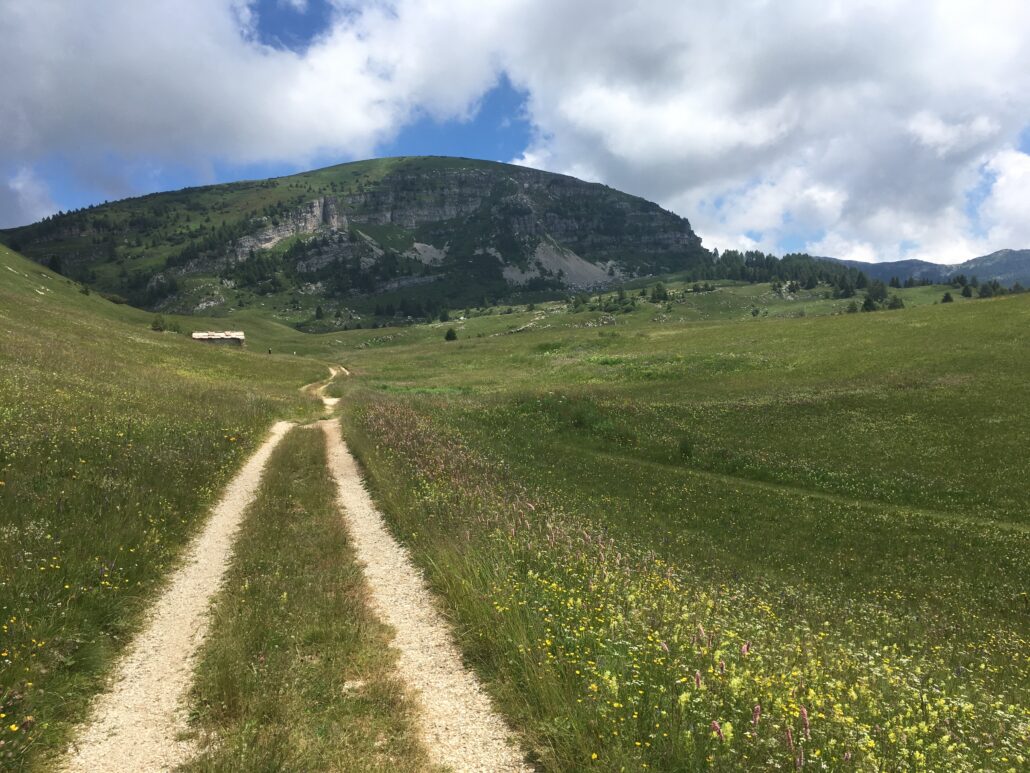
The importance and the beauty of mountain meadows lie in their high naturalness and for being perfectly inserted in a natural setting of high value, both from an ecological and cultural point of view. Over the centuries, traditional farming practices have shaped these environments, creating ideal habitats for the life of numerous animal and plant species. And here is where the role of man comes in as key element. As much as man has shaped mountain meadows in his favor and in favor of nature, he has also destroyed them. Since the second half of the twentieth century, the consolidation of intensive agriculture methods, urbanization and the abandonment of many disadvantaged farming areas have accelerated the loss of these habitats and hence the organisms associated with them. However, if this phenomenon is rather pronounced and worrying in the lowlands – resulting into the near total loss of meadows characterized by high natural value – it can still be recovered in hilly and mountainous areas [1].

Particularly in Trentino, the maintenance of a thriving livestock sector in the last decades has been fundamental for mountain meadows conservation. Moreover, meadows maintenance has been promoted for a long time also thanks to substantial public funding provided by both the Province of Trento and the European Union [2].

In this sense, technical terms must be clearly defined and distinguished. Meadows are technically divided into (1) natural meadows: naturally created and composed of native species; (2) semi-natural meadows: artificially created with native species and (3) artificial meadows: artificially created with genetically selected species.

When the need of renaturalizing an environment leads to meadow restoration, the creation of a semi-natural meadow is often an excellent option. Yet rather than restoring them, meadows should first be preserved and protected.

Figure 1:Safeguarding and protecting mountain meadow cenosis is essential to preserve landscape, farming and cultural features of the territory. (Author. Giazzera – Monte Pasubio (Province of Trento), July 05, 2020).

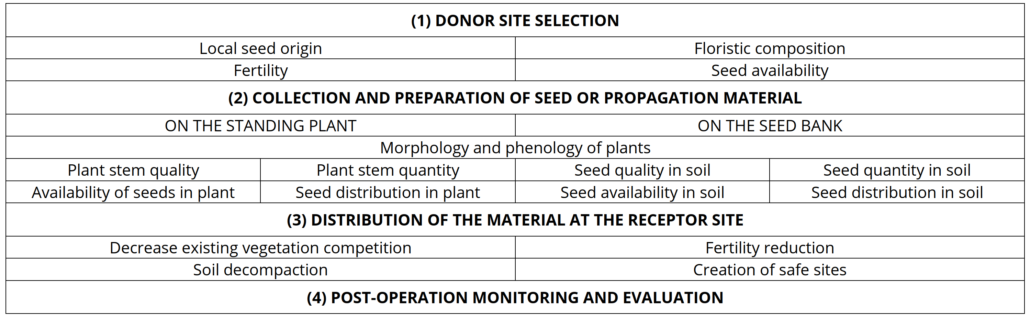
Research on meadows cenosis and its ecological restoration is particularly advanced in the Alpine area and, at least in Trentino, now implemented at a large scale [3]. The restoration process takes place in four phases: (1) choice of the donor site; (2) collection and preparation of the seed or propagation material in different forms (green grass, hay, hayseed from brushing machines or combine harvesters); (3) distribution of the material on the receiver site; (4) evaluation in retrospect of the success or failure of the process (Table 1).

The choice of the donor site must necessarily consider the (local) seed origin, its floristic composition, fertility and availability. This requirement is particularly important to favor a sustainable evolution of the vegetation. Especially in environments with adverse soil and climate featuresand where local conditions are therefore prohibitive for the establishment of non-native species, the choice of local native seed varieties is the only solution.

In the last decades, some central European markets have moved in this direction, with Swiss, Austrian and German farmers and cooperatives specializing in the production of native seed mixtures. This, however, has not happened in Trentino or Italy in general, where the collection and selection of seeds from existing semi-natural meadows remains one of the few viable restoration methods.Additionally, this method is often the only effective one in environments with a high species and vegetation diversity [4].

Seeds are collected directly from the standing plant or through a seed bank. In both cases, the following factors must be carefully considered: the quality and quantity of the stems or seeds in the soil, the morphology and phenology of the plants, the availability, distribution in the soil and in-plant production of the seed.

Similar steps are followed when seeds are collected manually and then propagated with agricultural production techniques. Yet, there are some differences between direct collection and distribution on the receiver site, and the method involving agricultural production. Indeed, production time requirements lengthen the restoration process by some years because seeds must be propagated through several generations. Nonetheless, the total cost of a restoration process involving farming production is lower and is, today, the most cost-efficient method for large-scale ecological restoration of species-rich meadows. A combination of the two methods is often useful because not all species can be easily propagated with farming techniques and not all the desired species can be easily found and collected from the field.

The seed distribution phase at the receiver site ends the restoration process. Again, traditional agricultural techniques such as mechanic or manual seeding can support the process.

To properly evaluate the restoration process, the receiver site geography, climate and soil condition prior to the restoration must be characterized and the restoration objectives clearly defined. For a successful meadow restoration, the receiver site soil must be tilled to decrease the competition between the introduced seeds and the existing grass species, fertility must be reduced, when necessary, soil must be decompacted, and safe sites must be created, where possible.

Table 1: a brief summary of the four steps of a meadow restoration process.

Finally, consider that the public price list of Autonomous Province of Trento includes such restoration works in the following categories: L.07.10.0050 – SEEDING and L.07.10.0052 – GRASSING WITH HAY OR LOCAL GREEN GRASS [5]. In 2021, prices for restoration works carried out with native grass species collected through farming propagation or directly from existing meadows, were comparable if not lower than that the prices for works carried out with mixtures of genetically selected seeds.

Besides an increasing attention of all stakeholders towards environmental protection and ecological restoration of the meadow’s heritage, we hope for a more complete market collaboration to start a flourishing and easily accessible trade of native grass species also in our territory. The environmental implications would certainly be positive.

Bibliography:

[1] Scotton, M. & Cossalter, S. (2014). PRATERIE SEMINATURALI RICCHE DI SPECIE NELLA PIANURA VENETA. Distribuzione e valorizzazione negli interventi di inerbimento e restauro ecologico. Veneto Agricoltura.

[2] Scotton, M., Pecile, A. & Franchi, R. (2012). I tipi di prato permanente in Trentino: tipologia agroecologica della praticoltura con finalità zootecniche, paesaggistiche e ambientali. Fondazione Edmund Mach.

[3] Zenatti, S., Gottardo, L. & Scotton, M. (2016). Restauro ecologico di praterie seminaturali tramite distribuzione di erba verde: l’esempio di Canal San Bovo (TN). Dendronatura, 37 (1), 49–58.

[4] Scotton, M. (2009). Semi-natural grassland as a source of biodiversity improvement–SALVERE. Proceedings of the International Workshop of the SALVERE. Raumberg–Gumpenstein: Agricultural Research and Education Centre.

[5] Provincia Autonoma di Trento (2021). ELENCO PREZZI 2021 [Online; in data 15-febbraio-2022].

Cover- and preview image: mountain meadow at Giazzera – Monte Pasubio (Province of Trento, Italy), July 05, 2020. Author.

Telegram: @greenmarked
LinkedIn: @greenmarked
Instagram: @greenmarked.it

Facebook:  @greenmarked.it


© GreenMarked.it is managed by ECONTROVERTIA APS — Via Alcide De Gasperi 1, 38015 Lavis (TN), Italy — VAT IT02667560227