
Tag: Caatinga

Tales from the Caatinga: The Vision of an Expert

Continuing the series of articles on Brazilian biomes, I invited Professor Francisca Soares de Araújo, a biologist with a Master’s Degree in Botany and a PhD in Plant Biology, to discuss the challenges of the Caatinga and its inhabitants in the face of climate change. In this conversation, we revisited the biome’s history from a local perspective and talked about the danger involved in the new vegetation dynamics of the Brazilian semiarid region.

Tell us a bit about the history of neglect of the Caatinga.

The [Brazilian] semi-arid climate […] is one of the poorest regions in a developing country. As a result, we had fewer universities and consequently fewer researchers. From the 1990s onwards, we saw an increase in researchers in the region due to the expansion of universities, which began in 2002 with the center-left government in Brazil […].I’m not endorsing any political party, this is a fact […] to give you an idea of where I was born, electricity only arrived in the last 10 – 15 years. Without electricity, you cannot access communication means like TV, phone… The Caatinga biome corresponds to 11% of the national territory, encompassing 28 million inhabitants. And the question now is what do you do with them?

In your perception, is the Caatinga still a little-known biome?

No, we already have a lot of scientific information; what I notice is that this information is not reaching decision-makers, and that’s the big problem. […] Isolated initiatives from institutions and NGOs do not generate significant impacts to popularize this knowledge. There is a need for government programs on a national scale [for] this knowledge to reach society and change the way natural resources are used, at all levels, all social classes. Because nationally, we are major exporters of agribusiness, agriculture, soy, and food [but] at very high costs of land degradation. The Northeast is not a major exporter because there are production difficulties, but the Northeast uses the land similarly to other biomes with more humid climates, however, we don’t have water [for that].
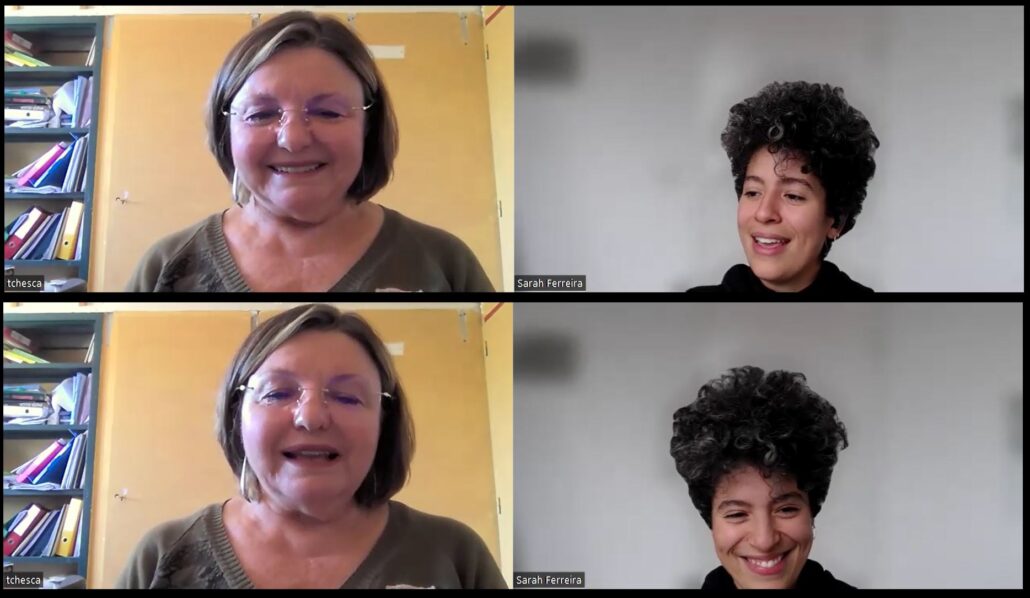
Fig. 1: Screenshot of the conversation between the Author and interviewed via Zoom. Reproduction authorized.

What impacts of climate change have you identified on the biodiversity and ecology of the Caatinga?

The increase in temperature and decrease in water mainly affect small animals and plants. Plants have roots, they are fixed, therefore […] they cannot migrate. However, our studies indicate that most of the plants inhabiting the Brazilian semiarid region today will expand their distribution area. This may seem good, but it is not.These plants are smaller, deciduous and [have] thinner leaves. Producing leaves is costly for plants that need water, nutrients, and light. Larger trees, with thicker leaves and greater carbon sequestration potential, will be restricted to mountainous regions, which are small areas in the Brazilian semiarid region. This means that the wetter areas we have in the Caatinga today will become drier. Overall, we will have a loss of biodiversity. At the feet of the mountains, which are the wettest regions, we have the sources of the hydrographic basins, so this will have a huge impact on water availability for humans.

What are the main challenges of the Caatinga in the face of global warming?

The main challenge is a change in land use culture.
Because most farmers and livestock farmers use the land as if we were in a climate without water restrictions – which will increase even more with global warming. It’s not [a climate] suitable for raising large animals. And there are livestock farmers who want to irrigate pastures. [We need] this change in land use culture and a planned action that integrates permanent preservation areas, currently only 20% like the Cerrado. We have to think about crops that are not irrigated and that can produce in a short period of rainfall, which will decrease even more, and in the raising of small animals. From a conservation standpoint, to minimize desertification, we need to restore the hydrographic basins and reforest them. Because historically [these areas] were the first to be deforested and degraded. [The ideal would be] to integrate: permanent preservation areas (APPs), legal reserve areas, areas to be restored, and public areas of environmental preservation to minimize desertification. The Caatinga is one of the least protected biomes. The government’s goal is to protect 30% of each biome by 2030, but the Caatinga doesn’t even have 10%. It’s possible to minimize the impacts, but not to reverse them. [Apart from all this] we should also make cities friendlier, with tree planting, alternative constructions, and better use of wind. This has to be a national initiative involving state and local governments.

Reading suggestions from the expert

Carvalho, C. E., Sfair, J. C., Eller, C. B., Menezes, B. S., Menezes, M. O. T., & Araújo, F. S. (2023). Tree height, leaf thickness and seed size drive Caatinga plants’ sensitivity to climate change. Journal of Biogeography, 50(12), 2057-2068. https://doi.org/10.1111/jbi.14717

Xavier, S. A. S., Araújo, F. S. de, & Ledru, M. P. (2022). Changes in fire activity and biodiversity in a Northeast Brazilian Cerrado over the last 800 years. Anthropocene, 40, 100356. https://doi.org/10.1016/j.ancene.2022.100356

Brazilian Biomes – Chapter 1: Caatinga

In my last article, I talked about the unprecedented heatwave and water scarcity Brazil has been facing since November last year.
I took advantage of that to introduce you to one of the most interesting and I dare to say neglected biomes of Brazil: the Caatinga. Which could be the first to completely disappear due to a process of desertification as a consequence of global warming. Considering data released by the Copernicus Satellites this Tuesday (09/01), which shows that we could have arrived at the point of irreversible damage to planetary systems, I thought this would be the time for a series of articles about the Brazilian Biomes. To preserve their memory and hopefully also their integrity.

“Os últimos serão os primeiros”

The Caatinga was by far the most misinterpreted biome of Brazil. Judged by its natural semi-arid characteristics, once it was thought to be a place of scarcity in all aspects, both in fauna and flora. Vidas Secas, one of the most famous national literary works, written by Graciliano Ramos in 1938 tells the miserable life story of a family located in part of the Caatinga known as sertão nordestino. In the book, the characters are depicted as living a harsh and impoverished existence in the arid sertão of northeastern Brazil. Their struggle for survival is marked by constant hunger, thirst, and the relentless heat. And their only way to survive is to move regularly to areas less affected by drought. For a long time, the reality of Vidas Secas was the image that Brazilians held of this natural environment.

Though it is hard to pinpoint exactly when our perspective about the Caatinga started to shift, a brief search on the Web of Science portal reveals how recent is the research interest in this biome. Using its advanced search tool, the query ALL= (caatinga) searches among all of the searchable fields in papers and results in a total of 5904 scientific articles, from 1960 to the present. However, it was only in 2009 that papers containing the subject grew above two digits with an impressive difference of 155 papers between 2008 and 2009. The same search applied to the Amazon ( query : (ALL= (amazon and brazil)) found 27346 articles starting in 1902, and with a significant increase starting in 1995.

Fig. 1:Screenshot of query search on the topic Caatinga at Web of Science’s Core Collection (Sarah Santos Ferreira. 11/01/2024).

Complexity unfolded

With time the Caatinga, the only biome exclusively found in Brazil, was found to be a complex and diverse environment. Contrary to the perception of it being a homogeneous landscape with little life and diversity, research revealed that the Caatinga holds unique characteristics, dynamics and species [1].

Fig. 2:Puma concolor at Johannesburg Zoo South Africa, Johannesburg, South Africa. Photo by Priscilla Du Preez on Unsplash

Environmental variations may occur over small geographical distances in the Caatinga. This phenomenon is responsible for the formation of micro-habitats with different floristic compositions. Topography is a physical variable that is extremely influential in such environmental heterogeneity, as it can alter the dynamics of rainfall distribution and intensity. As a consequence, precipitation levels also vary. However, whereas in Europe we observe a decrease of species with the increase of altitude levels, in this biome this variable plays the opposite effect. Studies say that at altitudes above 750 m, there is greater vegetation heterogeneity in Caatinga fragments with large plants [2].

On the other side, in the lowest dry landscapes, the thin and thick vegetation is highly adapted to its semi-arid climate. In periods of drought, many plants lose their foliage, giving the landscape a white appearance, which gave it its name from the Tupi-Guarani language which means “white forest”. However, with a little rain, the landscape quickly turns green all over as plants germinate and flower.

Preservation at stake

When it comes to fauna, the Caatinga is all the same diverse and unique, composed of approximately 1,307 animal species, of which 327 are exclusive to the biome – as of 2020. Many of these animals have adapted to the harsh climatic conditions of the Caatinga in various ways, such as hiding from the sun during the day, migrating during periods of intense drought, or developing more resistant armor to prevent water loss. However, those who rely on migration to ensure their survival face additional challenges: wind farms, roads and other anthropogenic disturbances to the landscape [3].

The northeast of the country is an ideal place for wind towers. However, as shown by the journalist Suzana Camargo [3] in an interview with researchers from the Environmental Protected Areas Boqueirão da Onça in Bahia the big cats – already on the verge of extinction- need to expend a much bigger amount of energy to reach water points to take alternative routes. Although Science has demonstrated the incredible amount of life and diversity of this biome, the Caatinga still carries a bad reputation and it is not in the media as the other biomes, which does not help in the improvement it most needs: public policies of protection.

References

Click here to expand the references
[1] Instituto Sociedade, População e Natureza. Fauna and Flora of Caatinga. 2020. Retrieved on 11 January 2024, from https://ispn.org.br/biomas/caatinga/fauna-and-flora-of-caatinga/

[2] Santos, W. B. dos, Marangon, L. C., Freire, F. J., Braz, R. L., Torres, J. E. de L., & Santos, J. N. B. (2020). Vegetação lenhosa de regiões semiáridas em diferentes altitudes. Ciência Florestal, 30(1), 161–175. Retrieved on 11 January 2024, from https://doi.org/10.5902/1980509836803 

[3] Camargo, Suzana.For Caatinga’s last jaguars and pumas, wind farms are the newest threat (2023). Mongabay. Retrieved on 11 January 2024, from https://news.mongabay.com/2023/08/for-caatingas-last-jaguars-and-pumas-wind-farms-are-the-newest-threat/

References

Click here to expand the references
  1. Instituto Sociedade, População e Natureza. Fauna and Flora of Caatinga. 2020. Retrieved on 11 January 2024, from https://ispn.org.br/biomas/caatinga/fauna-and-flora-of-caatinga/
  2. Santos, W. B. dos, Marangon, L. C., Freire, F. J., Braz, R. L., Torres, J. E. de L., & Santos, J. N. B. (2020). Vegetação lenhosa de regiões semiáridas em diferentes altitudes. Ciência Florestal, 30(1), 161–175. Retrieved on 11 January 2024, from https://doi.org/10.5902/1980509836803
  3. Camargo, Suzana.For Caatinga’s last jaguars and pumas, wind farms are the newest threat (2023). Mongabay. Retrieved on 11 January 2024, from https://news.mongabay.com/2023/08/for-caatingas-last-jaguars-and-pumas-wind-farms-are-the-newest-threat/

Telegram: @greenmarked
LinkedIn: @greenmarked
Instagram: @greenmarked.it

Facebook:  @greenmarked.it


© GreenMarked.it is managed by ECONTROVERTIA APS — Via Alcide De Gasperi 1, 38015 Lavis (TN), Italy — VAT IT02667560227