


An increasing blue risk – The Netherlands and the rising sea level
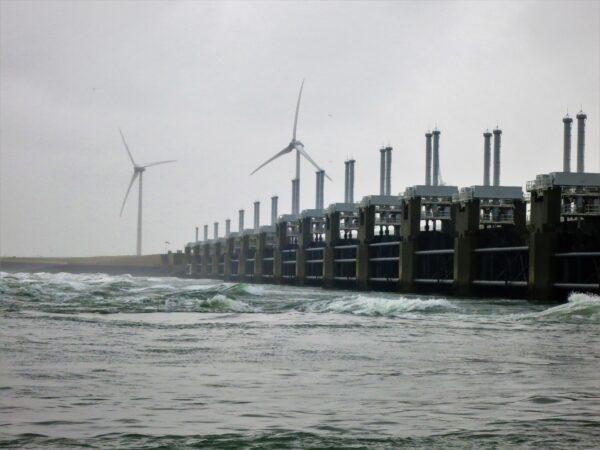
I Paesi Bassi sono sempre stati noti per la loro gestione delle risorse idriche. All’incirca il 70% degli olandesi vive in un'area sensibile o a rischio inondazioni[1], and the engineering works to make it all possible are looked with worldwide amazement. More international fame was gained through the construction of the Delta Works. Consisting of a series of dams, sluices and storm surge barriers [2], the Delta Works has been voted one of the seven modern world wonders.
Tuttavia, riconoscere la necessità di un tale sistema di difesa non è stato facile. Nonostante i numerosi avvertimenti, si dovette verificare una catastrofe alluvionale prima che i politici allora in carica approvassero la costruzione della Delta North Sea Protection Works. The tragedy of 1953 took nearly two thousand people’s lives and flooded 1290 km², four times the size of Malta. In fact, also Amsterdam and the entire province of Zuid Holland (including cities such as The Hague and Rotterdam) were close to being flooded [3].
"Il problema degli olandesi è che sono così autoironici, così modesti, che non credono più alla loro stessa storia".
Johan van Veen (1893–1959)
Il sistema di difesa Piano Delta presuppone un aumento dell'acqua del mare di 40 centimetri; un valore purtroppo molto inferiore all'aumento previsto conseguentemente alla crisi climatica. If the world’s greenhouse gas (“GHG”) emissions do not decline unprecedentedly, the sea level could rise by almost three meters within 2100. Even if the Paris Agreement target of keeping the average global temperature increase under 2 °C is met before the end of the century, the Royal Netherlands Meteorological Institute (KNMI) still predicts a sea-level rise of two meters [4].
Gli scienziati olandesi considerano pure plausibile uno scenario in cui la prossima generazione dovrà rinunciare a città quali Amsterdam, Rotterdam e L'Aia. Some even state that the Dutch newborns “will not be able to be Dutch anymore, because the country of the Netherlands will no longer be there” [3]. Is there still hope? In the end, Dutch people would not be Dutch if they did not fight water. Yet hope seems limited to engineers that believe in a makeable world while ecologists have given up already.
Rutger Bregman interviewed seven leading Dutch scientists for his book “Het water komt” (The water is coming). A condizione che vengano prese misure estreme ben oltre l'attuale Piano Delta, i grandi sette concordano che i Paesi Bassi saranno in grado di gestire un aumento del livello del mare fino a due metri. The country would need to build the world’s largest pumping stations to coninuously pump water from the low rivers into the high sea. Furthermore, it would require 25 times more sand to strengthen the coast and a permanent fleet of dredging ships to continuously spray sand upon the North Sea coast. And this would only be the beginning [3].
“If the earth warms by more than 2 degrees, sea levels will continue to rise, requiring us to think even bigger.” [3]
Bas Jonkman, professore di ingegneria idraulica all'Università di Delft, indaga su possibili soluzioni per contrastare aumenti del livello del mare oltre i due metri. Jonkman immagina la dislocazione dell'aeroporto Schiphol di Amsterdam in mare e la creazione di isole artificiali frangionda, anteposte alle spiagge e coperte di turbine eoliche. Un ulteriore aumento di livello potrebbe essere affrontato collegando le isole e formando così una grande diga ad anello. Gli ecologisti prevedono l'arrivo incessante di disastri ambientali, ma Jonkman sostiene che "la natura è dinamica, e ha potenziale di ripristino". Nonostante le discrepanze, sia ecologisti che ingegneri concordano che evitare uno scenario di più di due metri di aumento del livello del mare sia fondamentale. Ciò significherebbe arrivare allo zero assoluto di emissioni di gas serra (non lo zero netto) il più presto possibile.
The Dutch Climate Agreement aims at a GHG reduction of 49 % by 2030 compared to 1990, followed by 95 % by 2050 [5]. To meet these targets, some eight million buildings must become gas-free, nine million cars must run on electricity or hydrogen, the electricity grid capability must become at least three times bigger, a quarter of the North Sea must be filled with wind turbines, 75 million solar panels must be connected, and 100 thousand hectares of forest must be planted [3]. The cost of the operation has been roughly estimated at € 500 to 700 billion, which is 70 to 100 % of the Dutch GDP, and five times as much as the Delta Works [6].
“This will be the largest reconstruction of our country. Ever.” [3]
Per raggiungere gli obiettivi preposti per la riduzione di gas serra, ognuno deve fare la sua parte, ma il governo ha un ruolo esemplare e di guida. Per decarbonizzare la propria economia non deve esternalizzare le emissioni di anidride carbonica o cuasare danni ambientali altrove. Bensi deve utilizzare una prospettiva oolistica e contribuire alla creazione di un mondo più sostenibile nel suo complesso. In Renewable energy at what price?, I explained that base metals mining needed for the Global North energy transition leads to ecological destruction in the Global South, destroying the habitat of the local population, often without compensation. The Dutch government should acknowledge this and act accordingly [7].
Le stime dell'Agenzia olandese per le Valutazioni d'Impatto Ambientale ("PBL") stimano che i gas serra saranno ridotti solo del 38-48 % entro il 2030; dei valori molto inferiori rispetto a quelli previsti dal piano "Fit for 55" dell'UE. Il Consiglio di Stato olandese - il più alto organo consultivo del governo e della Camera dei rappresentanti - ha dunque concluso che la politica climatica olandese "non è sufficiente per raggiungere gli obiettivi climatici", even though “the nature and extent of the climate crisis require immediate action” [8].
La coalizione del nuovo governo Rutte IV ha fatto della lotta alla crisi climatica una priorità assoluta.Grazie ad uno stanziamento di 35 miliardi di euro nei prossimi dieci anni e la nomina di un ministro speciale per il clima e l'energia, la politica climatica olandese vuole allinearsi alla direttiva europea per la riduzione del 55 % dei gas serra rispetto al 1990 entro il 2030. Inoltre, il nuovo governo istituirà un consiglio scientifico indipendente per valutare e consigliare nuove e strategiche politiche climatiche [9].
La coalizione Rutte IV, tuttavia, non ha spiegato concretamente come contrasterà gli effetti dettati dalla crisi climatica e, in particolar modo, l'incombente aumento del livello del mare che colpirà duramente le coste olandesi. Rimane poco chiaro come gli ingegneri e i referenti degli enti per la gestione delle risorse idriche nazionali si stiano preparando per gli scenari d'innalzamento marino delineati, dato che le politiche attuali sono ancora troppo spesso concentrate sul breve termine. Sia nel breve che nel lungo termine, i Paesi Bassi dovranno affrontare la crisi climatica non solo per rispettare le direttive europee, ma per proteggere le proprie coste, la propria terra, i cittadini e il proprio futuro.
Riferimenti bibliografici:
[1] PBL. (2014). Small chances – big consequences: casualties and social disruption as a focus for water safety policy.[Translated by Author]. Retrieved 11 December 2021, from https://www.pbl.nl/publicaties/kleine-kansen-grote-gevolgen [2] BenDor, T.K. (n.d.) Flood Control. Downloaded 11 December 2021, from https://todd.bendor.org/media/Flood_Control_BenDor.pdf [3] Bregman, R. (2020). The water is coming: a letter to all Dutch people. [Translated by Author]. De Correspondent. Downloaded 6 December 2020, from https://decorrespondent.fetchapp.com/files/a8a80f35 [4] Haasnoot, M., Bouwer, L., […] Sloff, K. & Mosselman, E. (2018). Possible consequences of accelerated sea level rise for the Delta Programme: an exploration.[Translated by Author]. Downloaded 11 December 2021, from https://www.deltares.nl/app/uploads/2018/08/Deltares_Mogelijke-gevolgen-van-versnelde-zeespiegelstijging-voor-het-Deltaprogramma.pdf [5] Klimaatakkoord. (2019). National Climate Agreement – The Netherlands.Downloaded 13 December 2021, from https://www.klimaatakkoord.nl/binaries/klimaatakkoord/documenten/publicaties/2019/06/28/national-climate-agreement-the-netherlands/20190628+National+Climate+Agreement+The+Netherlands.pdf [6] Borst, T. & Keulemans, M. (2019, 10 October). Will climate policy really cost the Netherlands 1,000 billion euros?[Translated by Author]. Retrieved 13 December 2021, from https://www.volkskrant.nl/nieuws-achtergrond/gaat-het-klimaatbeleid-nederland-echt-1-000-miljard-euro-kosten~bd4fe21a/ [7] Hoekstra, E. (2019, 21 February). Renewable energy at what price?Retrieved 13 December 2021, from https://greenmarked.it/renewable-energy_price/[8] Raad van State. (2021, 30 September). Advice on the Climate Memorandum 2021. [Translated by Author]. Downloaded 15 December 2021, from https://www.rijksoverheid.nl/binaries/rijksoverheid/documenten/brieven/2021/10/28/brief-raad-van-state-over-klimaatnota/Raad+van+State+Advies+op+Klimaatnota+2021.PDF
[9] Nijenhuis, H. (2021, 16 December). Will the new coalition agreement achieve the climate goals?[Translated by Author]. Retrieved 16 December 2021, from https://www.parool.nl/nederland/gaan-we-de-klimaatdoelen-nu-wel-halen-met-het-nieuwe-regeerakkoord~b51898b8/Immagine di copertina e di anteprima:area costiera inondata. Foto free-source di Cobe68 da Pixabay.
Questo articolo fa parte del progetto “Environmental Blogging Boost 4 Students”, finalizzato all’incremento della diffusione di conoscenze e pratiche agroecologiche nonché quelle per l'utilizzo sostenibile delle risorse idriche in Trentino. Il progetto è ufficialmente sostenuto dal Consorzio dei Comuni della Provincia di Trento B.I.M. dell’Adige (provvedimento concessione n. 100 del 09/06/2021).


