Tag: policy

Val di Torba

As explored in a previous article by GreenMarked, peat extraction in South Tyrol has long been a topic of controversy. The debate is complex, involving agriculture, environmental protection, the peat industry, and the interests of the local community. But what if the design could serve as a mediating discipline — shifting the conversation from a history of conflict towards a more hopeful post-extraction future?  The role of designers today is changing as designers become mediators between research, politics, and society [1]. An exhibition in Salurn offers an inspiring insight into this possibility, its potential and its limits.

From January 28 to February 7, the exhibition Val di Torbawas presented at the public library in  Salurn, South Tyrol. Developed as part of my master’s thesis in Eco-Social Design, it became the result of a long research process. The exhibition aimed to compile and share knowledge about peatlands, the role of peat in the Adige Valley, and its climate impact, while also creating a space for open dialogue on these topics. Salurn, with its long history of peat extraction and related conflicts, was an important location to showcase the project. The public library, as a place of knowledge and exchange, offered the perfect setting.

Figure 1:Exhibition poster. Author, 2025.

The exhibition followed a participatory format, where the goal was to empower participants and share decision-making power throughout the design process [2]. Therefore, it invited visitors to contribute their knowledge, ideas, hopes, and concerns throughout ten days.  Afternoon workshop sessions helped to collect these contributions, capturing them as written comments in a guest book and on a big sheet of paper.

In this way, the exhibition attracted great interest from the local community and achieved surprising results. Around 90 people visited the exhibition, including farmers, environmentalists,  residents, activists, local politicians, environmental organizations, and representatives of the peat industry. Even three school classes visited, learning about the valley’s history and its current challenges. With peat extraction expected to be banned soon [3], discussions focused on the future of the valley. Through illustrations and narrative texts, future scenarios offered inspiration for potential pathways.

Figure 2:Exhibition opening. Author, 2025.

In addition to discussing these scenarios, participants also created new ones. One very popular suggestion was to transform a former peat extraction site into a lake. Could this “nature pool”  stop the release of CO2 emissions from the surrounding peat, while creating a place for people to swim and for nature to develop? Other new ideas focused on creating more compensation areas or expanding biotopes. It was also suggested that ongoing peat extraction licenses could be returned if the community decided against them and would financially compensate.  With all the different stakeholders involved in this debate, discussions were sometimes tense, but they also led to surprising outcomes. For instance, some farmers expressed interest in exploring alternative cultivation methods for peat soils, where apple cultivation is currently challenging.  Discussions emerged about cultivating reeds, cattails, bamboo, or rice. One captivating statement  in the debate was: “We should not adjust the land to the use, but rather adjust the use to the land”.

Figure 3:Comments in The Future Scenario Book. Author, 2025.

The closing event offered an opportunity to reflect on the exhibition’s outcomes and discuss potential next steps. The ten days of discussions generated many hopeful perspectives but also revealed that much remains to be done. An exhibition alone cannot solve the complex issue of peat extraction, but it can serve as a starting point for ongoing dialogue. The insights gathered during the exhibition, including written comments and new scenarios, were compiled into a final report as the official outcome of the process. It is being shared with the library, participants of the exhibition and other interested stakeholders. Some institutions have already expressed interest in continuing the dialogue around this topic — with the report as a valuable foundation.

All of this wouldn’t have been possible without the exhibition as a space for dialogue. This demonstrates how design, as a creative and mediating discipline, can play an important role in addressing environmental issues — not just for peat extraction, but for other topics as well.

References:

Click here to expand the references
[1] Groß, B. and Mandir, E. (2022): Zukünfte gestalten – Spekulation, Kritik, Innovation: mit Design  Futuring Zukunftsszenarien strategisch erkunden, entwerfen und verhandeln. Mainz: Verlag  Hermann Schmidt.

[2] Ehn, P. (2008) ‘Participation in Design Things’, in Proceedings of the Tenth Conference on  Participatory Design. PDC 2008, Bloomington, Indiana, USA.

[3] Regional Law, 16 August, 2023, Nr. 19 https://lexbrowser.provinz.bz.it/doc/de/231085/landesgesetz_vom_16_august_2023_nr_19.aspx? view=1

Cover image: Exhibition opening. Photo by Author, 2025

This article is part of the project “Quiz Ambientali per un Trentino Più Verde!” carried out by Econtrovertia APS and sponsored by Fondazione Cassa Rurale di Trento (Notice of Approval of December 20, 2024).

A Valley Full Of Peat And Challenges For The Future

Few people know that the Adige Valley in South Tyrol, famous for its apple production today, was once a sprawling mosaic of peatlands. Swamps, fens, and alluvial forests shaped the landscape, a picture vividly captured in old maps, books, and local stories.

Today, only the last fragments of this wetland heritage remain, offering a glimpse into the valley’s past. One such example is the Adlermösl biotope. The nearby peat mining sites show a clear contrast: for decades, peat has been extracted near Leifers and Salurn, releasing enormous amounts of CO2 until today [1]. A brief history review shows how this transformation came to be and reveals the challenges we must face today.

In the past, frequent flooding of the Adige River created a natural cycle, supporting the formation of peatlands in many areas. These areas slowly developed layers of peat that were able to store vast amounts of carbon.

Peatlands were treated as common land for a long time, but with population growth and the rising demand for agricultural space, they were privatized and drained. It was believed that the wide valley, once drained, would hold great potential as fertile farmland. The drainage process took nearly two centuries, as the ditches were dug out by hand. Eventually, growing food on the dry land became possible, allowing apple cultivation here today [2].

However, the peat soil, combined with a high groundwater level, posed challenges for apple farmers in recent years. Low-lying fields often became so wet and unstable that apple trees would lean, prompting farmers to lease their land to peat extraction companies, which then removed the peat to sell it, since it is widely used as a growing substrate for plants and mushrooms [3, 4].

After extraction, these fields were backfilled with soil and stones, slightly elevated, and returned to the owners. Peat extraction, however, comes at a high environmental cost. This process releases vast amounts of CO2:when peat, previously submerged under groundwater, is exposed to air, microorganisms decompose the organic material, releasing stored carbon as CO2. This makes peatlands critical in the fight against climate change and highlights their importance for our planet’s future [1, 4].

For years, residents, biologists, environmental activists, farmers and politicians have been involved in a tense conflict between economic and ecological interests [5, 6, 7]. With the ongoing climate crisis, peat extraction in South Tyrol is set to be banned, as the old extraction licenses near expiration[8].
But once this is achieved, what should become of these areas, some of which still contain peat soil? Opinions in South Tyrol vary widely. Should there simply be apple orchards again, prioritizing economic benefits? Could biotopes be established, aligning with the European Nature Restoration Law? Or could even hybrid forms such as paludiculture*emerge, combining ecological and economic interests?

Despite the varying opinions among stakeholders— farmers, extraction companies, biologists, environmental associations, and residents — a constructive dialogue about the future of peatlands is essential. But how can we foster meaningful dialogue in such a conflict?

As an eco-social designer with a focus on environmental issues, I am currently exploring the topic of peat extraction for my Master’s thesis. I aim to introduce a new discipline into this debate, that is — Design.

Figure 1: Exhibition testing in Waltherhaus, Bolzano. Author, 2024.

Over the past months, I have visited intact, damaged and restored peatlands, interviewed various stakeholders, and created visual materials on the topic. Through this research, I found out that making the issues visual helps to open discussions and make future possibilities tangible. This led me to create an exhibition that not only informs visitors about peat extraction but also serves as a mediator among diverse interest groups. Within the exhibition, the participating stakeholders engage with different perspectives, while also contributing with their own ideas. Narrative scenarios, accompanied by illustrations, depict various futures for the valley and sparkdiscussions — futures where biotopes evolve into educational sites, experimental areas for innovative cultivation methods are developed, or creative strategies for marketing apples grown on peat soil emerge.

Figure 2: Exhibition testing in Waltherhaus, Bolzano. Author, 2024.

After being tested for a few days in Bolzano, the exhibition will next move to Salurn, where tensions are particularly high. This shift presents additional challenges but also opportunities for meaningful dialogue and valuable outcomes. Overall, this research taught me that there are different ways to approach environmental protection. Creative approaches, in particular, are crucial for addressing the complexities of a damaged environment and finding collective solutions. As one interviewee pointed out, envisioning positive futures for a topic long clouded by negativity is essential.

Design and illustration are now supporting this process.

*paludicultureis the sustainable cultivation of crops on wetland soils without draining them. For example, reeds or cattails can be economically used as insulation material [4].

References

Click here to expand the references
  1. Marsoner, T., Illmer P., Hiphold A., Niedrist, G., Tappheiner, U. (2022): Studie zum Torfabbau in Südtirol. Bozen-Bolzano: Eurac Research, 2022. https://webassets.eurac.edu/31538/1670407876-studie-zum-torfabbau-in-su-edtirol-30-11_final_cm_screen.pdf
  2. Werth, K. (2014): Geschichte der Etsch, zwischen Meran und San Michele: Flussregulierung, Trockenlegung der Möser, Hochwasserschutz. Athesia AG, 2014.
  3. Farmers, personal communication, 2024.
  4. Heinrich-Böll Stiftung (2023): Mooratlas — Daten und Fakten zu nassen Klimaschützern. Heinrich-Böll Stifung (2023). https://www.boell.de/de/mooratlas
  5. Weniger Moore? – die neue Südtiroler Tageszeitung. (2023, April 3). https://www.tageszeitung.it/2023/04/03/weniger-moore/
  6. Der Torf muss bleiben!! – Climate Action South Tyrol. (n.d.). https://climateaction.bz/der-torf-muss-bleiben/
  7. Di Barbara Raich Montaggio Di Werner Sperandio, V. L. I. (n.d.). Ampliamento della torbiera, Comune di Salorno e agricoltori contrari [Video]. RaiNews. https://www.rainews.it/tgr/bolzano/video/2022/01/blz-Salorno-Bassa-Atesina-Alto-Adige-torbiera-cava-estrazione-agricoltori-Bauernbund-Provincia-70ac674a-820c-4d17-aa60-f0db5cbf0c13.html
  8. Regional Law, 16 August, 2023, Nr. 19 https://lexbrowser.provinz.bz.it/doc/de/231085/landesgesetz_vom_16_august_2023_nr_19.aspx?view=1

Cover image:  Peat extraction in the Adige Valley, Italy, Author 2024.

Balancing Agriculture and Sustainability in the EU

The European Union (EU) stands at a crucial crossroads as it seeks to balance agriculture and food supply with sustainability and environmental preservation. This balance brings to light some of the most pressing challenges of our time: biodiversity loss, extremely polluting livestock, drought and water degradation. Despite significant regulatory frameworks and political commitments, the path to a sustainable agricultural future in Europe is complex.

New political landscape

The results of the recent European elections have significant implications for the future of EU agricultural and environmental policies​​. Despite a rise in far-right parties opposed to stringent environmental regulations, the centrist European People’s Party (EPP) remains the largest group in the European Parliament, maintaining a clear majority with the Socialists and Democrats (S&D) and the liberal Renew group [1]. However, the stronger presence of right-wing parties will likely influence the EU’s legislative agenda, potentially delaying or weakening environmental initiatives such as the Green Deal [2].

Loss of biodiversity

Biodiversity loss in Europe has reached alarming levels, with over 80% of European habitats in poor condition​​. The recently adopted EU Nature Restoration Law aims to reverse this trend by mandating the restoration of at least 20% of the EU’s land and sea areas by 2030, and all ecosystems in need of restoration by 2050. This law sets legally binding targets for restoring degraded ecosystems,requiring member states to develop national restoration plans, prioritize Natura 2000 sites, and enhance biodiversity in agricultural lands. However, translating these ambitious targets into actionable steps across diverse member states remains a significant challenge [3].

“Our global food system is the primary driver of biodiversity loss, with agriculture alone being the identified threat to 24,000 of the 28,000 (86%) species at risk of extinction.” [4]

Agricultural subsidies

The EU member states spend huge amounts to subsidize agriculture. The Common Agricultural Policy (CAP) of the EU accounted for €57 billion in 2013, making it the largest expenditure in the EU budget. A new study showed that 82% of these agricultural subsidies were allocated to livestock and fodder[5].

“People see fields full of plants without considering their purpose is to feed animals.” [5]

Most agricultural subsidies end up with large farmers and even landowners who do not even farm themselves. Small (organic) farmers are most affected, not only because they receive fewer subsidies, they also have to compete with an existing system that has many economies of scale and innovation. Moreover, all external costs (e.g., environment, climate, health) can be passed on to the taxpayer. This way, intensive livestock farming is being advantaged twiceconcludes Jeroen Candel, Associate Professor of Food & Agricultural Policy at Wageningen University [2].

Conflicting climate targets

Livestock is also responsible for the vast majority of food-related greenhouse gas (GHG) emissions in the EU. Livestock products subsidized by the CAP account for 84% of food-related GHG-emissions in the EU, with agriculture accounting for 10% of total EU GHG emissions [5]. This is in stark contrast to the EU’s climate target“Fit for 55”, which stipulates a net emissions reduction target of 55% by 2030 and climate neutrality by 2050.

Transforming food systems

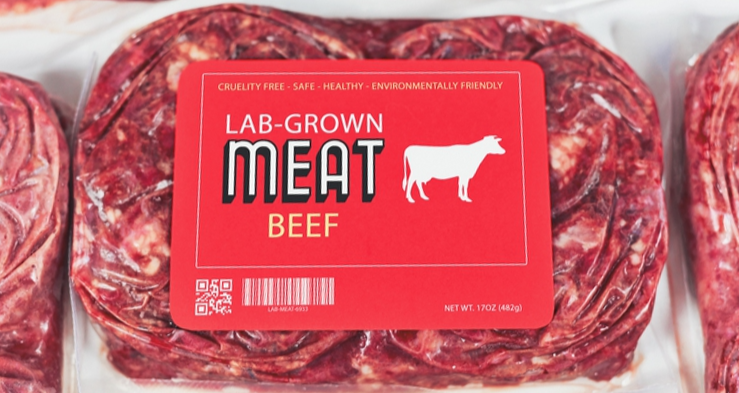
In most Member States and regions, agriculture, and especially nature, is under pressure from increasing economic activity. If 70% of that agricultural land is used for animal production, it is clear what we need to do: We need to switch to more plant-based products, because a shift in eating habits, especially a reduction in the consumption of animal products, can reduce pressure on land and natural resources [2]. Technological innovations such as lab-grown meat and precision fermentation are also leading to alternatives to livestock [6].

Fig. 1: Lab-grown meat. Royalty free photo from Getty images.

“Producers of alternative proteins receive 1,200 times less public support than intensive livestock farming.” [6]

Candel stated that these innovators in alternative protein are surrounded by uncertainty: “we don’t know if they will be successful, but expectations are high. Potentially, they are disruptive innovations that could enable us to produce more sustainably” [2]. However, governments largely ignore the climate-mitigation potential of these innovators [6]. The Dutch Liberal Party (VVD), for example, always stresses the importance of innovation, but in reality tends to support the status quo: the current dominant agricultural regime, rather than these innovative forms of food production [2].

The way forward

The future of agriculture in Europe hangs in the balance, influenced by political shifts, industrial lobbying, and societal pressures. As citizens and policymakers, the responsibility lies with us to push for changes that align agricultural practices with environmental sustainability and social equity.

Moving forward, we must advocate for policies that promote sustainable agricultural practices, support innovation, and ensure equitable distribution of resources. This includes rethinking subsidy systems, investing in new technologies, and fostering collaboration among all stakeholders—farmers, policymakers, scientists, and consumers.

Ultimately, achieving a sustainable agricultural future requires a collective effort. It demands that we remain informed, engaged, and proactive in advocating for change. By working together, we can create a resilient agricultural system that not only feeds the world but also nurtures the planet.

Sustainability Implications of Dutch Far-right Victory

Marine Le Pen in France, Giorgia Meloni in Italy, the British leaving the European Union in 2020, former Eastern Bloc countries flirting with communism again and reaching out to Vladimir Putin’s Russia. The Dutch elections, in which the far-right PVV party lead by populist Geert Wilders became the biggest party in the game, fits into the growing right-wing sentiment in Europe[1]. GreenMarked explored the implications of this election result for sustainability in the Netherlands.

Anti-sustainability by the PVV

As with the Brexit, Wilders wants a “binding referendum” on a Dutch “Nexit” [2]. Moreover, Wilders denies the urgency of climate change and wants to cancel the Paris Agreement:

“The Climate Bill, the Climate Agreement and all other climate measures go straight through the shredder. No billions wasted on pointless climate hobbies, but more money for our people.”

PVV election programme 2023 [2]

In addition, the entire energy transition should be cancelled if it is up to the PVV. Wilders wants “no more wind turbines and solar parks” as well as “eliminating all climate subsidies”. Instead, coal and gas power plants should stay open” and “new nuclear power plants should be added”, the latter then being the only low-carbon energy source. Contradicting, though, is that Wilders calls for “keeping the solar panel subsidy scheme in place” [2].

While these statements are very alarming, it is important to understand the Dutch political landscape. Dutch politics is characterised by a robust multi-party system, in which no single party traditionally achieves an absolute majority in parliament. Therefore, coalition governments are the norm, requiring parties to engage in complex negotiations to form alliances and shape policy agendas, known as the Dutch “polder model“.

Despite gaining almost a quarter of the votes, it remains questionable whether other parties are willing to enter a coalition with the PVV. Potential coalition parties have been particularly critical of PVV’s controversial anti-Islam views, which are considered unconstitutional. Instead, these potential coalition parties stated that they want to adhere to the rule of law [3]. The outcome depends on the current formation process. Last time, it took almost ten months to come up with a new cabinet.

Dutch constitution

Adhering to the constitution goes beyond freedom of speech and religion. The Dutch Constitution also includes climate policy, although not explicitly. The Constitution mentions that the government takes care of the environment (article 21), but also has to ensure security of existence (article 20) and public health and housing (article 22). All those articles relate to climate as well [3].

This is obvious where the environment is concerned. However, livelihood security, public health and housing are also threatened by floods, forest fires, dangerously high temperatures, extreme weather – in short, the effects of climate change. Severe storms destroy homes, businesses and vehicles, heat waves cost the lives of vulnerable elderly people in particular [3].

Moreover, climate change will hit the poorest parts of the world hardest – think of the devastating floods in Pakistan. This leads to more displaced people, more refugees, more international conflicts, which is terrible in itself, but on top of that, it leads to more pressure on livelihoods, healthcare and housing in our own societies [3].

Legal perspective

This has also been recognised by the Dutch courts. An example is the Urgenda case we reported on in 2021. Here, the Dutch Court and Supreme Court ruled that the Dutch State was violating human rights with insufficiently ambitious climate policies. The human rights that formed the legal basis of that judgment were the “Right to life” and the “Right to private and family life” [4]. Dutch judges are not permitted to review laws for compliance with the Constitution [3].

Fig. 1: Caretaking of the world. Copyright-free photo by Dorothe on Pixabay.

Climate dossier cannot be dismissed

In a democratic constitutional state, politicians may enact any law they want, as long as they abide by the Constitution. The fundamental rights enshrined therein require effective policies in line with the Paris Agreement [3].

As such, top advisers to the Dutch government concluded that a new Dutch cabinet cannot “put climate policy through the shredder” [5]. In addition, these advisers foresee that “applying the brakes [on climate policy] will harm business rather than help” [5].

“EU countries such as Germany and France, which are laying out roadmaps for a low-carbon economy, could be a draw for companies looking to adopt clean technology. As a result, the Netherlands may find itself ‘at the back of the bus’ in Europe, but should still join them to the final destination of a low-carbon society.” [5]

The Netherlands must do its part to keep global warming below 2 °C and should only raise its ambitions in that regard, not lower them. Which measures will be taken to achieve that goal can be negotiated, but the fact that this effective policy must be in place should not be a question at the formation table. Otherwise they risk being overruled by the judge[3].

Beyond climate targets, the Netherlands cannot ignore the consequences of global warming, being the “increasing blue risk”. Even if limited to 2 °C, the Netherlands will face a rise in sea-water way beyond the capacity of its Delta Works defence system [6]. Extreme countermeasures must be taken to prevent the majority of land from flooding [7]. However, can we expect sound water safety policies from a party that denies the root cause of the climate crises?

For both climate policy and water safety policy, doing nothing now will only make it more difficult and expensive in the future. Countering the climate crisis is not only about complying with European directives, but also about protecting their coasts, their land, their people and their future. That is why relating human rights were integrated into the Dutch Constitution.

This article is part of the project “PILLOLE D’ACQUA PIANA: seminari itineranti, blog e podcast per una gestione sostenibile delle risorse idriche in Piana Rotaliana” carried out by ECONTROVERTIA APS and supported by Fondazione Caritro (Prot. no. U445.2023/SG.386 of April 23, 2023).

Like Dwarfs Standing on the Shoulders of Giants

relevant historically, culturally […] or to local traditions” “of special naturalistic value” [1].’ tag=’h3′ size=” subheading_active=” subheading_size=’15’ padding=’10’ color=” custom_font=” av-medium-font-size-title=” av-small-font-size-title=” av-mini-font-size-title=” av-medium-font-size=” av-small-font-size=” av-mini-font-size=” custom_class=” admin_preview_bg=”] relevant historically, culturally […] or to local traditions” “of special naturalistic value” [1].’ tag=’h3′ size=” subheading_active=” subheading_size=’15’ padding=’10’ color=” custom_font=” av-medium-font-size-title=” av-small-font-size-title=” av-mini-font-size-title=” av-medium-font-size=” av-small-font-size=” av-mini-font-size=” custom_class=” admin_preview_bg=”]

“Rare examples of majesty and longevity”

“tree […] relevant historically, culturally […] or to local traditions”

“of special naturalistic value”[1].

The above are just a couple of the plenty definitions of Monumental Trees taken from the Italian Law no. 10/2013 of 14 January 2013 – Standards for the development of urban green spaces, comprising Art. 7, which precisely lists provisions for the protection and preservation of monumental trees.
As it is often the case with the Italian legislation, also the legal framework of Monumental Trees is complex. And defining, identifying and, consequently, protecting a Monumental Tree is not always a simple affair.

Why, then, is it called a “Monumental Tree”? The most straightforward answer might well be, “because it is big” or “because it is so old”. Yet, it is precisely the word “Monumental” that gives meaning to the whole story. Indeed, a monument as such may well be big and old, but it could also represent a historical symbol of collective memory, or tradition for a community, a country or even an entire nation. And all of this is particularly well defined in Italy’s legislation, which includes Monumental Trees in a law mainly dedicated to green spaces in urban areas.

Many of Italy’s Monumental Trees are very old, but not all of them. And their age alone is not enough to define them as monumental. Other defining parameters are their biological importance – therefore, whether the tree is a rare or threatened species – and their ecological importance, thus the importance of the tree in its surrounding landscape. The same may well be true for non-native species, if they represent a rarity, an example of beauty (or strangeness) in their surrounding context.

As a matter of fact, the profound importance of a Monumental Tree is given by its visibility, or relevance for a urban area or landscape, meaning by the latter “[…] a land extension, as perceived by populations, […] shaped by the action of natural and/or human factors and their interrelations” [2]. It is thus no coincidence that most Monumental Trees are found in historic parks and gardens, villas, city centers, tree-lined avenues, and very few times within forests (who could see them?).

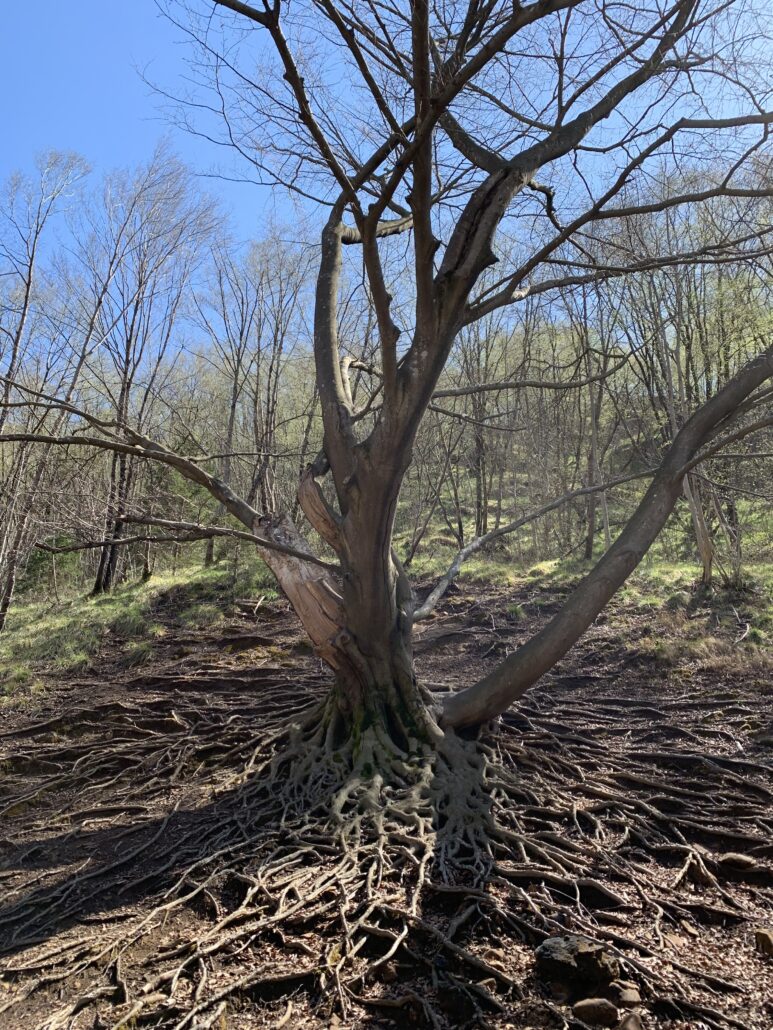
Fig. 1: Age and size are not the only and obligatorily features used to define a monumental tree. “Shape and bearing” (i.e., strangeness or beauty of the tree) also contribute to the definition. A great beech, non-monumental tree in Cison di Valmarino (Treviso, Italy). Photo by Author (April 10, 2022).

But then, is the large cedar tree that stands in the city square a Monumental Tree?

If someone ever asks you the same question, be well assured of the answer, “It depends!”. It depends, because that cedar may be as big, tall and old as you want, but if no one has ever declared it as Monumental, it is not.

Yes, it is always the law that rules over everything. And the definition of “Monumental Tree” is only a legal definition. Something for technicians, city administrations, foresters and regional public agencies.

And yet, everybody can at least inquire if a big tree is a Monumental Tree or not, and if it should be protected by the municipality that houses it. Reporting a potential Monumental Tree to the city offices will often push them to conduct a census and update the Monumental Trees database together with the competent regional authorities.

To date (last update: July 2022), the National Italian Monumental Trees Register counts more than 4000 trees [3]. In the Veneto region, there are 244 Monumental Trees, in the Autonomous Province of Trento, 85 and in the Autonomous Province of Bolzano, 40.

What do monumental tree species tell us about the history of our communities?

From a quick analysis of the tree species included in the register, one can understand the anthropological and cultural importance of specific trees for their territories.

In Veneto, most Monumental Trees are beech trees (Fagus sylvatica), Himalayan cedars (Cedrus deodara) and common plane trees (Platanus acerifolia). All three tree species have been part of Veneto’s economy, culture and urbanization for centuries.

Just think of the economic importance of beech wood for pre-Alpine Mountain communities. In ancient times, they developed complex tree management systems such as the “ceduo a sterzo” system, and today’s forestry activities are still key for the local firewood market. It is no coincidence that we find the finest examples of monumental beech trees on the “Altopiano dei Sette Comuni” hihgland, the province of Vicenza, Verona’s Lessinia, the Grappa area and the Agno valley.

Conversely, cedar trees dominate in prominent locations of urban areas such as Parco Querini in Vicenza, Alessandro Rossi’s Villa in Piovene Rocchette, Villa Bolasco in Castelfranco Veneto, and Via Monte Grappa in Belluno. Indeed, the taste for beauty of the traditional Villa Veneta architectural style has often promoted cedar trees, a purely ornamental species imported for the purpose of beautifying parks, villas and gardens since the early decades of the 19th century.

Finally, the common plane tree: a rustic, leathery, imposing tree, resistant to pollution and … accidents! Hard to scratch, hard to die and, therefore, the perfect guardrail for the region’s roads. And even earlier, the perfect boundary marker to be placed along the ditches of different agricultural properties.

For Trentino, the matter is even simpler, with beech having the same historical reasons as in Veneto, and larch (Larix decidua) playing the leading role. Spruces and larches are the two major players in Trentino’s forests. While spruce has been considered for centuries a “disposable” species, to use and consume by alpine forestry, larches have always been spared and considered of precious value by mountain foresters. Additionally, larches grow where nothing else comes close. The most famous case? The staircase of monumental larches in the Rabbi valley, where trees (more than twenty and all gigantic) rise directly from a boulder field.

What about Bolzano? No, no firs or pines, but rather a dense presence of monumental chestnut trees, almost all of them located in non-urban settings. Why? “Shape and bearing”, again: These chestnut trees are often very large and acquire rather strange and twisted shapes because they are left on their own, without the pruning of a gardener.

Monumental Trees are the witnesses of our past, and in their silent presence they act as spokespersons for rural, urban culture and local traditions. As with our great elders, it is up to us to locate them, protect them, and why not… love them too!

What are Companies’ Green Claims Built On?

You have most likely seen internationally renowned companies’ claims that their products are “carbon neutral” or have heard that you can fly, buy new clothes or eat certain foods without exacerbating the climate crisis. But what are these green claims built on?

Consumer pressure

Due to increased pressure from consumers, markets and governments, companies feel pressured to demonstrate their active contribution to solving the climate crisis. As a result, more and more companies set carbon reduction targets. Credible targets require clear pathways towards reducing greenhouse gas (GHG) emissions aligned with the Paris Agreement [1].

Even though consumers sometimes tend to believe that carbon-neutral claims imply an absolute reduction in carbon emissions, most companies rely on carbon offsetting
as part of their net-zero strategies[2].

What is carbon offsetting?

Offsetting cannot replace emission reduction efforts but is supposed to compensate for residual, unavoidable emissions. Companies buy carbon credits for every ton of residual greenhouse gas (GHG) emissions [1]. Demand quadrupled the value of the Voluntary Carbon Market (VCM) to $2 Billion in 2021, while prices of carbon credits grew by nearly 60% [3].

To generate carbon credits, VCM projects must demonstrate that their activities lead to GHG emission reductions and removals beyond those that would have occurred without the carbon activity, commonly referred to as “additionality”. These emission reductions or removals are quantified against a baseline or reference level, a counterfactual scenario of what would have occurred without the VCM project or program. Conservative reference scenarios are essential for the credibility of baselines, but what does the practice look like? [1]

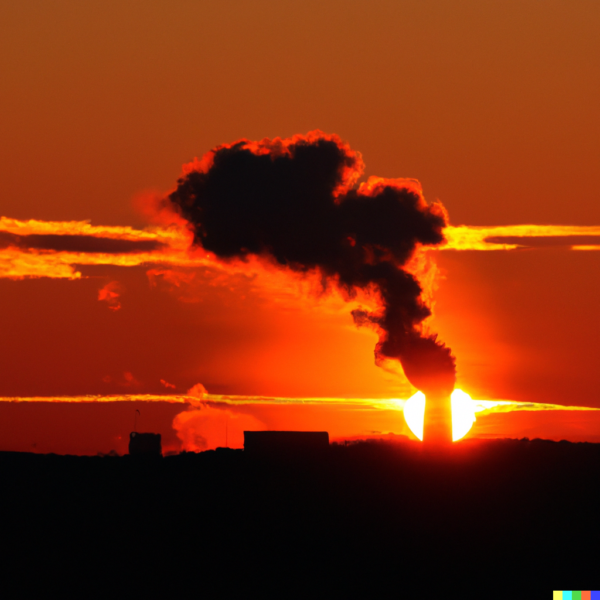
Fig. 1: An AI-generated image of carbon emission at sunset from DALL·E on OpenAI.

How credible are carbon standards?

The VCM is built on trust. Transactions between buyers and sellers of carbon credits mainly occur over-the-counter, as there is no central regulatory body governing the market. Instead, certification programmes and standards have been developed to promote transparency, credibility, and accountability in the VCM.

While the rapidly increasing value of VCMs reflects the high confidence of corporate buyers, criticism is growing, especially towards avoided deforestation projects – with 30% the most prominent single offset type (in 2020) [2]. Based on a joint scientific study on the majority of forest offset projects (commonly known as REDD+ schemes) certified by Verra, the world’s leading carbon standard for the VCM, the Guardian concluded the following [4]:

“[M]ore than 90% of [Verra’s] rainforest offset credits – among the most commonly used by companies – are likely to be “phantom credits” and do not represent genuine carbon reductions.”

The Guardian also encountered severe human rights issues on-site at Verra’s flagship project in Peru, where
smallholder farmers claimed to be victims of land grabswhile park guards and police cut down their homes with chainsaws and ropes. They spoke of forced evictions and tensions with park authorities [4].

The responsibility of companies buying carbon credits

Dozens of companies and organisations have bought rainforest offsets approved by Verra for environmental claims. In reaction, some companies simply stated that the credits bought were certified by Verra, the “world’s leading certification organisation” [4].

However, relying on Verra’s approval and the certifying agencies is insufficient. According to Thales West, a lead environmental economist at the Free University in Amsterdam, Verra’s “methodologies are based on fragile assumptions. That, makes them fundamentally unreliable. There is much room to game the system” [5].

Moreover, Verra has a conflicting interest: on the one hand, it wants to maintain a reliable reputation and intervene in case of possible overestimation of carbon credits; on the other hand, it gets a commission per verified credit. In other words, Verra has to verify offset calculations, but it benefits when estimating the number of carbon credits higher [5].

Therefore, companies buying carbon credits should find out for themselves whether the projects they are leaning on actually offset emissions. West, who previously worked as a certifier of forest projects, stated that “buyers themselves need to have a good understanding of the underlying methodologies and analyses. Because depending on how you calibrate the models,you can trigger an explosion of [supposedly avoided] deforestation – exactly what we see happening in some projects” [5].

In response to misleading or socially irresponsible advertising concerning the environment, the Advertising Standards Authority set out new, significantly stricter standards for net-zero and sustainability claims [6].

The role of climate consultants

While Verra denied all allegations and questioned the research methodology of The Guardian’s research group, Follow the Money revealed that South Pole, the world’s most influential climate consultancy, sold fictitious (mainly avoided deforestation) emissions allowances certified by Verra. Follow the Money’s perusal of internal documents from South Pole and interviews with multiple sources reaffirmed that many green claims by the world’s leading climate consultant clients appear to exist only on paper [5].

Moreover, South Pole employs many climate consultants. Follow the Money stated that they are part of the climate solutions department, which has a joint turnover with carbon credit traders. As a result, they risk wearing multiple hats. When a company inquires how to reduce its climate footprint, South Pole’s climate consultants may be more inclined to advise carbon offsets and refer the customer to their colleagues in sales, while the climate would benefit more from advice that helps the company to mitigate not compensate its emissions[5].

According to South Pole, there is a clear demarcation between advisers and vendors, as clients would enter into separate sales agreements for climate advice and carbon credits. No other guarantees are mentioned. However, South Pole does stress that providing climate advice and selling carbon credits are both necessary to meet climate targets [5].

In short, internationally renowned companies extensively use (rainforest) offsetting to make green claims. However, many resulting credits do not represent genuine carbon reductions. Verra showcased that leading certification standards can have a conflicting role by profiting from inflating the impact of offset projects certified by them. Similarly, leading climate consultants do not always seem to put climate first in their advice. Buyers should be aware that they cannot blindly rely on these parties. Instead, they must understand the underlying methods and work with parties offering complete transparency to add credibility to their green claims.

The EU Climate Agreement: Making the Polluter Pay

Earlier in December, the European Parliament and the EU member states took a major step towards a more ambitious climate policy. After 30 hours of continuous negotiations, they reached an agreement on aligning national climate plans to ensure that greenhouse gas (“GHG”) emissions fall faster to meet “Fit for 55”. The goal is to reduce GHG emissions in the EU by at least 55 % by 2030 compared to 1990, despite the difficult economic circumstances [1].

More companies paying for carbon emissions

At the heart of the measures is the expanded scope and strictness of the EU’s Emissions Trading System (“ETS”). Since 2005, the ETS has forced companies in the energy sector and heavy industry to pay for their CO₂ emissions, meaning that they need a certificate for every emitted ton. There are still free CO₂ allowances available, but they will be phased out
gradually by 2026. Thus, the companies concerned will have to emit less or pay more through the ETS [1].

The EU will also establish an additional and separate ETS for fuel used in road transport and buildings, which puts a price on emissions from these sectors by 2027. Citizens and companies will have to pay for CO₂ coming from their exhaust pipe and chimney, which will be done through energy companies and gas stations. They will have to pay for emission rights and then pass on the cost to customers who refuel their cars or turn on gas heater [1].

Fig. 1: A polluted industrial landscape. Free-source photo by jplenio on Pixabay.

Diederik Samsom, Frans Timmermans’ chief of cabinet in Brussels, is optimistic and believes that calling the agreement a “breakthrough” would be an understatement [2]:

“With this agreement, we can change everything of the path towards a sustainable future. Polluters will pay. Big companies, because they pollute more, but also we, for using heaters and cars. But it can become a two-sided sword, because the proceeds of those payments – tens of billions a year – will we spent on both stimulating sustainability and compensating people who cannot bear higher costs so easily.”

Vulnerable households

In a time when everything, energy in particular, is getting more expensive, many households struggle to make ends meet. The Commission acknowledged that its new climate policy could be an additional burden. Hence, it proposed the introduction of a Social Climate Fund to finance temporary direct income support for vulnerable households. The Fund will amount to over 86 billion euro and will run for five years from 2027 onwards [3].

Avoiding carbon leakage

There is a risk that companies under the ETS will leave the EU to avoid paying for their CO₂, commonly referred as “carbon leakage”. To prevent unfair competition between Europe and the rest of the world, the EU has set up the Carbon Border Adjustment Mechanism(“CBAM”). Companies exporting iron and steel, cement, aluminium, fertilizers and electricity to Europe will also be obliged to pay for their CO₂ emissions. In other words, the EU links the rest of the world to its European ETS. The pilot phase of the CBAM will start in October 2023. By 2030, all goods covered by the ETS should be included [4].

The EU hopes that the CBAM will lead to more ambitious climate policy in the three biggest economies, China, India, and the United States [2]. Critics have warned of the potential economic harm of the CBAM to the Global South. Developing countries may struggle to decarbonize quickly enough to remain competitive in the global market, as the transition to a low-carbon economy requires technology and investment beyond the resources of many countries. Technology transfer and green financing are possible solutions [5].

Telegram: @greenmarked
LinkedIn: @greenmarked
Instagram: @greenmarked.it

Facebook:  @greenmarked.it


© GreenMarked.it is managed by ECONTROVERTIA APS — Via Alcide De Gasperi 1, 38015 Lavis (TN), Italy — VAT IT02667560227