Tag: carbon emissions

The Philosophy of the Climate Movement: “Doomism” or Action, and the Dilemma of Non-Violence

I was born 65 ppm ago. “ppm” stands for parts per million, a measurement unit used to calculate how much of a gas there is inside another gas. In this instance we refer to the amount of CO2 dissolved in the atmosphere. While I’m writing these words, we have reached 433 ppm of CO2 in the air. Do the math. I was born under 400 ppm, which was kind of the 70s objective if we wanted to achieve another main goal in the fight against climate change, the well-known 1.5ºC increase of average annual temperatures under pre-industrial levels. 65 ppm later, the fight changed: now we want to avoid going over an interval of 2 to 5ºc. Two degrees might not seem much higher than 1.5, but four? That is well over three times the original goal.

I was born on the year of the fifth Conference of the Parts (COP) on Climate Change, and last year I followed the thirtieth closely. During all the years I have been familiar with the climate movement and its actions, two things have been constant. First, despite smaller victories – incredibly valuable and that deserve recognition –, the much-needed structural changes the system has to undergo for an actual effect did not arrive. And second, climate activism was, above everything else, the champion of non-violence. Protests were about sit-downs in front of oil company meetings, unfurling banners, demonstrations in which it was explained in every possible way that the methods were to be non-violent. “We must do everything accordingly and properly so we can be heard. Only like this our petitions will be valid and validated”. 65 ppm, 25 COP and 1.5ºC of warming later, who heard the petitions?

Now that we have reached this point, I have some questions for you: How do you feel? Do you feel sad? Helpless? Or are you angry? These words, do they push you to despair, or to fight even harder against climate change? A while ago we already dealt with eco-emotions: ecoanxiety, ecodepression, and ecorage. I sincerely hope you feel angrier than you feel sad or anxious, is far more useful. And less dangerous, as we are about to see. Today we will talk about two different sides of the climate movement: doomism (and derivates) and the call for “violent” action, both closely linked with the mentioned emotions.

Doom rhetoric: is it time to give up?


Figure 1: Peoplesclimate demonstration in Melbounre, banner reads “Anthropocene: we came, we conquered, we vanished”. Photo by Takver. Source: Wikimedia commons.

Doom rhetorics are born from despair and helplessness, which are mainly represented by ideologists like Roy Scranton, Jonathan Franzen, or our old acquittance, Kingsnorth. And as one might sense from the name of this ideological current, they hold little to no hope for the future. They defend that we must learn how to live with what we brought upon the planet and affirm that there is nothing we can possibly do, as “human beings are the killers of the natural world” [1]. From this kind of fatalist discourse that will certainly not encourage anyone to change nothing, some dangerous currents can also arise, such as ecofascism and the actual Deep ecology line of thoughts. The latter meant a huge input into the environmental ethics during its beginnings, with the theories of Arne Naess [2] talking about the need to develop an environmental awareness surrounding the human role as a part, rather than the owner of ecosystems, being conscious about their limits, as well as admitting the intrinsic value of everything non-human.

However, some people that consider themselves adjourned to this current have focused a lot on the “ecosystem limits” part during the last years, so much that they argue for the reduction of human population as a solution for the Earth. The idea of “human beings as parasites” is a slippery slope. Social ecologists Murray Bookchin wondered about “what disruption had turned man into that highly destructive parasite?”. All in all, human beings are social and gregarious animals, or they used to be. They used to be organized in societies in which collectivity and cooperation were the most important, and they depended on the health of the surrounding ecosystems to survive. According to Bookchin, the roots of the problem are the current system and organization that drain human’s community and solidarity nature, and they are regressive from an ecological perspective [3].

“[The current system and organization of society] undermine human spirit and community, and the viability of the planet and all living beings”

The problem here does not lie in human nature, then, and therefore it would have a solution. The problem with doomists is not usually that they deny the solutions, they admit that emissions would decrease if some changes were made. What they sustain though, is that a “radical reorientation of human economic and social production” is simply not going to happen. And thus, what they propose is to stoically accept it. Their acceptance, which seems nihilistic rather than stoic, brings us back to the aforementioned point: sadness or anxiety are useless in generating some answers. Especially because, as also mentioned, we know solutions are possible.

But what about probable? Is it worth it to fight? As journalist David Wallace-Wells said, “the fight is not yet lost, it will never be lost, as long as we avoid extinction, because however warm the planet gets, it will always be the case that the following decade could contain more suffering or less” [4]. And it is actually like that. If we cannot avoid global warming to stay under the 1.5ºC threshold, we can by any means possible try to keep it under 2ºC. And this leads us to the next question: which are these “any means possible”?

Climate action: where are the limits?

And so, we face yet another dilemma. Yes, the situation looks rather dire. Yes, we have the solutions. Or at least, we know them. We know what to do to reduce emissions, to stop temperatures rising, to reduce overexploitation of resources… And most importantly, we have said it. Scientists, activists and the ecological movement in general have tried to transmit it over decades: first, there was a crisis. Then, the magnitude. And in the meantime, the solutions. Everything in a civil, and according to Human ecology professor Andreas Malm, “in a gentle and mild in extreme way”. This is the main reasoning behind his book How to blow up a pipeline [5]. The title might look rather taunting – and it is, do not believe for a moment that this is an instruction manual –, but his proposal is basically what he gives away: he does not believe that the pacifist way is bearing the fruits that it should.


Figure 2: FridaysForFuture demonstration and banner that reads “Respect existence or expect resistance”. Photo by Leonhard Lenz. Source: Wikimedia Commons

Among the several aspects that compound the climate crisis, he focuses specifically on the greenhouse gases emissions and the subsequent global warming and focuses his proposals on how to fight against CO2 emissions and fossil fuel use. In what may only be referred to as a detailed, well-documented analysis on other social movements, such as the suffragettes’ struggle, slavery abolitionists, or the struggle for working rights, the conclusion he reaches might be slightly disorienting: no other movement has stuck so strictly to absolute pacifism as the ecologist one. Another difference with the other struggles is that fossil fuel use is not a political arrangement, as limited franchise or the length of the working day: they are the very technologies that allow the proper functioning of the system as it is, the foundations of “business-as-usual”. In Malm’s words, fossil fuel use is not a sideshow to bourgeois democracy, it is the material form of contemporary capitalism.

Throughout the book, Malm develops a series of proposals that are, at he very least, quite agitative, based in one idea: the potential usefulness of certain violent actions – always regarding properties and never against human beings – to push the limits of what the climate movement might achieve. This can sound quite similar to some controversial actions from the past, maybe. But how does he propose to push them? With sabotage directed towards devices or infrastructure emitting greenhouse gases. Although he rejects violence against other people, Malm recognizes that private property destruction is still violent, “but different to violence that affects people” and points out that he would reject sabotage that “may affect material conditions for subsistence”. One of the actions he uses as an example is one his group carried out in 2007, when several activists went through the most affluent neighborhoods in Sweden and deflated SUV’s wheels – the most emitting car on the market – to prevent its unnecessary use. He calls for sabotage of private jets, superyachts, and any other kind of devices that may create what he refers to as “luxury emissions”, those generated by non-essential consumption and that go beyond “subsistence emissions”, which are the ones that meet human basic needs. He quotes a well-known paper published in nature Climate change, in which it was reported how the richest 0.54% emits one third more than the poorest half [6].

Malm maintains that the sabotage he proposes would be useful in different aspects: it would demonstrate that the emitting devices can be put out of the market, as well as disincentivize investment in emitting technologies. He is no stranger to the radicality of what he supports and maintains as well that the carried-out actions would have to be undertaken in planned, conscious ways, and be kept at levels that would “avoid pushing away too much possible supporters”. While it would be impossible not to have detractors, he argues that “as long as you can explain the goal, plan and its execution” to a majority of people, it could also be a tool to further stretch the collective environmental conscience and generate changes.

Would it be actually useful?

Although it has been proved that doomism and fatalist rhetoric are not really useful to generate changes among the population, we are also not as convinced about Malm’s proposals being much more adequate as he may be. It seems that some of the campaigns he mentioned in the book, such as the SUV one, managed to decrease these cars’ demand in Sweden down a 27%. On the other hand, there have not been – as he mentions – campaigns as the ones he proposes at a considerable level. Surely his book cannot be described as anything but incendiary. They invite readers to reflect about the limits of protesting, and force them to question the situation, themselves, and the author as well.

It feels worth it to add an extra point that the author mentions, even if too briefly: the social rejection and/or support. While he may mention, as discussed, the potentiality of pushing society’s perception towards a more environmentally conscious one, he might have underestimated the rejection that these kinds of sabotage actions could stir up the public sentiment. As much as he admits that “a climate movement without social support remains largely in a void”, he fails to address precisely that: a collective environmental conscience. Is that the point we are at? Does he really believe that there is such a powerful environmental sense that would support these sabotages? I certainly would not dare to answer the questions asked by Malm so categorically, but I would like to retrieve a quote from Bookchin about the search for solutions regarding the climate crisis: “we cannot be extravagant enough in releasing the imagination of a man”

If you felt your interest piqued up by any of the proposals here, we would love to know your opinions, for further debates about them or the books, please reach out to us thought our Instagram (@greenmarked.it) or via e-mail (info@greenmarked.it).

References

Click here to expand the references
  1. [1] Berry M. (18 July 2018) Roy Scranton Calls for Acceptance of a Future Defined by Climate Change. Retrieved from https://www.sierraclub.org/sierra/roy-scranton-calls-for-acceptance-future-defined-climate-change
  2. [2] Naess A. (1973) The shallow and the deep, long‐range ecology movement. A summary, Inquiry, 16:1-4, 95-100. Retrieved from https://www.tandfonline.com/doi/abs/10.1080/00201747308601682
  3. [3] Bookchin M. (1964) Ecology and revolutionary thought.
  4. [4] Wallace-Wells D. (2 February 2019) The devastation of human life is in view: what a burning world tells us about climate change. Retrieved from https://www.theguardian.com/environment/2019/feb/02/the-devastation-of-human-life-is-in-view-what-a-burning-world-tells-us-about-climate-change-global-warming
  5. [5] Malm A. (2021) How to blow up a pipeline: Learning to fight in a world on fire.
  6. [6] Otto I.M., Mi Kim K., Dubrovsky N., Lucht W. (28 January 2019). Shifting the focus from the super-poor to the super-rich. Retrieved from https://www.nature.com/articles/s41558-019-0402-3

Cover image:

View of the Welzow Süd (Germany) open pit mine with an “Ende Gelände” banner that reads “Keep it on the Ground”. Photo by Rikuti. Source: Wikimedia Commons

How the EU is Revising its 2040 Climate Targets amid Farmers’ Strikes

Earlier this month, the European Commission(EC) presented recommendations for cutting greenhouse gas emissions by 90 % by 2040 [1], building on the EU’s 2030 Fit for 55objective, and part of the broader goal of reaching climate neutrality by 2050. Notably, however, while the report states a target of less than 850 MtCO₂-eq remaining at 2040, the scope of the final document was reduced. Reuters reported that the EU’s draft target required agriculture to reduce non-CO₂ emissions by 30% compared to 2015 to meet the overall climate target, but claimed that this section was removed from the final draft [2]. Moreover, emissions from the land use, land use change, and forestry (LULUCF) sector are not included [1], as well as the 90% reduction being reliant on 400 MtCO₂ being extracted through both land based and industrial forms of carbon capture.

Changing frames

The report stated that its purpose was solely “to initiate the political debate and inform the preparation of the post-2030 framework”, with no new policy propositions or sector-specific targets set according to the EC [1]. However, the creative accounting of the report puts a particular frame on climate change, and the solutions to it. Frames have been described to have the power to define problems, diagnose causes, make moral judgements and from there suggest remedies [3]. Thinking of the recommendations in this light, shows how the chosen framing can lead the political debate to focus less on animal agriculture, and more on carbon capture and storage (CCS), producing policies to this effect.

This particular framing is alarming for several reasons. Firstly, while atmospheric levels of CO₂ have increased by roughly 50 %, atmospheric methane levels have seen a much greater increase of 162 % [4]. These exceptions create a framing where National energy and Climate plans (NECPs) are not encouraged to recognise agricultural emissions, particularly methane which the European Environment Agency (EEA) states is 80 times more potent than CO₂ over a 20 year period [5].

Nevertheless, in the EC’s report, they account for GHG emissions with an adjustment of Global Warming Potentials (GWPs)over a 100 year period. For this timeframe, the potency of methane drops to 27 times the equivalent of CO₂, thus diminishing the perceived threat. The IPCC has also recognised this misapplication of GWPs, stating:

“GWP100 is not well-suited to estimate the cumulative effect on climate from sustained SLCF emissions [Short-lived climate forcers, including aerosols, methane and nitrogen oxides] and the resulting warming at specific points in time” [6].

Accounting for SLCFs in such a way, will protract their effect over time under the proposed recommendations, and misrepresents the scale of their impact in the short-term, leading to the illusion of far more time to offset the emissions than is available. When adjusting EU GHG emissions data for 2021 [7] to a 20 year warming period, methane accounts for 1.52Bt of CO₂e with CO₂ at 2.76Bt for the same year. Measured this way, methane is shown to be a compound that demands far more attention than the EC affords it, representing 55 % of its prominent counterpart CO₂’s environmental impact. When considering a shorter term perspective, this highlights the dangers of the EC’s oversight when considering SLCFs.

The dangers of neglecting methane however, does not only lead to a miscalculation of warming potential. Elevated atmospheric methane levels can increase all-cause mortalities, particularly through promoting cardiovascular and respiratory problems [8]. Methane itself is also a marker of the volume of animal agriculture in a society, which not only causes the suffering of billions of sentient animals, but also contributes to poor public health through the risk of zoonotic diseases [9]. From a localised perspective, animal agriculture typically causes the degradation of soil and water quality, requiring significant treatment for bacteria and pathogens [10].

Fig. 1: Farmers protest in Berlin on 18 December 2023. Editorial Use Only photo by Jakob Berg on Shutterstock

The decision to tactically disclude agricultural emissions and the withdrawal of the planned halving of pesticide use demonstrates the success of recent farmer protests sparking across Europe [11]. Excluding agricultural emissions means that GHG emissions far more potent than CO₂ are excluded from the climate target. Emissions such as methane (CH4) and nitrous oxide (NO₂), are largely caused by farm animals and fertiliser runoff.

Leading to the second issue of GHG capture, methane capturespecifically has been found to be particularly ineffective [12], while also often using methods that do not negate emissions altogether, but rather transform the methane, into the less potent CO₂ and water. Achieving the aforementioned target of 400 MtCO₂ is stated in the report to require “faster investments for deployment of novel low carbon technologies such as hydrogen production by electrolysis, carbon capture and use and industrial carbon removals between 2031 and 2040”. While there is recognised future potential for various carbon capture and storage methods, their benefits are likely to appear in the  second half of the century, due to both recognised legislative barriers [13], as well financial barriers and a lack of political will, stunting the R&D of high performance CCS solutions [14].

Proposal to final targets

Greenpeace’s EU climate and energy campaigner Silvia Pastorelli stated: “Without honesty about an end to fossil fuels and finally tackling farming emissions, it’s hard to see how the EU will even clear this too-low bar it’s setting itself” [12].

The EC’s recent recommendations for cutting greenhouse gas emissions represent a significant step toward combating climate change. However, the decision to exclude agricultural emissionsfrom the final draft and the reliance on carbon capture and storage (CCS) solutions raises concerns about the effectiveness of the proposed measures.

By framing the climate debate in a way that prioritises certain emissions over others, there is a risk of overlooking critical contributors to global warming, and other societal ills, which demands urgent attention. This should be considered when the new EC and European Parliament (EP) are to pass the final emission target for 2040 after the EP elections in June.

References

Click here to expand the references
  1. Entman, R. M. (1993). Framing: Toward clarification of a fractured paradigm. Journal of communication, 43(4), 51-58. [4] NASA. (2024). Vital signs. Retrieved from https://climate.nasa.gov/vital-signs/.

    [5] European Parliament, EP. (2023, 28 March). Greenhouse gas emissions by country and sector. Retrieved from  https://www.europarl.europa.eu/topics/en/article/20180301STO98928/greenhouse-gas-emissions-by-country-and-sector-infographic

    [6] Intergovernmental Panel on Climate Change, IPCC. (2022). AR6 Climate Change 2022: Mitigation of Climate Change. Technical Summary. Downloaded from  https://www.ipcc.ch/report/ar6/wg3/downloads/report/IPCC_AR6_WGIII_TechnicalSummary.pdf

    [7] Ritchie, H., Rosado, P. & Roser, M. (2023). CO₂ and Greenhouse Gas Emissions. Retrieved from https://ourworldindata.org/co2-and-greenhouse-gas-emissions

    [8] West, J. J., Fiore, A. M., Horowitz, L. W., & Mauzerall, D. L. (2006). Global health benefits of mitigating ozone pollution with methane emission controls. Proceedings of the National Academy of Sciences, 103(11), 3988-3993. https://doi.org/10.1073/pnas.0600201103

    [9] Chakravorty, U., Fisher, D. K., & Umetsu, C. (2007). Environmental effects of intensification of agriculture: livestock production and regulation. Environmental economics and policy studies, 8, 315-336. https://doi.org/10.1007/BF03353963

    [10] Akinbile, C. O., Erazua, A. E., Babalola, T. E., & Ajibade, F. O. (2016). Environmental implications of animal wastes pollution on agricultural soil and water quality. Soil and Water Research 11(3). https://doi.org/10.17221/29/2015-SWR

    [11] European Commission, EC. (2024, 6 February). Speech by President von der Leyen at the European Parliament Plenary on the conclusions of the European Council meetings, in particular the special European Council meeting of 1 February 2024. Retrieved from https://ec.europa.eu/commission/presscorner/detail/en/speech_24_661

    [12] Carbon Offset Guide. (n.d.) Methane Capture. Retrieved from https://www.offsetguide.org/avoiding-low-quality-offsets/vetting-offset-projects/methane-capture/

    [13] Tysoe, S. (2009). Carbon capture and storage: pulling down the barriers in the European Union. Proceedings of the Institution of Mechanical Engineers, Part A: Journal of Power and Energy, 223(3), 281-291. https://doi-org.mu.idm.oclc.org/10.1243/09576509JPE626

    [14] Rubin, E. S., Mantripragada, H., Marks, A., Versteeg, P., & Kitchin, J. (2012). The outlook for improved carbon capture technology. Progress in energy and combustion science, 38(5), 630-671. https://doi-org.mu.idm.oclc.org/10.1016/j.pecs.2012.03.003
  2. Niranjan, R. (2023, 6 February). EU lays out plan to cut greenhouse emissions by 90% by 2040. Retrieved from https://www.theguardian.com/environment/2024/feb/06/eu-lays-out-plan-to-cut-greenhouse-emissions-by-90-by-2040

What are Companies’ Green Claims Built On?

You have most likely seen internationally renowned companies’ claims that their products are “carbon neutral” or have heard that you can fly, buy new clothes or eat certain foods without exacerbating the climate crisis. But what are these green claims built on?

Consumer pressure

Due to increased pressure from consumers, markets and governments, companies feel pressured to demonstrate their active contribution to solving the climate crisis. As a result, more and more companies set carbon reduction targets. Credible targets require clear pathways towards reducing greenhouse gas (GHG) emissions aligned with the Paris Agreement [1].

Even though consumers sometimes tend to believe that carbon-neutral claims imply an absolute reduction in carbon emissions, most companies rely on carbon offsetting
as part of their net-zero strategies[2].

What is carbon offsetting?

Offsetting cannot replace emission reduction efforts but is supposed to compensate for residual, unavoidable emissions. Companies buy carbon credits for every ton of residual greenhouse gas (GHG) emissions [1]. Demand quadrupled the value of the Voluntary Carbon Market (VCM) to $2 Billion in 2021, while prices of carbon credits grew by nearly 60% [3].

To generate carbon credits, VCM projects must demonstrate that their activities lead to GHG emission reductions and removals beyond those that would have occurred without the carbon activity, commonly referred to as “additionality”. These emission reductions or removals are quantified against a baseline or reference level, a counterfactual scenario of what would have occurred without the VCM project or program. Conservative reference scenarios are essential for the credibility of baselines, but what does the practice look like? [1]

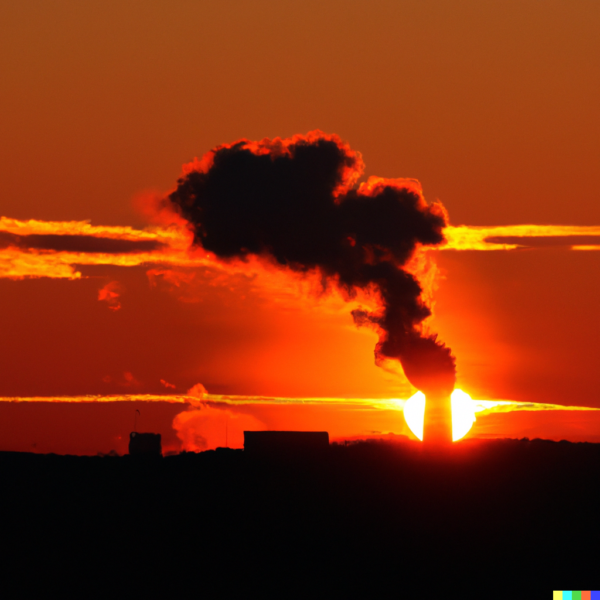
Fig. 1: An AI-generated image of carbon emission at sunset from DALL·E on OpenAI.

How credible are carbon standards?

The VCM is built on trust. Transactions between buyers and sellers of carbon credits mainly occur over-the-counter, as there is no central regulatory body governing the market. Instead, certification programmes and standards have been developed to promote transparency, credibility, and accountability in the VCM.

While the rapidly increasing value of VCMs reflects the high confidence of corporate buyers, criticism is growing, especially towards avoided deforestation projects – with 30% the most prominent single offset type (in 2020) [2]. Based on a joint scientific study on the majority of forest offset projects (commonly known as REDD+ schemes) certified by Verra, the world’s leading carbon standard for the VCM, the Guardian concluded the following [4]:

“[M]ore than 90% of [Verra’s] rainforest offset credits – among the most commonly used by companies – are likely to be “phantom credits” and do not represent genuine carbon reductions.”

The Guardian also encountered severe human rights issues on-site at Verra’s flagship project in Peru, where
smallholder farmers claimed to be victims of land grabswhile park guards and police cut down their homes with chainsaws and ropes. They spoke of forced evictions and tensions with park authorities [4].

The responsibility of companies buying carbon credits

Dozens of companies and organisations have bought rainforest offsets approved by Verra for environmental claims. In reaction, some companies simply stated that the credits bought were certified by Verra, the “world’s leading certification organisation” [4].

However, relying on Verra’s approval and the certifying agencies is insufficient. According to Thales West, a lead environmental economist at the Free University in Amsterdam, Verra’s “methodologies are based on fragile assumptions. That, makes them fundamentally unreliable. There is much room to game the system” [5].

Moreover, Verra has a conflicting interest: on the one hand, it wants to maintain a reliable reputation and intervene in case of possible overestimation of carbon credits; on the other hand, it gets a commission per verified credit. In other words, Verra has to verify offset calculations, but it benefits when estimating the number of carbon credits higher [5].

Therefore, companies buying carbon credits should find out for themselves whether the projects they are leaning on actually offset emissions. West, who previously worked as a certifier of forest projects, stated that “buyers themselves need to have a good understanding of the underlying methodologies and analyses. Because depending on how you calibrate the models,you can trigger an explosion of [supposedly avoided] deforestation – exactly what we see happening in some projects” [5].

In response to misleading or socially irresponsible advertising concerning the environment, the Advertising Standards Authority set out new, significantly stricter standards for net-zero and sustainability claims [6].

The role of climate consultants

While Verra denied all allegations and questioned the research methodology of The Guardian’s research group, Follow the Money revealed that South Pole, the world’s most influential climate consultancy, sold fictitious (mainly avoided deforestation) emissions allowances certified by Verra. Follow the Money’s perusal of internal documents from South Pole and interviews with multiple sources reaffirmed that many green claims by the world’s leading climate consultant clients appear to exist only on paper [5].

Moreover, South Pole employs many climate consultants. Follow the Money stated that they are part of the climate solutions department, which has a joint turnover with carbon credit traders. As a result, they risk wearing multiple hats. When a company inquires how to reduce its climate footprint, South Pole’s climate consultants may be more inclined to advise carbon offsets and refer the customer to their colleagues in sales, while the climate would benefit more from advice that helps the company to mitigate not compensate its emissions[5].

According to South Pole, there is a clear demarcation between advisers and vendors, as clients would enter into separate sales agreements for climate advice and carbon credits. No other guarantees are mentioned. However, South Pole does stress that providing climate advice and selling carbon credits are both necessary to meet climate targets [5].

In short, internationally renowned companies extensively use (rainforest) offsetting to make green claims. However, many resulting credits do not represent genuine carbon reductions. Verra showcased that leading certification standards can have a conflicting role by profiting from inflating the impact of offset projects certified by them. Similarly, leading climate consultants do not always seem to put climate first in their advice. Buyers should be aware that they cannot blindly rely on these parties. Instead, they must understand the underlying methods and work with parties offering complete transparency to add credibility to their green claims.

The EU Climate Agreement: Making the Polluter Pay

Earlier in December, the European Parliament and the EU member states took a major step towards a more ambitious climate policy. After 30 hours of continuous negotiations, they reached an agreement on aligning national climate plans to ensure that greenhouse gas (“GHG”) emissions fall faster to meet “Fit for 55”. The goal is to reduce GHG emissions in the EU by at least 55 % by 2030 compared to 1990, despite the difficult economic circumstances [1].

More companies paying for carbon emissions

At the heart of the measures is the expanded scope and strictness of the EU’s Emissions Trading System (“ETS”). Since 2005, the ETS has forced companies in the energy sector and heavy industry to pay for their CO₂ emissions, meaning that they need a certificate for every emitted ton. There are still free CO₂ allowances available, but they will be phased out
gradually by 2026. Thus, the companies concerned will have to emit less or pay more through the ETS [1].

The EU will also establish an additional and separate ETS for fuel used in road transport and buildings, which puts a price on emissions from these sectors by 2027. Citizens and companies will have to pay for CO₂ coming from their exhaust pipe and chimney, which will be done through energy companies and gas stations. They will have to pay for emission rights and then pass on the cost to customers who refuel their cars or turn on gas heater [1].

Fig. 1: A polluted industrial landscape. Free-source photo by jplenio on Pixabay.

Diederik Samsom, Frans Timmermans’ chief of cabinet in Brussels, is optimistic and believes that calling the agreement a “breakthrough” would be an understatement [2]:

“With this agreement, we can change everything of the path towards a sustainable future. Polluters will pay. Big companies, because they pollute more, but also we, for using heaters and cars. But it can become a two-sided sword, because the proceeds of those payments – tens of billions a year – will we spent on both stimulating sustainability and compensating people who cannot bear higher costs so easily.”

Vulnerable households

In a time when everything, energy in particular, is getting more expensive, many households struggle to make ends meet. The Commission acknowledged that its new climate policy could be an additional burden. Hence, it proposed the introduction of a Social Climate Fund to finance temporary direct income support for vulnerable households. The Fund will amount to over 86 billion euro and will run for five years from 2027 onwards [3].

Avoiding carbon leakage

There is a risk that companies under the ETS will leave the EU to avoid paying for their CO₂, commonly referred as “carbon leakage”. To prevent unfair competition between Europe and the rest of the world, the EU has set up the Carbon Border Adjustment Mechanism(“CBAM”). Companies exporting iron and steel, cement, aluminium, fertilizers and electricity to Europe will also be obliged to pay for their CO₂ emissions. In other words, the EU links the rest of the world to its European ETS. The pilot phase of the CBAM will start in October 2023. By 2030, all goods covered by the ETS should be included [4].

The EU hopes that the CBAM will lead to more ambitious climate policy in the three biggest economies, China, India, and the United States [2]. Critics have warned of the potential economic harm of the CBAM to the Global South. Developing countries may struggle to decarbonize quickly enough to remain competitive in the global market, as the transition to a low-carbon economy requires technology and investment beyond the resources of many countries. Technology transfer and green financing are possible solutions [5].

Who Compensates for Forest Fires?

Carbon offsetting has become a popular means for corporates to compensate for their greenhouse gas (“GHG”) emissions. Corporate interests and investments in carbon offsetting grew tremendously last year, quadrupling the Voluntary Carbon Market value towards $2 billion. The biggest boost came from an accelerated trading volume in Nature-based Solutions and higher prices [1]. Nature-based Solutions are defined as:

“Actions to protect, sustainably manage and restore natural or modified ecosystems that address societal challenges effectively and adaptively, simultaneously providing human well-being and biodiversity benefits” [2].

It sounds like a win-win: more nature and fewer greenhouse gases, while companies can affordably meet their environmental obligations and polish their ‘green’ image. But what happens if such an offset forest goes in flames, so that all the stored CO₂ goes back up in the atmosphere? Wouldn’t the company still have to include the released CO₂ in its carbon accounting? And if not, are corporate net-zero pledges still credible? [3].

Critics partly reject this carbon compensation mechanism because the CO₂ emitted by companies stays in the atmosphere for centuries. Offset forests must be maintained for many generations to really offset those emissions. There are many risks, too. Trees are sometimes cut down (legally or illegally), they can get sick, and the CO₂ is slowly rereleased when they die. A forest fire can immediately wipe out all climate gains [3].

The total amount of CO₂ released from forest fires is exceptionally severe. The European Union’s Copernicus Atmosphere Monitoring Service (“CAMS”) calculated that in 2021, fires in the Northern Hemisphere released as much as 1.76 gigatons of CO₂, more than double the CO₂ emissions of Germany [4]. This year again, forest fires in Europe were responsible for many additional GHG emissions. Precise figures are not yet available, but CAMS argued it is inevitable that emissions from forest fires this summer were the highest in the last 15 yearsdue to numerous fires in Spain, Portugal and France [5].

Other parts of the Northern Hemisphere face similar issues. Californian wildfires caused over 90 million tonnes of emitted CO₂, rounded up to twice the CO₂ emissions of California’s entire energy sector. Despite the wildfires, emissions trading based on forest certificates took off in California. To compensate for potential losses from forest fires, pests and other tree diseases, and human risks (e.g., illegal logging), forest companies selling emissions certificates must maintain a 20 % buffer of trees from which they cannot trade stored CO₂ [6]. According to NASA:

“Wildfires release carbon emissions that affect climate and drive climate change-related events that contribute to even more wildfires.”[6]

The question is whether forest certificates are sustainable over time. Critics have warned that buffer pools are “not large enough to cover the increased risk of the carbon benefits being reversed because of climate change” [7]. A recent scientific study revealed that California’s buffer pools have depleted nearly a fifth in less than a decade. At the same time, forest mortality from wildfires, diseases and insects, and droughts are likely to get significantly worse in our century, not better [8].

And who will account for the remaining gigatons of CO₂ caused by annual wildfires? The Paris Agreement has not yet established specific rules or guidance on how countries may account for natural disturbances in achieving their Nationally Determined Contributions [9]. The EU allows member states to exclude emissions resulting from natural disturbances such as forest fires from accounting [10]. However, only with full GHG accounting can the world manage its GHG emissions to achieve atmospheric concentrations that can support a stable climate [11].

The Provincial Environmental Energy Plan 2021-2030 of the Autonomous Province of Trento.

The energy issue is in the forefront of all the news. Trentino, too, is discussing what solutions should be put in place to make the Province’s energy demands as sustainable as possible.

To this end, the Environmental Energy Plan of the Autonomous Province of Trento 2021-2030(“PEAP“), approved by Resolution No. 952 of June 11, 2021, plays a relevant and strategic role because it aims to identify the essential and necessary guidelines, and priority strategies to decarbonize the whole region. The general goal is to reduce the emissions of gases that contribute to the climate crisis by 55 % compared to 1990, thus exceeding the current 50 % cut target set by Provincial Law 19/2013. The number should not be frightening: An analysis of energy consumption in 2016 shows that Trentino has already reduced emissions by 20.6 % compared to 1990. And yet there is still a lot of work to do [1].

For this reason, the Autonomous Province of Trento has proposed the PEAP, recognizing some technological and socioeconomic trends, outlining a future energy system that cuts climate-changing emissions, introduces new efficient technologies and maintains the effective existing ones.

Specifically, the PEAP is an energy plan aimed at defining actions to save energy, make homes and industries more efficient, and increase electricity generation from renewable sources (solar, hydroelectric, fuelwood, and wind). The Plan implements many global-scale environmental goals, namely the 2030 Agenda – covering as many as 6 of the 17 Sustainable Development Goals – and the 2015 Paris Agreement, which aims to contain the global average temperature increase below 2°C compared to pre-industrial levels. Ambitious provincial-level goals also comply with the Plan: The Provincial Strategy for Sustainable Development, which defines Trentino’s position in relation to strategic sustainability goals [2], and the Provincial Urban Plan, which looks at the territory as an environmental, landscape, social and productive setting. There are also numerous references to other Provincial Plans such as the Water Protection Plan, the Waste Management Plan, and the Provincial Electric Mobility Plan.

Fig. 1: A visit to Santa Massenza lake hydropower plant (Trentino). GreenMarked. December 05, 2021.

The Plan draft was anticipated by a detailed collection of energy consumption data. In Trentino, households consume 40-43 % of the share, transportation 30-33 % and industries 24-25 %. Currently, transportation uses almost entirely oil by-products, whereas industries mostly natural gas (about 60 %) and electricity. The Autonomous Province of Trento imports about 40 % of the energy consumed (mainly in the form of natural gas and oil by-products) and exports 25 % of its hydropower-derived energy. The data thus helped define some key actions reported in the Plan:

1. Real estate energy efficiency upgrading. Insulating buildings, replacing gas and LPG-fueled boilers with natural gas-fueled condensing systems, replacing windows and doors, and replacing winter air conditioning systems with heat pumps will decrease energy consumption by more than 35 %, and considerably increase the number of solar panel systems.

2. More sustainable mobility. Reducing the need of internal combustion engine vehicles, promoting bike/pedestrian mobility, increasing transportation efficiency, and expanding the electric fleet of vehicles will go a long way toward reducing the huge non-renewable energy demand of the transportation sector. In this regard, the Plan calls for the installation of 283 fast and ultrafast electric charging points and an additional 707 “accelerated mode” charging points.

3. To encourage local renewable energy production and increase self-consumption, the Plan considers implementing a number of energy communities – that is a group of citizens who agree to produce and consume renewable energy together. Through a shared photovoltaic system, such communities can share energy and have more ways to adapt to different energy loads through collective storage systems.

These are just a few of the PEAP actions, which actually comprises 12 strategic guidelines (i.e., objectives) and 83 environmental actions, each of them belonging to a specific guideline. They will lead to a significant reduction in carbon dioxide emissions and improvement in air quality. Through biannual monitoring it will be possible to assess the Plan effectiveness and thus obtain another evidence of Trentino’s commitment to becoming a sustainable land, where man and the environment can coexist in harmony.

Climate friendly post-COVID traveling

Cheap flight tickets from budget airlines allowed everyone to discover other parts of the world without spending half their monthly salary. This habit, a sign of an excessive and unsustainable lifestyle, became especially evident when national borders closed during the Corona pandemic. We even believed that this extraordinary time of history would increase people’s awareness of the resource depletion of our planet. Yet, how did our travelling habits change now that many countries are slowly readapting to a post-COVID era?

“Since the Corona measures were largely lifted and we are going on holiday en masse again, it is chaos at Schiphol: long queues, threatened airline staff, strikes and cancelled flights.”

The above headliner in a Dutch newspaper reflects a business-as-usual perspective at Europe’s busiest airport [1]. The International Air Transport Association (“IATA”) expects the total number of air passengers in 2023 to be close to pre-COVID levels, and raise from 2024 onwards [2].

This does not mean that people are not receptive to change. To fight the climate crisis, an overwhelming 87 % of EU citizens are willing to replace short-distance flights with fast, low-polluting trains together with neighboring countries, compared to 71 % in the US [3].

The main benefits of rail traveling compared to other means of transportation are that: (1) Travel time can be used differently (e.g., for working, sleeping, or reading); (2) You can see more of the journey (e.g., scenery); (3) Trains are safer; and (4) Trains produce less greenhouse gas emissions [4].

Night trains are making a comeback in Europe. After decades of closing night train lines, European governments and railway companies and actors have chosen a different path now. The Austrian railway company ÖBB is expanding its NightJet network across Europe, the French government announced the reintroduction of ten night-train lines, and the Swedish government wants to run a night train to Brussels [4]. The already existing Italian night railway is shown here.

However, the rail sector also faces the consequences ofthe war in Ukraine. The higher energy prices lead to increasing purchasing costs of electricity for companies without long-term contracts. Moreover, SCI Verkehr claims that train wagon manufacturers will increase their prices by 30 %, which would have severe drawbacks for the operators who will not be able to pass on these costs in full to the market [5].

Fig. 1: Austrian Railjet train crossing a bridge (free-source photo by Florian Kropshofer from Pixabay).

The European Commission (“EC”) aims to boost long-distance and cross-border passenger rail transport with a new action planpresented in December 2021. Passengers should be able to buy tickets more easily, international timetables will be improved, more fast lines will become available, and passenger rights will be strengthened [6].

In addition, the EC is working towards a level playing field for train travel by considering the abolishment of country-specific VAT on international train tickets and, at the same time, increasing flight ticket prices. The European Green Deal stipulates that the aviation industry must (finally) pay taxes on kerosene, a higher tariff on CO₂ emissions and is obliged to use more expensive and sustainable fuel. National governments like the Netherlands and Belgium also started charging a ticket tax, making air travel more expensive [6].

Dutch newspaper NRC investigated international trains as an alternative to popular short flights from Amsterdam. Using flight data, emission figures and other data, it concluded that trains could effectively replace planes, especially to destinations within 500 kilometres of Amsterdam. Eight of the seventeen destinations studied within this distance are even cheaper to reach by rail [7].

Are you going on holiday within Europe this summer? Check EcoPassenger to find out the most environmentally friendly means of transportation, or read Climate change – A new way of traveling for additional tips.

Cover and preview photo: Empty train tracks cutting though a green field at sunset. Free source photo by Konstantin Planinski on Unsplash (Karnobat, Bulgaria. September 2017).

REFERENCES:

[1] König, E. & Benjamin, J. (2022, 4 June). #34 Political flight shame [Translated by Author]. Retrieved 4 June 2022, from https://www.nrc.nl/nieuws/2022/06/04/34-politieke-vliegschaamte-a4132268

[2] International Air Transport Association (IATA). (2022, 1 March). Air Passenger Numbers to Recover in 2024. Retrieved on 6 June 2022, from https://www.iata.org/en/pressroom/2022-releases/2022-03-01-01/

[3] European Investment Bank (EIB). The EIB Climate Survey 2021-2022.
https://doi.org/10.2867/414948

[4] Germanwatch. (2021, March). European public opinion poll shows support for shifting flights to rail.Downloaded 6 June, from https://germanwatch.org/sites/default/files/2021-03-26_EU%20Rail_polling%20report_final-1.pdf

[5] IRJ Staff. (2022, 27 April). Rising energy prices a challenge for European rail sector.Retrieved 7 June 2022, from https://www.railjournal.com/analysis/rising-energy-prices-a-challenge-for-european-rail-sector/

[6] European Commission (EC). New Action Plan: boosting long-distance and cross-border passenger rail. Retrieved on 6 June 2022, from https://transport.ec.europa.eu/news/action-plan-boost-passenger-rail-2021-12-14_en

[7] Benjamin, J., Van Gameren, E. & Molijn, C. (2022, 20 January). Is the international train really a reasonable alternative to short air travel? Retrieved on 6 June 2022, from https://www.nrc.nl/nieuws/2022/01/20/is-de-internationale-trein-echt-een-redelijk-alternatief-voor-korte-vliegreizen-a4081166

Applying the European Green Deal. Is the Netherlands Fit for 55?

On July 14, the European Commission will present the long-awaited “Fit for 55” legislative package. It is the first legal stipulation supporting the European Green Deal climate actions aimed at making Europe the first climate-neutral continent by 2050. “Fit for 55” will “update the EU’s 2030 climate and energy laws to reflect the 55% net emissions reduction target that the EU set for 2030” [1].

Some countries are already on the right track to meet the necessary emissions reduction, whereas others face a relatively large task to achieve the European climate objectives. Per capita emissions in the Netherlands, for example, are a third higher than the EU average, and double that of Sweden [2]. The Dutch Environmental Assessment Agency (“PBL”) compared the reduction in emissions between 1990 and 2019 in the Netherlands with results in Germany, Belgium, Denmark, Sweden, France, and the United Kingdom. The Netherlands was the only country that did not manage to reduce emissions to a level below 1990 levels during that period, concluded PBL [3].

Author, July 2021

In the verdict of the famous Urgenda case in 2018, the Dutch National Government was ordered to do more to limit the emission of greenhouse gases in the Netherlands [4]. The Dutch Court of Appeal required a 25% reduction in 2020 compared to 1990. However, preliminary figures from the Dutch Statistics have shown that even in Corona year 2020, which was characterised by less traffic and economic activity, estimated emissions reduction was only 24.5% lower compared to 1990[5].

Last month, the newly appointed Dutch State Secretary for Economic Affairs and Climate Change Dilan Yesilgöz presented a long list of measures that should finally meet the 25% reduction target. It applies to various sectors, such as industry, agriculture, transportation, and energy [6].

Since it has become apparent that the required target has not been achieved on time, plaintiff Urgenda will impose a penalty payment on the Dutch state through the court. Director of the Dutch NGO Marjan Minnesma expects a claim between 100 million and 2 billion euros. Yesilgöz regrets that Urganda will not await the implementation of the listed measures, but it can be concluded that the Dutch state missed its opportunity to adapt its policy to meet its target on time [5].

Ultimately, this disadvantages everyone, including the Dutch state, because quick measures to increase sustainability are more expensive than measures included in long-term policy objectives.

Bibliography

[1] European Commission. (2021, 8 June). Fit for 55 package’: local leaders ready to take the helm as Council adopts a €17.5 billion Just Transition Fund. Retrieved 29 July 2021, from https://cor.europa.eu/en/news/Pages/ENVE-COMMISSION-Fit-for-55-package.aspx

[2] Maree, K. (2021, 29 June). PBL: klimaataanpak Nederland loopt achter bij buurlanden. NRC Handelsblad. Retrieved 29 June 2021, from https://www.nrc.nl/nieuws/2021/06/29/pbl-klimaataanpak-nederland-loopt-achter-bij-buurlanden-a4049138

[3] Boot, P. (2021, June). Ervaringen met energie-en klimaatbeleid in omringende landen: Wat kunnen we ervan leren? Centraal Planbureau. Downloaded 29 June 2021, from https://www.pbl.nl/sites/default/files/downloads/pbl-2021-ervaringen-met-energie-en-klimaatbeleid-in-omringende-landen-wat-kunnen-we-ervan-leren-4647.pdf

[4] Hoekstra, E. (2021, 16 April). Climate justice as a human right.Retrieved 29 June 2021, from https://greenmarked.it/climate-justice-as-a-human-right/

[5] Van der Walle, E. (2021, 28 June). Urgenda weigert ‘genaaid’ te worden en voert bij kabinet druk op. NRC Handelsblad. Retrieved 29 June 2021, from https://www.nrc.nl/nieuws/2021/06/28/urgenda-weigert-genaaid-te-worden-en-voert-bij-kabinet-druk-op-a4049097

[6] Rijksoverheid. (2021, 25 June). Kamerbrief over uitvoering motie Thijssen over Urgendavonnis en langetermijn-klimaatbeleid. Downloaded 30 June 2021, from https://www.rijksoverheid.nl/ministeries/ministerie-van-economische-zaken-en-klimaat/documenten/kamerstukken/2021/06/25/kamerbrief-over-uitvoering-motie-thijssen-over-urgendavonnis-en-langetermijn-klimaatbeleid

Telegram: @greenmarked
LinkedIn: @greenmarked
Instagram: @greenmarked.it

Facebook:  @greenmarked.it


© GreenMarked.it is managed by ECONTROVERTIA APS — Via Alcide De Gasperi 1, 38015 Lavis (TN), Italy — VAT IT02667560227