Ir al contenido principal

Etiqueta: los residuos

Un análisis actualizado sobre the Ocean Cleanup

Durante los últimos setenta años, la producción global de plástico ha aumentado a un ritmo vertiginoso. En 1950 apenas se producían unos dos millones de toneladas amounted to approximately two million tonnes, whereastoday it exceeds 450 million tonnes [1]. Esta cantidad es equivalente al is comparable to the combined weight of the world’s human population, y parece destinada a aumentar en el futuro [2].

Los envases de plástico suponen un ejemplo emblemático de las dinámicas propias de la economía linear: derivados de combustibles fósiles, de un solo uso, vida útil muy breve, tasas de reciclaje extremadamente bajas, y generadores de elevados volúmenes de residuo que se gestionan de un modo inadecuado [3]. Estimaciones recientes indican que tan sólo un 9% de los residuos plásticos son reciclados de manera correcta, mientras que el 19% se incinera. Casi la mitad termina en vertederos controlados, y el resto se gestiona de manera inadecuada, o bien mediante quemas en campo abierto o disperso por el medio ambiente [4].

Más plástico que peces

“Solamente” un 0.5% de la producción anula de plástico termina en el mar. Puede parecer un porcentaje marginal, pero no es un problema pequeño, precisamente. Más de un millón de toneladas llegan anualmente al mar, lo que supone una cantidad enorme de residuos [5]. No en vano hay numerosos investigadores que sostienen que la acumulación de plástico en los ecosistemas marinos está poco a poco acercándose a niveles que pueden representar una seria amenaza para los "límites del planeta " [6].

La acumulación de plástico en flotación preocupa particularmente por su dispersión en la superficie del océano. Además de que favorece el transporte de especies invasoras, los residuos pueden comprometer los hábitats vulnerables y causar estragos en las comunidades que dependen de unos ecosistemas sanos. La acumulación de plástico amenaza a la fauna marina ya sea a través de la ingesta o porque quedan atrapados entre los residuos, y los microplásticos y los contaminantes asociados pueden entrar en la cadena trófica y acumularse [6].

En un escenario en el que todo siga igual, la masa total de plástico podría superar a la biomasa de peces en el océano para el año 2050. Reducir la producción mediante leyes, y mejorar la gestión de residuos y desarrollar soluciones circulares es esencial para limitar que se cree más plástico y que termine en el medio ambiente [7].

Sin embargo, estas medidas no afectarán al plástico que ya se ha ido acumulando en el mar a lo largo de las décadas, conocido como “contaminación histórica”. Una parte de estos materiales puede volver a las costas y ser retirado mediante operaciones de limpieza de costa, pero la mayor concentración está en las corrientes oceánicas más remotas, como la Great Pacific Garbage Patch (GPGP), y necesitan de intervenciones concretas y regulares [7].

The Ocean Cleanup

Una de las iniciativas más destacadas en abordar este reto es The Ocean CleanupThe Ocean Cleanup (TOC), una organización sin ánimo de lucro con sede en los Países Bajos, fundada en 2013 por Boyan Slat, que tenía en aquel momento 18 años. La misión de TOC es desarrollar tecnologías capaces tanto de retirar el plástico ya acumulado en las grandes zonas de concentración de residuos oceánicos, como te interceptar los nuevos residuos antes de su llegada al mar, en los ríos. Esta estrategia integrada se basa en los resultados de las investigaciones científicas, que indican que aproximadamente el 1% de los ríos del mundo unos mil cauces fluviales – son responsables de casi el 80% del plásticoque acaba cada año en los océanos [8].

Para orientar su visión a largo plazo, TOC se ha fijado un objetivo especialmente ambicioso:reduciren un 90 % el plástico flotante presente en los océanos para 2040, mediante una combinación de sistemas de limpieza oceánica a gran escala, intervenciones específicas en los ríos y una reducción más amplia del uso del plástico,respaldada por mejores prácticas de gestión de residuos a nivel mundial [9].

Cuando publicamos en 2020 el primer caso de estudio en GreenMarked dedicado a The Ocean Cleanup la iniciativa se encontraba aún en una fase experimental, centrada principalmente en demostrar la viabilidad técnica de la retirada de plástico a gran escala en mar abierto. En los años siguientes, TOC ha pasado claramente de la validación del concepto a la operatividad continua. Las primeras pruebas en alta mar pusieron de manifiesto tanto la complejidad de las operaciones de limpieza en mar abierto como la necesidad de iterar rápidamente el diseño de las soluciones adoptadas. Tras las dificultades iniciales encontradas con el primer sistema en 2018, las versiones posteriores mostraron niveles crecientes de fiabilidad, lo que condujo al desarrollo de sistemas remolcados en forma de U capaces de capturar de forma continua los residuos plásticos presentes en la Great Pacific Garbage Patch (GPGP) [10].


Figura 1: The Ocean Cleanup (n.d.) The Ocean Cleanup dedicada a la retirada de plástico de la Great Pacific Garbage Patch (GPGP), la mayor zona de acumulación de plástico conocida en el mundo. The Ocean Cleanup Media Gallery and available for editorial use.

At the same time, the scope of operations expanded upstream, reflecting the dual strategy it adopted in response to early criticism highlighted in the first case-study as well as emerging scientific evidence. As such, river interception systems were deployed alongside offshore cleanup to address concerns that ocean cleanup alone would focus on symptoms rather than sources. La combinación de estos dos enfoques ha permitido a The Ocean Cleanup acelerar su impacto de manera significativa. Tan sólo en 2025, la organización consiguió retirar más de 25 millones de kilogramos de plástico, una cantidad superior a la recogida total en todos los años anteriores [11]. Esta tendencia continuó también en 2026: en marzo de ese mismo año, TOC alcanzó el hito histórico de 50 millones dekilogramos de residuos retirados a nivel mundial [10].

Críticas más recientes

Las investigaciones científicas más recientes se han centrado en las posibles consecuencias ecológicas y en las incertidumbres asociadas a las actividades de recuperación a gran escala. Varios biólogos marinos han analizado los riesgos para el neuston (el conjunto de organismos que viven en la superficie del agua) y los posibles fenómenos de captura accidental (bycatch) en los sistemas de recogida en mar abierto, poniendo de relieve cómo las operaciones de retirada de residuos pueden tener diferentes impactos en estas comunidades especialmente vulnerables [11].

Otros investigadores subrayan la necesidad de evaluar cuidadosamente el balance global entre los beneficios medioambientales derivados de la retirada de grandes concentraciones de plástico y los costes o efectos indeseados que dichas intervenciones podrían generar. En este contexto, se reitera la importancia de llevar a cabo rigurosas evaluaciones de impacto ambiental y de reforzar los mecanismos de gobernanza que regulan las actividades de limpieza en aguas internacionales [12].

Como respuesta a estas observaciones, The Ocean Cleanup ha ido incorporando progresivamente una supervisión científica estructurada en sus proyectos. La organización ha encargado evaluaciones independientes de impacto ambiental, ha modificado el diseño de sus sistemas para minimizar las capturas accidentales y ha contribuido activamente producir investigación científica de acceso abierto. Estudios recientes basados en los datos operativos recopilados por TOC sugieren que concentrar las intervenciones en las zonas con mayor densidad de residuos plásticos puede limitar las interacciones con el neuston y mejorar los resultados ambientales generales [13]. En conjunto, estos resultados indican que las actividades de limpieza de los océanos pueden constituir un complemento ambientalmente responsable de las estrategias de prevención,siempre que sigan adaptándose y evolucionando en función de las pruebas científicas más recientes.

Con la vista hacia el futuro

Con su estrategia integrada ya plenamente implantada y numerosos hitos claves ya alcanzados, The Ocean Cleanup está en el buen camino para alcanzar sus objetivos a largo plazo. La rápida expansión de los sistemas de limpieza en mar abierto, combinada con intervenciones específicas para interceptar los residuos en los ríos, ha transformado una ambición inicial en resultados concretos y medibles, demostrando que la eliminación a gran escala del plástico acumulado históricamente en los océanos es técnica y operativamente viable.

Al mismo tiempo, este caso de estudio confirma una realidad fundamental: la limpieza de los océanos, por sí sola, no es suficiente. Un éxito duradero dependerá de la capacidad de complementar las actividades de limpieza con avances significativos en la reducción del plástico en origen, en la evolución del marco normativo y en la mejora de los sistemas de gestión de residuos a nivel mundial. En este contexto más amplio, el trabajo realizado por The Ocean Cleanup representa una contribución esencial y cada vez más madura a la lucha contra la contaminación por plástico en los océanos. Su enfoque no pretende sustituir las estrategias de prevención, sino complementarlas, abordando un componente del problema que, de otro modo, seguiría afectando a los ecosistemas marinos durante décadas.

REFERENCIAS:

Pulse aquí para ampliar las referencias
  1. [1] Ritchie, H., Samborska, V., & Roser, M. (2026). Plastic pollution. Our World in Data. Retrieved from https://ourworldindata.org/plastic-pollution
  2. [2] The Ocean Cleanup. (n.d.). Ocean plastic pollution explained. Retrieved from https://theoceancleanup.com/ocean-plastic-pollution-explained/
  3. [3] Ellen MacArthur Foundation. (n.d.). Plastics – Overview. Retrieved from https://www.ellenmacarthurfoundation.org/topics/plastics/overview
  4. [4] Organisation for Economic Co-operation and Development (OECD). (2022). Global plastics outlook: Economic drivers, environmental impacts and policy options. Downloaded from https://www.oecd.org/content/dam/oecd/en/publications/reports/2022/02/global-plastics-outlook_a653d1c9/de747aef-en.pdf
  5. [5] Sainte-Rose, B., Lebreton, L., Pham, Y., Tjallema, A., & Maes, C. (2026). Modelling the cleanup of the North Pacific Garbage Patch based on 3 years of operational experience. Scientific Reports, 16, 8050. https://doi.org/10.1038/s41598-026-40859-y
  6. [6] Ellen MacArthur Foundation. (2021). The solution to plastic pollution. Retrieved from https://www.ellenmacarthurfoundation.org/articles/the-solution-to-plastic-pollution
  7. [7] Meijer, L. J. J., van Emmerik, T., van der Ent, R., Schmidt, C., & Lebreton, L. (2021). More than 1000 rivers account for 80% of global riverine plastic emissions into the ocean. Science Advances, 7(18), eaaz5803. https://doi.org/10.1126/sciadv.aaz5803
  8. [8] The Ocean Cleanup. (n.d.). The Ocean Cleanup. Retrieved from https://theoceancleanup.com/
  9. [9] The Ocean Cleanup. (n.d.). Milestones. Retrieved from https://theoceancleanup.com/milestones/
  10. [10] The Ocean Cleanup. (2025–2026). 2025 in review: The Ocean Cleanup. Retrieved from https://theoceancleanup.com/updates/2025-in-review-the-ocean-cleanup/
  11. [11] Spencer, M., Culhane, F., Chong, F., Powell, M. O., Roland Holst, R. J., & Helm, R. (2023). Estimating the impact of new high seas activities on the environment: The effects of ocean-surface macroplastic removal on sea surface ecosystems. PeerJ, 11, e15021. https://doi.org/10.7717/peerj.15021
  12. [12] Bergmann, M., Arp, H. P. H., Carney Almroth, B., Dey, T., Farrelly, T., Gündoğdu, S., Helm, R. R., Krieger, A., Syberg, K., Tekman, M. B., Thompson, R. C., Villarrubia-Gómez, P., & Wang, M. (2024). Ocean plastic cleanups need a global framework with science-based criteria. Science, https://epic.awi.de/id/eprint/58076/1/e_Letter_PRT_Final_exclEndnote.pdf
  13. [13] Egger, M., van Vulpen, M., Spanowicz, K., Wada, K., Pham, Y., Wolter, H., Fuhrimann, S., & Lebreton, L. (2024). Densities of neuston often not elevated within plastic hotspots territory inside the North Pacific Garbage Patch. Environmental Research: Ecology, 3, 035002. https://doi.org/10.1088/2752-664X/ad4f92

Imagen de portada: The Ocean Cleanup (n.d.) Boyan Slat, founder and CEO of The Ocean Cleanup, is pictured on a beach in Honduras. Retrieved from The Ocean Cleanup Media Gallery and available for editorial use.

Aguas de Mi*rda: El Escándalo de Las Aguas Fecales en Reino Unido

Con la última ola de calor que ha golpeado a Europa a finales de mayo, darse un baño en el río, el lago o el mar, parece en principio una muy buena idea. Sin embargo, aquellos que se nadan regularmente en el Reino Unido saben bien lo necesario que es comprobar el mapa online de los vertidos fecales antes de salir – un reflejo trágico de la situación de contaminación en la que se haya el agua de este país. En todo el país se cometen crímenes ambientales con regularidad, conforme las empresas vierten sus aguas residuales a las vías fluviales. Activistas y organizaciones ambientales como Surfers Against Sewage, The Rivers Trust, y grupos locales que pertenecen a la Sewage Campaign Network luchan para exigir responsabilidades a las compañías de tratado de agua y a los gobiernos, y para proteger la salud humana y de la vida salvaje. Pese a que el escándalo de las aguas residuales en el Reino Unido haya captado la atención pública durante los últimos años, queda todavía mucho por hacer para limpiar las aguas del país y eliminar esta crisis medioambiental.

El vertido de aguas residuales es básicamente echar el agua fecal sin tratar a ríos, lagos, canales y océanos. Cuando grandes volúmenes de agua saturan el sistema de alcantarillado, los aliviaderos sacan todo el residuo hacia las vías fluviales [1].

Pese a que el uso de aliviaderos está permitido legalmente en situaciones de emergencia, para evitar que las aguas residuales vuelvan a salir por las casas o fábricas, hay investigaciones que destacan que las compañías de tratado están usándolos de manera sistemática, más allá de “circunstancias excepcionales”, incluso cuando llueve poco o nada [2]. Esta práctica se conoce como “vertido seco”, y pese a ser estrictamente ilegal, está muy extendida. En 2025, hubo 386466 vertidos en las vías fluviales de Inglaterra y Gales, durante un total de 2,5 millones de horas [3[. Pese a que los números parecen reflejar una disminución en el número de vertidos en relación a años anteriores, esta reducción podría responder al hecho de que 2025 fue un año más seco que el 2024 [4]. Es más, esto es una desventaja ecológica – un tiempo más seco implica que los vertidos se diluyen menos al entrar en los ríos con el cauce bajo, generando mayores impactos en los ecosistemas y en los bañistas desprevenidos [3].

Figura 1:A combined sewer overflow outlet used to discharge raw sewage into waterways. By Kate Boicourt (2010). Licensed under CC BY 2.0.

Incluso las aguas tratadas pueden llegar a tener efectos considerables en los ecosistemas [5]. Pueden quedar nutrientes que causan eutrofización, lo cual da lugar a proliferaciones de algas que pueden acabar con los peces y el resto de la vida acuática al acabar con las reservas de oxígeno. También existen químicos de origen farmacológico que pueden alterar las hormonas de las especies acuáticas. Por ejemplo, la combinación de microplásticos y químicos que afecten al sistema endocrino – como los que se encuentran en fármacos o productos de higiene personal – pueden alterar la función reproductiva de los peces, al alterar sus niveles hormonales y evitar el desarrollo de sus gametos [6]. Un estudio en elFundulus heteroclitus, ha revelado que la exposición a estrógenos sintéticos (como los de las pastillas de control de natalidad, que entran al sistema de aguas residuales a través de la orina humana) pueden alterar el desarrollo y la determinación del sexo en estos peces, generando una feminización de los peces macho [7].

¿Qué se puede hacer para reducir nuestra dependencia en estos aliviaderos y evitar el vertido de aguas residuales?

El rendir cuentas y ser transparentes están poniendo en marcha los mecanismos necesarios para garantizar que las empresas de tratamiento de aguas asuman las consecuencias. El seguimiento del alcantarillado se ha incrementado desde 2024, y ahora cada aliviadero en Inglaterra cuenta con un seguidor de la duración de los eventos de lluvia [4]. Instalar sistemas separados, en lugar de los actuales sistemas combinados, de alcantarillado y aguas pluviales on new developments would also help to reduce our reliance on CSOs. Soluciones basadas en la Naturaleza – como el desellado de áreas urbanas para un mejor drenaje, la recuperación de humedales, o la instalación de sistemas de drenaje sostenibles – podrían aumentar la capacidad de almacenaje de agua del suelo, para evitarle esa carga al sistema [2].

La Agencia del Medio Ambiente de Iglaterra está tomando medidas contra las compañías de tratamiento de agua contra las que hay evidencia de vertido en seco ilegal [4[. No obstante, y pese a que estos esfuerzos han resultado en multas a estas compañías por el valos de 6.9 millones de libras, este castigo no es más que una gota de agua en mitad del océano, ya que, desde la privatización del sistema de tratado de aguas en 989, se ha obtenido la vergonzosa cifra de 85.2 miles de millones de libras en beneficio para inversores privados y fondos de inversión[8]. Al priorizar los beneficios corporativos sobre la actualización de una infraestructura obsoleta y asumir esa multa medioambiental, el sistema en realidad está priorizando el beneficio económico sobre la salud pública y la seguridad del medioambiente.

Figura 2:Sewage pipe on beach. By Eric Jones (2011). Licensed under CC BY 2.0.

El uso ilegal de los sistemas con aliviaderos está ensuciando las aguas del Reino Unido. Esto no solo pone en peligro la salud pública, también afecta a la biodiversidad acuática a través de la eutroficación o los efectos a largo plazo de los químicos y plásticos que se encuentran en las aguas residuales.

Se está generando un impulso para mejorar la situación con un aumento del seguimiento de los aliviaderos, la instalación de sistemas separados para aguas pluviales y residuales, y soluciones basadas en la naturaleza como la recuperación de humedales y el desellado urbano. Aun así, mientras los beneficios económicos y los dividendos de los inversores sigan siendo una prioridad sobre la actualización de las infraestructuras, las multas seguirán siendo una gota en el océano.

Al final, la limpieza de las aguas nacionales dependerá de una presión pública constante que obligue a las compañías privadas a rendir cuentas, de una aplicación estricta de la ley, y de la mejora de las infraestructuras.

REFERENCIAS:

Pulse aquí para ampliar las referencias
  1. Clark, A. (2025, April 15). Constituency data: Sewage discharges in England. House of Commons Library. https://commonslibrary.parliament.uk/constituency-data-sewage-discharges-in-england/
  2. Surfers Against Sewage. (2026). Combined sewer overflows. https://www.sas.org.uk/water-quality/water-quality-facts-and-figures/combined-sewer-overflows/
  3. The Rivers Trust. (2026, March 26). Sewage discharges: England and Wales’ 2025 annual summary data released. https://theriverstrust.org/about-us/news/sewage-discharges-2025-annual-summary-data
  4. Department for Environment, Food & Rural Affairs, Environment Agency, & Hardy, E. (2026, March 27). Fewer and shorter storm overflow spills in 2025, new monitoring data shows. GOV.UK. https://www.gov.uk/government/news/fewer-and-shorter-storm-overflow-spills-in-2025-new-monitoring-data-shows
  5. The Rivers Trust. (2025). 5 things the sewage map can tell you about your river. https://theriverstrust.org/about-us/news/5-things-the-sewage-map-can-tell-you-about-your-river
  6. Yang, Z., & Wang, J. (2025). From gonads to generations: Mechanistic insights into reproductive disruption by polystyrene nanoplastics and co-contaminants in fish. Environmental Chemistry and Ecotoxicology, 7, 1871–1883. https://doi.org/10.1016/j.enceco.2025.08.018
  7. Chehade, I., Sing-Judge, C., Corrigan, E., Lister, A., Van Der Kraak, G., & MacLatchy, D. (2025). Effects of 17α‐Ethinylestradiol on development and gonadal differentiation in the estuarine mummichog, Fundulus heteroclitus. Journal of Experimental Zoology Part A: Ecological and Integrative Physiology. Advance online publication. https://doi.org/10.1002/jez.70045
  8. Dearbail, J. (2024). Water industry investors have withdrawn billions, claims research, BBC News. https://www.bbc.co.uk/news/articles/cw4478wnjdpo

Imagen de portada: Seven Sisters cliff, East Sussex, England. Foto de Luca Upper en Unsplash.

Inteligencia Artificial y Economía Circular: una Nueva Frontera de la Gestión de Residuos

Si cogemos una disciplina tradicionalmente reactiva, que se basa en datos históricos para comprender las consecuencias que tienen los daños, y la combinamos con un instrumento de simulaciones para anticiparnos a la variabilidad de los eventos, ¿cuál podría ser el resultado?

Un nuevo paradigma, capaz de afrontar los retos ambientales que el modelo económico linear todavía no ha sido capaz de resolver.

Antes de la revolución de la inteligencia artificial era difícil para los científicos reconciliar conjuntos de datos amplios y fragmentados – desde las temperaturas oceánicas hasta la presión atmosférica, pasando por la salud del suelo. La estadística ayuda a individualizar los patrones y a delimitar estrategias, pero llega un momento en el que se queda corta. La inteligencia artificial (IA) nos permite hoy en día dar un gran paso adelante.

El machine learning, por ejemplo, ha empezado a sustituir a las simulaciones tradicionales basadas en la física con modelos híbridos, siendo estos entre 10 y 50 veces más rápidos. Esto posibilita tener previsiones “hiperlocalizadas”: una ciudad se puede anticipar a una inundación con una precisión hasta de calles concretas, horas antes de que suceda [1]. A, ismo tiempo, los sistemas de IA procesan petabytes de imágenes satelitales cada día, detectando desde tala ilegal [2] hasta escapes de metano [3], invisibles al ojo humano. Lo que antes necesitaba de meses de trabajo por parte de equipos de investigación al completo se puede mapear hoy con un algoritmo en unos pocos segundos.

Si este salto tecnológico está ya transformando el modo en el que observamos el planeta, la pregunta inevitable es: ¿qué sucedería si lo aplicásemos directamente a la gestión de residuos?

Utilizando los mismos instrumentos informáticos que realizan el seguimiento de los glaciares sobre las plantas de tratamientos de residuos, la “basura” se convierte en una variable que se puede medir y predecir. El machine learning serviría para mejorar la separación de los materiales, haciendo más eficiente el proceso de reciclaje, y transformando el concepto de los residuos como un deshecho ambiental a un recurso rico en datos – un recurso que la IA puede ayudar a reintegrar en la cadena global.

Las plantas de recuperación de materiales han confiado en el trabajo humano y los filtros mecánicos simples durante décadas – sistemas lentos, sujetos a error y fácilmente contaminables. A día de hoy, las tecnologías de selección basadas en la inteligencia artificial están transformando estos procesos.

Hay videocámaras de alta velocidad que pueden identificar materiales distintos, incluso a niveles tan cruciales como plásticos de grado alimentario de aquellos que no lo son, y son capaces de procesar hasta 80 objetos al minuto. Los algoritmos de deep learning que guían los brazos robóticos que recogen hasta 33 000 objetos en una jornada de 10 horas pueden hasta duplicar la eficiencia de una separación manual [4].

Los sistemas de imaging hiperespectrales pueden analizar la firma química de los plásticos, incluso si el objeto está aplastado o sucio, y detectar capas a priori ocultas, como el recubrimiento plástico de los vasos de café “de cartón”, pudiendo así enviarlos a un procesado especial en lugar de contaminar la cinta encargada del papel. También son capaces de distinguir el PET del PVC y el HDPE, asegurando su separación para el futuro reciclado [5].

De la misma manera, las redes neurales adiestradas con millones de imágenes de deshechos son ya en grado de clasificar materiales según tipología, grado o marcas – permitiendo así a los fabricantes recuperar plásticos específicos para conseguir un reciclado de ciclo cerrado. Objetos peligrosos o prohibidos como son las baterías de litio o deshechos médicos podrían ser separados automáticamente y desviados, paralizando de inmediato la cadena y evitando así incendios u otro tipo de riesgos para la seguridad.

Otra innovación significativa llega de los llamados “contenedores indeligentes”, que combinan unos sensores del Internet of things y la inteligencia artificial para afrontar el persistente problema de la sobrecarga. Estos contenedores emplean sensores de ultrasonidos para seguir en tiempo real el volumen de residuos en el contenedor, permitiendo así que el camión de recogida de residuos sólo tenga que pararse cuando el contenedor esté lleno. El resultado es una reducción del número de viajes inútiles y de la huella de carbono de la recogida de deshechos – una de las fases con más consumo energético del ciclo de reciclaje [6].

Al integrar los datos de tráfico, el tiempo, y el estado de los contenedores, la IA puede planificar recorridos más eficientes desde el punto de vista de consumos. Estos nuevos contenedores públicos con IA integrada también pueden reconocer los objetos en el momento n el que se depositan – distinguiendo, por ejemplo, una botella de PET de una lata – rotando automáticamente compartimentos internos para que cada deshecho termine en su flujo de reciclaje correspondiente. Pueden hasta monitorear la temperatura y humedad para detectar posibles riesgos de incendio o de fugas de deshechos biológicos antes de que se conviertan en un problema de salud pública.

Más allá de la fase de recogida, los análisis que genera la IA ya están influenciando el diseño de los productos en función de su reciclabilidad. Al estudiar porqué algunos materiales – como los plásticos oscuros o las etiquetas complejas – son rechazados por las máquinas de separación, los fabricantes pueden disponer de la información que les haga mejorar los envases. Al combinarlos con el blockchain, la IA puede rastrear el el recorrido que ha tenido un material desde el contenedor hasta convertirse en un producto nuevo, creando una suerte de “pasaportes de productos digitales” que puedan verificar las proclamas de sostenibilidad y reforzar el concepto de un ciclo de reciclaje cerrado.

En una época marcada por la emergencia ambiental, la integración de la inteligencia artificial en la economía circular está transformando los deshechos, que pasan de ser un simple problema a un recurso de valor calculable. Al darle a los productores los datos de sus materiales desechados, la IA contribuye a diseñar productos más fácilmente reciclables y a construir sistemas en los que los deshechos se les pueda seguir la pista, para así ser gestionados y reintegrados en el ciclo. Más que una visión futurista, se trata de un enfoque concreto para reducir el impacto ambiental y hacer que las ciudades y las industrias sean un poco más sostenibles.

REFERENCIAS:

Pulse aquí para ampliar las referencias
  1. Silverman A., Brain T., Branco B., Challagonda P., Choi P., Fischman R., Graziano K., Hénaff E., Mydlarz C., Rothman P., Toledo-Crow R., 2022- Making waves: Uses of real-time, hyperlocal flood sensor data for emergency management, resiliency planning, and flood impact mitigation. Water Research, 220: https://doi.org/10.1016/j.watres.2022.118648
  2. Mahfud M., Farsia L., Roesa N., Safrina S.,  2021- Satellite Image Data As Environmental Crime Evidence in the Field of Illegal Logging. Fiat Justisia: Jurnal Ilmu Hukum 15 (3):269-86.
  3. Louime C. J., & Raza, T. A., 2024)- Development of Artificial Intelligence/Machine Learning (AI/ML) Models for Methane Emissions Forecasting in Seaweed. Methane, 3(3), 485-499.
  4. Grosso M., 2025- Which role for artificial intelligence in waste management? Let us ask her. Waste Management & Research: The Journal for a Sustainable Circular Economy, 43(5):629-631
  5. Lubongo C, Bin Daej MAA, Alexandridis P., 2024-  Recent Developments in Technology for Sorting Plastic for Recycling: The Emergence of Artificial Intelligence and the Rise of the Robots. Recycling, 9(4):59.
  6. Lakhouit A., 2025- Revolutionizing urban solid waste management with AI and IoT: A review of smart solutions for waste collection, sorting, and recycling. Results in Engineering, 25:  https://doi.org/10.1016/j.rineng.2025.104018

Imagen de portada: Waste in a shopping container. Photo by Ralph en Pixabay

A World of Plastic: Soon to an End?

Plastic production has sharply increased over the last 70 years: while in 1950, the world produced just two million tonnes, plastic is nowadays topping over 450 million tonnes [1]. Life without plastics would be difficult since it adds much value to our life:  it’s a cheap, versatile, and sterile material used in various applications, including construction, home appliances, medical instruments, and food packaging. While the material has been around since 1907, mass production began right after the Second World War and since then, plastics production has increased nearly 200-fold since today as we produce as much plastics globally as two-thirds of humanity’s total mass. This produces 400 million tonnes of plastic water each year [2].

However, when plastic waste is mismanaged – not recycled, incinerated, or kept in sealed landfills – it becomes an environmental pollutant. It is estimated that eight million tons of plastic waste and pollution enters the world’s oceans every year [3]. One to two million tonnes of plastic enter our oceans yearly, affecting wildlife and ecosystems.

A 2020 report found that should no action be taken, plastic pollution is set to grow to 29 million metric tons per year in less than 20 years from now [4]. This has a detrimental impact on marine wildlife and the health of ecosystems – animals can ingest plastic, get entangled in them, and plastic debris increases the risk of invasive species, to just list a few. Many marine animals accidentally ingest plastic waste or microplastics, in which larger plastic debris breaks down into smaller plastic particles that are invisible to the human eye. As plastic travels up the food chain and it reaches the top predator it is inevitable that top predators will end up consuming plastic.

It is estimated that humans ingest about five grams of plastic every week – a spoonful that weighs about as much as a bottle cap and equivalent to about half a rice bowl [5]. Combined throughout a year, the amount of plastic we ingest amounts to a full dinner plate. In 10 year’s time, we would have eaten five pounds of plastic and 44 pounds worth of plastics over the course of a lifetime.

But scientists in the same report say it is possible to slash 80% of that pollution: by reducing the growth of virgin plastic production, improving waste collection systems, and investing in recyclable plastics. These measures could be addressed with a wider angle, like it is conceived by EU Directive, 2019/904, the so-called “Single-Use Plastics Directive” (SUPD), which bans several single-use plastic products and addresses additional items with measures such as extended producer responsibility and obligatory requirements for product redesign.  Thanks to it, the use of certain disposable plastic products such as drinking straws, stirrers or EPS containers for take-away meals has since been banned.

However, there is an EU-wide plastic levy – orplastic tax – to reduce plastic consumption. But this implementation is also designed differently in different countries: for example, this directive has been implemented in Germany, Austria, Belgium, Portugal and Croatia while France and Spain have even stricter environmental laws that affect online trade. Among the European countries, Italy is postponing the introduction of the plastic tax to 2024 (after the original implementation was planned for 2020!) with the aim – analogous to the European directive – to achieve a reduction in the production and consumption of single-use plastic products (MACSI) and to support the sustainability of the circular economy.

Examples of MACSI are plastic bottles, bags and trays for food (e.g. yoghurt pots). Tetrapak containers used for liquid food products, such as milk and soft drinks. Containers for detergents, earphones, sweaters and any other good wrappers, but also the polystyrene used to protect the packaged appliances, the bubble wrap that wraps any online purchased item, the plastic films used to wrap the materials on the pallets and the caps of bottles or jams. The subjects obliged to pay the Plastic Tax are different: for MACSI manufactured in Italy, the manufacturer or the customer, which is the subject who requests the manufacture of MACSI for his work; for MACSI from other European Union countries, the subject who buys MACSI in the case of B2B sales, or the transferor in the case of B2C sales to private consumers in Italy; for MACSI coming from third countries, on the other hand, the importer.

The Plastic Tax has an impact on the entire corporate Value Chain. All operators in the supply chain will have to quantify the impacts of the new tax on their business and adapt the processes and the information systems to the compliance obligations that may arise for the obliged subjects. This is going to be an expensive process but it is going to make us all think about how the issue of plastics needs to be addressed in the fastest and best way possible to maintain biodiversity and sustainable development. As with all the other taxes and regulations aimed at dealing with environmental issues (e.g., carbon tax), the process will be delicate and controversial, but action is needed as soon as possible.

REFERENCIAS:

[1] Hannah Ritchie, Veronika Samborska and Max Roser (2023) – “Plastic Pollution” Published online at OurWorldInData.org. Retrieved from: https://ourworldindata.org/plastic-pollution [Online Resource] [2] Olivia Lai (2024)- “8 shocking plastic pollution statistics to know about” Published online at Earth.org. Retrieved from: https://earth.org/plastic-pollution-statistics/ [Online Resource] [3] Tim Kiessling, Mandy Hinzmann, Linda Mederake, Sinja Dittmann, Dennis Brennecke, Marianne Böhm-Beck, Katrin Knickmeier, Martin Thiel (2023)- “What potential does the EU Single-Use Plastics Directive have for reducing plastic pollution at coastlines and riversides? An evaluation based on citizen science data”. Waste Management, 164: 106-118.

[4] Leslie Kaufman (2020)- “Ocean plastic pollution is on track to triple by 2040” Published online at Blomberg.com. Retrieved from: https://origin.www.bloomberg.com/news/articles/2020-07-23/plastic-pollution-in-oceans-to-triple-by-2040-harming-climate?embedded-checkout=true [Online Resource] [5] Lina Zeldovich (2020)- “We consume a spoonful of plastic a week” Published online at Jstor.org. Retrieved from: https://daily.jstor.org/we-consume-a-spoonful-of-plastic-a-week/ [Online Resource]

Waste Management: State of the Art and Future Emergencies

Waste production is nowadays one of the main pressures on the environment. This is because of its many drivers (including economic and domestic activities) and its connected impacts, like the pollution of soil, emissions in the atmosphere, and exhaustion of energetic resources [1]. Waste reduction is therefore a priority and as such, it needs to focus on waste management but also on the overall lower waste production: using the principles of circular economy to inspire the future, is fundamental.

Many territories have worked in the past years with these goals in mind: one of them, is Trentino. In the recently published Report on Waste [2], it is stated how Trentino has reached a high standard for the quantity of waste sorting (average 79.1% in 2021) with some areas doing better than others (see Figure 1). Even if the quantity of recycled waste was high, the quality was not as much. The study has in fact shown how organic waste contained almost 6% of materials that should not have been there (like glass, metals, textile and non-biodegradable plastics).

The Report on Waste also shows how in the last years, sorting has increased from 16.3% in 2001 to 79.1% in 2021 (see Figure 1): the ambitious goal settled by the Law 152/2006 (65% of waste sorted) is long surpassed in the provincial territory. The non-recyclable waste component represents a little more of 18% of the waste while organic waste accounts for almost 19% and paper for 14%.

These important results show how in twenty years, thanks to the education and information of the citizens along with an efficient collecting system, Trentino has reached an excellent standard even if some work can still be done (as stated, in particular on the quality of the waste which is sometimes not appropriate). Sustainable waste management includes the integration of the circular economy: it is in fact necessary that each of us makes an effort to change their routine. The consumeristic society and the need for things “here- and – now” have increased the use of non-disposable items and our neglect for where the raw materials come from. The principles of circular economy invite us to reuse items and objects, to fix them when broken to not buy new ones unless we really need them. This will make us more aware of the impact they have and therefore that each of us has [2].

Fig 1: Waste Management in Trentino. Data from Rapporto Rifiuti Trentino 2022. Photo by GreenMarked, 2024.

The Report evaluates the environmental cost of E-commerce highlighting how buying online is an advantage for the environment only if the item cannot be found within 15 km from the consumer. It is obvious how E-commerce is posing a detrimental effect because of packaging: the global value of it is going to reach 28.6 billion dollars in 2027 (it was 9.62 in 2019). In Italy, Corepla (the Italian consortium for the recycling of plastics packaging) claims that E-commerce takes up 15% of the whole plastics in the market, which accounts for almost 300,000 tons [3]. The Scuola Superiore San’Anna di Pisa has calculated that our online purchases generate a packing effect which is ten times higher than the classic plastic bag of the shops (182 kg of carbon dioxide instead of 11).

There has been an increase of +300% in online purchases on the global scale and +70% in Trentino (for the year 2020) so we need to find alternatives to these major challenges.

One of these could mock La Poste (the largest French mailing company), which has recently signed an agreement with the Finnish start-up RePackthat has created a virtuos model of circular economy. Once the consumer receives their item, the envelopes, thanks to a pre-paid label, are sent back to the company to be re-used, after being cleaned. RePack is collaborating with more than 150 brands and has already circulated more than 250thousand packages in Europe. It has recently won the German Design Award in the “Excellent Communication Design Packaging” category.

Waste management is surely one of this century’s major challenges, and many of the Sustainable Development Goals focus on it, making it a worldwide emergency. It has a cascade effect on the biodiversity of our ecosystems, and the quality of our waters and soils therefore it affects food production: it is a challenge we need to win, for our future generations.

REFERENCIAS:

Pulse aquí para ampliar las referencias
[1] Jones M. & Jones G., 2014- Biology. Cambridge University Press: 345 pp. 

[2] Agenzia Provinciale per la Protezione dell’Ambiente, 2023- Rapporto sullo stato dell’ambiente del Trentino, approfondimento 2022 (Rifiuti). Provincia Autonoma di Trento: 132 pp.

[3] Escursell S., Llorach-Massana P., Roncero M, 2021- Sustainability in e-commerce packaging: A review

[4] Leon, N. F. (2022, March 10). Quanto costa comprare con un click? Il peso ambientale e sociale dell’e-commerce. Economia Circolare. https://economiacircolare.com/impatto-ambientale-e-sociale-e-commerce/

A Deposit Return System for Single-Use Plastic: What Are We Waiting For?

The other night I was in downtown Bologna. After an ice cream with friends, I took away the water bottle I had bought but I had not finished—a plastic half-liter bottle.
Once I drank all of my water, I faced an important moral dilemma: should I have looked for a plastic bin or thrown it in one of the many roadside trash cans?

Apart from the shortage of publicly accessible recycling bins in downtown Bologna, Italy lacks a system for valuing waste, and the ability to sort is just an ethical issue left to citizens’ common sense and morals.

What would happen if we switched from an ethical issue to an ethical and economic issue, placing a concrete value on waste?

“A Buon Rendere – molto più di un vuoto”

The initiative “A Buon Rendere – molto più di un vuoto“ (lit. “In Return- much more than an empty space”) is a campaign launched by the “Associazione Comuni Virtuosi” to encourage the transition to a circular economy in the packaging sector by introducing a collection system for beverage containers based on a Deposit Return System, or DRS.

The idea is that the consumer pays a deposit for the container (€0.10 to €0.25) in addition to the sale price of the good. This, however, will be refunded when the empty packaging is returned. In other words, the consumer actually buys only the contents and borrows the packaging [1].

A similar system is already in use in Italy for glass bottles. Some beverage companies give the option of using a returnable service, thus reusing the glass bottle for about 20 cycles.
What makes DRS different from returnable glass, however, is the material for which it is designed and its durability: single-use plastic and aluminum packaging. However, the key difference is that the returnable glass is a voluntary service, while the DRS is mandatory by law in countries where it is active [2].

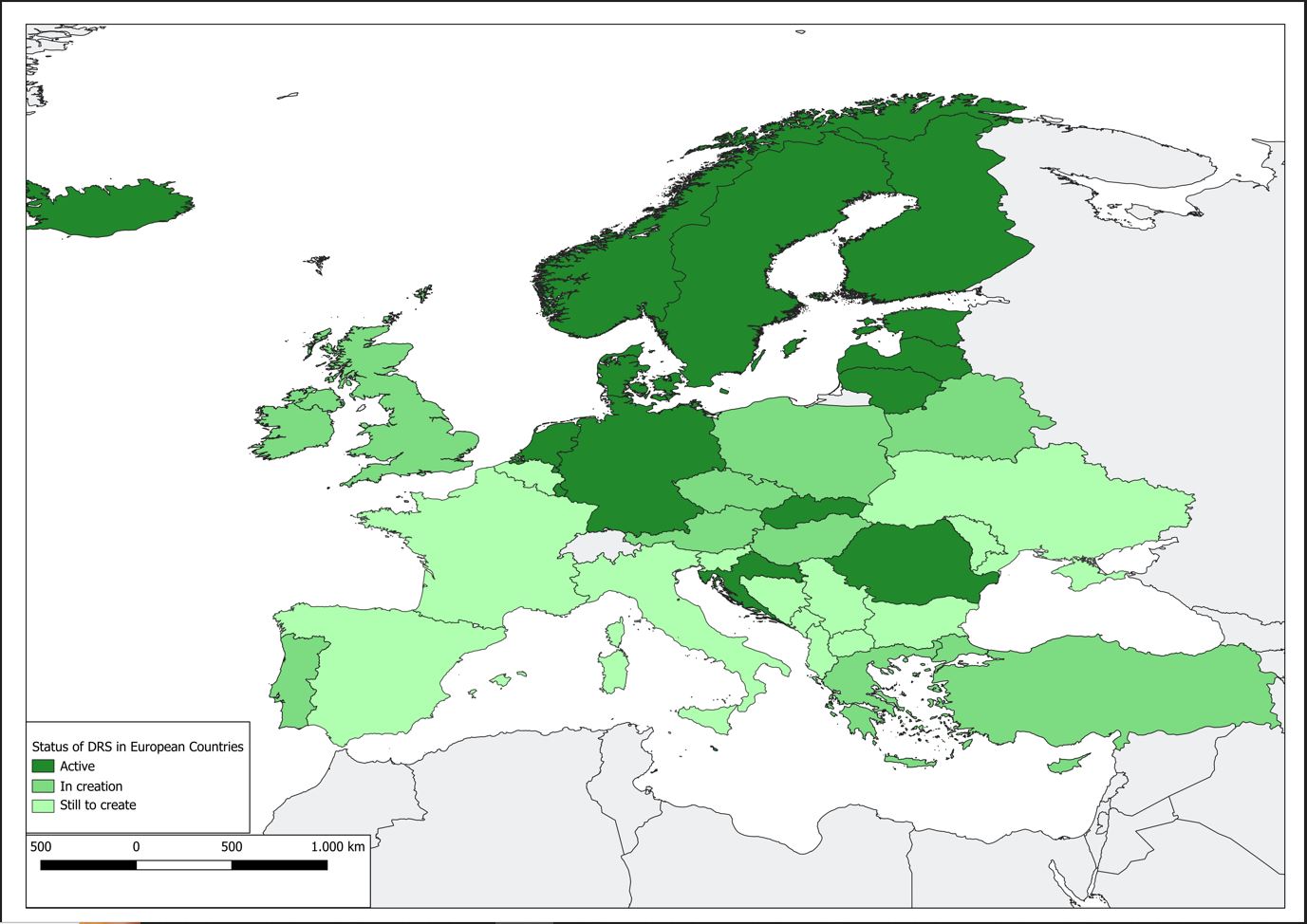
In Europe, 13 countries already have an active DRS and as many will introduce it by 2025. Among them, however, is not Italy [2]. Yet, the DRS could be a solution to align with the European Green Deal directives on waste recycling, particularly plastic packaging.

Fig. 1: Status of DRS in European countries. Author, 2023. Data source: A Buon Rendere

The benefits are not only for the environment

The main goal of the European Green Deal’s Circular Economy Action Plan is for each member state to reduce packaging waste by 15 % compared to 2018 by encouraging reuse, recycling, and banning unnecessary forms of packaging [3]. A DRS could help in the achievement of this goal.

Indeed, a factsheet by the NGO Reloop, highlights the positive impacts of DRSs, pointing out that in the United States and Australia, the introduction of these systems has reduced the amount of plastic bottles and other beverage packaging abandoned in the environment by up to 84 % and 54 %, respectively. The most successful example cited in the review is, however, Germany where, prior to the introduction of DRS, plastic beverage packaging accounted for about 80 % of trash. Then, after the introduction of the “Pfandsystem“, this value was reduced to ‘almost zero’ [4].

However, the benefits are not only for the environment. Public Administrations, the commercial sector, and the beverage companies also benefit.

PAs have lower operating costs from removing abandoned waste and cleaning up their territory. The large-scale retail and commercial sector gains from hosting take-back systems. In addition to receiving compensation for the distributor’s presence in the stores, it has been shown that people tend to visit stores more frequently to leave empty packaging and then take the opportunity to make purchases.
Finally, beverage companies have access to large quantities of high-quality raw materials that can be recovered at low cost. They also improve their environmental profile and image to the public [1].

What about us, in Italy, are we ready for a DRS? Since the different kinds of waste management and treatment systems we have across the whole peninsula, it is first necessary to succeed in harmonizing the diversity among the various municipalities. Meanwhile, we must continue to educate citizens about reuse and recycling and talk about differentiating, whether there is an economic payoff or whether it remains an ethical and moral issue.

By the way, in the end, I found a plastic bin to leave my bottle in.

Circular Economy: Waste as a Secondary Raw Material

It is now a well-known fact that the linear economic model, oriented toward developing and consuming raw materials to make a profit, is now unsustainable for the environment. According to the linear economy model, in fact, the life of any product is essentially marked by five stages: extraction, production, distribution, consumption and disposal. This means that industry extracts virgin raw materials, transforms them to produce consumable goods using labor and energy, distributes the products to the consumer, who, after using them, proceeds to dispose of the “waste” and, therefore, of the products themselves that have now become “waste” [1]. This model of economy is no longer functional because the demand for raw materials is increasing and they are available in limited quantities. In addition to this, there is the need to limit the environmental impact of raw material production and extraction processes [2].

The change is implemented with the transition to the circular economy: a production and consumption model that involves sharing, lending, reusing, repairing, reconditioning and recycling existing materials and products. This extends the life cycle of products by contributing to a reduction in waste but also recovery and reuse that lead to “keeping products alive” for as long as possible and minimizing waste generation. In the circular economy, products are part of an integrated business model because the good is considered a service: it is inevitable that the benefits will not only be environmental but also economic and social.
Thanks to the Directives issued in recent years by the European Union (the so-called “Circular Economy Package”) numerous efforts have been made in the direction of the paradigm shift between linear and circular economy, and there have been numerous companies and start-ups from Trentino that have approached this new concept.

Antifemo, for example, is a company in Rovereto that wants to transform agribusinesses into zero-waste businesses through a biocatalyst that can transform waste materials that do not ferment (such as, for example, sewage sludge formed during the extraction of juice from fruit) into compost. This exemplary circular economy project has even attracted the attention of the European Commission, which has listed it as a good circular economy practice in the European Circular Economy Stakeholder Platform [3]. The benefits of this innovation accrue to the company, which will actually be able to save money on the disposal of its waste, and at the same time, the environment will benefit since there will be a substantial reduction in pollution in addition to energy savings.

Fig. 1: Food source products that can become a resource through the circular economy. Free source photo by FinjaMdownloaded from Pixabay.

Another best practice is that of Biodermol Ambiente, a Lavis company that has been working for years on the implementation of new solutions aimed at water purification, odor abatement, soil decontamination, and the treatment of waste and biomass. Together with startup Symbiargo, the company has launched a project aimed at treating waste products from tanneries in such a way that it can become a secondary raw material for the fertilizer and biostimulant industry in agriculture. In this way, what is expensive to dispose of, as well as a waste, for tanneries becomes a starting material to close the circular transition of production cycles.

These are just two of the many projects that can be completed with the circular economy: a business model with enormous potential, capable of generating competitiveness by combining innovation and sustainability. To implement this model, however, it is necessary to change the traditional approach: a radical change to market dynamics, customer habits, and the way raw materials are exploited in order to reduce costs, use energy efficiently, decrease CO2 emissions, and optimize the supply chain.

The (Long) Way to Recycle Photovoltaic Panels

Renewable energy is finally becoming normality. Global energy production from photovoltaic (“Pv”) panels was about 400 GW in 2017 and it could reach 2500 GW in 2050 [1]. The boom of the solar energy industry, which nowadays generates 22 GW of energy only in Italy [2], is yet called to answer a crucial question. What happens to the panels once they get to their end of life? How are they disposed?

According to the International Energy Agency, Pv panels must comply to the “End-of-life” regulation in force. The best “End-of-Life” process, however, may not be the most convenient one due to high costs and low profits obtained from recycling panels in countries where solar energy is still unpopular [3].

In Europe, recycling Pv panels is mandatory since 2012. The Electronic Waste Directive (Waste from Electric and Electronic Appliances) decrees that “long life-cycle goods […], like photovoltaic panels, should be reused in the best way possible in existing recycling and disposal centers”  [4].

In 2050, 78 million tons of worn panels are expected worldwide [5]. Reusing and recycling their single components has become crucial and indispensable.

Good news come from Australia. A convincing study from the University of New South Wales suggested a new way to recycle solar panels and better handle an increasing volume of photovoltaic cells. The research offers companies a different process to extract and collect precious metals contained in solar panels. After panels are collected and their aluminum frame is removed, cells are chopped, metals are separated through an electrostatic process and finally collected. Overall, the original panel weight is reduced by 2 % – 3 %. The recycled material is then sent to the refinery for further purification and treatment [6].

An interesting solution also comes from Italy. Compton Industriale patented some systems that are capable of recycling Pv panel components, by separating all welded materials and dividing glass. Once the frame is removed, the panel is split in two parts and the surface is sent through a delamination process, which allows to separate and remove the glass without contaminating it. In short, glass can be completely removed and collected. The rest of the panel is chopped, and the metals contained in it are separated.

The process advanced by Compton Industriale allows to recycle more than 90 % of the panel weight. For an average 22 kg panel, 0.1 kg of circuit boards, 0.2 kg of metals, 2.8 kg of silicon, 2.9 kg of aluminum and 13.8 kg of glass can be collected an recycled. Recyclable materials can be reused in several sectors: in manufacturing activities, in the building industry, and in the IT sector, as hardware elements. What cannot be used again is instead burned to generate energy [5].

Very similar from a non-expert eye but different for those of the field, these two approaches represent the first steps to develop a consolidated technology that can reuse and recycle as many existing solar panels as possible. Investing in research and development is the only way to avoid troublesome environmental and social controversies on solar panels disposal and solar energy in general.

8 billion. Are we not too many?

World population studies tell us that we had continuous growth from the end of the 14th century’s notorious Black Death to the present. In the early 1900s, global population was about 1.65 billion, while in June 2022, we nearly touched 8 billion despite two world wars [1].

Since it is estimated that in 2050 human population will potentially reach 10 billion [2], will we not be too many on this planet?Are ordinary citizens aware of this massive increase?

There are various life forms on Earth. We, humans, consider ourselves the most intelligent species, flaunting our civilization and puffing out our chests in high esteem. Yet, do our actions correspond to that intelligence?

On these hot summer days, TV news programs do not give us much optimism. Journalists tell us about extreme heat, droughts, fires, wars, Covid, smallpox, locusts in Sardinia, and heavy immigration from poorer countries: tragedies only.

We should ask ourselves where our reason has gone. If in 120 years the world population has reproduced about 4.8 times, our wisdom has not thought of long-term plans for agricultural development, water recycling, seawater desalination, and waste reuse. If the energy humans wish for their pleasures and duties is not enough, why has no thought been given to its clean regeneration?

“Come on, it’s just the TV”, I told myself.

I dropped the TV news and looked for reassurance in the newspapers but found nothing. I abandoned the newspapers as well, and landed on social media, where “Keyboard Lions” are found in abundance.

“Not this one: It is the baby boomers’ favorite. This one has just post of holiday photos. This one only polemical tweets. Certainly, this one is mostly used by the young people: I will find something positive … No, not even here”. So, I asked myself, “If man conquered outer space and now wants to build a neat space station for human beings, will we really be able to fit all of them, all eight billion of them?”

I better go to sleep. Some good rest will erase all the bad thoughts.

It is hot. I woke up early and decided to go for a bike ride – normal bycicle, not electric. Let’s save a little coal or oil. I cut through the farm fields of the beautiful Po Valley until I stopped at the top of a highway overpass. It is just 08:00 AM and I can already see a long line of cars, halted on their way to the Adriatic sea. “What is a line of cars?”, was my first thought.

I run away from the smell. The cars are still but their engine is running to supply their “inhabitants” with the coolness from the air conditioner. Far away I see a large sunflower field. At last something beautiful.

The Po Valley has always hosted hardworking people. Sunflowers must be oxygen for our agricultural economic sector. My thoughts immediately go to my grandma’s fried zucchini blossoms.

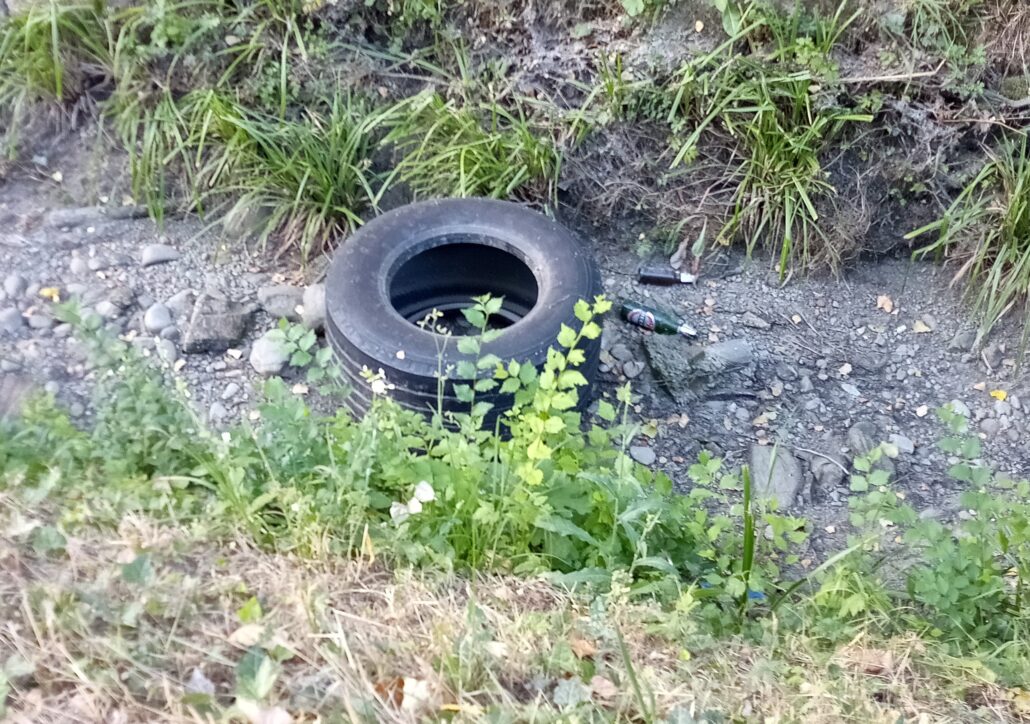
I reach the fields and stop to shoot a couple photos. “They cleaned the ditches”, I notice. “It will be good in case of thunderstorms”. Then, I have a closer look at the ditch and see big tires, glass and plastic bottles, and bags full of garbage. “What a shame for our exceptional intelligence. Will my fried zucchini blossoms now taste of tire?”

Fig. 1: A tire and glass bottles found in a typical ditch of the Po Valley. Author, 2022.

Only a few kilometers from here, there is an inter-municipal landfill where everyone can bring their waste [3]. Not only is the service free, but one also receives a tax discount at the end of the year. We are really smart beings.

On my way home, I pass close to a carwash. There is a line of cars – no, sorry, a line of human beings with their car – waiting for their turn. With the news announcing severe droughts and possible water rationing [4], is it really necessary to clean our car
these days?

If car washing needs about 10-15 liters of water and a man drinks about 2-3 liters a day, each cleaned car would be equivalent to a week of drinking.

Looking at these insightful actions and acknowledging that there are 8 billion of us, are we not too many?

A Dump of Recyclable Waste

On Friday, September 4, the documentary “PrimAscesa – La Montagna Creata dall’Uomo” (“First Climb Up – The Manmade Mountain”)by Leonardo Panizza was played in Lavis (Trento, Italy) during the event “Vita Nuova”.

The movie shows the first exceptional ascent of one of the last pristine alpine mountaintops: the “Ischia-Podetti” dump (Trento). The two Trentino mountaineers, Simon and Giovanni, climb up and sky down the slopes of Trento’s mountain of waste. The one that each of us from Trentino contributes to create every day.

View of the Ischia-Podetti dump from the industrial district of Trento North.


One remains shocked after the movie ends. Why does this mountain keep on growing despite all our efforts to separate waste and reduce the volume of unrecyclable waste? In fact, the movie clearly shows that most of the waste in the dump is made of recyclable materials. The issue is simple and derives from the waste separation and recycling system business management. If too many impurities (i.e., non-conforming materials) are found in the recyclable waste when it is handled at the waste separation plant, it cannot be sold to recycling companies and is therefore transported to the dump or the incinerator.

With its advantages and disadvantages, the incinerator is the alternative to dumps. Located about 50 km north of Trento, the incinerator of Bolzano is also used by the people of Trentino because it is oversized for the needs of the people of South Tyrol alone [1]. Far from being circular in a concrete way, our economy creates unrecycled waste every day. Despite the good will of individual citizens and associations, our economy is often unable to find valid alternatives to incinerators that can drastically reduce the amount of unrecycled waste.

In addition to the advices given in previous articles and posts, we recommend you to be active critical consumers in shopping and eating places. Ask your favorite supermarkets, canteens, restaurants, clothing stores, etc. about their waste management. Questions such as “Do you have plastic-free packaging?” or “Do you sell returnable goods?” reveal how important these issues are to us as consumers. If we are able to show that consumers demand better reuse and recycling waste handling practices, the message will sooner or later reach facilities decision makers and eventually those who have the real power to improve the waste management system in Trentino.

REFERENCIAS:

[1] Foppa, B. (2019, January 29). Utilizzo dell’inceneritore di Bolzano. Grüne – Verdi – Vërc.

Dirty Dutch Recycling

Citizens, businesses, and governments are increasingly aware of the need to use energy more efficiently and sustainably in the future. The transition from a linear to a circular economy is thus seen as both necessary and desirable (Kroes, 2018).

The role of recycling is crucial to achieve a resource efficient society, and a circular economy in general (Worrel & Reuter, 2014). Nevertheless, the sustainability of recycling itself is rarely questioned. What if recycling was part of the unsustainability of our global economy? This possibility is confirmed in this case study focusing on the Dutch market for recycled metal scrap.

Scrap consists of recyclable materials left over from the manufacturing and consumption of goods (Meena et al., 2018). In the Netherlands, eighty percent of the generated metal scrap is recycled (Tam & Tam, 2006). However, most of the Dutch smelters in charge of scrap recycling have gone bankrupt in the last decades, as a result of competing prices and weaker environmental regulations in other parts of the world (Wester, 2020A).

Scrap recycling was therefore delocalized, and Dutch traders now send large quantities of scrap metals to countries outside of Europe. Since Asia became the manufacturing factory of the world, there are more goods coming in Europe than going back to Asia (Wester, 2020B). To prevent container ships from returning empty, shipping costs to Asia are very low. On top of that, environmental pollution from international shipping is hardly taxed. This makes scrap transportation to other European countries inconvenient and uncompetitive (Wester, 2020A).

Remarkably, when scrap metal is exported rather than melted in the country of origin, the environmental impact remains zero on paper. The shipping industry does not need to record carbon dioxide emissions, so Dutch CO2 emissions from scrap metal are only counted when it is melted in the Netherlands. When scrap is exported, emissions simply vanish from the records and from any environmental impact evaluation (Wester, 2020).

Shipping scrap to other parts of the world means that high seas are entered. High seas are open-access resources, i.e. they are not subject to the legal sovereignty of any state. Thus, there is no entity guaranteeing its intergenerational survival or protection from depletion or pollution. (Debaere, 2020).

A esto shipping was not even mentioned in the 2015 Paris Agreement global targets for carbon emission reduction, or anywhere else in the agreement (UNFCCC, 2015). Still, marine vessels account for approximately 5% of the global CO2 emissions, 7% of the sulphur dioxide emissions, and 23% of the nitrogen oxides emissions (Kesieme et al., 2019). The last two emissions are linked to acid rain, which causes considerable pollution of land ecosystems (Graßl, 2002).

Fig. 1: The HMM Algeciras – the biggest marine vessel worldwide – in Antwerp, Belgium. Photo source: Author, October 2020.

So where exactly does all the scrap metal go?

After China’s ban on scrap metal import, Turkeyhas quickly become the biggest importer with a share of 30 to 40% of the global scrap. Of all the scrap that is shipped from the Netherlands, approximately 80% is melted down in Turkey. Cheap labour and energy costs, on top of loose and often not enforced environmental standards,makes Turkey highly competitive in the global scrap metal recycling market. That is why Turkish smelters can afford buying scrap metal at prices up to double the prices offered by Dutch traders. Thus, a total of approximately 60,000 Dutch lorries full of scrap metals found their way to Turkey last year (Wester, 2020A).

One can question whether the recycling of scrap metals, as it is done now, is sustainable at all. This has consequences for the purchaser of these metals, especially for the end consumer An example comes from the Dutch Sluishuis, a futuristic designed apartment building in Amsterdam, which promotes itself as “ultra-sustainable”. Among various reasons, Sluishuis claims to be “ultra-sustainable” due to its “maximum use” of recycled and renewable construction materials. They advertised the new flats under the motto “circular building” (Sluishuis, 2020). Aunque Sluishuis has right intentions, it purchases steel for beams and pillars from one of the dirty factories in Turkey. This shows how difficult it is to build “sustainably”, even when your intentions are right (Wester, 2020A).

Wester (2020A) shows that even if metal traders were to melt more sustainably in the Netherlands, the scrap recycling capacity would not be sufficient since the manufacturing industry was largely delocalized. Clearly, at this moment it is not possible to build a clean smelter in the Netherlands. So, today “the more scrap we process abroad, the better the CO2 footprint of the Netherlands [looks like], while [instead] it leads to more emissions worldwide”. On paper the Netherlands is a recycling world champion, but in truth it has exported the scrap metal, climate, and waste problem somewhere else (Wester, 2020A).

Bibliography

Debaere, P.M. (2020, 31 August). The Tragedy of the (Water) Commons. Downloaded on 8 October 2020, from https://papers.ssrn.com/sol3/Delivery.cfm/UVA-GEM-0174.pdf?abstractid=3682604&mirid=1

Graßl, H., Kokott, J. […] Schubert, R. & Schulze, E.D. (2002, 18 January). Charging the use of global commons.Downloaded on 8 October 2020, from http://dlc.dlib.indiana.edu/dlc/bitstream/handle/10535/4321/wbgu_sn2002_engl.pdf?sequence=1

Kesieme, U., Kayvan, P., Murphy, A. & Chrysanthou, A. (2019, January). Attributional life cycle assessment of biofuels for shipping: Addressing alternative geographical locations and cultivation systems. Retrieved on 8 October 2020, from https://doi.org/10.1016/j.jenvman.2019.01.036

Kroes, F.G.H. (2018). Circulaire oogst. Educatieve Uitgeverij EnDusZo: Rotterdam

Meena, S., Sakalle, R. & Tiwari, N. (2018, May). An Experimental Study On Concrete As A Partial Replacement Of Sand With Stone Dust And Steel Scrap. Retrieved on 8 October 2020, from http://www.academia.edu/download/57013236/IRJET-V5I599.pdf

Sluishuis (2020). Duurzaamheid.Retrieved on 8 October 2020, from https://sluishuis.nl/duurzaamheid/

Tam, V.W.Y. & Tam, C.M. (2006). A Review on the Viable Technology for Construction Waste Recycling, pp. 209-221. Retrieved on 7 October 2020, from https://doi.org/10.1016/j.resconrec.2005.12.002

United Nations Framework Convention on Climate Change (2015, 15 December). Adoption of the Paris Agreement. Retrieved on 8 October 2020, from https://unfccc.int/resource/docs/2015/cop21/eng/l09r01.pdf

Wester, J. (2020A, 15 September). Nederlands schroot reist de hele wereld over – waarom?Retrieved on 7 October 2020, from https://www.nrc.nl/nieuws/2020/09/15/nederlands-schroot-reist-de-hele-wereld-over-waarom-a4012127

Wester, J. (2020B, 16 October). Plasticafval: hoe een Nederlands dropzakje kon eindigen in een Turkse berm. Retrieved on 18 October 2020, from https://www.nrc.nl/nieuws/2020/10/16/plastic-afval-hoe-een-nederlands-dropzakje-kon-eindigen-in-een-turkse-berm-a4016112

Worrel, E. & Reuter, M.A. (2014). Chapter 1 – Recycling: A Key Factor for Resource Efficiency. Handbook of Recycling, pp. 3-8. Retrieved on 7 October 2020, from https://doi.org/10.1016/B978-0-12-396459-5.00001-5

Petition: better waste separation and recycling in Tyrolean students dorms

Greta’s amazing campaign for better policies against climate change has led to some first practical results.
First, the Exctinction Rebellion bursted out in London, then, a Commons motion that declares environment and climate change emergency was passed by UK’s parliament.

This is the power of a well developed environmental #activism.
We want to stick to the same type of activism to face another environmental problem: #waste.

Here’s our petition for better waste separation and recycling in Austrian student dormitories. If you want, sign it and send it back to us.

Text of the petition

Most of our daily household waste can be recycled. Our paper, plastic, glass and metal waste are valuable resources that can be reused to create new materials. All EU countries have learned to recycle waste and reuse its valuable resources. Austria itself recycles more than 1M tons of packaging and waste paper per year. That’s about 90% of the overall packaging waste (ARA, 2018). Such a high recycling rate is only possible thanks to a proper household waste separation.

The packaging recycling rate of student dorms is clearly below the national average. Is this because students don’t care about recycling or because the waste separation system is inefficient? Why are Home4students dorms in Innsbruck separating paper, plastic, glass and metal waste so badly? Why are there only organic and unrecyclable waste bins in our dorms’ kitchens? Wouldn’t it be better to also have paper, plastic, metal and glass bins?

Sources: (ARA) Altstoff Recycling Austria. (2018). Recycling. [online] Available at: www.ara.at/kreislauf-wirtschaft/verpackungsrecycling/ (Accessed 2019.03.13).

If you are in favor of a better waste separation system in your kitchen dorm, which allows you to separate paper, plastic, glass and metal properly, sign the petition. You can also sign it if you don’t live in a student dorm but you want to support the petition. If you are not in favor or you have better ideas to improve waste separation in student dorms’ kitchen drop a comment.

I personally believe that if the system gives us students easy ways to separate waste, we will do it.

PS: The petition for a better waste separation and recycling in Tyrolean students dorms is now online at openpetition.eu/!mxgqp (in English) and at openpetition.eu/!studentrecycling (in German).

Telegram: @greenmarked
LinkedIn: @greenmarked
Instagram: @greenmarked.it

Facebook:  @greenmarked.it


© GreenMarked.it is managed by ECONTROVERTIA APS — Via Alcide De Gasperi 1, 38015 Lavis (TN), Italy — VAT IT02667560227