Ir al contenido principal

Etiqueta: Veneto

El Resurgir a lo Loco de los Trineos Bob en Cortina

Mientras permaneció abierta, la antigua pista de bobsled «Eugenio Monti» de Cortina d'Ampezzo, construida para los Juegos Olímpicos de Invierno de 1956, fue considerada una de las más peligrosas del panorama internacional de este deporte. Han pasado diecisiete años desde la última vez que se utilizó, en enero de 2008. El bobsled no es uno de los deportes más populares y practicados en nuestro país; de hecho, solo cuenta con 59 miembros registrados en toda Italia.

La lluvia y las heladas en el Valle de Boite han transformado por completo las instalaciones, la madera de las protecciones se ha desgastado y las farolas y barreras se han oxidado. La pista ha vuelto a ser el centro de atención en los últimos años porque se está restaurando para albergar los eventos de los Juegos Olímpicos deMilán-Cortina 2026, pesar de varios retrasos desde el anuncio de la asignación a Italia del evento de los cinco círculos, controversias relacionadas con el impacto medioambiental de la obra y su uso posterior. El principal problema tiene que ver con los altos costes programados inicialmente, se planeó un gasto de 47 millones, que luego comenzó a aumentar lentamente. Primero fueron 61 millones en 2021, 85 millones en 2022 y con el último decreto del gobierno de Meloni, son 128 millones en total, cinco de los cuales ya se han gastado en consultoría y demolición [1].

Sin embargo, el problema del aumento de los costes es común en la mayoría de las instalaciones olímpicas repartidas por los Alpes italianos. El estadio de saltos de esquí de Predazzo (Trento), por ejemplo, tenía un coste presupuestado de poco menos de 24 millones de euros, que ahora ha aumentado a casi 43 millones. El municipio de Trentino también albergará una de las villas olímpicas, y de nuevo esto ha aumentado de un gasto presupuestado inicial de 27,6 millones a los 42 actuales [2]. Lo importante a tener en cuenta es que estos fondos adicionales a menudo son aportados por los gobiernos municipales, provinciales o regionales.

Un daño medioambiental

La antigua pista de Cortina ya ha sido retirada y los organizadores están yendo a contrarreloj para completar el trabajo. Para dar paso a las nuevas instalaciones, ya se han talado varios árboles, equivalentes a los que cayeron durante un período de 12 años bajo las sierras eléctricas en el municipio de Cortina d'Ampezzo [3]. a desconcertante cifra, que justifica la preocupación por el daño medioambiental causado al bosque de Ronco a las laderas de las montañas Tofane, surge de las aclaraciones proporcionadas por la empresa responsable de la tala (Infrastrutture Milano Cortina spa - Simico) tras la controversia causada por la tala de alerces centenarios [3]. La Comisión Central para la Protección del Medio Ambiente de Montaña (CCTAM) del Club Alpino Italiano ha expresado una postura muy firme al respecto.

a opinión de la CCTAM se expresa en las siguientes palabras: "El verdadero daño de la intervención actual viene dado por el cambio de uso de la zona que, de bosque con valores predominantes de protección de la zona habitada, se transforma en una zona semi-construida. Por lo tanto, se pierden todos los servicios ecosistémicos relacionados con el tipo de bosque presente en los últimos siglos” [3]. La tala de alerces también fue objeto de una denuncia presentada ante la unidad de biodiversidad de los Carabinieri de Belluno La hipótesis esbozada en la denuncia se refiere al "delito de destrucción de bienes paisajísticos y daños medioambientales", la tala altera la planificación forestal anterior al confirmar que la protección de la zona boscosa no es una prioridad [4].

As a result, the removal of the forest is likely to be more extensive than estimated. At the same time, the subsequent planting of 6,000 trees does not really appear to be compensatory since neither where it will be done nor the ultimate goal of this activity is specified [4].

Fig. 1: The Mountain chain standing behind Cortina d’Ampezzo. Photo by  Martinophuc en Pixabay.

Las instalaciones completadas deben estar terminadas antes del 15 de marzo de 2025, en poco menos de dos meses, y luego deben realizarse las pruebas y cualquier modificación; a partir del 6 de febrero de 2026, deben albergar las competiciones olímpicas. De lo que no se puede encontrar ninguna mención es de los futuros
costes
de funcionamiento y de quién correrán a cargo, ¿del municipio? ¿Región? ¿CONI? Al igual que no se menciona el hecho de que se necesitará un presupuesto adicional para las instalaciones no previstas en el proyecto [1].

La noticia que resonó en diciembre 2024 es que, si la pista no se puede completar, los eventos se celebrarán en Lake Placid en los Estados Unidos [5]. Debido a los retrasos en la finalización de las obras, el Comité Olímpico Internacional, que había hecho saber en varias ocasiones que se oponía a la repavimentación de la pista de Cortina y que no estaba convencido de que se cumpliera el calendario, pidió a los organizadores que indicaran un plan B de todos modos: Lake Placid. Las instalaciones estadounidenses ya han acogido los Juegos Olímpicos de Invierno en 1932 y 1980 y acogerán el Campeonato Mundial de Skeleton el año que viene, por lo que ya están listas; los que las gestionan también las pondrían a disposición de Milán-Cortina de forma gratuita, escribe el Wall Street Journal [5].

Cuentos ya oídos

Una solución que ya se había propuesto desde la asignación de los juegos, y que, entre otras cosas, habría mantenido los juegos en suelo italiano, era ampliar las ciudades anfitrionas a tres, incluida Turín, que acogió los Juegos Olímpicos en 2006. La pista de bobsled de Cesana Torinese (Turín), como dijo Marina Menardi (presidenta de la asociación Comité Cívico de Cortina), "podría arreglarse y reabrirse con una inversión de diez millones de euros, la misma que se necesita aquí solo para demoler la pista antigua" [6]. Sin embargo, por orgullo territorial, y también debido al hecho de que sin las carreras de bobsled y trineo en Cortina quedarían pocas disciplinas por albergar, se decidió optar por construir una nueva instalación prácticamente desde cero.

Menardi continúa: "n su momento [los Juegos Olímpicos de 2006], Cortina propuso acoger las carreras de bobsled, pero el comité organizador de los Juegos Olímpicos de Turín decidió construir una nueva y costosa instalación por orgullo. Después de los Juegos Olímpicos siguió perdiendo dinero y cerró. Estamos cometiendo el mismo error" [6]. De hecho, uno de los principales problemas, mencionado anteriormente, es la futura gestión de las instalaciones después de los Juegos Olímpicos, que se espera que cueste la desorbitada cantidad de 1,4 millones de euros al añoEl comité organizador y el CONI (Comité Olímpico Nacional Italiano) han elaborado una lista de actividades alternativas para las que se podría utilizar la pista; el número de bobsledders en Italia es de solo 59 atletas, lo que ni de lejos garantizaría que la instalación alcanzara el punto de equilibrio. Muchas de estas propuestas, sin embargo, son las mismas que ya se escucharon después de los juegos de 2006. El alcalde del municipio de Cesana Torinese, Daniele Mazzoleni, declaró recientemente sobre estas afirmaciones: "Es un copia y pega de los cuentos que nos habían contado [...] el Coni nos dijo que Cesana sería 'el Coverciano del esquí' garantizándonos que se haría cargo de la gestión. Dos años y adiós” [7].

Italia se acerca así a la cita olímpica recogiendo cifras y críticas despiadadas tanto a nivel nacional como internacional. Si hace tan solo dos años se hubieran tenido al menos en cuenta las sugerencias de las asociaciones ecologistas y los residentes de Cortina, tal vez hoy se habrían resuelto varios problemas.

En el contexto de un renovado deseo de "vuelta a la montaña", publicitado incluso a través de acontecimientos de gran repercusión como los Juegos Olímpicos, es necesario evaluar cómo afectan tales intervenciones a los territorios alpinos. Los cambios favorables y desfavorables, derivados de tales iniciativas, siempre están relacionados con influencias directas tanto sobre la población como sobre el medio ambiente.

Este artículo forma parte del proyecto "Quiz Ambientali per un Trentino Più Verde!" llevado a cabo por Econtrovertia APS y patrocinado por la Fondazione Cassa Rurale di Trento (Notificación de aprobación del 20 de diciembre de 2024).

REFERENCIAS:

Pulse aquí para ampliar las referencias
[1] Italia, M. (2024, February 1). A Cortina si consuma una farsa. La pista di bob non servirà per le Olimpiadi. Mountain Wilderness Italia ONLUS. https://www.mountainwilderness.it/editoriale/a-cortina-si-consuma-una-farsa-la-pista-di-bob-non-servira-per-le-olimpiadi/

[2] Fiemme – Fassa | l’Adige.it. (n.d.). L’Adige. https://www.ladige.it/territori/fiemme-fassa

[3] Pietrobelli, G. (2024, March 2). Olimpiadi, il bosco distrutto per la pista da bob: a Cortina in pochi giorni abbattuta la stessa quantità di alberi degli ultimi 12 anni – Foto. Il Fatto Quotidiano. https://www.ilfattoquotidiano.it/2024/03/02/olimpiadi-il-bosco-distrutto-per-la-pista-da-bob-a-cortina-in-pochi-giorni-abbattuta-la-stessa-quantita-di-alberi-degli-ultimi-12-anni-foto/7465046/

[4] Taglio dei larici a Cortina per la pista da bob: secondo il CAI si tratta di un bosco in meno. (2024, March 9). PlanetMountain.com. https://www.planetmountain.com/it/notizie/ambiente/taglio-dei-larici-cortina-pista-da-bob-secondo-cai-tratta-un-bosco-in-meno.html

[5] Robinson, J. (2024, December 8). The Milan Olympics has a backup location. it’s in upstate New York. The Wall Street Journal. https://www.wsj.com/sports/olympics/milan-cortina-winter-olympics-lake-placid-9b7a6534

[6] La costosa e contestata pista da bob a Cortina. (2021, November 16). Il Post. https://www.ilpost.it/2021/11/16/pista-bob-cortina-olimpiadi/

[7] Stella, G. A. (2024, September 9). Cortina, larici centenari abbattuti per creare la  pista di bob  dell’Olimpiade. Corriere Della Sera. https://www.corriere.it/cultura/24_settembre_09/cortina-larici-centenari-abbattuti-creare-pista-bob-dell-olimpiade-fdfc74fe-6e05-11ef-b351-93b8a69b82dd.shtml

REFERENCIAS:

Pulse aquí para ampliar las referencias
  1. Italia, M. (2024, February 1). A Cortina si consuma una farsa. La pista di bob non servirà per le Olimpiadi. Mountain Wilderness Italia ONLUS. https://www.mountainwilderness.it/editoriale/a-cortina-si-consuma-una-farsa-la-pista-di-bob-non-servira-per-le-olimpiadi/
  2. Fiemme – Fassa | l’Adige.it. (n.d.). L’Adige. https://www.ladige.it/territori/fiemme-fassa
  3. Pietrobelli, G. (2024, March 2). Olimpiadi, il bosco distrutto per la pista da bob: a Cortina in pochi giorni abbattuta la stessa quantità di alberi degli ultimi 12 anni – Foto. Il Fatto Quotidiano. https://www.ilfattoquotidiano.it/2024/03/02/olimpiadi-il-bosco-distrutto-per-la-pista-da-bob-a-cortina-in-pochi-giorni-abbattuta-la-stessa-quantita-di-alberi-degli-ultimi-12-anni-foto/7465046/
  4. Taglio dei larici a Cortina per la pista da bob: secondo il CAI si tratta di un bosco in meno. (2024, March 9). PlanetMountain.com. https://www.planetmountain.com/it/notizie/ambiente/taglio-dei-larici-cortina-pista-da-bob-secondo-cai-tratta-un-bosco-in-meno.html
  5. Robinson, J. (2024, December 8). The Milan Olympics has a backup location. it’s in upstate New York. The Wall Street Journal. https://www.wsj.com/sports/olympics/milan-cortina-winter-olympics-lake-placid-9b7a6534
  6. La costosa e contestata pista da bob a Cortina. (2021, November 16). Il Post. https://www.ilpost.it/2021/11/16/pista-bob-cortina-olimpiadi/
  7. Stella, G. A. (2024, September 9). Cortina, larici centenari abbattuti per creare la  pista di bob  dell’Olimpiade. Corriere Della Sera. https://www.corriere.it/cultura/24_settembre_09/cortina-larici-centenari-abbattuti-creare-pista-bob-dell-olimpiade-fdfc74fe-6e05-11ef-b351-93b8a69b82dd.shtml

Imagen de portada: “Curve of a bobsled track during an international competition, Photo by Dominic Wunderlich en Pixabay.

Friends of Mother Earth the Brotherhood of Francis

Social Friendship: this is the leading theme, the challenge, the juxtaposition, as natural as it is impossible, at the center of one of the most famous Encyclicals of recent decades, Pope Francis’ “Brothers All.”

Since the time of Aristotle at least, it has been universally recognized that human beings are a “social form of life” (Zoon Politikòn), weaving their existence through relationships and complex constructs of human interactions.
However, as Alessandra Smerilli – Professor of Political Economy at the Pontifical Faculty of Educational Sciences “Auxilium,” Advisor to the State of Vatican City – makes explicit in the initial “Reading Guide” to the Encyclical, juxtaposing the term “Friendship” with the word “Social,” and placing it in the context of “brotherhood,” represents a true revolution, aiming to outline the contours of a New world… a more “human” world.

Where Friendship is by its nature a selective concept (when one says “friends choose themselves,” as opposed to relatives), to define it as social is an almost oxymoronic representation, expanding its semantic area, and extending it to society as a whole. If we reflect carefully, however, the association is not so inconceivable and finds its legitimacy not only if we inscribe it in the groove of the Aristotelian tradition (friendship can be given to anyone, thanks to the social nature of our species), but also by placing it in the broader context of Christian brotherhood. The commandment of Love, “Love one another,” [1] or “Love your neighbor as yourself,” [2] represents the essence of this message.
Social Friendship institutionalizes at the secular level a concept inherent in human evolutionary nature (as Aristotle had intuited) and theology and broadens its scope, further clarifying the delimitations of that neighbor to whom we must strive. If in the Jewish traditions, the imperative to love the other was understood as one’s neighbor, a member of the same nation [3], with Judaism grown out of Israel and the Gospel message in fact the boundaries extend generically to the whole of humanity and now reach, with Social Friendship, to include far more than that.

The brotherhood is not only between humans but is with and for Creation, in full Franciscan tradition and in line with the ecological and environmental movements of recent decades. We are facing perhaps the secular awareness of the spiritual values of the Patron Saint of Italy, for the first time systematized in a practical and theoretical system of directions by one of the highest international authorities.
Indeed, the clear conception expressed by the pontiff makes it clear to us that we are one with Creation. The partnership is in harmony with Planet Earth, of which we are an integral part.

One is not saved alone, where “alone” refers not only to human beings but to the entire animal and plant ecosystem of the Earth.
It is not possible to save ourselves alone … and there is more: it is necessary, by human-natural obligation and not only ethical-moral obligation, to care for others, where others, once again, are all the living on our planet and suffering and non-suffering humanity, undoubtedly.
This is because “the existence of each of us is linked to that of others: life is not time passing, but time of encounter” [4]. Being social forms of life then is only the first step: loving and caring, taking care is the final goal, which completes us as a new humanity.

Today’s society, on the other hand, seems to want to keep us in a state of immaturity, educating us to the absence of relationships, to selfish individualism, which makes us see our neighbor as a stranger, an enemy, a waste of time.We do not want to waste time on “other people’s problems”: these, Pope Francis reminds us, are “symptoms of a sick society” [5].A consumerist ideology of life and also of relationships, disposable, that cannot but result in the destruction and total collapse of everything, once the deceptions of this system are revealed. We are the first to be at risk, as well as the environment.

As the Pope states, then “the ‘every man for himself’ will quickly result in the ‘all against all’ ” of Hobbesian memory. From the sociality of divine Love to an uncivilized state of nature of the war of all against all [6].
If this is how we currently treat members of our own species, it is not surprising that we fail to see the consequences on the entire living organism, of which we are a cell, an integral part, namely the Planet.

It is necessary to embrace a new modus vivendi, a new “diet” of life, the diet of Caring for the Earth, because we are the Earth: She is our neighbor … nearest neighbor.
Being her friends and brothers, as St. Francis teaches in the famous canticle, means being friends with ourselves.

It is necessary to end the exploitation of the planet and the destruction of ecosystems, human above all. Words that have resonated in the minds and hearts of many for a long time and finally find support in one of the most authoritative institutional figures in the world, capable of not just stopping at saying what should or should not be done or an accurate analysis of the present, but able to outline concrete guidelines for our future.
In his Encyclical, Pope Francis shows us the way to take a “leap toward a new way of living” where we discover “once and for all that we need and are indebted to one another” [6].
The first step? Let’s follow the Pontiff’s wise shrewdness and, from now on, ask ourselves and anyone we meet, not only “what’s your name?” or “what do you do/what do you do for a living?” but also … “Who do you take care of?”

Let’s ask ourselves, let’s give ourselves an answer, and let’s start now, if there isn’t one.
Let us spread the question, as a necessary gift to our curriculum vitae as humans or, better, Inhabitants, part of this extraordinary Planet.

Ad maiora!

REFERENCIAS:

Pulse aquí para ampliar las referencias
  1. Gospel of John: 15, 12
  2. Gospel of Mattew: 22, 39
  3. Francesco, P. (2020). Fratelli tutti. Sulla fraternità e l’amicizia sociale. p 43
  4. Videomessaggio al TED2017 di Vancouver (26 aprile 2017): L’Osservatore Romano, 27 aprile 2017, p.7
  5. Francesco, P. (2020). Fratelli tutti. Sulla fraternità e l’amicizia sociale. p 46
  6. Francesco, P. (2020). Fratelli tutti. Sulla fraternità e l’amicizia sociale. p 33

A Pinnacle Crumbles in the Alps: Hydrogeological Safety in Veneto and Trentino

“… and that is how the Dona lost her Omo",

To most of you readers, these words may seem nonsensical, decontextualized, and meaningless. Unfortunately, this is not the ending of a fairy-tale love story, a poorly written adventure novel, or the new recording of a budding singer-songwriter. The story is the real and tangible one of a millennial married couple who separate under the pressure of a heavy, continuous, unexpected rain.
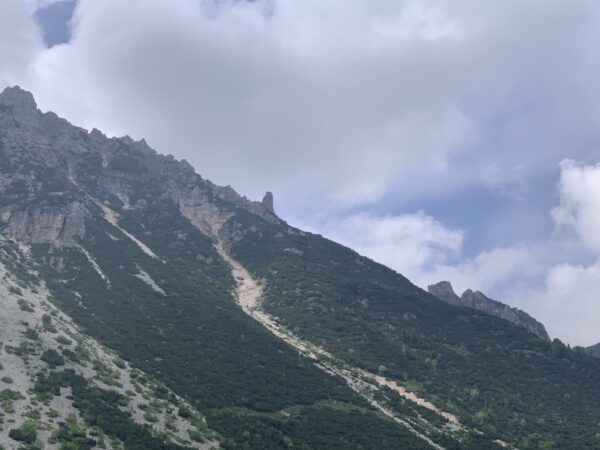
The two rock pinnacles that soar – or rather, towered – on Monte Plische (precisely, the Omo and the Dona), on the border between Veneto and Trentino, south of Rovereto in the municipality of Recoaro Terme (Vicenza, Italy), are for us locals a kind of symbol, an emblem considered immutable, a fixed star of the skyline of our mountains.

Yet, like everything in nature, unchanging it is not. So much so that today, at first light, after a week of thunderstorms and heavy rain in the area, the entire valley woke up without part of this symbol.

But how is this possible? The two pinnacles have always been there since living memory!

And if on the one hand, with a veiled – and not even too much – healthy parochialism, I am pleased to be able to introduce this technical-hydrogeological discussion starting from a fact of absolute territorial marginality, on the other hand, however, I perceive a sense of helplessness in the face of nature’s magnificence, which this time affects me directly.

Fig. 1: Mount Plische, Carega Group. Middle: “La Dona,” isolated from “L’Omo.” (Author. Recoaro Terme, Italy. June 11, 2023)

Landslides, rockfalls, avalanches and … forests! Or, anyway: trees, plants, and shrubs are the protagonists of this story. And the narrator is water.

In economic terms, the situation in Veneto looks promising for the current year. It was a few weeks ago that the Governor announced the allocation of more than 25 million euros to combat hydrogeological instability in the regional territory. Funds that will be allocated primarily to works of embankment, riverbed arrangement, and cleaning, in almost all the provinces of Veneto [1].

And it is also true that important works in the regional territory have already been carried out over the years. Following the flood of 2010, which hit the provinces of Vicenza, Verona and Padua hard [2], the Region endowed itself with a Plan of absolute depth – the so-called “Piano d’Alpaos”, named after the professor at the University of Padua who oversaw its drafting – worth over 3 billion euros in investments against hydrogeological risk.

To date, more than 40% of the Plan is reported to have been implemented, with investments put in place in excess of 1.5 billion euros, including [3]:

⦁ Completion of Trissino di Monte basin on the Agno-Guà river (22.7 million the value of the intervention) 40% of Trissino di Valle basin (20 million intervention);

⦁ Near completion San Lorenzo basin in the Verona municipalities of Soave and San Bonifacio (5.9 million euro work);

⦁ 80% of the one on the Bacchiglione River upstream of Viale Diaz in Vicenza’s capital city (18.75 million euro intervention);

⦁ 70% of the first functional lot of the one on the Muson stream, in the municipalities of Fonte and Riese Pio X in the Treviso area (€18.6 million value).

For Trentino, the situation is also positive, with 7 million allocated by the Government to the year 2023 for defence works identified by the province in coordination with the territories [4].

In total, interventions in the provincial territory for about 13.5 million euros are approved for the current year, related to the state of emergency in October 2018 [5].

In short, there seems to be no shortage of initiatives and funding pe these territories. Yet with every event that occurs in the territory, fronts of criticism open up (often rightly so). Between those who cry of inefficiency, incompetence, and tardy response and those who justify and praise the work of those in charge, the fact remains that for the entire peninsula, almost 94% of municipalities are at risk of landslides, with the Province of Trento reaching even 100% of municipalities, for a population residing in landslide hazard areas of more than 22% of the total.

Numbers, these, however, compare with a reality on the ground that can help and support risk prevention itself. Because, while it is true that extreme weather events are a product of nature itself (anthropogenic climate change excluded), it is also from nature itself that humans can benefit.

And in this, the forests come to the rescue. Indeed, afforestation interventions in alpine areas, which have been active since the 1960s, have proven effective and have shown their capacity in terms of protection and support or replacement of traditional technical measures against hydrogeological hazards. However, necessary assessments regarding soil type, elevation, planting techniques, exposure, and socio-economic implications are still to be considered. Moreover, maintaining the effectiveness of such biological protective structures is only ensured by active forest management that can enable forest resilience and persistence.

In short, technical and applicative knowledge is necessary for proper and effective land use planning, including forestry, but it can supplant and help against the advance of risk.
Because in the end, as a colleague of mine, who is not so much a forester but so much a human being said about the recent floods in Emilia-Romagna: “A river will always act as a river”.

That is to say, it is useless to try to change what nature dictates. However, it is up to us to plan actions that can put us in a safe condition, making the best use – when possible – of nature itself.

This article is part of the project “PILLOLE D’ACQUA PIANA: seminari itineranti, blog e podcast per una gestione sostenibile delle risorse idriche in Piana Rotaliana” carried out by ECONTROVERTIA APS and supported by Fondazione Caritro (Prot. no. U445.2023/SG.386 of April 23, 2023).

CAREGA PROJECT: Local charcoal as a strategic tool for the bioeconomy of the Piccole Dolomiti Vicentine

Matteo Gecchelin

August 5, 2022

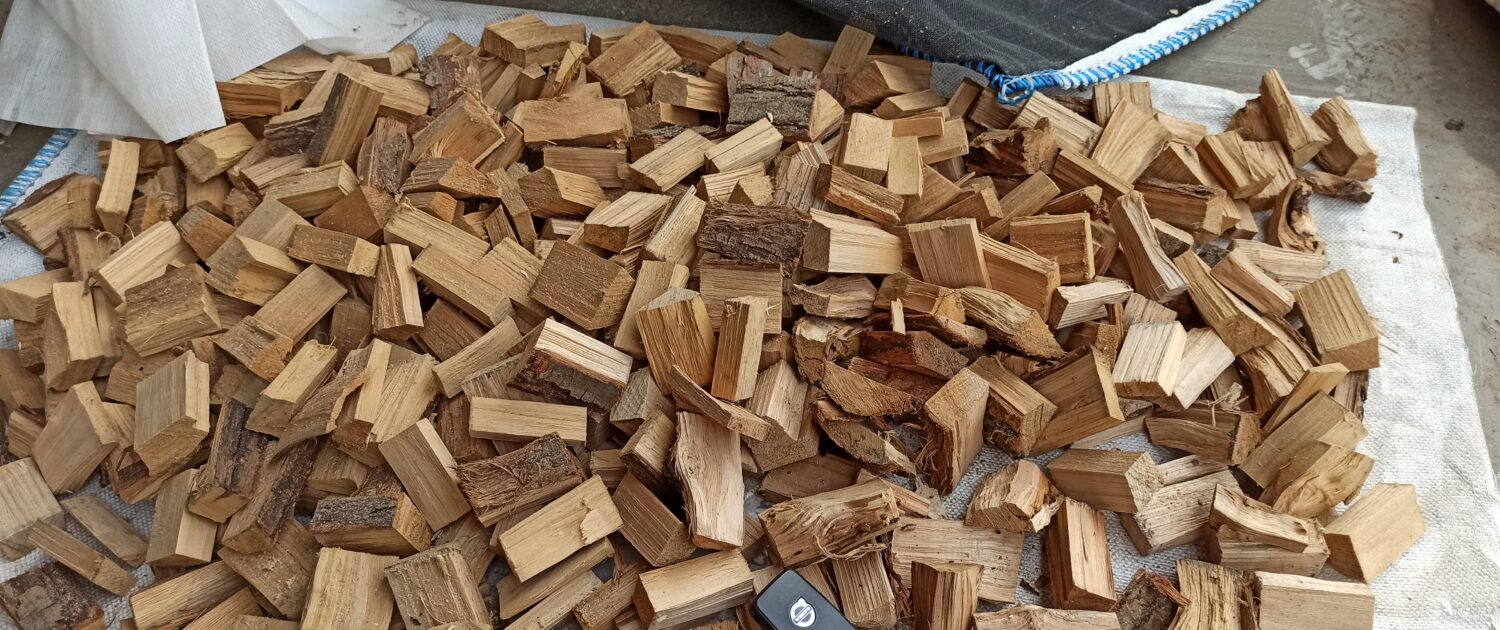
It ended in the best possible way on July 15, 2022 through a day of seminar and sharing of results at Valli del Pasubio (VI – Italy) the CAREGA project. In the strand of proposals on the topic of circular energy and biomass supply chains in Veneto and Trentino already inaugurated [1], the present project is, in its fullness, perfectly placed in that context. CAREGA: Local charcoal as a strategic tool for the bioeconomy of the Piccole Dolomiti Vicentine aims, in its capacity as an initiative funded by the Rural Development Program for Veneto 2014–2020, Measure 16 [2] to:
    • The valorization of waste/zero value material by processing it into charcoal (forest-wood-energy supply chain). An innovative demonstration plant will be implemented, supporting the entire valorization of the subject “tree” (cascading);

• Aggregation of forest land through innovative contractual forms, following European examples, to increase active forest management (wood mobilization).

In this sense, the project addresses not only the purely technical and engineering problem of designing a machine suitable for the production of high-quality charcoal for culinary uses that is at the same time efficient, economical, easy to use and easy to transport but also fits strongly into the typically pre-alpine problem of forest land fragmentation.
And if, in fact, few doubts still remain at the end of the project about the functionality of the production machinery — at least at the experimental level — easily implemented with technical improvements in the near future, it is precisely with regard to the involvement of the territory, in its small woodland owners, of the few user firms that concerns become more pressing.
An optimization of the forest–wood–energy supply chain is not yet a reality for the mountain areas of Vicenza to date.
Absent or unknown forest owners, highly fragmented and small plots, often difficult to access and mechanize make, in many ways, the possibility of truly active and for productive purposes forest management of the resources stored here fatuous.
Not only that, non-marketable production waste such as firewood or — for the little present — opera wood, turn out to an important extent for these areas. Chestnut wood waste proposed for use in the CAREGA project is an excellent example.
Consider, in fact, how not only has the reduced utilization of the forest asset in recent decades led to an almost total abandonment of forests — with consequent risks related to afforestation of neighboring agricultural areas, increased fire risk as well as hydrogeological and landslide risk and the growth of allochthonous species — but, a far more worrying fact, has generated a breakdown of all supply chain relationships between owners, user companies and forest enterprises [3] .
In this sense, the project — on behalf of the partner ETIFOR, a spin-off of the Department of Territory and Agro-Forestry Systems (TESAF) of the University of Padua — proposes the study of new contractual forms suitable for the satisfaction, including economic satisfaction, of all the actors of the supply chain in the area.

Fig. 1: The CAREGA project involves the use of chestnut waste products as biomass for the production of charcoal for culinary use. Photo Associazione Forestale Vicentina (July 12, 2022)

Valuable starting point and point of pride for the territory of the Piccole Dolomiti turns out to be, in this regard, the Vicenza Forestry Association.
Established in 2002 as part of PSR funding, it remains to this day one of only two Forest Associations still active in the Veneto region, out of the fourteen originated by funding two decades ago. Since its inception, the Association — made up of forest owners — has aimed to «organize members’ forest property to enable sustainable forest management» [2].
Contracts presented during the project’s concluding conference are, in this sense, effective tools for overcoming the problems associated with abandonment of forest management.
It is proposed, by way of non exhaustive list:

• The introduction of the figure of the “forest contractor“, who can take over the management of the entire supply chain even in multifunctional terms and with multi-year ad-hoc contracts, as well as provide for the management of various financing;
    • The introduction of “Forest Agreements”, by force of law L. 29 luglio 2021, n. 108.

And it is precisely these Forest Agreements that could be an active tool for «valuing public and private land with agro-sylvo-pastoral vocation as well as for the conservation and delivery of the ecosystem services provided by forests» (As stated in art.3, comma 4 quinquies 1 of decreto legge n. 5 2009, converted with amendments into L.9 aprile 2009 n.33).
In this sense, in fact, such Forest Agreements — of which National Rural Network has edited an exhaustive analysis in [4] — represent an additional regulatory tool, in addition to those already existing, for “networking,” in the legal and negotiating sense, for the creation of economic chains — for the purpose referred to in Article 3 above — where there are rights and obligations for all contracting parties.
With this in mind and through the creation of a local ad-hoc market (for the CAREGA project, of charcoal for culinary use), one can truly hope for the reestablishment of an active and participatory forest management that can both create an economy and fit into the theme of bioenergy with reuse of production waste. It would benefit not only our forests, but also all those who live off them as well as the entire territory that revolves around them on a daily basis.

Bibliography:

[1] Gecchelin, M. (2022, June 24). A State-Of-The-Art Review of the Biomass Supply Chain in Trentino and Veneto [Online; dated 26-July-2022]. GreenMarked. https://greenmarked.it/a-state-of-the-art-review-of-the- biomass-supply-chain-in-trentino-and-veneto/

[2] Associazione Forestale Vicentina. (2022). PROGETTO CAREGA [Online; dated 26-July-2022]. https://www.progettocarega.it/it/
[3] ETIFOR. (2022). Carbonella certificata dalle foreste di montagna italiane [Online; dated 26-July-2022]. https://www.etifor.com/it/portfolio/ carega/

[4] Rete Rurale Nazionale. (2021). Gli Accordi di Foresta. Una nuova opportunità per il settore forestale nazionale. Report di approfondimento [Online; dated 26-July-2022]. https://www.reterurale.it/flex/cm/pages/ServeBLOB.php/L/IT/IDPagina/23814

A State-Of-The-Art Review of the Biomass Supply Chain in Trentino and Veneto

During a lecture held at the Trento Festival of Economics on June 05, 2022, forestry economics expert Alessandro Dolcetti claimed that "the European Union argues that the use of biomass for energy purposes is a problem. The best use of wood is for construction purposes”[1].

According to the latest Report on the Use of Biomass for Energy Production in the European Union, Europe’s position on biomass production is ambiguous. While it supports the growth of this energy source as a mean of divestment from fossil fuels, it is yet concerned about “[…] the intensification of forest management for additional biomass production, [because it] can increase pressures on forest ecosystems at the local level",[2].

The concern specifically refers to the 63 % share of the total wood used in the EU going to bioenergy production in 2015 [2]. In quantitative terms, the study also shows that 59.2 % of all renewable sources used in the EU are represented by bioenergy.

Looking at the 2030 Biodiversity Strategy, the Report clearly specifies that a sharp increase in demand for bioenergy is expected, which translates into a direct increase in demand for wood and woody biomass. Specifically, three ways for additional biomass productionare identified by the Report: (1) increased harvesting of wood residues; (2) afforestation/reforestation; and (3) conversion of natural forests to plantations[2].

Dolcetti’s analysis of the situation in Italy – and especially Trentino and Veneto – is very different from the one depicted by the European fears of timber shortages and fits well into this discussion.

In Trentino, a notable project of 2011-2012 defined and quantified the use of woody biomass in the Province of Trento. At the time, the “Biomasfor” project proposed a holistic model for evaluating sustainable forest bioenergy. What emerged is a deficit of woody material to use for energy purposes. Specifically, 30 % of Trentino’s total needs [3].

As a solution, the project recommended "the activation of an efficient harvest of agricultural residues from an already well-organized and structed sector (apple orchards and vineyards), [thus determining] source differentiation and income integration for Trentino farms”[4].

In any case, an increase of tree felling and sawing activities to produce greater quantities of energy wood residues and chips was seen as unreasonable by the predictions of that time. Further and more recent analyses of Trentino’s biomass sector state-of-the-art are not available to date. The opinion of Trentino artisans, however, seem to draw attention to the changed economic and social condition of Trentino compared to a decade ago. "The 140 sawmill and packaging firms, with about 1300 employees, process an average of 1 million cubic meters of rebar in Trentino, but the availability is 500 thousand cubic meters. That means that we buy half of it from outside the Province of Trento. The point is that 1 million cubic meters of processed rebar produces 1.2 million stero meters of by-products, waste from sawmills, 45-47 % of which is not used in Trentino” [5].

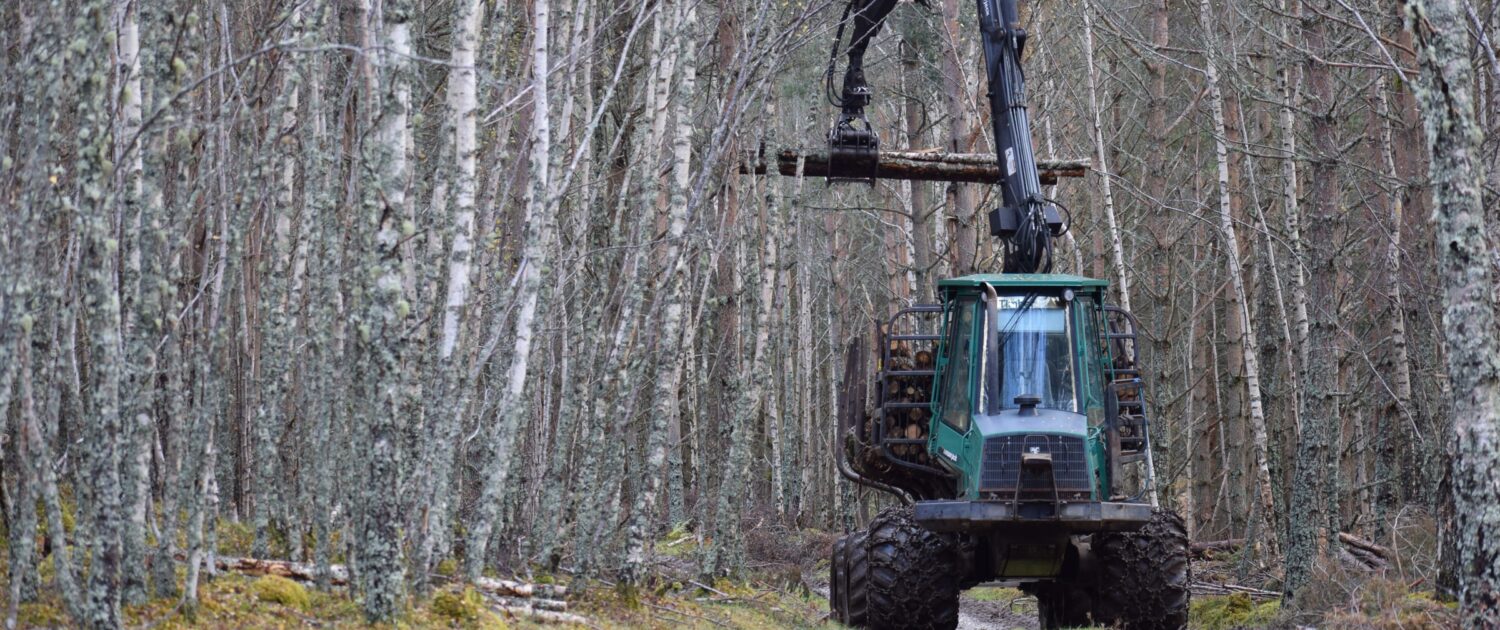
Fig. 1: In defining the logging capacity for an area, the presence of adequate forest infrastructures suitable for transporting material is paramount. Free-source photo by Ma Ti on Unsplash (Scotland, 18 September 2020).

In Veneto and in line with “Biomasfor”, we find the “Biomass-React” project, led by the forestry company Cippolegno srl in partnership with the Tesaf department of the University of Padua and FSC Italy. The project was activated in the municipality of Asiago (Vicenza) in the 2019-2021 period [6].

The project results show that the amount of timber moved from May 2019 to January 2021 on the Asiago Plateau exceeded 46,000 cubic meters. Of this, about 20 % was classified for biomass chipping. Over the past three years, an average of 450 cubic meters of material has been produced every MONTH for energy purposes in the form of wood chips. These quantities are quite impressing when compared with the average annual values generally handled in the area for wood chipping: about 450-650 cubic meters per YEAR.

In this context, the turning point was storm VAIA and its consequences.

While the project does not deny the countless negative impacts that storm VAIA caused in a vast area of the Eastern Alps, it laid the basis for a proper evaluation and use of the material fell because of storms. Conversely to the predictions set at beginning of the decade for Trentino, the data shows how the national forestry system, here represented by the Asiago supply chain, works properly also when large amounts of material must be skidded and processed. Considering the current Italian underharvest compared to the annual wood increment estimates, wood harvesting was confirmed to be liable at the expense of the national supply chain both under ordinary conditions and following extreme weather events [7].

“Biomass-React” also demonstrates that areas like the Altopiano dei Sette Comuni can start and consolidate a virtuous process that favors the establishment of a local biomass supply and use chain. For such goal, a key point is the construction of a “[…] governance capable of managing in a more structured way the material of the area, evaluating not only its availability, but also the logistical aspects and local demand”[6].

Due to the phytosanitary emergency caused by the appearance of wood scolytids on the studded material (in particular, Ips typographus) and since affected trees cannot be used for wood works, an increased amount of wood chipping material will be available in the next years.

Cover- and preview photo: A small forwarder collects birch wood in a birch forest. Free-source photo by Ma Ti on Unsplash (Scotland, 18 September 2020).

REFERENCIAS:

[1] Ufficio Stampa della Provincia autonoma di Trento. (2022, June 05). Fonti rinnovabili, accumuli e bioenergie in Trentino e in Alto Adige [Online; dated 13-June-2022]. https://www.ufficiostampa.provincia.tn.it/Comunicati/Fonti-rinnovabili-accumuli-e-bioenergie-in-Trentino-e-in-Alto-Adige.

[2] Camia, A., Giuntoli, J., Jonsson, R., Robert, N., Cazzaniga, N. E., Jasi- nevičius, G., Grassi, G., Barredo, J. I. & Mubareka, S. (2021). The use of woody biomass for energy production in the EU. Publications Office of the European Union.

[3] Sacchelli, S., Zambelli, P., Zatelli, P. & Ciolli, M. (2013). Biomasfor: an open-source holistic model for the assessment of sustainable forest bioenergy. iForest-Biogeosciences and Forestry, 6(5), 285.

[4] Casini, Lapo. (2013, December 11). Le biomasse legnose in Trentino secondo il progetto Biomasfor [Online; dated 13-June-2022]. GeorgofiliINFO. https://www.georgofili.info/contenuti/le-biomasse-legnose-in- trentino-secondo-il-progetto-biomasfor/1561.

[5] Varesco, L. (2022). Biomassa legnosa, alternativa al gas: le opinioni degli artigiani del Trentino [Online; dated 13-June-2022]. https://www.artigiani.tn.it/biomassa-legnosa-alternativa-al-gas-le-opinioni-degli-artigiani-del-trentino/.

[6] Pellegrini, M., Bertotti, M., Grigolato, S. & Novak, M. (2021). Biomass-React, il progetto che valorizza l’impiego della biomassa forestale. Agriforenergy, 15(2), 26–29.

[7] INFC. (2015). Inventario Nazionale delle Foreste e dei serbatoi forestali di Carbonio [Online; dated 13-June-2022]. https://www.inventarioforestale.org/it.

Telegram: @greenmarked
LinkedIn: @greenmarked
Instagram: @greenmarked.it

Facebook:  @greenmarked.it


© GreenMarked.it is managed by ECONTROVERTIA APS — Via Alcide De Gasperi 1, 38015 Lavis (TN), Italy — VAT IT02667560227