Ir al contenido principal

Etiqueta: Trentino

¿Cuántos Arboles Puede Plantar una Persona?

Hace aproximadamente un año celebramos el Día Mundial del Medio Ambiente con un artículo que hablaba de cómo el compromiso de las personas y las organizaciones puede marcar una verdadera diferencia en la reforestación de entornos degradados.

Hoy volvemos a abordar este tema con la extraordinaria historia de Augusto Girardelli y cómo transformó toda una ladera del Monte Baldo. Pero antes, intentemos comprender mejor el contexto en el que se desarrolla esta historia.
La sierra del Baldo se hizo famosa gracias a la obra de Francesco Calzolari de 1566, "Il viaggio di Monte Baldo" (El viaje de Monte Baldo). Gracias a su relato, que describía la rica biodiversidad de estas montañas, el Baldo fue definido primero como Hortus Italiae y más tarde como Hortus Europae, el “Jardín de Europa”.

Para más información, el volumen completo en versión digitalizada haciendo clic aquí.

Unas décadas más tarde, Giovanni Pona también escribió sobre el extraordinario interés botánico de la zona del Monte Baldo, el lago de Garda, Val Lagarina y Verona en su obra Monte Baldo, en la que se describen y representan muchas plantas raras de la antigüedad, desconocidas en los registros actuales, hasta ahora.
También puede encontrar esta obra digitalizada en google books.

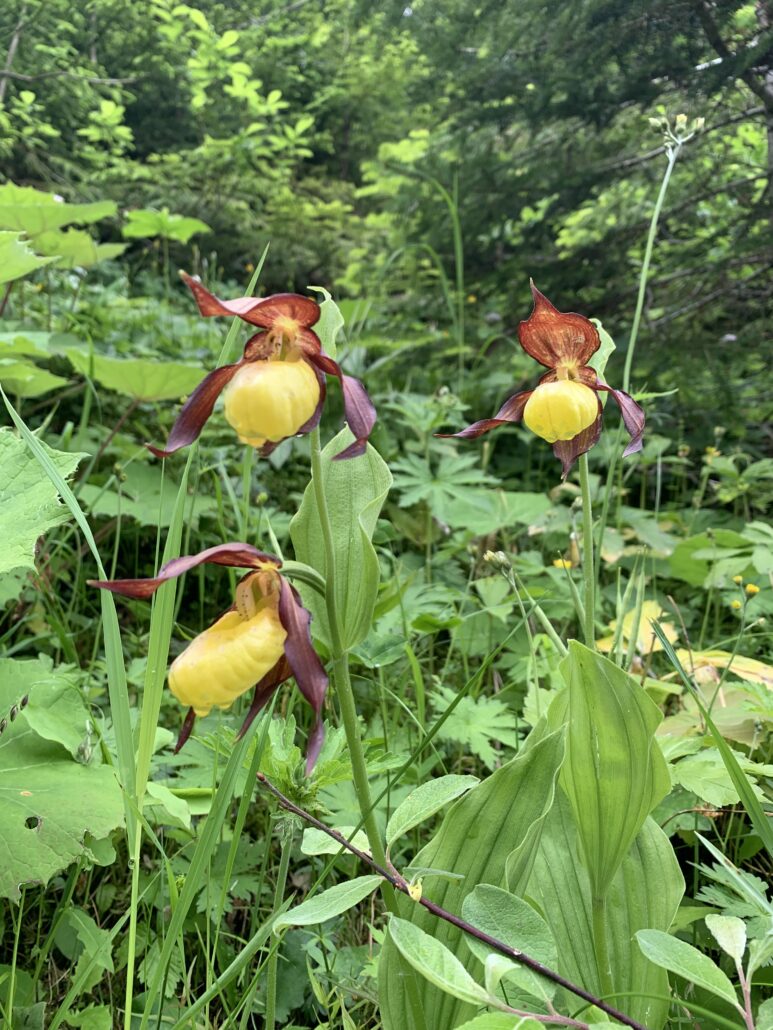
Basta con pensar que en una superficie de tan solo 300 kilómetros cuadrados– aproximadamente una milésima parte de la superficie italiana –crecen al menos 57 especies de orquídeas, muchas de las cuales son endémicas[1], es decir, que solo se encuentran en este territorio. Una concentración de vida que convierte a la zona en una de las más ricas en biodiversidad no solo de Italia, sino de toda Europa.

Se puede entender pues lo especial que es esta zona, un enclave entre las fronteras políticas de Trentino y Véneto y las fronteras naturales del lago de Garda y el valle del Adigio.

Volvamos ahora al protagonista de nuestra historia. Aprendí sobre él mientras caminaba por el sendero que va desde San Giacomo hasta el Altissimo di Nago, una de las cimas más altas del Monte Baldo, donde hay una placa conmemorativa en su memoria.En ella se lee:

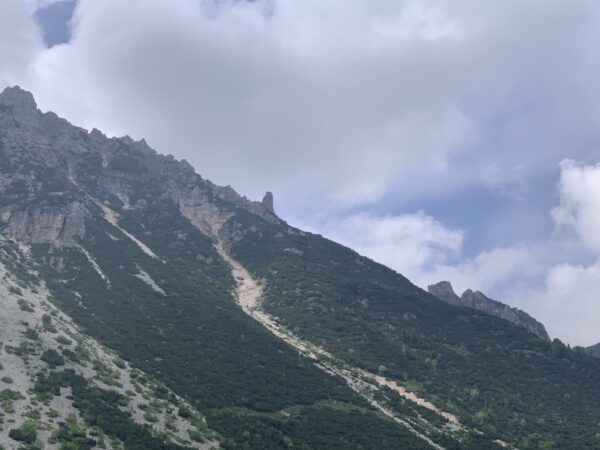
Augusto Girardelli, hombre de la montaña, dedicó con pasión toda su larga vida al trabajo y a la familia, pero desde joven se enamoró también de esta montaña: el Altissimo. Con el objetivo concreto de protegerla de las inclemencias del tiempo, los desprendimientos y las avalanchas, plantó más de 300 000 árboles en esta ladera escarpada e inaccesible. Abetos, alerces y abedules, pero sobre todo pinos cembros, una planta noble de alta montaña, robusta, fuerte y tenaz como el carácter de Gusto, que en estas difíciles laderas realizó uno de los grandes sueños de su vida: plantar árboles para proteger la montaña, curar sus heridas, hacerla más bella y acogedora, segura y accesible para todos.

Figura 1:Placa conmemorativa a Augusto Girardelli en el sendero Cirmoli, que va desde San Giacomo al Monte Altissimo de Nago. Fuente: Autor, 2025.

Un proyecto que duró treinta años, iniciado a mediados de la década de 1970 y llevado a cabo con una determinación increíble. Abarca aproximadamente 250 hectáreas, desde la Malga Pesna hasta la Malga Campo, prácticamente toda la ladera. Augusto Girardelli lo había comprado unos quince años antes, con un préstamo y los ingresos de su hotel recién inaugurado. Sin embargo, había un problema: las frecuentes avalanchas. De este problema práctico surgió la visionaria idea de reforestar toda la ladera para proteger el pueblo de San Giacomo y su hotel.
Entre las plantas que sembró se encuentra el pino cembro (Pinus cembra), también conocido simplemente como cembro o cirmolo: una planta tenaz, pero difícil de enraizar y de crecimiento muy lento, tanto que puede tardar hasta doscientos años en alcanzar la madurez. Sin embargo, una vez que sus raíces se afianzan en el suelo, son más sólidas que la propia roca.

Recomiendo encarecidamente ver este pequeño vídeo de RaiNews, en el que su hijo Elio cuenta la historia de su padre Augusto, rodeado por los árboles que él mismo plantó junto a él.

Augusto Girardelli no plantaba para sí mismo: hizo del amor por los árboles su razón de ser. El fruto de sus esfuerzos es hoy en día visible para todos aquellos que caminen por este sendero hacia lo alto de “su” montaña, que él mismo transformó y reforestó apasionadamente, dejando tras de sí un bosque que vivirá y prosperará durante siglos.

REFERENCIAS:

Pulse aquí para ampliar las referencias
  1. La flora del Monte Baldo stupisce ancora: scoperta una rara orchidea mediterranea | Fondazione Museo Civico di Rovereto. (n.d.). https://www.fondazionemcr.it/news.jsp?ID_NEWS=2411&areaNews=48>emplate=default.jsp 

Imagen de portada: A view of the Mount Altissimo. Free-source photo, CC BY-SA 3.0, via Wikimedia Commons.

Vino y Cambio (Climático)

Que el cambio climático es una amenaza que impacta nuestras vidas dramáticamente es un hecho de sobra conocido, pero hay ciertos impactos con más repercusión que otros. Uno de los sectores afectados es el vinícola, que se enfrenta hoy en día a una crisis estructural, ya que los daños no afectan sólo a la calidad del producto, si no a la sostenibilidad de toda la cadena de producción.

Pero, ¿cómo se hace el vino? Algunos podrían decir que es el proceso de transformar el mosto en una bebida alcohólica a través de la fermentación, pero aquellos que trabajan en el sector saben bien que el vino empieza mucho antes. El proceso comienza más atrás, ya que el vino es el resultado de una cuidadosa selección de los suelos en los que se cultivan las vides, el cariño que se les brinda y las precisas técnicas agrícolas que guían a las uvas hasta su madurez. Todo ello requiere estudio y experiencia, y culmina en la vendimia. La vendimia es un paso crucial, ya que permite a las bodegas obtener racimos de uva sanos, que hayan alcanzado un nivel de madurez adecuado para el producto deseado. Para garantizar que la fruta está realmente lista, se realizan diversos análisis que permiten al viticultor evaluar su madurez tecnológica y fenólica. Un análisis indica la cantidad de polifenoles, especialmente típicos de los vinos tintos, y otro indica el porcentaje de azúcar dentro de las bayas (expresado en Brix). Los racimos pueden considerarse maduros cuando la concentración de estas sustancias y el equilibrio entre dulzor y acidez se ajustan a las expectativas (establecidas en algunos casos por las normas de producción de determinados vinos) y a las necesidades de las bodegas.

Se ha registrado una mayor frecuencia de episodios de sequías, precipitaciones extremas, olas de calor y heladas primaverales y estivales en diferentes zonas vitivinícolas [1] y, en general, las temperaturas medias han aumentado +1,5 °C a nivel mundial, con picos de 2 °C en algunas zonas. Además, algunos viñedos se han plantado más al sur, por lo que el calor es aún mayor. El resultado global es una aceleración de la maduración tecnológica de las uvas: un mayor contenido de azúcar en menos tiempo, pero a expensas de la acidez y del componente fenólico, por lo que se ve afectado todo el desarrollo de los aromas del vino. Esto conducirá inevitablemente a un cambio en los componentes de sabor y aroma del vino, ya que, aunque el contenido de azúcar sea mayor, no se ha alcanzado la maduración completa de la fruta, lo que compromete la calidad del vino, haciendo que le falte color, pero, sobre todo, provocando la necesidad de cosechas más tempranas para evitar un alto contenido alcohólico. Esta es la razón por la que, a nivel mundial, la época de vendimia se adelanta diez días con respecto a la década anterior, según se ha medido en algunas de las zonas más productoras de vino del mundo [2], con efectos inevitables en el producto final.

A esto se suma la proliferación de nuevas patologías de la vid. Las precipitaciones irregulares e intensas, seguidas de olas de calor, favorecen el crecimiento de hongos y de nuevos parásitos en general, mientras que algunos insectos, gracias al aumento de las temperaturas, completan más de un ciclo reproductivo al año. Una vid estresada es más vulnerable y, por lo tanto, más propensa a los ataques, que solo pueden contrarrestarse con el uso de pesticidas, con un impacto inevitable en la sostenibilidad de toda la cadena.

Es evidente que el perfil aromático de los vinos ha cambiado, ya que el contenido alcohólico ha aumentado en comparación con el pasado [3]. Los vinos Nebbiolo y Barbera, por ejemplo, han aumentado su contenido alcohólico de una media de un 12% a un 14-15 % en volumen. Esto tiene efectos inevitables en la estructura del vino y en sus características organolépticas, lo que influye en el perfil aromático que los clientes esperan de un determinado vino y por tanto podría influir en su comerciabilidad. Este factor ya supone un reto, ya que el sector vitivinícola se enfrenta a una disminución general del consumo mundial [4], una productividad demasiado alta y, por lo tanto, una competencia generalizada entre las bodegas.

La buena noticia es que existen algunas soluciones (aunque sean leves) para este dramático escenario: en Burdeos, por ejemplo, cultivan variedades de uva resistentes a las altas temperaturas. En Piamonte están utilizando caolín, una arcilla blanca que se rocía sobre la vegetación para que refleje la luz solar y reduzca las quemaduras que causa hasta un 70 % [5]. Otra técnica prometedora es la defoliación temprana: se abren ventanas en la copa superior de las vides a tres o cuatro semanas de la vendimia, lo que puede prolongar la acumulación de azúcares y, por lo tanto, aumentar la maduración fenólica de las uvas [6]. El futuro de la industria vinícola pasa, por tanto, por un cambio radical en las técnicas de cultivo, la adopción de variedades resistentes, pero también por una nueva mentalidad del modelo productivo y económico. Si es cierto que el buen vino proviene de una buena planta de vid, hoy en día es el clima decidirá si puede llegar a nuestras copas. Con moderación, por supuesto.

REFERENCIAS:

Pulse aquí para ampliar las referencias
  1. Gutiérrez-Gamboa G., Verdugo-Vásquez N., 2024- Advances in viticulture: new approaches towards the vineyard of the future. Frontiers in Plant Science, 15: https://www.frontiersin.org/journals/plant-science/articles/10.3389/fpls.2024.1475437
  2. Coldiretti. (2024, 25 luglio). Caldo: scatta la vendemmia 2024, mai così precoce. Coldiretti. https://www.coldiretti.it/economia/caldo-scatta-la-vendemmia-2024-mai-cosi-precoce (Last access: July 23rd 2025)
  3. Asproudi A., Petrozziello M., Cavalletto S., Guidoni S., 2016-  Grape aroma precursors in cv. Nebbiolo as affected by vine microclimate. Food Chemistry, 211: 947-956,
  4. International Organisation of Vine and Wine. (2025, April). State of the world vine and wine sector in 2024: Adaptation & cooperation. https://www.oiv.int/sites/default/files/2025-04/OIV-State_of_the_World_Vine-and-Wine-Sector-in-2024.pdf
  5. Teker T., 2023- A study of kaolin effects on grapevine physiology and its ability to protect grape clusters from sunburn damage, Scientia Horticulturae, 311: https://doi.org/10.1016/j.scienta.2022.111824.
  6. Intrieri C., Filippetti I., Allegro G., Centinari M., Poni S., 2008- Early defoliation (hand vs mechanical) for improved crop control and grape composition in Sangiovese (Vitis vinifera L.). Australian Journal of Grape and Wine Research.  https://doi.org/10.1111/j.1755-0238.2008.00004.x

Imagen de portada: Grapes. Photo from samboep en Pixabay

Aprendizaje Experiencial Para Proteger el Futuro

La Educación Ambiental tiene un papel fundamental a la hora de abordar los retos globales como pueden ser el cambio climático, la contaminación, y la degradación de los ecosistemas [1]; y los humanos, como una de las especies que habita en este planeta, tenemos el valor moral de mitigar sus efectos. Las escuelas, a través de la educación y la responsabilidad de preparar a las generaciones venideras para trabajar, también están implicadas en formar a los jóvener en el cuidado y el respeto al medio ambiente. Pese a ello, la realidad es que la sostenibilidad ha recibido hasta ahora poca atención, y la consistencia y el compromiso de los profesores y escuelas con hacer un esfuerzo por una educación ambiental también han disminuido [2]. A medida que aumentan los problemas ambientales y los gobiernos implementan políticas verdes, la educación ambiental se convierte en una preocupación urgente como proceso cuyo objetivo es concienciar a niños y adultos sobre las problemáticas ambientales, animándolos a reflexionar sobre la relación humana con la naturaleza. La educación ambiental va más allá de la transmisión de conocimiento científico: promueve el cambio de actitudes y comportamientos daros como la reducción de residuos, ahorro energétco, y el respeto por la biodiversidad.

But how would an effective environmental education program need to be? An effective environmental education program should have a clear and coherent vision and goals that guide its design, implementation, and evaluation. The vision and goals should reflect the values, needs, and aspirations of the program stakeholders, including learners, educators, community members, and partners, as well as align with the national and international frameworks and standards for environmental education, such as the United Nations Sustainable Development Goals. An effective environmental education program should have a relevant and engaging curriculum and pedagogy that foster the development of environmental knowledge, skills, attitudes, and actions. The curriculum and pedagogy should be based on the principles of inquiry, experiential learning, critical thinking, problem-solving, and action-oriented learning and should also be responsive to the local and global environmental issues and contexts, and incorporate the perspectives and voices of diverse and marginalized groups [3]. The challenge then is to find an engaging, effective and experiential project to foster critical thinking and problem solving and GreenMarked, in collaboration with Econtrovertia APS and with support from the Fondazione Cassa Rurale di Trento, has therefore launched the educational project Quizzes Ambientales para un Trentino más Verde, inspirado por la Estrategia Provincial para el Desarrollo Sostenible [4].

Figura 1: Día de preguntas y respuestas para los estudiantes que participan en el proyecto Pillole d’Acqua Piana. Autora, 2025.

Este proyecto cuenta con cuatro quizzes temáticos, cada uno enfocado en uno de los principales retos ambientales que se han identificado en el plan SPrOSS, a saber, Agua, Biodiversidad, Reducción de Emisiones, y Seguridad Territorial , con el objetivo de concienciar a los estudiantes y ciudadanos sobre el impacto ambiental de sus acciones diarias. Se alinea así tanto cn los objetivos globales de la Agenda 2030, como con los objetivos locales de la provincia de Trento [5].

Dos centros educativos de Piana Rotaliana (Centro Istruzione e Formazione della Fondazione Edmund Mach y Istituto Martini) se han implicado en numerosas iniciativas educativas basadas en la interacción, participación activa y el diálogo intergeneracional. Cada una de las cuatro clases participantes se ha centrado en uno de los cuatro retos ambientales. La primera fase del proyecto se ha centrado en una excursión acompañando a un experto una de las cuatro instituciones locales que llevan el proyecto (Ufficio Aree Protette e Biodiversità della Provincia Autonoma di Trento, Ambios- per una comunicazione dell’ambiente, Agenzia Provinciale per la Protezione dell’Ambiente y Servizi Bacini Montani della Provincia Autonoma di Trentocon la idea de que vieran la importancia de los distintos temas que se definen en “Un Trentino más verde”.

Los distintos sitios visitados se alcanzaron en bici para fomentar un modo de pensar más sostenible mientras los estudiantes se mezclaban con los expertos para capturar la mayor cantidad de ideas posible, para usarlas en la siguiente fase, la creación de los quizzes. Esta fase se realizó en las aulas, y las cuatro clases se centraron en crear los cuestionaros de Kahoot © basados en el documento de la Estrategia Provincial para el Desarrollo Sostenible (SPrOSS) , y lo más destacable que aportaron los expertos en las excursiones. La creación de los cuestionarios en sí fue una fase bastante entretenida, ya que los estudiantes pudieron experimentar de primera mano la educación participativa, creando lazos entre los jóvenes y los problemas relacionados con la sostenibilidad, mientras de promueve el compromiso activo con el medio ambiente local. Los cuestionarios se pueden encontrar de manera pública en la plataforma de GreenMarked y pueden ser usados por otros centros o personas individuales.

Figura 2: Quiz Night en el Auditorio Istituto Martini Auditorium en Mezzolombardo (TN). 30 de mayo de 2025. Foto de Marcelo Olivera Prada.

La tercera fase fue la presentación final de las conclusiones obtenidas de este proyecto al público general: la tarde del 30 de mayo de 2025, los participantes pudieron realizar los quizzes en un divertido evento, y los mejores (aquellos que ganaron los quizzes) recibieron un premio muy sostenible.

Como una de las profesoras involucradas en etre proyecto, me complació profundamente ver la implicación de mis estudiantes y el brillo en sus ojos al pensar en proteger su futuro. La educación ambiental no es una simple asignatura – es un movimiento, una madera de pensar una perspectiva moral. Provee a las personas de conocimientos, valores, y herramientas necesarias para convertirse en agentes del cambio en sus comunidades. A medida que la crisis ambiental se intensifica, se hace más y más necesaria la presencia de ciudadanos implicados, activos e informados. Invertir en educación ambiental es invertir en el planeta – y en nuestro futuro.

REFERENCIAS:

Pulse aquí para ampliar las referencias
  1. Salazar, C., Jaime, M., Leiva, M., & González, N. (2024). Environmental education and children’s pro-environmental behavior on plastic waste: Evidence from the green school certification program in Chile. International Journal of Educational Development, 109, 103–106.
  2. GreenMarked. (n.d.). Environmental education for the future. Retrieved June 15, 2025, from https://greenmarked.it/it/environmental-education-for-the-future/
  3. Husin, A., Helmi, H., Nengsih, Y. K., & Rendana, M. (2025). Environmental education in schools: Sustainability and hope. Discover Sustainability, 6(41).
  4. Provincia Autonoma di Trento. (n.d.). Strategia provinciale SProSS. Retrieved June 15, 2025, from https://agenda2030.provincia.tn.it/Trentino-2030/Strategia-provinciale-SproSS
  5. GreenMarked. (n.d.). Participatory process for Trentino’s sustainable development. Retrieved June 15, 2025, from https://greenmarked.it/participatory-process-for-trentinos-sustainable-development/

Imagen de portada: Día de preguntas y respuestas para los estudiantes que participan en el proyecto Pillole d'Acqua Piana. Foto cortesía de Mark L. Miller. Pillole d’Acqua Piana. Imagen de Mark L. Miller. Mark L. Miller.

Cuando Desaparece la Nieve

Los beneficios generados por los centros de esquí llegan a alcanzar la cifra estimada de 5 mil millones de dólares en 2022, y se espera que alcancen los 15 mil millones en 2032, con un crecimiento anual del 8% [1].

Sin embargo, como está quedando claro en las últimas temporadas de inverno con poca nieve, el cambio climático amenaza directamente al medio montañoso y al futuro del esquí. En las últimas décadas, el aimento de las temperaturas ha traído consigo una disminución del 86% en la nieve acumulada en Abriil en los Estados Unidos entre 1955 y 2022 [1]. Además, se prevé que el 53 % de las zonas de esquí europeas entrarán en la categoría de "riesgo muy alto"en cuanto a cobertura de nieve natural si se da el aumento de 2 °C en la temperatura media mundial, el límite más alto que se fijó el Acuerdo de París [1].

Para tratar de hacer frente a estos graves problemas, la Federación Internacional de Esquí y Snowboard (FIS) publicó en diciembre de 2024 una guía práctica para ayudar a las estaciones de esquí de todo el mundo a afrontar los retos del cambio climático. Dado que operan en entornos naturales extremadamente sensibles al aumento de las temperaturas, se les ofrece una oportunidad única para liderar la transición ecológica [2].

El proyecto Folgaria es una de las mayores del Trentino, con 70 km de pistas y 26 remontes, y ha desarrollado a lo largo de los años tres embalses artificiales de innivación, necesarios para hacer frente a una prolongada ausencia de nieve natural. La zona representa bien la ambivalencia dualidad del esquí alpino: por un lado, sigue siendo fundamental para la economía del turismo de invierno y, por otro, muestra una fuerte dependencia de tecnologías que consumen energía y agua en exceso. Sin embargo, la Estrategia Provincial para el Desarrollo Sostenible del Trentino (SproSS) [3] hace referencia explícita a la urgencia de racionalizar el consumo de agua y favorecer modelos de turismo de montaña capaces de coexistir con la creciente escasez de recursos, favoreciendo la multifuncionalidad del territorio y un mayor uso estival.

En todo el mundo, los científicos y las partes interesadas ya están abordando estos retos utilizando y aplicando las últimas tecnologías, colaborando con expertos de diversos campos y adoptando un enfoque científico para aumentar la resiliencia en un futuro próximo. La guía FIS sienta las bases para futuras actuaciones que podrían minimizar la huella de carbono de las infraestructuras de esquí y, al mismo tiempo, apoyar la conservación de la biodiversidad y la vida salvaje. A continuación se describen brevemente las catorce iniciativas propuestas [1]:

  1. Reducir el consumo de energía de los remontes mecánicos: It is estimated that the operation of a ski lift system consumes the same amount of energy that powers 3.8 households per year. Some options to reduce this impact include the installation of solar panels (CO2 savings of up to 470 million tonnes per year), and optimising the speed of ski lifts (additional energy savings of 20% per year).
  2. Adopción de energías renovables: Shifting from fossil fuels to renewable energies is key to reducing carbon emissions. The savings achieved are substantial, as demonstrated by the Snow Space in Salzburg (Austria), which from the 2019/2020 season uses 100% green electricity, and has already eliminated 9,800 tonnes of CO2.
  3. Establecer un objetivo de cero emisiones netas para 2050: Quantify the carbon footprint to identify emissions hotspots. Furthermore, to reach net zero, one must offset non-zero emissions, i.e. remove from the atmosphere an amount of CO2 equivalent to that released by the same entity. Ski resorts will be able to invest in diversified offsetting projects, such as tree-planting campaigns.
  4. Adoptar un plan eficaz de gestión de las pistas: un ejemplo es la cartografía de las pistas, es decir, el estudio científico de las zonas con alta presencia de biodiversidad documentada para garantizar que estas zonas estén señalizadas y protegidas. Además, deben identificarse los hábitats ya dañados por las operaciones de esquí para aplicar un plan de restauración eficaz. 
  5. Conservación de los hábitats naturales: hay que prestar especial atención a las especies animales amenazadas, como el urogallo, el gallo lira, el sapo común, la rana arborícola y el tritón alpino, así como a especies vegetales raras, como las orquídeas y las gencianas.
  6. Fomentar métodos de viaje sostenibles: un esquiador que viajara en tren podría tomarse unas vacaciones de esquí cada invierno durante los próximos cuatro años para igualar la huella de carbono de otro esquiador que volara una sola vez. En la actualidad, los desplazamientos representan por sí solos el 57% de las emisiones totales de una estación de esquí.
  7. Introducir prácticas de “cultivo de nieve”: la nieve se recoge de las pistas y se almacena en depósitos o almacenes especializados mediante aislamiento térmico, a menudo con materiales como serrín o virutas de madera, preservándola durante los meses más cálidos. La innivación reduce así la demanda de nieve artificial y ofrece una solución a la escasez de nieve natural, eliminando la dependencia de las condiciones meteorológicas. 
  8. Aplicar nuevas tecnologías para reducir el consumo de agua: Los proyectos financiados por la UE ya trabajan en la creación de un cañón de nieve que funcione con energía solar, pero aún no se ha desarrollado un prototipo que pueda comercializarse. Mientras tanto, las estaciones de esquí tendrán que reducir al mínimo la cantidad de nieve artificial, utilizando sistemas de previsión meteorológica y seguimiento para optimizar el momento y la cantidad de nieve. 
  9. Adoptar un plan eficaz de gestión de residuos: Alcanzar el nivel cero en materia de residuos implica minimizar, reutilizar y recuperar los materiales de desecho, convertirlos en recursos valiosos y garantizar que no se envíen residuos sólidos al vertedero durante el año. Hay que asegurarse de que los socios toman las medidas adecuadas para reducir el impacto medioambiental de los equipos de esquí y snowboard.
  10. Colaborar con los principales agentes locales: ayudar a los esquiadores a preservar el entorno montañoso, reconociendo al mismo tiempo que son una parte que conforma el paisaje junto con los agricultores.
  11. Restauración y hostelería más sostenible: centrar los esfuerzos en reducir el desperdicio de alimentos y las emisiones, así como en conservar los recursos hídricos.
  12. Alojamientos más sostenibles: La mejora de la sostenibilidad de los alojamientos requiere la aplicación de una estrategia global que aborde la arquitectura, la eficiencia energética, la conservación del agua y la gestión de residuos.
  13. Reducir el impacto de los grandes acontecimientos: Acontecimientos como las celebraciones de la Copa del Mundo de esquí pueden reportar importantes beneficios económicos a la comunidad local, pero por otro lado es esencial reconocer que tales eventos también pueden tener efectos negativos en el entorno natural.
  14. Crear su propia hoja de ruta: una hoja de ruta en la que se detallen las medidas y actividades de apoyo a la sostenibilidad, de corto a largo plazo.
Figura 1: Esquiador suizo en la Copa del Mundo Lauberhorn, Wengen, Suiza. Imagen de Andreas en Pixabay.

La FIS también anunció que ha firmado una nueva asociación con la Organización Meteorológica Mundial (OMM), que colaborará con una federación deportiva internacional por primera vez en su historia. La OMM y sus servicios meteorológicos e hidrológicos nacionales aportarán datos y conocimientos especializados en el marco de iniciativas conjuntas para concienciar y promover cambios significativos en la gestión de las instalaciones de esquí en todo el mundo. "Evidentemente, la crisis climática es mucho mayor que la FIS, o que el deporte: se trata de una verdadera encrucijada para la humanidad. "Sin embargo, es cierto que el cambio climático es, en pocas palabras, una amenaza existencial para el esquí y el snowboard", son palabras del Presidente de la FIS Johan Eliasch. In 2023/24 alone, the FIS organised 616 World Cup competitions in all disciplines, spread across 166 venues, twenty-six of which were cancelled for weather reasons. Eliasch then concludes “Seríamos negligentes si no realizáramos todos los esfuerzos posibles basados en la ciencia y el análisis objetivo. Eso es lo que intentamos hacer y lo que constituye el núcleo de esta prometedora colaboración con la OMM" [2].

REFERENCIAS:

Pulse aquí para ampliar las referencias
  1. Fédération Internationale de Ski. (2024). Sustainability guide for ski resorts. https://assets.fis-ski.com/f/252177/x/93a1eb34fa/sustainability_skiguide_final.pdf
  2. World Meteorological Organization. (n.d.). FIS and WMO partnership highlights harmful effects of climate change on winter sports and tourism. https://wmo.int/news/media-centre/fis-and-wmo-partnership-highlights-harmful-effects-of-climate-change-winter-sports-and-tourism
  3. Provincia Autonoma di Trento. (n.d.). Strategia provinciale per lo sviluppo sostenibile (SproSS). https://agenda2030.provincia.tn.it/Trentino-2030/Strategia-provinciale-SproSS

La Tragedia de Los (Bienes) Comunales: Agotamiento del Oxígeno en Lagos

Los problemas medioambientales son lo más subrayado de los últimos tiempos: entre ellos, el cambio climático llama la atención a diversos niveles, ya que, a su vez, desencadena tantas otras amenazas que requerirán de una toma de decisiones valiente para ser superadas. Una de esas está relacionada con los lagos, que últimamente están sufriendo un descenso dramático en sus niveles de oxígeno, sobre todo en las aguas más profundas, de manera global [1].

Este fenómeno, conocido como hipoxia, supone un grave riesgo para la vida acuática, la calidad del agua, y en general para la salud de los ecosistemas de agua dulce. Mientras la superficie parece estar en calma y serena, subyace una crisis de agotamiento del oxígeno que señala un reto ambiental cada vez más urgente que requiere de nuestra atención [2].

La reducción del oxígeno en lagos puede ser el resultado tanto de procesos naturales como de la actividad humana. Los factores clave que contribuyen a ella son la eutrofización un proceso alimentado por un exceso de nutrentes (sobre todo nitrógeno y fósforo) proveniente principalmente de lixiviados agrícolas, aguas fecales y aguas pluviales urbanas. Estos nutrientes causan un crecimiento muy rápido de algas. Cuando las algas se mueren, se hunden y se descomponen en el fondo del lago, consumiendo grandes cantidades de oxígeno durante este proceso.

El cambio climáticotambién intensifica el proceso, ya que la estratificación se hace más exagerada conforme aumenta la temperatura global. El agua más cálida tiene menos contenido de oxígeno disuelto, lo que se suma al problema. Además, las olas de calor cada vez más frecuentes y las tormentas pueden alterar aún más los ecosistemas lacustres. Un equipo chuno de Science Advances ha observado que el calentamiento global es la causa principal del agotamiento del oxígeno disuelto en el 83% de los 15 000 lagos estudiados entre 2003 y 2023 [3]. Las tasas de desoxigenación en lagos son más altas que las que se han registrado en los océanos y ríos, y podrían aumentar hasta 10 veces para el final de siglo.

La estratificación termal es más exagerada en los meses de verano, cuando los lagos a menudo se estratifican. La capa cálida y rica en oxígeno de la superficie se “separa” de las capas más frías y profundas, que no se mezclan, de manera que el fondo del lago se aísla de la atmósfera y puede perder oxígeno conforme pasa el tiempo. La contaminación, en particular la microbiológica, exagera el problema porque fomenta un bucle de retroalimentación positivo, ya que a mayor actividad microbiana, más oxígeno se consume en los procesos de descomposición.

También en los lagos alpinos y subalpinos de Trentino hay numerosas evidencias del agotamiento de oxígeno en los lagos de LTERM (Lagos de Garda y Tovel), así como en los más pequeños (como Lavarone) [4]. Si analizamos las tendencias y la variabilidad estacional de los niveles de oxígeno en los lagos profundos del sur de los Alpes, el oxígeno está desapareciendo a un ritmo alarmante [5].

La hipoxia en los lagos tiene consecuencias devastadoras para la vida salvaje de los mismos: fish and other aerobic organisms need oxygen to survive so hypoxic or anoxic (completely oxygen-depleted) conditions can derivar en episodios de muertes en masa de los peces, y el colapso de las poblaciones acuáticas locales. This would lead to the loss of the entire ecosystem as the food web of the lake would be disrupted and, in turn, this would lead to a general loss of biodiversity.  In low-oxygen environments, las sustancias dañinas como el metano, el amoníaco o el ácido sulfhídrico pueden liberarse de los sedimentos del lago y afectar aún más a un ecosistema ya de por sí debilitado. La falta de oxígeno también puede causar una liberación de fósforo de los sedimentos, contribuyendo a la eutrofización. En general, la Calidad del agua se vería afectada de anera negative y muchos lagos dejarían de server como fuentes de agua potable. La falta de oxígeno pude afectar al sabor, olor e incluso la seguridad del agua como potable, complicando su tratamiento y aumentando el coste debido a la necesidad de purificarla.

Abordar la crisis del oxígeno en los lagos necesita una combinación de intervenciones a corto plazo y cambios sistémicos a largo plazo, que deberían empezar con la reducción de nutrientes. Esto, a su vez, sólo puede conseguirse implementando prácticas agrícolas más sostenibles (por ej.: fertilización por goteo, campos abiertos), modernizando las plantas de tratamiento de aguas residuales (riego por goteo) y controlando la escorrentía urbana para reducir las fuentes de este exceso de nutrientes.

Restaurar los humedales también sería de ayuda, ya que actúan como filtros naturales y pueden capturar estos nutrientes antes de que lleguen a los lagos. La convención Ramsar (creada en 1971) ha sido un acuerdo exitoso para asegurar la conservación de este tipo de áreas tan fundamentales, enfocándose en la conservación de los humedales. También existen aireadores mecánicos o sistemas de oxigenación que pueden restaurar los niveles de oxígeno, por ejemplo en lagos particularmente pequeños o aislados.

La falta de oxígeno en lagos en más que un problema ecológico escondido – es un indicador claro del estrés medioambiental con implicaciones diversas para la biodiversidad, la salud humana y la seguridad hídrica.Pese a la complejidad de estos retos, una combinación de políticas basadas en la ciencia, una gestión sostenible del territorio y la colaboración de la comunidad, es el camino para revitalizar y preservar estos ecosistemas de agua dulce tan viales. Para las generaciones venideras, los lagos suponen una biodiversidad importante y su preservación es una prioridad.

REFERENCIAS:

Pulse aquí para ampliar las referencias
[1] Rose, K.C., Ferrer, E.M., Carpenter, S.R. et al.,2024– Aquatic deoxygenation as a planetary boundary and key regulator of Earth system stability. Nature Ecology and Evolution 8: 1400–1406.

[2] Joshua M. Tellier, Nicholas I. Kalejs, Benjamin S. Leonhardt, David Cannon, Tomas O. Hӧӧk, Paris D. Collingsworth, 2022- Widespread prevalence of hypoxia and the classification of hypoxic conditions in the Laurentian Great Lakes. Journal of Great Lakes Research 48/1: 1,2022: 13-23. 

[3] Zang Y., Shi K., Woolway R., Wank X., Zahng Y., 2025- Climate warming and heatwaves accelerate global lake deoxygenation. Science Advances, 11/12: DOI: 10.1126/sciadv.adt5369. 

[4] Corradini F., Boscaini A., Flaim G., Filippi M., Borsati A., Zandonati M., 2005- Fisica, idrochimica e idrologia del lago di Lavarone (Trentino, Italia). Studi Trentini Scienze Naturali, Acta Geologica 82: 175-187.

[5] Rogora, M., Buzzi, F., Dresti, C. et al.,2018-  Climatic effects on vertical mixing and deep-water oxygen content in the subalpine lakes in Italy. Hydrobiologia 824: 33–50.

Imagen de portada: Blanca Lake, Washington, USA. Image by Caleb Jack en Unsplash.

Este artículo forma parte del proyecto "Quiz Ambientali per un Trentino Più Verde!" llevado a cabo por Econtrovertia APS y patrocinado por la Fondazione Cassa Rurale di Trento (Notificación de aprobación del 20 de diciembre de 2024).

¿Es Posible un Legado Positivo?

¿Qué es lo que queda tras un gran acontecimiento deportivo después de correr la última carrera o jugar el último partido? ¿Cómo se puede justificar la enorme cantidad de dinero gastada en organizar tales eventos, si la ciudad anfitriona se queda con deudas, un legado social y paisajístico negativo e instalaciones costosas e infrautilizadas?

A menudo, lo que se espera inmediatamente después de unos Juegos Olímpicos o una Copa del Mundo no es solo un éxito deportivo, sino la renovación de las infraestructuras y un fuerte impulso a la economía; en esencia, la revitalización de una nación. Sin embargo, con frecuencia hay un legado, es decir, el legado material e inmaterial que queda sobre el terreno tras un gran evento, que es negativo [1]. Este no consiste solo en la falta de explotación de las infraestructuras una vez finalizado el evento, sino en la pérdida del potencial del evento en sí [2]. El legado que se deja atrás puede justificar el gasto tanto para el organismo promotor como para el país o la ciudad anfitriona [2]. El COI (Comité Olímpico Internacional) ha incluido formalmente el legado en sus estatutos desde 2003, y la FIFA (Federación Internacional de Fútbol Asociación) también se ha preocupado cada vez más por utilizar los eventos deportivos para el desarrollo económico y social de un territorio.

Tradicionalmente, el legado se ha dividido en tangible y intangible[3]. El primero es el más evidente y fácil de entender, casi siempre relacionado con impactos económicos a corto plazo, aunque sus diversas manifestaciones son variadas, complejas e interrelacionadas. El segundo incluye impactos sociales, políticos, deportivos y de capital humano, que van desde la formación básica impartida a los voluntarios hasta las habilidades directivas altamente especializadas. Todas ellas son formas de impacto que pueden lograrse en una zona únicamente mediante la organización de un gran evento deportivo y que no se consiguen con la mera inversión de dinero [3]

Italia acogerá los Juegos Olímpicos de Invierno en Milán-Cortina el año que viene, y uno de los objetivos importantes definidos en el informe de presentación del evento de los cinco anillos era dejar un legado positivo para nuestro país. Cada obra debía aportar de alguna manera un beneficio social a los territorios implicados, no solo en términos de apoyo al deporte. Sin embargo, hasta la fecha solo se pueden imaginar los beneficios futuros de la villa olímpica de Milán, que se transformará en una residencia de estudiantes, de la pista de biatlón de Anterselva y del nuevo tramo ferroviario del valle de Riga, en Tirol del Sur [4]. El resto de infraestructuras, sin embargo, corren el riesgo de convertirse en catedrales en el desierto tras el evento. Estas son las que, según la experiencia de ediciones anteriores, corren mayor riesgo de quedar en desuso a largo plazo, principalmente por falta de demanda pública:

  • Pistas de bobsleigh, skeleton y luge: instalaciones muy costosas de construir y mantener, que requieren refrigeración continua y mantenimiento técnico. Además, muy pocas personas practican estos deportes fuera del contexto olímpico o profesional.
  • Pistas de esquí nórdico y biatlón: although more ‘popular’ than bobsleigh, they require large areas, artificial snow, and equipment that is not easily accessible to the general public.
  • Trampolines de salto de esquí: only professional athletes can really use them, as this sport requires advanced technique, support facilities and qualified trainers. Ski jumping competitions are also infrequent; there are few annual events on the FIS (International Ski and Snowboard Federation) calendar compared to what would be needed to justify the existence of the facility.
Figura 1: Pista abandonada de Bobsleigh tras los Juegos Olímpicos de Sarajevo 1984. Imagen de Peter Donko en Unsplash.

El histórico trampolín de saltos de esquí de Predazzo [TN], en el corazón del Val di Fiemme, que ya ha sido escenario de pruebas de la Copa del Mundo y Campeonatos del Mundo, ha sido seleccionado como sede oficial de las competiciones olímpicas de saltos de esquí. Para cumplir con los requisitos impuestos por la Federación Internacional, la infraestructura existente ha sido objeto de una importante renovación. Inicialmente previsto con un presupuesto menor, el proyecto ha sufrido un ajuste económico que ha elevado el coste total a 38 millones de euros, with an additional 8 million related to the updating of prices and materials [5]. In Predazzo, one of the Olympic villages will also be built to host the athletes. The Latemar pavilion will be demolished and rebuilt with a modern structure with 69 habitaciones y 132 camas [5]. The Olympics also brought with them secondary works, including [5]:

  • 300,000 € para mejorar el sistema de carreteras;
  • 290,000 € para adaptar la iluminación pública;
  • 50,000 € para el control remoto del acueducto;
  • 130,000 € para secciones adicionales de iluminación, dstrbuidas entre Predazzo y las áreas vecinas.

En el dossier Nevediversa 2025 [5], Legambiente criticaba el uso de inversiones tan elevadas en instalaciones deportivas sujetas a fuertes incertidumbres climáticas y a un futuro postolímpico a menudo marcado por el abandono o la obsolescencia. Según el informe, el riesgo es que estas obras se conviertan en un legado difícil de sostener para las comunidades locales, especially in the absence of a clear plan for their future use. Even the Olympic Village, although modern and functional, leaves open questions about its intended use once the lights of the Games have gone out. In the strategic document adopted by the Autonomous Province of Trento for sustainable development (SproSS) [6] it is stated that el futuro sostenible del Trentino debe basarse en una gestión cuidadosa del territorio, la reducción de las emisiones, la contención del consumo de suelo y la promoción del turismo sostenible. Teniendo en cuenta estos objetivos, la construcción y/o modernización de infraestructuras olímpicas, que por su naturaleza son temporales y tienen un gran impacto, plantea importantes cuestiones sobre la necesidad real y la utilidad futura de las instalaciones, el consumo potencial de suelo y recursos, pero también la coherencia con la movilidad sostenible y la gestión inteligente de la energía.

Los Juegos Olímpicos serán un escaparate internacional para Trentino y, en particular, Predazzo será uno de los centros neurálgicos del evento de los cinco anillos, listo para acoger a cientos de atletas y espectadores de todo el mundo. Sin embargo, como nos recuerda el propio documento SproSS, "Trentino puede y debe adelantarse" [6], promoviendo innovaciones transformadoras para el territorio, y no simplemente obras de adaptación. El riesgo es que el evento olímpico se convierta en una oportunidad perdida para experimentar nuevos modelos de sostenibilidad, en beneficio únicamente de las necesidades inmediatas y la visibilidad. Entre el entusiasmo y el espíritu deportivo, el mayor reto sigue abierto: construir un futuro sostenible para las montañas del Trentino y para quienes viven allí todo el año.

REFERENCIAS:

Pulse aquí para ampliar las referencias
  1. AR Architetti Roma.. Grandi eventi: Strategie di gestione sostenibile nel resto del mondo. Retrieved from https://www.ar-architettiroma.it/ar-archivio/archivio/120-ar-113-tematiche/457-grandi-eventi-strategie-di-gestione-sostenibile-nel-resto-del-mondo.html
  2. SDA Bocconi. Grandi eventi sportivi e legacy. Retrieved from https://www.sdabocconi.it/it/sda-bocconi-insight/idee-senza-tempo/sport/grandi-eventi-sportivi-e-legacy
  3. Holt, R., & Ruta, D. (2015). Routledge handbook of sport and legacy: Meeting the challenge of major sports events. Routledge.
  4. Italia Nostra Trento. Olimpiadi invernali Milano Cortina 2026. Retrieved from https://www.italianostra-trento.org/olimpiadi-invernali-milano-cortina-2026/
  5. Legambiente. (2021). Nevediversa 2025. Retrieved from https://www.legambiente.it/wp-content/uploads/2021/11/Nevediversa-2025.pdf
  6. Provincia Autonoma di Trento. Strategia provinciale per lo sviluppo sostenibile (SproSS). https://agenda2030.provincia.tn.it/Trentino-2030/Strategia-provinciale-SproSS

Imagen de portada: Ski-jumping trampoline abandoned after the 2006 Olympics near Cortina d’Ampezzo. Image by 4h4photography en Pixabay.

Autoridades locales y Responsabildad Climática: ¿Un Nuevo Despertar?

El camino hacia la neutralidad climática requiere de una actuación audaz y eficaz a todos los niveles. Los ambiciosos objetivos del Acuerdo de París exigen el compromiso total de todos los niveles de gobierno para evitar que las temperaturas globales aumenten de forma incontrolada [1]. Esto implica la participación de una amplia gama de actores internacionales, nacionales y locales para que no se deje ninguna oportunidad de cambio sin explorar.

En este contexto, los gobiernos locales desempeñan un papel crucial en la implementación de los planes de inversión masiva que se avecinan, empezando por el Plan Nacional de Recuperación y Resiliencia (NRRP) y más allá. Las autoridades municipales y regionales tienen responsabilidades clave en todos los sectores afectados por la política climática, desde la planificación energética y de transporte hasta los permisos de infraestructuras renovables y los servicios públicos.

Aquí es donde entra en juego el CIRO (Indicadores climáticos para las regiones italianas): una base de datos en línea desarrollada por Italia por el Clima en colaboración con el ISPRA. Su misión es proporcionar información y análisis actualizados sobre el camino de Italia hacia la neutralidad climática, haciendo que los datos climáticos y energéticos sean accesibles para el debate público [2].

La base de datos también está diseñada para proporcionar a las administraciones regionales una herramienta práctica para supervisar y acceder a información fiable sobre cuestiones climáticas y energéticas, así como para fomentar el intercambio de mejores prácticas.

CIRO presenta 26 indicadores en 8 áreas temáticas. Además de los datos, recopila y promueve best practice y ejemplos de rendimiento de cada región. El objetivo es destacar las iniciativas locales que impulsan la transición energéticareconociéndolas como oportunidades para impulsar las cadenas de valor locales y fomentar el progreso tecnológico y social de las comunidades.

A través de sus informes, la base de datos permite la comparación y el análisis entre las autoridades locales, lo que ayuda a supervisar los progresos a medida que nos acercamos a la fecha límite climática de 2030.

Entre las 20 regiones de Italia, Trentino-Alto Adige tiene un perfil agridulce. Aunque la región está considerada puntera en energía renovable y emisiones industriales, el panorama es mucho menos prometedor en lo que respecta a las emisiones agrícolas y de transporte..

Incluso sus emisiones de gases de efecto invernadero per cápita —7,02 toneladas de CO₂ equivalente por persona— superan ligeramente la media nacional de 6,96. Pero la mayor debilidad de la región parece residir en su limitada capacidad para aprovechar los sistemas naturales para la absorción de carbono. En esta categoría, Trentino-Alto Adige registra 35 toneladas de CO₂ absorbidas por km², situándose en el puesto 16 de 20. Por el contrario, Sicilia y Calabria muestran valores de absorción negativos, lo que indica que sus sistemas naturales son emisores netos, normalmente debido a los incendios forestales.

Los puntos débiles son especialmente evidentes en la agricultura y el transporte. Trentino-Alto Adige se sitúa por debajo de la media nacional en cuanto a emisiones agrícolas per cápita (0,71 toneladas/persona), uso de fertilizantes y número de cabezas de ganado. En cuanto al transporte, registra las segundas emisiones per cápita más altas de Italia (3,2 toneladas/persona), a pesar de que el número de propietarios de automóviles y el uso del transporte público son inferiores a la media. En una nota más positiva, los vehículos eléctricos representan el 5,2 % de las matriculaciones de coches nuevos en la región.

Aun así, Trentino-Alto Adige tiene un buen rendimiento en energía limpia: ocupa el sexto lugar a nivel nacional en consumo total de energía per cápita y el segundo en porcentaje de energía renovable. También lidera el país con 33 comunidades de energía renovable.

Como región montañosa, Trentino-Alto Adige se enfrenta a desafíos únicos que otros no tienen. Sin embargo, ciertos factores, como la baja urbanización o el potencial de secuestro de carbono en la agricultura, podrían jugar a su favor. La estrategia SproSS de la región representa un intento prometedor de gestionar estas complejidades a través de una planificación sostenible e integrada.

REFERENCIAS:

Pulse aquí para ampliar las referencias
[1] Falkener R., 2016- The Paris Agreement and the new logic of international climate politics, International Affairs, Volume 92, Issue 5, Pages 1107–1125. 

[2] Alessio. (2025, April 4). CIRO – DATABASE DELLE REGIONI SUL CLIMA – Italy for Climate. Italy for Climate. https://italyforclimate.org/ciro-database-regioni-clima/

[3] SpA, T. D. (n.d.). Strategia provinciale | SproSS. Agenda 2030. https://agenda2030.provincia.tn.it/Trentino-2030/Strategia-provinciale-SproSS

Imagen de portada: Young seedlings sprouting from rich soil, bathed in natural light. Image from onehundredseventyfive en Pixabay

Este artículo forma parte del proyecto "Quiz Ambientali per un Trentino Più Verde!" llevado a cabo por Econtrovertia APS y patrocinado por la Fondazione Cassa Rurale di Trento (Notificación de aprobación del 20 de diciembre de 2024).

Val di Torba

Como se exploró en un artículo anterior de GreenMarked, la extracción de turba en Tirol del Sur ha sido durante mucho tiempo un tema controvertido . El debate es complejo e involucra a la agricultura, la protección del medio ambiente, la industria de la turba y los intereses de la comunidad local. Pero, ¿y si el diseño pudiera servir como disciplina mediadora , cambiando la conversación de una historia de conflicto hacia un futuro más esperanzador tras el fin de la extracción? El papel de los diseñadores está cambiando a medida que se convierten en mediadores entre la investigación, la política y la sociedad [1]. Una exposición en Salurn ofrece una visión inspiradora de esta posibilidad , su potencial y sus límites.

From January 28 to February 7, the exhibition Val di Torbawas presented at the public library in  Salurn, South Tyrol. Developed as part of my master’s thesis in Eco-Social Design, it became the result of a long research process. The exhibition aimed to compile and share knowledge about peatlands, the role of peat in the Adige, and its climate impact, while also creating a space for open dialogue on these topics. Salurn, with its long history of peat extraction and related conflicts, was an important location to showcase the project. The public library, as a place of knowledge and exchange, offered the perfect setting.

Figura 1:Exhibition poster. Author, 2025.

La exposición tuvo un formato participativo, cuyo objetivo era dar el poder a los participantes y compartir la toma de decisiones a lo largo del proceso de diseño [2]. Es decir, se invitó a los visitantes a aportar sus conocimientos, ideas, esperanzas e inquietudes a lo largo de diez días. Las sesiones de los talleres de la tarde ayudaron a recopilar estas aportaciones, plasmándolas como comentarios escritos en un libro de visitas y en una gran hoja de papel.

De esta manera, la exposición atrajo un gran interés de la comunidad local y logró resultados sorprendentes. Alrededor de 90 personas visitaron la exposición, entre ellas agricultores, ecologistas, residentes, activistas, políticos locales, organizaciones medioambientales y representantes de la industria de la turba. Incluso fue visitada por tres clases escolares, que aprendieron sobre la historia del valle y sus desafíos actuales. Dado que se espera que la extracción de turba se prohíba pronto [3], los debates se centraron en el futuro del valle. A través de ilustraciones y textos narrativos, los escenarios futuros ofrecieron inspiración para posibles vías de acción.

Figura 2:Exhibition opening. Author, 2025.

Además de debatir estos escenarios, los participantes también crearon otros nuevos. Una sugerencia muy popular fue transformar un antiguo sitio de extracción de turba en un lago. ¿Podría esta «piscina natural» detener la liberación de emisiones de CO2 de la turba que la rodea, al tiempo que se crea un lugar para que la gente nade y para que la naturaleza se desarrolle? Otras ideas nuevas se centraron en crear más áreas de compensación o ampliar los biotopos. También se sugirió que se podrían devolver las licencias de extracción de turba en curso si la comunidad se pronunciaba en contra y compensaba económicamente. Con todas las diferentes partes interesadas involucradas en este debate, las discusiones fueron a veces tensas, pero también condujeron a resultados sorprendentes. Por ejemplo, algunos agricultores expresaron su interés en explorar métodos de cultivo alternativos para los suelos de turba, donde el cultivo de manzanas es actualmente un reto. Surgieron discusiones sobre el cultivo de juncos, espadañas, bambú o arroz. Una declaración cautivadora en el debate fue: "No debemos ajustar la tierra al uso, sino ajustar el uso a la tierra".

Figure 3:Comentarios en The Future Scenario Book. Autora, 2025.

El acto de clausura ofreció la oportunidad de reflexionar sobre los resultados de la exposición y debatir los posibles pasos a seguir. Los diez días de debates generaron muchas perspectivas esperanzadoras, pero también revelaron que queda mucho por hacer. Una exposición por sí sola no puede resolver la compleja cuestión de la extracción de turba, pero puede servir como punto de partida para un diálogo continuado. Las ideas recopiladas durante la exposición, incluidos los comentarios escritos y los nuevos escenarios, se recopilaron en un informe final como resultado oficial del proceso. Se está compartiendo con la biblioteca, los participantes de la exposición y otras partes interesadas. Algunas instituciones ya han expresado su interés en continuar el diálogo sobre este tema, con el informe como base valiosa.

Todo esto no habría sido posible sin la exposición como espacio para el diálogo. Esto demuestra cómo el diseño, como disciplina creativa y mediadora, puede desempeñar un papel importante en el tratamiento de las cuestiones medioambientales, no solo en lo que respecta a la extracción de turba, sino también en otros temas.

REFERENCIAS:

Pulse aquí para ampliar las referencias
[1] Groß, B. and Mandir, E. (2022): Zukünfte gestalten – Spekulation, Kritik, Innovation: mit Design  Futuring Zukunftsszenarien strategisch erkunden, entwerfen und verhandeln. Mainz: Verlag  Hermann Schmidt.

[2] Ehn, P. (2008) ‘Participation in Design Things’, in Proceedings of the Tenth Conference on  Participatory Design. PDC 2008, Bloomington, Indiana, USA.

[3] Regional Law, 16 August, 2023, Nr. 19 https://lexbrowser.provinz.bz.it/doc/de/231085/landesgesetz_vom_16_august_2023_nr_19.aspx? view=1

Imagen de portada: Exhibition opening. Photo by Author, 2025

Este artículo forma parte del proyecto "Quiz Ambientali per un Trentino Più Verde!" llevado a cabo por Econtrovertia APS y patrocinado por la Fondazione Cassa Rurale di Trento (Notificación de aprobación del 20 de diciembre de 2024).

El Camino de Trentino Hacia un Futuro sostenible y Biodiverso

Trentino alberga una gran biodiversidad en sus 6.200 km² (en esta superficie cabría París unas 60 veces). Esta provincia italiana alberga unos 500.000 árboles, 2.300 especies vegetales y 70 biotopos [1]. Para proteger esta biodiversidad y fomentar una mayor sostenibilidad, la provincia ha publicado una Estrategia Nacional para el Desarrollo Sostenible de Trentino (informe SproSS)[2]. En ella se esboza su visión de una Trento sostenible para 2040 y el camino para llegar a ella: una agenda que recoge propuestas concretas que deben aplicarse para 2030. Estas estrategias de sostenibilidad se dividen en cuatro pilares para proteger y apoyar la biodiversidad en la provincia: fortalecer los ecosistemas; mejorar la gobernanza; compartir conocimientos; y cultivar la concienciación.

Conservar la biodiversidad reforzando los ecosistema

En 2018, cuando llegó la tormenta Vaia, Trentino perdió 1,5 millones de metros cúbicos de madera [3]. Trentino creará planes de recuperación definidos para las zonas destruidas por tormentas y otros desastres naturales que promuevan la regeneración natural, mantengan los paisajes abiertos y, cuando sea necesaria la reforestación artificial, activen mecanismos operativos y financieros para la recuperación. Para ello, establecerá una cadena de suministro eficiente de plantones de reforestación y activará un sistema de seguimiento permanente para medir la eficacia de las intervenciones [2].

Trentino pretende limitar el desarrollo de infraestructuras en zonas forestales con un alto valor natural y de vida silvestre, promoviendo una gestión y un uso que minimicen los factores de perturbación y la fragmentación del hábitat [2]. La provincia tiene previsto aumentar la silvicultura cercana a la naturaleza para garantizar un bosque estable y diverso y promover la biodiversidad. Este método forestal promueve la regeneración natural de los árboles y la presencia de muchas especies de árboles de diferentes edades en un área pequeña [4]. Además, el Plan de Bosques Antiguos de Trentino identificará y protegerá las zonas de bosques antiguos [2].

Junto con los sistemas tradicionales de pastos de montaña y la agricultura de conservación, Trentino pretende mantener y aumentar el uso de sistemas agroforestales silvopastorales [2]. La agricultura silvopastoral integra árboles, arbustos y ganado [5]. Los árboles proporcionan sombra y refugio al ganado, ayudan a prevenir la pérdida de suelo y actúan como amortiguadores de condiciones climáticas extremas [5]. Al apoyar diversos hábitats, la biodiversidad se beneficia. Por último, para promover la recuperación de las zonas abandonadas, Trentino quiere animar a las asociaciones y comunidades a cuidar la tierra ampliando las subvenciones y ayudas para incentivar su gestión y mantenimiento [2]

Figura 1:Livestock grazing in silvopasture paddock. Savannainstitute, CC BY-SA 4.0, via Wikimedia Commons.

Innovación en la gobernanza: repensar las normas y los procedimientos

La Evaluación Ambiental Estratégica Europea evalúa los efectos sobre el medio ambiente de los planes, programas y políticas propuestos antes de su aplicación [6]. Trentino tiene previsto incluir análisis sobre los efectos acumulativos de las transformaciones propuestas por la estrategia 2040 en determinados ecosistemas o hábitats. La provincia tiene previsto actualizar su planificación estratégica considerando horizontes temporales a largo plazo y escenarios para la funcionalidad ecológica y la resiliencia de los territorios [2].

Quieren mejorar su planificación paisajística asignando ciertas áreas con funciones ecológicas específicas. Por ejemplo, mediante zonas de amortiguación para filtrar fuentes difusas de contaminación, corredores hidroecológicos, áreas de conectividad e infraestructura verde. También pretenden introducir un fondo que permita la supervisión continua de los servicios ecosistémicos.

Los servicios ecosistémicos son los beneficios que los seres humanos obtienen de los ecosistemas saludables. Por ejemplo, gracias a las abejas y otros insectos (¡y aves y murciélagos!) que polinizan las especies vegetales, los seres humanos se benefician a través de la producción de alimentos. Trentino fomenta las especies nativas y polinizadoras, inspirándose en la organización benéfica de conservación de plantas y hongos silvestres [7].

Compartir conocimiento y soluciones basadas en datos

Se tomarán medidas para salvaguardar la biodiversidad animal y vegetal, como la vigilancia medioambiental, la adopción de nuevas tecnologías y la realización de investigaciones medioambientales. La provincia tiene previsto utilizar un enfoque multidisciplinar e integrado para la recopilación y el intercambio de datos con el fin de crear modelos sobre el funcionamiento de la biodiversidad. El mosquito tigre (Aedes albopictus) se está expandiendo por Trentino, y su creciente distribución puede afectar a la posible propagación de enfermedades infecciosas transmitidas. Al predecir dónde puede establecerse y propagarse esta especie, se puede prevenir y controlar su impacto [7]. Como parte del plan de acción SproSS, Trentino reforzará la investigación y el desarrollo de métodos innovadores para advertir y prevenir los riesgos biológicos y climáticos.

Trentino también pretende reforzar su diversidad agrícola mediante el mantenimiento y el cultivo de variedades antiguas y tradicionales y el uso de la agroecología para crear diversos sistemas agrícolas. Quieren cultivar plantas resistentes a las enfermedades para reducir el uso de pesticidas. La Comisión Europea ha presentado recientemente una propuesta legislativa para eximir a algunas plantas editadas genéticamente de la estricta normativa de la Unión Europea para los cultivos modificados genéticamente clásicos [8]. Esto podría permitir una reducción significativa del uso de pesticidas en la agricultura. Un estudio de caso de Suecia sugiere que los productores de cereales podrían ahorrar colectivamente 70 millones de euros con el uso de cultivos resistentes a las enfermedades [8].

Cultivar la conciencia y crear buenas prácticas inclusivas e innovadoras

Como cuarto pilar en su camino hacia un Trentino sostenible en 2040, la provincia tiene previsto reforzar los programas de educación e investigación. Pretenden ofrecer formación continua a ciudadanos, administradores y profesionales y promover la adaptación al cambio climático. Por ejemplo, al fomentar la resiliencia de la cadena de suministro cuando se produzcan fenómenos meteorológicos extremos.

Trentino cuenta con un rico capital natural con beneficios ecológicos y socioeconómicos. Al aumentar los conocimientos y el sentido de la responsabilidad de los residentes y turistas, se fomenta un mayor incentivo para mantener este bien común. Para ello, tienen previsto promover proyectos en curso entre las autoridades locales, los museos, las asociaciones y las bibliotecas, y apoyar a los educadores medioambientales, los comunicadores científicos y los guías de montaña[2].

Por último, la provincia tiene previsto aumentar el papel de los parques reservas y áreas protegidas como «laboratorios de buenas prácticas» para probar planes de gestión, realizar investigaciones y supervisar el cambio climático,y proporcionar educación medioambiental. Probar nuevas herramientas para conservar los recursos naturales, como la forma de promover la biodiversidad en los paisajes agrícolas, también forma parte de su plan de acción.

Conclusión

Trentino se compromete a proteger y mejorar su biodiversidad a través de una Estrategia Nacional de Sostenibilidad integral. El objetivo es garantizar que su biodiversidad y sus recursos naturales permanezcan intactos para las generaciones futuras. Su camino refleja una comprensión de la interconexión entre las personas, la naturaleza y la economía, y la investigación y el seguimiento desempeñan un papel clave en la aplicación del plan. Si Trentino logra ejecutar con éxito las estrategias esbozadas en los cuatro pilares, la provincia será un modelo a seguir por otras regiones en su camino hacia un futuro más biodiverso.

Este artículo forma parte del proyecto "Quiz Ambientali per un Trentino Più Verde!" llevado a cabo por Econtrovertia APS y patrocinado por la Fondazione Cassa Rurale di Trento (Notificación de aprobación del 20 de diciembre de 2024).

REFERENCIAS:

Pulse aquí para ampliar las referencias
[1] The flora of Trentino. (n.d.). https://www.visittrentino.info/en/articles/practical-info/flora-of-Trentino

[2] Provincia Autonoma di Trento. (2021). Strategia provinciale per lo sviluppo sostenibile (SproSS). https://agenda2030.provincia.tn.it/content/download/8212/151863/file/SproSS%20def_15.10.2021.pdf

[3] Aftermath of the “Vaia” storm in Italy. (2018, December 17). European Forest Institute. https://efi.int/news/aftermath-vaia-storm-italy-2018-12-17

[4] What is close to nature forestry? (n.d.). life4forest.dk. Retrieved February 28, 2025, from https://life4forest.dk/english/about/what-is-close-to-nature-forestry

[5] Evans-Bevan, R. (n.d.). SILVOPASTORAL AGROFORESTRY SYSTEMS. https://www.agroforestrysystems.eu/wp-content/uploads/2020/09/AGFOSY_IO4_07_Silvopastoral_final_ENG.pdf

[6] Strategic Environmental Assessment. (n.d.). Environment. https://environment.ec.europa.eu/law-and-governance/environmental-assessments/strategic-environmental-assessment_en

[7] Plantlife. (2025, February 28). Plantlife. https://www.plantlife.org.uk/

[8] Sundström, J. F., Berlin, A., Phuong, N. K., Karlsson, M., & Andreasson, E. (2024). New genomic techniques can contribute to reduced pesticide usage in Europe. Plants People Planet, 6(6), 1215–1223. https://doi.org/10.1002/ppp3.10559

Imagen de portada: View of Stenico, Trentino. Stenico, Sep 2020. Free-source photo by  Moroder, CC BY-SA 4.0, via Wikimedia Commons.

El Resurgir a lo Loco de los Trineos Bob en Cortina

Mientras permaneció abierta, la antigua pista de bobsled «Eugenio Monti» de Cortina d'Ampezzo, construida para los Juegos Olímpicos de Invierno de 1956, fue considerada una de las más peligrosas del panorama internacional de este deporte. Han pasado diecisiete años desde la última vez que se utilizó, en enero de 2008. El bobsled no es uno de los deportes más populares y practicados en nuestro país; de hecho, solo cuenta con 59 miembros registrados en toda Italia.

La lluvia y las heladas en el Valle de Boite han transformado por completo las instalaciones, la madera de las protecciones se ha desgastado y las farolas y barreras se han oxidado. La pista ha vuelto a ser el centro de atención en los últimos años porque se está restaurando para albergar los eventos de los Juegos Olímpicos deMilán-Cortina 2026, pesar de varios retrasos desde el anuncio de la asignación a Italia del evento de los cinco círculos, controversias relacionadas con el impacto medioambiental de la obra y su uso posterior. El principal problema tiene que ver con los altos costes programados inicialmente, se planeó un gasto de 47 millones, que luego comenzó a aumentar lentamente. Primero fueron 61 millones en 2021, 85 millones en 2022 y con el último decreto del gobierno de Meloni, son 128 millones en total, cinco de los cuales ya se han gastado en consultoría y demolición [1].

Sin embargo, el problema del aumento de los costes es común en la mayoría de las instalaciones olímpicas repartidas por los Alpes italianos. El estadio de saltos de esquí de Predazzo (Trento), por ejemplo, tenía un coste presupuestado de poco menos de 24 millones de euros, que ahora ha aumentado a casi 43 millones. El municipio de Trentino también albergará una de las villas olímpicas, y de nuevo esto ha aumentado de un gasto presupuestado inicial de 27,6 millones a los 42 actuales [2]. Lo importante a tener en cuenta es que estos fondos adicionales a menudo son aportados por los gobiernos municipales, provinciales o regionales.

Un daño medioambiental

La antigua pista de Cortina ya ha sido retirada y los organizadores están yendo a contrarreloj para completar el trabajo. Para dar paso a las nuevas instalaciones, ya se han talado varios árboles, equivalentes a los que cayeron durante un período de 12 años bajo las sierras eléctricas en el municipio de Cortina d'Ampezzo [3]. a desconcertante cifra, que justifica la preocupación por el daño medioambiental causado al bosque de Ronco a las laderas de las montañas Tofane, surge de las aclaraciones proporcionadas por la empresa responsable de la tala (Infrastrutture Milano Cortina spa - Simico) tras la controversia causada por la tala de alerces centenarios [3]. La Comisión Central para la Protección del Medio Ambiente de Montaña (CCTAM) del Club Alpino Italiano ha expresado una postura muy firme al respecto.

a opinión de la CCTAM se expresa en las siguientes palabras: "El verdadero daño de la intervención actual viene dado por el cambio de uso de la zona que, de bosque con valores predominantes de protección de la zona habitada, se transforma en una zona semi-construida. Por lo tanto, se pierden todos los servicios ecosistémicos relacionados con el tipo de bosque presente en los últimos siglos” [3]. La tala de alerces también fue objeto de una denuncia presentada ante la unidad de biodiversidad de los Carabinieri de Belluno La hipótesis esbozada en la denuncia se refiere al "delito de destrucción de bienes paisajísticos y daños medioambientales", la tala altera la planificación forestal anterior al confirmar que la protección de la zona boscosa no es una prioridad [4].

As a result, the removal of the forest is likely to be more extensive than estimated. At the same time, the subsequent planting of 6,000 trees does not really appear to be compensatory since neither where it will be done nor the ultimate goal of this activity is specified [4].

Fig. 1: The Mountain chain standing behind Cortina d’Ampezzo. Photo by  Martinophuc en Pixabay.

Las instalaciones completadas deben estar terminadas antes del 15 de marzo de 2025, en poco menos de dos meses, y luego deben realizarse las pruebas y cualquier modificación; a partir del 6 de febrero de 2026, deben albergar las competiciones olímpicas. De lo que no se puede encontrar ninguna mención es de los futuros
costes
de funcionamiento y de quién correrán a cargo, ¿del municipio? ¿Región? ¿CONI? Al igual que no se menciona el hecho de que se necesitará un presupuesto adicional para las instalaciones no previstas en el proyecto [1].

La noticia que resonó en diciembre 2024 es que, si la pista no se puede completar, los eventos se celebrarán en Lake Placid en los Estados Unidos [5]. Debido a los retrasos en la finalización de las obras, el Comité Olímpico Internacional, que había hecho saber en varias ocasiones que se oponía a la repavimentación de la pista de Cortina y que no estaba convencido de que se cumpliera el calendario, pidió a los organizadores que indicaran un plan B de todos modos: Lake Placid. Las instalaciones estadounidenses ya han acogido los Juegos Olímpicos de Invierno en 1932 y 1980 y acogerán el Campeonato Mundial de Skeleton el año que viene, por lo que ya están listas; los que las gestionan también las pondrían a disposición de Milán-Cortina de forma gratuita, escribe el Wall Street Journal [5].

Cuentos ya oídos

Una solución que ya se había propuesto desde la asignación de los juegos, y que, entre otras cosas, habría mantenido los juegos en suelo italiano, era ampliar las ciudades anfitrionas a tres, incluida Turín, que acogió los Juegos Olímpicos en 2006. La pista de bobsled de Cesana Torinese (Turín), como dijo Marina Menardi (presidenta de la asociación Comité Cívico de Cortina), "podría arreglarse y reabrirse con una inversión de diez millones de euros, la misma que se necesita aquí solo para demoler la pista antigua" [6]. Sin embargo, por orgullo territorial, y también debido al hecho de que sin las carreras de bobsled y trineo en Cortina quedarían pocas disciplinas por albergar, se decidió optar por construir una nueva instalación prácticamente desde cero.

Menardi continúa: "n su momento [los Juegos Olímpicos de 2006], Cortina propuso acoger las carreras de bobsled, pero el comité organizador de los Juegos Olímpicos de Turín decidió construir una nueva y costosa instalación por orgullo. Después de los Juegos Olímpicos siguió perdiendo dinero y cerró. Estamos cometiendo el mismo error" [6]. De hecho, uno de los principales problemas, mencionado anteriormente, es la futura gestión de las instalaciones después de los Juegos Olímpicos, que se espera que cueste la desorbitada cantidad de 1,4 millones de euros al añoEl comité organizador y el CONI (Comité Olímpico Nacional Italiano) han elaborado una lista de actividades alternativas para las que se podría utilizar la pista; el número de bobsledders en Italia es de solo 59 atletas, lo que ni de lejos garantizaría que la instalación alcanzara el punto de equilibrio. Muchas de estas propuestas, sin embargo, son las mismas que ya se escucharon después de los juegos de 2006. El alcalde del municipio de Cesana Torinese, Daniele Mazzoleni, declaró recientemente sobre estas afirmaciones: "Es un copia y pega de los cuentos que nos habían contado [...] el Coni nos dijo que Cesana sería 'el Coverciano del esquí' garantizándonos que se haría cargo de la gestión. Dos años y adiós” [7].

Italia se acerca así a la cita olímpica recogiendo cifras y críticas despiadadas tanto a nivel nacional como internacional. Si hace tan solo dos años se hubieran tenido al menos en cuenta las sugerencias de las asociaciones ecologistas y los residentes de Cortina, tal vez hoy se habrían resuelto varios problemas.

En el contexto de un renovado deseo de "vuelta a la montaña", publicitado incluso a través de acontecimientos de gran repercusión como los Juegos Olímpicos, es necesario evaluar cómo afectan tales intervenciones a los territorios alpinos. Los cambios favorables y desfavorables, derivados de tales iniciativas, siempre están relacionados con influencias directas tanto sobre la población como sobre el medio ambiente.

Este artículo forma parte del proyecto "Quiz Ambientali per un Trentino Più Verde!" llevado a cabo por Econtrovertia APS y patrocinado por la Fondazione Cassa Rurale di Trento (Notificación de aprobación del 20 de diciembre de 2024).

REFERENCIAS:

Pulse aquí para ampliar las referencias
[1] Italia, M. (2024, February 1). A Cortina si consuma una farsa. La pista di bob non servirà per le Olimpiadi. Mountain Wilderness Italia ONLUS. https://www.mountainwilderness.it/editoriale/a-cortina-si-consuma-una-farsa-la-pista-di-bob-non-servira-per-le-olimpiadi/

[2] Fiemme – Fassa | l’Adige.it. (n.d.). L’Adige. https://www.ladige.it/territori/fiemme-fassa

[3] Pietrobelli, G. (2024, March 2). Olimpiadi, il bosco distrutto per la pista da bob: a Cortina in pochi giorni abbattuta la stessa quantità di alberi degli ultimi 12 anni – Foto. Il Fatto Quotidiano. https://www.ilfattoquotidiano.it/2024/03/02/olimpiadi-il-bosco-distrutto-per-la-pista-da-bob-a-cortina-in-pochi-giorni-abbattuta-la-stessa-quantita-di-alberi-degli-ultimi-12-anni-foto/7465046/

[4] Taglio dei larici a Cortina per la pista da bob: secondo il CAI si tratta di un bosco in meno. (2024, March 9). PlanetMountain.com. https://www.planetmountain.com/it/notizie/ambiente/taglio-dei-larici-cortina-pista-da-bob-secondo-cai-tratta-un-bosco-in-meno.html

[5] Robinson, J. (2024, December 8). The Milan Olympics has a backup location. it’s in upstate New York. The Wall Street Journal. https://www.wsj.com/sports/olympics/milan-cortina-winter-olympics-lake-placid-9b7a6534

[6] La costosa e contestata pista da bob a Cortina. (2021, November 16). Il Post. https://www.ilpost.it/2021/11/16/pista-bob-cortina-olimpiadi/

[7] Stella, G. A. (2024, September 9). Cortina, larici centenari abbattuti per creare la  pista di bob  dell’Olimpiade. Corriere Della Sera. https://www.corriere.it/cultura/24_settembre_09/cortina-larici-centenari-abbattuti-creare-pista-bob-dell-olimpiade-fdfc74fe-6e05-11ef-b351-93b8a69b82dd.shtml

REFERENCIAS:

Pulse aquí para ampliar las referencias
  1. Italia, M. (2024, February 1). A Cortina si consuma una farsa. La pista di bob non servirà per le Olimpiadi. Mountain Wilderness Italia ONLUS. https://www.mountainwilderness.it/editoriale/a-cortina-si-consuma-una-farsa-la-pista-di-bob-non-servira-per-le-olimpiadi/
  2. Fiemme – Fassa | l’Adige.it. (n.d.). L’Adige. https://www.ladige.it/territori/fiemme-fassa
  3. Pietrobelli, G. (2024, March 2). Olimpiadi, il bosco distrutto per la pista da bob: a Cortina in pochi giorni abbattuta la stessa quantità di alberi degli ultimi 12 anni – Foto. Il Fatto Quotidiano. https://www.ilfattoquotidiano.it/2024/03/02/olimpiadi-il-bosco-distrutto-per-la-pista-da-bob-a-cortina-in-pochi-giorni-abbattuta-la-stessa-quantita-di-alberi-degli-ultimi-12-anni-foto/7465046/
  4. Taglio dei larici a Cortina per la pista da bob: secondo il CAI si tratta di un bosco in meno. (2024, March 9). PlanetMountain.com. https://www.planetmountain.com/it/notizie/ambiente/taglio-dei-larici-cortina-pista-da-bob-secondo-cai-tratta-un-bosco-in-meno.html
  5. Robinson, J. (2024, December 8). The Milan Olympics has a backup location. it’s in upstate New York. The Wall Street Journal. https://www.wsj.com/sports/olympics/milan-cortina-winter-olympics-lake-placid-9b7a6534
  6. La costosa e contestata pista da bob a Cortina. (2021, November 16). Il Post. https://www.ilpost.it/2021/11/16/pista-bob-cortina-olimpiadi/
  7. Stella, G. A. (2024, September 9). Cortina, larici centenari abbattuti per creare la  pista di bob  dell’Olimpiade. Corriere Della Sera. https://www.corriere.it/cultura/24_settembre_09/cortina-larici-centenari-abbattuti-creare-pista-bob-dell-olimpiade-fdfc74fe-6e05-11ef-b351-93b8a69b82dd.shtml

Imagen de portada: “Curve of a bobsled track during an international competition, Photo by Dominic Wunderlich en Pixabay.

Waste Management: State of the Art and Future Emergencies

Waste production is nowadays one of the main pressures on the environment. This is because of its many drivers (including economic and domestic activities) and its connected impacts, like the pollution of soil, emissions in the atmosphere, and exhaustion of energetic resources [1]. Waste reduction is therefore a priority and as such, it needs to focus on waste management but also on the overall lower waste production: using the principles of circular economy to inspire the future, is fundamental.

Many territories have worked in the past years with these goals in mind: one of them, is Trentino. In the recently published Report on Waste [2], it is stated how Trentino has reached a high standard for the quantity of waste sorting (average 79.1% in 2021) with some areas doing better than others (see Figure 1). Even if the quantity of recycled waste was high, the quality was not as much. The study has in fact shown how organic waste contained almost 6% of materials that should not have been there (like glass, metals, textile and non-biodegradable plastics).

The Report on Waste also shows how in the last years, sorting has increased from 16.3% in 2001 to 79.1% in 2021 (see Figure 1): the ambitious goal settled by the Law 152/2006 (65% of waste sorted) is long surpassed in the provincial territory. The non-recyclable waste component represents a little more of 18% of the waste while organic waste accounts for almost 19% and paper for 14%.

These important results show how in twenty years, thanks to the education and information of the citizens along with an efficient collecting system, Trentino has reached an excellent standard even if some work can still be done (as stated, in particular on the quality of the waste which is sometimes not appropriate). Sustainable waste management includes the integration of the circular economy: it is in fact necessary that each of us makes an effort to change their routine. The consumeristic society and the need for things “here- and – now” have increased the use of non-disposable items and our neglect for where the raw materials come from. The principles of circular economy invite us to reuse items and objects, to fix them when broken to not buy new ones unless we really need them. This will make us more aware of the impact they have and therefore that each of us has [2].

Fig 1: Waste Management in Trentino. Data from Rapporto Rifiuti Trentino 2022. Photo by GreenMarked, 2024.

The Report evaluates the environmental cost of E-commerce highlighting how buying online is an advantage for the environment only if the item cannot be found within 15 km from the consumer. It is obvious how E-commerce is posing a detrimental effect because of packaging: the global value of it is going to reach 28.6 billion dollars in 2027 (it was 9.62 in 2019). In Italy, Corepla (the Italian consortium for the recycling of plastics packaging) claims that E-commerce takes up 15% of the whole plastics in the market, which accounts for almost 300,000 tons [3]. The Scuola Superiore San’Anna di Pisa has calculated that our online purchases generate a packing effect which is ten times higher than the classic plastic bag of the shops (182 kg of carbon dioxide instead of 11).

There has been an increase of +300% in online purchases on the global scale and +70% in Trentino (for the year 2020) so we need to find alternatives to these major challenges.

One of these could mock La Poste (the largest French mailing company), which has recently signed an agreement with the Finnish start-up RePackthat has created a virtuos model of circular economy. Once the consumer receives their item, the envelopes, thanks to a pre-paid label, are sent back to the company to be re-used, after being cleaned. RePack is collaborating with more than 150 brands and has already circulated more than 250thousand packages in Europe. It has recently won the German Design Award in the “Excellent Communication Design Packaging” category.

Waste management is surely one of this century’s major challenges, and many of the Sustainable Development Goals focus on it, making it a worldwide emergency. It has a cascade effect on the biodiversity of our ecosystems, and the quality of our waters and soils therefore it affects food production: it is a challenge we need to win, for our future generations.

REFERENCIAS:

Pulse aquí para ampliar las referencias
[1] Jones M. & Jones G., 2014- Biology. Cambridge University Press: 345 pp. 

[2] Agenzia Provinciale per la Protezione dell’Ambiente, 2023- Rapporto sullo stato dell’ambiente del Trentino, approfondimento 2022 (Rifiuti). Provincia Autonoma di Trento: 132 pp.

[3] Escursell S., Llorach-Massana P., Roncero M, 2021- Sustainability in e-commerce packaging: A review

[4] Leon, N. F. (2022, March 10). Quanto costa comprare con un click? Il peso ambientale e sociale dell’e-commerce. Economia Circolare. https://economiacircolare.com/impatto-ambientale-e-sociale-e-commerce/

The Time of Glyphosate

The time when we live is defined in many ways: we talk about the age of digital, of terror, of migration, but without hardly anyone noticing, for years, the era of glyphosate has also begun.

Launched on the U.S. market in 1974 by Monsanto [1] under the name Roundup, it is now one of the most important tools of conventional agriculture, capable of exterminating virtually all types of weeds, in every corner of the planet. In fact, since the existence of glyphosate-resistant genetically modified plants, this herbicide can be used even after planting when it was initially used mostly beforehand to rid fields of weeds.

For some time, however, there have also been hints, rumors, and signs that glyphosate is also harmful to animals, humans, and biodiversity in general, and from there, the ideological battle has begun. For studies conducted on the “pure” compound, the prestigious journal Lancet Oncology [2] concluded that “the evidence that the herbicide causes cancer in animals is sufficient.” In contrast, the evidence regarding the genotoxicity” of the product is “strong. Until now, pesticide exposure had been found to be correlated with increased cases of childhood leukemias and neurodegenerative diseases of which Parkinson’s leads.

But so does glyphosate kill (as environmentalists say) or does glyphosate increase agricultural yields and ensure global food supply (as farmers’ representatives say)?

Numerous authorities have also entered this battle between organic and conventional farming to help people distinguish between truth and propaganda: the first, in order of time, was the IARC (International Agency for Research on Cancer), which concluded that glyphosate is “probably carcinogenic,” but shortly after, the EFSA(European Food Safety Authority) declared that glyphosate is “probably not carcinogenic”. Probably carcinogenic. Probably not carcinogenic. A conflict between environmentalists and agricultural industry lobbyists has thus turned into a clash of scientists, and in the middle are politicians and consumers.

The dilemma is faced everywhere, also in Europe, where the agricultural sector contributes 10 % of greenhouse gas emissions. One measure to decrease them has been identified with the proposal to limit the use of pesticides. The production of such chemicals is in fact energy intensive and requires fossil fuels, in addition to having devastating effects on fragile natural ecosystems. And what happens in Italy, a country that makes green agriculture its bulwark? There remains a ban on the use of glyphosate in areas frequented by the population such as parks, gardens, sports fields and recreational areas, children’s playgrounds, courtyards and green areas inside school complexes and health care facilities, but also the use in fields to accelerate ripening and harvesting. Yet, in Lombardy, according to a Legambiente report, “the presence of glyphosate and its metabolite, aminomethylphosphonic acid, is widely confirmed. In Lombardy, where the substance is present in 31.8 % of surface water monitoring points and the metabolite in 56.6 %. The herbicide is therefore widely used, and if it were monitored everywhere in the same way an increase in noncompliance cases would be very likely [3].

In Trentino, where the agricultural sector is important and the highest national production of apples is located, the dilemma over the use of glyphosate is very much in the air. In addition to use, abuse is also an issue: Coldiretti Trentino has been working for some time to ensure that glyphosate can be spread over an area no more than 20-30 centimeters away from orchards or vineyards. This view stands in stark contrast to practices allowed in other countries such as Canada and Turkey where glyphosate can be spread, directly over large crops, by the use of airplanes. And “The problem arises when some Italian pasta brands, prefer to buy wheat from such crops because it contains a higher percentage of protein.” “Drugged” percentages obtained precisely with the use of this technique banned in Italy. Certainly, the “glyphosate” situation is still evolving: numerous stimuli are on the horizon not least of which is the need to feed ten billion people, which seems to be a necessity that cannot be achieved without the use of glyphosate.

The Alien Crayfish

In a recent article, we reported how common and apparently harmless animal species such as the cat are actually one of the most invasive species we interact with almost daily [1].
We also reported on the meaning of invasive species, which more generally can be called allochthonous species:

In biology, an allochthonous or alien species is defined as any living species that, due to human action, is found to inhabit and colonize a territory other than its historical range, self-sustaining reproductively in the new range. [2]

What is happening in Italian lakes and streams, however, has precisely to do with an invasive species, the Louisiana red crayfish (Procambarus clarkii). This crayfish, native between the southern United States and northern Mexico, is now widespread worldwide [3]. The alien species P. clarkii is a dangerous invader whose extreme aggressiveness and ecological and biological characteristics are taking over native crayfish populations.

The problem does not stop on the competition between species for the resources available to them, but unfortunately also on the pest and disease front. The red crayfish has had time to adapt and become healthy carriers of the “crayfish plague”, while native species are not prepared to deal with this disease.
Recently, in the municipality of Colle Brianza, there is precisely an outbreak of crayfish plague, which is causing a die-off of the native crayfish (Austropotamobius pallipes). The Lecco section of WWF promptly took action and, albeit with delays caused by slow bureaucracy, installed the first barriers to prevent infected crayfish from moving upstream and infecting even healthy ones upstream. You can follow the status of the work and all updates on the dedicated page [4].

Fig. 1: Procambarus clarkii (2006). Photo by Mike Murphy on Wikimedia Commons.

In Trentino, too, we are dealing with this problematic invasive species: it was previously known to be present in Lagolo Lake and has recently been found by researchers at the Edmund Mach Foundation (FEM) in other lakes as well [5]. But neighboring South Tyrol has also recently reported that the situation is getting out of hand, for example at Lake Caldaro, where the crayfish has invaded the biotope despite barriers [6]. In the latter case, it cannot be ruled out that the displacement of the crayfish was facilitated by humans: if someone sees a crayfish walking along the edge of the lake, remember that moving it elsewhere could speed up the proliferation of this species and create even more damage.

These current events teach how active citizenship can help counter emergencies caused by alien species, without necessarily having to wait for institutions to take the initiative. There is also to remember, however, how it was man who introduced these animals, so it is up to all of us and our society in general to take charge of these issues so that they are managed in the best possible way.

Losing Soil, Losing Opportunities. A Threat for Trentino

The last report by Ispra (Istituto Superiore per la protezione e la ricerca ambientale) shows a generalized loss of soil in the whole Italian country [1] but some regions and districts, in particular, seem to be suffering more than others. Among these, Trentino Alto-Adige displays the highest loss of soil per capita with 385,22 m2 per inhabitant which is a much higher value than the average number (364 m2). As expected, the majority of soil is lost around the urban centers and the touristic areas around the lakes.

In these last few years, Italy has shown a general increase in soil loss but the values displayed in the year 2022 go beyond any expectation: 21,500 km2 of soil have been lost which add up to 7.4% of the whole land of Italy.

This is impacting in particular on the temperatures perceived in the urban centers which are getting warmer because of the general increase of urbanization coupled with the decrease of the rural areas which expose the people to a higher hydrogeological risk. This is partly the reason why in the highly dense urban areas, temperatures can go as high as 43/46 °C.

More than half of the world’s population- 4.2 million people- live in urban areas and this number is deemed to increase to 70% by 2050. Urban centers are at the core of economic activity and represent 70% of the global greenhouse gas emissions so they lie right in the middle of the climatic crisis [2]

The evaluation of the ecosystem services lost by land use spans agricultural production, timber, carbon sink, soil erosion, pollination, microclimate regulation, water purification and the general balance of the hydrological cycle. The ISPRA report has calculated that the soil lost in Italy since 2012, could have given the chance to supply more than 4 billion quintals of farming products. The whole loss has been estimated to generate an economic loss of more than 3.6 billion euro due to the generalised effects of soil loss on ecosystem services. Estimates are higher than 8 billion/years if considering the soil lost in the last 15 years (2006-2021).

Trentino is not new to this kind of phenomenon and that is why, in 2015, a provincial law regulating land use had been established but this did not stop the major increase in land use, which had been consistent thereafter.

One way to stop soil loss surely is to provide green areas to urban centers: the recent pandemic has shown us how they can really advocate for the general health of people too. Establishing green areas can prevent soil loss in addition to a general better health status and this is not new considering that in the largest urban areas, green spaces had increased by 4.11% in the last 15 countries. The problem lies in the fact that this applies to only some cities since only few have accomplished the WHO requirement of a minimum of 9 m2/capita with an ideal value of 50 m2/capita.

Trentino can also do its part to ensure more green areas in the largest cities and touristic districts: everything should start by the update of the Piano Urbanistico Provinciale which is a very important tool for land use planning whose last version goes back to 2015. Another asset would be given by tourism: stakeholders have to find a compromise towards sustainable tourism if we really want a sustainable Trentino as claimed in the Strategia Provinciale per lo Sviluppo Sostenibile (SProSS). The document, in fact, claims that by 2030, Trentino wants to be greener by transitioning to green energy, ensuring high biodiversity and tackling climatic issues [3].

The Summer of Hail Storms in Northeastern Italy

We will remember the summer of 2023 for many things, but one of them is surely the extreme hailstorms that hit all of northeastern Italy in July. Hail of this size (the record at Azzano Decimo, in the province of Pordenone, with a diameter of 19 cm) had never been seen, much less had such frequent hailstorms been recorded (four consecutive days with hailstones larger than 10 cm in diameter, in Lombardy, Emilia-Romagna, Veneto, and Friuli-Venezia Giulia). Damage to property and homes was very extensive in all the provinces of northeastern Italy.

Trentino, too, is not exempt from this phenomenon, with 70 percent of the provincial territory affected: many farmers saw a year’s harvest lost in a matter of seconds despite anti-hail nets and a Civil Defense prevention and defense service.

Fig. 1: An apple orchard equipped with anti-hail nets. Recently many farmers saw a year’s harvest lost in a matter of seconds despite anti-hail nets. Free source photo by adege downloaded from Pixabay.

One wonders whether such phenomena should be considered the new normal and, in general, whether climate change will cause new situations that are completely unexpected and inevitable.

Whatever the reason, it is worth understanding the reasons why hail forms. Hail comes with thunderstorms: the triggering mechanism thus needs warm, moist air that rises upward when it is found to be lighter than the surrounding air. When this process occurs intensely or for a long time, the clouds that are generated can become very high (as much as 12,000 meters) and turn into what meteorologists call cumulonimbus. As it rises upward, the air drags along with it water droplets that, at a certain altitude, freeze: that’s when the hailstone is born.

The different size of the hailstones lies in the presence of supersaturated water inside the cloud that remains liquid even at subzero temperatures (this is possible due to the fact that the water is pure and the droplets are very small). In cases like these, the hailstone that is moving upward bumps into the supersaturated droplets causing them to instantly freeze on its surface. In July 2023, the high temperatures recorded throughout northeastern Italy accentuated this phenomenon. These phenomena allow the hailstone to get wet but rise again by re-icing in a cycle that can occur countless times. This is why the operation of cutting a hailstone, would show that the hailstone has growth layers like an onion.

The European Severe Storm Laboratory (ESSL) investigates the most intense weather phenomena and states that hailstorms with hailstones larger than 2 cm in diameter have more than tripled in the past 16 years across Europe. A study by the same laboratory simulated 24 different climate scenarios between now and 2100, and all projections show a substantial increase (from 47 to 139 %) in large hailstorms (hailstones greater than 5 cm in diameter) between now and 2100 [1]. So it is obvious that we will have to get used to phenomena of this magnitude: global warming, which favors the formation of extreme weather phenomena because it increases evaporation of moist air, shows no sign of letting up. The problem is global, but northeastern Italy has already been one of the most hail-prone areas in Europe for years because it naturally, by its very morphology, retains heat and is surrounded by mountains [2].

Italy is within a hail hotspot that is the Mediterranean so we need to find ways to mitigate the deleterious effectsthat a phenomenon of this magnitude, will inevitably cause.

This article is part of the project “PILLOLE D’ACQUA PIANA: seminari itineranti, blog e podcast per una gestione sostenibile delle risorse idriche in Piana Rotaliana” carried out by ECONTROVERTIA APS and supported by Fondazione Caritro (Prot. no. U445.2023/SG.386 of April 23, 2023).

Water Emergency is the New Normal in Trentino

The year 2022, just like its predecessors before, holds the sad primacy of being the warmest and driest year ever recorded, also in Trentino [1].

Everything starts from a winter that, in the last few years, could count on very few snow events: the snow plant engineering companies have overcome the problem with artificial snow and accumulation basins at high altitudes but the consequences for agriculture and the production of electric energy have been devastating.

In Trentino, in the last few months, the results have been visible to anyone: the Santa Giustina basin lacked 40 meters of water and the lowered level has uncovered, on the left bank, the bridge on the old road above the San Romedio watercourse that had been covered with the fill up of the hydroelectric basin in the fifties. The Garda Lake, on the first of March 2023, recorded a volume of 120 million meter cubes (on the 459 maximum allowed): its level is 46 cm above the hydrometric zero measured in Peschiera del Garda, against the 99 cm of the average value of the same period.

The four rivers carrying water outside Trentino have showed lowered discharge values. Along with the above mentioned case of Adige, the Brenta river in Grigno has recorded a 30 % deficit compared to the same average value of the previous year, in the same period. In the month of January, the Sarca water quota to the Garda Lake was 10 cubic meters/sec against the average 18 (average value of the last ten years). In the month of February, the Chiese river, tributary of the Idro lake, has been estimated up to 2.5 cubic meter/second (against the 4.4 of the last ten years) [2].

In general, all the superficial water bodies of Trentino (377 among rivers, streams and 21 lakes) and underground water bodies (22) have recorded significant reductions, and, in some cases, the lowest values ever recorded.

Fig. 1: Many lakes of Trentino have been suffering a dry state, till May 2023. Free source photo by armennano downloaded from Pixabay.

The emergency was visible in the whole provincial territory: in march 2023, the basins of malga Bissina and Boazzo ( in the Alto Chiese, mountain range of Adamello) showed a capacity of 16 % (accounting for less than 12 millions meter cubes of water). In the Laste Trento station, in 2022, 751 mm of water have fallen down (against the 936 expected) which accounted for a 20 % loss. In Bassa Valsugana, Altipiani Cimbri e Vallarsa, the deficit is even harsher since 35 % of the regular precipitation quota (recorded on 2021) had been missing.

Not to forget, there is the stockage of snow in the glacier: snow cumulating in winter time is in fact the water to be used during summer time. Glaciers, all around the world, are suffering, and Marmolada is just the least of the environmental hazards that could lead to the 75 % of the perennial snow to disappear by the end of the century. Climatic models foreseen extreme scenarios happening all around the world, including Trentino: models picture a relatively constant precipitation scenario in terms of abundance but with far less days of rain. This means rains will be rare in the future but with more abundant when they actually take pace, bringing to the paradox of dryness and droughts.

Fig. 2: Rarer but more forceful precipitations will bring to more dry states with the need for crop irrigation. Free source photo by ThorstenF downloaded from Pixabay.

Climate is really changing and quite fast: enough to think that February 14th, Arpa Agency of Veneto has recorded the zero thermal level at 3,000 meters. It was the first time that such a low number had been recorded. In May 2023, tensions and fears have gone looser since rain fell so the focus had been removed from the problem. It is easy to forget that this will be the “new normal” and that therefore, its management has to be ordinary. Solutions have to be conceived holistically, looking for mitigation measures that take into account a shared and coordinated strategy that, just like reported in the IPCC document “Climate Change 2022” [3] foreseen the mitigation of the climate change events. This would include a substantial reduction of the fossil fuel use, a spread electrification (of private and public vehicles), a better energy efficiency and the use of alternative energetic sources (like, for example, hydrogen). It would also be important to educate people to a more sustainable use of the resources and a higher consciousness of its value (by, for example, the education of the youth and citizen science.

This article is part of the project “PILLOLE D’ACQUA PIANA: seminari itineranti, blog e podcast per una gestione sostenibile delle risorse idriche in Piana Rotaliana” carried out by ECONTROVERTIA APS and supported by Fondazione Caritro (Prot. no. U445.2023/SG.386 of April 23, 2023).

Friends of Mother Earth the Brotherhood of Francis

Social Friendship: this is the leading theme, the challenge, the juxtaposition, as natural as it is impossible, at the center of one of the most famous Encyclicals of recent decades, Pope Francis’ “Brothers All.”

Since the time of Aristotle at least, it has been universally recognized that human beings are a “social form of life” (Zoon Politikòn), weaving their existence through relationships and complex constructs of human interactions.
However, as Alessandra Smerilli – Professor of Political Economy at the Pontifical Faculty of Educational Sciences “Auxilium,” Advisor to the State of Vatican City – makes explicit in the initial “Reading Guide” to the Encyclical, juxtaposing the term “Friendship” with the word “Social,” and placing it in the context of “brotherhood,” represents a true revolution, aiming to outline the contours of a New world… a more “human” world.

Where Friendship is by its nature a selective concept (when one says “friends choose themselves,” as opposed to relatives), to define it as social is an almost oxymoronic representation, expanding its semantic area, and extending it to society as a whole. If we reflect carefully, however, the association is not so inconceivable and finds its legitimacy not only if we inscribe it in the groove of the Aristotelian tradition (friendship can be given to anyone, thanks to the social nature of our species), but also by placing it in the broader context of Christian brotherhood. The commandment of Love, “Love one another,” [1] or “Love your neighbor as yourself,” [2] represents the essence of this message.
Social Friendship institutionalizes at the secular level a concept inherent in human evolutionary nature (as Aristotle had intuited) and theology and broadens its scope, further clarifying the delimitations of that neighbor to whom we must strive. If in the Jewish traditions, the imperative to love the other was understood as one’s neighbor, a member of the same nation [3], with Judaism grown out of Israel and the Gospel message in fact the boundaries extend generically to the whole of humanity and now reach, with Social Friendship, to include far more than that.

The brotherhood is not only between humans but is with and for Creation, in full Franciscan tradition and in line with the ecological and environmental movements of recent decades. We are facing perhaps the secular awareness of the spiritual values of the Patron Saint of Italy, for the first time systematized in a practical and theoretical system of directions by one of the highest international authorities.
Indeed, the clear conception expressed by the pontiff makes it clear to us that we are one with Creation. The partnership is in harmony with Planet Earth, of which we are an integral part.

One is not saved alone, where “alone” refers not only to human beings but to the entire animal and plant ecosystem of the Earth.
It is not possible to save ourselves alone … and there is more: it is necessary, by human-natural obligation and not only ethical-moral obligation, to care for others, where others, once again, are all the living on our planet and suffering and non-suffering humanity, undoubtedly.
This is because “the existence of each of us is linked to that of others: life is not time passing, but time of encounter” [4]. Being social forms of life then is only the first step: loving and caring, taking care is the final goal, which completes us as a new humanity.

Today’s society, on the other hand, seems to want to keep us in a state of immaturity, educating us to the absence of relationships, to selfish individualism, which makes us see our neighbor as a stranger, an enemy, a waste of time.We do not want to waste time on “other people’s problems”: these, Pope Francis reminds us, are “symptoms of a sick society” [5].A consumerist ideology of life and also of relationships, disposable, that cannot but result in the destruction and total collapse of everything, once the deceptions of this system are revealed. We are the first to be at risk, as well as the environment.

As the Pope states, then “the ‘every man for himself’ will quickly result in the ‘all against all’ ” of Hobbesian memory. From the sociality of divine Love to an uncivilized state of nature of the war of all against all [6].
If this is how we currently treat members of our own species, it is not surprising that we fail to see the consequences on the entire living organism, of which we are a cell, an integral part, namely the Planet.

It is necessary to embrace a new modus vivendi, a new “diet” of life, the diet of Caring for the Earth, because we are the Earth: She is our neighbor … nearest neighbor.
Being her friends and brothers, as St. Francis teaches in the famous canticle, means being friends with ourselves.

It is necessary to end the exploitation of the planet and the destruction of ecosystems, human above all. Words that have resonated in the minds and hearts of many for a long time and finally find support in one of the most authoritative institutional figures in the world, capable of not just stopping at saying what should or should not be done or an accurate analysis of the present, but able to outline concrete guidelines for our future.
In his Encyclical, Pope Francis shows us the way to take a “leap toward a new way of living” where we discover “once and for all that we need and are indebted to one another” [6].
The first step? Let’s follow the Pontiff’s wise shrewdness and, from now on, ask ourselves and anyone we meet, not only “what’s your name?” or “what do you do/what do you do for a living?” but also … “Who do you take care of?”

Let’s ask ourselves, let’s give ourselves an answer, and let’s start now, if there isn’t one.
Let us spread the question, as a necessary gift to our curriculum vitae as humans or, better, Inhabitants, part of this extraordinary Planet.

Ad maiora!

REFERENCIAS:

Pulse aquí para ampliar las referencias
  1. Gospel of John: 15, 12
  2. Gospel of Mattew: 22, 39
  3. Francesco, P. (2020). Fratelli tutti. Sulla fraternità e l’amicizia sociale. p 43
  4. Videomessaggio al TED2017 di Vancouver (26 aprile 2017): L’Osservatore Romano, 27 aprile 2017, p.7
  5. Francesco, P. (2020). Fratelli tutti. Sulla fraternità e l’amicizia sociale. p 46
  6. Francesco, P. (2020). Fratelli tutti. Sulla fraternità e l’amicizia sociale. p 33

A Pinnacle Crumbles in the Alps: Hydrogeological Safety in Veneto and Trentino

“… and that is how the Dona lost her Omo",

To most of you readers, these words may seem nonsensical, decontextualized, and meaningless. Unfortunately, this is not the ending of a fairy-tale love story, a poorly written adventure novel, or the new recording of a budding singer-songwriter. The story is the real and tangible one of a millennial married couple who separate under the pressure of a heavy, continuous, unexpected rain.
The two rock pinnacles that soar – or rather, towered – on Monte Plische (precisely, the Omo and the Dona), on the border between Veneto and Trentino, south of Rovereto in the municipality of Recoaro Terme (Vicenza, Italy), are for us locals a kind of symbol, an emblem considered immutable, a fixed star of the skyline of our mountains.

Yet, like everything in nature, unchanging it is not. So much so that today, at first light, after a week of thunderstorms and heavy rain in the area, the entire valley woke up without part of this symbol.

But how is this possible? The two pinnacles have always been there since living memory!

And if on the one hand, with a veiled – and not even too much – healthy parochialism, I am pleased to be able to introduce this technical-hydrogeological discussion starting from a fact of absolute territorial marginality, on the other hand, however, I perceive a sense of helplessness in the face of nature’s magnificence, which this time affects me directly.

Fig. 1: Mount Plische, Carega Group. Middle: “La Dona,” isolated from “L’Omo.” (Author. Recoaro Terme, Italy. June 11, 2023)

Landslides, rockfalls, avalanches and … forests! Or, anyway: trees, plants, and shrubs are the protagonists of this story. And the narrator is water.

In economic terms, the situation in Veneto looks promising for the current year. It was a few weeks ago that the Governor announced the allocation of more than 25 million euros to combat hydrogeological instability in the regional territory. Funds that will be allocated primarily to works of embankment, riverbed arrangement, and cleaning, in almost all the provinces of Veneto [1].

And it is also true that important works in the regional territory have already been carried out over the years. Following the flood of 2010, which hit the provinces of Vicenza, Verona and Padua hard [2], the Region endowed itself with a Plan of absolute depth – the so-called “Piano d’Alpaos”, named after the professor at the University of Padua who oversaw its drafting – worth over 3 billion euros in investments against hydrogeological risk.

To date, more than 40% of the Plan is reported to have been implemented, with investments put in place in excess of 1.5 billion euros, including [3]:

⦁ Completion of Trissino di Monte basin on the Agno-Guà river (22.7 million the value of the intervention) 40% of Trissino di Valle basin (20 million intervention);

⦁ Near completion San Lorenzo basin in the Verona municipalities of Soave and San Bonifacio (5.9 million euro work);

⦁ 80% of the one on the Bacchiglione River upstream of Viale Diaz in Vicenza’s capital city (18.75 million euro intervention);

⦁ 70% of the first functional lot of the one on the Muson stream, in the municipalities of Fonte and Riese Pio X in the Treviso area (€18.6 million value).

For Trentino, the situation is also positive, with 7 million allocated by the Government to the year 2023 for defence works identified by the province in coordination with the territories [4].

In total, interventions in the provincial territory for about 13.5 million euros are approved for the current year, related to the state of emergency in October 2018 [5].

In short, there seems to be no shortage of initiatives and funding pe these territories. Yet with every event that occurs in the territory, fronts of criticism open up (often rightly so). Between those who cry of inefficiency, incompetence, and tardy response and those who justify and praise the work of those in charge, the fact remains that for the entire peninsula, almost 94% of municipalities are at risk of landslides, with the Province of Trento reaching even 100% of municipalities, for a population residing in landslide hazard areas of more than 22% of the total.

Numbers, these, however, compare with a reality on the ground that can help and support risk prevention itself. Because, while it is true that extreme weather events are a product of nature itself (anthropogenic climate change excluded), it is also from nature itself that humans can benefit.

And in this, the forests come to the rescue. Indeed, afforestation interventions in alpine areas, which have been active since the 1960s, have proven effective and have shown their capacity in terms of protection and support or replacement of traditional technical measures against hydrogeological hazards. However, necessary assessments regarding soil type, elevation, planting techniques, exposure, and socio-economic implications are still to be considered. Moreover, maintaining the effectiveness of such biological protective structures is only ensured by active forest management that can enable forest resilience and persistence.

In short, technical and applicative knowledge is necessary for proper and effective land use planning, including forestry, but it can supplant and help against the advance of risk.
Because in the end, as a colleague of mine, who is not so much a forester but so much a human being said about the recent floods in Emilia-Romagna: “A river will always act as a river”.

That is to say, it is useless to try to change what nature dictates. However, it is up to us to plan actions that can put us in a safe condition, making the best use – when possible – of nature itself.

This article is part of the project “PILLOLE D’ACQUA PIANA: seminari itineranti, blog e podcast per una gestione sostenibile delle risorse idriche in Piana Rotaliana” carried out by ECONTROVERTIA APS and supported by Fondazione Caritro (Prot. no. U445.2023/SG.386 of April 23, 2023).

Circular Economy: Waste as a Secondary Raw Material

It is now a well-known fact that the linear economic model, oriented toward developing and consuming raw materials to make a profit, is now unsustainable for the environment. According to the linear economy model, in fact, the life of any product is essentially marked by five stages: extraction, production, distribution, consumption and disposal. This means that industry extracts virgin raw materials, transforms them to produce consumable goods using labor and energy, distributes the products to the consumer, who, after using them, proceeds to dispose of the “waste” and, therefore, of the products themselves that have now become “waste” [1]. This model of economy is no longer functional because the demand for raw materials is increasing and they are available in limited quantities. In addition to this, there is the need to limit the environmental impact of raw material production and extraction processes [2].

The change is implemented with the transition to the circular economy: a production and consumption model that involves sharing, lending, reusing, repairing, reconditioning and recycling existing materials and products. This extends the life cycle of products by contributing to a reduction in waste but also recovery and reuse that lead to “keeping products alive” for as long as possible and minimizing waste generation. In the circular economy, products are part of an integrated business model because the good is considered a service: it is inevitable that the benefits will not only be environmental but also economic and social.
Thanks to the Directives issued in recent years by the European Union (the so-called “Circular Economy Package”) numerous efforts have been made in the direction of the paradigm shift between linear and circular economy, and there have been numerous companies and start-ups from Trentino that have approached this new concept.

Antifemo, for example, is a company in Rovereto that wants to transform agribusinesses into zero-waste businesses through a biocatalyst that can transform waste materials that do not ferment (such as, for example, sewage sludge formed during the extraction of juice from fruit) into compost. This exemplary circular economy project has even attracted the attention of the European Commission, which has listed it as a good circular economy practice in the European Circular Economy Stakeholder Platform [3]. The benefits of this innovation accrue to the company, which will actually be able to save money on the disposal of its waste, and at the same time, the environment will benefit since there will be a substantial reduction in pollution in addition to energy savings.

Fig. 1: Food source products that can become a resource through the circular economy. Free source photo by FinjaMdownloaded from Pixabay.

Another best practice is that of Biodermol Ambiente, a Lavis company that has been working for years on the implementation of new solutions aimed at water purification, odor abatement, soil decontamination, and the treatment of waste and biomass. Together with startup Symbiargo, the company has launched a project aimed at treating waste products from tanneries in such a way that it can become a secondary raw material for the fertilizer and biostimulant industry in agriculture. In this way, what is expensive to dispose of, as well as a waste, for tanneries becomes a starting material to close the circular transition of production cycles.

These are just two of the many projects that can be completed with the circular economy: a business model with enormous potential, capable of generating competitiveness by combining innovation and sustainability. To implement this model, however, it is necessary to change the traditional approach: a radical change to market dynamics, customer habits, and the way raw materials are exploited in order to reduce costs, use energy efficiently, decrease CO2 emissions, and optimize the supply chain.

The Bark Beetle: A Threat for Trentino’s Forests

Four years since windstorm Vaia hit Trentino, an event that was never seen on the southside of the Alps, a new threat faces Trentino’s forests. This time it is a phytophagous insect called the bark beetle(Ips typhographus). It measures only a few millimeters but poses a major threat. If storm Vaia, in October 2018, caused 4 million cubic meters of crashed wood in the whole Province of Trento, the bark beetle has already affected 1.47 million cubic meters of trees over a total area of 8350 hectares. And the count of dead trees does not seem to stop [1].

Under normal conditions, the beetle attacks and reproduces in weak plants, especially spruce trees, thus contributing to the forest cleanup. It therefore plays an important role in the forest ecology because it attacks plants that have reached the end of their life cycle. Nonetheless, thanks to the huge availability of groundwood generated by the windstorm and weather patterns that favor very hot and dry temperatures, the insect has also been attacking plants that survived the storm: they are now weak and vulnerable. Both bark beetle adults and larvae dig tunnels under the tree bark, interrupting the flow of sap and virtually killing the plant. The consequences are easily seen by looking at the crown color of attacked spruce trees: it goes from amber yellow to rust red. In the final stage, the tree loses all its needles and acquires a gray color. Before it turns gray, the insects move away, leaving the tree to its rapid death.

Besides representing an economic damage, which at the moment has been estimated at 132 billion euro by Etifor due to the lost income from the sale of infected timber [2], the bark beetle also represents a problem in terms of safety. Slope instability is a huge danger that can cause rolling stones, avalanches and landslides. For this reason, it is preferrable to avoid removing all the affected plants or adopt special felling systems, such as leaving tall stumps on the forest parch. Indeed, the presence of plants – even standing dead ones – provides greater protection.

Interregional coordination between forest agencies of Trentino – South Tyrol, Veneto and Friuli can improve the monitoring of the bark beetle spread, the protection of forest resources and the planning of forest interventions. Indeed, although the most affected province has been Trentino, the bark beetle has attacked all northeastern Italy.

In Trentino, 229 beetle traps (containing pheromones that attract the insect, Fig. 1) have been placed to check the bark beetle spread. The priority of the Bark Beetle Plan is to promptly detect and cut infected trees. The Plan also looks at security and protection, promoting actions that avoid creating weak margins.

An interesting project involving the Edmund Mach Foundation of San Michele all’Adige (Trento), the Autonomous Province of Trento state agencies and the University of Vienna applies a phenological model that simulates the bark beetle development by analyzing meteorological data. It is called “the Phenips project” [3]. Wide-ranging projects like this, together with timely monitoring, can help avert damage and safeguard Trentino’s great territorial and landscape heritage.

Fig. 2: Pheromones are put in the bark beetle trap to attract the insect.

Fig. 1: Pheromones are put in the bark beetle trap to attract the insect.

The Energy Crisis is Pressuring Dairy Farms in Trentino and Veneto. What is the State of the Art?

Let us try to reason together: to make cheese you need milk, to make milk you need a cow, to farm a cow you need a farmer, to work, what does a farmer need? Passion, a barn, farm equipment, fields and… incentives! Brutally speaking, money.

But then, is it all that simple? As a South Tyrolean farmer would well answer: «Jein». Yes and no. In short, and as it often happens “it depends”.

The Society for the Study and Enhancement of Alpine Livestock Systems (“SoZooAlp”) defines the dissemination of «the productive, social, cultural, ecological, tourist and educational importance of livestock activities implemented in the Alpine Arc» as its first objective [3].

Because while it is true that livestock activity alone is aimed at food production, increasingly – and especially for mountainous areas – diversification of agricultural activity is an essential tool for economic, social and cultural growth and integration.

Connecting the two aspects of production diversification and energy crisis was well addressed at October’s “First Summit on Mountain Livestock” in Bergamo. Among other actors, Alleanza Cooperative Agroalimentari, which brings together most of the milk collection and processing cooperatives operating in mountain territories, joined the summit.

Fig. 1:Diversification of production ensures resilience and stability against market trends and consumers’ demand. In addition, a “multifunctional” farming, implementing both food production and a variety of collateral environmental, social, and cultural activities, can reinforce its agricultural income and competitiveness in the market. Free-source photo by Vane Monte en Pixabay.

The gathered data shows that in Trentino, milk production loss reached a peak of 15 %, with a total of 30 farms closed over the past year. And Veneto is not looking better: Lattebusche recorded a 6 % milk production loss in the province of Belluno [4]. And the explanation of this case is simple: milk – and therefore cheese – are decreasing because those who produce them are decreasing. And producers are no longer there because producing milk costs more than the profits that can be derived from it.

Some numbers? Just look at the national average price increase for energy (+60 %), fodder (+95 %), diesel oil (+110 %) and electricity bills (+500 %)
[5]. Bingo!

The short-term and more than logical solution to pass on some of the increased costs to end-consumers was already tried by our farmers. However, those in the industry sector are not new to this either. In the past, the attempt of increasing butter prices resulted into a drastic drop of demand [4].

Other solutions to generate immediate cash and a secure the farm’s income can be the quick slaughtering of the least productive dairy cows or even the complete decommissioning of the barn [6].

And when a barn in the mountains shuts down, such action «is difficult to reverse, and has serious consequences, not only socioeconomic, but also for the maintenance of the delicate landscape and environmental balance of the mountain territory” [7].

In fact, if the energy crisis had not affected the sector, production differentiation would have been a winning and strategic choice for many agribusinesses, the data shows. The latest report (September 2022) from Veneto Agricoltura showed that the regional dairy sector performance for providing milk to produce certified dairy products decreased by 8.5 % compared to the previous five years [8]. This means that compared to 2011, less milk is dedicated to PDO (“Protected designation of origin”) products only. According to Venerto Agricoltura, this is a sign of a successful attempt of dairy farms to differentiate production aimed at increasing producers’ resilience against market demands and raw material trends.

And this interpretation was echoed in the Bergamo Summit. In response to the worrying market predictions, the Summit strongly recommended companies to invest in non-production business activities to secure the survival of farms with an unparalleled social, cultural, environmental and landscape value for their territory
[4].

In this sense, a true “multifunctional farming”, which can directly or indirectly provide alternative social benefits to agricultural production alone
[9], can prove to be a true shield against market trends and future economic crises. Especially in mountainous areas, where quantitative production – especially of milk and dairy products – cannot in any way compete with large farms in the plains, diversification incentives structured in the territory and shared with other stakeholders(tourism agencies, hotels, restaurants, mountain guides, traders, artisans, industries, etc.) can be good insurance against the blows of the commodity market. Additionally, multifunctional mountain farming can safeguard the livestock sector in the mountains. By locking dairy farms on the territory and making them become valuable garrisons of mountain traditions and culture they can prevent mountain abandonment.

What about in the short term?

One positive endnote from a more recent newspaper article:

Agritourism in Trentino: Hospitality and Simplicity in the Mountains

"Agritourism” means “accommodation and catering activities – linked and complementary to farming operations, which remain the main business activity – carried out by farmers through the use of the farm’s facilities and funds” [1]. Agritourism is therefore a tourism service that targets those who appreciate and look for natural spaces, supplemented by historical, cultural and food and wine attractions. Hence, a real added value to nowadays popular soft tourism.

In Trentino, agritourism is part of the local heritage and has been safeguarded and protected for years in order to obtain a unique tourism concept that aims to offer experiences, not just vacations. The aim is to make tourists feel not like customers but guests of a welcoming family, so that they can discover the rural culture in a simple way. The characteristics of Trentino’s territory and the uniqueness of its farming sector have favored the spread of this form of accommodation, which, in fact, is also an opportunity for farmers to integrate their income. To understand more about the rural culture, one can choose among the 80 agritourism farms in Trentino that carry out educational farm activities.

Agritourism can contrast the decrease of cultivated land, depopulation of mountain areas and the consequent damage to the natural environment and landscape. While the Italian population has grown by about 12 million over the past 60 years, mountain areas have lost about 900,000 people. All the growth has virtually occurred in the plains (8.8 million inhabitants) and hills (about 4 million) [2]. These trends are caused by the overall decline of workers, the aging of the rural population, the closure of many farms (especially livestock farms) in peripheral areas, and the abandonment of areas that are more “difficult” to farm.

Looking at mountain population decline, we must highlight that depopulation has not been uniform all over Italy, and greatly differs from region to region. In Trentino-Alto Adige and Valle d’Aosta not only was there no depopulation, but actually a growth in population
over the last 60 years, also in absolute values [2]. The idea was (and still is) that a self-sustaining triangle between mountains, agriculture and the elderly exists. The support and development of agritourism and rural tourism is then a valuable contribution to counteracting this trend.

These are the reasons why, as of November 2022, a total of 525 agritourism facilities – 510 were in 2019 and 498 in 2018 – hosting 368,000 guests were registered in Trentino in 2021. The most staggering figure is the number of agritourists in Trentino in January-September 2022: more than 404,000. Furthermore, there are 150 registered educational farms and 374 agritourism facilities that provide overnight stays, with a total of 5100 available beds.

Currently, the legal framework in force is the Provincial Law Number 1 of October 30, 2019 (Regulation of agritourism and amendments to the Provincial Law on Agritourism of 2001 and the Provincial Law on Business Incentives of 1999) and its Implementing Regulations, which legislate the sector. The major changes concerned the maximum thresholds of agritourism activity and the opening time.

The framework aims to uniform and coordinate activities in order to achieve increasing synergies between guest and host family: a conscious choice to experience an “alternative vacation” on the territory, for the territory.

Fig. 1: Close-up of Maso Besleri agritourism farm in Val di Cembra, Trentino. Photo by Andreas. August 20, 2020.

Protected Areas and Tourism for Trentino’s Sustainable Development

Thirty percent of Trentino’s land is under environmental protection. Over the years, these areas have accumulated good experience in tourism, especially with regard to local governance, products, seasonality and synergies with agriculture. Much of this is thanks to the positive experience of the three nature Parks(Stelvio National Park and Adamello Brenta and Paneveggio – Pale di San Martino Nature Parks). Added to this, is the possibility for municipalities and local authorities to create conservation networks (“Reti di Riserva”) in their territory. Introduced by Provincial Law No. 11 of May 23, 2007, these networks are a new management tool for small areas of natural and cultural interest [1]. To date, there are eleven Reti di Riserva, under the management of sixty municipalities and six supra-municipal valley communities (“Comunità di Valle”), which add to the three Parks. Overall, 89 municipalities and 12 Comunità di Valle are included in Trentino’s protected areas[2].

The road to this ambitious result started about a decade ago. In 2013, there were six Reti di Riserva that had been established thanks to funds from the Rural Development Plan and the European LIFE Project “Trentino Ecological Network.” At the time, Trentino Marketing, the provincial tourism promotion company, started a project aimed at upgrading sustainable development (project “TurNat- Turismo Natura”) through on a participatory approach. The project proposed the establishment and promotion of a sustainable tourism offer by enhancing the protected areas network and the uniqueness of their natural and cultural heritage, while integrating tourism, agriculture and biodiversity protection.

The project followed two main strategies. The first was to enhance existing organizational and economic resources through a systematic collaboration between several stakeholders holding experience and expertise in the area. The second was to consider protected areas as places and communities called upon to strengthen local knowledge and know-hows within a globalized market so that a culture of sustainability could spread in Trentino.

A further step forward is the acquisition of the European Certification for Sustainable Development. Established in 1991 by the Europarc Federation – which brings together more than 400 protected areas – the certification is a participatory governance method to consolidate protected area collaborations whit tourism. It represents a process certification and boosts the sustainable tourism offer [3]. The goal is to meet the needs of those tourist flows with a strong environmental awareness. Those interested in discovering the uniqueness and specificity of the natural and cultural biodiversity of Trentino.

The Adamello Brenta Nature Park obtained the certification in 2006 (later revalidated in 2012) as one of the first bodies in Italy. The Park plan had also foreseen projects aimed at promoting the dissemination of environmental management models for accommodation facilities (e.g., th “Qualità Parco” environmental label), actions to promote movilidad sostenible and environmental education proposals. The Paneveggio – Pale di San Martino National Park also obtained the certification in 2015 thanks to a plan of 32 project sheets and goals that outlined the path for a sustainable territorial development.

Fig. 1: The Biotopo delle Foci dell’Avisio Natura 2000 site was established at the Avisio stream mouth, right where the stream flows into the Adige river (Author: Mark L. Miller. Lavis, Trento, September 2021).

After numerous round tables involving the main local socio-economic bodies and stakeholders, also the Reti di Riserva joined the European Certification for Sustainable Development by introducing 232 local actions. Below are some of the planned actions:

– Monte Baldo Local Nature Park. Together with the Rovereto-Vallagarina Tourism Agency (“Azienda di Promozione Turistica”), the Park has planned a seasonal calendar with different food and wine tourism experience offers.

– Monte Bondone Conservation Network. A strong collaboration with Trento Film Festival will promote the Riserva to the Festival guests during the days of the event.

– Alta Val di Cembra-Avisio Conservation Network. New marked itineraries will unite all existing local initiatives and connect local farms.

– Alpi Ledrensi Conservation Network. Thanks to a collaboration with the MUSE natural sciences museum, local charcoal supply chain will be recovered.

Looking at the significant amount of attention and work that local administrations have put to preserve and foster natural resources, the future looks bright for Trentino’s protected areas and sustainable tourism development.

Italy’s Wood to Fight against the Energy Crisis: Economic and Environmental Sustainability

Without any desire to emulate, I am pleased to take up the definition of “Forest Sovereignty” that journalist and forester Luigi Torreggiani of Compagnia delle Foreste gives. A term recently introduced by the new Italian government to rename the former Ministry of Agricultural Policies into “Ministry of Agriculture and Food and Forestry Sovereignty” (formerly MiPAAF).

“FOREST sovereignty is a model of forest resource management that does not prioritize and is not driven by  profit maximization but the satisfaction of people’s need for ECOSYSTEMIC SERVICES. It promotes a sustainable type of forest production that respects the labor of those who produce FOREST-DERIVED GOODS AND SERVICES. It aims to encourage local FOREST-based economies by reducing the distance between suppliers and consumers, waste, and dependence on societies distant from the places where FOREST-DERIVED GOODS AND SERVICES are produced. Finally, FOREST sovereignty aims to enhance traditional knowledge about resource production and its transmission to future generation, and promotes the use of methods and means of managing FORESTS in an environmentally sustainable manner[1].”

From my point of view, such a description is of great quality. It describes in a concise, simple but not trivial, scientific and authoritative way the current will to action of forestry stakeholders as a whole.

In a period of crisis – energy, environmental and economic crisis – such as the one we are currently in, those involved in the forestry are crying out for solutions again and again. These, however, must combine with the solutions of other economic sectors, involve all productive bodies, consider the needs of private individuals and they must be adequately supported by public authorities. No one, least of all foresters, has a magic wand that can solve in one step all the problems we face. Yet, with everyone’s input and everyone’s will, results can be evident already today.

Today, Italy’s forestry sector suffers from a great deal of misinformation, followed by a more than trivial disinterest. Yet, all of Italy is a forested country. Forests cover approximately 11 million hectares, equivalent to 37 % of the national land [2]. So what do we do with these forests? Actually, many things: from simply doing nothing with them (yes, this is also contemplated among the “uses” of a forest) to tourism use, from edible mushrooms provision to timber production.

And here is our keystone: timber production through Sustainable Forest Management; “SFM” all together in one concept. SFM is a bit of a synthesis of many of the terms introduced in the description of Forest Sovereignty. SFM translates into local, scientific, economically viable use of wood.

The future – the bright one – sees all of us thinking globally and acting locally. And this must be as clear to us today as ever in the context of the energy crisis. A crisis caused by geopolitical tensions relatively far from our land, and yet, so penetrating in our daily life due to our energy requirements and imports. A disconnection from these imports has already begun in several mountain villages not supplied by natural gas. Where gas does not arrive, however, wood does. And wood can be rediscovered as an energy resource. The integration of woodchip boilers in district heating systems serving hundreds of private households and public agency buildings provides economic, social and ecological benefits.

Sustainable Forest Management takes into account the entire life cycle of wood processing – or in general, the forest as an ecosystem. In this case, energy needs do not determine extraction, as it has been done for years – and continues to be done – with fossil fuels. It is the possibility of energy revenue that determines the need. It represents a new concept of energy, part of a circular and nonlinear energy supply chain. All of this leads to a precise design (and implementation) of boilers and heating systems that minimize the thermal (and electrical) dispersion of the generated energy. And the same goes for the efficiency of buildings: same heating design and minimum of dispersion. Since the fuel (wood) is what it is, it must be… used parsimoniously. Because wood is indeed renewable but not endless. This is not an economic degrowth application, but rather a type of development plan that is designed in a way to ensure prosperity for us and the future generations, without taking anything away from anyone.

Fig. 1:Most Modern woodchip boilers and stoves ensure optimal combustion, minimize pollutants emissions and maximize energy efficiency. Free-source photo by GUNTAMATIC Heiztechnik GmbH – www.guntamatic.com, CC BY-SA 3.0, https://commons.wikimedia.org/w/index.php?curid=20200339

And thus, economic and environmental sustainability

ECONOMICALLY SUSTAINABLE because using wood ensures revenue, market, and economic prosperity for local and national companies on an otherwise unexploited product. In the view of a trickle-down economy, where the outputs of a process are the inputs of the following process, the wood supply chain “waste” material is a valuable source for energy production. From an ecological perspective, this is a perfect representation of a cycle. Where nothing comes by accident, nothing is simply thrown away and everything is exploited.

ENVIRONMENTALLY SUSTAINABLE because using wood is perfectly within the scope of the much discussed renewable energy. Obviously, in union and synergy with all the other renewable. Even though it is true that wood combustion pollutes – in terms of air pollutant emissions, emissions are easily controlled by modern combustion systems. Pollutant emission levels are nearly negligible in most energy efficient five-star certified boilers [3].

Considering CO2 emissions, which inevitably derive from the combustion process, wood combustion for energy purposes has a net zero carbon balance. The CO2 generated from the combustion of wood coming from properly managed wood production systems, where less wood is harvest than what is annually produced by the forest and where forest stands can thus regenerate, is stored in equal amounts in the new-growth plant. Furthermore, if the fuel is the waste of other wood uses, the balance can even be negative. Only part of the CO2 stored in the plant is actually burned while the rest is kept in the wood source.

In short, a small step for the lumberjack (or rather, a small forest cut), but a giant step for mankind toward the hope of an efficient and affordable future.

Even Plants Climb Mountains

Plants travel. It may sound mind-boggling, nearly impossible in fact, but plants do travel. The do not have legs, they do not move or walk, and yet they travel. They travel millions of miles across continents. Gardeners and nurserymen, who use, import and export plants on a daily basis, know this well. They make them travel. But botanists and plant researchers who study the “invasions” of “foreign” plant species also know it well.

As much as it is for humans and animals, however, traveling in mountain areas is hard for plants. Mountain ranges are high and often lack an adequate soil substrate: poor of nutrients and often covered with ice and snow. Yet even here, plants succeed in the challenge, proving to be among the most resilient living beings in the world. Plants are able to adapt to any situation, and examples are numerous.

One of them is the study by Japanese researcher Shoji Naoe, who analyzed bears, cherry trees, seeds and… feces [1].

Imagine a Tibetan bear hoarding a large supply of cherries to get ready for wintertime. It feeds on them, then moves down the mountain slope to escape the impending cold and to look for a place where to hibernate. There, it digests them and… excretes the remains. And every spring, the same process is repeated but in the opposite direction (i.e., toward the mountain top).

The result of this natural physiological process is represented by the cherry trees’ location. It is called “vertical seed dispersion”, in this case driven by an animal (“zoocory”).

In today’s context, tragically affected by the climate crisis, researcher Naoe describes the bears’ physiological movements as a “life-saving factor” for cherry trees. Indeed, rising temperatures are undermining the survival and, even more so, the reproduction capabilities of cherry trees. Altitudes typically considered as appropriate for cherry trees’ vegetation period are becoming too hot and no longer are they seen as an ideal habitat by the plants. In a nutshell, the upward transition of high temperatures is harming the wellbeing of Japanese cherry trees. Thanks to bear migrations, however, cherry trees can move upwardby an estimated 193 m in altitudinal gradient in spring and summertime. This rapid and effective dispersal is a life-savior for Japanese cherry trees.

This may be true not only in Japan. Altitudinal migrations are taking place also in the Alps. And this was not so expected. A recently published article showed a similar trend occurring for orchid populations in Trentino’s Alps (Italy) [2].

In this case, however, the base condition is more complex than that one in Japan because no bears or animal-driven seed dispersal are involved. Moreover, orchids have very small seeds and require a symbiosis with fungal species for reproduction and germination. The presence of fungal species in the substrate therefore determines where these plants can grow.

To understand the evolution of orchid population, the research compared the historical data of orchid occurrence in Trentino (nearly 50,000 records collected over more than 30 years by researchers at the Museo Civico di Rovereto museum) and other notable re-surveyed data (i.e., reevaluation of historical field data).

Fig. 1:Cypripedium calceolus L. Most of the analyzed orchid species show a decrease in population compared to historical data. (Author. Sawmill Latemar – Nova Levante (Bolzano, Italy). June 2022)

The picture that emerges is nonlinear in many ways. The resulting altitudinal movements are idiosyncratic and not only related to climate change. The main outcome, however, is the attempt of most species to move upward to escape the ongoing rise of temperatures, particularly impelling in mountainous areas. Nonetheless, the data show that only a few of the analyzed orchid species – the most resilient and flexible – succeed in this attempt. The rise in temperatures may be too rapid compared to the adaptation time of most orchid species.

Ultimately, this results into a substantial decrease of today’s orchid populations compared to the past.

Looking at wetland orchid species, researchers pointed out that the climate crisis may not be the main cause of the decrease. Indeed, orchids living in wetlands, which are protected or included in protected areas in Trentino, were the only ones that did not suffer of any population decline. This is an evidence that land-use change is the first responsible. Stopping the decades-long and still ongoing land-use change in all the Alps is key for the survival and wellbeing of orchids and many other plant species.

The Provincial Environmental Energy Plan 2021-2030 of the Autonomous Province of Trento.

The energy issue is in the forefront of all the news. Trentino, too, is discussing what solutions should be put in place to make the Province’s energy demands as sustainable as possible.

To this end, the Environmental Energy Plan of the Autonomous Province of Trento 2021-2030(“PEAP“), approved by Resolution No. 952 of June 11, 2021, plays a relevant and strategic role because it aims to identify the essential and necessary guidelines, and priority strategies to decarbonize the whole region. The general goal is to reduce the emissions of gases that contribute to the climate crisis by 55 % compared to 1990, thus exceeding the current 50 % cut target set by Provincial Law 19/2013. The number should not be frightening: An analysis of energy consumption in 2016 shows that Trentino has already reduced emissions by 20.6 % compared to 1990. And yet there is still a lot of work to do [1].

For this reason, the Autonomous Province of Trento has proposed the PEAP, recognizing some technological and socioeconomic trends, outlining a future energy system that cuts climate-changing emissions, introduces new efficient technologies and maintains the effective existing ones.

Specifically, the PEAP is an energy plan aimed at defining actions to save energy, make homes and industries more efficient, and increase electricity generation from renewable sources (solar, hydroelectric, fuelwood, and wind). The Plan implements many global-scale environmental goals, namely the 2030 Agenda – covering as many as 6 of the 17 Sustainable Development Goals – and the 2015 Paris Agreement, which aims to contain the global average temperature increase below 2°C compared to pre-industrial levels. Ambitious provincial-level goals also comply with the Plan: The Provincial Strategy for Sustainable Development, which defines Trentino’s position in relation to strategic sustainability goals [2], and the Provincial Urban Plan, which looks at the territory as an environmental, landscape, social and productive setting. There are also numerous references to other Provincial Plans such as the Water Protection Plan, the Waste Management Plan, and the Provincial Electric Mobility Plan.

Fig. 1: A visit to Santa Massenza lake hydropower plant (Trentino). GreenMarked. December 05, 2021.

The Plan draft was anticipated by a detailed collection of energy consumption data. In Trentino, households consume 40-43 % of the share, transportation 30-33 % and industries 24-25 %. Currently, transportation uses almost entirely oil by-products, whereas industries mostly natural gas (about 60 %) and electricity. The Autonomous Province of Trento imports about 40 % of the energy consumed (mainly in the form of natural gas and oil by-products) and exports 25 % of its hydropower-derived energy. The data thus helped define some key actions reported in the Plan:

1. Real estate energy efficiency upgrading. Insulating buildings, replacing gas and LPG-fueled boilers with natural gas-fueled condensing systems, replacing windows and doors, and replacing winter air conditioning systems with heat pumps will decrease energy consumption by more than 35 %, and considerably increase the number of solar panel systems.

2. More sustainable mobility. Reducing the need of internal combustion engine vehicles, promoting bike/pedestrian mobility, increasing transportation efficiency, and expanding the electric fleet of vehicles will go a long way toward reducing the huge non-renewable energy demand of the transportation sector. In this regard, the Plan calls for the installation of 283 fast and ultrafast electric charging points and an additional 707 “accelerated mode” charging points.

3. To encourage local renewable energy production and increase self-consumption, the Plan considers implementing a number of energy communities – that is a group of citizens who agree to produce and consume renewable energy together. Through a shared photovoltaic system, such communities can share energy and have more ways to adapt to different energy loads through collective storage systems.

These are just a few of the PEAP actions, which actually comprises 12 strategic guidelines (i.e., objectives) and 83 environmental actions, each of them belonging to a specific guideline. They will lead to a significant reduction in carbon dioxide emissions and improvement in air quality. Through biannual monitoring it will be possible to assess the Plan effectiveness and thus obtain another evidence of Trentino’s commitment to becoming a sustainable land, where man and the environment can coexist in harmony.

Trentino’s Beefarming Reinvents Itself to Stay Ahead of the Hard Times

Barbara Centis

July 08, 2022

It is no news that times are not easy for bees. Threatened by diseases such as varroa, the massive use of plant protection products, and adverse weather, bees, which more than any other insect ensure the survival of humans, are not having a good time.

As occurred in Trentino in the past few years, this negative trend severely affects honey production. For Trentino-South Tyrol, the Italian National Honey Observatory reported a production drop because of bad weather in 2019, an improvement in 2020 followed by another decrease in 2021. The unfavorable temperatures of last year’s April and May forced the Provincial Council to allocate a public fund of € 300,000 in support beekeepers [1].

In order to produce honey, bees need certain temperatures to fly over flowers and find pollen and nectar. At low temperatures, they can find pollen (useful for brood) but not nectar, which is necessary for feeding. Under such climatic conditions, bees are unable to produce honey because some flower species (acacia and dandelion, for example) do not bloom, thus compromising the production season. This is a great damage to the economy of Trentino’s honey industry, which is an important component of Trentino’s farming sector.

By examining the farm size data, one can see that most beekeepers in Trentino are hobbyists (less than ten hives) and honey production is mainly for self-consumption. Looking at the number of apiaries in the Province of Trento, only 29 beekeepers hold more than 100 hives, and of these only 9 have more than 200. In 2021, more than 30,000 hives were active, of which about 5000 were permanently located outside Trentino-South Tyrol (the preferred region is Calabria, due to the diversity of flowering species) [2].

In addition to the production of honey and other hive products (royal jelly, propolis, wax, and pollen), some beekeepers are also involved in pollinating agricultural crops and raising queen bees and bee families, which they will later sell to other beekeepers.

Many beekeepers from Trentino call themselves “nomadic beekeepers“. In other words they move the apiary or parts of it (the hives) from the farm site to locations that differ in altitude, vegetation or climatic features. This is referred as “bee pastures” [3].

Fig. 1: Bee pasture in a rapeseed field. Free-source photo by Goran Horvat from Pixabay (May 07, 2017).

There are three types of bee nomadisms: of service, necessity and production. The first refers to beekeepers that transfer bees to farmers growing trees, bushes or grasses that require cross-pollination. Relocation for necessity has the purpose of removing bees for a period of time from their place of residence due to health reasons or to ensure sources of food that are lacking for various reasons. Finally, production nomadism is linked to the different blooms, e.g., the particular orography and high elevation range of Trentino’s land allow the succession of blooms over time and different altitudes. After all, bees have always been nomadic insects. It has been calculated that a bee makes three to ten trips a day and is able to pollinate several thousand flowers. To make one kilogram of honey, bees will have to visit 22 million flowers [3].

In the honey industry, the first innovation story from Trentino starts with the study and recovery Trentino’s bee ecotype. Since 2019, a beekeeper from eastern Trentino has been raising native-bred queen bees in apiaries located in specific areas of the Lagorai mountain chain. The premium line of high-altitude honey produced in this nature area has been recently added to the list of Italian products of excellence marketed by Gambero Rosso.

The second virtuous story comes from the Val di Sole valley where a beekeeper has established a permanent workshop for the construction of PEFC-certified wood hives and beekeeping equipment. Thanks to this project, hives with fixed and mobile bottoms, honeycombs, frames, hive covers, anti-varroa bottoms, Hoffman frames and cube hives are now available also for homeowners. In this way anyone can become a beekeeper.

Hard times yes, but Trentino’s beekeeping industry knows how to reinvent itself to keep up with them!

REFERENCIAS:

[1] Osservatorio Nazionale Miel. (2022). Miele: Andamento produttivo e di mercato per la stagione 2021. 1, 107.

[2] Provincia Autonoma di Trento – Servizio Agricoltura. (2020, December 31). Dati statistici—Dati 2020. http://www.trentinoagricoltura.it/Trentino-Agricoltura/Apia/Dati-statistici/Dati-2020.

[3] Provincia Autonoma di Trento – Servizio Agricoltura. (2012). Miele del Trentino. Storia, tradizione, qualità (p. 73).

Cover photo: Bee hives in a forest patch. Free-source photo by Erika Varga from Pixabay (May 27, 2019).

Preview photo: Present and future generation of beekeepers (Magdeburg, Saxony-Anhalt, Germany. April 3, 2016). Free-source photo by Michael Strobel fom Pixabay.

A State-Of-The-Art Review of the Biomass Supply Chain in Trentino and Veneto

During a lecture held at the Trento Festival of Economics on June 05, 2022, forestry economics expert Alessandro Dolcetti claimed that "the European Union argues that the use of biomass for energy purposes is a problem. The best use of wood is for construction purposes”[1].

According to the latest Report on the Use of Biomass for Energy Production in the European Union, Europe’s position on biomass production is ambiguous. While it supports the growth of this energy source as a mean of divestment from fossil fuels, it is yet concerned about “[…] the intensification of forest management for additional biomass production, [because it] can increase pressures on forest ecosystems at the local level",[2].

The concern specifically refers to the 63 % share of the total wood used in the EU going to bioenergy production in 2015 [2]. In quantitative terms, the study also shows that 59.2 % of all renewable sources used in the EU are represented by bioenergy.

Looking at the 2030 Biodiversity Strategy, the Report clearly specifies that a sharp increase in demand for bioenergy is expected, which translates into a direct increase in demand for wood and woody biomass. Specifically, three ways for additional biomass productionare identified by the Report: (1) increased harvesting of wood residues; (2) afforestation/reforestation; and (3) conversion of natural forests to plantations[2].

Dolcetti’s analysis of the situation in Italy – and especially Trentino and Veneto – is very different from the one depicted by the European fears of timber shortages and fits well into this discussion.

In Trentino, a notable project of 2011-2012 defined and quantified the use of woody biomass in the Province of Trento. At the time, the “Biomasfor” project proposed a holistic model for evaluating sustainable forest bioenergy. What emerged is a deficit of woody material to use for energy purposes. Specifically, 30 % of Trentino’s total needs [3].

As a solution, the project recommended "the activation of an efficient harvest of agricultural residues from an already well-organized and structed sector (apple orchards and vineyards), [thus determining] source differentiation and income integration for Trentino farms”[4].

In any case, an increase of tree felling and sawing activities to produce greater quantities of energy wood residues and chips was seen as unreasonable by the predictions of that time. Further and more recent analyses of Trentino’s biomass sector state-of-the-art are not available to date. The opinion of Trentino artisans, however, seem to draw attention to the changed economic and social condition of Trentino compared to a decade ago. "The 140 sawmill and packaging firms, with about 1300 employees, process an average of 1 million cubic meters of rebar in Trentino, but the availability is 500 thousand cubic meters. That means that we buy half of it from outside the Province of Trento. The point is that 1 million cubic meters of processed rebar produces 1.2 million stero meters of by-products, waste from sawmills, 45-47 % of which is not used in Trentino” [5].

Fig. 1: In defining the logging capacity for an area, the presence of adequate forest infrastructures suitable for transporting material is paramount. Free-source photo by Ma Ti on Unsplash (Scotland, 18 September 2020).

In Veneto and in line with “Biomasfor”, we find the “Biomass-React” project, led by the forestry company Cippolegno srl in partnership with the Tesaf department of the University of Padua and FSC Italy. The project was activated in the municipality of Asiago (Vicenza) in the 2019-2021 period [6].

The project results show that the amount of timber moved from May 2019 to January 2021 on the Asiago Plateau exceeded 46,000 cubic meters. Of this, about 20 % was classified for biomass chipping. Over the past three years, an average of 450 cubic meters of material has been produced every MONTH for energy purposes in the form of wood chips. These quantities are quite impressing when compared with the average annual values generally handled in the area for wood chipping: about 450-650 cubic meters per YEAR.

In this context, the turning point was storm VAIA and its consequences.

While the project does not deny the countless negative impacts that storm VAIA caused in a vast area of the Eastern Alps, it laid the basis for a proper evaluation and use of the material fell because of storms. Conversely to the predictions set at beginning of the decade for Trentino, the data shows how the national forestry system, here represented by the Asiago supply chain, works properly also when large amounts of material must be skidded and processed. Considering the current Italian underharvest compared to the annual wood increment estimates, wood harvesting was confirmed to be liable at the expense of the national supply chain both under ordinary conditions and following extreme weather events [7].

“Biomass-React” also demonstrates that areas like the Altopiano dei Sette Comuni can start and consolidate a virtuous process that favors the establishment of a local biomass supply and use chain. For such goal, a key point is the construction of a “[…] governance capable of managing in a more structured way the material of the area, evaluating not only its availability, but also the logistical aspects and local demand”[6].

Due to the phytosanitary emergency caused by the appearance of wood scolytids on the studded material (in particular, Ips typographus) and since affected trees cannot be used for wood works, an increased amount of wood chipping material will be available in the next years.

Cover- and preview photo: A small forwarder collects birch wood in a birch forest. Free-source photo by Ma Ti on Unsplash (Scotland, 18 September 2020).

REFERENCIAS:

[1] Ufficio Stampa della Provincia autonoma di Trento. (2022, June 05). Fonti rinnovabili, accumuli e bioenergie in Trentino e in Alto Adige [Online; dated 13-June-2022]. https://www.ufficiostampa.provincia.tn.it/Comunicati/Fonti-rinnovabili-accumuli-e-bioenergie-in-Trentino-e-in-Alto-Adige.

[2] Camia, A., Giuntoli, J., Jonsson, R., Robert, N., Cazzaniga, N. E., Jasi- nevičius, G., Grassi, G., Barredo, J. I. & Mubareka, S. (2021). The use of woody biomass for energy production in the EU. Publications Office of the European Union.

[3] Sacchelli, S., Zambelli, P., Zatelli, P. & Ciolli, M. (2013). Biomasfor: an open-source holistic model for the assessment of sustainable forest bioenergy. iForest-Biogeosciences and Forestry, 6(5), 285.

[4] Casini, Lapo. (2013, December 11). Le biomasse legnose in Trentino secondo il progetto Biomasfor [Online; dated 13-June-2022]. GeorgofiliINFO. https://www.georgofili.info/contenuti/le-biomasse-legnose-in- trentino-secondo-il-progetto-biomasfor/1561.

[5] Varesco, L. (2022). Biomassa legnosa, alternativa al gas: le opinioni degli artigiani del Trentino [Online; dated 13-June-2022]. https://www.artigiani.tn.it/biomassa-legnosa-alternativa-al-gas-le-opinioni-degli-artigiani-del-trentino/.

[6] Pellegrini, M., Bertotti, M., Grigolato, S. & Novak, M. (2021). Biomass-React, il progetto che valorizza l’impiego della biomassa forestale. Agriforenergy, 15(2), 26–29.

[7] INFC. (2015). Inventario Nazionale delle Foreste e dei serbatoi forestali di Carbonio [Online; dated 13-June-2022]. https://www.inventarioforestale.org/it.

A participatory process for Trentino’s Sustainable Development

The United Nations adopted the 2030 Agenda in 2015 to promote universal, cross-cutting, and integrated sustainable development. The 17 Sustainable Development Goals (SDGs) that make up the 2030 Agenda [1], involve five fundamental areas: People, Planet, Prosperity, Peace and Partnership.

In this context, the Autonomous Province of Trento started in 2018 a path to define a Provincial Sustainable Development Strategy (“SproSS”). Culminated in 2020 with the issue of the Preliminary Provincial Strategy Document (approved by Provincial council resolution no. 2062/2020), the path made use of a broad participatory process, involving citizens of Trentino and pertinent stakeholders. The process ended with the publication of the Final Provincial Strategy Documentin 2021 [2].

The Document is strategic not only because of its concrete measures and strategies that promote 2030 sustainable development models, but also because of the process that led to them. It was inspired by the Three Horizons method, belonging to the Future Studies field. Designed to encourage a long-term perspective in change policies, the guiding principle of the method is to identify “what to leave, what to keep, and which transformative innovations are useful in achieving a shared medium- and long-term vision”. Its key feature is to use future scenarios to act in the present. The method has been applied by identifying so-called mega trends, i.e., global trends that are likely to continue in the future and that could have a major impact in the local setting.

To develop the Final Document and present it to the Provincial Council, findings from previous assessments[3] and participatory events of numerous local stakeholders – both online and in presence – were considered. Specifically:

 ●  Involvement of 200 students of Trentino secondary schools and the University of Trento in 12 consultation rounds

●  Consultation of external experts and public authorities through the Delphi survey tool (method based on mutual anonymity and multi-interaction rounds)

●  Public online questionnaire where remarks about existing Document parts could be added. 330 citizens participated: 33 % aged 30-50 and 29 % aged 18-30

●  Voluntary participation of local NGOs to a guided discussion

●  Participation of more than 40 unions and 15 Public Tourism Agencies

●  Participation of over 84 mayors in synergy with local authorities and representatives of the Local Youth Initiatives Plans (“Piani Giovani di Zona”) of the Province of Trento

●  Participation of 36 Provincial bodies (e.g., Edmund Mach Foundation, Bruno Kessler Foundation, etc.).

As a major outcome of the participatory process, the Document identified 20sustainability objectives that make up the backbone of the Provincial Sustainable Development Strategy both in terms of strategic vision and concrete proposals and ideas. The 20 objectives were integrated in the five priority goals defined by the European Sustainability framework (2021-2027). The five priority goals of the Provincial Sustainable Development Strategy are so defined:

1.A smarter Trentino through innovation, research, digitalization and economic transformation. A smarter Trentino is one that invests in sustainable waste management, sustains the circular economy and promotes Lifelong Learning programs for everybody. The provincial objectives referring to farming, circular economy, school education, employment and sustainable tourism belong to this first priority goal.

2.  A greener Trentino through the transition to clean, fair and renewable energy. A greener Trentino enhances biodiversity by protecting natural resources and landscape elements, aware of the pressures imposed by the ongoing climate crisis. Objectives related to water, biodiversity, emissions reduction and territory safety belong to this second goal.

3.  A more connected Trentino through investments in mobility and digital transport networks. A more connected Trentino invests in sustainable mobility and information technology as tools for territorial cohesion. Sustainable mobility and innovation and digital agenda are the two provincial objectives belonging to the third goal.

4.A more social Trentino through actions aimed at tackling poverty such as investments in social inclusion programs and measures and campaigns against inequality. A more social Trentino is inclusive and prevents all forms of violence and discrimination for a fair and resilient society. Objectives pertinent to housing, rights, gender equality, poverty, corporate social responsibility and lifestyles belong to this fourth priority.

5.  A Trentino closer to its citizens through the sustainable and integrated development of urban, rural and mountain areas with attention to the size and features of each area. Territorial development must integrate the community and local features and values (as pointed out by the Regional Mountains convention [4]). Objectives referring to legality and the fight against crime, health and health services, and territory belong to this last priority goal.

Although the work has been long and complex, the final outcome has shown the awareness and willingness of Trentino to maintain a high sustainability standards. The second major outcome is the success of the participatory process that brought to the Final Document: an example of democracy for the management of the common good.

Bibliography:

[1] Organizzazione delle Nazioni Unite. (2015). Trasformare il nostro mondo: L’Agenda 2030 per lo Sviluppo Sostenibile (A/RES/70/1; pag. 35). https://unric.org/it/wp-content/uploads/sites/3/2019/11/Agenda-2030-Onu-italia.pdf

[2] Provincia Autonoma di Trento. (2021). Strategia Provinciale per lo Sviluppo Sostenibile. APPA. https://agenda2030.provincia.tn.it/content/download/8213/151869/file/SproSS%20def_15.10.2021.pdf

[3] Centis, B. (2021, December 21). Trentino Clima 2021-2023: Countermeasures to mitigate the climate crisis in Trentino. GreenMarked. https://greenmarked.it/it/trentino-clima-2021-23/

[4] Stati Generali della Montagna. (2019, June 14). Presidiamo il futuro.
https://statigeneralimontagna.provincia.tn.it/content/download/765/8308/version/1/file/Slide.pdf

…

Cover photo:view of Riva del Garda and Lake Garda. Free-source photo by Flo Lorenz on Unsplash.

Preview image: group work on a grass field. Free-source photo by vait_mcright on Pixabay.

Five Golden Threads – A roadmap to spread agroecology in Trentino

Spreading agroecological knowledge, know-hows and tools in Trentino is the core our “Environmental Blogging Boost 4 Students” project, jointly carried out with Association Alla Ribalta, A.P.S., and financed by the Adige Water Catchments Consortium (Province of Trento BIM dell’Adige).

Aware of the fact that there is no bullet-proof recipe universally valid for everyone [1], the GreenMarked Team has begun to follow its own path: the creation of a Niche that allows new generations to regain possession of that nearly extinct age-old knowledge – certainly updated with the most modern scientific discoveries.

In this way, a strong strategic combination is applied: the prevention of knowledge disappearance and the prevention of natural capital extinction. In other words, the adopted path promotes ecological culture – in its theoretical principles and practical applications – to strengthen and prosper the territory.

A type of land development that includes not only ecological but also business dynamics, in which the wealth of the Province of Trento and of future generations is generated.

The project implementation approach shows the crucial underlaying perspective on both ecology and business. With a detailed stakeholder analysis[2], the Team photographed, analyzed and assessed the impact of all the Institutions and Associations directly and indirectly involved with agroecology in Trentino (both for and against).

The goal is therefore to disseminate agroecological knowledge and know-hows to the people of Trentino – especially to those involved in the key bodies found in the stakeholder analysis – to stop the loss of and recover this local cultural capital and past achievements. Agroecology can become a strategic solution to tackle the forthcoming environmental breakdowns – which are already affecting several agricultural areas around the world – and the loss of effectiveness of current farming methods, which have not yet been updated with the most modern scientific breakthroughs.

To achieve such goal, a brief roadmap (i.e., a concrete proposal for planning and carrying out the work in steps) will now be illustrated. Recalling the simplicity and richness of wheat spikes, we will name it the “Five Golden Threads” roadmap: five simple steps to help the land prosper again.

In short: Seeding, Sprouting, Growth, Networking, and Germination.

Seeding is the research and planning phase, including costs & benefits analyses, the required human and technological resources assessments, energy needs evaluations and business risk tolerance assessments. How far can we go? What are the best business pathways and who are our strategic business partners? If the project is not as successful as expected, can we still sustain it? But for how long?

The stakeholder analysis and the collaboration started with two schools of Trentino and the Free University of Bolzano-Bozen show how much the GreenMarked Team has already worked hard on this first phase, field-testing its ideas, its risk tolerance and amount of devoted workhours. It also showed its ability to count on a valid and trusted network of collaborators to carry out diversified tasks and initiatives: from stakeholder analyses to articles co-editing with students.

The first phase merged and developed simultaneously with the second. As a matter of fact, the five phases must not be seen as separate and independent compartments, but rather intersecting development streams. Flexibility is indeed an important element in an ever-changing reality such as the current one. It is necessary, if not mandatory, to go back over the planning, enriching the initial project plan with new elements. It happened after the pandemic when educational classes in presence were replaced by online webinars.

It is then easy to understand that the Sprouting symbolizes the ideas and the collected datatesting phase. The first test addresses a selected audience – specifically, the project-collaborating schools – and focuses on the effectiveness of the choices made.

The Sprouting thread is then followed by Growth, also referred as design development. It is the most important phase in the project execution and it is the one that the Team is currently tackling. All the monitoring data and feedback received must now be integrated in the project plan revision, correcting specific needs where they have strongly emerged. In this phase, existing relationships must be taken care of, and new connections with contacts of different hierarchical work position must be opened: project leaders, project managers, executers (whether employees, volunteers or teachers) and also the project target group (associates, students, etc.). The user base must be broadened. One cannot identify and target one contact only for each key stakeholder but must strive to target all the contacts linked to that stakeholder. They can be a source of and a mean for new opportunities. Potentially, every linked contact can be and may want to be involved in the project, play a key role for its spread, and even integrate it in his daily life and future.

A careful verbal exchange is not the only approach to achieve all this. Through constant presence – with regular initiatives and events that directly involve stakeholders – one must build a relationship of trust and become a meaningful point of reference. By developing regular activities with both governmental bodies and non-governmental organizations and presenting meaningful outcomes, one can truly become a key player in the field addressed by the project goal.

In this process, youth is a strategic factor. Young people involved in the project must feel the desire of sharing it with their friends and join the projects events as joyfully as when they go to sports training or they practice their favorite games and hobbies. The young age of the GreenMarked Team members is a great advantage. Young members can be direct points of contact for young project target groups without the need of middlemen. Young members could be allowed to review the project plan and contaminate it with new ideas for agroecological development that are aligned with new generations’ mentality. This is a stress test sub-phase that can be used to validate the project, and lead to the development of new pathways, ideas to be tested and applied by the young ones.

To spread (agro) ecology, it is not enough to diversify communication means and blog media [3]. The Team must look for ways to truly transform both the real and digital world. Through the results of its actions, the Team can try to attract the press instead of (only) looking for it. This is valid also with credit institutions. Especially thanks to an increased media coverage, the Team can attract new funds. Growth requires this change of perspective, which can be achieved only with the utmost and unconditional confidence in the project.

From this consideration, the fourth Golden Thread arises spontaneously and parallel to the third one: Networking. In fact, I renamed it Networkoria, putting together the English word, “network”, and the ancient Greek word Koreo (i.e., “to bring”). Networkoria is inspired by the botanical world and refers to the spread of the seed, or how plants propagate to make their species thrive. The proliferation of the Team’s agroecological ideas and the consequent wealth gained by the territory is carried neither by the wind nor by the water or the animals. It is carried by the “network effect”: mankind’s greatest way of exponential proliferation of ideas. The more people talk about the project and build up on it, the more the project can spread out exponentially. The cascade effects is a multiplication not a simple sum. All actors involved in the project should therefore be invited not only to join and share the project activities, but also to develop their own initiatives based on the project, involving friends and relatives. This will allow to enter people’s homes and families, widening the project audience and making it unselected. The transition will require a careful monitoring of the impact, and eventually to go back and redefine the three previous Golden Threads – once again, all simultaneously. The consumed energy, the costs and benefits, and the business risks will finally become of a much higher order of magnitude.

At that point it will be possible to think of financial revenues for the most efficient initiatives. They will support the growing organization structure and actions of a much greater impact on the territory.

Once the overall structure is reassessed and recalibrated, we will inevitably arrive at the final launch of the project. This time, a project that is open to the public, and ready to sustain the impact of a nationwide user base. This is the last Golden Thread, the Germination: the actualization of a dynamic, open, flexible and effective project model, that can be exported to any kind of environment.

Bibliography:

[1] Tosoni, J. (2018, December 22). Environmental NGOs’ dilemma. GreenMarked. https://greenmarked.it/ngodilemma

[2] Miller, M.L. (2021, October 29). A stakeholder analysis to spread agroecology in Trentino. GreenMarked. https://greenmarked.it/trentino-agroecology-stakeholder-analysis/

[3] GreenMarked Team (2021, November). Eco-battles picture stories. GreenMarked. https://greenmarked.it/eco-battles-picture-stories/

Cover and preview image:wheat spikes. Free-source photo.

This report is part of the project “Environmental Blogging Boost 4 Students“, aimed at increasing the spread of agroecology and sustainable water management in Trentino. The project is financed by the BIM Adige Water Catchments Consortium (grant approved by provision n. 100 of June 06, 2021).

Trentino Clima 2021-2023: Countermeasures to mitigate the climate crisis in Trentino

The 2020 Report of the Province of Trento Environmental State-of-Art (Nono Rapporto sullo Stato dell’Ambiente) analyzed 70 environmental indicators of which 52 % were rated as medium-quality level. Compared to the previous report published in 2016, 32 % of the indicators improved their quality level while 20% of them worsened it [1]. Seemingly, Trentino believes that the environment represents an important resource that must be taken good care of. This is proven by the reduction of atmospheric emissions, the good quality level of surface and underground waters, and the moderate production of urban waste. Some indicators, however, still need improvement. Atmospheric nitrogen and ozone concentration levels have increased and so have air temperatures, thus accelerating glaciers meltdown and increasing the frequency of extreme weather events, like windstorm Vaia in 2018. The pressure added by tourism and mobility could exacerbate the whole situation.

The climate crisis has been defined by the sixth IPCC Assessment Report as a “Red Code for Humanity” [2], and Trentino is not exempted by its effects. The aim of COP 26 in Glasgow was to increase the worldwide ambition in the fight against the climate crisis in terms of mitigation (cut down carbon emissions) and adaptation (avoid and minimize the negative impacts on people, the economy and ecosystems). These would reflect on the increase of developed countries financial commitment to transit towards a more resilient and decarbonized global society.
The Paris Agreement (2015) aimed at keeping the global average temperature increase below 2 °C compared to the pre-industrial time is far from being achieved. In the hope that it could prompt a leap forward to get back on track with the Paris Agreement targets, the Glasgow Climate Pact commits signing countries to submit incisive climate action plans and strongly foster the use of renewables.

If we do not act soon, major climate changes will take the toll on our lives and in Trentino a lot is deemed to change. Studies have reported that vines will alter their phenological phases and projected a two-weeks harvest anticipation by 2050 [3]. This is supposed to happen in the provincial areas where temperatures are lower but it will dramatically change the annual results of viticulture: one of the most relevant economic sectors in Trentino. The general increase in temperatures, both annual and seasonal, the far more marked temperature increase in summer coupled with a general precipitation decrease will inevitably bring seasonal variations in the water cycle. Warmer summers with far less rain could mean more water scarcity episodes and the rise in temperature will promote glaciers depletion. In general, the Alps have suffered an increase in temperature higher than the average global value of 1.1°C (compared to 1850-1900). Being a rather fragile and vulnerable environment, they need also LOCAL countermeasures.

Trentino has taken on the challenge with the final approval of “Trentino Clima 2021-2023” Plan by the Provincial Environmental Protection Agency (Agenzia Provinciale per la Protezione dell’Abiente – APPA). Using the knowledge and advice of local scientific experts, the Plan provides the provincial administration with guidelines to contrast the ongoing climate crisis.
One of the measures taken by Trentino Clima 2021-2023, is the implementation of the Provincial Environmental Energy Plan (Piano Energetico Ambientale Provinciale – PEAP 2021-2030) by which Trentino has set out mitigation measures. Adaptation measures will be defined on a priority basis, starting from scientific evidence and vulnerability scenarios. Great importance will also be given to information and education with a particular focus on schools and youth. In this context, the Plan has established the Forum on Climate Change aimed at involving young people of Trentino in the drafting of a climate manifesto to tackle the climate crisis within the provincial territory. The Forum and the manifesto will become a starting point for fruitful collaborations with local politicians, schools and enterprises. The Forum ended with the Climate Conference of Youth in Trento and the official disclosure in November 2021, during the Meteorological Festival of Rovereto.

This case of shared governance could become the first example in Trentino of virtuous engagement between public and private bodies in dealing with the climate crisis. An issue that will inevitably have consequences on all the sectors, both public and private, and all the citizen of Trentino.

Figura 1:summary facts of the Trentino Clima 2021-23 report (source: Province of Trento press office).

Bibliography:

[1] Azienda Provinciale per la Protezione dell’Ambiente, 2020. Nono Rapporto sullo Stato dell’Ambiente della Provincia di Trento. Provincia Autonoma di Trento, APPA: 549 pp.

[2] IPCC, 2021: Summary for Policymakers. In: Climate Change 2021: The Physical Science Basis. Contribution of Working Group I to the Sixth Assessment Report of the Intergovernmental Panel on Climate Change [Masson-Delmotte, V., P. Zhai, A. Pirani, S. L. Connors, C. Péan, S. Berger, N. Caud, Y. Chen, L. Goldfarb, M. I. Gomis, M. Huang, K. Leitzell, E. Lonnoy, J.B.R. Matthews, T. K. Maycock, T. Waterfield, O. Yelekçi, R. Yu and B. Zhou (eds.)]. Cambridge University Press. In Press.

[3] Alikadic, A., Pertot, I., Eccel, E., Dolci, C., Zarbo, C., Caffarra, A., De Filippi, R., Furlanello, R., 2019. The impact of climate change on grapevine phenology and the influence of altitude: A regional study. Agricultural and Forest Metereology, 271:73-82

Cover and preview image:melting Alpine glacier. Free-source photo by Martin Adams en Unsplash

This article is part of the project “Environmental Blogging Boost 4 Students”, aimed at increasing the spread of agroecology and sustainable water management in Trentino. The project is financed by the BIM Adige Water Catchments Consortium (grant approved by provision n. 100 of June 06, 2021).

A school, windstorm Vaia and Alpine forests restoration

The second grade students of the “LOS4” four-years teaching program at Martino Martini high school, Mezzolombardo (Trento), Italy, took part in a project called “Windstorm Vaia and Environmental Sustainability”. A two-years school initiative aimed at raising awareness about the impact of human activities and land use change on Alpine forests[1].

Windstorm Vaia was obviously the first topic to be tackled. The last week of a hot October 2018, a huge meteorological depression unleashed a storm of wind and rain that devastated the woods of three northern Italian regions. In Veneto, Lombardy and Trentino – South Tyrol, Vaia razed more than 40,000 hectares of marvelous Norway spruces, firs and larches. Yet, the number of damaged forest hectares is much greater: 12 million. Sadly, Vaia’s impact was not equally distributed. Approximately 26 % of the overall damage was recorded in the Fiemme valley, Trentino, where about 1.3 of the overall 4 million trees fell. Consequently, 50 forest paths and 145 roads, equivalent to 140 km, were destroyed [2].

These dramatic numbers and the shocking footages of Vaia’s impact bounced quickly from on media to the other saddening millions of people and triggering a strong wish to support the forest restoration in the hearts of plenty. Fundraising campaigns appeared on social media, bottom-up reforestation initiatives such as South Tyrol Plants were organized [3] and ethical start-ups such as VAIA Cube were born. The desire to join the restoration activities and contribute in a practical manner erupted also in local schools of Trentino. Not only did the Martino Martini students participate to seminars and educational workshops but also actively at a tree-planting campaign on October 16, 2021. “All 20 students and the 4 professors leading the project, planted a tree, either a larch or a spruce, in a forest site once devasted by Vaia and now designed for reforestation” affirmed Professor Alhena Piazzi.

Fig. 1:Students and professors of the “Windstorm Vaia and Environmental Sustainability” project actively planting larch and spruce seedlings in a forest site destroyed by Vaia (courtesy of Alhena Piazzi).

During the storm, the wind reached bewildering speeds of 180/190 km/h (maximum speed verified at Manghen pass) and about 60 cm of rain fell in only three days. That accounts to 60 % of the yearly rainfall rate (i.e., one meter of water). Luckily, the Fall and winter of 2018 were not harsh and allowed local forest rangers to take immediate action. Thanks to its secular heritage in forest management, the Fiemme valley forestry agency was on the forefront to remove the first trees obstructing the major roads and later to reestablish the entire road network [2].

Unremoved fallen trees can be infected by forest pests, such as the bark beetle (Ips typographus). The beetles can penetrate into the bark and feed on the meristem, the only living tissue of plants. Once it takes over the tree, it can then attack neighboring trees, and spread also to standing trees, thus augmenting the damage. This happened also after Vaia [2].

“Given their high vulnerability to bark beetles, the number of Norway spruce forests should be reduced and replaced by more diversified forest types” admitted forest ranger Ilario Cavada during the field trip. “Both Trentino’s forests and the 20,000 hectares of forests managed by the Fiemme valley forest agency house too many Norway spruces, which can live up to 500 years but are more exposed to dangerous forest infections and can therefore weaken the entire ecosystem” continued Cavada.

Integrating larches and spruces can be a optimum strategy against bark beetle infections and was the solution adopted by the Fiemme agency to restore the damaged areas. All available Italian forestry companies were first contacted, then also foreign companies because the workload to recover the fallen trees and plant the new ones is immense. Currently, the agency is growing about 600,000 seedlings of different species that will replace the fallen trees. To date, only 60 hectares of woods have been restored.

Forest conservation is perhaps the most known and appreciated form of environmental protection. Indeed, forests provide dozens of forest services but it is commonly said that they have a double purpose: they secure the soil hydrogeological stability, and they favor the biodiversity and the ecosystem.

Understanding the importance of forests and sustainable forest management was a key result of the project. It is hard to say, but “thanks” to Vaia, 20 students were given a down-to-earth learning experience about reforestation. They could broaden their knowledge and perspective on the impact of human activities on Alpine forests and all the living beings that depend on it.

Bibliography:

[1] Piazzi, A. (2021, December 6). Windstorm Vaia and Environmental Sustainability—Interview with the Martino Martini project leaders [Email].

[2] Cavada, I. (2021, October 16). Windstorm Vaia and Environmental Sustainability — Interview with the Fiemme Valley forest agency [Personal communication].

[3] Cologna, M. (2020, October 16). Let’s re plant South Tyrol! GreenMarked. https://greenmarked.it/ri-piantiamo-altoadige/

Cover photo: courtesy of Alhena Piazzi.

The article has been drafted by the 2nd grade students of the “LOS4” four-years teaching program at Martino Martini high school (Mezzolombardo – Trento, Italy) and edited by the GreenMarked Team.

This article is part of the project “Environmental Blogging Boost 4 Students”, aimed at increasing the spread of agroecology and sustainable water management in Trentino. The project is financed by the BIM Adige Water Catchments Consortium (grant approved by provision n. 100 of June 06, 2021).

Agroecology for a better water management in Trentino

Trentino has an average year precipitation of more than 1000 mm with obvious differences in space and time as some areas of the territory receive more rain than others. All in all, the yearly volume of water from precipitation accounts to 11.7 billion m3 since 2.3 billion are lost through evaporation and evapotranspiration [1]. In Trentino, there are 14,000 capture points catching water from springs and wells, waterways (rivers and lakes) and underground. In addition to them, there are plenty of “artificial lakes” (reservoirs) that have been set up for hydroelectric purposes to supply for the ever increasing need of water. They provide for 394 million m3 of water which accounts for 8 % of the needs. Just to compare Trentino with the “rest of the world”, while irrigated land accounts for only 20 % of the global cultivated area, it contributes to about 40 % of crop production [2]. These numbers prove that Trentino enjoys a good availability of water but particularly in the plain areas of the territory, in the last years, the situation has started to change due to changes in weather and climate regimes.

Fig. 1:lakes and water reservoirs are important capture points in Trentino (photo by shogun on Pixabay).

Several reports by Meteotrentino prove that the last two years have been warmer and drier: 2019, for instance, has been the second warmest year ever recorded (after 1850), and Trentino has registered temperatures higher than 1.5 – 2 °C, if compared to the period 1961-1990. The year 2020 has not been different: monthly data show higher temperatures (particularly in the Fall) and lower precipitation as well as the first months of 2021. In particular, March 2021 has been characterized by particularly strong winds and zero precipitations. This inevitably translates in the global warmer and drier climatic regimes happening worldwide, meaning that Trentino is no different than other areas [3].

Withstanding the complexity of the situation, we need to envisage a versatile strategy that takes into serious considerations the weather patterns while posing alternatives to catching water from sources commonly used in irrigation and perhaps making irrigation more sustainable (for instance, by making crops more efficient). One viable solution could be the use of crops which are less greedy of water or promote the use of varieties that require less irrigation. Irrigation, on the other hand, must be efficient through the use of digitalization and the conversion to sustainable methods (drip irrigation, micro-irrigation and precision irrigation). A complex strategy like this must be based on funds and agreements between the different stakeholders but above all on instilling an education in the public and private sector, acting also on the younger generations. The European Common Policy (CAP) can surely be the way to make it happen. While farmers consider irrigation to be sustainable when it provides uninterrupted access to water resources at a price not exceeding the marginal revenue that they generate (clearly without accounting for environmental externalities), from the standpoint of water resources, irrigation is sustainable if it does not deplete freshwater stocks or environmental flows [4]. It is thus crucial to take into account the strong link between territory and agriculture, as expressed by ecological status of the waterbody and the hydraulic risk.

Fig. 2: drip irrigation can be used in different vine training systems and represents a more sustainable irrigaton method (figure edited from the photos by Markus Winkler on Unsplash and Fotokalde on Pixabay).

Agriculture is an important sector in Trentino’s economy and farmers have made it possible to preserve the territory while agricultural practices aimed at food production were taking place. This delicate connubium happened for many years but now climate change is calling for more action and this will be possible with the implementation of the Agenda 2030 and the Sustainable Development Goals. Trentino has made a major effort to implement them through the definition of a Provincial Strategy for Sustainable Development and in particular for the Goal no. 6 that refers to Water (Clean Water and Sanitation). The participation of citizens and stakeholders in the implementation of the Agenda, has proposed some priorities for the future years and this is a milestone and a virtuous example for their bigger involvement in the res publica [5]. Here are some ideas to make Trentino more sustainable for water use:

•   Rationalize the use of water in the sectors that use a lot of water, like agriculture with a common focus on the sustainable use of the resource. This action would start from a proper education of the stakeholders.

•   Promote a common culture of water by involving citizens with meaningful initiatives (e.g., citizen science events). This would inform the general public about the need of preserving the resource.

•   Enhance the availability and accessibility of water data in the territory, involving all the stakeholders. The implementation of such data would help set up monitoring and research studies.

•   Evaluate the caption of water by private citizens and require their action with initiatives that benefit the territory to promote, once more, the importance of water and good water management.

Fig. 3: typical apple orchards in Trentino-South Tyrol in winter time(photo by 12019 on Pixabay).

Bibliography:

[1] Provincia Autonoma di Trento (2006) Piano Generale di Utilizzazione delle Acque Pubbliche.

[2] Chartzoulakis K.  and Bertaki M. (2015) Sustainable water management in agriculture under climate change. Agric. Agric. Sci. Procedia 4, 88-98.

[3] Meteotrentino (2019, 2020, 2021) Analisi metereologica mensile.

[4] Borsato E., Rosa L., Marinello F., Tarolli P. and D’Odorico P. (2020) Weak and strong sustainability of irrigation: a framework for irrigation practices under limited water availability. Frontiers in sustainable food systems 4, 1-16.

[5] Provincia Autonoma di Trento (2021) Report del processo partecipativo con cittadinanza ed associazioni Trentino Agenda 2030.

This article is part of the project “Environmental Blogging Boost 4 Students”, aimed at increasing the spread of agroecology and sustainable water management in Trentino. The project is financed by the BIM Adige Water Catchments Consortium (grant approved by provision n. 100 of June 06, 2021).

A stakeholder analysis to spread agroecology in Trentino

A stakeholder analysis is a preliminary assessment prepared prior to the drafting (or evaluation) of a project proposal. As the terms “stake” and “holder” undoubtedly explain, the analysis assesses the view of all parties interested in or affected by the project goal and implementation. Our latest project “Environmental Blogging Boost 4 Students”, carried out with “Association Alla Ribalta”, A.P.S.” and financed by the Adige Water Catchments Consortium (grant approved by provision n. 100 of June 06, 2021), also requires a stakeholder analysis to kickoff. To reach our goal of increasing the spread of agroecological knowledge and practices in Trentino, we created a stakeholder list and assessed their view on the goal.

Agroecology: ecology in agriculture

“Agroecology” is a form of agriculture that applies ecological principles within the farming system, so that local ecosystems dynamics and enterprise development dynamics are intrinsically integrated. Agroecology is a “more than sustainable” farming type. It is type of regenerative farming because rather than to preserve, it aims to increase the environmental, social and economic resources of future generations.

Spreading agroecology in Trentino

In Trentino, sound local practices of natural resource management often lack a solid and widespread ecological knowledge base. In both farming and water management, today’s citizens are unaware of the ecological-environmental reasons behind certain actions. In agriculture, for example, few citizens understand why certain winegrowers in the Cembra valley keep hedges along their vineyard boundary adjoining busy roads or sensitive areas. Or why during spring time, many farmers in Piana Rotaliana place beehives in the inter-rows of their apple orchards. Or why farmers in Rovereto cannot cultivate on the bed and banks of the Adige River.

This knowledge cannot be restricted to only experts working in the field or students of agricultural studies. To the contrary of what many believe, a basic environmental education is easily acquired through easy logical sequences and a few simple illustrations. Above all else, a more outdoor-based lifestyle can truly incentive a general understanding of environmental dynamics. Due to Trentino’s society transition towards more urbanized and nature-disconnected lifestyles, this culture has dramatically deteriorated over the decades. Once widespread in our grandparents’ generation, it has become niche knowledge, accessed and preserved only by field experts.

The recent “Fridays For Future” environmental campaigns have revived young people’s desire to reconnect with nature. In thousands of squares around the globe, young environmental protesters shouted out their anger towards current minuscule, ineffective, and often hypocritic climate crisis actions by international politics, and their request to preserve the natural environment in order to protect their future. Yet, the environmental activism of such campaigns must be accompanied by a more solid ecological-environmental awareness and culture so that concrete and feasible solutions can be found to safeguard present ecosystems.

Increasing the agroecological knowledge and know-hows of Trentino’s citizens and competent local authorities can enhance Trentino’s natural capital. It represents both a noble goal and a necessary effort to regain that lost and widespread environmental education and culture.

A blog and a collaboration with schools of Trentino

In order to increase the spread of agroecological knowledge in Trentino, we have started publishing educational articles on agroecology. Our blog will also be opened to selected students living and/or studying in the Province of Trento. Articles will therefore be cowritten and the blog will be used as a platform that stimulates digital and cooperative forms of environmental education. The content of the articles will depend on the literature findings, the stakeholder analysis and on eventual interview with relevant stakeholders.

A stakeholder analysis to select the articles content

Each stakeholder was examined according to its influence on the project goal (i.e., direct or indirect), its position (i.e., positive, neutral, or negative) and its impact (i.e., small, medium, or significant) on it. By assigning each criterion a score, the overall stakeholder relevance on the project goal achievement was finally calculated.

With respect to the stakeholder’s influence, a score of 2 was assigned if the stakeholder had the potential to directly influence the project objective, and 1 if it influenced it indirectly. With respect to the stakeholder’s position on the project goal, a score of +1 was given if it was positive, – 1 if negative, and 0 if neutral.  With respect to the potential impact of the stakeholder on the goal pursuit and achievement, a score of 1 was assigned if it was small, 2 if medium, and 3 if significant. Finally, the overall stakeholder relevance score was calculated by multiplying the three scores.

Fig.1: extract of the stakeholder analysis to increase the spread of agroecology in Trentino. The table includes 80 stakeholders divided into 18 categories.

Download the complete stakeholder analysis (Italian only)

This analysis and report are part of the project “Environmental Blogging Boost 4 Students”, aimed at increasing the spread of agroecology and sustainable water management in Trentino. The project is financed by the BIM Adige Water Catchments Consortium (grant approved by provision n. 100 of June 06, 2021).

The Social Media Detox – A 2021 season review

We started the Social Media Detox back in 2017 when I was still studying at the University of Milano-Bicocca. Even though it consisted of summer camp in the mountains near Trento, it never was a mere holiday retreat. Since the very beginning it embodied the essence of a project, and every year it was intended as a one-year project reserved to specific targets. Year after year, we wrote a Social Media Detox project proposal and sent it to financing institutions that could support our initiative. Our Detox projects started to become bigger, more consolidated, more professional. Slowly, its project-essence was contaminated by other types of undertakings: paid Detox educational courses, self-sustained camps, collaborations with associations and businesses, school joint projects, assigned work for specific Detox activities. In terms of social and economic relevance, the 2021 Social Media Detox season can be seen as the point of time where non-project-based Detox initiatives closed the gap with the project-based ones. Overall, 410 participants joined our 2021 Social Media Detox, of which 370 in non-project-based Detox initiative and 40 in a Detox project.

1. Detox @ School

–Type of initiative:school collaboration

–Location: Liceo Da Vinci high school of Trento, Albere Park of Trento, Trento city center, Candriai (Monte Bondone)

–No. of participants: 65 high school students

–Duration: five overall weeks.

The 2021 season started in mid-April thanks to a collaboration with the Liceo Da Vinci high school of Trento. The five-weeks collaboration was called “Detox @ School” and its goal was to involve two 3rd grade classes in interactive and English-taught Detox activities. About 45 teens of 15-17 y/o participated to our half-day Detox activities in the school gym, the Albere Park and Trento city center. Our Detox program included the theater workshop “Black Mirror in the Covid-19 era”, the sensorial experience “Ministry of Nature”, the emotional intelligence lab “Emotional intelligence and mindfulness for a better social media life”, a Geocaching race both in the school courtyard as in the city center and reaching up to the Doss Trento hilltop.

The second “Detox @ School” event occurred at the end of August and beginning of September. It involved 20 first and second grade students of, once again, the Liceo Da Vinci high school. Its goal was to promote social interactions and friendships between high school freshers by organizing dynamic and outdoor activities. This time, the students took part in the musical workshop “Lion King – reprise”, a theater workshop focused on emotions, a Geocaching race in the woods of Candriai, and a “Digital Gym” competition, which we will explain better in the next article section.

Previous
Next


2. Social Media Detox – Work & Focus

–Type of initiative: self-financed camp

–Location: Candriai (Monte Bondone, Trento)

–No. of participants: 15 young adults

–Duration: one weekend.

Our second Detox initiative took place on June 12-13 at the AERAT holiday-center of Candriai (Mount Bondone, Trento), and launched the 2021 AERAT summer camps season. Our “Work & Focus” weekend Detox involved 15 people, mostly young adults from Trentino both also three participants from Bologna, Monza-Branza and Innsbruck. It was a self-financed camp aimed to help participants detox from social media and recover their concentration. In this Detox training weekend smartphones and social media were replaced by focus-oriented seminars, networking moments, interactive outdoor activities, artistic workshops, and recreational night activities. Specifically, the first day included the theater workshop “Waiting for Godot in Lockdown”, a Geocaching-race in the woods of Candriai, the “Digital Carbon Footprint” seminar, the networking lab “How to transfer work outdoor”, and the “Lion King – Reprise” dance course. On the second day, the “Stress-killer” yoga course was followed by the “Digital Diet” seminar. After the delicious and highly appreciated lunch meal, the “Digital Gym” concluded the camp. This precious gem of the AERAT center stimulates participants to play in a digital world while keeping an analogic mind and body. Together with the Geocaching race, it represents a possible balanced relation with digital technologies.

Previous
Next


3. Ri-Generazione Detox in Piana

–Type of initiative: project financed by a Youth Initiative Fund

–Location: Mount Mezzocorona (Trento), Località ai Piani of Mezzolombardo (Trento), Faedo – località Masetto (Trento)

–No. of participants: 35 young people + 5 elderly

–Duration: April – December 2021.

Our third Detox initiative, the “Ri-Generazione Detox in Piana”, was a project supported by the Piano Giovani di Zona (“Youth Initiative Fund”) of Piana Rotaliana – Königsberg. It consisted of three Detox Day Camp in three municipalities of Piana Rotaliana (Trento). Namely, in nature areas located in the outskirts of Mezzocorona, Mezzolombardo and Faedo. The Day Camps took place on July 24, August 21, and September 4 and involved a total of 35 young people, as well as 5 elderly people of the retirement home “San Giovanni” of Mezzolombardo. Indeed, young and old participants were put together by the most relevant activity of the project: a theater workshop focused on digital and analogic memories which analyzed the relation, resistance and resilience towards digital addiction of different generations. The first short-video of the workshop was already published on our Telegram channel and our other digital platforms. Besides the theater workshops, the three Day Camps included an “Emotional intelligence” lab, a geocaching race in the woods of Monte di Mezzocorona, a yoga course, the “Digital Diet” workshop, the “Ministry of Nature” sensorial experience, and an literary aperitif and cheese tasting with a digital escaper. A more detailed review of the “Ri-Generazione Detox in Piana” can be found on our GreenMarked blog together with a three photo-galleries. If you know Italian you can also read the local newspaper article that was written about our project!

Read our review

Look at our photo-galleries

4. Digital Gym & Geocaching race combo

–Type of initiative: business collaboration

–Location: Candriai, Trento

–No. of participants: 250 firefighters + 20 employees

–Duration: July and August + one day in September.

The fourth Detox initiative was organized by the AERAT center and its format alternated the “Digital Gym” activity and the Geocaching race. We were thus assigned to prepare, organize, manage and maintain the Geocaching race for about 250 firefighter trainees of Trentino and approximately 20 employees of a third-sector South Tyrolean company. The “Geocaching race – Digital Gym” comboproved to be a successful format, it consolidated our collaboration with the AERAT center and provided fruitful outcomes. We look forward to using this Detox format with more social group next year!

5. Digital detox and education for sports teachers

–Type of initiative: assigned undertaking for training course

–Location: Candriai, Trento

–No. of participants: 20 sports teachers

–Duration: one day.

Our final Detox initiative was a Detox camp sustained by and organized for the Sports Teachers Association of Trentino (“Associazione Trentina Insegnanti Educazione Fisica – ATIEF”). The Day Camp took place on September 7 at the AERAT Center of Candriai. For the second year in a row, sports teachers of Trentino gathered in Candriai for one of their annual training courses. Indeed, digital addiction and the enforced quarantine periods have strengthened sedentarism, one of the biggest threats to students that sports teachers fight against. Learning more about digital addiction and digital education helped them in their battle. The Camp included a yoga course, an emotional intelligence lab and a mindfulness session, a “Digital Diet” workshop, and an exciting Brännbol game!

Every Detox initiative of 2021 had its goals and its target audience. The different nature of the five different Detox initiatives highlights the versatility of our 2021 Social Media Detox. It has been a constant and regular evolution and a forced adaption to the new social mechanisms and difficulties brought by the Coronavirus crisis. While evolving to new horizons, our Social Media Detox will always maintain its prime mission of being a wonderful get-together moment. With that in mind, we will keep on showing the world how magical it is to socialize and interact with others, when, for a specific period of time, somebody takes your phone away.

In order to let the Social Media Detox keep on growing it its flexible way, we decided to start the process of turning it into a standalone project / entity. Although it will remain a brand of the GreenMarked Team, the Social Media Detox will soon have its independent digital platform. Content-wise the GreenMarked digital platforms will stay focused on environmental blogging and education whereas the Social Media Detox platforms will be dedicated to digital addiction and education. In Telegram, subscribe to the @greenmarked channel if you are interested into the environmental topics, and join the @socialmediadetox public group if you are interested into the digital detox topics. We are convinced that this strategic communication separation will help both platform to improve their outreach and help the Social Media Detox reach higher heights and new places.

Subscribe to the GreenMarked Telegram channel

Join our Social Media Detox Telegram group

Tre fotogallerie per raccontare il progetto “Ri-Generazione Detox in Piana”

Si è concluso lo scorso 4 settembre, l’ultimo Detox Day Camp del nostro progetto “Ri-Generazione Detox in Piana” organizzato dall’Associazione “Alla Ribalta”, A.P.S. e dal GreenMarked Team e finanziato dal Piano Giovani di Zona della Piana Rotaliana – Königsberg.

Tramite tre campi diurni in tre comuni della Piana Rotaliana (TN), il progetto ha visto l’alternarsi di giochi di orientamento ed esperienze sensoriali, laboratori di educazione e dieta digitale, un corso di yoga antistress e un aperitivo letterario con un “fuggitivo digitale”; ha unito vecchie e nuove generazioni in un percorso teatrale di scambio di conoscenza analogica-digitale e ha gettato le basi teoriche dell’intelligenza emotiva e alcune tecniche, quali la mindfulness, di difesa contro le dipendenze digitali.

Il riassunto visivo del progetto lo trovi qui sotto nelle nostre tre fotogallerie!

Fotogalleria del Detox Day Camp avvenuto il 24 luglio 2021 sul Monte di Mezzocorona.

Fig.1: vista di Mezzocorona e della Piana Rotaliana dal Monte di Mezzocorona
Fig. 1: vista di Mezzocorona e della Piana Rotaliana dal Monte di Mezzocorona
Fig.2: laboratorio teatrale “Mio nonno usa WhatsApp” della regista Jennifer Miller per creare un personaggio d’altri tempi alle prese con la tecnologia.
Fig.3: laboratorio di intelligenza emotiva e mindfulness con il sociologo Riccardo Codevilla.
Fig.4: scorcio del paesaggio boschivo utilizzato per la gara di Geocaching.

Fotogalleria del Detox Day Camp avvenuto il 21 agosto 2021 in Località ai Piani di Mezzolombardo.

Fig. 5: vista dell’area utilizzata per le attività Detox in Località ai Piani di Mezzolombardo.
Fig. 6: partecipanti al secondo laboratorio teatrale “”Ricordi: le mie storie sono online, le tue sono un racconto”della regista Jennifer Miller.
Fig.7: dettaglio del laboratorio teatrale sui ricordi (analogici).
Fig.8: dettaglio del laboratorio teatrale sui ricordi (analogici).
Fig.9: dettaglio del laboratorio teatrale sui ricordi (analogici).
Fig.10: dettaglio del laboratorio teatrale sui ricordi (analogici).
Fig.11: dettaglio del laboratorio teatrale sui ricordi (analogici).
Fig.12: dettaglio del laboratorio teatrale sui ricordi (analogici).
Fig. 13: laboratorio “Una Dieta Digitale” della psicologa Laura Endrighi.
Fig. 14: alcuni dei partecipanti al corso di yoga antistress di Melissa Scommegna.
Fig.15: Francesco Piazza, ideatore dell’esperienza sensoriale “Il Ministero Della Natura”.

Fotogalleria del Detox Day Camp avvenuto il 04 settembre 2021 presso il Bici-Grill di Faedo, località Masetto.

Fig. 16: vista del Bici-Grill di Faedo – Località Masetto, utilizzato per le attività Detox del terzo Camp.
Fig. 17: laboratorio teatrale “Dialogo a due” della regista Jennifer Miller. Riflessione performativa su una video-intervista agli anziani dell’APSP “San Giovanni” di Mezzolombardo.
Fig. 18: dettaglio del laboratorio teatrale “Dialogo a due”.
Fig. 19: aperitivo letterario con il dottor agronomo e “fuggitivo digitale” Francesco Gubert.
Fig.20: panoramica della Piana Rotaliana, dove si è svolto il Progetto “Ri-Generazione Detox in Piana”.

Materiale visivo addizionale


Alcuni esercizi del Ministero della Natura dell’esperto Francesco Piazza presso la Località ai Piani di Mezzolombardo.

Un estratto dell’aperitivo letterario con l’agronomo e “fuggitivo digitale” Francesco Gubert presso il Bici-Grill di Faedo.

A Dump of Recyclable Waste

On Friday, September 4, the documentary “PrimAscesa – La Montagna Creata dall’Uomo” (“First Climb Up – The Manmade Mountain”)by Leonardo Panizza was played in Lavis (Trento, Italy) during the event “Vita Nuova”.

The movie shows the first exceptional ascent of one of the last pristine alpine mountaintops: the “Ischia-Podetti” dump (Trento). The two Trentino mountaineers, Simon and Giovanni, climb up and sky down the slopes of Trento’s mountain of waste. The one that each of us from Trentino contributes to create every day.

View of the Ischia-Podetti dump from the industrial district of Trento North.


One remains shocked after the movie ends. Why does this mountain keep on growing despite all our efforts to separate waste and reduce the volume of unrecyclable waste? In fact, the movie clearly shows that most of the waste in the dump is made of recyclable materials. The issue is simple and derives from the waste separation and recycling system business management. If too many impurities (i.e., non-conforming materials) are found in the recyclable waste when it is handled at the waste separation plant, it cannot be sold to recycling companies and is therefore transported to the dump or the incinerator.

With its advantages and disadvantages, the incinerator is the alternative to dumps. Located about 50 km north of Trento, the incinerator of Bolzano is also used by the people of Trentino because it is oversized for the needs of the people of South Tyrol alone [1]. Far from being circular in a concrete way, our economy creates unrecycled waste every day. Despite the good will of individual citizens and associations, our economy is often unable to find valid alternatives to incinerators that can drastically reduce the amount of unrecycled waste.

In addition to the advices given in previous articles and posts, we recommend you to be active critical consumers in shopping and eating places. Ask your favorite supermarkets, canteens, restaurants, clothing stores, etc. about their waste management. Questions such as “Do you have plastic-free packaging?” or “Do you sell returnable goods?” reveal how important these issues are to us as consumers. If we are able to show that consumers demand better reuse and recycling waste handling practices, the message will sooner or later reach facilities decision makers and eventually those who have the real power to improve the waste management system in Trentino.

REFERENCIAS:

[1] Foppa, B. (2019, January 29). Utilizzo dell’inceneritore di Bolzano. Grüne – Verdi – Vërc.

Una “Bolla Detox” di successo alla ricerca di normalità

Si è concluso lo scorso 4 settembre, l’ultimo Detox Day Camp del nostro progetto “Ri-Generazione Detox in Piana” sostenuto dal Piano Giovani di Zona della Piana Rotaliana – Königsberg.

Tramite tre campi diurni in tre comuni della Piana Rotaliana (TN), il progetto ha visto l’alternarsi di giochi di orientamento ed esperienze sensoriali, laboratori di educazione e dieta digitale, un corso di yoga antistress e un aperitivo letterario con un “fuggitivo digitale”; ha unito vecchie e nuove generazioni in un percorso teatrale di scambio di conoscenza analogica-digitale e ha gettato le basi teoriche dell’intelligenza emotiva e alcune tecniche, quali la mindfulness, di difesa contro le dipendenze digitali.

I tre campi hanno avuto luogo il 24 luglio sul Monte di Mezzocorona, il 21 agosto in Località ai Piani di Mezzolombardo e il 4 settembre presso la località Masetto di Faedo, coinvolgendo 27 giovani e cinque anziani dell’APSP “San Giovanni” di Mezzolombardo. La scelta di tali località era volutamente finalizzata ad incentivare la riappropriazione di spazi naturali periurbani, lo svolgimento di attività dinamiche all’aperto, la riaccensione del desiderio di esplorare il territorio circostante e conseguentemente la cura del bene comune. Difatti, “Ri-generazione Detox in Piana” ha voluto sviluppare un’esperienza di Detox Digitale utilizzando spazi aperti, fuori dagli edifici scolastici e lontano da schermi e lavagne interattive. In un’ottica di continuità con i percorsi educativi relativi ai rischi online tenute dai comandi di polizia locali nelle scuole superiori, il progetto ha scelto di affrontare il problema delle dipendenze digitali nei giovani tramite metodi didattici innovativi ed efficaci, quali laboratori interattivi e forme di arte performativa.

I casi di dipendenza digitale sono aumentati negli ultimi due anni perché la convivenza col virus ha costretto la collettività a rimanere in casa per lunghi periodi e ha mutato, talvolta permanentemente, le abitudini sociali delle persone. Dobbiamo tornare ad uscire ed esplorare (in sicurezza) tanti spazi pubblici del nostro comune, specialmente quelli naturali periurbani. Le nostre
gare di Geocaching, una sorte di caccia al tesoro moderna che utilizza “tesori” georeferenziati, lo permettono perché aiutano a riscoprire l’ambiente naturale circostante e sensibilizzano i giocatori verso l’appartenenza al proprio territorio. In più, le esperienze sensoriali proposte dall’attività
“Il Ministero della Natura” di Francesco Piazza
hanno permesso ai partecipanti non solo di riappropriarsi del proprio territorio ma di immergersi corporalmente nella sfera ambientale per ripristinare quella connessione con la natura che la vita moderna ha degradato. Sulla stessa linea d’onda, il corso yoga antistress di Melissa Scommegna ha aiutato i partecipanti a ritrovare quel benessere psico-fisico spesso messo a dura prova dai ritmi del mondo digitale iperconnesso. Riflettendo, i nostri campi Detox promuovono uno stile di vita offline basato su attività all’aria aperta, che ben si integra con lo stile richiesto a gran voce da chi proclama una maggiore sostenibilità ambientale nella vita di tutti i giorni.

Il concetto di sostenibilità, fondato sull’equità intergenerazionale di disposizione di capitale, ricade nel progetto “Ri-generazione Detox in Piana” anche dal punto di vista sociale perché finalizzato alla lotta contro le dipendenze digitali nelle generazioni di oggi e anche di domani. Nell’era post-Covid19 la società diventerà sempre più digitalizzata e occorrerà pianificare e applicare buone pratiche sociali per contrastare le dipendenze digitali e dare sostegno a chi già sarà dipendente. Per favorire la creazione di una comunità più resistente e resiliente rispetto alle dipendenze digitali e dunque più duratura e sostenibile, “Ri-generazione Detox in Piana” ha voluto utilizzare il sussidio del passato. Solo conoscendo i valori e le tradizioni analogiche del passato si possono pianificare le buone abitudini analogiche e digitali del futuro. Grazie ai laboratori teatrali di Jennifer Miller e le storie raccontate dagli anziani dell’APSP “San Giovanni” di Mezzolombardo, i partecipanti si sono interrogati sull’utilità delle tecnologie digitali nel passato, presente e futuro, sviluppando in prima persona la fase di realizzazione e di ideazione dei laboratori. Nella fattispecie, le interviste svolte agli ospiti dell’APSP “San Giovanni” di Mezzolombardo sono state preparate nel primo Detox Day Camp di Mezzocorona, quindi riprese nel secondo Day Camp di Mezzolombardo e infine analizzate nell’ultimo Camp di Faedo. Il percorso teatrale è stato documentato tramite una videoripresa
che verrà pubblicato a breve sulle piattaforme digitali dell’Associazione “Alla Ribalta”, A.P.S., e del “GreenMarked Team”.

Laboratorio teatrale durante il terzo campo Detox svolto presso il Bici Grill di Faedo (Autore, 04 settembre 2021)

Affrontare il problema dell’iper-connessione e delle dipendenze digitali nelle generazioni di oggi e domani è dunque un obbligo improrogabile delle comunità del mondo moderno. Dal punto di vista psicologico, la dipendenza da social media è equivalente alla dipendenza da alcool. Lasceresti mai tuo figlio/a, nipote, fratellino o sorellina più piccola girare con una bottiglia di vino in tasca? No. Proprio per questo le comunità e le famiglie hanno il dovere di dare ai giovani un’educazione d’igiene digitale prima di fornire loro un qualunque device con connessione internet.

L’analogia tra gli effetti dell’alcool e dei social media calza perfettamente il contesto della Piana Rotaliana, dove il progetto è stato sviluppato e dove il vino è principalmente un indicatore di cultura agricola e gastronomica piuttosto che di alcolismo. Per raggiungere questo traguardo, le amministrazioni della Piana Rotaliana, le proloco e le cooperative vitivinicole hanno investito, negli anni, significative quantità di tempo e capitale per promuovere politiche atte al radicamento di una buona cultura vitivinicola sul territorio. Similmente, il progetto “Ri-generazione Detox in Piana” vuole fornire spunti per iniziare un processo di educazione verso una buona cultura digitale in Trentino e nella Piana Rotaliana, in cui i giovani d’oggi possano raggiungere una relazione sana, consapevole e proficua con i social media, anziché di dipendenza. Una cultura digitale in cui i “nativi digitali” della Piana Rotaliana possano essere buoni utenti e cittadini sui social media piuttosto che schiavi degli algoritmi e delle male-abitudini che essi comportano.

Non per nulla, le buone e cattive abitudini digitali sono state il focus del laboratorio “Una dieta digitale” di Laura Endrighi, avvenuto durante il secondo campo diurno a Mezzolombardo. Durante il laboratorio si è riflettuto sul parallelismo tra dipendenza alimentare e dipendenza digitale, analizzando, grazie ad attività manuali e interattive, le similitudini e le differenze tra i due tipi di dipendenza e le dinamiche psicologiche alla loro base.

Rimanendo in ambito alimentare, durante il terzo Day Camp presso il Bici-Grill di Faedo è stato organizzato un aperitivo letterario con Francesco Gubert, un “fuggitivo digitale” che ha lasciato il suo lavoro da ricercatore per diventare prima casaro e poi consulente tecnico per malghe e divulgatore della cultura dell’alpeggio e relativa ai prodotti lattiero-caseari di montagna. L’intervista a Francesco sul suo libro “Novanta giorni, diario di una stagione in alpeggio” seguita da una degustazione di formaggio di malga, hanno stimolato i partecipanti a interrogarsi sulla necessità di ricercare un equilibrio tra analogico e digitale sul posto di lavoro e a scuola, sull’importanza di separare la vita professionale da quella privata anche dentro le piattaforme digitali, sull’utilità di trasmettere cultura agro-gastronomica sia offline che online, sul valore di chiedersi continuamente se il proprio lavoro, esercitato in maniera digitale o analogica, ci aiuti davvero a mantenere un sano livello di benessere mentale ed emotivo.

L’intelligenza emotiva è stata un’altra importante tematica trattata dal progetto. Da sempre surclassata dall’intelligenza cognitiva (“IQ”), l’intelligenza emotiva (“EQ”) ha finalmente iniziato a ricevere più rilevanza mediatica e attenzione da parte delle imprese. D’altronde, alcuni studi scientifici hanno affermato che chi detiene un buon livello d’intelligenza emotiva ha statisticamente più probabilità di fare carriera, raggiungere successo e vivere una vita gratificante. Il laboratorio di Riccardo Codevilla sull’intelligenza emotiva e la mindfulness durante il primo Day Camp sul Monte di Mezzocorona si è incentrato sul senso di connessione e disconnessione, sull’ansia, sulla motivazione e la concentrazione: tutti argomenti che ci toccano direttamente quando sfogliamo distrattamente le pagine web o saltiamo da un post all’altro sui social media. Perché ci comportiamo così? Sono forse gli algoritmi alla base di queste piattaforme digitali che vogliono che ci comportiamo in tale maniera? Grazie ai laboratori Detox di Riccardo i partecipanti del progetto hanno appreso le basi dell’intelligenza emotiva e alcune tecniche di difesa dalle dipendenze digitali.

In generale, tutte le attività Detox inserite nel progetto “Ri-Generazione Detox in Piana” ambiscono a promuovere un ambiente libero da distrazioni e dipendenze socialmediatiche, favorevole alla socialità all’aria aperta, alla concentrazione e al ragionamento profondo. Certamente le tre giornate Detox del progetto sono state in grado di promuovere tale ambiente ma sono rimaste “bolle isolate”, realtà separate dalla normalità. È dunque forte per molti la tentazione di ritornare alla “normalità” o, nei più volenterosi, di cedere alla “normalità” incalzante e martellante. In futuro, i campi e le esperienze Detox devono tentare di entrare nella normalità, aiutando in maniera continua le comunità a costruire un presente e un futuro in cui le sempre più onnipresenti tecnologie digitali trovino un sano equilibrio con la realtà offline e la mente analogica delle persone.

Laboratorio di intelligenza emotiva durante il primo campo Detox sul Monte di Mezzocorona (Autore, 24 luglio 2021)

An organic district for the Province of Trento: rejected, but…

On Sunday, 15.58 % of Trentino voters voted: participation was much lower than the 40 % required by the quorum. Let’s look at the mathematics: of the 437,113 voters, 68,081 went to the polls. Specifically, 31,185 males and 36,896 females [1]. Of these, 65,652 voted in favor. In other words, 96.96 % of those who voted crossed the “yes” box [2].

Let us now look at the geographical position of municipalities with higher and lower turnouts. Looking at districts or macro areas the highest is Val di Sole (21.37 % of the electorate), then the Giudicarie (17.35 % of the electorate) and the Alta Valsugana and Bernstol (17.25 % of the electorate).Whereas looking at the large pool of votes, 16.26 % and 16.48 % of voters respectively voted in the cities of Trento and Rovereto, equivalent to 14,964 and 5,152 citizens [3].

The defeat is clear but it gives hope that more than 65,000 Trentino citizens have confidence and want a more sustainable type of agriculture in this area. Personally, I did not expect more than a 10 % turnout at the polling stations, given the deafening silence of Trentino politics [4]. As stated by Lucia Pavesi [2], the reasons for the defeat could also be technical-strategic (e.g., the lack of initial involvement of producers and some existing organic farming districts and insufficient publicity). Nevertheless, the courage of the proposers of the initiative was enormous. Publicly addressing one of the most consolidated (contaminating) sectors of Trentino was a heroic gesture.

Fig. 1: Land use in Piana Rotaliana is mainly wine and apple farms alternated with light industrial districts and urban settlements (photo by © Matteo Ianeselli / Wikimedia Commons, CC BY-SA 3.0, https://commons.wikimedia.org/w/index.php?curid=15615268).

Web references:

[1] Scozzari, C. (2021, September 27). Trento, flop del referendum sul biodistretto. Il passaggio al biologico può attendere. la Repubblica. https://www.repubblica.it/green-and-blue/2021/09/27/news/trento_flop_del_referendum_sul_biodistretto_il_passaggio_al_biologico_puo_attendere-319636683/

[2] Pianesi, L. (2021, September 27). Referendum per il Biodistretto, una sconfitta senza appello che affonda il biologico per il futuro? Come un autogol può trasformarsi in un’opportunità. il Dolomiti. http://www.bkoffice.ildolomiti.it/societa/referendum-per-il-biodistretto-una-sconfitta-senza-appello-che-affonda-il-biologico-per-il-futuro-come-un-autogol-puo-trasformarsi-in-unopportunita

[3] Andreazza, L. (2021, September 26). Referendum biodistretto del Trentino, l’affluenza si ferma lontana dal quorum: Alle urne il 15,58% degli aventi diritto. il Dolomiti. https://www.ildolomiti.it/politica/2021/referendum-biodistretto-del-trentino-laffluenza-si-ferma-lontana-dal-quorum-alle-urne-il-1558-degli-aventi-diritto

[4] Miller, M. L. (2021, September 24). Who stands for the organic district referendum? GreenMarked. https://greenmarked.it/it/standing-for-the-organic-district/

Cover photo: free-source photo by sweetlouise on Pixabay.

This article is part of the project “Environmental Blogging Boost 4 Students”, aimed at increasing the spread of agroecology and sustainable water management in Trentino. The project is financed by the BIM Adige Water Catchments Consortium (grant approved by provision n. 100 of June 06, 2021).

Who stands for the organic district referendum?

Two days before the referendum on the establishment of an organic district in the Province of Trento, the media coverageto remind Trentino’s citizens to exercise their right-duty remains scandalously low. It is sad that an independent Province governed through a democratic regime wants to encourage abstentionism in a referendum, which is the highest representation of people’s participation in the political debate. In fact, this situation is rather understandable, almost logical, since very few political parties have publicly and clearly declared their position on the referendum.

Only the Greens, Futura and the Five Stars Movement have unequivocally invited citizens to come to the polls on Sunday and vote in favor of the district. Lega, Fratelli D’Italia, Onda Civica, PATT and the Democratic Party have not made any official declaration on their stand, leaving freedom of choice to citizens [1]. A deafening silence. Is there fear of losing votes and strategic friendships? The absenteeism of politics and the social effects of the pandemic on an initiative born more than two years ago will strongly affect public participation and consequently the achievement of the quorum set at 40 %.

A clear advice to vote “no” was given by the farming lobby. The Italian Confederation of Farmers (“Confederazione Italiana Agricoltori – CIA“) of Trentino as well as Italy’s Farming Confederation (“Confederazione Generale dell’Agricoltura Italiana – Confagricoltura”) have deliberately taken sides against the organic district referendum, pointing out the disappointing approach with which the debate on organic farming was started. For the two organizations, it is an initiative that favors clashes between citizens and farmers and forgetting or failing to involve producers in the initial stages was a serious mistake [2]. The National Confederation of Direct Producers (“Coldiretti”) also aligns itself with the two other farming institutions, stressing out that only certain Provincial areas are suitable for organic. “You can’t force things”, criticized President Gianluca Barbacovi [3].

A week before the referendum, also the main worker unions of Trentino – CGIL, CISL and UIL – have finally taken part in the public debate. The unions unanimously took position in favor of the referendum and the referendum question, affirming that it represents the first step to establish a “quality food chain centered on people’s health, the preservation Trentino’s natural environment and the work welfare of those involved in farming” [4].

Also ACLI, a historical catholic association of Trentino committed to “promoting the common good, peace and the integral development of people following the values of the Gospel, democracy and labour”, has openly expressed its support for the public poll and invited citizens to vote in favor of the organic district establishment[5].

Fig. 1: The Prosecco Hills of Conegliano and Valdobbiadene in neighboring Veneto region was recently added to UNESCO World Heritage list (2019) as a cultural landscape, where the work of the winemakers and their positive interaction with the natural environment contributed to create a unique scenario of outstanding universal value. May the successful story of the Conegliano and Valdobbiadene hills be an example for Trentino’s farming development? (Free-source photo by Vincenzo Tabaglio on Unsplash).

There are also many environmental associations that officially support the referendum committee: associations for the protection of the environment (e.g., Legambiente) and animals (e.g., LIPU Trentino), and the promotion of sustainable farming (e.g., L’Ortazzo). There are fishermen and beekeepers’ associations (e.g., Federazione Pescatori Trentini), Solidarity Purchasing Groups and organizations advertising for and marketing local, eco- or fairtrade products (e.g., Comitato di Salvaguardia l’Olivaia). Finally, there are NGOs promoting a more sustainable society and economy (e.g., Alta Val di Non Futuro Sostenibile), safeguarding public health (e.g., Medici per l’ambiente ISDE Trentino), and preserving the local landscape or the natural and cultural heritage (e.g., Italia Nostra Sezione trentina) [6].

There are also other NGOs, environmentalist or not, that have not yet been added to the official page of the promoting committee’s website but that support the initiative on their own digital platforms.

Considering now media resonance, the absence of the political parties weighs much more than the support of the various NGOs mentioned above and will affect public participation heavily. Nevertheless, the movement and public discussion about sustainable, organic and agroecological farming will not be damaged in the aftermath of the vote.On the contrary, it will be strengthened and will begin to network in an organized and strategic manner. In the same way that the Fridays For Future movement was born and grew big to fight the climate crisis on a global level, movements and social networks fighting for more nature-friendly farming methods may grow and solidify in the Province of Trento.

Bibliography:

[1] Patruno, L. M. (2021, September 13). Distretto biologico su tutto il territorio agricolo provinciale, i partiti non si scaldano per il voto—Cronaca | l’Adige.it. l’Adige. https://www.ladige.it/cronaca/2021/09/13/distretto-biologico-su-tutto-il-territorio-agricolo-provinciale-i-partiti-non-si-scaldano-per-il-voto-1.2993607

[2] Andreazza, L., & Todarello, M. (2021, September 24). Referendum Biodistretto, le ragioni del “‘No’” (IL VIDEO): “ ‘Molti pensano che il biologico non sia trattato ma le piante vanno aiutate. Insetti e parassiti ci mettono in difficoltà.’” il Dolomiti. https://www.ildolomiti.it/ambiente/2021/referendum-biodistretto-le-ragioni-del-no-il-video-molti-pensano-che-il-biologico-non-sia-trattato-ma-le-piante-vanno-aiutate-insetti-e-parassiti-ci-mettono-in-difficolta

[3] Ghezzi, P. (2021, September 23). Bioreferendum, la congiura del silenzio. Salto.bz. https://www.salto.bz/de/article/23092021/bioreferendum-la-congiura-del-silenzio

[4] L’Adige. (2021, September 20). Referendum sul biodistretto, sindacati per il sì: “Occasione unica per valorizzare il territorio” – Cronaca | l’Adige.it. l’Adige. https://www.ladige.it/cronaca/2021/09/20/referendum-sul-biodistretto-sindacati-per-il-si-occasione-unica-per-valorizzare-il-territorio-1.3000371

[5] Oliver, L. (2021, September 17). Referendum: Le Acli per il Si. https://www.aclitrentine.it/news/2021/09/referendum-le-acli-per-il-si/

[6] Distretto Biologico Trentino. (2021, April 7). Unisciti a noi. DISTRETTO BIOLOGICO TRENTINO. https://bio.trentino.it/365-2/unisciti-a-noi/

This article is part of the project “Environmental Blogging Boost 4 Students”, aimed at increasing the spread of agroecology and sustainable water management in Trentino. The project is financed by the BIM Adige Water Catchments Consortium (grant approved by provision n. 100 of June 06, 2021).

Telegram: @greenmarked
LinkedIn: @greenmarked
Instagram: @greenmarked.it

Facebook:  @greenmarked.it


© GreenMarked.it is managed by ECONTROVERTIA APS — Via Alcide De Gasperi 1, 38015 Lavis (TN), Italy — VAT IT02667560227