Ir al contenido principal

Etiqueta: carbon banking

The EU Climate Agreement: Making the Polluter Pay

Earlier in December, the European Parliament and the EU member states took a major step towards a more ambitious climate policy. After 30 hours of continuous negotiations, they reached an agreement on aligning national climate plans to ensure that greenhouse gas (“GHG”) emissions fall faster to meet “Fit for 55”. The goal is to reduce GHG emissions in the EU by at least 55 % by 2030 compared to 1990, despite the difficult economic circumstances [1].

More companies paying for carbon emissions

At the heart of the measures is the expanded scope and strictness of the EU’s Emissions Trading System (“ETS”). Since 2005, the ETS has forced companies in the energy sector and heavy industry to pay for their CO₂ emissions, meaning that they need a certificate for every emitted ton. There are still free CO₂ allowances available, but they will be phased out
gradually by 2026. Thus, the companies concerned will have to emit less or pay more through the ETS [1].

The EU will also establish an additional and separate ETS for fuel used in road transport and buildings, which puts a price on emissions from these sectors by 2027. Citizens and companies will have to pay for CO₂ coming from their exhaust pipe and chimney, which will be done through energy companies and gas stations. They will have to pay for emission rights and then pass on the cost to customers who refuel their cars or turn on gas heater [1].

Fig. 1: A polluted industrial landscape. Free-source photo by jplenio en Pixabay.

Diederik Samsom, Frans Timmermans’ chief of cabinet in Brussels, is optimistic and believes that calling the agreement a “breakthrough” would be an understatement [2]:

“With this agreement, we can change everything of the path towards a sustainable future. Polluters will pay. Big companies, because they pollute more, but also we, for using heaters and cars. But it can become a two-sided sword, because the proceeds of those payments – tens of billions a year – will we spent on both stimulating sustainability and compensating people who cannot bear higher costs so easily.”

Vulnerable households

In a time when everything, energy in particular, is getting more expensive, many households struggle to make ends meet. The Commission acknowledged that its new climate policy could be an additional burden. Hence, it proposed the introduction of a Social Climate Fund to finance temporary direct income support for vulnerable households. The Fund will amount to over 86 billion euro and will run for five years from 2027 onwards [3].

Avoiding carbon leakage

There is a risk that companies under the ETS will leave the EU to avoid paying for their CO₂, commonly referred as “carbon leakage”. To prevent unfair competition between Europe and the rest of the world, the EU has set up the Carbon Border Adjustment Mechanism(“CBAM”). Companies exporting iron and steel, cement, aluminium, fertilizers and electricity to Europe will also be obliged to pay for their CO₂ emissions. In other words, the EU links the rest of the world to its European ETS. The pilot phase of the CBAM will start in October 2023. By 2030, all goods covered by the ETS should be included [4].

The EU hopes that the CBAM will lead to more ambitious climate policy in the three biggest economies, China, India, and the United States [2]. Critics have warned of the potential economic harm of the CBAM to the Global South. Developing countries may struggle to decarbonize quickly enough to remain competitive in the global market, as the transition to a low-carbon economy requires technology and investment beyond the resources of many countries. Technology transfer and green financing are possible solutions [5].

Who Compensates for Forest Fires?

Carbon offsetting has become a popular means for corporates to compensate for their greenhouse gas (“GHG”) emissions. Corporate interests and investments in carbon offsetting grew tremendously last year, quadrupling the Voluntary Carbon Market value towards $2 billion. The biggest boost came from an accelerated trading volume in Nature-based Solutions and higher prices [1]. Nature-based Solutions are defined as:

“Actions to protect, sustainably manage and restore natural or modified ecosystems that address societal challenges effectively and adaptively, simultaneously providing human well-being and biodiversity benefits” [2].

It sounds like a win-win: more nature and fewer greenhouse gases, while companies can affordably meet their environmental obligations and polish their ‘green’ image. But what happens if such an offset forest goes in flames, so that all the stored CO₂ goes back up in the atmosphere? Wouldn’t the company still have to include the released CO₂ in its carbon accounting? And if not, are corporate net-zero pledges still credible? [3].

Critics partly reject this carbon compensation mechanism because the CO₂ emitted by companies stays in the atmosphere for centuries. Offset forests must be maintained for many generations to really offset those emissions. There are many risks, too. Trees are sometimes cut down (legally or illegally), they can get sick, and the CO₂ is slowly rereleased when they die. A forest fire can immediately wipe out all climate gains [3].

The total amount of CO₂ released from forest fires is exceptionally severe. The European Union’s Copernicus Atmosphere Monitoring Service (“CAMS”) calculated that in 2021, fires in the Northern Hemisphere released as much as 1.76 gigatons of CO₂, more than double the CO₂ emissions of Germany [4]. This year again, forest fires in Europe were responsible for many additional GHG emissions. Precise figures are not yet available, but CAMS argued it is inevitable that emissions from forest fires this summer were the highest in the last 15 yearsdue to numerous fires in Spain, Portugal and France [5].

Other parts of the Northern Hemisphere face similar issues. Californian wildfires caused over 90 million tonnes of emitted CO₂, rounded up to twice the CO₂ emissions of California’s entire energy sector. Despite the wildfires, emissions trading based on forest certificates took off in California. To compensate for potential losses from forest fires, pests and other tree diseases, and human risks (e.g., illegal logging), forest companies selling emissions certificates must maintain a 20 % buffer of trees from which they cannot trade stored CO₂ [6]. According to NASA:

“Wildfires release carbon emissions that affect climate and drive climate change-related events that contribute to even more wildfires.”[6]

The question is whether forest certificates are sustainable over time. Critics have warned that buffer pools are “not large enough to cover the increased risk of the carbon benefits being reversed because of climate change” [7]. A recent scientific study revealed that California’s buffer pools have depleted nearly a fifth in less than a decade. At the same time, forest mortality from wildfires, diseases and insects, and droughts are likely to get significantly worse in our century, not better [8].

And who will account for the remaining gigatons of CO₂ caused by annual wildfires? The Paris Agreement has not yet established specific rules or guidance on how countries may account for natural disturbances in achieving their Nationally Determined Contributions [9]. The EU allows member states to exclude emissions resulting from natural disturbances such as forest fires from accounting [10]. However, only with full GHG accounting can the world manage its GHG emissions to achieve atmospheric concentrations that can support a stable climate [11].

Transparency in the Voluntary Carbon Market

The voluntary carbon market (“VCM”) offers companies and organizations striving to improve their carbon footprint a low-cost solution to achieve their emission reduction targets. After cutting CO₂ emissions wherever is possible, such a party can choose to offset them with an equivalent of CO₂ reduction, avoidance or removal elsewhere. This is called “carbon credit” and each credit stands for 1000 kg CO₂e.

As discussed in a previous blog post, Rabobank is developing a platform to unlock the voluntary carbon market for smallholder farmers in the Global South. The platform is called ACORN: Agroforestry Carbon Removal Units for the Organic Restoration of Nature. ACORN wants to provide a fully traceable, ex-post solution, meaning that the source of each Carbon Removal Unit (“CRU”) is linked to an existing piece of land with trees that have already removed carbon from the atmosphere.

“In the absence of quality regulations, pricing is considered the only quality indicator for CRUs.”

This approach is unique according to ACORN’s strategy lead Emma van de Ven. She points out that carbon offsetting projects usually sell their carbon credits ex-ante, before a single tree has been planted and way before the actual storage occurs, usually without providing any insight into the calculations applied. When asked how quality is measured in the carbon market, Van de Ven replied that pricing is considered a key quality indicator due to the absence of quality regulations and transparency. In terms of accounting, however, it currently does not matter whether one buys high or low-quality credits since they theoretically compensate for the same amount of carbon and thus represent the same value.

“As the price for a credit is fixed for each project without a market-based price, buyers are left with the idea that a good price equals to good quality, which perpetuates a total lack of transparency.”

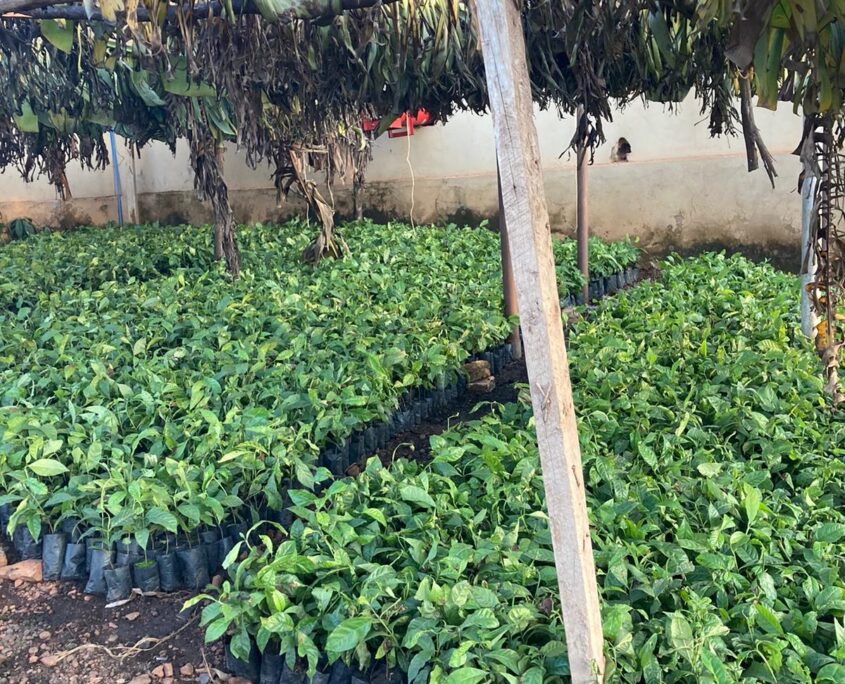
Fig. 1:carbon offsetting trees in an ACORN plant nursery in Tanzania (Jelmer van de Mortel).

Certifiers of carbon credits maintain the status quo by approving CRUs with different quality standards. Van de Ven acknowledged that there is not much incentive for certifiers to discard lower quality credits in their current portfolio in favour of quality improvement. This would deprive them of revenue, but more importantly, of their credibility. Hence, how can the market be segmented to make transparency key and create incentives to purchase higher-priced credits?

Van de Ven argues that the only way to achieve a change in the status quo is to differentiate the quality of carbon credits. Besides the addition of the credit type (reduction, removal, avoidance), the accounting taxonomy(ex-ante or ex-post) and the credit origin (renewable energy, nature-based, etc.), another essential factor for this segmentation would be the specification of the number of additional benefits provided by the carbon offsetting project. A hydropower plant, for example, does not contribute to any SDGs in addition to its carbon benefits compared to e.g. coal-based electricity. At the same time, ACORN is said to contribute to five SDGs.

Credits with low or zero additional benefits need not be banned from the market. Take cut-price chicken, for example. They are pumped up with antibiotics, such as avoparcin, that speed up their growth, and water that increases their weight. “Yes, it’s cheaper, and it’s in the supermarket so you can eat it, but you cannot find a [healthy] justification for buying it all the times [you go shopping]”. If we had a “cut-price credit” that companies and organizations could not justify buying it all the time, they will “die out on their own (no offence to chicken)”.

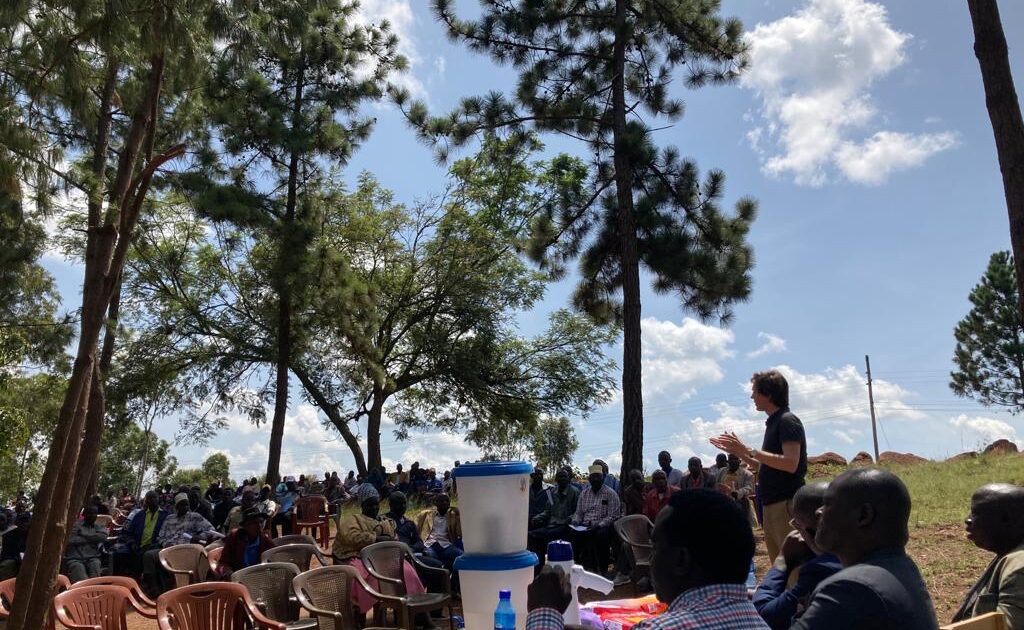
Fig. 2:ACORN carbon offsetting meeting in Tanzania (Jelmer van de Mortel).

When factors such as additional benefits are made transparent, the quality of CRUs can be defined on a protocol basis and categorized with comparable prices. “Only then you can start working towards a market price per segment. Currently, there is no market price for carbon in the VCM because we don’t yet have categories like “organic”, “free-range”, or “better life”, let alone that transparency is considered within the VCM.

But who should promote this change? Van de Ven claims that “neither will it be the credit buyers because they want to pay as little money as possible, nor the certifiers.” This is somewhat contradictory because all VCM party’s actions are voluntary, “driven by an external incentive, especially consumer perception.” If these parties want to show consumers that they are doing good, they must be transparent about the nature of their carbon credits. If they cannot tell what their net-zero claims are based on, it may well be that their commitments are causing destruction rather than providing a solution for the climate crisis. Consumers must be informed about these practices so that they can leverage change.

ACORN demonstrates that full transparency within the VCM is possible. Their best practice approach is based on protocols that require a detailed understanding of carbon storage and value distribution. When, where, and by whom carbon is stored, who ultimately pays, and where the money comes from must be clear. Van de Ven concludes that “regardless of the cost to Rabobank, the farmer always gets 80 % of the returns, regardless of whether the price of the credit is 20 € or 50 €.”

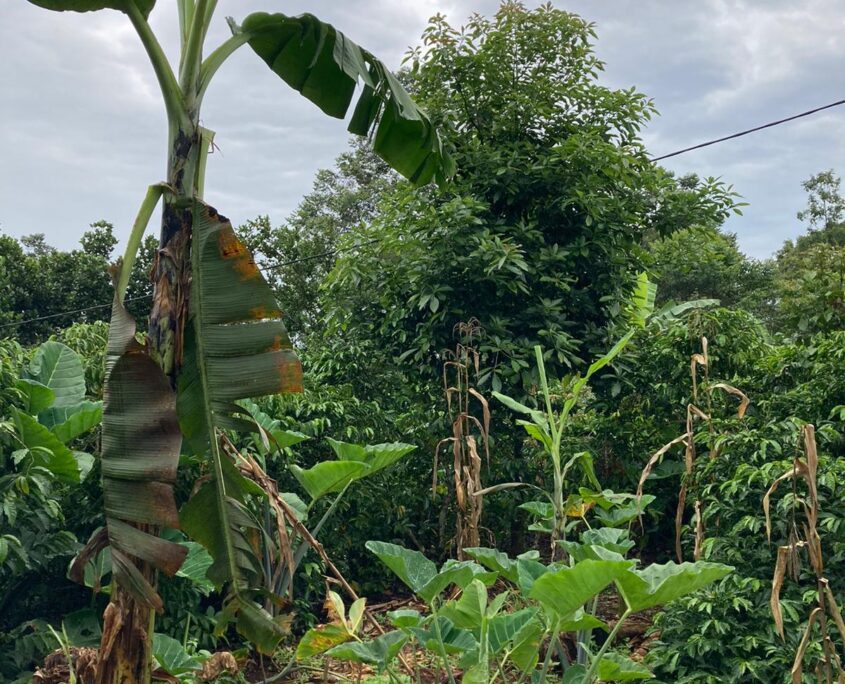
Fig. 3:ACORN’s carbon credits provide additional environmental benefits (Jelmer van de Mortel).

This article is based on an interview with Emma van de Ven, Strategy Lead at ACORN (Rabobank), conducted on 15 February 2022, and originally appeared on the sitio web of the Fair & Smart Data Spearhead of Maastricht University’s School of Business and Economics.

Cover and preview photo: scenic surroundings of ACORN’s pilot test site in Tanzania (Jelmer van de Mortel – Head of ACORN, Rabobank).

Carbon banking to tackle the climate crisis

At the beginning of 2021, Rabobank officially announced its online marketplace for carbon trading: the Rabo Carbon Bank (“RCB”). Using remote sensing, artificial intelligence, and machine learning, RCB aims to create a globally scalable and transparent solution for climate change while empowering local smallholder farmers, thus building on Rabobank’s origins as a farmers’ bank [1].
RCB’s key proposition “Acorn” explicitly focuses on helping smallholders in developing countries in the global south. Using the knowledge of business partners and interviewing experts and around 50 smallholders, Acorn learned that many problems of smallholders relate to land degradation and deforestation [2].

By leveraging Microsoft’s technical expertise in remote sensing, artificial intelligence, and machine learning, RCB aims to create a globally scalable and transparent solution for climate change while empowering local smallholders [1]. RCB’s key proposition “Acorn” explicitly focuses on helping small producers in Africa. Using the knowledge of business partners and interviewing experts and around 50 smallholders, RCB learned that many problems of smallholders relate to land degradation and deforestation [2].

According to RCB, regenerative farming – particularly agroforestry in the case of smallholders – is crucial in tackling degraded soil issues and low rainfall rates. Acorn’s landscape approach to agroforestry plots can strengthen healthy microclimates, as trees and cover crops protect the soil from degradation and increase regional rainfall rates. The carbon sequestrated through these trees and cover crops can be traded as carbon credits. Microsoft was the first to buy Acorn’s high-quality carbon credits [2].

Acorn was created with the aim of “giving small farmers access to the carbon credit market”, said Strategy Lead Emma van de Ven. In an interview, Ms Van de Ven stressed that “small farmers are the most affected by climate change. However, the money from the carbon credit market usually goes to big project developers because they can be certified and be able to quantify, for example, how much carbon dioxide can be stored” [2].

Fig. 1: Old-growth agroforestry row at Sitio Semente (Brasilia, Brazil).

Acorn will bring together the demand of international corporates who want to offset their residual carbon emissions and
the supply of smallholders who have captured atmospheric CO₂ through their agroforestry plots and converted it into carbon credits. Acorn’s objective is to offset 0.5 per cent of global CO₂ emissions released annually by 2025. To reach this target, about four billion trees must be planted by approximately 15 million smallholders worldwide [3].

Acorn’s ability to scale up its operations depends on finding a fair business deal with farmers. It is also contingent on the degree of innovation required for reliable and cost-effective monitoring. Understanding whether the smallholder is genuinely interested in such a revised income model has been proved to be a critical step for potential scale-up.

To define the project requirements, the farmers’ needs, and a valuable collaboration offer for farmers, Acorn has been running ten pilot projects worldwide. Acorn proved its ability to remotely sense, clarify, and sell carbon credits through these projects. It also found high interest in smallholders who want to participate and multinationals who want to invest in the project [2].

This article derives from the Master thesis “A Case Study on the Rabo Carbon Bank using the ‘Quintuple Helix’ innovation model”, as part of the Master’s Degree “Sustainability Science, Policy & Society” at Maastricht University, the Netherlands. The case study was based on an extensive literature review and thirteen in-depth semi-structured interviews. For questions or requesting the full report, please reach out toe.hoekstra@maastrichtuniversity.nl

Fig.2: Brazilian agroforestry farm “Sitio Florestinha” (Alto Paraíso de Goiás, Brazil).

Bibliography

[1] Hoff, J. (2021, 29 January). Rabobank initiative tackles global carbon challenge and improves position of farmers in developing countries. [Translated by Author] Retrieved 9 March 2021, from https://www.rabobank.com/en/press/search/2021/20210129-rabobank-to-announce-initiative-to-tackle-global-co2-challenge-while-enhancing-farmers-businesses.html

[2] Hoekstra, E. (2021, August). A Case Study on the Rabo Carbon Bank using the ‘Quintuple Helix’ innovation model.Master thesis Sustainability Science, Policy and Society, Maastricht University. Downloaded from https://www.maastrichtuniversity.nl/sites/default/files/downloadables/master_thesis_etienne_hoekstra_2021.pdf

[3] Smal, E. (2021, 28 January). Every bank must become a ‘carbon bank’ – and Rabo wants to be first. [Translated by Author] NRC Handelsblad.Retrieved 17 February 2021, from https://www.nrc.nl/nieuws/2021/01/28/elke-bank-moet-een-carbon-bank-worden-en-rabo-wil-de-eerste-zijn-a4029689

Telegram: @greenmarked
LinkedIn: @greenmarked
Instagram: @greenmarked.it

Facebook:  @greenmarked.it


© GreenMarked.it is managed by ECONTROVERTIA APS — Via Alcide De Gasperi 1, 38015 Lavis (TN), Italy — VAT IT02667560227