Ir al contenido principal

Etiqueta: Alps

Bajo los Glaciares: ¿Es el Permafrost lo Impredecible de la Crisis Climática?

Cuando se habla de la crisis climática – temperaturas en alza, deshielo –, se nos vienen a la cabeza imágenes de icebergs rompiéndose en los polos y glaciares alpinos en retroceso. Son símbolos de un mundo cambiando. Y aún así, hay un jugador silencioso que es normalmente infravalorado, y que merece la misma atención: el permafrost. Es un elemento clave en la comprensión de los efectos del cambio climático.

El permafrost, también conocido como "hielo perenne", se define como "cualquier superficie (suelo, roca, o materia orgánica) que permanece bajo los cero grados Celsius por un mínimo de 2 años" (Muller S.W., 1943). Se trata básicamente de una capa activa que se congela y descongela estacionalmente, y una capa más profunda que permanece siempre helada [1].

Tan sólo en el hemisferio norte, el permafrost cubre una superficie de unos 22.8 millones de kilómetros cuadrados en regiones árticas y áreas alpinas. El medio ambiente afecta de manera significativa a las características del permafrost, en particular a su composición y a su grosor. Por ejemplo, el permafrost ártico es mucho más profundo que su equivalente alpino, puede superar los 1200 metros de profundidad, mientras que en las montañas, el grosor medio está entre los 50 y los 120 metros [1]. Además, el permafrost ártico tiene una tercera capa, todavía más profunda, formada entre hace 1.8 millones y hace 10 000 años, particularmente rica en materia orgánica [2].

Permafrost alpino: cuando el suelo cede

A grandes altitudes, el permafrost juega un papel fundamental en estabilizar las laderas de las montañas, ya que actúa como un pegamento natural entre las rocas y los sedimentos. Su descongelación impacta de manera directa a la estabilidad del suelo, conforme se degrada, el suelo pierde cohesión y aumenta el riesgo de deslizamientos, desprendimientos de rocas y corrimientos de escombros – fenómenos que son cada vez más comunes en los Alpes debido al aumento de las olas de calor.

Estos sucesos no sólo amenazan a los ecosistemas, también suponen riesgos para las infraestructuras y las comunidades locales [3]. Estructuras como refugios de montaña y teleféricos, construidos en lo que solía ser terreno estable, pueden sufrir graves daños si el suelo cede. Este hecho es preocupante en particular en los Alpes, donde el permafrost deshelándose pone en serio compromiso a un gran número de estructuras [4].

La investigación y el monitoreo son esenciales para comprender la evolución del permafrost y desarrollar estrategias de adaptación eficaces. Desde 2012, en Trentino, el proyecto PermaNET se ha centrado en la investigación y la supervisión del permafrost, en particular de los glaciares de roca.

Un estudio suizo reciente introduce un enfoque innovador para el seguimiento del deshielo del permafrost en entornos alpinos: la "microgravimetría". Esta técnica mide las variaciones de masa en el suelo, comparando las zonas congeladas y descongeladas. Cuando el hielo del permafrost se derrite, el suelo se satura de agua, aumentando su peso, un cambio que los instrumentos pueden detectar con precisión. Este método proporciona una nueva herramienta para estudiar la degradación del permafrost y sus implicaciones [3].

Figura 1: Los efectos del cambio climático en los Alpes: donde a mediados del siglo XIX llegaba la cola del glaciar Ortles, ahora se levanta un bosque. Trafoi, Tirol del Sur, Italia. Autor, verano de 2018.

Permafrost ártico: la materia orgánica es la protagonista

Mientras que la degradación del permafrost de montaña amenaza la estabilidad geológica, el deshielo del permafrost del Ártico tiene otra consecuencia, quizás aún más preocupante: la liberación de grandes cantidades de gases de efecto invernadero.

El permafrost del Ártico contiene una enorme reserva de materia orgánica congelada acumulada a lo largo de milenios. Cuando el suelo se descongela, los microorganismos comienzan a descomponer este material, liberando dióxido de carbono y metano a la atmósfera. Algunas estimaciones sugieren que el permafrost contiene aproximadamente el doble de la cantidad de carbono que hay actualmente en la atmósfera terrestre, lo que lo convierte en un acelerador potencial del cambio climático [5].

Figura 2:Green moss and snow cover in the Tundra. Photo by Alin Gavriliuc en Unsplash.

Un futuro incierto

En la COP29 de Baku, mientras la atención mundial se centraba en la financiación climática y el futuro de los combustibles fósiles, la comunidad científica presentaba su informe anual sobre el estado de la criosfera, con un mensaje claro y urgente: "No podemos negociar con el deshielo” [6].

Si bien se han identificado tres posibles escenarios para el futuro de los glaciares, el destino del permafrost sigue siendo mucho más incierto. Los científicos siguen sin poder predecir con precisión su comportamiento ni cuantificar plenamente su impacto en relación con el calentamiento global y las fluctuaciones locales de temperatura [6].

Mientras el mundo debate estrategias para hacer frente a la crisis climática, el permafrost sigue evolucionando, influyendo silenciosamente en el equilibrio natural del planeta. Comprender mejor este fenómeno e integrarlo en las políticas medioambientales es crucial para gestionar los retos que se avecinan.

REFERENCIAS:

Pulse aquí para ampliar las referencias
[1] Ciavarelli, E. (2025, February 6). Permafrost, una certezza a rischio – Osservatorio Artico. Osservatorio Artico. https://www.osservatorioartico.it/permafrost-certezza-rischio/

[2] Secci, G. (2024, January 26). Le conseguenze della perdita del permafrost – Osservatorio Artico. Osservatorio Artico. https://www.osservatorioartico.it/retroazione-climatica-positiva/

[3] Jorio, L. (2025, January 15). Breakthrough Swiss research decodes thawing permafrost. SWI swissinfo.ch. https://www.swissinfo.ch/eng/climate-change/melting-permafrost-decoded-by-breakthrough-swiss-research/87458699

[4] Bradley, S. (2025, March 11). Melting permafrost threatens mountain regions. What can be done? SWI swissinfo.ch. https://www.swissinfo.ch/eng/climate-change/melting-permafrost-threatens-mountain-regions-what-can-be-done/88952465

[5] INGVambiente, T. (2025, March 6). Il permafrost: una bomba ad orologeria per il pianeta. INGVambiente. https://ingvambiente.com/2024/11/12/il-permafrost-una-bomba-ad-orologeria-per-il-pianeta/

[6] Gozzi, A. (2024, December 10). Non possiamo negoziare con il punto di fusione del Ghiaccio – Osservatorio Artico. Osservatorio Artico. https://www.osservatorioartico.it/cop29-criosfera/

Imagen de portada: Cola del glaciar Adamello en los Alpes italianos. Autor, verano 2015.

Este artículo forma parte del proyecto "Quiz Ambientali per un Trentino Più Verde!" llevado a cabo por Econtrovertia APS y patrocinado por la Fondazione Cassa Rurale di Trento (Notificación de aprobación del 20 de diciembre de 2024).

Alm Sweet Alm

REGIONAL LAW (ed., of the Veneto region) No. 4, March 21, 2023 “Enhancement of the regional heritage of mountain pastures”:

Veneto Region, as part of its actions to promote the sustainable development of the territory and the natural and historical landscape heritage, promotes and enhances the regional heritage of mountain pastures. This heritage constitutes a characteristic element of traditional agricultural activity and the identity of the regional mountain landscape, performing an important environmental and socio-economic function, and providing ecosystem services [1].

Mountain Alms – for the entire Alpine region – play a major role in understanding the social, cultural and economic dynamics that have accompanied the lives of mountain people for centuries.

Indeed, the Veneto Regional Law makes it very clear how these alpine realities are as much a part of the economic-social identity as they are of the landscape-environmental identity of the mountains.

And three keywords emerge: agricultural value, biodiversity, and ecosystem services.

Three key words that sum up what the alpine pastures were and what they are today. Traditional examples of optimal human-nature integration dictated by the need for survival and exploitation of the vast alpine spaces.

And these realities were in the past so important that they were the object of assiduous – often deadly – struggles between neighbors, particularly of different regions and often language and culture. This is the typical case in all the border areas between Veneto and Trentino, where the alms stretched over much of the territory and where belligerent peasants used to fight for the possession of mountain pasture lands.

The Seven Crosses of Pasubio – now in Trentino territory – are just one of the memories of a peasant past that was inextricably linked to the mountain pasture. Although most think that the Crosses visible today are a reminder of those who fell during the Great War,  they are a memory of a much more distant past. A past dated back to 1446, when the Republic of Venice had recently conquered the territories of Rovereto, requisitioning the alms and auctioning them off. The fact inevitably exacerbated centuries-old tensions between the people of Vicenza and Rovereto, leading to a confrontation of the peasants in the mountain pastures [2].

Today, these borderlands no longer see such clashes over land ownership, yet the presence of structures definable as alms is still very dense. Veneto Region’s latest report estimates there are 700 alms throughout the region. Of these, half are public and only a small part of the total is currently active. The province of Vicenza turns out to be the one where there are the greatest number of alms, about 37% of the regional total, concentrated almost entirely in the Altopiano di Asiago area [3].

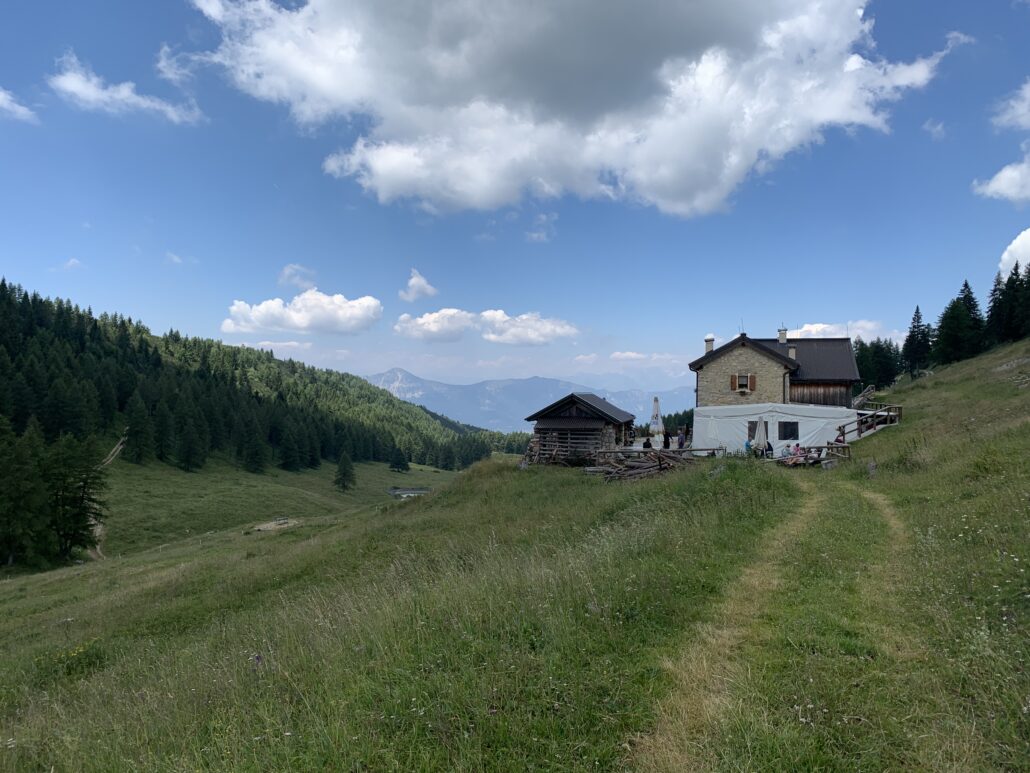
Fig. 1: Malga Zocchi (Comune di Vallarsa – Pasubio – Trento, Italy). Photo: Author. 02.07.2022

Agricultural value

At the time, the availability of open space in middle and high mountains was an almost unavoidable necessity for livestock farming. Alms allowed animals to be driven to the mountains during the summer (transhumance), to ensure their nourishment, taking advantage of what naturally occurs on the pasture.

Today, this need has not changed much, and for the many lowland farms, the possibility of sheltering animals in the alms is a strong point in terms of both the quality of production and the economy of the farm itself. Fresh grass for grazing benefits the animals and yields positive results in their overall production.Additionally, it proves advantageous for the farm, eliminating the need to provide alternative fodder for the animals during mountain pastures.

However, it’s crucial to consider that, compared to the past, the current load in the pastures (referring to the number of grazing animals) is significantly lower. The animals themselves have grown larger in size and weight, prompting the introduction of concentrated forages to supplement their nutrition. Furthermore, a notable shift is observed, with a general expansion of the forest over the grassland-grazing areas.

Biodiversity

In its broadest sense, biodiversity, encompassing a multitude of life forms in terms of both species and variety within each species, finds its ideal manifestation in alms management. The inclusion of grazing animals like cattle, sheep, goats, and horses plays a pivotal role in overseeing open areas rich in plant and animal biodiversity, areas where the encroachment of forests would naturally occur. Beyond just grazing spaces, natural and semi-natural (man-made) grasslands stand out as environments that have retained their natural characteristics, even amidst periods of intensive agriculture. This preservation allows for the sustenance of rare plant species, closely tied to the presence of numerous insects, especially orthopterans like crickets. From the presence of continuous herbaceous extension, home to numerous insects, comes a dense presence of bird species, which in these environments find the ideal conditions for their survival [4].

Ecosystem services

Ecosystem services are those beneficial consequences for humans that result from nature. And the consequences of alms management of alpine pastures are manifold.

Open spaces such as meadows and pastures ensure an efficient hydrogeological cycle. Indeed, the herbaceous species present and their roots allow for rapid water infiltration, counteracting erosive and landslide phenomena, even on steep slopes. In addition, the evapotranspiration of grasslands is much lower than that of forests, ensuring the valley floor has a proper supply of water [5].

Another important function appears to be related to cultural services, with alpine alms increasingly suitable for development as places for slow tourism, food and wine, environmental education and social development.

The Veneto Regional Law aims to give normative consistency to everything reported here, taking into consideration both the economic and the natural and landscape aspects of mountain alms management. A starting point for a true valorization and revaluation of a centuries-old cultural heritage that still lives on in the hearts and work of mountain people.

The journey has just (re)started. The rebirth of the mountain also begins from here!

REFERENCIAS:

Pulse aquí para ampliar las referencias
[1] Regione del Veneto, Legge Regionale n. 4 del 21 marzo 2023 – Valorizzazione del patrimonio regionale delle malghe,2023.

[2] I. Salvador and M. Avanzini, “I segni di confine,” in Memorie di terre alte. Archeologia di un paesaggio pastorale tra Pasubio e Piccole Dolomiti, Trento, MUSE, 2022, pp. 182-196.

[3] Regione del Veneto – U.O. Politiche per lo sviluppo turistico della montagna, Le malghe del Veneto, Venezia: Regione del Veneto, 2019.

[4] M. Scotton, A. Pecile and R. Franchi, Scotton, Michele, Angelo Pecile, and Roberta Franchi. I tipi di prato permanente in Trentino. Tipologia agroecologica della praticoltura con finalità zootecniche, paesaggistiche e ambientali, San Michele all’Adige (TN): Fondazione Edmund Mach, 2012.

[5] J. Bengtsson, J. Bullock, C. Everson, T. Everson, T. O’Conner, P. J. O’Farrel, H. G. Smith and R. Lindborg, “Grasslands – more important for ecosystem services than you might think,” Ecosphere,vol. 2, no. e02582, p. 10, 2019

REFERENCIAS:

Pulse aquí para ampliar las referencias
  1. Regione del Veneto, Legge Regionale n. 4 del 21 marzo 2023 – Valorizzazione del patrimonio regionale delle malghe, 2023.
  2. I. Salvador and M. Avanzini, “I segni di confine,” in Memorie di terre alte. Archeologia di un paesaggio pastorale tra Pasubio e Piccole Dolomiti, Trento, MUSE, 2022, pp. 182-196.
  3. Regione del Veneto – U.O. Politiche per lo sviluppo turistico della montagna, Le malghe del Veneto, Venezia: Regione del Veneto, 2019.
  4. M. Scotton, A. Pecile and R. Franchi, Scotton, Michele, Angelo Pecile, and Roberta Franchi. I tipi di prato permanente in Trentino. Tipologia agroecologica della praticoltura con finalità zootecniche, paesaggistiche e ambientali, San Michele all’Adige (TN): Fondazione Edmund Mach, 2012.
  5. J. Bengtsson, J. Bullock, C. Everson, T. Everson, T. O’Conner, P. J. O’Farrel, H. G. Smith and R. Lindborg, “Grasslands – more important for ecosystem services than you might think,” Ecosphere, vol. 2, no. e02582, p. 10, 2019

A Battle in the Alps: A Story of Climate and Men

Today I want to tell you a story. A story that begins with the most classic of introductions:

Once upon a time, there was a high Mountain covered with meadows and forests, with pastures and bare rocks, and furrowed by countless clear, cool streams. And on its summit, he wore a great hat. A very pure white hat of solid, unshakable ice.

And the Mountain was happy, aware that it was home and mother to all the animals and plants that found refuge there.

However, on a fine summer day, suddenly there was a great commotion. The Mountain found itself shaken, awakened in great turmoil by an incessant uproar. A battle had begun on right above it. And never would the Mountain have expected it.

The challengers were its greatest guests: Mrs. Forest and Mr. Meadow. This battle soon took the name “Kampfzone” and, unexpectedly, was won not by either Forest or Meadow but by a third, unstoppable challenger: “Krummholtz”!

The main characters of the story introduce what happens incessantly in our mountains from an ecological point of view, particularly in the Alps. I have always been fascinated by the idea of a kind of battle between the different components of an ecosystem for survival and dominance over the “opponent”. Indeed, even in a romanticized way, the challenge between forest (present at lower elevations) and the natural high-altitude grasslands is a real fact, and theKrummholtz are none other than those twisted shrubs, shaped by the continuous action of wind and snow, that are established right on the margin line between the subalpine forest and grassland formations: the Kampfzone, or “battle zone”.

What does this have to do with the climate and the people who inhabit the mountains?

This Kampfzone is the most obvious surface that can be found in the alpine ranges. Difficult to interpret, but relatively easy to spot, even from aerial and satellite observations [1].

Moreover, this margin zone, which varies in width, density of shrubs and trees, and vegetation dynamics, is the most complex surface that can be found in the Alps from an ecological point of view, as it is governed by processes induced by delicate balances.

In the last two decades, the trend of this line is to migration. And the concauses are as much natural as anthropogenic. A migration that, to tell the truth, is not a new fact for this ecosystem, which has been shaped by human action for centuries.

As early as the 17th century, through intense deforestation actions, this margin line was lowered from its real natural elevation, thus artificially creating meadows and pastures for agriculture and livestock management. Subsequently, after World War II, the economic-social situation in the Alpine valleys changed, resulting in a rapid loss of interest in the care and exploitation of high-altitude pastures and meadows, triggering a process of gradual recolonization of the forest toward higher altitudes. In short, a revenge of nature over man [2].

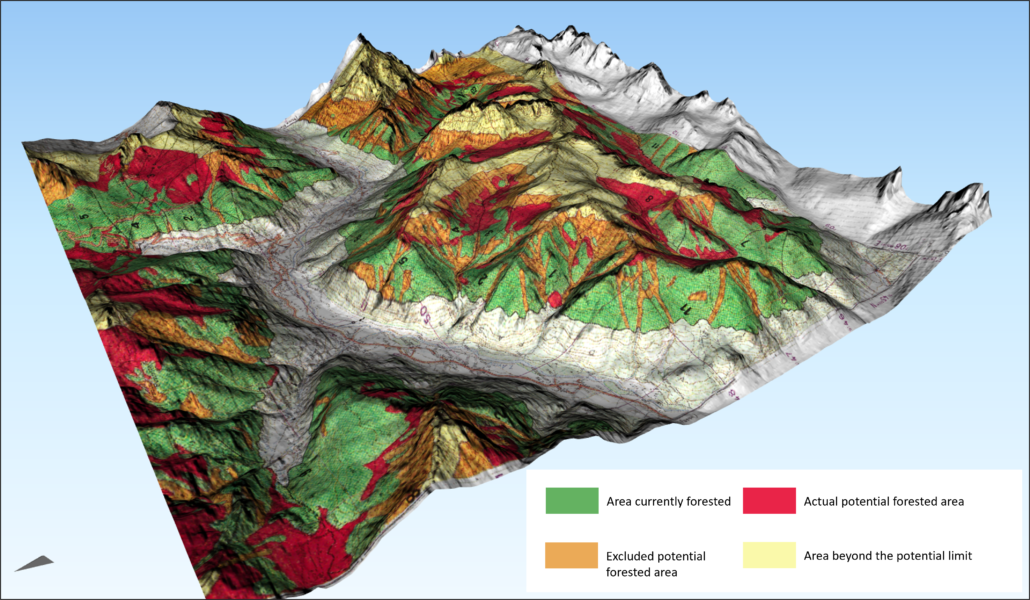
Fig. 1: Potential forest boundary. Sheet #12 – CANAZEI. Own 3D processing. Source: [2]

However, this revenge of nature, though constant since the 1950s, is actually turning out to be a little too pro-nature, especially in unexpected ways.

While it is true that forest growth is something positive, one must necessarily consider it at the expense of what this growth is taking place. The map in Fig 1 shows how the forest line (which we can understand here as the Kampfzone) appears to be highly variable as a function of the anthropogenic logging actions, with the areas in red and orange representing the surfaces that could potentially be occupied by the forest but is still not recolonized.

Such dynamics turn out to be very different to date. There is indeed a general increase of forest formations at the expense of high-altitude grasslands, but the key point is to understand how this elevation is or is not also followed by an elevation of the lower limit of the forest, i.e., that at the edge with the valley floor.

In short, where are these forests going?

The answer to this question – as usual for many ecological issues – is that it depends. It depends on the type of species characterizing the forest formations, the geographic area, the socio-cultural and economic dynamics of the territory, and the methods of analysis. In general, however, it can be considered how, for the Alps, the upward trend of spruce-fir forests, expanding to higher elevations but also shifting its presence from the lower limit, represents one of the dynamics of greatest impact on the reality of these territories, and not only in purely ecological terms.

The economic and cultural dependence established with this species over the past century [3] has meant that much of the forest land, at least in the Eastern Alps, is occupied by it. An increase in the elevation of the species, such that it is presented beyond the current (even potential) limit of the forest, and a simultaneous loss of the species at the lower elevations, which are more accessible, mechanizable, and therefore easier to use, also necessarily obliges a change of strategy towards harvesting and silvicultural techniques for the future. Just as with Spruce, this is also the case for many other species that modify, expand, and reduce their range of presence, making mobile and transformative what we have hitherto made and credit immutable [4].

In this, too, we are closely affected by climate change, which is as evident in the mountains as it is in the city and is forcing us to alter our plans for a future different from the one we had planned.

REFERENCIAS:

Pulse aquí para ampliar las referencias
[1] L. Dinca et al., “Forests dynamics in the montane alpine boundary: a comparative study using satellite imagery and climate data,” Climate Research,vol. 73, no. 1-2, pp. 97-110, 2017.

[2] P. Piussi, Carta del limite potenziale del bosco in Trentino, Trento: Provincia Autonoma di Trento. Servizio Foreste, Caccia e Pesca, 1992.

[3] M. Cerato, Le radici dei boschi. La questione forestale del Tirolo italiano durante l’Ottocento, Publistampa Edizioni, 2019.

[4] S. Noce, C. Cipriano and M. Santini, “Altitudinal shifting of major forest tree species in Italian mountains under climate change,” Frontiers in Forests and Global Change,vol. 6, 2023.

REFERENCIAS:

Pulse aquí para ampliar las referencias
  1. L. Dinca et al., “Forests dynamics in the montane alpine boundary: a comparative study using satellite imagery and climate data,” Climate Research, vol. 73, no. 1-2, pp. 97-110, 2017.
  2. P. Piussi, Carta del limite potenziale del bosco in Trentino, Trento: Provincia Autonoma di Trento. Servizio Foreste, Caccia e Pesca, 1992.
  3. M. Cerato, Le radici dei boschi. La questione forestale del Tirolo italiano durante l’Ottocento, Publistampa Edizioni, 2019.
  4. S. Noce, C. Cipriano and M. Santini, “Altitudinal shifting of major forest tree species in Italian mountains under climate change,” Frontiers in Forests and Global Change, vol. 6, 2023.

The Glacier Caravan from Satellite

The Glacier Caravan [1], an initiative organized by the NGO Legambiente, now in its fourth edition, recently ended. With the scientific collaboration of the Italian Glaciological Committee (CGI), the caravan made a 6-stage journey to monitor the dramatic retreat of glaciers due to the climate crisis.

We will retrace the 6 stages through as many satellite images of each glacier, allowing everyone to see how dramatic the situation is with each passing year.

Lares and Mandrone Glaciers: 1986 – 2000 – 2023

High mountains and glaciers are very inaccessible and unstable areas, where it is best not to venture unless highly prepared and equipped. That is why nowadays much of the surveying for glacier monitoring is done remotely, thanks to satellite constellations constantly orbiting the earth.

For example, Claudia Notarnicola, director of the Institute for Earth Observation at Eurac Research, recently published a paper [2] showing that globally, snow remains on average two weeks less than in 1982. NASA MODIS data [3], which offer daily snow cover maps from February 2000, were used for this study.
Using other satellites, we could go back even further: NASA’s Landsat program has been active since the 1970s and the first satellite was launched in 1972 [4].

Moreover, thanks to new tools such as STAC (SpatioTemporal Asset Catalog) based data catalogs [5] and operators such as Microsoft offering this data for free [6], we can access satellite images from around the world quickly and efficiently.

This process of democratizing satellite data allows many new scientists to analyze and understand the environment around us, reducing the barriers to entry caused by the huge amount of imagery to manage.

Belvedere Glacier: 2000 – 2023

Ochsentaler Glacier: 2000 – 2023

Morteratsch Glacier: 2000 – 2023

Rutor Glacier: 2000 – 2023

Dosde Glacier: 2000 – 2023

The images above have been generated by the author using Landsat data from the public STAC collection offered by Microsoft. It is a false color composite that highlights snow and ice. The color channels correspondence is red: Landsat Swir16, green: Landsat Nir, Blue: Landsat Red.

They don’t contain only the cited glaciers but a broader area, to give a better general overview. Additionally, the light blue area does not necessarily correspond exactly to the glacier extent, since it can contain seasonal snow as well. The reduction of the ice coverage is anyway evident.

This article is part of the project “PILLOLE D’ACQUA PIANA: seminari itineranti, blog e podcast per una gestione sostenibile delle risorse idriche in Piana Rotaliana” carried out by ECONTROVERTIA APS and supported by Fondazione Caritro (Prot. no. U445.2023/SG.386 of April 23, 2023).

Blue Water, Clear Water… Mountain Water

“Have you ever observed the fall of torrential rain in a bare valley?

Recall for a moment. The spectacle demonstrates with the mute eloquence of things, how it accomplishes that work of gradual demolition operated with brutal energy by the waters, which unrestrainedly run robbery down the bare woodland stoops.”

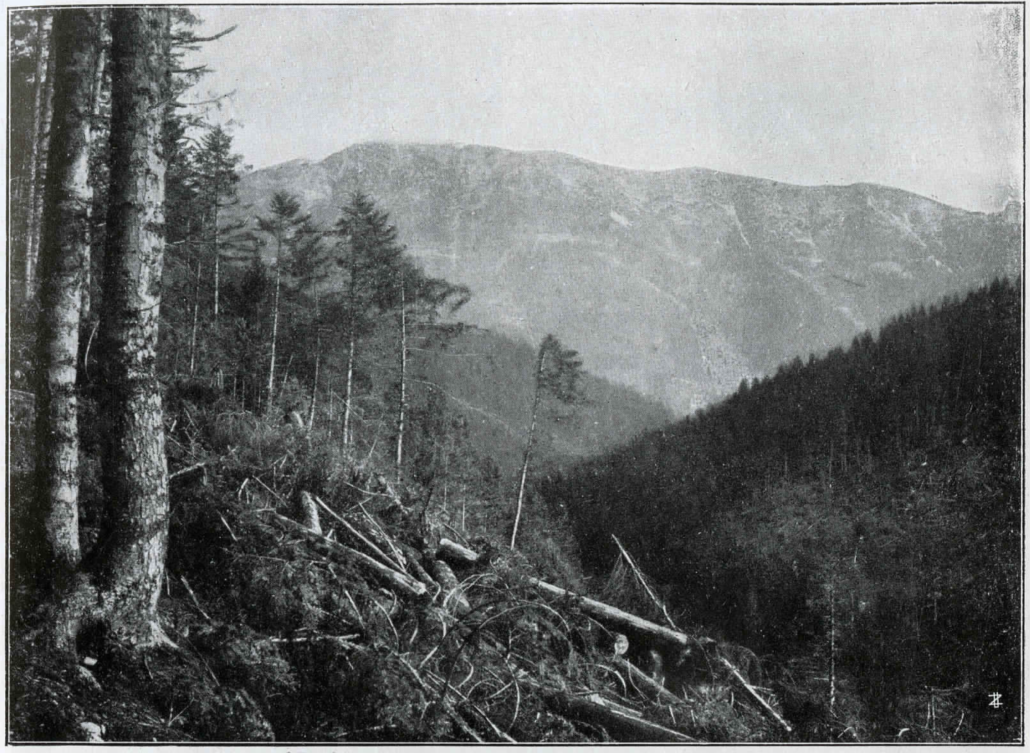
These are the (markedly antiquated) words with which opens a technical-scientific-disclosure tract by the Italian Touring Club, Propaganda Commission “For the Forest and for the Pasture” with the eloquent title, “The Forest versus the Stream.” Year 1910! [1]

By reading this essay now, it is really well edited, not only in typographical terms (with numerous black and white pictures and hand-drawn color extracts, a fact not taken for granted at the time) but especially in technical terms.

Anyone with a little experience in water management in mountain and valley environments will understand what is reported here, which turns out to be thoroughly modern, although written more than a hundred years ago. Because when you think about it, everything technical that we still do today in our mountains has nothing really new. Sure, materials, construction techniques and supporting machinery change. Monitoring tools (practically nonexistent at the time) also change: think of new laser, remote sensing or integrated data collection technologies. But at the root of it all, the needs for our valleys, in terms of water-forest-human coexistence, are still the same.

Regarding the Faussimagna torrent (in the Cozie Alps, between Cuneo and Turin), the presentation of it, following a flood event that destroyed some villages along the valley, is of absolute simplicity and directness: “The King, in the aftermath of the tragic flood, rushed to the places devastated by the torrent. The citizens, appalled by the mourning of the frightful night, demanded the embankment of the Faussimagna […]. – We must reforest up there! – exclaimed the King, pointing to the high, bare cliff face of Mount St. Bernard. Such is in fact the only remedy: the ubertose plain, the safety of the settlements are not defended with the levees, which are too often impotent, but with the forest on the mountain”. However modern you may find in these words, remember that they are dated the year 1906!

Fig. 1: Storm Vaia but in the early 1900s. “The effects of a hurricane. Even the richly forest-covered ground could not prevent the effects of the wild waters of the bare mountain area above”. Photo. Pietro Rizzi, isp. for. and C. D. Bonomo – Asiago. Source: [1]

For the Veneto area, then, the problem is not limited only to mountain streams, for which the same prescriptions implemented in the rest of the Alps also applied and still apply. Indeed, Veneto sees the presence of a dense network of lowland waters, variously exploited and no less fearsome than Alpine streams.

Accommodation of slopes in upstream sections, correction of ravines, planting of tree and shrub species, correction and modification of embankments and curves, consolidation of landslides, defense against avalanches. The table of contents of a modern book on hydraulic-forestry systems would certainly not look much different.
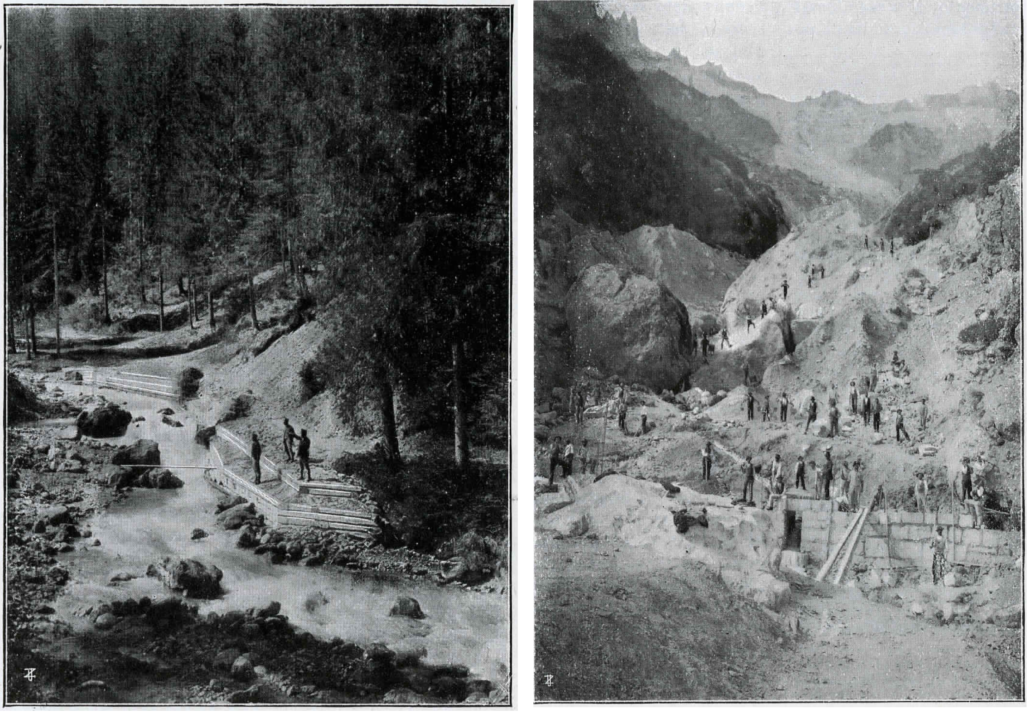
It is enough to look at these images to understand that much of what we see in our valleys today is just the legacy of centuries-old knowledge, technique and building architecture always aimed at safeguarding man and his spaces.

Fig. 2a –left side:  “A log defense at a bend. Without this defense, the stream would run over the slope somewhat devoid of trees, beginning its demolition, which, once started, could extend upward with serious consequences“. Photo: Fini – Treviso. Source: [1]

Fig. 2b –right side: “The construction of a large bridleway in the Rotolon Valley above Recoaro (Vicenza)”. Photo. Magistrato delle Acque – Venice. Source: [1]

However, mountain waters are not only the bearers of calamities and natural disasters. A positive example is certainly the activity of fluitation: the mode of timber transport that was practiced for centuries on the waterways. And the hand of man has not been slow, even in this case, to put its modifications on it. The so-called “risine” are nothing more than channels, made of rubble when they were fixed, but more frequently of temporary lumber strands, to be used as chutes where logs or other woody assortments could slide down mountain slopes. Historic and noteworthy for the Italian Tyrol (i.e., present-day Trentino) are the fluitation transport systems developed in the 19th century in the Lagarina Valley and along the Avisio River. In each case,  “fluitation affected in a customary way a large part of the main hydrographic network of the Italian Tyrol. Fluitation with rafts was mandatory only on the Adige downstream of the Burgstall (Postal) station” [2].

Finally, with regard to a modernity of visions and needs that have never radically changed over the centuries, I am pleased to quote the final lines of the treatise on forest and stream. From the perspective of modern bottom-up integration, the multifunctionality of forests and mountains, and the protection of the environment and local people, my impression is that certain concepts were already well understood more than a century ago. Will we finally be aware of this?

“The State except in mountain basins, for the arrangement of which it must provide directly because of the high public interests of a general character which advise it, and except for the creation of a forest domain of a special character, can only exert an action of encouragement and aid to the work of local authorities and private individuals.

The forest, let us remember, is a great cheap laboratory of future wealth […] and its workers great or small, visible and invisible, are only waiting to be put to work and to be quietly thrown to work, in the solemn industrious peace of their fruitful and mysterious agglomerations”.

This article is part of the project “PILLOLE D’ACQUA PIANA: seminari itineranti, blog e podcast per una gestione sostenibile delle risorse idriche in Piana Rotaliana” carried out by ECONTROVERTIA APS and supported by Fondazione Caritro (Prot. no. U445.2023/SG.386 of April 23, 2023).

Friends of Mother Earth the Brotherhood of Francis

Social Friendship: this is the leading theme, the challenge, the juxtaposition, as natural as it is impossible, at the center of one of the most famous Encyclicals of recent decades, Pope Francis’ “Brothers All.”

Since the time of Aristotle at least, it has been universally recognized that human beings are a “social form of life” (Zoon Politikòn), weaving their existence through relationships and complex constructs of human interactions.
However, as Alessandra Smerilli – Professor of Political Economy at the Pontifical Faculty of Educational Sciences “Auxilium,” Advisor to the State of Vatican City – makes explicit in the initial “Reading Guide” to the Encyclical, juxtaposing the term “Friendship” with the word “Social,” and placing it in the context of “brotherhood,” represents a true revolution, aiming to outline the contours of a New world… a more “human” world.

Where Friendship is by its nature a selective concept (when one says “friends choose themselves,” as opposed to relatives), to define it as social is an almost oxymoronic representation, expanding its semantic area, and extending it to society as a whole. If we reflect carefully, however, the association is not so inconceivable and finds its legitimacy not only if we inscribe it in the groove of the Aristotelian tradition (friendship can be given to anyone, thanks to the social nature of our species), but also by placing it in the broader context of Christian brotherhood. The commandment of Love, “Love one another,” [1] or “Love your neighbor as yourself,” [2] represents the essence of this message.
Social Friendship institutionalizes at the secular level a concept inherent in human evolutionary nature (as Aristotle had intuited) and theology and broadens its scope, further clarifying the delimitations of that neighbor to whom we must strive. If in the Jewish traditions, the imperative to love the other was understood as one’s neighbor, a member of the same nation [3], with Judaism grown out of Israel and the Gospel message in fact the boundaries extend generically to the whole of humanity and now reach, with Social Friendship, to include far more than that.

The brotherhood is not only between humans but is with and for Creation, in full Franciscan tradition and in line with the ecological and environmental movements of recent decades. We are facing perhaps the secular awareness of the spiritual values of the Patron Saint of Italy, for the first time systematized in a practical and theoretical system of directions by one of the highest international authorities.
Indeed, the clear conception expressed by the pontiff makes it clear to us that we are one with Creation. The partnership is in harmony with Planet Earth, of which we are an integral part.

One is not saved alone, where “alone” refers not only to human beings but to the entire animal and plant ecosystem of the Earth.
It is not possible to save ourselves alone … and there is more: it is necessary, by human-natural obligation and not only ethical-moral obligation, to care for others, where others, once again, are all the living on our planet and suffering and non-suffering humanity, undoubtedly.
This is because “the existence of each of us is linked to that of others: life is not time passing, but time of encounter” [4]. Being social forms of life then is only the first step: loving and caring, taking care is the final goal, which completes us as a new humanity.

Today’s society, on the other hand, seems to want to keep us in a state of immaturity, educating us to the absence of relationships, to selfish individualism, which makes us see our neighbor as a stranger, an enemy, a waste of time.We do not want to waste time on “other people’s problems”: these, Pope Francis reminds us, are “symptoms of a sick society” [5].A consumerist ideology of life and also of relationships, disposable, that cannot but result in the destruction and total collapse of everything, once the deceptions of this system are revealed. We are the first to be at risk, as well as the environment.

As the Pope states, then “the ‘every man for himself’ will quickly result in the ‘all against all’ ” of Hobbesian memory. From the sociality of divine Love to an uncivilized state of nature of the war of all against all [6].
If this is how we currently treat members of our own species, it is not surprising that we fail to see the consequences on the entire living organism, of which we are a cell, an integral part, namely the Planet.

It is necessary to embrace a new modus vivendi, a new “diet” of life, the diet of Caring for the Earth, because we are the Earth: She is our neighbor … nearest neighbor.
Being her friends and brothers, as St. Francis teaches in the famous canticle, means being friends with ourselves.

It is necessary to end the exploitation of the planet and the destruction of ecosystems, human above all. Words that have resonated in the minds and hearts of many for a long time and finally find support in one of the most authoritative institutional figures in the world, capable of not just stopping at saying what should or should not be done or an accurate analysis of the present, but able to outline concrete guidelines for our future.
In his Encyclical, Pope Francis shows us the way to take a “leap toward a new way of living” where we discover “once and for all that we need and are indebted to one another” [6].
The first step? Let’s follow the Pontiff’s wise shrewdness and, from now on, ask ourselves and anyone we meet, not only “what’s your name?” or “what do you do/what do you do for a living?” but also … “Who do you take care of?”

Let’s ask ourselves, let’s give ourselves an answer, and let’s start now, if there isn’t one.
Let us spread the question, as a necessary gift to our curriculum vitae as humans or, better, Inhabitants, part of this extraordinary Planet.

Ad maiora!

REFERENCIAS:

Pulse aquí para ampliar las referencias
  1. Gospel of John: 15, 12
  2. Gospel of Mattew: 22, 39
  3. Francesco, P. (2020). Fratelli tutti. Sulla fraternità e l’amicizia sociale. p 43
  4. Videomessaggio al TED2017 di Vancouver (26 aprile 2017): L’Osservatore Romano, 27 aprile 2017, p.7
  5. Francesco, P. (2020). Fratelli tutti. Sulla fraternità e l’amicizia sociale. p 46
  6. Francesco, P. (2020). Fratelli tutti. Sulla fraternità e l’amicizia sociale. p 33

A Pinnacle Crumbles in the Alps: Hydrogeological Safety in Veneto and Trentino

“… and that is how the Dona lost her Omo",

To most of you readers, these words may seem nonsensical, decontextualized, and meaningless. Unfortunately, this is not the ending of a fairy-tale love story, a poorly written adventure novel, or the new recording of a budding singer-songwriter. The story is the real and tangible one of a millennial married couple who separate under the pressure of a heavy, continuous, unexpected rain.
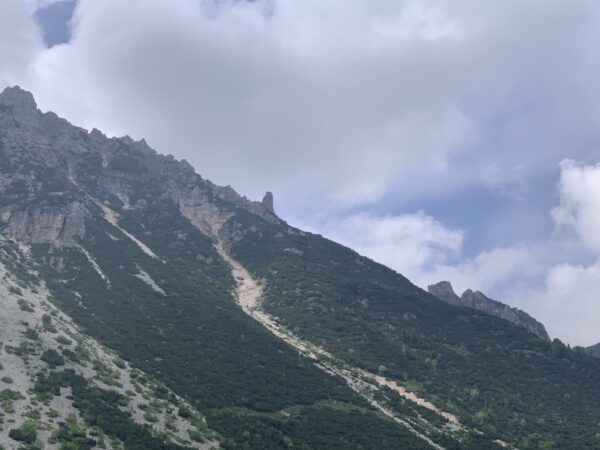
The two rock pinnacles that soar – or rather, towered – on Monte Plische (precisely, the Omo and the Dona), on the border between Veneto and Trentino, south of Rovereto in the municipality of Recoaro Terme (Vicenza, Italy), are for us locals a kind of symbol, an emblem considered immutable, a fixed star of the skyline of our mountains.

Yet, like everything in nature, unchanging it is not. So much so that today, at first light, after a week of thunderstorms and heavy rain in the area, the entire valley woke up without part of this symbol.

But how is this possible? The two pinnacles have always been there since living memory!

And if on the one hand, with a veiled – and not even too much – healthy parochialism, I am pleased to be able to introduce this technical-hydrogeological discussion starting from a fact of absolute territorial marginality, on the other hand, however, I perceive a sense of helplessness in the face of nature’s magnificence, which this time affects me directly.

Fig. 1: Mount Plische, Carega Group. Middle: “La Dona,” isolated from “L’Omo.” (Author. Recoaro Terme, Italy. June 11, 2023)

Landslides, rockfalls, avalanches and … forests! Or, anyway: trees, plants, and shrubs are the protagonists of this story. And the narrator is water.

In economic terms, the situation in Veneto looks promising for the current year. It was a few weeks ago that the Governor announced the allocation of more than 25 million euros to combat hydrogeological instability in the regional territory. Funds that will be allocated primarily to works of embankment, riverbed arrangement, and cleaning, in almost all the provinces of Veneto [1].

And it is also true that important works in the regional territory have already been carried out over the years. Following the flood of 2010, which hit the provinces of Vicenza, Verona and Padua hard [2], the Region endowed itself with a Plan of absolute depth – the so-called “Piano d’Alpaos”, named after the professor at the University of Padua who oversaw its drafting – worth over 3 billion euros in investments against hydrogeological risk.

To date, more than 40% of the Plan is reported to have been implemented, with investments put in place in excess of 1.5 billion euros, including [3]:

⦁ Completion of Trissino di Monte basin on the Agno-Guà river (22.7 million the value of the intervention) 40% of Trissino di Valle basin (20 million intervention);

⦁ Near completion San Lorenzo basin in the Verona municipalities of Soave and San Bonifacio (5.9 million euro work);

⦁ 80% of the one on the Bacchiglione River upstream of Viale Diaz in Vicenza’s capital city (18.75 million euro intervention);

⦁ 70% of the first functional lot of the one on the Muson stream, in the municipalities of Fonte and Riese Pio X in the Treviso area (€18.6 million value).

For Trentino, the situation is also positive, with 7 million allocated by the Government to the year 2023 for defence works identified by the province in coordination with the territories [4].

In total, interventions in the provincial territory for about 13.5 million euros are approved for the current year, related to the state of emergency in October 2018 [5].

In short, there seems to be no shortage of initiatives and funding pe these territories. Yet with every event that occurs in the territory, fronts of criticism open up (often rightly so). Between those who cry of inefficiency, incompetence, and tardy response and those who justify and praise the work of those in charge, the fact remains that for the entire peninsula, almost 94% of municipalities are at risk of landslides, with the Province of Trento reaching even 100% of municipalities, for a population residing in landslide hazard areas of more than 22% of the total.

Numbers, these, however, compare with a reality on the ground that can help and support risk prevention itself. Because, while it is true that extreme weather events are a product of nature itself (anthropogenic climate change excluded), it is also from nature itself that humans can benefit.

And in this, the forests come to the rescue. Indeed, afforestation interventions in alpine areas, which have been active since the 1960s, have proven effective and have shown their capacity in terms of protection and support or replacement of traditional technical measures against hydrogeological hazards. However, necessary assessments regarding soil type, elevation, planting techniques, exposure, and socio-economic implications are still to be considered. Moreover, maintaining the effectiveness of such biological protective structures is only ensured by active forest management that can enable forest resilience and persistence.

In short, technical and applicative knowledge is necessary for proper and effective land use planning, including forestry, but it can supplant and help against the advance of risk.
Because in the end, as a colleague of mine, who is not so much a forester but so much a human being said about the recent floods in Emilia-Romagna: “A river will always act as a river”.

That is to say, it is useless to try to change what nature dictates. However, it is up to us to plan actions that can put us in a safe condition, making the best use – when possible – of nature itself.

This article is part of the project “PILLOLE D’ACQUA PIANA: seminari itineranti, blog e podcast per una gestione sostenibile delle risorse idriche in Piana Rotaliana” carried out by ECONTROVERTIA APS and supported by Fondazione Caritro (Prot. no. U445.2023/SG.386 of April 23, 2023).

Plants Know Their Way Forward: Alpine Species Migrate to Escape Environmental Changes

Two inconspicuous and unrecognizable little flowers – indistinguishable to unexperienced eyes and useless for ecological purposes – have created a perfect fairy-tale setting for plant science.

On a regular day in the late 1800s, Galinsoga parviflora – a small daisy-like plant of the grassy wastelands – arrived in Europe from Peru, probably transported as a seed by merchant ships. Since the European
climate was suitable for its survival and reproduction, it did well in the old continent.  It found itself so well there that it even began to colonize land that other species already occupied: it suffocated and eradicated them from their land. A true “alien” , a so-called invasive allochthonous species (e.g., a neophyte), occupied Europe.

All went well for parviflora, which took over any other competing species by expanding in vineyards and cultivated land. And yet… who lives by the sword, dies by the sword.

A distant South American cousin, Galinsoga ciliata, also reached Europe by sea in the early decades of the 1900s. In a new environment full of opportunities for expansion and reproduction, the two cousins declared war to each other because their land conquest plans were incompatible.  Similarly, the two Galinsogafought for supremacy in uncultivated areas, vineyards, grassy traffic circles, road dividers, and weeded field edges.

To date, Galinsoga parviflora seems to have been defeated in Trentino. Although it is not yet considered rare, it is definitely not easy to find. After having bitterly conquered its land, Galinsoga
ciliata seems to have no fears of being overthrown.

In short, even the smallest and most insignificant plants, that we can hardly identify and recognize, know a lot about how to move, even without legs.

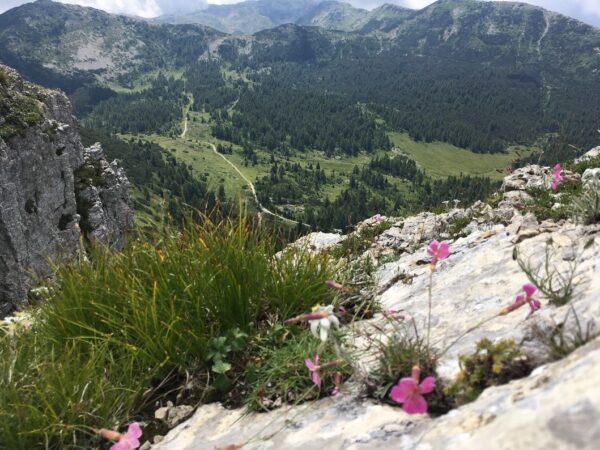
Fig. 1: Changes of the Alpine landscape terrain are already visible. Alpine species are moving, particularly upward and northward in search of coolness against global warming. However, this migration is not always straightforward. The journey is often impeded by terrain impediments or lack of soil. Photo by Author (Monte Pasubio, Trambileno – Trento, Italy. July 20, 2020).

In the last few days, an internationally resounding news in plant science burst out: the discovery by botanists at the Museo Civico di Rovereto of an orchid species altitudinal record. In summer 2022,
Hammarbya paludosa was found in a peat bog at 1800 meters a.s.l. in upper Val di Non valley
(Trento, Italy) [1]. Hammarbyalives in circumboreal environments, typically in Scandinavia and Russia, but its finding in the Italian Alps peat bog completely changed our definition of its habitat: Alta Val di Non is the third site that Hammarbyaoccupies with certainty and the highest point of occurrence in Europe.

Although the discovery is extraordinary di per se, the origin of this orchid is even more. Did it always live in Alta Val di Non and was it simply never seen? Or did it move there for a specific reason? The question, of course, remains unsolved. Nonetheless, the fact that many species of plants, flowers and shrubs are migrating is confirmed. And orchid species are the best example of this trend [2].

In this case, the trigger and driving force for such displacements is environmental change: climate change firstly, but also changes in land use, changes in the designation of protected areas, water regime changes, agricultural changes and forestry tillage.

Although we now have a better idea of how many plant species are moving upwards to fight global warming in search of coolness, it remains unclear how many of these migrating species will successfully reach their destination [3].

Distribution simulations in the alpine areas of Veneto, Trentino, Alto Adige/Südtirol and Tirol carried out at the University of Innsbruck (unpublished), showed that by 2100 the occurrence of two shrub species,
el
Green Alder and Mountain Pine, will shift northward and to higher elevations. And yet the shift will be quite different region by region.

In Veneto, for example, some niches manage to reach higher elevations or move in latitude to the adjacent Alto Adige/Südtirol and Tirol. The ascent of many of them, however, is completely blocked or limited by the harshness of the Dolomites, which are too steep, inhospitable, rocky, and windy even for the most resilient individuals. And this is already noted by the locals and all the forests stakeholders of the area. Many of them already see a decrease of the two shrub species in the Belluno region. In contrast, the upward expansion of these two shrubs in Tyrol has been successful and made local breeders, farmers and foresters very worried.

In short, these plants know how to find their way forward, and rightly move – though perhaps unconsciously – in their own best interest. They are the green migrants we still know little about but that are increasingly becoming more present in our everyday lives. Even though the migration of a small greenish orchid may bother very few, it may interest thousands if olive trees, strawberries or grapevines moved.

Plants move and adapt and it is up to us to keep up with them. We must evaluate their changes and take advantage of their benefits to both humans and ecosystems. We should act as we have always done but aware that plants move and know their way forward.

Agroecology to fight back Alpine pastures abandonment

In the mountains, classifying the present land-use is rather easy: what is not woodland is a meadow or pasture. However, the two often mix together because forests often take over meadows and pastures.

Pastures are defined as «forage crops of different origin and flora composition, used in part or entirely for feeding» [1]. Grazing — and in general human action —thus represents care, maintenance, and production for these areas.

«Coniferous forests, either dense or sparse, are interrupted by meadows used for mowing and/or grazing» [2]. In other words, coniferous forests are  — or at the most were — managed, cut and controlled in a way that allowed traditional agricultural activities on large sections of the now densely wooded Alps. And precisely those meadows used for mowing or grazing are described by Sestini as the main method for land and landscape management. Implemented for centuries by Alpine communities, it is the only one capable of ensuring a high level of landscape diversity and, above all, biogenetic diversity. As a matter of fact, meadows are the priority habitat of several plant and animal species [3].

Rural and mountain areas abandonment has been studied and confirmed as a widespread and common phenomenon in the whole Alpine area. It occurred especially where post-war production needs could no longer depend on traditional breeding practices and labor-intensive agriculture normally practiced until the first half of the 20th century [4].

The abandonment that led to this Alpine reforestation reflects a profound crisis in rural mountain societies. Not only does it imply a loss of aesthetic, landscape and environmental qualities, but also the socio-cultural and traditional heritage of the populations that for centuries lived and managed those territories.

So what then? What should we do?

Innovative agroecological features such as farm multifunctionality, grazing rotation plans, hydraulic-agrarian-forestry systems, agroforestry, animal welfare and collaborative ethology [5] can encourage animal-plant-man integration in a perspective of sustainable production and redevelopment of mountain and inland areas.

In a modern key, agroecology can become a restoration for those traditional agricultural, zootechnical and landscape management practices that have always molded mountain areas development. For centuries performed by Alpine dwellers out of necessity, they are now included in innovative management and production systems in will.

To establish this innovation process and a modern agroecological framework, the measures here below are key.

From a socio-economic point of view: (1) a bottom-up innovation approach that includes active participation by the stakeholders; (2) project feasibility research studies and results follow-up monitoring programs; (3) stakeholders training experiences (especially for growers and breeders); (4) integration of all the environmental and production components. By adopting a systemic vision of production, the new business development models will have to include forage making and the reuse of local resources – thus cutting production costs – within their production cycle.

From a more technical point of view, mountain meadows and pasture reforestation must be contrasted through restoration and proper management. Without active management, abandonment is inevitable. There is no alternative more economically viable for such areas, which are highly limited by altitude, slope and difficulty of mechanization


Figura 1: Adequate grazing plans and correct management practices are fundamental to maintain the slope hydrogeological stability, safeguard biodiversity and contrast reforestation in mountain areas.
Courtesy of Michela Santacatterina — Malga Novegno, Schio (Vicenza)

There is a rich literature on the correct pasture management, with studies and reports considering both quantitative and qualitative production elements. Among the plenty study outcomes, the following practices are essential for a proper (traditional) agroecological pasture and livestock management: (1) correct animal load; (2) adequate grazing plans; (3) traditional weed removal without the use of synthetic plant production products; (4) extensive grazing and consideration of the marginal pasture areas; (5) use of native and hardy breeds; (6) multi-temporal grazing and simultaneous presence of more than one species; (7) ban of synthetic silage for animal feed. All these practices have a direct impact on each of the livestock production cycle components: animals, products, breeders, consumers, environment and landscape. They are a convenient entrepreneurial choice from many points of view.

The Alpine landscape we are used to is profoundly shaped by man and depends on it. The Alps witness man’s history and have given mountain communities a home for centuries. The challenge of today is to encourage and sustain new Alpine keepers, recovering the essence of Alpine areas, and the cultures, land-uses and traditions that they have supported. The goal is not to abandon them to the undaunted advance of nature, but rather make ourselves part of nature. We must return to be mountain management promoters and active mountain keepers as it happened for millennia, right here, here in the Alps.

Bibliography:

[1] Ziliotto, U. (2004). Tratti essenziali della tipologia veneta dei Pascoli di monte e Dintorni. Regione del Veneto. Direzione Regionale delle Foreste e dell’Economia Montana.

[2] Sestini, A. (1963). Il paesaggio(Vol. 7). Touring Club Italiano.

[3] Sitzia, T. & Trentanovi, G. (2012). Fisionomia e distribuzione dei prati montani (maggenghi) in 150 anni di avanzamento spontaneo del bosco (Val di Pejo, Trentino). Forest@ — Journal of Silviculture and Forest Ecology, 9(1), 52.

[4] MacDonald, D., Crabtree, J. R., Wiesinger, G., Dax, T., Stamou, N., Fleury, P., Lazpita, J. G. & Gibon, A. (2000). Agricultural abandonment in mountain areas of Europe: environmental consequences and policy response. Journal of Environmental Management, 59(1), 47–69.

[5] Pisseri, F. (2020). Pratiche agroecologiche per un allevamento sostenibile. Il contributo dell’Agricoltura all’Agenda dell’ONU sulla sostenibilità 2030.

Imagen de portada y vista previa Malga Paù alm in the Asiagio highland (Vicenza, Italy). Courtesy of Giovanni Manzardo.

This article is part of the project “Environmental Blogging Boost 4 Students”, aimed at increasing the spread of agroecology and sustainable water management in Trentino. The project is financed by the BIM Adige Water Catchments Consortium (grant approved by provision n. 100 of June 06, 2021).

Telegram: @greenmarked
LinkedIn: @greenmarked
Instagram: @greenmarked.it

Facebook:  @greenmarked.it


© GreenMarked.it is managed by ECONTROVERTIA APS — Via Alcide De Gasperi 1, 38015 Lavis (TN), Italy — VAT IT02667560227