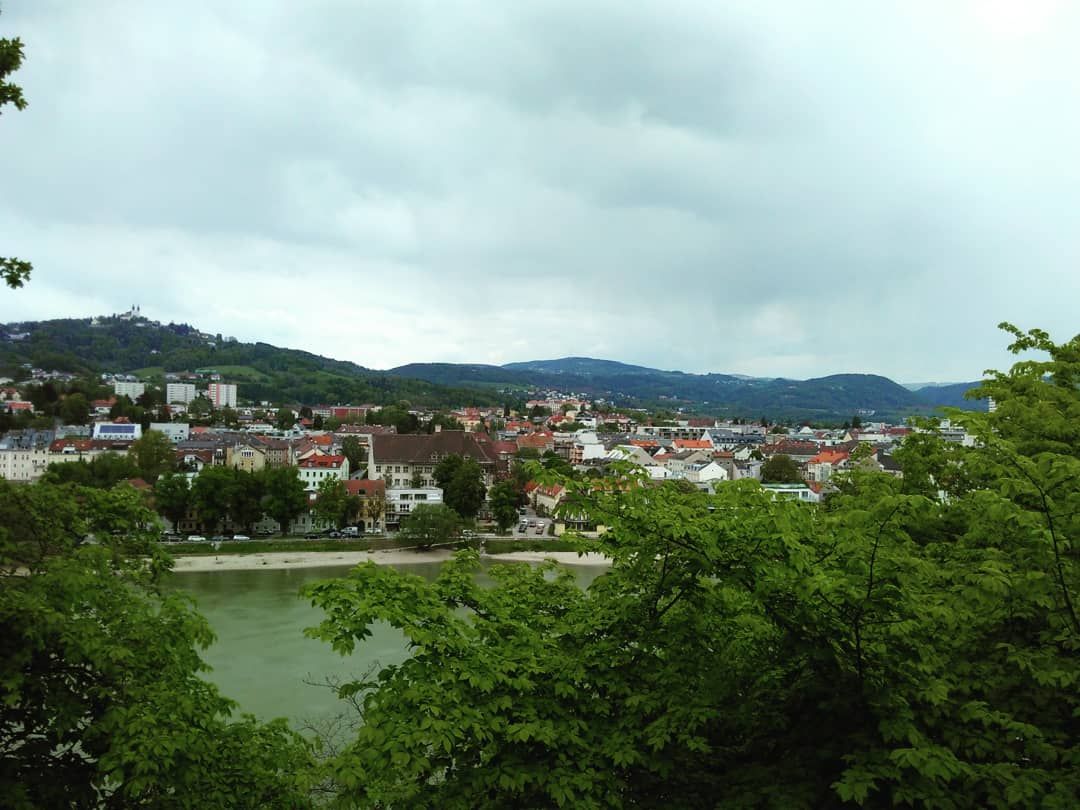
My name is Mark L. Miller and I am the founder of GreenMarked. As an MSc graduate in Environmental Sciences and Management, I am happy to spend time and energy on this environmental platform to coordinate our ongoing activities, design new green initiatives and turn successful projects into real jobs.
Immediately after watching this YouTube video two questions popped into my head.
Is our communication about environmental issues good enough?
How can we influence people more effectively?
Australia has been burning for months now. Those dramatic bushfires are an indirect cause of our #climatecrisis. If we are environmentalists but still feel apathic towards Australia, it means that communication was not great.
Is it really enough to tell people and politicians: “Hey! Move your butt, change your lifestyle, save Australia and the world?”
If you feel empathic towards Australia and its koalas, check out how you can help clicking on the following link
Così dice il famoso detto. Tutti sono coscienti che il cambiamento climatico sta diventando la priorità per le politiche future, ma con fatica, e con la paura di perdere voti, si sta cercando di ostacolare ogni possibile misura che aiuti l’ambiente. Coraggio, bisogna avere coraggio, niente di più. E così, in Italia, nelle ultime settimane, è arrivata nella scena politica il clamoroso dibattito sulla Plastic Tax. La Plastic Tax è la tassa sulla plastica monouso, una misura che esiste già in vari altri paesi europeicome la Francia e la Danimarca [1]. Oltre a cercare di ridurre l’uso di plastica nella vita quotidiana, e quindi di promuovere tipi di imballaggi più eco-friendly, la Plastic Tax permetterebbe di portare circa 3 miliardi nelle casse dello stato. Soldi che potrebbero essere utilizzati per incentivare la ricerca, la produzione di materiali biodegradabili e aiutare le aziende di settore ad ammortizzare il colpo [2]. Questa tassa recepirebbe la direttiva europea di questa primavera, che porta alla riduzione (e per alcuni prodotti all’eliminazione) della plastica monouso, con eccezion fatta per le siringhe. In più, la Plastic Tax incentiverebbe l’economia circolare, ridurrebbe la quantità di rifiuti e l’inquinamento, tutelando così l’ambiente.
Credo che la discussione politica sulla Plastic Tax sia stata ridicola [3]. Ancora più ridicola trovo la visione di certi politici, i quali perdono il coraggio per avere sicura la propria poltrona. Sì, coraggio; quello che ci vuole oggi per avere un mondo più green e più equo. Il coraggio di non fermarsi a previsioni economiche di breve termine, il coraggio di pensare alle generazioni future, ai giovani e al nostro pianeta. Quindi, tra dire e il fare c’è di mezzo il mare. Esatto, cari politici; prima di dire e metterci la bella faccia per far felice Greta (Fig.1), attivatemi! Noi giovani vogliamo solo questo: più coraggio.
Il clima sta cambiando, è innegabile. Gli eventi metereologici intensi sono sempre più frequenti: ad oggi ogni giornale e telegiornale parla dell’acqua alta a Venezia, delle esondazioni, frane e valanghe. C’è addirittura qualcuno che afferma, date le abbondanti nevicate, che l’aumento della temperatura globale non è realtà.
La realtà purtroppo è ben diversa, e lo vediamo anche sul nostro territorio. L’anno scorso abbiamo vissuto un evento drammatico in Trentino, la tempesta Vaia. Secondo le stime sono stati abbattuti 14 milioni di alberi (dato mai registrato in epoca recente in Italia), di cui almeno 4 in Trentino [1]. Le stime dei danni per il Trentino sono superiori ai 300 milioni di euro [2][3], dato che rafforza l’idea di quanto siano preziosi gli alberi, che fanno del nostro territorio la bellezza naturale che tutti ammirano,
Subito tutti si sono attivati, ripulendo boschi e sentieri con tante iniziative e buona volontà, anche se la burocrazia della PAT ha rallentato il processo di raccolta e smaltimento del legname [4].
Nonostante ciò, ci sono alcune decisioni politiche che non guardano in faccia la realtà climatica che stiamo vivendo. Sto parlando della realizzazione della nuova pista da sci in Paganella Jana Granda. Più di 90 000 m [5] di bosco andati persi per sempre, solo per permettere a pochi eletti di sciarci sopra, forse su neve artificiale visti gli inizi stagione passati (Fig.1). La montagna e i boschi dovrebbero essere un bene comune, invece in questo caso viene trattato come un prodotto qualsiasi, con cui possiamo fare ciò che più ci aggrada per portare più turisti e più indotto.
Fig. 1: Il tracciato della nuova pista da sci Jana Granda. Fonte: [5]
La Provincia di Trento attraverso Trentino Marketing, dopo la tempesta Vaia, ha creato un fondo chiamato Trentino Tree Agreement[6] “per ripristinare i boschi andati distrutti in seguito all’anomala ondata di maltempo di fine ottobre 2018”. Il fondo è aperto a tutti e raccoglie le donazioni volontarie di chi ha a cuore la natura e il ripopolamento dei nostri boschi.
La stessa Provincia, che da un lato cerca il nostro aiuto economico per ripristinare i boschi, dall’altro concede il disboscamento per puri scopi di lucro, senza tenere conto del contesto storico-ambientale che stiamo vivendo. Lo sfruttamento della montagna per il turismo di massa non è più accettabile e la politica provinciale dovrebbe essere in prima linea per cercare valide alternative per una trasformazione sostenibile del settore del turismo trentino.
Bolivia. Dopo le elezioni presidenziali, migliaia di boliviani arrabbiati hanno occupato le strade di La Paz per chiedere più democrazia al sempre più egemonico Evo Morales. Il presidente andino, artefice della nuova costituzione boliviana, dopo aver perso il referendum nel 2016 che gli garantiva il terzo mandato, è stato pubblicamente accusato dal popolo di brogli elettorali. Secondo la corte costituzionale la vittoria di Morales è data al primo turno senza un ballottaggio, contrariamente a ciò che è garantito dalla costituzione boliviana. È difficile stabilire chi ha ragione e chi ha torto ma la sete di potere di Morales sta andando oltre le indicazioni del principale testo legislativo nazionale,la volontà del popolo e il rispetto di Madre Natura [1].
La Bolivia non è né il Venezuela, né Cuba. #BoliviaSeRespeta.
Un rispetto che è scritto su carta ma non esiste nella pratica. Nero su bianco si scrive di proteggere le risorse naturali, nero su bianco si firma il via libera alla costruzione di mega opere per estrarre idrocarburi e minerali in luoghi inesplorati ed espandere l’area di coltivazione della coca [2]. Un paradosso che sta causando la contaminazione del suolo e delle acque in territori amazzonici abitati dalle popolazioni indigene [3].
Tpnisi, Bolivia. Il territorio indigeno e parco nazionale Isiboro Sécure è minacciato dalla costruzione di una nuova autostrada che potrà aiutare l’espansione della coltivazione di coca. (Fotografia: Martin Alipaz/EPA. Fonte: The Guardian [2])
Se ne è parlato anche nell’ultimissimo Sinodo della Chiesa cattolica per l’Amazzonia, terminato lo scorso 27 ottobre con la pubblicazione del documento finale. In sintesi, si richiedono quattro tipi di conversione: integrale, pastorale, culturale ed ecologica. Viene promossa l’ecologia integrale, evidenziata da papa Francesco nella sua Laudato sii,quale “unico cammino possibile per salvare la regione dall’estrattivismo predatorio, dallo spargimento di sangue innocente e dalla criminalizzazione dei difensori dell’Amazzonia”. Un’affermazione della Chiesa cattolica che più assomiglia ad una sacrosanta denuncia, peraltro enfatizzata dall’introduzione del “peccato ecologico”, ovvero il “peccato contro la Creazione”. Non solo concetti teologici ma anche proposte concrete. Il Sinodo, difatti, suggerisce la creazione di un fondo mondiale per le comunità amazzoniche, quale restituzione doverosa del debito che molti Paesi sviluppati hanno con l’Amazzonia, quale arma di contrattacco contro gli interessi economici di Stati e multinazionali, quale strumento di difesa del ben vivirdelle popolazioni indigene [4].
Il buen vivir è un’ideologia che letteralmente significa “il giusto modo di vivere”, inteso come una forma di coesistenza in diversità e in armonia con la natura al fine di raggiungere “the good way of living",. Un’idea controcorrente al consumismo e al capitalismo del mondo occidentale. In Equador e in Bolivia il buen vivirè stato inserito nella costituzione. Inoltre, dal 2009 la Bolivia considera il buen vivir come un principio guida nell’azione dello stato. Un’innovazione storica, altamente ecologica e democratica, ancora impensabile alla logica neoliberista dell’UE e totalmente in contrapposizione con l’attuale politica egemonica e sfruttatrice di Morales[5].
Some of you know that I’ve been to Brazil to work on my Master’s thesis. Here’s a brief research trip overview. Enjoy it!
RESEARCH EXPERIENCE
The first part of the research trip took place in Alto Paraiso (Goiás). For sure, it was the most adventurous time of the trip. Coming from Peru, after 10 days of interdisciplinary university excursion where everything was planned and organized for me, the start in Brazil was rough.
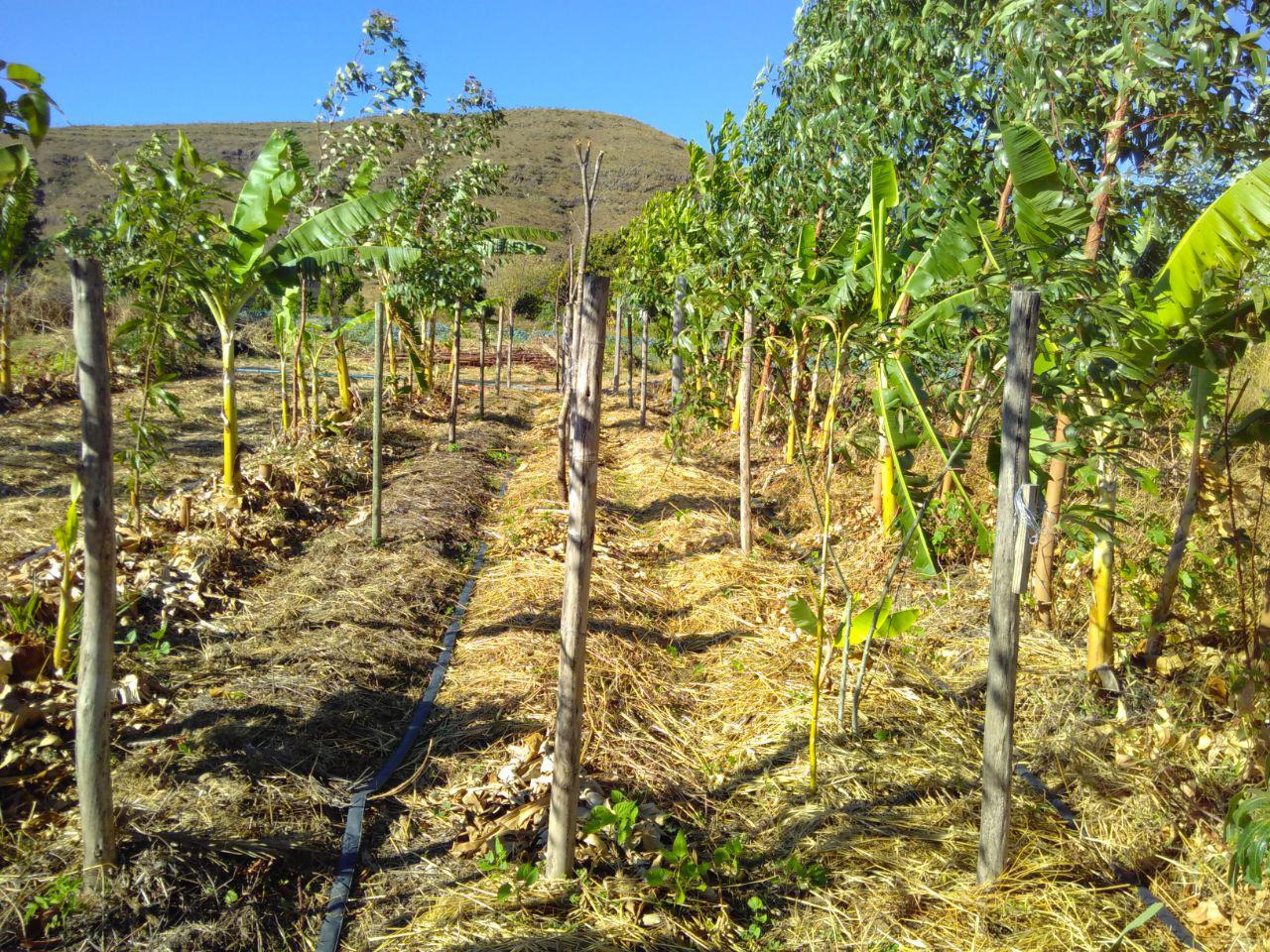
Nevertheless, I was able to interview 3 agroforestry farmers and get a deep insight into the life of an agroforestry farm: I stayed four nights at Sito Florestinha agroforestry farm. My contact, Dax, helped me out a lot and directed me to different places that could contribute to my thesis.
A “modulo” of Sito Florestinha agroforesty farm (Miller, 2019)
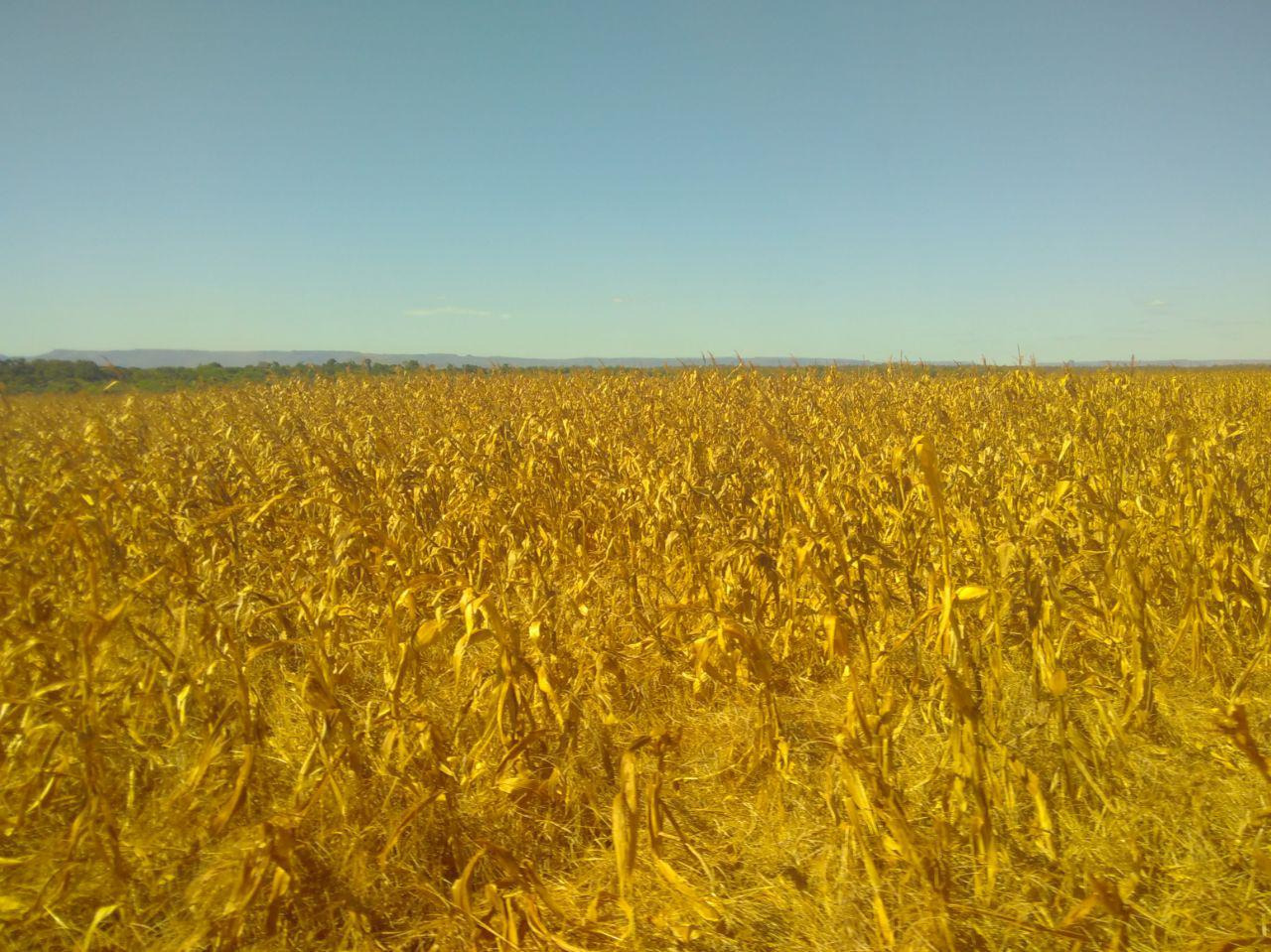
The second part of the trip in Porto Nacional (Tocantins) was the most productive. I had a backup team from COMSAUDE, a partner association of BRASA(my Brazilian partner institution), that helped me out in finding the right people to interview and the right places where to be. That week I had an information overload and interviewed 2 soy farm managers, 7 traditional family farmers and 4 farming institutions. I also managed to get in contact with the Federal University of Tocantins, attend a seminar on agrotox(alas pesticide) use in Tocantins and collaborate on some cerrado conservation projects of COMSAUDE.
A corn monoculture in Porto Nacional (Miller, 2019)
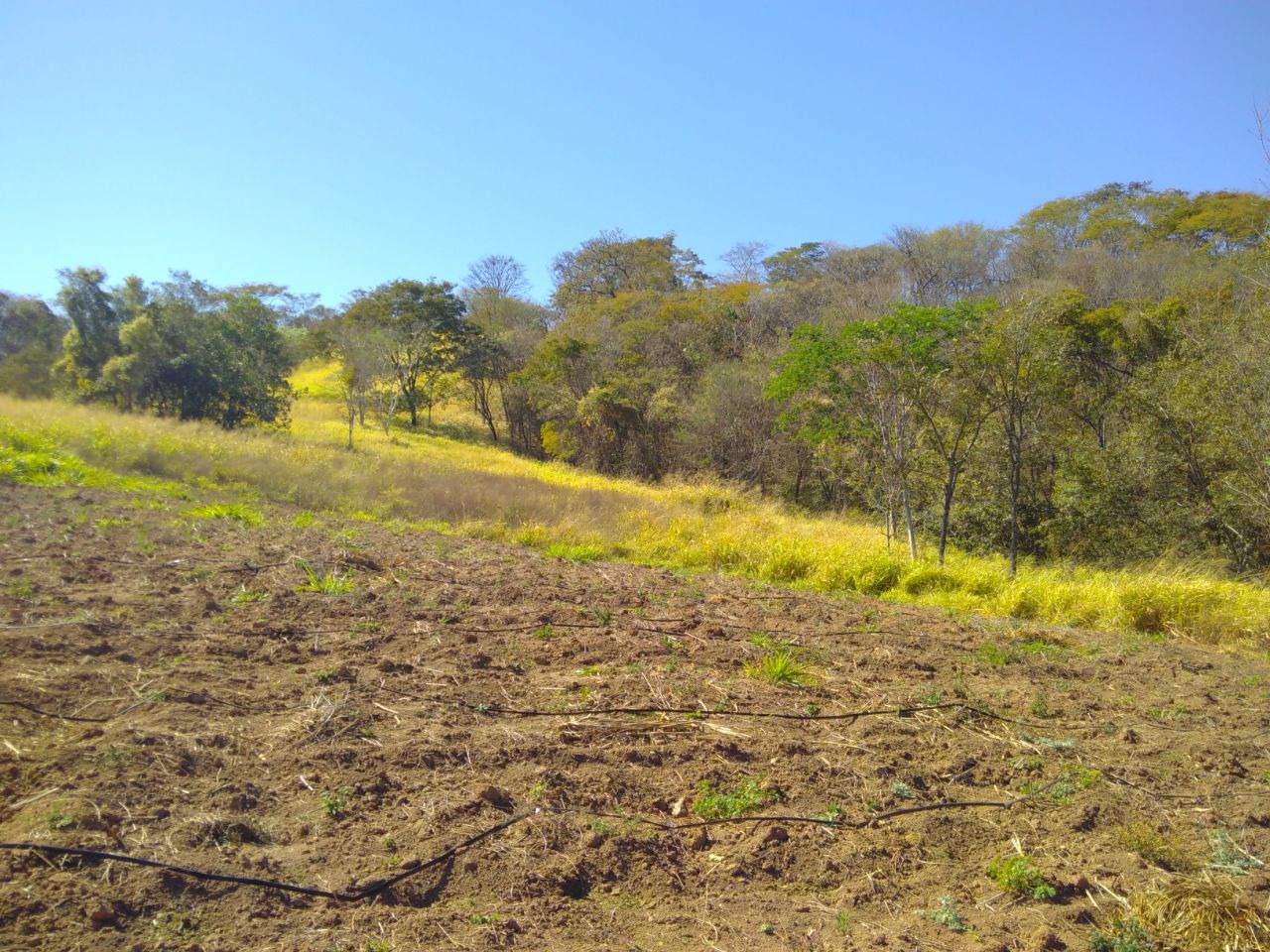
The third part of the trip was in Goiânia (Goiás). There, I found the right balance between research work and free time. I interviewed 1 agroecology family farm, 2 agroforestry farmers, 1 soy farm manager and 1 farming institution. I also visited the Federal University of Goiás, which carries out advanced research on ecology and agriculture. I engaged with with a lot of professors, PhD and Master students.
An agroecological family farm close to Goiânia (Miller, 2019)
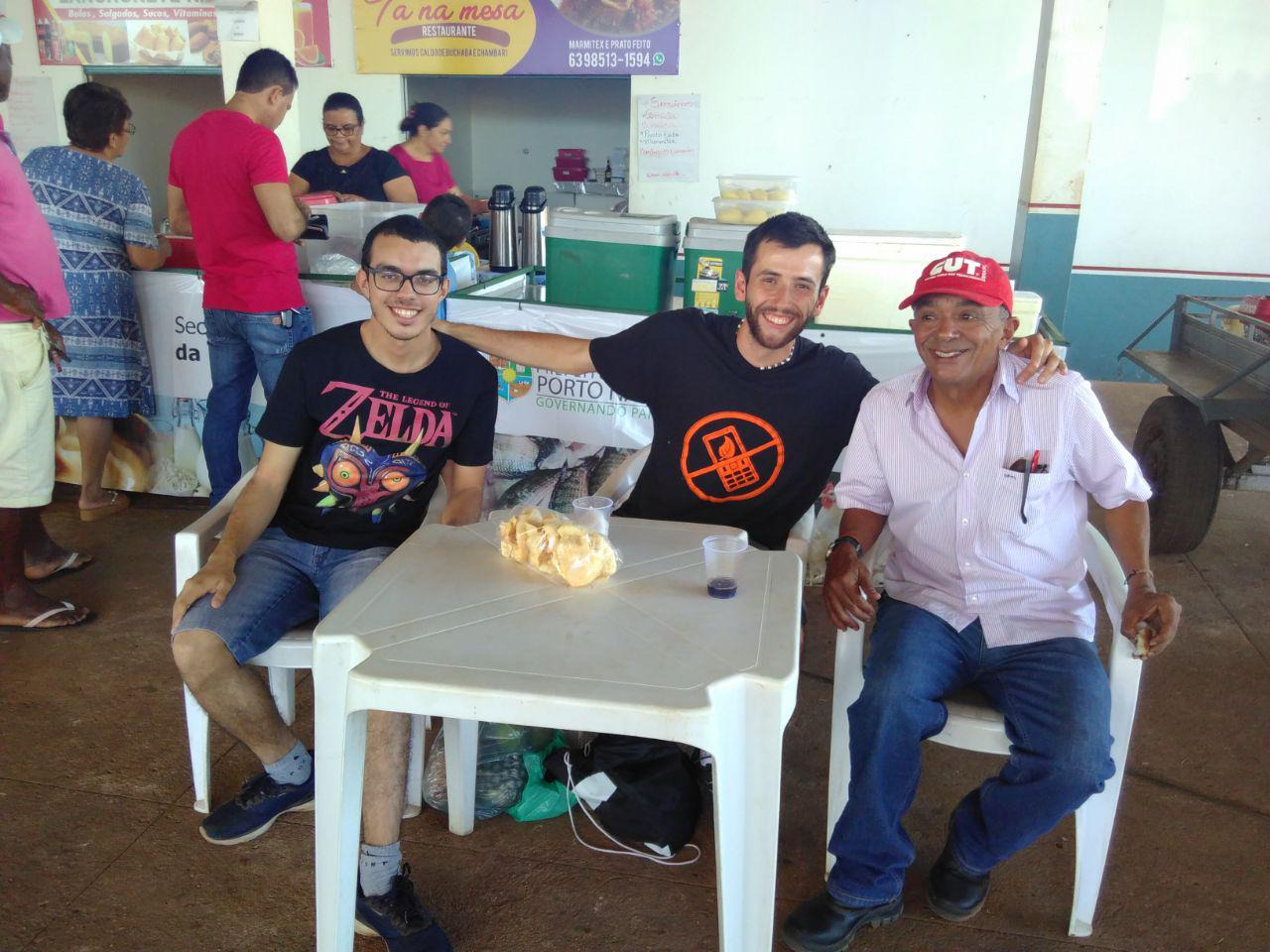
The amount of research data I was able to collect in a relative short time, was facilitated by the natural kindness and welcoming attitude of Brazilians. The help of locals and some basic knowledge of Portuguese were also keys factors of the success. Finally, to perform interviews and collect the data, I used investigation skills that I acquired from my intern at an environmental consultancy company in Milan.
Great interview helpers in Porto Nacional (Miller, 2019)
TRAVELING
Traveling was the ever-present element of the trip. I constantly had to move by plane, car, coach, city-bus, taxi and on foot.
When I first arrived to Brasilia, my luggage – containing my working clothes and the malaria pills – didn’t arrive. I had to stay in the expensive capital for five days and deal with lots of bureaucratic struggles with the airport offices. After buying some new clothes, a Brazilian phone and a sim card, registering to the Brazilian immigration office and renting a car, I left for Alto Paraiso without my luggage. The interviews to the agroforestry farmers were calling me and there was no more time to waste.
In that first adventurous part of the trip I had to deal with a great load of frustration, difficulties and uncertainties. In these moments, however, I found the best human solidarity and the most advanced ecological innovation in agroforestry farm communities.
When I did not get stuck in traffic or lost in cities, when I didn’t take wrong highway exits or miss buses, traveling around the Brazilian farmlands and the beautiful cerrado filled me with a great sense of freedom. Cruising around, working for the environment and enjoying stunning outdoor landscapes, compensated all the tiredness of the intense research work: I was doing what I really wanted to do for my thesis. I am thankful for having had that chance.
Stuck in the traffic of Brasilia on sunset (Miller, 2019)
LANDSCAPES
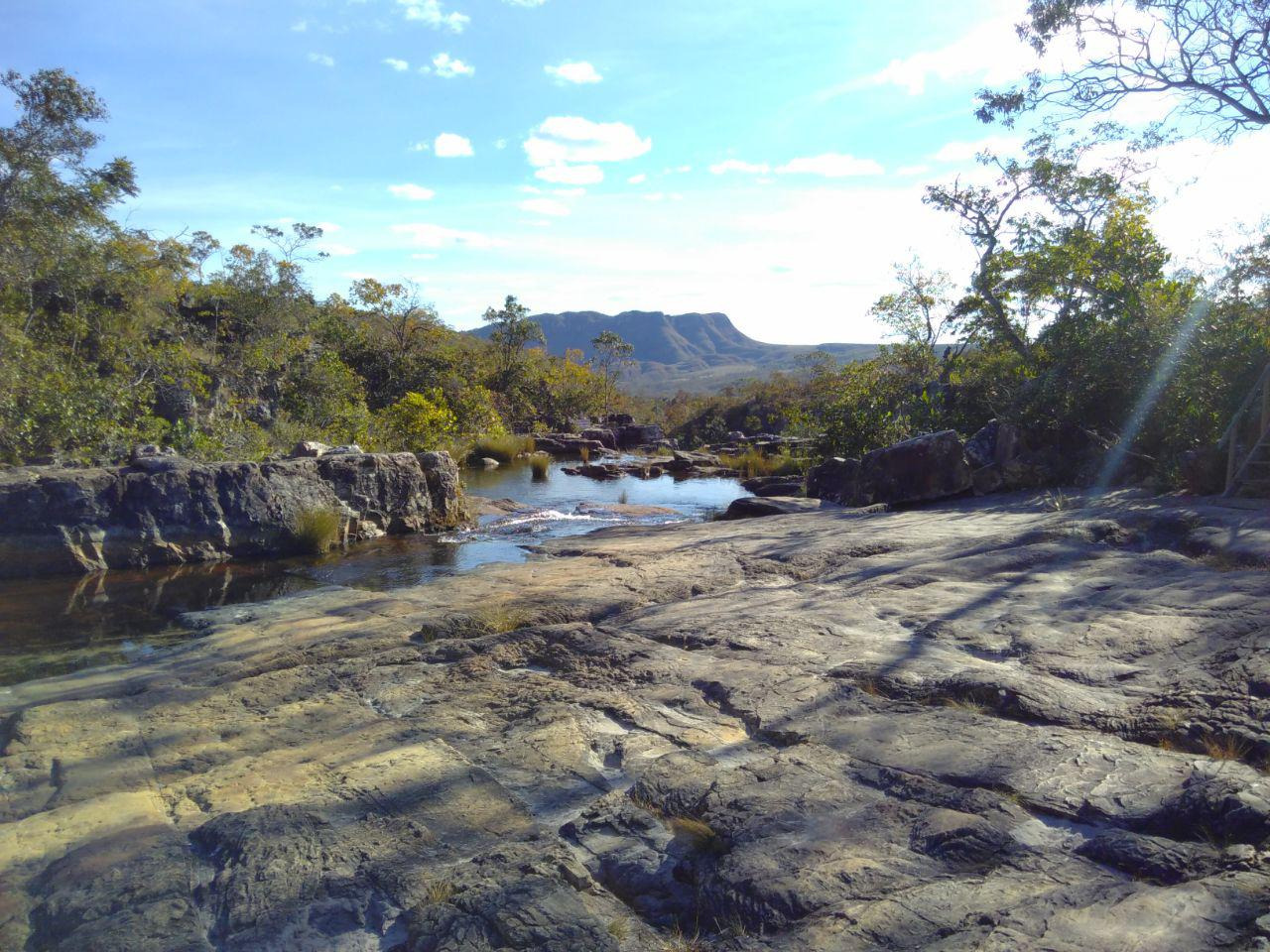
Thanks to the continuous traveling, I had the chance to see plenty different landscapes. From the over-controlled and disgustingly planned urban landscape of Brasilia to the astonishing Chapada de Veradeios nature reserve in Alto Paraiso. From the never-ending soy and corn monocultures in Porto Nacional to the pure and beautiful waterfalls of Taquarussu or Alto Paraiso. From the chaotic and urbanized city center of Goiâniato the relaxed farmlands in the outskirts and at the university campus.
All this helped me see the cerrado from different points of view and helped me grasp a general idea of what sustainable farming in such ecoregion could look like.
The cachoeiras of Vila Verde – Alto Paraíso (Miller, 2019)
PEOPLE
Besides the environmental diversity, Brazil is famous for its social diversity and sociability. The feeling that I got, is that Brazilians are welcoming,somewhat street-smart and explosive at times.
Agroforestry farmers have a strong community feeling and a sense of responsibility to change the current farming system, which is destroying the cerrado. Traditional family farmers aresound sellers and proud workers because they believe they are the ones feeding the city. They were also very kind and open to answer my research questions. Some of them feel a sense of community with the other family farmers, others don’t. Similarly, some of them have good ecological basics, others don’t. Finally, soy farm managers belong to a very different economic system and their status also affects their personality: they are more reserved but maintain the traditional Brazilian welcoming attitude.
The urban landscape of “Babilonia” – Goiânia (Miller, 2019)
SECURITY AND SAFETY
Many people warned me to be cautious in Brazil. In some places, security could be an issue. In fact, households fenced with electric or barbed wire and security cameras everywhere give you an unpleasant feeling of insecurity. So, I paid attention to my safety when I spent many hours on the streets or in remote farms. Actually, I never ran into dangerous situations and never had the feeling of being in danger. My only preoccupation was when I interviewed an important soy farm manager in his office.
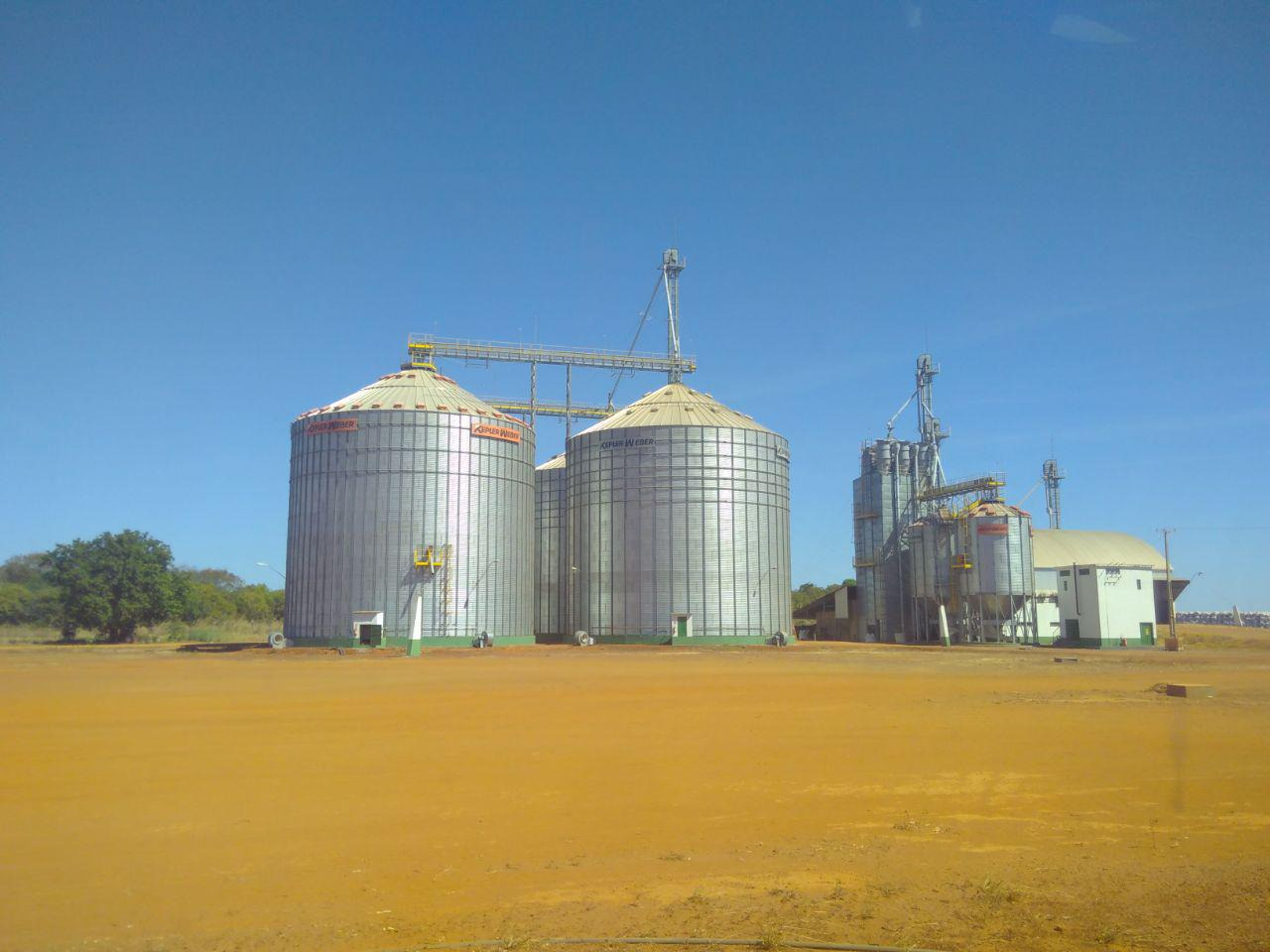
A soy farm storage plant in Porto Nacional (Miller, 2019)
CULTURE
During my little free time I had the opportunity to get to know more about the Brazilian culture.
First of all, the Brazilian cuisine. I am Italian and I am used to high food quality standards, but I think Brazilian food is delicious and I fell in love with the their fruit and their prato feitos.
Second, the language. Don’t even think to go to Brazil without knowing a little bit of Portuguese. In Goiânia, I met two PhD students from Check Republic looking for new university partnerships in Brazil. Assisting to their communication exchange with the Brazilian professors and PhDs was hilarious.
Third, poverty. Although Brazil is a developed country, there still is poverty and a huge gap between poor and rich people. It’s a modern type of poverty, in which people have decent livelihoods, can afford fancy watches and the latest smartphones, but can’t go to the hospital because it’s too expensive. In general, the welfare system is behind European standards.
Delicious typical street food in Goiânia (Miller, 2019)
OVERVIEW
My research trip to Brazil has been extraordinarily adventurous, highly productive and lifetime memorable. It was my first real research study and I am extremely happy that I started in such a fashion. I don’t think I could have carried out a research study on Brazilian sustainable farming if I hadn’t included a similar field trip. I would have probably got bored and stuck at the introduction. Instead, I am now passionately motivated to write a sound, scientifically decent manuscript that can honor my research experience and all the field work hours that I spent. A manuscript that can honor the ongoing sustainability battle, the people that helped me out in the research and that believe in a more sustainable world, and those that constantly live daily struggles to farm their family farm. I wish to find the right technical and stylistic words that can communicate all this effectively. I will commit to that even when I’m bored typing on the computer or preparing the references.
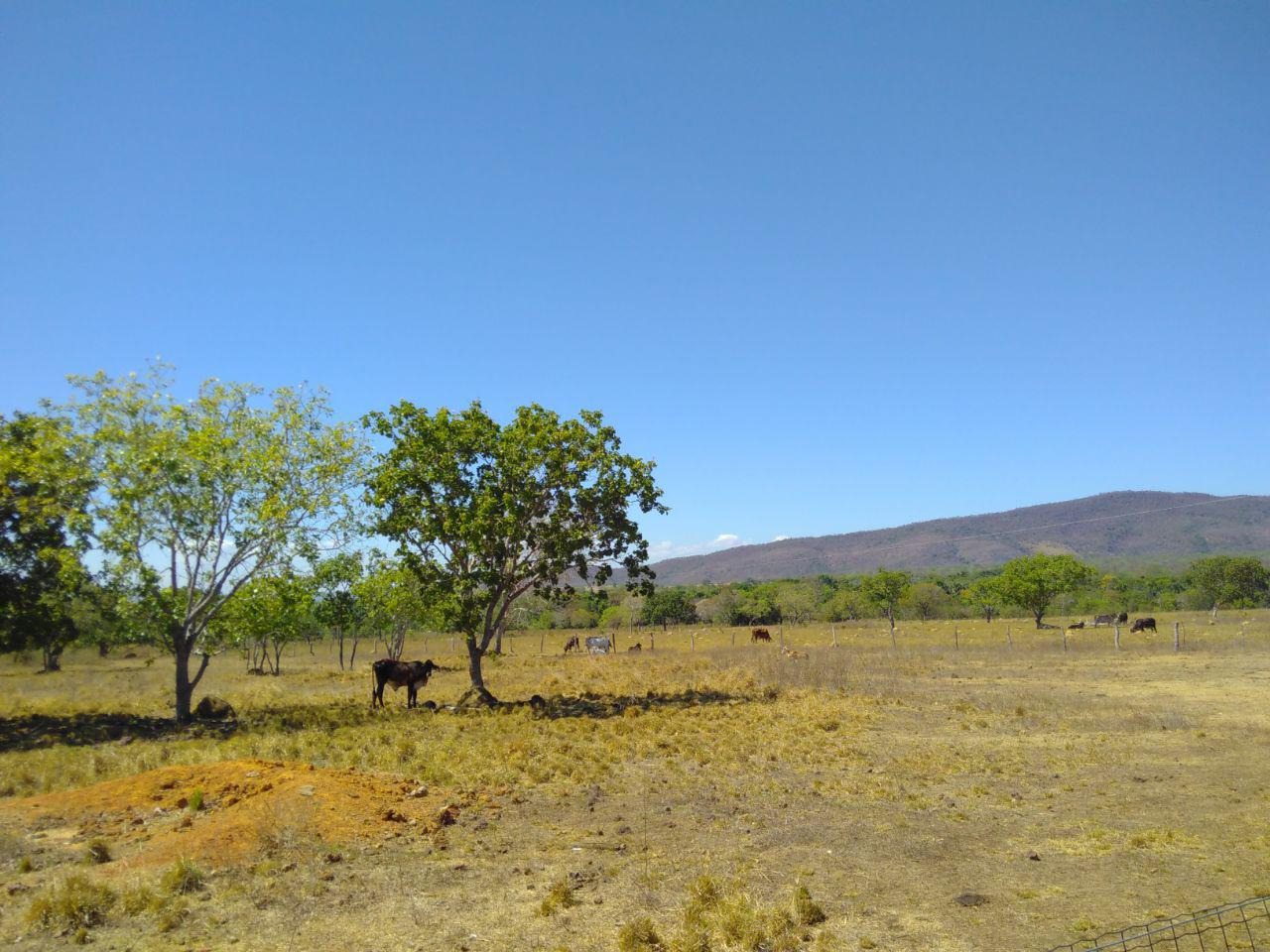
A traditional dairy family farm in Porto Nacional (Miller, 2019)
THE MOST SUSTAINABLE TYPE OF FARMING FOR THE BRAZILIAN CERRADO
Well this is something I am working on. I can’t tell you now
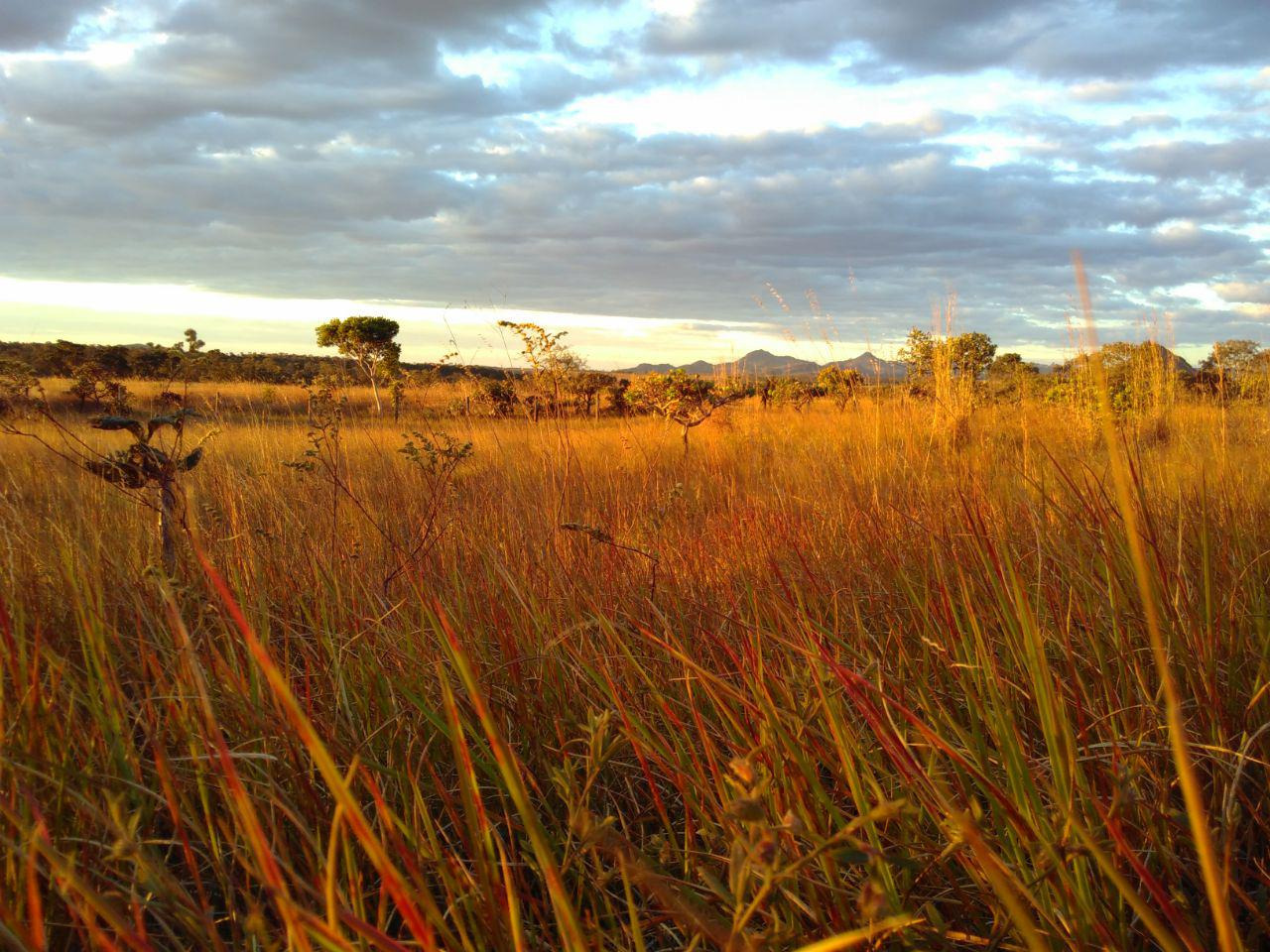
Landscape view of the beautiful cerrado: the Brazilian savannah ecoregion (Miller, 2019)
Our Amazon has already been hit by more than 72,000 forest fires this year. Nothing special in the Southern Hemisphere’s winter, but the increase of fires is dramatic: +85% compared to winter 2018.
While Bolsonaro claims without any evidence, that NGOs are to blame [1], many International governments say it is his fault. His weak consideration of the Amazon and the indigenous minorities living in it, encouraged farmers and miners to cut down and burn more trees. As a matter of fact, Bolsonaro thinks that the Amazon can be the new frontier for agricultural development.
The destruction of the Brazilian Amazonian rainforest is nothing to take superficially. It represents the lungs of our planet, and killing it may give a deadly kick to our attempts to contrast climate change.
But what can we do about it? In the end, we’re not Brazilians and the Amazon is on the other side of the Ocean.
Pray for the Amazon with your heart and your spirit. To pray, you can also use the hashtag #PrayForTheAmazon on Twitter.
Spread your disappointment and concern to your friends and colleagues. If the issue becomes of national interest, it may reach politicians and decision-making people of your country.
Ask your politicians to put market deals with Brazil into question (e.g. soy beans and beef steaks imports) and to stop financing the Brazilian government’s Amazon fund, like Norway and Germany did [2].
Set “Ecosia” has default search engine on your phone, computer and tablet. Ecosia is an environmental friendly search engine that plants tree every time you browse the web. In response to the Amazonian fires, Ecosia decided to plant 1M trees in the Atlantic rainforest [3]. They don’t accept donation but their partners do [4].
En el tempi turbolenti si vede se uno è davvero capace di rimanere saldo sulla propria nave, mantenere la sua rotta o sterzarla per non andare a picco.
Sono tempi turbolenti per la politica italiana. Come ambientalisti italiani, il nostro contributo alla politica italiana durante questa crisi di governo è l’appoggio all’iniziativa di Figli Costituenti per ecologizzare la costituzione [1].
Vi sono raccolte firme nei comuni di tutta Italia per raggiungere 50,000 firme entro quest’autunno. Il team GreenMarked sta organizzando le raccolte firme in Trentino e collabora a stretto contatto con gli amici “Costituenti” altoatesini [2].
Fai un salto presso il tuo comune per firmare la legge d’iniziativa popolare. Se ancora non si sono attivati, sollecitali e scrivici. Insieme li bombarderemo di mail per scrollarli di dosso il torpore di post-ferragosto.
Tempi difficili anche per noi di GreenMarked, che fatichiamo a gestire tutte le iniziative in corso (oltre al progetto “Ecologizziamo la Costituzione” siamo nella fase climax della preparazione al “Mountain Social Media Detox”) e mantenere la costanza settimanale degli articoli per il blog. Abbiamo bisogno di nuovi blogger! Gente appassionata di ambiente con una buona mano giornalistica. Gente competente e con buon senso critico, capace di scrivere articoli creativi, efficaci e concisi. Retribuzione di 10€ cada articolo tramite PayPal. Se sei interessato, manda un tweet ambientale di 140 caratteri a @info_greenmarked per essere selezionato.
Tempi amari invece per le compagnie aeree, costrette a contrastare o dare ascolto al movimento no-fly. “Flygskam” è la nuova parola svedese per descrivere la vergogna di aver volato. Qui sotto uno spunto di buona lettura ambientale:
“Flygskam” è quella che provo io tornando adesso da un viaggio di ricerca universitaria in Brasile. All’atmosfera poco importa di tutti i miei dati raccolti per capire quale tipo di agricoltura sia più sostenibile per il cerrado brasiliano (più info in un prossimo post) ma della quantità di CO2 che ho emesso spostandomi da una parte all’altra del mondo. Atmosfair, un sito per compensare emissioni CO2, può essere d’aiuto per riconciliare il proprio “flygskam”. Compensare i miei voli dal Brasile al Peru significa mettere una pezza al danno ambientale che ho causato e “ripulirmi la coscienza”. Non è un atteggiamento molto romantico ma è utile quando l’aereo è l’unico mezzo viabile.
Non la pensa così la nostra profetessa Greta, la quale sta attraversando l’Oceano Atlantico a vela per raggiungere le sue prossime conferenze negli Stati Uniti. Puoi seguire qui il suo viaggio. Un esempio per i migliaia di accademici che vanno di qua e di là per il mondo, accumulando punti sui programmi 1-milione-di-miglia. “Contribuire alla Scienza” non è una giustificazione sufficiente. Deve aumentare il livello di coerenza ambientale e per aumentarlo non basta che ognuno “faccia del proprio meglio”. Il celebre motto del movimento scoutisco deve essere accompagnato da una transizione ecologica dell’intero sistema socio-economico: il sistema deve creare un ambiente che incentivi e faciliti le scelte ecologiche delle singole persone. Per esempio, quanto sono incentivati gli aero-viaggiatori a non utilizzare plastiche mono-uso? Il futuro regolamento europeo sul divieto di plastiche mono-uso riuscirà a colpire le compagnie aeree operanti nel Vecchio Continente e le tratte internazionali con partenza o destinazione Europa?
1. Look at the abiotic elements
2. Analyze the biotic ones
3. Study the influence of humans
4. Enjoy the research experience, stick to your research plan and be ready to adapt it in case of unforeseen events, discover things unrelated to the research mission.
5. Have fun with the locals and your research mates. In the end, you’re not just a researcher but a beautiful human being.
Here a couple of photos of my extraordinary and lifetime-memorable university excursion in Peru.
Peruvian forests and their biggest threat: deforestation
Peru has a total area of 128.5M hectares divided in three main regions: a) the Coast region to the West; b) the Andean region in the center; c) the Amazon region to the East. It hosts 73.3M hectares of forests, of which 53.4M are of low jungle (selva baia) and 15.7M of high jungle (selva alta),which allow widespread forest activities. Indeed, 80.1% of the national area is covered by forests, while only 13.9% is covered by pastures and 5.9% by cultivated areas. Yet, forests contribution to the national GDP is very little (approx. 1.1%). That is because 70-90% of conceded forested areas are used by local populations for self-subsidence and because about 10M hectares of forested areas are used for illegal and untaxed activities [1] (MINAM, 2016).
The biggest threat of Peruvian forests is deforestation. Since 1995, deforestation rate has been around 100,000 ha/year in the Amazon region, which hosts 94% of the national forests, and has strongly hit the low jungle. Slash-and-burn farming, cattle farming and coca cultivation are the main reasons of deforestation, but the generic causes are deeper rooted in the Peruvian society. Poverty, overpopulation and migration in the Amazon are some of the social causes. Land use change, weak market regulation for the extraction of natural resources and the demand increase for industrial crops are some economic causes. Finally, a bad governance, including the incoherence of government [2], the lack of regional administrative bodies and poor institutional control and coordination is the third cause (MINAM, 2016). Meanwhile, the expansion of the global cocaine market, has increased Peru’s coca production, which raised from 43,900 hectares in 2016 to 49,900 hectares in 2017, and added additional pressure to Peruvian forests(United Nations, 2017).
In this scenario, agroforestry can be a potential solution to tackle deforestation, replace coca production and restore degraded land in Peru.
Agroforestry in Peru
There are multiple types of agroforestry systems in Peru and include 148 native species: 20 in the Coast region, 57 in the Andean region and 94 in the Amazon region. In the Amazon, most agroforestry species are used for timber, followed by food and multiple uses, agroecological service and medicine. In the Andes, most agroforestry species are used for multiple uses, followed by agroecological services, food, timber and medicine. In the Coast, most agroforestry species are used multiple uses, followed by agroecological services, food and medicine (Cherron-Macha et al. 2018).
Agroforestry systems in Peru
Multistrata, cacao and coffee are the most popular agroforestry systems in Peru.
A typical multistrata agroforestry system starts with a fast-growing and nitrogen-fixing fruit tree (Inga edulis) combined with other native fruit and timber trees. During the first years, the trees are intercropped with staple crops. In subsequent years, tree-growth hinders many staple crops, so shade-resistant crops, like pineapple, are planted (Lojka, 2016).
In cacao agroforestry systems, is first planted as understory shade tolerant tree in thinned natural forests. Later, cover crops can be incorporated in the system. Best practices for a proper cultivation include adjusting light infiltration and moisture availability and reducing weed competition (PUR Project, 2015).
In coffee agroforestry system, coffee cultivations are first established under the cover of Inga edulis. Coffee is sold and exported, while Inga edulisfruit and wood is harvested for either consumption or wood constructions. The system is generally two-layered but additional herbaceous or tree species (e.g. Ceroxylon echinulatum) can also be introduced to add biodiversity, provide fuelwood and protect the system from pests (Envolv-Vert, 2017).
A simple agroforestry farm in the Peruvian Andes. Photo taken by author (July 2019).
The environmental, social and economic benefits of agroforestry
All three types agroforestry systems provide several environmental, social and economic benefits. Cacao agroforestry systems largely benefit the soil quality. Depending on the soil microbial structure, the agroforestry management system and the selected cover crop, they improve soil structure and texture, soil fertility, soil organic matter, soil microbial biomass and soil pH. They can suppress pathogens and weeds, reduce leaching losses of nutrients, control erosion, decrease soil acidity and compaction, reduce fertilizers inputs and pests, improve water holding capacity and nutrient cycling (Buyer et al. 2017). On the other hand, it is still unclear if it truly enhances biodiversity. It depends on the density of the cover crops (Lojka, 2016). On the socio-economic side, cacao agroforestry systems can replace coca cultivations, enhance the resilience of production systems and producers’ families and generate higher incomes for the farmers. Coffee agroforestry systems reduce CO2 emissions of deforested areas, increase soil carbon stocks, which can be converted in carbon credits, thus attract Net Market Carbon investments. They also increase diversification of production and of potential revenue sources (e.g. FSC labelled timber, agricultural products). Following the abolition or minimal use of fertilizers and pesticides, coffee agroforestry system produce healthier food, provide education, and stimulate the engagement of local communities in environmental protection and forest management (Ferrari, 2018)
Agroforestry potential for ecosystem restoration
Agroforestry systems can restore land productivity of nutrient poor areas depleted by unsustainable agricultural practices and intensive exploitation of virgin forests. The first step is to install aggressive nitrogen-fixating species legumes (e.g. Makuna)or fruit trees (e.g. Inga edulis)to prepare the land for the future agroforestry system. At that point, full-sun or shadowed cacao or coffee agroforestry system can be installed. Alternatively, one can install an agroforestry system that includes a shadow component (e.g. banana or papaya), a main crop (e.g. cacao), a recovery crop (e.g. guava) and slow-growing timber species. In this case, not only land productivity is restored, but also nutrients and water are better retained in the soil, land is protected from erosion, carbon absorption is increased and the behavior of a real forest is mimicked (Ferrari, 2018).
Restoring forest connectivity is also possible through agroforestry, as they can function as ecological corridors between the remaining virgin forest patches. This can consequently benefit biodiversity.
Por último, agroforestry can nurse threatened Amazonian species, like mahogany. A recent study revealed that an Inga edulis-mahogany-pasturesystem is a good solution to fix nitrogen in depleted soil, restore degraded pastures and protect mahogany from predators (Fernandes et al. 2006).
Nevertheless, agroforestry solutions have issues to consider. Return on investment is slow, there are light, water, space and soil nutrients trade-offs between species to properly balance, restoration of pure stand agroforestry systems may not be possible in densely populated landscapes. One must therefore consider the option to install intercropping, bordering or clustered agroforestry systems (Erdmann, 2005). Yet, agroforestry systems are much more effective than fenced reforestations and can be considered extremely valid solutions to restore degraded ecosystems in Peru.
Family farms and agroforestry farms in the Peruvian Andes. Photo taken by author (July 2019).
REFERENCIAS:
Papers:
Buyer, J. et al. (2017). Soil microbial communities under cacao agroforestry and cover crop systems in Peru. Applied Soil Ecology. Science Direct. Vol. 120, 273-280.
Cerron-Macha, J. et al. (2018). Agroforestry species of Peru: annotated list and contribution to prioritization for genetic conservation. Working paper number 289. World Agroforestry Centre, Lima, Peru. DOI: http://dx.doi.org/10.5716/WP18029.PDF.
Erdmann, T. (2005). Agroforestry As a Tool for Restoring Forest Landscapes. Forest Restoration in Landscapes. Beyond Planting Trees (pp.274-284). DOI: 10.1007/0-387-29112-1_40.
Lojka, B. (2016). Multistrata agroforestry as an alternative to slash-and-burn farming in Peruvian Amazon.Agroforestry Research Developments, Chapter: 13, pp.383-398. ISBN-978-1-63485-094-0.
Fernandes, E. et al. (2006). Restoring Productivity to Degraded Pasture Lands in the Amazon through Agroforestry Practices. Biological Approaches to Sustainable Soil Systems. DOI: 10.1201/9781420017113.ch21.
Per far fronte al cambiamento climatico che, oltre ad avere serie conseguenze sulla salute e sulla vita di ognuno di noi, ha effetti IRREVERSIBILI sul nostro pianeta (migrazioni forzate e significative perdite economiche), un gruppo di studiosi, scienziati e politici, principalmente sostenitori del partito democratico americano, hanno scritto il "Green New Deal",[1]. Ispirato dal New Deal che portò gli Stati Uniti fuori dalla crisi economica del ‘29, questo piano prevede misure per modificare e migliorare radicalmente l’economia e la società americana, attuando politiche economiche che cercano di ridurre al minimo le emissioni di CO2. Considerato come il “First Step”, il Green New Deal cerca di proporre un nuovo modello economico e sociale più sostenibile e a impatto zero per il nostro ambiente.
Guarda il video [2] per scoprire di più su come il cambiamento climatico non è un problema ma solo una grande opportunità per migliorare le nostre vite!
The slogan of GROM, a popular Italian ice-cream chain focused on sustainability and tradition, is the title of this week’s post.
Perfection is not a value of nature. Imperfection is. Just like GROM we strive to achieve the highest quality, but we also embrace imperfection. So, if our traditional Friday post came two days later, it means that we are being coherent to Mother Nature’s imperfection. We are pretty sure Greta would agree.
As a matter of fact, living in a sustainable way is anything but perfect. Environmental actions and solutions are usually complex, inconvenient and easily criticized.
Some people that temporarily quit eating meat for environmental reasons are often questioned with stuff like: “Do you know that your temporary absence at the supermarket’s meat compartment will not change the meat industry?”. Or also: “Do you know that meat consumption is not a big deal? Industry crops for biofuels are much worse. They’re famishing South American populations!”.
Some other people that decide to keep their car in the garage and travel by train to reduce CO2 emissions get laughed about with stuff like: “Do you know that your CO2 reduction is compensated by the CO2 generated by the coffees you drink?”.
These conversations cannot be avoided. Critical thinking is a virtue of mankind that helps evolution and makes environmentalists think twice about their actions. Actually, it makes them stronger. Yet, most of the time these conversations are anything but constructive because they discourage those who are not environmental geeks but try to live more sustainably. These people need support. Environmentalists, environmental scientists and managers should give a couple of guidelines to make sustainable living easier. And we are not talking about scientific papers.
A generic guideline is coherence. For example, one should live sustainably during and after workhours. One should not forget about the environment once the workday is over. If you work as a train driver, you should try to travel by train when you go on holiday and incentive your kids to use it, instead of driving them to school.
Staying local is another guideline. Is it more sustainable to eat a freshly caught local trout or a box of pesticide-full Brazilian soy?
A third guideline is seasonality. Is it better to consume a pack of seasonal raspberries or a kilo of last-year Gala apples, which have been stored for ten months in energy draining cold storage warehouses?
Of course, these cannot be the only guidelines. Once again, environmental solutions are complex. That’s why we need more help from knowledgeable friends, expert, standardized labels (e.g. EU or BIOLAND organic logo), accreditation (e.g. Natura2000 or UNESCO site) and assessment (e.g. Life Cycle Assessments).
yes
Alba, Piedmont (Italy). Can you see here the nice balance between vineyards, nut plantations, forest patches and urban centers? It is hard for an untrained eye, but you can count on the UNESCO. This marvelous cultural landscape has been recognized by the UNESCO as World Heritage
Notwithstanding the guidelines and the support from “helpers”, criticisms will still find an unprotected nerve. One of the most common criticism is that your contribution to sustainability is insignificant. If your contribution, however, is successful, many other contributions will come too. That’s a normal social dynamics pattern. When the overall contribution is sufficiently significant, it will reach the policy and decision-making level, which is the key level to truly affect processes and habits in favor of a more sustainable life. Check this nice articleto know more about it [1].
So all in all, let’s keep on striving for a more sustainable life, because our personal contributions do make a difference. If it makes you feel better and keeps you on track, strive for a perfect sustainable life, but accept and embrace imperfection also.
In ancient times, sailors did not have maps that directed their journey. They used the moon instead and aimed to the Polar Star. Of course, they never reached it but it brought them to their destination.
Greta continua con i suoi avvertimenti profetici in giro per l’Europa. Questa settimana, a Vienna, ha rimproverato tutti gli ipocriti ambientalisti. Quei politici e decision makers che cavalcano “l’onda verde” e contemporaneamente rilasciano concessioni per aprire nuove autostrade o nuovi aeroporti.
Discorso integrale di Greta all’Austrian World Summit svolto a Vienna il 29 maggio
Sicuramente “l’onda verde” ha colpito l’Europa durante queste ultime elezioni. Germania, Francia, Belgio, Paesi Bassi, Irlanda e Regno Unito hanno registrato incrementi significativi [1]. L’Italia è ancora sotto il 3%. L’ambiente, per fortuna, non è un tema monopartitico [2] ma sicuramente chi vota Verdi dà il proprio voto a un partito che mette l’ambiente come tematica prioritaria. Credo che tra 5 anni “l’onda verde” sarà ancora più grossa e molti partiti priorizzeranno la causa ambientale tra i loro obbiettivi strategici. Il momentum del mondo, che ora è spostato sulla consolidazione e la sicurezza delle nazioni, “sotto attacco” dai flussi migratori, verrà ridirizionato dalla crisi ecologica. Di quanto? Lo sapremo tra 5 anni.
Intanto di crisi ecologica ne abbiamo parlato ai due incontri di catechesi ecologica a Mezzocorona. In tutto eravamo 19. Nessun numero da capogiro ma un numero sufficiente per creare un’atmosfera partecipativa e densa di significato.
“Così come rompere le relazione con Dio, gli altri e sé stessi è peccato, anche romperla con il Creato lo è“, “Attualmente la tecnica domina l’economia, l’ambiente e l’uomo”, “La spiritualità ecologica deve percolare fino alle basi della società”. Queste sono alcune frasi dei due incontri che mi porto a casa.
Un’ultima frase, anzi un’ultima odeviene da una piccola Greta di Mezzocorona.
Today’s calls for better climate change policies and actions have been roaring around the globe and have already reached 136 countries. I am happy to have given my contribution to the strike by speaking in Mezzocorona about the new friendship between the environmental movements and the Catholic Church. A friendship that started in 2015, when Pope Francis published the Laudato Si’ enciclica, and continued on April 17, when he met Greta Thunberg in Rome.
These days, the environmental crises is not only discussed in the Laudato Si’ or at the 2nd Global Climate Strike but also in the EU election campaigns. These elections are not only about immigrants. The EU has been one of the greatest leaders and pioneers to set new environmental protection laws and conservation goals. Think about how limited the impact of our environmental measures would be, if they were restricted to our environmental measures would be, if they were restricted to our national borders. How effective would national river pollution measures be, if a river passed through five or six different EU states? And take the EU Water Framework into account. It’s an outstanding achievement that was obtained only thanks to the EU. For me, the EU is the most powerful institutionalized protector of the environment. For me, the EU means that no matter if I’m in Veneto, Trentino, Tyrol or Upper Austria, there will always be some basic environmental protection laws that guarantee my right to have a clean and livable environment.
This week, a blasting UN Report Assessment yelled out that over 1M species are at risk of extinction, but was outshone by the birth of the new royal baby in the UK
We care about kids but we also tremendously care about the survival of animal and plant species. Anyway, we’re glad that the Guardian understood the relevance of such assessment.
It’s worth noting that the assessment reflects on the current conservation strategies, such as the creation of protected areas. [They are] “well-intended but inadequate”.
Instead, [it’s more important to focus on] “a shift in incentives, investments in green infrastructure, accounting for nature deterioration in international trade, addressing population growth and unequal levels of consumption, greater cooperation across sectors, new environmental laws and stronger enforcement”.
So, putting nature in front of everything doesn’t work. We need a more solid and well-integrated ecological culture and society. Religion is not excluded, and that brings us to the next GreenMarked event. Two meetings of ecological catechesis were two environmental scientists, a priest and the community of Mezzocorona discuss about environmentalism in the Bible based on the encyclical Laudato Sii of Pope Francis.
Contact us and swing by on May 24 and 29 if you’re interested
Greta’s amazing campaign for better policies against climate change has led to some first practical results.
First, the Exctinction Rebellion bursted out in London, then, a Commons motion that declares environment and climate change emergency was passed by UK’s parliament.
This is the power of a well developed environmental #activism.
We want to stick to the same type of activism to face another environmental problem: #waste.
Here’s our petition for better waste separation and recycling in Austrian student dormitories. If you want, sign it and send it back to us.
Text of the petition
Most of our daily household waste can be recycled. Our paper, plastic, glass and metal waste are valuable resources that can be reused to create new materials. All EU countries have learned to recycle waste and reuse its valuable resources. Austria itself recycles more than 1M tons of packaging and waste paper per year. That’s about 90% of the overall packaging waste (ARA, 2018). Such a high recycling rate is only possible thanks to a proper household waste separation.
The packaging recycling rate of student dorms is clearly below the national average. Is this because students don’t care about recycling or because the waste separation system is inefficient? Why are Home4students dorms in Innsbruck separating paper, plastic, glass and metal waste so badly? Why are there only organic and unrecyclable waste bins in our dorms’ kitchens? Wouldn’t it be better to also have paper, plastic, metal and glass bins?
If you are in favor of a better waste separation system in your kitchen dorm, which allows you to separate paper, plastic, glass and metal properly, sign the petition. You can also sign it if you don’t live in a student dorm but you want to support the petition. If you are not in favor or you have better ideas to improve waste separation in student dorms’ kitchen drop a comment.
I personally believe that if the system gives us students easy ways to separate waste, we will do it.
The value of a mountain community is not restricted to its economic resources. Besides the so-called “financial capital”, there are plenty other capitals that we can and should consider when assessing a #mountain #community. Sin embargo, la Community Capital Framework explains it very well: there’s the financial capital, the physical capital, natural capital, human capital, social capital, political capital and cultural capital. We picked this last one to evaluate one social group in the mountain community of Upper Vinschgau (Italy): apple growers. We already talked about the incredible Mals and its “Wunder” (the pesticide-ban referendum in 2014). No wonder we’re now interested in doing more research on those people that were mostly affected by the ban. What’s the culture of apple growers in Mals – Upper Vinschgau? What kind of farming practices have they embodied? What is there degree of education? Do they manifest they’re culture through objects or events related to apples? Read our report if you are interested in apple farming culture, landgrabbing and landscape perception.
About 35% of the world’s crop production and 87% of the world’s leading crop production is dependent on pollinators. That is worth between US$235 billion and US$577 billion (FAO, 2015).
Nobody reasonable would want a decrease of pollinators.
Yet, a long-term study on honeybees and beekeepers showed that the size of honeybee colonies and the number of beekeepers has decreased in most of EU countries between 1985 and 2005 (Figura 1).
The exact causes of pollinating insects decline are still unknown, but they are linked to 1) Habitat loss, fragmentation and modification; 2) Landscape Diversity; 3) Farming and grazing practices; 4) Pesticides; 5) Introduced species; 6) Urban development; 7) Fires; 8) Climate change. Surely, the decline may also be an effect of multiple causes.
While habitat loss, resulting in less food and shelter for pollinating insects, seems to be accepted as the most important cause of decline, there is still a lot of lack of knowledge about the impact degree of the other causes. For example, it is difficult to quantify how the diversity and floral resources of a landscape affect the distribution and diversity of pollinating insects (Nicholls & Altieri, 2012; Potts, 2010). Furthermore, pesticides, and especially neonicotinoids, harm the health of pollinating insects at unknown degree (Hadlik et al. 2016). New studies, however, revealed that invasive species can spread viruses and diseases that affect bees (Briggs, 2018) and climate change can alter the behavior of bees and other pollinating insects (Morris, 2018; Fessenden, 2015).
For mountain areas, climate change definitely plays an important role.
Figure 1 — Honeybee colonies and beekeepers decline from 1965 to 2005 (Potts et al. 2010).
Climate change threats mountain bee species
A two-year-study of the North Carolina State University investigated on the link the between climate change and pollinating insects decline. That is, the adaptation of the blueberry Mason bee,a native solitary bee in Western US and Northern Mexico and primary pollinator of wild manzanita shrubs, to a different phenology (i.e. earlier snow melt and flower blooming).
To conduct the experiment, three types of nesting environments in Arizona’s Santa Catalina Mountains were set up and temperatures of the nests were manipulated to simulate past, present and future climates .
One third of the nests were painted black to absorb more radiant heat, thus simulating a future climate predicted for the years 2040 to 2099, one third was painted with a white, reflective, cooling treatment to simulate climate in the 1950s, one third was painted with a transparent paint and represented the control nest.
The experiment included 90 nests total, each housing between 2 and 15 bees, and was run twice during two consecutive seasons.
Results revealed that during the 2013–2014 season, 163 bees emerged from 32 nests, amounting to 58, 54 and 21 bees from the control, cooling and warming treatments, respectively. During the 2014–2015 season, 131 bees emerged from 55 nests, amounting to 71, 79 and 13 bees from the control, cooling and warming treatments, respectively. This implies that 35% of the native blueberry Mason bee in nests predicting future climates died in the first year and 70% in the second year (Figura 2).
Figure 2 – Mortality of the Mason bee in three temperature treatments from 2013–2014 and 2014–2015. Bars represent the mean proportion of dead bees per nest for each treatment. Asterisks represent significant differences at p < 0.05, and “ns” no statistical difference (CaraDonna et al. 2018).
During the two years study bees experienced the altered environments from larval development, through metamorphosis and adult diapause. Bees in nests simulating past and current climates woke up from diapause and emerged after 10–15 days in February, which is normal. Bees in nests simulating future climates underwent multiple disturbing changes. Their mortality rates were remarkably high, and they emerged from diapause after 50 days (Figure 3).
Figure 3 – Adult emergence phenology for Mason bee males and females in three temperature treatment in 2013–2014 and 2014–2015 (CaraDonna et al. 2018).
Furthermore, bees in nests simulating future climates emerged with smaller bodies and lower body fat content (Figure 5). This did not depend on the bee sex.
Climate change contributes to the decline of bumblebees in mountain areas
While Arizona’s Mason bees have the possibility to move further up the mountains, some other pollinators will encounter more restrictions when moving to higher elevations or to northern areas in search for cooler climates (Kerr, 2015). Looking at American and European bumblebees, they are shifting the southern limit of their ranges towards north by as much as 300 km in some cases. However, the northern limits of the bumblebee ranges fail to extend to more northern into territories that are now habitable for them due to climate change. This leads to an overall range and habitat contraction.
The effects of habitat contraction and loss due to climate change is even more pronounced for native mountain pollinating insects. Besides suffering from the loss of plants from which they gather nectar and pollen, they may be trapped without a place to go as their habitat becomes warmer (USGS, 2018).
A long-term study in the pristine Rocky Mountains of Colorado revealed a 50% bumblebee decline after 17-years of monitoring. For nearly two decades, researchers compared the fruiting rate of glacier lilies that were artificially pollinated by hand and those that were left to be pollinated naturally by bumblebee. Over time, the fruiting rate of the naturally pollinated plants declined relative to the hand-pollinated plants. The cause may be related to climate change: glacier lilies bloom earlier in spring (up to a month earlier than in 1995) but maintain their overall growing season of three months. This forces bumblebees to break out from their diapause and visit flowers earlier. Apparently, this anticipation is not so straightforward since the decline of naturally pollinated lilies is remarkable. Either bumblebees have yet not adapted their diapause to the earlier blooming or have but cannot visit flowers at high frequency due to the harsher weather in early spring (Thomson, 2010). In either case the decline is statistically significant and has no correlation with pesticides, habitat loss or intensive farming practices. This proves that climate change, especially in mountain areas, notably contributes to pollinating insects’ decline.
CaraDonna, P.J. et al. (2018). Experimental warming in the field delays phenology and reduces body mass, fat content and survival: Implications for the persistence of a pollinator under climate change. Funct Ecol. 2018; 00:1–12.
Food and Agriculture Organization of the United Nations. (2018). The importance of bees and other pollinators for food and agriculture. [online] Available at: http://www.fao.org/3/I9527EN/i9527en.PDF (Accessed 2019.03.03).
Nicholls, C.I. and Altieri, M.A. (2012). Plant biodiversity enhances bees and other insect pollinators in agroecosystems. A review. Agronomy for Sustainable Development 33 (2): 257–274.
GreenMarked is an NGO that promotes sustainable living. But does it have what it takes to achieve its objectives? Is there a receipt that should be followed to leave a mark?
Let’s start saying one thing: NGOs can and do play a key role in promoting sustainable living, as they are able to successfully tackle social and environmental issues by providing critical goods and services. NGOs do not only advocate for environmental justice; they are also able to collect information, implement policies, co-operate with policymakers, and assess and monitor environmental protection and sustainable development. In other words, they are unique actors that allow constructive participation of the civil society in global environmental governance.
That said, let’s now pay attention to the factors and conditions that influence environmental NGOs’ work and make them achieve their objectives. Are there conditions under which NGOs generally thrive? For example, do big NGOs perform better than small ones?
Predictably, the possible factors are several. Nonetheless, after looking at the literature, possible conditions are the dimension of the NGO, the presence of connections with the government, being engaged with the local community, and co-operating with other NGOs.
Clearly, it would also be interesting to see whether a combination these factors is required for the NGO to succeed: for example, NGOs not only may need a connection with the government, but they may also need to be big in size.
To test these conditions, we could look at the LIFE Program. The LIFE program is an essential instrument used by the EU to protect the environment and promote sustainable development. NGOs that participate in this scheme aim to contribute to the implementation, updating, and development of the EU’s environmental and climate policy. NGOs elaborate a project, apply for EU funds, and if this proposal is coherent with EU’s mission, they get up the money to achieve their objectives. There’s plenty of documents and reports related to this program – it’s great for this investigation.
Let’s look at the already completed projects, then: which ones achieved the objectives they had set?
Interestingly, NGOs with similar characteristics didn’t perform in the same way: some of them failed, while other succeeded. In other words, there is no combination of conditions able to explain either the positive or the negative performance of the NGOs. Indeed, no condition seems to be necessary, sufficient, or a combination of the two. Why?
One possible explanation is that the relations NGOs have with the conditions is what they make of them. The same relationship can be fruitful or dangerous; different context can make the same action problematic or easy to implement. For example, working alone can be great for some NGOs, as the work is streamlined and focused; but if there are sudden problems, maybe having a stable partner to rely on is not a bad idea. Similarly, co-operating with the governments may be great for certain projects; but if the obstacles set by them are too burdensome, it’s a problem for the NGO.
To conclude, a “silver bullet” able to improve the work of NGOs in the environmental field does not exist. This means that there is no “perfect combination” of conditions that can or should be adopted by GreenMarked. To achieve its objective, it must find its own way.
This article is an extract of the paper “Always look at the bright side of LIFE”, Tosoni, J., (2018) (Unpublished Master’s dissertation). KU Leuven, Belgium.
On the 14, of December the COP24, the United Nation Convention on Climate Change has come to an end. The big news – or no-news, as it came as a surprise to nobody – is the decision of US representatives not to promote sustainable energy resources, focusing instead on coal. The commitment to invest in coal mines has been described by officials as a necessary, pragmatic move to fight climate change. It should be kept in mind that this is the explanation provided only in international fora: internally, the US administration has always framed it as a way to protect US jobs. After all, President Trump doesn’t believe in climate change, despite the numerous reports provided by numerous panels – even from the US. From this point of view, it would be interesting to understand his administration’s position on nuclear power – a lobby group quite present and vocal in the past COPs.
But what about the rest of the world?
The bright side is that China seems to be willing to insist on renewable energy. The country has invested a significant amount of money in R&D, and it aims to gain a technological lead and create new jobs. Predictably, Europa is still a driving force in the promotion of environmental policies. We are getting close to the 2020 deadline, and the Continent seems on the right track to meet many of its objectives. Still, many environmental threats, such as the emission of pollutants, need to be addressed.
On the other hand, developing countries still face the challenges they have always faced: to achieve growth without jeopardizing the environment by relying on unsustainable development. The Paris Agreement had promised to find a solution to the matter: unfortunately, the system designed to do so is now politically and economically crippled by the absence of the US. In this sense, the COP24 has been relatively useful for planning new methods and strategies, but the results are only mixed. Besides, a few countries, such as Russia and many oil exporters, have decided not to support the conclusions and the objectives set by the COP24.
All in all, this year’s COP has not been very consequential; but, again, this had to be expected. More than ever, there is a profound divide between the US and the rest of the world. Unfortunately, it seems safe to assume that no big advancements in the fight against climate change can be achieved in the near future. The environment is a common good, and much is at stake: unless all the parties work together, the new policies will always be limited in scope.
Non uccidete il mare,
la libellula, il vento.
Non soffocate il lamento
(il canto!) del lamantino.
Il galagone, il pino:
anche di questo è fatto
l’uomo. E chi per profitto vile
fulmina un pesce, un fiume,
non fatelo cavaliere
del lavoro. L’amore
finisce dove finisce l’erba
e l’acqua muore. Dove
sparendo la foresta
e l’aria verde, chi resta
sospira nel sempre più vasto
paese guasto: Come
potrebbe tornare a essere bella,
scomparso l’uomo, la terra.
Caproni, G. (1972) “Versicoli quasi ecologici”. Dalla raccolta “Res Amissa” Caproni, G. (1972) “Versicoli quasi ecologici”. From the poetry collection “Res Amissa”
Sono assolutamente compiaciuto delle scelte del MIUR circa le tracce della prima prova dell’esame di maturità 2017. Sia il testo “Versicoli quasi ecologici” di Caproni sia i dipinti per il saggio breve artistico letterario “La natura tra minaccia e idillio nell’arte e nella letteratura” indicano quanto sia necessario ristabilire un buon rapporto, per quanto eternamente travagliato, tra uomo e natura.
I am absolutely satisfied about the choices of the MIUR (Ministry of Education, Universities and Research of Italy) regarding the first test in the final state exam of high-school 2017. The poem “Versicoli quasi ecologici” of Giorgio Caproni as well as the drawings provided for writing a literature essay about “The double identity ofnature in art and literature: A menace or a possibility of harmonic living for mankind?” show clearly that the relationship between man and nature must be re-established and strengthen, regardless of how troublesome it will always be.
Honestly, I was glad to hear the reaction of the President of France E. Macron on US withdrawal: Yes, let’s make ours his ironic and intentionally provocative motto “Make the planet great again”. Also, the reaction of former US President Barack Obama, under whose administration the Agreement was signed, should be mentioned. Obama called out for personal activism and spirit of initiative in favor of the environment. “But even in the absence of American leadership; even as this Administration joins a small handful of nations that reject the future; I’m confident that our states, cities, and businesses will step up and do even more to lead the way, and help protect for future generations the one planet we’ve got ”. I guess somebody already listened to him: Elon Musk to Trump: You quit Paris, so I quit you“Am departing presidential councils. Climate change is real. Leaving Paris is not good for America or the world,” Musk…money.cnn.com …and hopefully the Climate Alliance between California, New York and Washington will also gain more members in the future. This whole story should remind all environmental managers and policymakers that the road towards an eco-friendlier future will keep on being difficult. As global environmental awareness will constantly increase and pro-environment decisions will gain more and more consensus, opposition by those against climate change will become more extreme. People, including our own governments in which we should trust, do not always share our ideas and there will never be perfect conditions to carry on the environmental fight. In Isaac Asimov’s Foundation trilogy, Hober Mallow, first merchant prince of the Foundation, affirmed in a very delicate situation
“There’s no merit in discipline under ideal circumstances. I’ll have it in the face of death, or it’s useless”. The real test for environmental activism is in the absence of the ideal.
Cloud networks as one of the biggest energy consumers in the ICT world. Nevertheless, Cloud technology is particularly handy, when it comes to traveling. In fact, traveling and transportation are key factors in the climate change challenge and that is why I will discuss about it today.
The growing number of people in the world, especially in urban areas, force us to rethink about the way we travel. Soon or later, we won’t be able to use one only type of transportation mean to get to a place. For example, getting out of home, hopping into our car and driving it directly in front of our favorite bar won’t be so easy in the future: traffic, parking, limited traffic zones and pedestrian areas will increasingly make life of car drivers more difficult.
The new way of traveling involves multiple transportation means:
Car + metro
Train + bus
Bike + train
Car + walking
Ferry + bus
…
Either we wanted or not, it’s going to happen. It’s definitely less comfortable but fairer and more eco-friendly.
Let’s get prepare for it!
In this sense, technology can help us in the process by making things easier. Here’s a list of some apps and sites that I personally use in my backpacker’s life. They can help you get around in Northern Italy, calmly are instantly plan your trips and chose the best routes. Maps
Google maps
Either your going far away or for a short trip just ask Google! Big-G is really good at dealing with thousands of possible routes and finding the best one. Also particularly helpful when you don’t know which is the local transportation app. https://www.google.it/maps/
Here
Implemented by Nokia, this app offers a great cartography service. It’s actually better than Google when you’re low with Giga and you want to tour around a foreign city: “Here” is very good for offline satellite navigation. https://wego.here.com/
ATM-Milan
Imagine to be in a hurry. You don’t have time to go buy a ticket at the tabacchino and the tram is about to leave. Ok, now take your phone out and send a quick message with the word “ATM” to the number 48444. Now jump in the tram, sit down, have a deep breath and relax: your ticket is on your phone. http://www.atm.it/it/AtmNews/AtmInforma/Pagine/bigliettoconSMS.aspx
Railway
Trenitalia
The app is slow and buggy but it’s definitely faster buying a ticket here than waiting for the queue at the machines in the stations.
http://www.trenitalia.com/tcom-en/Purchase/Mobile-Ticketing
Flixbus
Long distance coaches. A good alternative to Blabla rides. https://www.flixbus.it
Car sharing
Car2go
Smart-cars all over Milan and plenty other Italian cities. A little more than 25 cent per minute but totally practical for nightlife-goers. https://www.car2go.com/IT/en/milano/
Enjoy
The Italian car sharing service owned by ENI. Excellent for four-people groups. https://enjoy.eni.com/it
Viaggio nell’emarginazione e nella natura del Brasile
A cura di Mauro Pisano
Il nostro viaggio, come giovani Aifo, ha fatto tappa, tra novembre e dicembre scorsi, a Porto Nacional, nel Brasile centrale, nello Stato del Tocantins, che prende il nome dal fiume che lo attraversa.
Qui ci attendeva Ibis Alan De Souza, Presidente dell’Associazione locale COMSAUDE, nata nel 1969, che con l’appoggio di BRASA (Aifo in Brasile) lavora per garantire la salute dei cittadini, gestire programmi di sviluppo socioeconomico, incentivare l’accesso all’educazione e promuovere eventi culturali per le fasce vulnerabili della popolazione.
In definitiva la COMSAUDE gestisce un programma di sviluppo comunitario molto valido e, grazie al sostegno di Aifo, in questi ultimi anni si è riusciti ad aumentare il numero di persone beneficiate. Abbiamo visitato il Centrinho, centro educativo e di recupero per bambini malnutriti della periferia di Porto Nacional, dove si è potuto constatare che la stragrande maggioranza delle mamme sono di giovane età, alcune vittime di abusi.
In seguito, grazie a Rosa, una delle coordinatrici della COMSAUDE, abbiamo conosciuto l’Escola Família Agricola (EFA), che si occupa dell’educazione dei ragazzi cresciuti in area rurale e intende valorizzare le piccole aziende agricole familiari del cerrado brasiliano, un’eco regione caratterizzata da savana, con grande biodiversità di fauna e flora.
L’EFA è composta da una struttura con aule, dormitori, mensa, uffici amministrativi e, tutto intorno, un’azienda agricola. Fondamentale è il lavoro pratico all’esterno, dove gli studenti imparano attraverso la gestione diretta di attività agricole e di allevamento. La scuola, gestita dalla COMSAUDE, permette ai giovani di rimanere legati alle loro radici culturali e fornisce gli strumenti necessari affinché possano gestire le piccole aziende agricole assieme alla famiglia di origine.
In tal modo il programma educativo promuove lo sviluppo e la sostenibilità delle aziende agricole familiari, che nell’area sono preda delle grandi multinazionali che creano le colture intensive, in genere di soia. Grazie alla collaborazione dei docenti, abbiamo partecipato anche ad un Convegno di Agroecologia, durante il quale si è parlato del cerrado, e che ci ha portato a riflettere sull’importanza dell’ambiente.
Un’altra tappa importante del nostro viaggio è stata quella a Taquaruçu, che si trova a 60 km da Porto Nacional. Presso il Centro Criatividade abbiamo incontrato il gruppo di percussionisti Tambores do Tocantins, gestito da persone della COMSAUDE molto affiatate che, coinvolgendo i giovani, intendono valorizzare e preservare la cultura musicale tradizionale. Il gruppo è diventato molto popolare negli ultimi anni ed ora è impegnato anche nella protezione del cerrado dalla distruzione provocata dalle culture intensive, anche grazie ad una recente legge che permette la creazione di riserve ecologiche. Abbiamo conosciuto la coltura intensiva spostandoci pochi chilometri da Porto Nacional, con un’escursione in una delle aziende produttrici di soia, con un’area seminata di 3.500 ettari. Ancora oggi il dott. Eduardo Manzano e sua moglie Heloisa, fondatori della COMSAUDE, con la partecipazione diretta delle fasce vulnerabili della popolazione, partecipano alle gestione dei diversi programmi. Nonostante l’età avanzata proseguono il loro lavoro, anche in difesa del cerrado, partendo dal presupposto che “La Natura equivale a salute, cibo, economia e sopratutto VITA”.
La lotta contro la monocoltura
A cura di Mark L. Miller
Ho sentito il termine “agroecologia” forse cinque volte nella mia vita, quattro delle quali durante un corso universitario. Qui in Brasile, invece, il termine è assai diffuso. Agroecologia è, in sostanza, l’applicazione dei principi ecologici all’agricoltura e si fonda sui valori della sostenibilità nonché della protezione e buona gestione degli ecosistemi naturali. A ciò si aggiungono i temi dell’agricoltura biologica e famigliare e del commercio di prodotti ecosolidali. Di fatto in Tocantins è in corso una difficile battaglia contro la distruzione del cerrado, contro la monocoltura estensiva di soia transgenica, contro il trattamento spregiudicato di agrotoxe (pesticida), contro un tipo di commercio che non favorisce l’economia locale.
Mauro ed io abbiamo avuto la fortuna di partecipare al II Encontro Tocantinense de Agroecologia a Malhadinha, in un centro sperduto in mezzo al cerrado. L’incontro di quattro giorni è stato caratterizzato da convegni, dibattiti, aule pratiche e visite didattiche agli orti biologici. Al termine è stata stesa la Carta di Malhadinha.
Il tutto, chiaramente, in tipico stile brasiliano: sedendoci collettivamente sotto enormi alberi di mango, gustando riso, feijões e carne e bevendo suco de abacaxi in bicchieri di canna di bambù. Di sera, si tirano fuori i tambores e i cembali e si inizia a far musica e a cantare. Con le note di “Marilia Mendonça” anche noi abbiamo iniziato a ballare forrò. Non si va a dormire presto, qui in mezzo al cerrado la notte è lunga.