Water Emergency is the New Normal in Trentino
The year 2022, just like its predecessors before, holds the sad primacy of being the warmest and driest year ever recorded, also in Trentino [1].
Everything starts from a winter that, in the last few years, could count on very few snow events: the snow plant engineering companies have overcome the problem with artificial snow and accumulation basins at high altitudes but the consequences for agriculture and the production of electric energy have been devastating.
In Trentino, in the last few months, the results have been visible to anyone: the Santa Giustina basin lacked 40 meters of water and the lowered level has uncovered, on the left bank, the bridge on the old road above the San Romedio watercourse that had been covered with the fill up of the hydroelectric basin in the fifties. The Garda Lake, on the first of March 2023, recorded a volume of 120 million meter cubes (on the 459 maximum allowed): its level is 46 cm above the hydrometric zero measured in Peschiera del Garda, against the 99 cm of the average value of the same period.
The four rivers carrying water outside Trentino have showed lowered discharge values. Along with the above mentioned case of Adige, the Brenta river in Grigno has recorded a 30 % deficit compared to the same average value of the previous year, in the same period. In the month of January, the Sarca water quota to the Garda Lake was 10 cubic meters/sec against the average 18 (average value of the last ten years). In the month of February, the Chiese river, tributary of the Idro lake, has been estimated up to 2.5 cubic meter/second (against the 4.4 of the last ten years) [2].
In general, all the superficial water bodies of Trentino (377 among rivers, streams and 21 lakes) and underground water bodies (22) have recorded significant reductions, and, in some cases, the lowest values ever recorded.

The emergency was visible in the whole provincial territory: in march 2023, the basins of malga Bissina and Boazzo ( in the Alto Chiese, mountain range of Adamello) showed a capacity of 16 % (accounting for less than 12 millions meter cubes of water). In the Laste Trento station, in 2022, 751 mm of water have fallen down (against the 936 expected) which accounted for a 20 % loss. In Bassa Valsugana, Altipiani Cimbri e Vallarsa, the deficit is even harsher since 35 % of the regular precipitation quota (recorded on 2021) had been missing.
Not to forget, there is the stockage of snow in the glacier: snow cumulating in winter time is in fact the water to be used during summer time. Glaciers, all around the world, are suffering, and Marmolada is just the least of the environmental hazards that could lead to the 75 % of the perennial snow to disappear by the end of the century. Climatic models foreseen extreme scenarios happening all around the world, including Trentino: models picture a relatively constant precipitation scenario in terms of abundance but with far less days of rain. This means rains will be rare in the future but with more abundant when they actually take pace, bringing to the paradox of dryness and droughts.
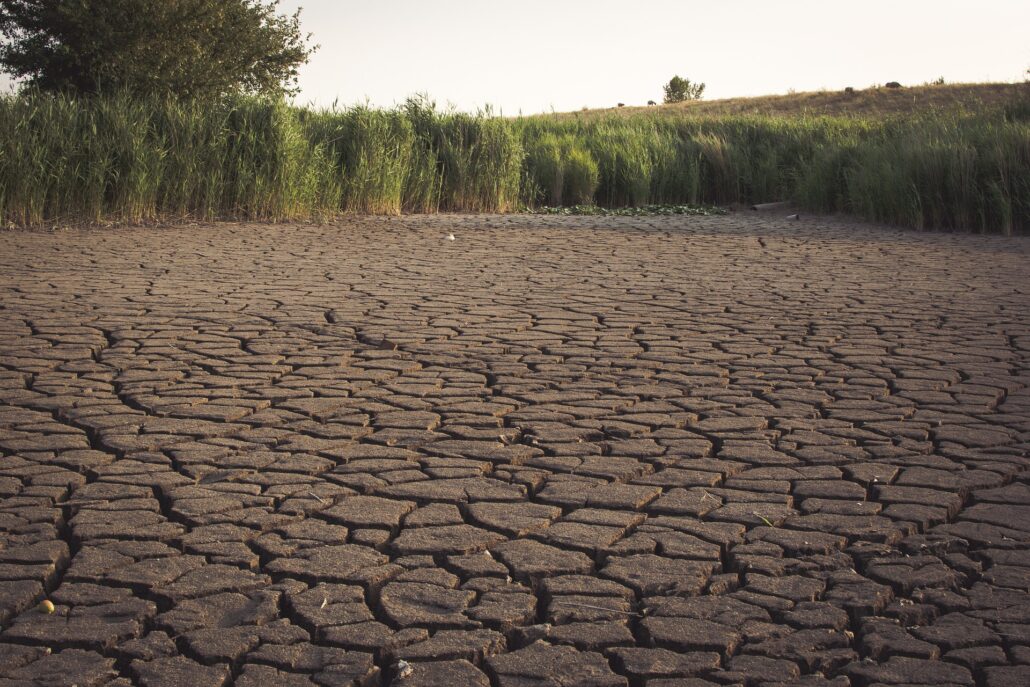
Climate is really changing and quite fast: enough to think that February 14th, Arpa Agency of Veneto has recorded the zero thermal level at 3,000 meters. It was the first time that such a low number had been recorded. In May 2023, tensions and fears have gone looser since rain fell so the focus had been removed from the problem. It is easy to forget that this will be the “new normal” and that therefore, its management has to be ordinary. Solutions have to be conceived holistically, looking for mitigation measures that take into account a shared and coordinated strategy that, just like reported in the IPCC document “Climate Change 2022” [3] foreseen the mitigation of the climate change events. This would include a substantial reduction of the fossil fuel use, a spread electrification (of private and public vehicles), a better energy efficiency and the use of alternative energetic sources (like, for example, hydrogen). It would also be important to educate people to a more sustainable use of the resources and a higher consciousness of its value (by, for example, the education of the youth and citizen science.
This article is part of the project “PILLOLE D’ACQUA PIANA: seminari itineranti, blog e podcast per una gestione sostenibile delle risorse idriche in Piana Rotaliana” carried out by ECONTROVERTIA APS and supported by Fondazione Caritro (Prot. no. U445.2023/SG.386 of April 23, 2023).