Ir al contenido principal

Etiqueta: methane

Balancing Agriculture and Sustainability in the EU

The European Union (EU) stands at a crucial crossroads as it seeks to balance agriculture and food supply with sustainability and environmental preservation. This balance brings to light some of the most pressing challenges of our time: biodiversity loss, extremely polluting livestock, drought and water degradation. Despite significant regulatory frameworks and political commitments, the path to a sustainable agricultural future in Europe is complex.

New political landscape

The results of the recent European elections have significant implications for the future of EU agricultural and environmental policies​​. Despite a rise in far-right parties opposed to stringent environmental regulations, the centrist European People’s Party (EPP) remains the largest group in the European Parliament, maintaining a clear majority with the Socialists and Democrats (S&D) and the liberal Renew group [1]. However, the stronger presence of right-wing parties will likely influence the EU’s legislative agenda, potentially delaying or weakening environmental initiatives such as the Green Deal [2].

Loss of biodiversity

Biodiversity loss in Europe has reached alarming levels, with over 80% of European habitats in poor condition​​. The recently adopted EU Nature Restoration Law aims to reverse this trend by mandating the restoration of at least 20% of the EU’s land and sea areas by 2030, and all ecosystems in need of restoration by 2050. This law sets legally binding targets for restoring degraded ecosystems,requiring member states to develop national restoration plans, prioritize Natura 2000 sites, and enhance biodiversity in agricultural lands. However, translating these ambitious targets into actionable steps across diverse member states remains a significant challenge [3].

“Our global food system is the primary driver of biodiversity loss, with agriculture alone being the identified threat to 24,000 of the 28,000 (86%) species at risk of extinction.” [4]

Agricultural subsidies

The EU member states spend huge amounts to subsidize agriculture. The Common Agricultural Policy (CAP) of the EU accounted for €57 billion in 2013, making it the largest expenditure in the EU budget. A new study showed that 82% of these agricultural subsidies were allocated to livestock and fodder[5].

“People see fields full of plants without considering their purpose is to feed animals.” [5]

Most agricultural subsidies end up with large farmers and even landowners who do not even farm themselves. Small (organic) farmers are most affected, not only because they receive fewer subsidies, they also have to compete with an existing system that has many economies of scale and innovation. Moreover, all external costs (e.g., environment, climate, health) can be passed on to the taxpayer. This way, intensive livestock farming is being advantaged twiceconcludes Jeroen Candel, Associate Professor of Food & Agricultural Policy at Wageningen University [2].

Conflicting climate targets

Livestock is also responsible for the vast majority of food-related greenhouse gas (GHG) emissions in the EU. Livestock products subsidized by the CAP account for 84% of food-related GHG-emissions in the EU, with agriculture accounting for 10% of total EU GHG emissions [5]. This is in stark contrast to the EU’s climate target"Fit for 55”, which stipulates a net emissions reduction target of 55% by 2030 and climate neutrality by 2050.

Transforming food systems

In most Member States and regions, agriculture, and especially nature, is under pressure from increasing economic activity. If 70% of that agricultural land is used for animal production, it is clear what we need to do: We need to switch to more plant-based products, because a shift in eating habits, especially a reduction in the consumption of animal products, can reduce pressure on land and natural resources [2]. Technological innovations such as lab-grown meat and precision fermentation are also leading to alternatives to livestock [6].
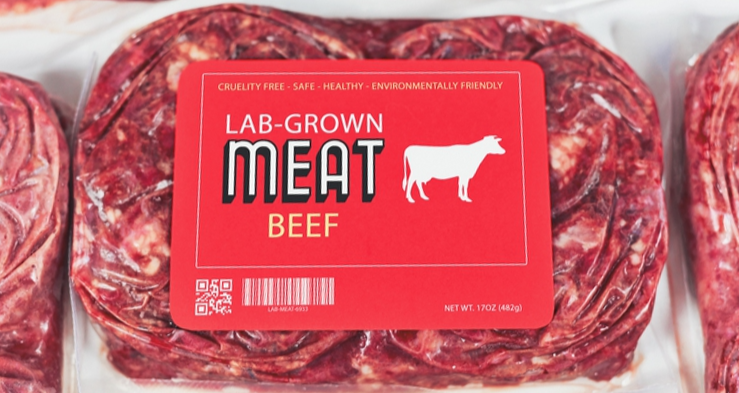
Fig. 1: Lab-grown meat. Royalty free photo from Getty images.

“Producers of alternative proteins receive 1,200 times less public support than intensive livestock farming.” [6]

Candel stated that these innovators in alternative protein are surrounded by uncertainty: “we don’t know if they will be successful, but expectations are high. Potentially, they are disruptive innovations that could enable us to produce more sustainably” [2]. However, governments largely ignore the climate-mitigation potential of these innovators [6]. The Dutch Liberal Party (VVD), for example, always stresses the importance of innovation, but in reality tends to support the status quo: the current dominant agricultural regime, rather than these innovative forms of food production [2].

The way forward

The future of agriculture in Europe hangs in the balance, influenced by political shifts, industrial lobbying, and societal pressures. As citizens and policymakers, the responsibility lies with us to push for changes that align agricultural practices with environmental sustainability and social equity.

Moving forward, we must advocate for policies that promote sustainable agricultural practices, support innovation, and ensure equitable distribution of resources. This includes rethinking subsidy systems, investing in new technologies, and fostering collaboration among all stakeholders—farmers, policymakers, scientists, and consumers.

Ultimately, achieving a sustainable agricultural future requires a collective effort. It demands that we remain informed, engaged, and proactive in advocating for change. By working together, we can create a resilient agricultural system that not only feeds the world but also nurtures the planet.

How the EU is Revising its 2040 Climate Targets amid Farmers’ Strikes

Earlier this month, the European Commission(EC) presented recommendations for cutting greenhouse gas emissions by 90 % by 2040 [1], building on the EU’s 2030 Fit for 55objective, and part of the broader goal of reaching climate neutrality by 2050. Notably, however, while the report states a target of less than 850 MtCO₂-eq remaining at 2040, the scope of the final document was reduced. Reuters reported that the EU’s draft target required agriculture to reduce non-CO₂ emissions by 30% compared to 2015 to meet the overall climate target, but claimed that this section was removed from the final draft [2]. Moreover, emissions from the land use, land use change, and forestry (LULUCF) sector are not included [1], as well as the 90% reduction being reliant on 400 MtCO₂ being extracted through both land based and industrial forms of carbon capture.

Changing frames

The report stated that its purpose was solely “to initiate the political debate and inform the preparation of the post-2030 framework”, with no new policy propositions or sector-specific targets set according to the EC [1]. However, the creative accounting of the report puts a particular frame on climate change, and the solutions to it. Frames have been described to have the power to define problems, diagnose causes, make moral judgements and from there suggest remedies [3]. Thinking of the recommendations in this light, shows how the chosen framing can lead the political debate to focus less on animal agriculture, and more on carbon capture and storage (CCS), producing policies to this effect.

This particular framing is alarming for several reasons. Firstly, while atmospheric levels of CO₂ have increased by roughly 50 %, atmospheric methane levels have seen a much greater increase of 162 % [4]. These exceptions create a framing where National energy and Climate plans (NECPs) are not encouraged to recognise agricultural emissions, particularly methane which the European Environment Agency (EEA) states is 80 times more potent than CO₂ over a 20 year period [5].

Nevertheless, in the EC’s report, they account for GHG emissions with an adjustment of Global Warming Potentials (GWPs)over a 100 year period. For this timeframe, the potency of methane drops to 27 times the equivalent of CO₂, thus diminishing the perceived threat. The IPCC has also recognised this misapplication of GWPs, stating:

“GWP100 is not well-suited to estimate the cumulative effect on climate from sustained SLCF emissions [Short-lived climate forcers, including aerosols, methane and nitrogen oxides] and the resulting warming at specific points in time” [6].

Accounting for SLCFs in such a way, will protract their effect over time under the proposed recommendations, and misrepresents the scale of their impact in the short-term, leading to the illusion of far more time to offset the emissions than is available. When adjusting EU GHG emissions data for 2021 [7] to a 20 year warming period, methane accounts for 1.52Bt of CO₂e with CO₂ at 2.76Bt for the same year. Measured this way, methane is shown to be a compound that demands far more attention than the EC affords it, representing 55 % of its prominent counterpart CO₂’s environmental impact. When considering a shorter term perspective, this highlights the dangers of the EC’s oversight when considering SLCFs.

The dangers of neglecting methane however, does not only lead to a miscalculation of warming potential. Elevated atmospheric methane levels can increase all-cause mortalities, particularly through promoting cardiovascular and respiratory problems [8]. Methane itself is also a marker of the volume of animal agriculture in a society, which not only causes the suffering of billions of sentient animals, but also contributes to poor public health through the risk of zoonotic diseases [9]. From a localised perspective, animal agriculture typically causes the degradation of soil and water quality, requiring significant treatment for bacteria and pathogens [10].

Fig. 1: Farmers protest in Berlin on 18 December 2023. Editorial Use Only photo by Jakob Berg en Shutterstock

The decision to tactically disclude agricultural emissions and the withdrawal of the planned halving of pesticide use demonstrates the success of recent farmer protests sparking across Europe [11]. Excluding agricultural emissions means that GHG emissions far more potent than CO₂ are excluded from the climate target. Emissions such as methane (CH4) and nitrous oxide (NO₂), are largely caused by farm animals and fertiliser runoff.

Leading to the second issue of GHG capture, methane capturespecifically has been found to be particularly ineffective [12], while also often using methods that do not negate emissions altogether, but rather transform the methane, into the less potent CO₂ and water. Achieving the aforementioned target of 400 MtCO₂ is stated in the report to require “faster investments for deployment of novel low carbon technologies such as hydrogen production by electrolysis, carbon capture and use and industrial carbon removals between 2031 and 2040”. While there is recognised future potential for various carbon capture and storage methods, their benefits are likely to appear in the  second half of the century, due to both recognised legislative barriers [13], as well financial barriers and a lack of political will, stunting the R&D of high performance CCS solutions [14].

Proposal to final targets

Greenpeace’s EU climate and energy campaigner Silvia Pastorelli stated: “Without honesty about an end to fossil fuels and finally tackling farming emissions, it’s hard to see how the EU will even clear this too-low bar it’s setting itself” [12].

The EC’s recent recommendations for cutting greenhouse gas emissions represent a significant step toward combating climate change. However, the decision to exclude agricultural emissionsfrom the final draft and the reliance on carbon capture and storage (CCS) solutions raises concerns about the effectiveness of the proposed measures.

By framing the climate debate in a way that prioritises certain emissions over others, there is a risk of overlooking critical contributors to global warming, and other societal ills, which demands urgent attention. This should be considered when the new EC and European Parliament (EP) are to pass the final emission target for 2040 after the EP elections in June.

REFERENCIAS:

Pulse aquí para ampliar las referencias
  1. Entman, R. M. (1993). Framing: Toward clarification of a fractured paradigm. Journal of communication, 43(4), 51-58. [4] NASA. (2024). Vital signs. Retrieved from https://climate.nasa.gov/vital-signs/.

    [5] European Parliament, EP. (2023, 28 March). Greenhouse gas emissions by country and sector. Retrieved from  https://www.europarl.europa.eu/topics/en/article/20180301STO98928/greenhouse-gas-emissions-by-country-and-sector-infographic

    [6] Intergovernmental Panel on Climate Change, IPCC. (2022). AR6 Climate Change 2022: Mitigation of Climate Change. Technical Summary. Downloaded from  https://www.ipcc.ch/report/ar6/wg3/downloads/report/IPCC_AR6_WGIII_TechnicalSummary.pdf

    [7] Ritchie, H., Rosado, P. & Roser, M. (2023). CO₂ and Greenhouse Gas Emissions. Retrieved from https://ourworldindata.org/co2-and-greenhouse-gas-emissions

    [8] West, J. J., Fiore, A. M., Horowitz, L. W., & Mauzerall, D. L. (2006). Global health benefits of mitigating ozone pollution with methane emission controls. Proceedings of the National Academy of Sciences, 103(11), 3988-3993. https://doi.org/10.1073/pnas.0600201103

    [9] Chakravorty, U., Fisher, D. K., & Umetsu, C. (2007). Environmental effects of intensification of agriculture: livestock production and regulation. Environmental economics and policy studies, 8, 315-336. https://doi.org/10.1007/BF03353963

    [10] Akinbile, C. O., Erazua, A. E., Babalola, T. E., & Ajibade, F. O. (2016). Environmental implications of animal wastes pollution on agricultural soil and water quality. Soil and Water Research 11(3). https://doi.org/10.17221/29/2015-SWR

    [11] European Commission, EC. (2024, 6 February). Speech by President von der Leyen at the European Parliament Plenary on the conclusions of the European Council meetings, in particular the special European Council meeting of 1 February 2024. Retrieved from https://ec.europa.eu/commission/presscorner/detail/en/speech_24_661

    [12] Carbon Offset Guide. (n.d.) Methane Capture. Retrieved from https://www.offsetguide.org/avoiding-low-quality-offsets/vetting-offset-projects/methane-capture/

    [13] Tysoe, S. (2009). Carbon capture and storage: pulling down the barriers in the European Union. Proceedings of the Institution of Mechanical Engineers, Part A: Journal of Power and Energy, 223(3), 281-291. https://doi-org.mu.idm.oclc.org/10.1243/09576509JPE626

    [14] Rubin, E. S., Mantripragada, H., Marks, A., Versteeg, P., & Kitchin, J. (2012). The outlook for improved carbon capture technology. Progress in energy and combustion science, 38(5), 630-671. https://doi-org.mu.idm.oclc.org/10.1016/j.pecs.2012.03.003
  2. Niranjan, R. (2023, 6 February). EU lays out plan to cut greenhouse emissions by 90% by 2040. Retrieved from https://www.theguardian.com/environment/2024/feb/06/eu-lays-out-plan-to-cut-greenhouse-emissions-by-90-by-2040

Telegram: @greenmarked
LinkedIn: @greenmarked
Instagram: @greenmarked.it

Facebook:  @greenmarked.it


© GreenMarked.it is managed by ECONTROVERTIA APS — Via Alcide De Gasperi 1, 38015 Lavis (TN), Italy — VAT IT02667560227