Ir al contenido principal

Etiqueta: businesses

Climate Justice as a Human Right

Even though future generations will suffer most from the climate crisis, they cannot participate in today’s political decision-making process. Their interests must therefore be protected in another way and starting a climate court case may be a possible one. The rising number of worldwide climate court cases means that protecting environmental rights through legal avenues is apparently becoming popular [1][2].

“Climate litigation is a broad and still maturing term that refers to the rapidly growing body of lawsuits in which climate change and its impacts are either a contributing or key consideration in legal argumentation and adjudication”.

[3] Ganguly, Setzer & Heyvaert, 2018, p.843.

Around the globe, approximately 1800 climate change cases have been labeled as climate change litigation, mostly as a side issue [4][5]. Strategic climate litigation is less common but receives more attention. It involves cases filed to put pressure on states (“strategic public climate litigation”) or businesses (“strategic private climate litigation”) to reduce, adapt or compensate for the damage caused by climate change [3].

Strategic public climate litigation aims to “influence public policy or policy decisions with climate change implications” [3]. A good example is the Dutch Urgenda case. In 2018, the Dutch Court of Appeal compelled the National Government to do more to reduce greenhouse gas emissions in the Netherlands. The case focused on future generations, and directly relied on the European Convention on Human Rights (ECHR), especially articles no.2 “Right to life” and no.8 “Right to private and family life” [6].

Strategic private climate litigation, instead, aims to “influence corporate behaviour and strategies in relation to climate change” [3]. However, due to its ramified and international corporate organization, multinationals can easily bypass judication for misdeeds.

Generally, business strategies are planned in the powerhouses of the Western world, physical production is outsourced to low-wage countries, and raw materials are extracted from poor areas prone to weak governments and corrupt judges. This complex business strategy raises questions about the responsibility
of multinationals – e.g., in terms of human rights and environmental pollution – a debate that has been ongoing since the 1970s [1].

To clarify multinationals responsibility, Ecuador recently proposed a UN Treaty on Transnational Corporations. The proposal has been negotiated since 2015 and, so far, it gained support from a majority of 85 UN member states – including China and Russia. The European Union was reluctant at the start of the negotiations, but “[t]here has been a tipping point over the last two years” in favor of the treaty [7][8].

In the meantime, case law should provide clarity. The verdicts from e.g., the UK Supreme Court and the Dutch Court of Appeal against Royal Dutch Shell in Nigerian oil pollution cases, show that parent companies do have a duty of care over its subsidiaries, and can therefore be held liable for their misdeeds [9][10]. This creates more opportunities to hold multinationals accountable [7]. However, these trials are very time consuming. Prosecutor “Friends of the Earth Netherlands” together with four local plaintiffs had to wait 13 years for justice in the Dutch Shell case [11].
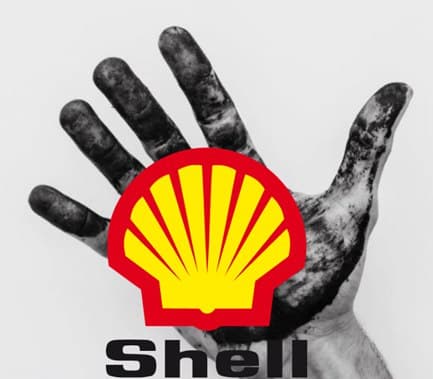
(Author, April 2021).

The recent developments that the environment is becoming more in the realm of law and less in that of politics also caused controversy both regarding the separation of power, and the legitimacy of NGOs taking these legal steps [2].

“[E]nvironmentalist claims in European private law illustrate that classical boundaries to democratically legitimate judicial law-making are being challenged, as these claims operationalise the constitutionalisation of the environment, which increasingly encompasses the interests of people in other nations, future generations and non-human entities.”

[2] Burgers, 2020, p.24.

According to “Friends of the Earth Netherlands”, governments do not dare to confront large multinationals properly [2]. In fact, governments can be so entangled with the vested interests of corporations that democracy can be undermined [12]. That is why James Hansen – seen as the father of climate science – concludes that “the litigate-to-mitigate campaign is needed alongside political mobilisation because judges are less likely than politicians to be in the pocket of oil, coal and gas companies” [13]. However, they should not overstep their power but respect the separation of powers.


Bibliography

[1] Luttikihuis, P. (2020, 30 November). ‘Klimaat is steeds meer mensenrechtenzaak’. Retrieved 12 April 2021, from https://www.nrc.nl/nieuws/2020/11/30/klimaat-is-steeds-meer-mensenrechtenzaak-a4022056

[2] Burgers, L.E. (2020). Justitia, the People’s Power and Mother Earth: Democratic legitimacy of judicial law-making in European private law cases on climate change. Downloaded 12 April 2021, from https://pure.uva.nl/ws/files/52346650/Chapter_1.pdf

[3] Ganguly, G., Setzer, J., & Heyvaert, V. (2018). If at first you don’t succeed: Suing corporations for climate change. Oxford Journal of Legal Studies, 38(4), 841-868.

[4] Grantham Research Institute on Climate Change and the Environment (2021). Litigation Cases.Retrieved 12 April 2021, from https://climate-laws.org/litigation_cases

[5] Sabin Center for Climate Change Law (2021). U.S. Climate Change Litigation. Retrieved 12 April 2021, from http://climatecasechart.com/us-climate-change-litigation/

[6] European Court of Human Rights (2010). European Convention on Human Rights. Downloaded 13 April 2021, from https://www.echr.coe.int/documents/convention_eng.pdf

[7] De Bruyne, M. (2021, 19 February). De multinational ontkomt niet aan zijn zorgplicht. Retrieved 13 April 2021, from https://www.nrc.nl/nieuws/2021/02/19/de-multinational-ontkomt-niet-aan-zijn-zorgplicht-a4032530

[8] Ernste, B. (2019, 14 November). Om multinationals in toom te houden zijn strengere regels nodig, maar de EU werkt tegen. Retrieved 15 April 2021, from https://www.vn.nl/multinationals-in-toom-eu/

[9] District Court The Hague (Rechtbank Den Haag) (2015, 24 June). Stichting Urgenda/Staat der Nederlanden ECLI:NL:RBDHA:2015:7145.Retrieved 12 April 2021, from https://uitspraken.rechtspraak.nl/inziendocument?id=ECLI:NL:RBDHA:2015:7145

[10] De Bruyne, M. (2021, 12 February). Ook nederlaag voor Shell in Britse rechtszaak vervuiling Nigeria. Retrieved 13 April 2021, from https://www.nrc.nl/nieuws/2021/02/12/ook-nederlaag-voor-shell-in-britse-rechtszaak-a4031600

[11] Milieudefensie. (2021, 4 February). 13 jaar wachten op gerechtigheid is veel te lang. Retrieved 15 April 2021, from https://milieudefensie.nl/actueel/13-jaar-lang-wachten-op-gerechtigheid-is-veel-te-lang

[12] Hoekstra, E. (2021, 5 March). The Interest of Fossil Fuel Corporations and Agribusiness Enterprises in Climate Policies. Retrieved 15 April 2021, from https://greenmarked.it/fossilfuels-and-agribusiness-in-climatepolicies/

[13] Watts, J. (2017, 17 November). We should be on the offensive’ – James Hansen calls for wave of climate lawsuits. Retrieved 13 April 2021, from https://www.theguardian.com/environment/2017/nov/17/we-should-be-on-the-offensive-james-hansen-calls-for-wave-of-climate-lawsuits.

The Interest of Fossil Fuel Corporations and Agribusiness Enterprises in Climate Policies

In 2015, the countries that signed the Paris Agreement decided to keep the global average temperature increase of the current century “well below 2 °C” compared to pre-industrial levels, and “persuade efforts” to keep it below 1.5 °C. Consequently, these countries should act in line with the aim of “strengthening the global response to the threat of climate change, in the context of sustainable development”, and of reaching a peak in global greenhouse gas emissions as soon as possible [1, 2].

Looking at these ambitions, one would think that the primary cause of the climate crisis – i.e., burning oil, coal, and gas excessively – would be mentioned in the Agreement [3, 4]. In fact, it was neglected. The focus of the Paris negotiations was shifted away from keeping fossil fuels in the ground – to prevent extraction and rising emissions – by defining the climate crisis merely as “a problem of too much CO₂ molecules in the atmosphere” [4].

Furthermore, the scenarios that were developed by scholars to reduce the global average temperature below 2 °C mainly used economic models. These tended to focus on the sequestration of vast amounts of atmospheric CO₂ by plants [5].

Even though the Paris Agreement was ratified by countries, it seems that transnational firms, such as fossil fuel corporations and agribusiness enterprises, and closely connected major conservation NGOs were the ones that heavily affected the decision-making processes. It is argued that these organizations have been reproached for securing their future profits by actively advocating “bogus solutions” such as tree plantations and reforestation projects, which would compensate for the emissions from fossil fuel burning [4].

The Paris Agreement, like most countries, adopted a definition of forest that was promoted by the UN Food and Agriculture Organization (FAO), which has an interest in extending the amount of industrial tree plantations. Not surprisingly, the FAO’s definition of forest includes eucalyptus, pine, acacia, teak, bamboo, and rubber tree plantations[6].

This wide-spectrum definition of forest allowed many new monoculture plantations to be framed as reforestation projects. In Latin American, extensive reforestation projects have made a significant use of monoculture plantations: The Clean Development Mechanism (68% of its plantations), the Forest Investment Program (21%), Initiative 20×20 (14%) and local initiatives (11%) [7]. Unsurprisingly, the majority of these projects were financed by public funds and international donors [8].

Fig.1: A bamboo plantation without any undergrowth. Photo by Kinsey on Unsplash (February 2020).

Also the World Resource Institute (WRI) – a “respected and highly data-driven environmental research organization” – strongly supported monocultural practices (e.g., for maize, soy and wheat), claiming that they would have the highest total added value among all considered “restoration practices” in Latin America [9, 10].

As it is true that corporate interests often prevail above national policies and targets, it has been true also with the ambitious Paris Agreement. This because the Agreement “does not contain legally binding provisions that require countries to take domestic legal action” [11]. Hence, the willingness of governments to implement climate policies that could aim at the Agreement targets has been compromised by their need to balance the requests of private bodies with clashing interests [12].

Sometimes governments are so entangled with the vested “environmental” interests of fossil fuel corporations that democracy can be undermined. An example comes from the Netherlands, where “Shell and Dutch politics [have] become heavily entwined” [13], and where the current Dutch cabinet has included three ministers that had previously worked for Shell [13]. Appointing one of them as minister of Economic Affairs and Climate has led the critics to ferociously denounce that the “cabinet [had] been hijacked by Shell” (Verhoeven, 2020, p.10). Sure enough, the Dutch fossil fuel industry has been rather helped than damaged by the government, showing that the climate policies of some European counties are still far away from the Paris Agreement targets [13].

Bibliography

[1] UNFCCC (2021, 26 February). Greater Climate Ambition Urged as Initial NDC Synthesis Report Is Published. Retrieved 28 February 2021, from https://unfccc.int/news/greater-climate-ambition-urged-as-initial-ndc-synthesis-report-is-published

[2] Burnes, B. (2017). After Paris: Changing corporate behaviour to achieve sustainability. Social Business, 7(3-4), 333-357. https://doi.org/10.1362/204440817X15108539431532

[3] Litgow, M. (2017, March). Analyzing the Environmental Injustices of Carbon Offsetting: The Limits of the California-REDD+ Linkage. Retrieved 25 February 2021, from http://library2.smu.ca/bitstream/handle/01/26934/Lithgow_Matthew_MASTERS_2017.pdf?sequence=1&isAllowed=y

[4] World Rainforest Movement (2017). What do forests have to do with climate change, carbon markets and REDD+? Downloaded 27 February 2021, from https://wrm.org.uy/wp-content/uploads/2017/05/WRMtoolkitREDD_Eng.pdf

[5] Fee E. (2019) Implementing the Paris Climate Agreement: Risks and Opportunities for

Sustainable Land Use. In: Ginzky H., Dooley E., Heuser I., Kasimbazi E., Markus T., Qin T. (eds) International Yearbook of Soil Law and Policy 2018. International Yearbook of Soil Law and Policy, vol 2018. Springer, Cham. https://doi.org/10.1007/978-3-030-00758-4_12

[6] Rodríguez-Labajos, B. (2012). An overview of industrial tree plantations in the global South.Downloaded 26 February 2021, from
https://wrm.org.uy/wp/wp- content/uploads/2012/10/EJOLTplantations.pdf

[7] Romijn, E., Coppus, R., De Sy, V., Herold, M., Roman-Cuesta, R. M., & Verchot, L. (2019). Land restoration in Latin America and the Caribbean: an overview of recent, ongoing and planned restoration initiatives and their potential for climate change mitigation. Forests, 10(6), 510.

[8] Romijn, J.E. & Coppus, R. (2019). Replication Data for: Restoration Database for Latin America and the Caribbean. Comparative Research Project on Landscape Restoration for Emissions Reductions, CIAT/WUR project for USAID. Retrieved 27 February 2021, from https://doi.org/10.7910/DVN/B9OUOZ

[9] Broder, J.M. (2012, 14 March). Climate Change Envoy to Lead Influential Institute. Retrieved 27 February 2021, from https://green.blogs.nytimes.com/2012/03/14/climate-change-envoy-to-lead-influential-institute/

[10] World Resource Institute. (2016). The Economic Case for Landscape Restoration in Latin America. Downloaded 25 January 2021, from https://files.wri.org/s3fs-public/The_Economic_Case_for_Landscape_Restoration_in_Latin_America.pdf

[11] Clémençon, R., 2016. The two sides of the Paris Climate Agreement. The Journal of Environment & Development, 25 (1), 3–24. DOI:10.1177/1070496516631362

[12] Averchenkova & Bassi. (2016). Beyond the targets: assessing the political credibility of pledges for the Paris Agreement.Retrieved 27 February 2021, from, https://www.lse.ac.uk/granthaminstitute/wp-content/uploads/2016/01/Averchenkova-and-Bassi-2016.pdf

[13] Walch, D. (2018). The credibility of the Dutch pledge to implement the 2015 Paris Agreement.Downloaded 27 February 2021, from https://edepot.wur.nl/461856

[14] Verhoeven, I. (2020). Contentious governance around climate change measures in the Netherlands. Environmental Politics, 1-23. https://doi.org/10.1080/09644016.2020.1787056.

Telegram: @greenmarked
LinkedIn: @greenmarked
Instagram: @greenmarked.it

Facebook:  @greenmarked.it


© GreenMarked.it is managed by ECONTROVERTIA APS — Via Alcide De Gasperi 1, 38015 Lavis (TN), Italy — VAT IT02667560227