Ir al contenido principal

Applying the European Green Deal. Is the Netherlands Fit for 55?

On July 14, the European Commission will present the long-awaited “Fit for 55” legislative package. It is the first legal stipulation supporting the European Green Deal climate actions aimed at making Europe the first climate-neutral continent by 2050. “Fit for 55” will “update the EU’s 2030 climate and energy laws to reflect the 55% net emissions reduction target that the EU set for 2030” [1].

Some countries are already on the right track to meet the necessary emissions reduction, whereas others face a relatively large task to achieve the European climate objectives. Per capita emissions in the Netherlands, for example, are a third higher than the EU average, and double that of Sweden [2]. The Dutch Environmental Assessment Agency (“PBL”) compared the reduction in emissions between 1990 and 2019 in the Netherlands with results in Germany, Belgium, Denmark, Sweden, France, and the United Kingdom. The Netherlands was the only country that did not manage to reduce emissions to a level below 1990 levels during that period, concluded PBL [3].

Author, July 2021

In the verdict of the famous Urgenda case in 2018, the Dutch National Government was ordered to do more to limit the emission of greenhouse gases in the Netherlands [4]. The Dutch Court of Appeal required a 25% reduction in 2020 compared to 1990. However, preliminary figures from the Dutch Statistics have shown that even in Corona year 2020, which was characterised by less traffic and economic activity, estimated emissions reduction was only 24.5% lower compared to 1990[5].

Last month, the newly appointed Dutch State Secretary for Economic Affairs and Climate Change Dilan Yesilgöz presented a long list of measures that should finally meet the 25% reduction target. It applies to various sectors, such as industry, agriculture, transportation, and energy [6].

Since it has become apparent that the required target has not been achieved on time, plaintiff Urgenda will impose a penalty payment on the Dutch state through the court. Director of the Dutch NGO Marjan Minnesma expects a claim between 100 million and 2 billion euros. Yesilgöz regrets that Urganda will not await the implementation of the listed measures, but it can be concluded that the Dutch state missed its opportunity to adapt its policy to meet its target on time [5].

Ultimately, this disadvantages everyone, including the Dutch state, because quick measures to increase sustainability are more expensive than measures included in long-term policy objectives.

Bibliography

[1] European Commission. (2021, 8 June). Fit for 55 package’: local leaders ready to take the helm as Council adopts a €17.5 billion Just Transition Fund. Retrieved 29 July 2021, from https://cor.europa.eu/en/news/Pages/ENVE-COMMISSION-Fit-for-55-package.aspx

[2] Maree, K. (2021, 29 June). PBL: klimaataanpak Nederland loopt achter bij buurlanden. NRC Handelsblad. Retrieved 29 June 2021, from https://www.nrc.nl/nieuws/2021/06/29/pbl-klimaataanpak-nederland-loopt-achter-bij-buurlanden-a4049138

[3] Boot, P. (2021, June). Ervaringen met energie-en klimaatbeleid in omringende landen: Wat kunnen we ervan leren? Centraal Planbureau. Downloaded 29 June 2021, from https://www.pbl.nl/sites/default/files/downloads/pbl-2021-ervaringen-met-energie-en-klimaatbeleid-in-omringende-landen-wat-kunnen-we-ervan-leren-4647.pdf

[4] Hoekstra, E. (2021, 16 April). Climate justice as a human right.Retrieved 29 June 2021, from https://greenmarked.it/climate-justice-as-a-human-right/

[5] Van der Walle, E. (2021, 28 June). Urgenda weigert ‘genaaid’ te worden en voert bij kabinet druk op. NRC Handelsblad. Retrieved 29 June 2021, from https://www.nrc.nl/nieuws/2021/06/28/urgenda-weigert-genaaid-te-worden-en-voert-bij-kabinet-druk-op-a4049097

[6] Rijksoverheid. (2021, 25 June). Kamerbrief over uitvoering motie Thijssen over Urgendavonnis en langetermijn-klimaatbeleid. Downloaded 30 June 2021, from https://www.rijksoverheid.nl/ministeries/ministerie-van-economische-zaken-en-klimaat/documenten/kamerstukken/2021/06/25/kamerbrief-over-uitvoering-motie-thijssen-over-urgendavonnis-en-langetermijn-klimaatbeleid

Royal Dutch Shell forced to drastically reduce CO₂ emissions

The Dutch District Court in The Hague has ordered Royal Dutch Shell (RDS) to “reduce the emissions of the Shell group, its suppliers and its customers by net 45%, as compared to 2019 levels, by the end of 2030, through the corporate policy of the Shell group”. The ruling in the ‘climate case’ corresponds to the claim of Friends of the Earth Netherlands, together with other civil society organizations and over 17,000 co-plaintiffs [1].

RDS also recognizes that immediate action is needed to stop climate change, but at a much slower pace than what environmental organizations are demanding [2]. Although the Dutch court acknowledges that RDS enhanced its policy, it founds it insufficiently concrete [1].

RDS was told that it has a duty of care and that its level of CO₂ reduction, as well as that of the whole supply chain, should be brought into line with the Paris Agreement [1]. The judges want RDS to start immediately with a policy that matches the required reduction. An expected appeal against the verdict should not be a reason for the company to postpone the reduction policy [3].

(Author, May 2021).

This historic ruling is a resounding victory for Friends of the Earth Netherlands and means that Shell may have to refrain from new investments in oil. It is the second time a Dutch judge has issued a groundbreaking ruling in a climate case [3]. Additional information about climate justice, and related court cases against RDS can be found in the article Climate Justice as a Human Right – GreenMarked.

Bibliography

[1] De Rechtspraak. (2021, 26 May). Royal Dutch Shell must reduce CO2 emissions. Retrieved 26 May 2021, from Royal Dutch Shell must reduce CO2 emissions (rechtspraak.nl)

[2] Van de Weijer, B. (2021, 26 May). Historische uitspraak in klimaatzaak: Shell moet CO2-uitstoot drastisch verminderen. Retrieved 26 May 2021, from Historische uitspraak in klimaatzaak: Shell moet CO2-uitstoot drastisch verminderen | De Volkskrant

[3] Luttikhuis, P. (2021, 26 May). Shell moet van rechter CO2-uitstoot snel verminderen. Retrieved 26 May 2021, from Shell moet van rechter CO2-uitstoot snel verminderen – NRC

Climate Justice as a Human Right

Even though future generations will suffer most from the climate crisis, they cannot participate in today’s political decision-making process. Their interests must therefore be protected in another way and starting a climate court case may be a possible one. The rising number of worldwide climate court cases means that protecting environmental rights through legal avenues is apparently becoming popular [1][2].

“Climate litigation is a broad and still maturing term that refers to the rapidly growing body of lawsuits in which climate change and its impacts are either a contributing or key consideration in legal argumentation and adjudication”.

[3] Ganguly, Setzer & Heyvaert, 2018, p.843.

Around the globe, approximately 1800 climate change cases have been labeled as climate change litigation, mostly as a side issue [4][5]. Strategic climate litigation is less common but receives more attention. It involves cases filed to put pressure on states (“strategic public climate litigation”) or businesses (“strategic private climate litigation”) to reduce, adapt or compensate for the damage caused by climate change [3].

Strategic public climate litigation aims to “influence public policy or policy decisions with climate change implications” [3]. A good example is the Dutch Urgenda case. In 2018, the Dutch Court of Appeal compelled the National Government to do more to reduce greenhouse gas emissions in the Netherlands. The case focused on future generations, and directly relied on the European Convention on Human Rights (ECHR), especially articles no.2 “Right to life” and no.8 “Right to private and family life” [6].

Strategic private climate litigation, instead, aims to “influence corporate behaviour and strategies in relation to climate change” [3]. However, due to its ramified and international corporate organization, multinationals can easily bypass judication for misdeeds.

Generally, business strategies are planned in the powerhouses of the Western world, physical production is outsourced to low-wage countries, and raw materials are extracted from poor areas prone to weak governments and corrupt judges. This complex business strategy raises questions about the responsibility
of multinationals – e.g., in terms of human rights and environmental pollution – a debate that has been ongoing since the 1970s [1].

To clarify multinationals responsibility, Ecuador recently proposed a UN Treaty on Transnational Corporations. The proposal has been negotiated since 2015 and, so far, it gained support from a majority of 85 UN member states – including China and Russia. The European Union was reluctant at the start of the negotiations, but “[t]here has been a tipping point over the last two years” in favor of the treaty [7][8].

In the meantime, case law should provide clarity. The verdicts from e.g., the UK Supreme Court and the Dutch Court of Appeal against Royal Dutch Shell in Nigerian oil pollution cases, show that parent companies do have a duty of care over its subsidiaries, and can therefore be held liable for their misdeeds [9][10]. This creates more opportunities to hold multinationals accountable [7]. However, these trials are very time consuming. Prosecutor “Friends of the Earth Netherlands” together with four local plaintiffs had to wait 13 years for justice in the Dutch Shell case [11].

(Author, April 2021).

The recent developments that the environment is becoming more in the realm of law and less in that of politics also caused controversy both regarding the separation of power, and the legitimacy of NGOs taking these legal steps [2].

“[E]nvironmentalist claims in European private law illustrate that classical boundaries to democratically legitimate judicial law-making are being challenged, as these claims operationalise the constitutionalisation of the environment, which increasingly encompasses the interests of people in other nations, future generations and non-human entities.”

[2] Burgers, 2020, p.24.

According to “Friends of the Earth Netherlands”, governments do not dare to confront large multinationals properly [2]. In fact, governments can be so entangled with the vested interests of corporations that democracy can be undermined [12]. That is why James Hansen – seen as the father of climate science – concludes that “the litigate-to-mitigate campaign is needed alongside political mobilisation because judges are less likely than politicians to be in the pocket of oil, coal and gas companies” [13]. However, they should not overstep their power but respect the separation of powers.

Bibliography

[1] Luttikihuis, P. (2020, 30 November). ‘Klimaat is steeds meer mensenrechtenzaak’. Retrieved 12 April 2021, from https://www.nrc.nl/nieuws/2020/11/30/klimaat-is-steeds-meer-mensenrechtenzaak-a4022056

[2] Burgers, L.E. (2020). Justitia, the People’s Power and Mother Earth: Democratic legitimacy of judicial law-making in European private law cases on climate change. Downloaded 12 April 2021, from https://pure.uva.nl/ws/files/52346650/Chapter_1.pdf

[3] Ganguly, G., Setzer, J., & Heyvaert, V. (2018). If at first you don’t succeed: Suing corporations for climate change. Oxford Journal of Legal Studies, 38(4), 841-868.

[4] Grantham Research Institute on Climate Change and the Environment (2021). Litigation Cases.Retrieved 12 April 2021, from https://climate-laws.org/litigation_cases

[5] Sabin Center for Climate Change Law (2021). U.S. Climate Change Litigation. Retrieved 12 April 2021, from http://climatecasechart.com/us-climate-change-litigation/

[6] European Court of Human Rights (2010). European Convention on Human Rights. Downloaded 13 April 2021, from https://www.echr.coe.int/documents/convention_eng.pdf

[7] De Bruyne, M. (2021, 19 February). De multinational ontkomt niet aan zijn zorgplicht. Retrieved 13 April 2021, from https://www.nrc.nl/nieuws/2021/02/19/de-multinational-ontkomt-niet-aan-zijn-zorgplicht-a4032530

[8] Ernste, B. (2019, 14 November). Om multinationals in toom te houden zijn strengere regels nodig, maar de EU werkt tegen. Retrieved 15 April 2021, from https://www.vn.nl/multinationals-in-toom-eu/

[9] District Court The Hague (Rechtbank Den Haag) (2015, 24 June). Stichting Urgenda/Staat der Nederlanden ECLI:NL:RBDHA:2015:7145.Retrieved 12 April 2021, from https://uitspraken.rechtspraak.nl/inziendocument?id=ECLI:NL:RBDHA:2015:7145

[10] De Bruyne, M. (2021, 12 February). Ook nederlaag voor Shell in Britse rechtszaak vervuiling Nigeria. Retrieved 13 April 2021, from https://www.nrc.nl/nieuws/2021/02/12/ook-nederlaag-voor-shell-in-britse-rechtszaak-a4031600

[11] Milieudefensie. (2021, 4 February). 13 jaar wachten op gerechtigheid is veel te lang. Retrieved 15 April 2021, from https://milieudefensie.nl/actueel/13-jaar-lang-wachten-op-gerechtigheid-is-veel-te-lang

[12] Hoekstra, E. (2021, 5 March). The Interest of Fossil Fuel Corporations and Agribusiness Enterprises in Climate Policies. Retrieved 15 April 2021, from https://greenmarked.it/fossilfuels-and-agribusiness-in-climatepolicies/

[13] Watts, J. (2017, 17 November). We should be on the offensive’ – James Hansen calls for wave of climate lawsuits. Retrieved 13 April 2021, from https://www.theguardian.com/environment/2017/nov/17/we-should-be-on-the-offensive-james-hansen-calls-for-wave-of-climate-lawsuits.

Farm Hedges and Urban Greening for Better Buffer and Transition Zones

After this long, dark winter, we finally feel spring coming. Strolling along the paths, watching the bulbs bloom and seeing the sparkling green of the new leaves brings us joy and new energy. Nature is finally awakening.

Intensively cultivated farmlands, however, cannot be called “nature”.  The hillslopes surrounding the Piana Rotaliana (Trentino, Italy) are rather alike manufacturing sites than natural areas. Characterized by the extensive presence of intensively farmed vineyards, they have severely lost their connection to their former land-use as forest. Today’s vineyards are so close to each other that the slopes look like a vast monocultural field (Fig.1). Indeed, today’s farmers have lost the good habit of using hedges to separate vineyards from each other and the nearby roads.

Hedges were traditionally formed by common shrubs such as hazel, rowan, cornelian cherry, hawthorn and viburnum. Not only they made the landscape more beautiful, but they also protected the vines from pollution and offered shelter to several species of birds, insects and small mammals, which increased local biodiversity and benefited the vines.

A few years ago, some researchers studied the correlation between the presence of birds in vineyards of Trentino and the quality of the agroecosystem where the birds lived. The outcomes showed how the vineyard is positively affected by the presence of biodiversity in the adjacent areas [1]. The preservation of residual natural environments (e.g., woody hedges, forest patches, uncultivated areas, small wetlands) is the factor that majorly affects the bird wellbeing.

Among the most abundant local bird species, we can list the blackbird, the chaffinch, the song thrush, and the goldfinch – all nesting in the vineyards. Other species important for conservation are the wryneck, the common redstart, the flycatcher, the hoopoe and the black bunting – all of them preferring less-intensively cultivated hillslopes.

Fig. 1: One of the few forest patches left on the extensively and intensively cultivated hillslopes surrounding the Piana Rotaliana. Trentino, Italy. Photo by author.

In Trentino, vineyards and industrial areas are so close to each other that transition zones and ecological corridors are virtually nonexistent. The transition from one area to another is anything but smooth and easy for animals and insects. A possible solution to let them roam freely without encountering artificial obstacles and being killed is urban greening: a urban design approach to increase greenery in urban and industrial areas.

Green roofs are one the most appreciated urban greening strategy,
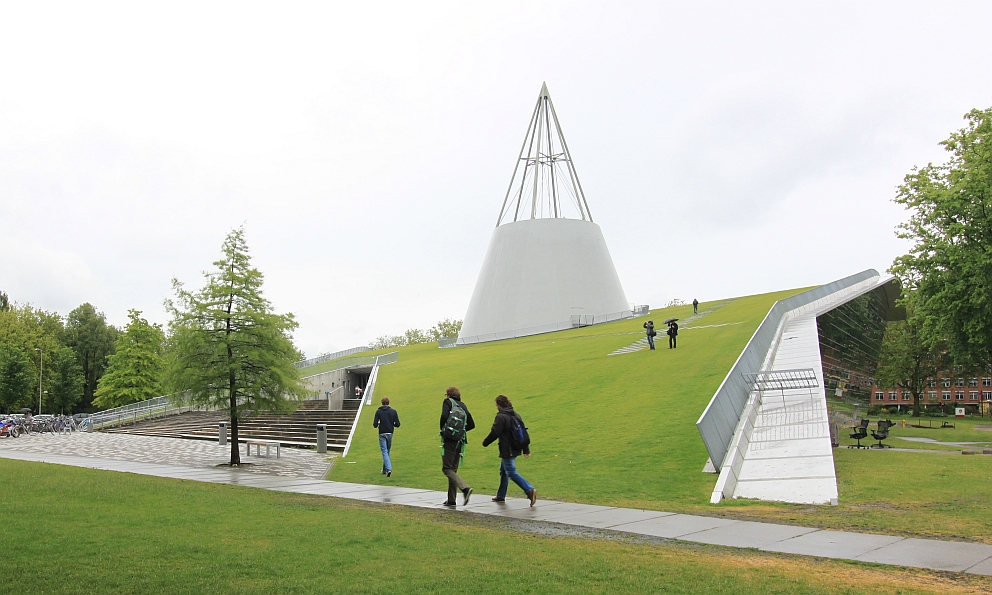
commonly used to contrast the “heat island” effect, which is the excessive accumulation of summer heat by certain urban buildings. In practical terms, the phenomenon is translated into a higher building energy consumption and maintenance cost, and a lower quality of life compared to other urban areas. By mitigating temperature changes both in summer and winter, green roofs are excellent means to oppose the “heat island” effect and allow significant energy savings. If a variety of species is included, green roofs can help local bird species and biodiversity, and reduce air and noise pollution. Finally, they can also become spaces for social aggregation and human wellbeing (Fig. 2).

Recently, a green roofs designing project was opened by the Institute for Renewable Energy of the Eurac Research Center [2]. The project aims to create new green roofs in the southern industrial area of Bolzano/Bozen, which is particularly affected by the “heat island” effect in summertime.

Let us keep on supporting projects like this one to create more buffer and transition zones both in our urban areas and farmlands.

Fig.2: The green roof of the TU Delft Library – Building No. 21. Delft, The Netherlands. Photo by Nol Aders on Wikipedia (Creative Commons BY-SA 3.0).

Bibliography

[1] Assandri, Giacomo & Ghidoni, Franca & Penner, Francesco & Bottura, M & Brambilla, Mattia & Bogliani, Giuseppe & Pedrini, Paolo. 2017. Importanza degli uccelli per la biodiversità del vigneto. Viti e Vino, supplemento a L’Informatore Agrario. 27. 19-22.

[2] Eurac Research, 2020. Tetti verdi per Bolzano sud [WWW Document]. URL http://www.eurac.edu/en/research/technologies/renewableenergy/newsandmedia/Pages/newsdetails.aspx?entryid=135488 (accessed 3.19.21).

The Interest of Fossil Fuel Corporations and Agribusiness Enterprises in Climate Policies

In 2015, the countries that signed the Paris Agreement decided to keep the global average temperature increase of the current century “well below 2 °C” compared to pre-industrial levels, and “persuade efforts” to keep it below 1.5 °C. Consequently, these countries should act in line with the aim of “strengthening the global response to the threat of climate change, in the context of sustainable development”, and of reaching a peak in global greenhouse gas emissions as soon as possible [1, 2].

Looking at these ambitions, one would think that the primary cause of the climate crisis – i.e., burning oil, coal, and gas excessively – would be mentioned in the Agreement [3, 4]. In fact, it was neglected. The focus of the Paris negotiations was shifted away from keeping fossil fuels in the ground – to prevent extraction and rising emissions – by defining the climate crisis merely as “a problem of too much CO₂ molecules in the atmosphere” [4].

Furthermore, the scenarios that were developed by scholars to reduce the global average temperature below 2 °C mainly used economic models. These tended to focus on the sequestration of vast amounts of atmospheric CO₂ by plants [5].

Even though the Paris Agreement was ratified by countries, it seems that transnational firms, such as fossil fuel corporations and agribusiness enterprises, and closely connected major conservation NGOs were the ones that heavily affected the decision-making processes. It is argued that these organizations have been reproached for securing their future profits by actively advocating “bogus solutions” such as tree plantations and reforestation projects, which would compensate for the emissions from fossil fuel burning [4].

The Paris Agreement, like most countries, adopted a definition of forest that was promoted by the UN Food and Agriculture Organization (FAO), which has an interest in extending the amount of industrial tree plantations. Not surprisingly, the FAO’s definition of forest includes eucalyptus, pine, acacia, teak, bamboo, and rubber tree plantations[6].

This wide-spectrum definition of forest allowed many new monoculture plantations to be framed as reforestation projects. In Latin American, extensive reforestation projects have made a significant use of monoculture plantations: The Clean Development Mechanism (68% of its plantations), the Forest Investment Program (21%), Initiative 20×20 (14%) and local initiatives (11%) [7]. Unsurprisingly, the majority of these projects were financed by public funds and international donors [8].

Fig.1: A bamboo plantation without any undergrowth. Photo by Kinsey on Unsplash (February 2020).

Also the World Resource Institute (WRI) – a “respected and highly data-driven environmental research organization” – strongly supported monocultural practices (e.g., for maize, soy and wheat), claiming that they would have the highest total added value among all considered “restoration practices” in Latin America [9, 10].

As it is true that corporate interests often prevail above national policies and targets, it has been true also with the ambitious Paris Agreement. This because the Agreement “does not contain legally binding provisions that require countries to take domestic legal action” [11]. Hence, the willingness of governments to implement climate policies that could aim at the Agreement targets has been compromised by their need to balance the requests of private bodies with clashing interests [12].

Sometimes governments are so entangled with the vested “environmental” interests of fossil fuel corporations that democracy can be undermined. An example comes from the Netherlands, where “Shell and Dutch politics [have] become heavily entwined” [13], and where the current Dutch cabinet has included three ministers that had previously worked for Shell [13]. Appointing one of them as minister of Economic Affairs and Climate has led the critics to ferociously denounce that the “cabinet [had] been hijacked by Shell” (Verhoeven, 2020, p.10). Sure enough, the Dutch fossil fuel industry has been rather helped than damaged by the government, showing that the climate policies of some European counties are still far away from the Paris Agreement targets [13].

Bibliography

[1] UNFCCC (2021, 26 February). Greater Climate Ambition Urged as Initial NDC Synthesis Report Is Published. Retrieved 28 February 2021, from https://unfccc.int/news/greater-climate-ambition-urged-as-initial-ndc-synthesis-report-is-published

[2] Burnes, B. (2017). After Paris: Changing corporate behaviour to achieve sustainability. Social Business, 7(3-4), 333-357. https://doi.org/10.1362/204440817X15108539431532

[3] Litgow, M. (2017, March). Analyzing the Environmental Injustices of Carbon Offsetting: The Limits of the California-REDD+ Linkage. Retrieved 25 February 2021, from http://library2.smu.ca/bitstream/handle/01/26934/Lithgow_Matthew_MASTERS_2017.pdf?sequence=1&isAllowed=y

[4] World Rainforest Movement (2017). What do forests have to do with climate change, carbon markets and REDD+? Downloaded 27 February 2021, from https://wrm.org.uy/wp-content/uploads/2017/05/WRMtoolkitREDD_Eng.pdf

[5] Fee E. (2019) Implementing the Paris Climate Agreement: Risks and Opportunities for

Sustainable Land Use. In: Ginzky H., Dooley E., Heuser I., Kasimbazi E., Markus T., Qin T. (eds) International Yearbook of Soil Law and Policy 2018. International Yearbook of Soil Law and Policy, vol 2018. Springer, Cham. https://doi.org/10.1007/978-3-030-00758-4_12

[6] Rodríguez-Labajos, B. (2012). An overview of industrial tree plantations in the global South.Downloaded 26 February 2021, from
https://wrm.org.uy/wp/wp- content/uploads/2012/10/EJOLTplantations.pdf

[7] Romijn, E., Coppus, R., De Sy, V., Herold, M., Roman-Cuesta, R. M., & Verchot, L. (2019). Land restoration in Latin America and the Caribbean: an overview of recent, ongoing and planned restoration initiatives and their potential for climate change mitigation. Forests, 10(6), 510.

[8] Romijn, J.E. & Coppus, R. (2019). Replication Data for: Restoration Database for Latin America and the Caribbean. Comparative Research Project on Landscape Restoration for Emissions Reductions, CIAT/WUR project for USAID. Retrieved 27 February 2021, from https://doi.org/10.7910/DVN/B9OUOZ

[9] Broder, J.M. (2012, 14 March). Climate Change Envoy to Lead Influential Institute. Retrieved 27 February 2021, from https://green.blogs.nytimes.com/2012/03/14/climate-change-envoy-to-lead-influential-institute/

[10] World Resource Institute. (2016). The Economic Case for Landscape Restoration in Latin America. Downloaded 25 January 2021, from https://files.wri.org/s3fs-public/The_Economic_Case_for_Landscape_Restoration_in_Latin_America.pdf

[11] Clémençon, R., 2016. The two sides of the Paris Climate Agreement. The Journal of Environment & Development, 25 (1), 3–24. DOI:10.1177/1070496516631362

[12] Averchenkova & Bassi. (2016). Beyond the targets: assessing the political credibility of pledges for the Paris Agreement.Retrieved 27 February 2021, from, https://www.lse.ac.uk/granthaminstitute/wp-content/uploads/2016/01/Averchenkova-and-Bassi-2016.pdf

[13] Walch, D. (2018). The credibility of the Dutch pledge to implement the 2015 Paris Agreement.Downloaded 27 February 2021, from https://edepot.wur.nl/461856

[14] Verhoeven, I. (2020). Contentious governance around climate change measures in the Netherlands. Environmental Politics, 1-23. https://doi.org/10.1080/09644016.2020.1787056.

Life on Land

 “Protect, restore and promote sustainable use of terrestrial ecosystems, sustainably manage forests, combat desertification, and halt and reverse land degradation and halt biodiversity loss.” [1].

This is what the United Nations defined as the fifteenth Sustainable Development Goal (SDG): Life on Land.

“Every year, 13 million hectares of forests are lost, while the persistent degradation of drylands has led to the desertification of 3.6 billion hectares, disproportionately affecting poor communities” stated the United Nations Development Program [1]. In general, land degradation also leads to loss of biodiversity [2].

Why should we act?

It is widely accepted that preserving biodiversity is crucial for preserving “long –term and sustainable flows of ecosystem services” [2]. Furthermore, the Food and Agriculture Organization of the United Nations stated that biodiversity is crucial for the resilience of human food systems and their capacity to adapt to future change [3]. Human life depends on these ecosystem services to provide essential basic needs [4].

If healthy ecosystems are vital for our very existence, what stops us from acting?

Let us have a look at the root causes: industrial agriculture [5, 6]. First, “intensive agriculture reduces soil biodiversity” [7]. This is also the major reason for deforestation, with estimations reaching as high as 75% [6, 8, 9].

More specifically, animal agriculture is one of the most eco-degrading human activities and “the leading cause of species extinction” [7, 10]. It is estimated that it causes 91% of the deforestation of the Brazilian Amazon [11].

If agriculture is assumed to be the root cause of both deforestation and desertification, what stops us from adapting towards sustainable forms of agriculture?

Despite its considerable consequences on the environment, the growing world population and their wages drive up the global demand for animal products [12].

On the contrary, the importance of healthy forests to the agricultural industry is increasing while climate change risks are rising. Indeed, forests can both capture and store carbon and alleviate climate change effects. In addition, biodiversity is crucial for the resilience of human food systems and their capacity to adapt to future change [3].

Although humans depend on preserving ecosystems for meeting the long-term need for food, the rationality of preserving ecosystems might be overruled by the short-term need for food.

This is explained by hierarchy of needs by Maslow [13]. He stated that safety needs on the long-term (preserving ecosystems) can only be met when urgent physiological needs (providing food) are met. This illustrates the “destabilizing link between poverty and over-exploitation of biodiversity in most, if not all land ecosystems” [2].


Fig.1: Life on Land – rural areas in the highlands of Tiraque, Bolivia (3632 m a.s.l.). Photo source: GreenMarked, 2020

What can we do to overcome the effects of deforestation and desertification?

Instead of symptom management, the root cause of the problem needs to be tackled. Environmental issues in the (animal) agricultural sector “require an integrated approach, combining policy measures and technology changes, within a framework of multiple objectives” [12].

Agroforestry systems could be a way to restore land productivity of nutrient poor areas depleted by unsustainable agricultural practices [6, 8, 9].

The International Panel of Experts on Sustainable Food Systems (IPES Food) acknowledged that a paradigm shift needs to take place towards agroecology to ensure sustainable food systems in Europe. The Panel thus defined the following five factors, which are further specified in Figure 2 [5]:

  1. Ensuring access to land, water, and healthy soils.
  2. Rebuilding climate-resilient, healthy agroecosystems.
  3. Promoting sufficient, healthy, and sustainable diets for all.
  4. Building fairer, shorter, and cleaner supply chains.
  5. Putting trade in the service of sustainable development

For this to happen, “a new governance architecture for sustainable food systems” is necessary [5] that explicitly focuses on “fostering partnerships among actors and across different levels or tiers of government institutions”, which is the core of this SDG [14].


Fig. 2:five key factors defined by IPES Food to implement a paradigm shift towards agroecology in European food systems. Photo source: [5].

Bibliography

[1] UN (n.d.). Goal 15.Retrieved on 20 November 2020, from https://sdgs.un.org/goals/goal15

[2] Cherlet, M., Hutchinson, C., Reynolds, J., Hill, J., Sommer, S., & Von Maltitz, G. (Eds.). (2018). World atlas of desertification: Rethinking land degradation and sustainable land management. Publications Office of the European Union. Downloaded on 23 November 2020, from https://wad.jrc.ec.europa.eu/sites/default/files/atlas_pdf/JRC_WAD_fullVersion.pdf

[3] FAO (2020). The State of the World’s Forests 2020. Downloaded on 20 November 2020, from http://www.fao.org/3/ca8642en/CA8642EN.pdf

[4] Goal 15: Life on land – The Global Goals. (2024, January 23). The Global Goals. https://www.globalgoals.org/goals/15-life-on-land/

[5] IPES—Food (2019). Towards a Common Food Policy for the European Union: The Policy Reform and Realignment that is Required to Build Sustainable Food Systems in Europe.  Downloaded on 25 November 2020, from http://www.ipes-food.org/_img/upload/files/CFP_FullReport.pdf

[6] Hoekstra, E. (2020, 24 July). Deadly Beautiful Dutch Agriculture.Retrieved on 20 November 2020, from https://greenmarked.it/blog/deadly-dutch-agriculture/

[7] Tsiafouli, M.A., Thébault, E. […] Wolters, V., Hedlund, K. (2014). Intensive agriculture reduces soil biodiversity across Europe.
https://doi.org/10.1111/gcb.12752

[8] Vermeulen, S.J., Campbell, B.M. & Ingram, J.S.I. (2012, November). Climate Change and Food Systems: Annual Review of Environment and Resources. Retrieved on 20 November 2020, from https://www.annualreviews.org/doi/pdf/10.1146/annurev-environ-020411-130608

[9] Miller, M.L. (2019, 28 June). Agroforestry In Peru And Its Potential For Ecosystem Restoration. Retrieved on 25 November 2020, from https://greenmarked.it/blog/agroforestry-in-peru-and-its-potential-for-ecosystem-restoration/

[10] Tabassum, A., Abbasi, T. & Abbasi, S. A. (2015, 24 March). Reducing the global environmental impact of livestock production: the minilivestock option.
https://doi.org/10.1016/j.jclepro.2015.02.094

[11] Margulis (2003). Causes of Deforestation of the Brazilian Amazon. Downloaded on 20 November 2020, from http://documents1.worldbank.org/curated/en/758171468768828889/pdf/277150PAPER0wbwp0no1022.pdf

[12] Steinfeld, H., Gerber, P., Wassenaar, T. D., Castel, V., Rosales, M., Rosales, M., & de Haan, C. (2006). Livestock’s long shadow: environmental issues and options. Food & Agriculture Org.

[13] Maslow, A. H. (1958). A Dynamic Theory of Human Motivation. In C. L. Stacey & M. DeMartino (Eds.), Understanding human motivation (p. 26–47). Howard Allen Publishers. https://doi.org/10.1037/11305-004

[14] Valencia, S. C., Simon, D., […] Taylor Buck, N. & Versace, I. (2019). Adapting the Sustainable Development Goals and the New Urban Agenda to the city level: Initial reflections from a comparative research project, International Journal of Urban Sustainable Development, 11:1, pp.4-23. https://doi.org/10.1080/19463138.2019.1573172

Let’s re plant South Tyrol!

This is a story of a group of young people from Bolzano who organised the first participatory forest planting in South Tyrol.

In October 2018, a strong disturbance hit the Alps. It has been later called “la tormenta Vaia“. Alpine areas including South Tyrol experienced wind gusts of up to 200 km/h, which caused very serious environmental damage and razed entire forest areas to the ground. In the Province of Bolzano, 5918 hectares of forest were completely destroyed, which is about twice the amount of wood that should be harvested annually to ensure sustainable forest management [1].

Seeing these beautiful areas destroyed by storm called ‘Vaia’, we asked ourselves and some friends how we could help Mother Nature to recover as quickly as possible. At the same time we wanted to highlight the importance of the forest ecosystem and alert everyone to the dangers of global warming and its devastating effects.

Moving from the simple idea of doing something to an actual project took months, full of stimuli and challenges. First of all, the Forestry Corps was contacted and, having taken an interest in the issue from the outset, provided the first operational and background information. The Corps pointed out, for example, that only a fraction of the damaged slopes are reforested: these are those subject to hydro-geological risk or close to infrastructures such as houses and ski slopes. On the other hand, for the other slopes, we rely on mother nature, which – also thanks to a favorable pollination period in 2019 – has already managed to give birth to many new saplings without altering the forest’s DNA.

Despite the operational practices used by the Corps, an area in Obereggen was jointly identified where spruce, larch and rowan trees from the provincial nursery can be planted. These will speed up the reconstitution of the forest and stabilize the slope.

Fig. 1: small spruces transplanted in Obereggen.

“We didn’t want to plant trees just among friends. We wanted to share this active citizenship experience with as many people as possible and educate the population about the importance of the forest ecosystem” explains Greta, one of the organizers.

For this reason, the group decided to organize South Tyrol’s first woodland planting open to everyone under the name“South Tyrol Plants”. Thanks to the group’s various skills, it was possible to set up a website to register for the initiative and various social media profiles to promote the project and publish short ‘information pills’ on the function of the forest. At the same time, the long-awaited planting day was organized in detail.

Fig. 2: the organisational team of “South Tyrol Plants” and the Forestry Department of the Autonomous Province of Bolzano.

“The response from the people was extraordinary, beyond all expectations. Because of Covid-19 we could only accept 70 people, but we received 200 applications!” rejoices Anna, PhD student in forestry science and member of the organising team.

And indeed, on 5 September 2020, the long-awaited day was a real success. The smiling faces of the young people and families testified to their happiness at being able to give real help to the forest ecosystem. The happiness of having participated in this unique day, knowing that they had left a tangible mark for future generations.

Fig. 3: the 70 participants at the planting day in Obereggen.

Fig. 4: planting days are tangible actions that help the forest ecosystem and leave a mark on the ecological spirit and heart of the organizers and participants.

“In addition to the plentiful participation in the event, we had a real media boom, with press, radio and TV interviews, even with national TV! We are really pleased with the interest shown and that we managed to convey the importance of the role of the forest to so many people” explains Ariane, who has already participated in several other plantings.

This project has left its mark not only on the hearts of the eight young organizers but also on the many participants, some of whom have come from outside the province. For this reason, a second participatory planting is already being planned for the spring. But in the meantime, let the first snowflakes fall on the leaves and needles of the 500 saplings that have just found a new home.

Fig. 5: in Obereggen 500 saplings have found a new home to spend this winter season and the next decades.

Source of photos and photo-cover: the South Tyrol Plants organisation team (Matthias, Ariane, Greta, Tommaso, Anna, Johannes, Giulia and Felix). Obereggen, 5 September 2020.

For more information about South Tyrol Plants go to
www.southtyrolplants.org

Sitography:

[1] http://www.provincia.bz.it/agricoltura-foreste/servizio-forestale-forestali/downloads/2020_IT_VII_Situationsbericht_Vaia.pdf

Replanning post-Covid19 society

GreenMarked is not the only fish in the pond. While we roll out all our environmental articles y sustainability educational quiz, our degrowth and European Green New Deal talks, our eco-videogames post y eco-movies list, many other green players in the world are rolling out their beautiful initiatives and contributions to the environment.

During the Corona era, we decided to gather some petitions and collections of ideas and that aim at replanning today’s society and greenifying post-Covid19 society. We put them altogether in one single post, so that you can look at them all at once and within half hour. Environmental conscious boost done right and quickly.

Go to the Italian version.

Il mondo che verrà

  • Type of action: collection of ideas
  • Url:
    https://www.wwf.it/il__mondo_che_verra.cfm
  • Organizer: WWF
  • Language: Italian
  • Target location: worldwide
  • Description: “How can we plan together the after Covid19 world?”. The collected ideas will create a to-do agenda that will direct WWF initiatives and WWF’s requests to the leaders of the after Covid19 world.

Sustainable mobility for Bolzano/Bozen in phase 2

Terra Libera

  • Type of action: Manifesto with possibility to sign and join the community
  • Url:
    https://terralibera.eu
  • Organizer: members of +Europa, Giovani Europeisti Verdi/Europa Verde, Team K, Volt, Figli Costituenti and others
  • Language: Italian
  • Target location: Italia
  • Description: sign the manifesto of a newborn environmental community that develops and shares a new ecological perspective for Italy. An ecological perspective that embraces technological development, the entrepreneurial spirit, civil rights and european integration.

New Roots for the Economy

  • Type of action: read and share the signed Open Letter
  • Url:
    https://www.degrowth.info/en/open-letter/
  • Organizer: Degrowth.info
  • Language: Italian, English and other 16 languages
  • Target location: global
  • Description: read, promote and share the Open Letter “New Roots for the Economy ”. The Letter offer five principles for the recovery of our economy and the basis of creating a just society. 1)  Put life at the center of our economic systems; 2) Radically reevaluate how much and what work is necessary for a good life for all; 3) Organize society around the provision of essential goods and services; 4) Democratize society; 5) Base political and economic systems on the principle of solidarity. Degrowth.info invites the readers to share their ideas at Degrowth Vienna 2020 y el dúo Global Degrowth Day.

Stop Global Warming

  • Type of action: petition
  • Url:
    https://www.stopglobalwarming.eu/
  • Organizer: EUMANS & Science for Democracy
  • Language: English
  • Target location:the EU
  • Description: ask the European Commission to propose a EU legislation that discourages the consumption of fossil fuels, encourages energy saving and the use of renewable sources to fight global warming and limit the temperature rise to 1.5°C.

Save bees and farmers

  • Type of action: petition
  • Url:
    https://www.savebeesandfarmers.eu/eng/
  • Organizer: The “Save Bees and Farmers!” European Citizens’ Initiative alliance
  • Language: Italian/English/German/French/Spanish
  • Target location: Europa
  • Description: call for a bee-friendly agriculture to the benefit of farmers, health and the. Call on the European Commission to support an agricultural model that allows farmers and biodiversity to thrive in harmony.

Mountain hut on Monte Baldo (TN), Italy.
Settling in the mountains, integrating traditional and digital lifestyles, could be a solution to decrease the social pressure of urban areas and increase the resilience of post-Covid19 societies. Photo source: Michele Claus.

La Decrescita Felice e il Green Deal Europeo per la Transizione Ecologica dell’Europa

La quarantena sta finendo ed è il momento giusto per riprogrammare la nostra società. Siamo pronti per imboccare meno timidamente la strada della transizione ecologica? Siamo pronti a decrescere felicemente e all’arrivo del Green Deal Europeo? La Decrescita Felice e il Green Deal Europeo saranno abbastanza per compiere la transizione dell’UE?

Guarda la diretta su IlMulo.it


Ecologisti incoronati

Ok, Covid-19. Sei più veloce ed ecologista di noi. L’abbiamo capito. In una maniera molto più efficace della nostra, hai ridotto le concentrazioni di NO2 in atmosfera e restituito habitat naturali a specie animali e vegetali cacciate da Homo Sapiens [1]. Complimenti, infame. Il tuo successo è legato alle relazioni di causa-effetto “presenza di attività antropiche inquinanti – elevato livello di inquinamento atmosferico” e “dominio spaziale dell’uomo – presenza di habitat per altre specie animali e vegetali”. La crisi climatica è però più complessa. Costituita da relazioni dirette, indirette e indirettissime, la lenta e inesorabile crisi climatica [2] ci sarà anche quando te ne sarai andato via. Sì, ti cacceremo. Non abbiamo nessuna intenzione di lasciare che sia tu a fermare l’innalzamento dei mari, a proteggere i fragili ecosistemi montani e insulari dall’incremento di fenomeni atmosferici catastrofici, a trovare soluzioni ingegneristiche per ridurre le concentrazioni di CO2 in atmosfera [3]. E probabilmente non ne saresti in grado. Per questo i FridaysForFuture, e adesso iTalksForFuture, continueranno settimanalmente [4] anche durante questo periodo in cui stai ammazzando i nostri nonni, cioè il nostro patrimonio di saggezza, e i nostri eroi ospedalieri.

Fonte: [4]

Il nostro atteggiamento ecologista non andrà in stand-by durante questi tempi incoronati. Nemmeno l’economia. Per mantenere salda l’economia americana durante l’emergenza sanitaria, l’Environmental Protection Agency del governo statunitense ha tolto alcune restrizioni e monitoraggi ambientali per permettere alle industrie di produrre e inquinare di più[5]. Alcune compagnie aeree hanno fatto volare aerei fantasma, ovvero completamente vuoti, per evitare di cedere rotte di volo importanti alla concorrenza [6]. Questo non è smartworking ma smartsabotaging. Per alcuni l’economia di una società non si può fermare. Condivido. Seppure una quarantena di sola meditazione farebbe bene a molte persone, mangiare, bere e dormire tutto il giorno pregando che Covid-19 scompaia presto, non è l’atteggiamento giusto. Oltre che pregare, anche Papa Francesco si è rimboccato le maniche mostrando la sua vicinanza ai fedeli e all’umanità con gesti pratici. Neppure i nostri avi, durante la seconda guerra mondiale, sono rimasti immobili tutti i giorni dal 1939 al 1945. L’economia non si può fermare e dunque nemmeno la nostra battaglia per un’economia più ecologica, equa e solidale.

In Inghilterra, prima del lockdown, alcuni giornalisti ambientali promuovevano l’utilizzo della bicicletta come misura anti-Corona. Si rimane a più di un metro di distanza gli uni dagli altri e si evitano sintomi legati alla sedentarietà [7]. Nell’Italia barricata in casa da qualche settimana, molti si sono lanciati nell’educazione e divulgazione ambientale online. Noi di GreenMarked in primis. Internet, Telegram e gli altri social sono strumenti eccezionali in questo momento ma ricordiamoci che l’ICT e tra i settori più inquinanti al mondo [8]. Le emissioni globali dell’ICT
sono pari a quelle del traffico aereo, e un quarto rispetto a quelle del traffico automobilistico [9].

Dunque come possiamo contemporaneamente indebolire Corona e ridurre la nostra impronta ecologica digitale?

  • Evitare lo streaming H24
  • Disattivare l’autoplay su FB, Insta e Telegram
  • Scaricare le nostre playlist Spotify preferite sul nostro computer
  • Evitaredi caricare ogni bit della nostra vita digitale su cloud
  • Porre un limite
    al nostro screen time.

Altri trucchi? Ce li fornisce Mozilla.

  • Regolare le impostazioni di sistema del nostro computere della nostra stampantein modo tale che possano andare in ibernazione
    automaticamentequando noi andiamo a pranzare
  • Abbassare la luminosità dello schermo
  • Attivare l’impostazione “blocco tracciamento dati” di Firefox o Chrome
  • Digitare l’indirizzo preciso del sito(ovvero il “www”) anziché chiedere a Google di cercarlo. Se non ti ricordi come si chiama esattamente quel bel sito dove hai imparato a fare le brioches, puoi usare i segnalibri del tuo browser, Pocket o Evernote
  • Usareil motore di ricerca Ecosia. Dagli incassi pubblicitari piantano alberi in giro per il mondo
  • Annoiarsi. Anziché tirar fuori il cell ogni qualvolta non si sa cosa fare, guarda quello che succede dentro e intorno alla tua casa. Regala un po’ di spazio alla noia. Quello spazio temporale ti aiuterà a rilassarti e stimolerà la tua creatività e innovazione [10].

Schermi, noia e smartworking a parte quali potrebbero essere le altre attività “casalinghe” ed eco-friendly da fare in questi tempi incoronati?

  • Finire quel libro cartaceo che un amico ti ha regalato tre mesi fa
  • Preparare croissant e pane fatti in casa
  • Curare il proprio orto e potare le piante del proprio giardino
  • Riordinareil proprio appartamento seguendo il metodo KonMari [11]
  • Ripararela radio e tutti gli altri attrezzi della cantina a cui non non sei mai riuscito a dedicare molto tempo.

Ne avete in mente altre da fare nella vostra vera “home”? Scrivetele nella pagina dedicata ai commenti.

Per concludere, caro Covid-Carogna. Sei ecologista come noi ma non saremo mai compagni di squadra. Goditi il tuo momento perché prima o poi ti spazzeremo via. Durante questo periodo dai la possibilità a noi ecologisti umani di rafforzare la nostra battaglia ambientale. Ci dai lo spazio per equipaggiare la nostra fionda ecologica [12]. Sfrutteremo il tuo periodo di egemonia per testare la nostra fionda. Quando ti avremo annientato, la useremo seriamente.

Sitografia:

  1. Miller, M.L., 2020b. Spazio vitale contro COVID-20. Da Wuhan a Codogno, da Shanghai a Mezzocorona. Telegraph. URL https://telegra.ph/COVID-19-Spazio-ai-nostri-compagni-di-squadra-per-combatterlo-03-22 (accessed 3.29.20).
  2. Claus, M., 2020. Zero compensazione per la Zima Pù Bela. Telegraph. URL https://telegra.ph/Compensazione-zero-per-la-zima-pù-bela-02-28 (accessed 3.29.20).
  3. Smith, B., 2020. Microsoft will be carbon negative by 2030 [WWW Document]. The Official Microsoft Blog. URL https://blogs.microsoft.com/blog/2020/01/16/microsoft-will-be-carbon-negative-by-2030/ (accessed 2.7.20).
  4. Thunberg, G., 2020. School strike week 84. Twitter. URL https://twitter.com/gretathunberg/status/1243488184178180096 (accessed 3.29.20).
  5. Milman, O., Holden, E., 2020. Trump administration allows companies to break pollution laws during coronavirus pandemic. The Guardian.
  6. Bienkov, A., 2020. Le compagnie fanno volare aerei vuoti (che bruciano carburante) per mantenere gli slot di volo. Business Insider Italia. URL https://it.businessinsider.com/coronavirus-le-compagnie-aeree-fanno-volare-aerei-fantasma-vuoti-slot-di-volo-carburante/ (accessed 3.29.20).
  7. Walker, P., 2020. Why not encourage cycling during the coronavirus lockdown? The Guardian.
  8. Claus, M., 2017. The entire Information and Communications Technology world (alias ICT) is responsible of the same amount of greenhouse gases production as the one produced by airplanes. GreenMarked. URL https://t.me/GreenMarked/213 (accessed 3.29.20).
  9. Bawden, T., 2016. How liking something on Facebook can damage the planet. The Independent.
  10. Kelly, M.J., 2019. Eight ways to reduce your digital carbon footprint | The Firefox Frontier [WWW Document]. Mozilla. URL https://blog.mozilla.org/firefox/digital-carbon-footprint/?utm_source=desktop-snippet&utm_medium=snippet&utm_campaign=carbon-foot-print-blog-2019&utm_term=22222&utm_content=BETA (accessed 3.29.20).
  11. Miller, M.L., 2017. Less Is More — Reducing Consumerism To Save Nature [WWW Document]. Medium. URL https://medium.com/@MarkLawMiller/less-is-more-reducing-consumerism-to-save-nature-a73ad3c02e59 (accessed 3.29.20).
  12. Miller, M.L., 2020a. Preparing our environmental slingshot. GreenMarked. URL https://telegra.ph/Preparing-our-environmental-slingshot-01-31 (accessed 3.29.20).

Spazio vitale contro COVID-20. Da Wuhan a Codogno, da Shanghai a Mezzocorona

Siamo stati colpiti. Il nemico un tempo dall’altra parte del mondo, tra muraglie e dragoni, ora ce l’abbiamo in ogni comune trentino da Storo a San Michele All’Adige.

Wuhan e Codogno, nomi di due comuni che non avevo mai sentito fino a qualche mese fa. Due comuni ora assurdamente uniti da un legame concesso e timbrato dalla globalizzazione. Nel mondo globalizzato, Mezzocorona, il mio comune natale nella Provincia di Trento, è gemellato con Düßlingen, un altro piccolo paese della Germania. Un legame politico che permette a Mezzocorona di espandere il proprio raggio politico in Baden-Württemberg. Eppure la capitale del Teroldego Rotaliano è legata apoliticamente a centinaia di altri paesi e città del mondo. Intrecci commerciali, campi e flagship stores che passano dalla Sicilia, alla Germania, alla Shangai cinese [1]. Wuhan e Codogno. Non potevano essere Shanghai e Mezzocorona? Sì. COVID-19 è un effetto collaterale della nostra globalizzazione e dello scippo di spazi naturali da parte dell’uomo. COVID-19 potrebbe essere la punta dell’iceberg che preannuncia le emergenze pandemiche dei prossimi anni [2]. La globalizzazione ha fatto splendere il nostro Made in Italy e Made in Mezzo. Accordo economico win-win, stretta di mano, tutti contenti e di ritorno a casa propria. Quello che poi succede nelle rispettive case per portare buon frutto e profitto, ovvero le modalità di produzione, le condizioni ambientali e sanitarie, importa relativamente. Strumenti come il Life-Cycle Assessment sono cose da nerd ecologisti e poco interessano ai veri clienti. Eppure le condizioni di lavoro ambientali e sanitarie dei nostri partner commerciali devono interessarci da vicino. Anzi, essendo l’Italia un Paese che sussiste grazie all’export agricolo e al turismo globale, devono interessarci le condizioni ambientali e sanitarie di ogni lavoratore del mondo. Potremmo egoisticamente fregarcene soltanto se scegliessimo di uscire dal mercato globale e perseguire la strada adottata dal Bhutan qualche decennio fa, con la restrizione dei turisti e il pagamento smisurato per visti giornalieri. Vivere nella globalizzazione significa convivere sia con i suoi benefici che con i suoi effetti collaterali. Promuovere l’export italiano ma fregarcene delle condizioni ambientali e sanitarie in Cina, sarebbe ipocrita quanto l’atteggiamento di quei dirigenti di scuole e centri educativi che incentivano l’acquisto di materiali didattici nei bazar cinesi delle nostre città a prezzi stracciati. Prezzi che nascondono la manodopera sottopagata, le condizioni ambientali e sanitarie indecenti, i turni di lavoro disumani. Per fare felici i nostri bambini e i nostri bilanci scolastici, ammazziamo di lavoro uomini e bambini dall’altra parte del mondo. Grandioso. Per vivere adeguatamente nel mondo globalizzato dobbiamo acquisire un’empatia globalizzata [3]. Se le condizioni ambientali e sanitarie nel mercato di Wuhan sono pessime e incentivano il contatto tra ceppi patogeni e l’uomo, dobbiamo interessarci e indignarci. Se la commercializzazione di fauna selvatica in Gabon presso luoghi ad alta densità umana facilita i contagi patologici [2], dobbiamo pensare a soluzioni ad hoc per evitare l’innesco di quel contagio. Per evitare le prossime pandemie, le condizioni ambientali e sanitarie in China, Gabon, Nord Sumatra e Guinea Equatoriale devono interessarci quanto quelle a Roverè della Luna.

“Sì, ma i cinesi dovrebbero smettere di mangiare cani, gatti, topi e serpenti”.

Per una frase del genere il governatore Zaia sì è beccato una bacchettata durissima dall’ambasciata cinese [4]. Delle diete altrui non possiamo discutere troppo. Certamente possiamo dire che i roditori sono tra i principali vettori di patogeni verso l’uomo. Tuttavia, quello su cui si può e si deve lavorare è la modalità di conservazione della selvaggina. Noi cervi e caprioli li refrigeriamo prontamente; la maggior parte dei commercianti del mercato di Wuhan, invece, non ha soldi per comprarsi frigoriferi o freezer. Aiutiamoli.

“Perché diavolo dovrei aiutare i cinesi a compare frigoriferi e freezer se sono una superpotenza economica e hanno già comprato mezza Italia?”

E’ il modo in cui opera la cooperazione internazionale, ovvero la concretizzazione dell’empatia globalizzata. Ci si dà una mano a vicenda per risolvere problemi dentro e fuori i propri confini nazionali. L’Italia è la settima economia mondiale e non è ancora riuscita a debellare la povertà e la mafia in alcuni comuni del Meridione. Ci sono alcune ONG tedesche che si sono prese la responsabilità di aiutarci. Perché dovrebbe importare a loro l’infiltrazione della mafia in alcuni comuni della Basilicata? Perché i confini nazionali sia per la mafia che per COVID-19 non sono poi così difficili da oltrepassare. E poi, comprare alcune decine di frigoriferi e freezer è sicuramente meno costoso di curare qualche decina di migliaia di italiani colpiti dal Corona.

Dunque serve empatia verso uomini e collettività di altre parti del mondo, ed empatia verso altre specie intorno a noi. Così come possiamo vedere il patogeno non-vivente COVID-19 come nostro maledetto predatore, possiamo vedere le specie animali, vegetali e la stragrande maggioranza delle specie fungine, come nostri compagni di squadra contro i patogeni virali, dei prioni e dei domini filogenetici degli archea e dei batteri. In verità siamo dei pessimi compagni di squadra. Pensiamo soltanto a competere e predare i nostri compagni. Non pensiamo ai rapporti uni- e bilaterali che potremmo avere con loro. Non pensiamo al loro prezioso contributo nel regolare il funzionamento degli ecosistemi in cui viviamo. Ammazzando i nostri compagni di squadra o rimuovendo i loro habitat naturali favoriamo l’azione dei nostri nemici. E’ una specie di autogol. La scarsità di vettori animali favorisce la predisposizione dei patogeni ad effettuare “salti” interspecifici; generalmente verso la specie simile più abbondante, ovvero Homo Sapiens attualmente. In più, la migrazione della fauna selvatica da aree naturali verso zone urbane, causata dalla perdita di habitat o di risorse alimentari, aumenta il numero di contatti tra gli uomini e i potenziali vettori patogeni, e dunque aumenta la probabilità di contagio [2]. Dobbiamo dare ai nostri compagni di squadra più spazio!
Ci aiuteranno a contrastare i nostri nemici e serviranno da tampone. Il concetto è molto semplice. Noi abbiamo bisogno della nostra casa con un letto, un bagno e una cucina, i panda hanno bisogno delle loro foreste di eucalipto, gli elefanti selvatici dello Yunnan di riprendersi i propri habitat rubati dall’agricoltura cinese [5], i lupi e le linci delle Alpi di parchi naturali senza cacciatori e agricoltori montani col grilletto facile, i pipistrelli hanno bisogno di foreste intatte sufficientemente lontane dai rumori dell’urbanizzazione selvaggia. Diamo a questi chirotteri il loro spazio vitale e avremo meno pandemie simili al COVID-19. Noi ci togliamo un po’ di spazio e i nostri compagni di squadra se ne riappropriano pian piano. Guardate il ritorno dei cigni e dei pesci a Venezia [6]. La bonifica ambientale è estremamente facile da comprendere perché è una chiara relazione causa-effetto. Chiudi i canali alle gondole, ai motoscafi e alle crociere, la fauna ritorna. Una relazione facile quasi quanto quella tra lo stop dell’uso delle automobili e la riduzione delle concentrazioni di inquinanti atmosferici sopra Wuhan [7] e la Pianura Padana [8]. In questi giorni di quarantena, in cui l’utilizzo dell’auto è concesso solo per fondamentali necessità, le concentrazioni di NO2 nell’aria sono drasticamente diminuita. Di fatto, limitare fortemente le abitudini e lo spazio d’azione dell’uomo ha benefici ambientali incredibilmente superiori all’incentivo di azioni ambientali quali l’acquisto di auto elettriche o Euro 6. Ovvio, non è solo merito del blocco delle auto. La chiusura di fabbriche, come quelle di carbone nella regione di Wuhan, hanno contribuito al successo di queste “pulizie primaverili” dell’atmosfera [9].

Riduzione delle concentrazioni di NO2 in Cina tra dicembre 2019 e marzo 2020. Fonte [9].

E’ tuttavia triste che un virus abbia aiutato l’atmosfera, la flora, la fauna e l’ambiente in generale, molto meglio di noi. COVID-19 ci sta rubando il posto nella squadra! Le nostre misure ambientalistiche finora adottate sono di un’ordine di grandezza inferiore rispetto a quelle portate avanti dal nemico. E’ un punto di riflessione interessantissimo. Se un virus avvantaggia così tanto l’ambiente limitando le nostre abitudini, allora, una volta terminata l’emergenza pandemica, dovremmo pensare a modi e misure per autolimitarci al fine di salvaguardare l’ambiente e la nostra stessa specie. A maggio dell’anno scorso abbiamo citato una parte del rapporto dell’ONU in cui viene messa in luce l’inefficienza della realizzazione di parchi naturali per la salvaguardia della biodiversità [10]. Sono misure “ben intenzionate ma inadeguate”. I palesi effetti ambientali delle misure draconiane adottate dell’Italia e della Cina per contenere il Corona mettono in discussione questa affermazione. Generalmente, parchi naturali dove l’accesso all’uomo è vietato sono comuni solo nell’emisfero meridionale della Terra. Spesso, la delineazione di tali aree causa conflitti con le popolazioni native, abituate ad accedere senza vincoli a luoghi famigliari sin dalla nascita. Per di più la cultura di queste popolazioni native è talvolta intrinsecamente legata con questi luoghi. L’applicazione di aree con divieto d’accesso deve dunque essere cautamente e strategicamente pianificato. Come dimostra questa pandemia, vietare ingressi e spostamenti degli uomini comporta vantaggi. La delineazione di tali aree anche nel Mondo Occidentale, dove gli spazi dedicati principalmente alla natura, sono sempre meno, potrebbe avere più successo che nell’emisfero australe. I cigni son tornati a Venezia. Potremmo pensare ad aree all’interno della Laguna, in cui nessun uomo, se non ricercatori e guardie “lagunari”, possa accedere? Potremmo pensare e pianificare aree ad accesso vietato nelle nostre costose e super-turistiche Alpi europee? Potremmo pensare, pianificare e creare tali aree nei nostri inquinati e affollati fondovalli trentini? Aree in cui lasciare che sia la natura, la sua flora e la sua fauna nativa, a decidere come progredire nel futuro, seguendo le proprie dinamiche anziché quelle antropiche.

Certo che possiamo. Sembrano idee impossibili eppure abbiamo visto in queste settimane che nemmeno rivoluzionare completamente le nostre abitudini è impossibile. Siamo da una, due, tre settimane in quarantena; facciamo fatica, il nostro sistema economico fa fatica e molti dei nostri concittadini sono stati uccisi dal nemico. Eppure siamo riusciti a cambiare le nostre abitudini per combatterlo, a iniziare e valorizzare altre attività, le quali non ci mettono sotto il tiro maledetto del nemico. Dobbiamo essere orgogliosi di essere una specie con tale capacità di adattamento. Pazzesco. L’idea di creare aree ad accesso vietato non è perciò impossibile. Ci saranno conflitti? Certo. Amen. Sappiamo comunque che tutti saremo in grado di adattarci. Ci sarà la volontà pubblica e politica di realizzare tali aree? Dubito. Terminata l’emergenza la collettività e il sistema produttivo ed economico sarà spronato a lavorare, rimboccarsi le maniche, ripristinare e recuperare le perdite economico private e nazionali. Gli impatti ambientali torneranno con voga, e forse si chiuderà un occhio su certi comportamenti impattanti grazie alla scusa “bisogna lavorare e recuperare”. E’ un discorso che funziona nel breve termine ma ci frega di nuovo nel lungo termine. In un modo o nell’altro dobbiamo metterci in testa il discorso dell’empatia globalizzata e dobbiamo pensare velocemente ad aree e a modalità per autolimitarci. Dobbiamo limitare la nostra egemonia per concedere più spazio vitale alle altre specie animali e vegetali, ai nostri compagni di squadra. Restituiamogli i loro habitat, diamogli più libertà e, in squadra, riusciremo a prevenire o limitare il prossimo COVID-20 nel mondo, a Wuhan e a Codogno, a Shanghai e a Mezzocorona.

Bibliografia:

[1] Gruppo MezzaCorona, 2016. MezzaCorona ha lanciato a Shanghai il primo flagship store di una cantina italiana su Alibaba [WWW Document]. URL https://www.mezzacorona.it/it/news/2016/mezzacorona-ha-lanciato-a-shanghai-il-primo-flagship-store-di-una-cantina-italiana-su-alibaba (accessed 3.22.20).

[2] Vidal, J., 2020. “Tip of the iceberg”: is our destruction of nature responsible for Covid-19? The Guardian.

[3] Seghesio, S., Miller, M.L., 2019. Empathy towards Australia and its koalas. GreenMarked. URL https://t.me/GreenMarked/604 (accessed 3.22.20).

[4] Corriere del Veneto, 2020. Coronavirus, Zaia: «I cinesi mangiano topi». Pechino protesta – CorrieredelVeneto.it.

[5] Özdemir, D., 2020. Wild “Sober” Elephants Break Into Village, Searching for Food in Southwest China. Interesting Engineering. URL https://interestingengineering.com/wild-sober-elephants-break-into-village-searching-for-food-in-southwest-china (accessed 3.22.20).

[6] Brunton, J., 2020. “Nature is taking back Venice”: wildlife returns to tourist-free city. The Guardian.

[7] Future US, n.d. Air pollution over China dropped in January, rebounding in March – Satellite Data [WWW Document]. Space Showcase. URL http://videos.space.com/m/6Ve0Xx6J/air-pollution-over-china-dropped-in-january-rebounding-in-march-satellite-data (accessed 3.22.20).

[8] ESA, 2020. Coronavirus: nitrogen dioxide emissions drop over Italy.

[9] Patel, K., 2020. Earth Matters – How the Coronavirus Is (and Is Not) Affecting the Environment [WWW Document]. Earth Observatory. URL https://earthobservatory.nasa.gov/blogs/earthmatters/2020/03/05/how-the-coronavirus-is-and-is-not-affecting-the-environment/ (accessed 3.22.20).

[10] Miller, M.L., 2019. UN Report Assessment. GreenMarked. URL https://t.me/GreenMarked/533 (accessed 3.22.20).

Dalle parole alle leggi – decisioni politiche che tengono all’ambiente

In questi giorni la corte inglese ha emesso una sentenza storica; la prima basata sull’accordo di Parigi per il clima. Infatti, ha stabilito che il progetto per la costruzione della terza pista di decollo/atterraggio di Heathrow, il famoso aeroporto di Londra, non è consuetudinario con il diritto internazionale[1]; in particolar modo con l’accordo di Parigi. La sentenza potrebbe avere ripercussioni sia nel Regno Unito che in altre parti del mondo, ispirando associazioni ambientaliste e gruppi politici verdi a sfidare progetti per la costruzione d’infrastrutture con un’alta impronta di carbonio.

La sentenza ha una portata epocale perché:

“For the first time, a court has confirmed that the Paris agreement temperature goal has binding effect. This goal was based on overwhelming evidence about the catastrophic risk of exceeding 1.5C of warming. Yet some have argued that the goal is aspirational only, leaving governments free to ignore it in practice.”

Il problema è che l’interesse economico ha spesso la voce più grossa nei momenti decisivi per l’approvazione di un progetto di sviluppo. Ovvero, in quelle tavole rotonde in cui i membri del governo, gli esperti tecnici e i vari stakeholder discutono e approvano i progetti portati al tavolo. Nel caso della terza pista di Heathrow, i suoi sostenitori avevano brillantemente spinto in avanti l’approvazione del progetto, esponendo i suoi benefici commerciali e turistici in maniera convincente. Non sono però riusciti a convincere la corte inglese e sembra che il suo verdetto non sarà messo in discussione dal governo Johnson. Alok Sharma, il ministro inglese per gli affari economici nonché presidente del summit per il clima COP26, ha dichiarato che:

“The only economy which can avoid the worst effects of climate change, and thus continue to deliver growth, is a decarbonised economy. Our choices will make or break the zero-carbon economy.”

Per grandi opere così impattanti dal punto di vista ambientale, avere il governo dalla propria parte è un asso nella manica. Il blocco dell’espansione di Heathrow è una notizia splendida e una conquista storica per l’ambiente. I movimenti ambientalisti devono avere il coraggio di appellarsi alla neutrale giustizia delle corti e l’astuzia per giocare bene le proprie carte alle tavole rotonde. Sono rotonde perché danno ai “giocatori” pari opportunità per presentare le proprie argomentazioni. E’ proprio durante questi “momenti rotondi” che il “giocatore” più convincente si spiana la strada per portarsi successivamente a casa il proprio bottino di fiche. Sono questi momenti “rotondi” quelli in cui si deve tirar fuori la scala reale o mantenere la poker face avendo in mano solo una coppia di due. Sono questi i momenti decisivi.

Fig.1: le due piste di decollo/atteraggio dell’aeroporto di Heathrow. Fonte [2].

Sitografia:

[1] Carrington, D., 2020. Heathrow third runway ruled illegal over climate change. The Guardian.

[2] Capper, P. 2010. – Take off queue, Heathrow, 10 Sept. 2010, CC BY 2.0. [online] Available at: https://commons.wikimedia.org/w/index.php?curid=18438982

[3] Salard, E. – EI-DWI LHR, CC BY-SA 2.0. [online] Available at: https://commons.wikimedia.org/w/index.php?curid=29388588

Bio-botta e risposta

A carnevale il bio-distretto provinciale crea il bio-scontro frontale.

Lo scorso 11 febbraio il Comitato promotore per il referendum per la creazione di un bio-distretto provinciale ha annunciato di aver già raccolto circa 6000-6200 firme. L’obbiettivo di raccoglierne 8000 entro fine marzo sembra dunque vicino. Trattandosi di referendum provinciale propositivo, la Provincia avrà l’obbligo di fissare una data in cui i trentini saranno chiamati a votare [1]. Il propositivo è un tipo di referendum presente in Trentino e finora assente in Italia. O meglio, in Italia si sta cercando di introdurlo proprio in questi giorni [2]. In Trentino un referendum propositivo è approvato quando viene raggiunto un quorum del 40% e la maggioranza (50% + 1) dei votanti esprime un parere positivo. A quel punto il verdetto diventa vincolante e la Provincia è costretta a legiferare verso tale scopo [1]. La proposta di un bio-distretto provinciale è quindi un’iniziativa che parte dal basso ma è di fatto un provvedimento top-down. Perché? Capiamolo mettendo alcuni punti del quesito sotto la lente.

La lente puntata sul quesito

“Volete che, al fine di tutelare la salute, l’ambiente e la biodiversità, la Provincia Autonoma di Trento disciplini l’istituzione su tutto il territorio agricolo provinciale di un distretto biologico, adottando iniziative legislative e provvedimenti amministrativi – nel rispetto delle competenze nazionali ed europee – finalizzati a promuovere la coltivazione, l’allevamento, la trasformazione, la preparazione alimentare e agroindustriale dei prodotti agricoli prevalentemente con i metodi biologici, ai sensi dell’articolo 13 del decreto legislativo 228/2001, e compatibilmente con i distretti biologici esistenti?”

“[…] la Provincia Autonoma di Trento disciplini l’istituzione su tutto il territorio agricolo provinciale di un distretto biologico”

Il soggetto della proposizione è la Provincia Autonoma di Trento. Sarà la Provincia a dover ideare e organizzare le modalità di attuazione e amministrazione dell’eventuale futuro bio-distretto. Per tale motivo, il referendum sul bio-distretto conduce a provvedimenti top-down, ovvero da chi è al potere.

Il bio-distretto è “un’area geografica naturalmente vocata al biologico dove agricoltori, cittadini, operatori turistici, associazioni e pubbliche amministrazioni stringono un accordo per la gestione sostenibile delle risorse, partendo dal modello biologico di produzione e consumo” [3].

“[…] nel rispetto delle competenze nazionali ed europee”

Premesso che il bio-distretto provinciale dovrà rispettare le competenze nazionali ed europee, quali sono gli attuali provvedimenti amministrativi provenienti dall’Italia e dall’UE?

Dall’Italia

Già approvato dalla Camera l’11 dicembre 2018, il disegno per la legge nazionale sul biologico è ora bloccato al Senato. Entrerà probabilmente in vigore nel 2020 [4]. La legge disciplinerà la produzione agricola, agroalimentare e dell’acquacoltura con metodo biologico nei seguenti punti:

  • Il sistema delle autorità nazionali e locali e degli organismi competenti
  • I distretti biologici e l’organizzazione della produzione e del mercato
  • Le azioni per la salvaguardia, la promozione e lo sviluppo delle produzioni biologiche
  • Un marchio nazionale per prodotti biologici realizzati con materie prime coltivate e allevate in Italia [5].

Dall’UE

Per la PAC 2021-2027 (i.e. Politica Agraria Comune) è prevista una riduzione del budget totale a causa della Brexit e della decisione di spostare alcuni fondi dall’agricoltura a tematiche strettamente ambientali. Anche all’interno della nuova PAC, ciò nonostante, accresce la spinta a favore dell’ambiente, tramite finanziamenti di supporto ad agricoltori e istituzioni agricole che s’impegnano a contrastare la crisi climatica, tutelare l’ambiente, preservare il paesaggio e la biodiversità [6].

[…] ai sensi dell’articolo 13 del decreto legislativo 228/2001

Il bio-distretto non coinvolgeràsolo gli agricoltorima anche tutti quegli attori che lavorano in attività agrituristiche,
elencati, appunto, nell’art. 13 del decreto legislativo 228/2001.
Ovvero, “[attività] svolte ancorché all’esterno dei beni fondiari,

l’organizzazione di attività ricreative, culturali e didattiche, di pratica sportiva, escursionistiche e di ippoturismo finalizzate ad una migliore fruizione e conoscenza del territorio, nonché la degustazione dei prodotti aziendali”.

[…] compatibilmente con gli altri distretti biologici esistenti

Quali sono gli altri bio-distretti in Trentino?

  • Bio-distretto di Trento
  • Bio-distretto della Valle Dei Laghi
  • Bio-distretto Val di Gresta
  • Bio-distretto Valle del Vanoi [7].

Quali sono gli altri bio-distretti in Italia?

Quali sono gli altri bio-distretti nel resto del mondo?

  • Portogallo: Bio-região Idanha-A-Nova, bio-região Alto Tamega, bio-região São Pedro do Sul, Torres Vedras
  • Spagna: Tenerife – Canarie
  • Catalogna: Ecoregió Catalunya
  • Francia: BioVallèe, GIEE
  • Austria: Mühlvierterl
  • Svizzera: Valposchiavo
  • Germania: Regionalwert-AG Freiburg, Regionalwert-AG Hamburg, Regionalwert-AG Berlin, Regionalwert-AG Colonia
  • Slovacchia: Tatra
  • Polonia: Dolina Ekologicznej Zywnosci
  • Canada: Organic Valley
  • Indonesia: Eco Region [7].

I bio-distretti funzionano?

Alcuni risultati dal primo bio-distretto d’Italia: il bio-distretto del Cilento, nato nel 2004.

  • Coinvolgimento di 30 amministrazioni comunali
  • Coinvolgimento di 400 aziende agrarie iscritte al Registro Regionale degli Operatori dell’Agricoltura Biologica
  • Estensione totale della Superficie Agricola Utilizzata: 2000 ha (coltivazioni arboree – specialmente olivo, vite e fico: 32%; seminati/ortive: 22%; prati e pascoli: 46%)
  • Incremento di fatturato del 20% negli ultimi due anni delle aziende commercianti (mercatini del biologico, fiere, promozioni estive negli stabilimenti balneari)
  • Collocazione dell’intera produzione sul mercato del biologico anziché in parte o in toto sui mercati del convenzionale
  • Creazione di cooperazioni tra 20 ristoranti e 10 stabilimenti balneari
  • Apertura di Gruppi d’Acquisto Solidale nel bio-distretto
  • Creazioni di panieri contenenti eccellenze alimentari per commercializzare prodotti locali sinergicamente
  • Apertura di bio-sentieri e bio-spiagge
  • Assistenza tecnica e finanziaria gratuita da parte dell’Associazione Italiana per l’Agricoltura Biologica – Campania per tutte le aziende agricole biologiche del bio-distretto [9]

Il botta-risposta sul bio-distretto

Alla luce dell’assai probabile referendum venturo, sono innumerevoli gli incontri informativi organizzati in tutto il territorio provinciale. Il bio-distretto fa discutere. Fa discutere specialmente gli agricoltori locali, i quali sarebbero direttamente colpiti dal provvedimento. Il Comitato promotore è chiamato a rispondere alle numerose perplessità degli agricoltori, ammortizzare le accuse, difendere la propria tesi. Segue qui sotto il botta-risposta emerso durante la serata dell’11 febbraio, organizzata dall’assessore all’ambiente di Lavis, Franco Castellan.

Botta

Alcuni agricoltori locali tra il pubblico:

  • hanno mostrato rancore verso un’iniziativa che vuole screditare i benefici ambientali che l’agricoltura integrata già comporta (e.g. riduzione dei fitofarmaci grazie a pratiche ben consolidate quali la confusione sessuale)
  • temono che tale iniziativa comporterà l’obbligatorietà di effettuare la conversione al biologico
  • temono che il quesito nasconda obblighi aggiuntivi e che il bio-distretto non sia semplicemente un motore di sviluppo per chi sceglierà di passare al biologico (“Questa cosa mi puzza”)
  • criticano tale iniziativa perché inciterà lo scontro tra chi produrrà col metodo biologico e chi con quello integrato
  • hanno sottolineato che l’iniziativa non è partita dai contadini, ovvero chi verrà direttamente colpito dai provvedimento, qualora il quesito venisse accolto dal referendum
  • hanno sottolineato che non è giusto scaricare il peso della transizione verso un tipo di produzione agraria a minor impatto ambientale quando i consumatori stessi e i mercati non la promuovono: la produzione deve semplicemente seguire l’andamento del mercato.

Un amministratore locale tra il pubblico

  • ha evidenziato, citando protocolli locali e provinciali passati, che l’iniziativa non dà giusto peso a chi ha portato avanti azioni politiche per l’ambiente in agricoltura in passato.

I referenti di alcune istituzioni agrarie (cooperative frutticole, Coldiretti, ecc.)

  • si sono alterati perché non sono stati chiamati al confronto prima dell’apertura del Comitato per la proposta referendaria
  • hanno evidenziato che i trattamenti chimici non possono essere messi in croce. Servono a prevenire o guarire le piante (per esempio dalla cimice asiatica e drosophila suzukii), così come i farmaci [chimici] servono a prevenire o guarire una persona umana
  • sono disposti a sedersi a una tavola rotonda portando idee propositive qualora il referendum fosse approvato [10]

Risposta

Alcuni spettatori tra il pubblico:

  • hanno plaudito la presentazione e i contenuti dell’iniziativa
  • hanno firmato la proposta referendaria una volta terminato l’incontro
  • hanno sottolineato che con una produzione biologica inferiore al 4%, il Trentino esce largamente sconfitto da altri stati europei (per esempio l’Austria è al 20%)
  • hanno sottolineato che l’iniziativa è un bellissima opportunità per tutelare maggiormente l’ambiente. La Provincia dovrà aiutare gli agricoltori a sostenere (in termini di assistenza tecnica ed economica) la conversione al biologico.

Rispondendo agli interventi del pubblico, il Comitato promotore ha sottolineato che

  • il Trentino rimane il fanalino di coda in Italia per la produzione biologica
  • alcune mense scolastiche trentine sono state costrette a comprare prodotti biologici da regioni italiane limitrofe (e.g. mele biologiche dall’Emilia-Romagna)
  • il Consiglio della Provincia di Trento ha fatto davvero poco per l’agricoltura biologica e per il supporto all’ambiente negli ultimi anni
  • sarà lieto di partecipare a tavole rotonde con le istituzioni agricole una volta che saranno state raccolte le 8000 firme, ovvero quando avrà “qualcosa da portare al tavolo”
  • il bio-distretto non obbligherà gli agricoltori a convertirsi al biologico ma darà supporto a chi lo vorrà fare. Finora, gli agricoltori e le cooperative che producono con metodo biologico sono stati lasciati soli.
  • il bio-distretto permetterà al Trentino di iniziare un percorso di trasformazione culturale verso un modello di sviluppo più green. Con il tempo, un numero crescente di aziende e operatori economici confluirà nel bio-distretto e renderà il sistema produttivo più competitivo in Europa e pronto alle sfide del futuro
  • dietro il bio-distretto si celano ulteriori tipi di azioni per l’ambiente: la filiera corta, i gruppi di acquisto e le mense pubbliche bio
  • l’attuale sistema produttivo in Trentino, basato sui consorzi e sulle cooperative (“che con il sudore e la fatica i nostri padri sono riusciti a costruire in maniera lungimirante”) non è abbastanza forte per le nuove sfide del mercato globale
  • molti prodotti da agricoltura integrata già rispettano severi criteri ambientali. Tuttavia tale rispetto per l’ambiente non può essere promosso efficacemente perché non è “bio”. Tale mancanza sfavorisce la competitività dei prodotti trentini (e.g. le mele trentine contro quelle polacche) in un mercato sempre più globalizzato e attento all’ambiente e ai marchi ambientali
  • la conversione di alcuni prodotti trentini da integrato a biologico sarà molto semplice perché già rispettano numerosi criteri ambientali.

Riflessioni conclusive

Così come ogni settore della nostra società, l’agricoltura trentina farà il proprio dovere per proteggere e guarire l’ambiente. L’ha fatto in passato e lo sta facendo oggi. Così come ogni altro settore, tuttavia, dovrà fare molto di più in futuro. E’ l’urgenza della crisi climatica e del collasso ambientale a richiederlo. Sarà il bio-distretto provinciale la formula giusta che permetterà il Trentino di “fare di più”? Sarà il bio-distretto quel tassello che permetterà il Trentino di accelerare la propria conversione ad una società più attenta alla salvaguardia dell’ambiente? Certamente, quello che pareva essere uno scherzo di carnevale, è divenuto un grido di battaglia ambientale. Un lampo a ciel sereno in queste disperatamente torride e ventose giornate invernali.

Punti raccolta firme

  • In ogni Comune della Provincia durante gli orari d’apertura al pubblico
  • Nei negozi Natura Sì di Trento, Rovereto e Mezzolombardo, Pergine Valsugana
  • Nei punti vendita:La Minela – Cles, via Trento 76/A; Cuorebio Naturarco – Arco, via S. Caterina 49; Mandacarù– Lavis, Via Giacomo Matteotti 15
  • Durante le fiere e i mercati:Biocesta di Trento – Trento, via dei Solteri 41/2 (tutti i venerdì dalle 16.00 alle 19.00); Trento, via Milano 62/64 (tutti i sabato dalle 10.00 alle 13.00); Bio-Expo – Trento, via Torre Verde 52 (venerdì dalle 15:30 alle 19:00 e sabato dalle 9.00 alle 12.30); Bioladen– Riva del Garda, viale Rovereto 101; Mercato Biologico di Trento – Trento, Piazza S. Maria Maggiore (ogni giovedì mattina); Trento, Piazza Dante (ogni sabato mattina)

Sitografia:

[1] PAT, 2003. Legge sui referendum provinciali. Legge provinciale 5 marzo 2003, n. 3.

[2] La Repubblica, 2019. Riforme, primo sì della Camera al referendum propositivo. la Repubblica.

[3] Bio-distretto Trentino, n.d. BIO DISTRETTO TRENTINO [WWW Document]. BIO DISTRETTO TRENTINO. URL https://bio.trentino.it/ (accessed 2.23.20).

[4] Maresca, A., 2019. Legge nazionale sul bio all’ultimo miglio. Terra e Vita. URL https://terraevita.edagricole.it/biologico/legge-nazionale-sul-biologico-allultimo-miglio/ (accessed 2.23.20).

[5] Gadda, 2018. Disposizioni per la tutela, lo sviluppo e la competitività della produzione agricola, agroalimentare e dell’acquacoltura con metodo biologico. Disegno di Legge 988.

[6] European Commission, n.d. Future of the common agricultural policy [WWW Document]. European Commission – European Commission. URL https://ec.europa.eu/info/food-farming-fisheries/key-policies/common-agricultural-policy/future-cap_en (accessed 2.23.20).

[7] Portale dei Bio-distretti [WWW Document], n.d. URL http://biodistretto.net/ (accessed 2.23.20).

[8] Sturla, A., 2019. Biodistretti: nuova forma di governance territoriale per lo sviluppo locale. https://www.pianetapsr.it PianetaPSR.

[9] Basile, S., Cuoco, E., n.d. I BIO-DISTRETTI TERRITORIALI per potenziare le produzioni alimentari biologiche. IDEASS Italia.

[10] Grottolo, T., 2020. Referendum bio-distretto, il Comitato: “Nessun allarmismo sarà l’inizio di un percorso”. Coldiretti: “Al tavolo saremo propositivi.” il Dolomiti.

Il Superbowl dei Superbowls

Ogni quattro anni, negli States si svolge il Superbowl
dei Superbowls
: le elezioni del presidente! Misto tra folklore e sfide all’ultimo discorso, la corsa per la Casa Bianca inizia un anno prima con le primarie dei due partiti americani: i repubblicani e i democratici. Nel 2020 gli occhi di tutto il mondo sono rivolti al futuro sfidante di Trump. In questo articolo verranno elencate le proposte ambientali dei vari candidati. Sui loro
siti internet ufficiali, i programmi per il prossimo mandato 2020-2024
sono infiniti e contorti, qui, invece, concisi e ordinati.

Amy Klobuchar (democratici) [1]

Fonte: [1]

● Rientrare nell’accordo internazionale di Parigi sul clima

● Ripristinare il Clean Power Plan

● Dirigere gli Stati Uniti sulla strada del “100% emissioni nette zero” entro il 2050

● Mettere fine alla censura della scienza sul clima da parte dell’Amministrazione Trump

● Ripristinare il comitato consultivo nazionale di valutazione del clima per affrontare immediatamente la crisi climatica

● Ridurre l’impronta di carbonio del governo federale

● Vietare nuove autorizzazioni per estrazioni di combustibili fossili su terreni federali

● Cessare i sussidi federali per attività petrolchimiche

● Modernizzare le reti e le infrastrutture di stoccaggio di energia

● Ridurre le perdite di metano da produzione di petrolio e gas

● Sostenere la ricerca per migliorare le tecnologie con alte emissioni

● Promuovere l’industria automobilistica elettrica

● Rafforzare le reti ferroviarie per merci e passeggeri

● Creare un sistema di etichettatura “Buy Clean” per prodotti

● Introdurre una tassa d’importazione su merci con un’elevata impronta di carbonio

● Aiutare le aziende americane a diventare green leader.

Bernie Sanders (democratici) [2]

Fonte: [2]

● Convertire il 100% del sistema energetico al rinnovabili, creando 20 milioni di posti di lavoro per risolvere la crisi climatica

● Garantire le comunità locali e i lavoratori, compresi quelli del settore petrolifero, una giusta transizione al rinnovabile

● Investire nella impermeabilizzazione delle case e nei trasporti pubblici

● Fornire $ 200 miliardi al Green Climate Fund, aderire all’accordo di Parigi sul clima e riaffermare la leadership degli Stati Uniti nella lotta globale contro la crisi climatica

● Responsabilizzare e sanzionare le industrie petrolifere.

Donald J. Trump (repubblicani) [3]

Fonte: [3]

● Ridurre i gas serra, rinforzare gli stati, promuovere l’autonomia energetica e facilitare lo sviluppo economico e la creazione di posti di lavoro tramite l’Affordable Clean Energy Rule.

Elizabeth Warren (democratici) [4]

Fonte: [4]

● Pianificare un Blue New Deal per mari e oceani

● Costruire un economia green al 100%

● Azzerare le emissioni nette di carbonio delle basi militari non da combattimento entro il 2050

● Contrastare le false dichiarazioni delle multinazionali sui cambiamenti climatici

● Diventare leader in agricoltura ecologica

● Proteggere gli spazi pubblici dagli abusi edilizi.

Joe Biden (democratici) [5]

Fonte: [6]

● Introdurre limiti di inquinamento da metano in operazioni industriali

● Raggiungere l’obbiettivo “100% energia pulita e veicoli a emissioni zero” entro il 2050

● Garantire che tutte le strutture materiali e immateriali del governo siano più efficienti, resilienti e pronti alle sfide determinate dalla crisi climatica

● Ridurre le emissioni di gas serra provenienti dai trasporti preservando e implementando l’attuale Clean Air Act

● Far sì che gli investimenti su infrastrutture federali siano sempre integrati ad autorizzazioni che calcolino l’impronta di carbonio dell’investimento e il suo contributo ai cambiamenti climatici

● Sviluppare nuovi strumenti per gestire e ridurre il rischio causato dai cambiamenti climatici e i costi di trasferimento del rischio

● Sviluppare il sistema ferroviario

● Migliorare il dialogo internazionale per riportare il clima al centro

● Ridurre l’abuso di potere dei grandi inquinatori nei confronti delle comunità di colore e di basso reddito.

Mike Bloomberg(democratici) [6]

Fonte: [6]

● Ridurre del 50% le emissioni di gas serra di tutta l’economia americana entro il 2030

● Ridurre l’inquinamento da edifici e trasporti

● Aderire all’accordo di Parigi sul clima

● Aiutare le comunità locali a contrastare i cambiamenti climatici

● Prioritizzare la lotta e la prevenzione degli incendi boschivi.

Tutti i programmi presentati sono ambiziosi. Il problema sta nel attuare le promesse. Le promesse elettorali dovranno essere attuate per il rispetto sia degli elettori e del clima. Il cambiamento climaticoè una strada senza ritorno e, come tale, deve essere risolto il prima possibile e al meglio. Il 13 febbraio l’Antartide ha raggiunto per la prima volta i 20 gradi centigradi [8], come a dimostrazione che il problema esiste ed è sempre più urgente.

Bibliografia:

[1] Amy for America, n.d. Climate · Amy Klobuchar for President: Let’s Get to Work! [WWW Document]. Amy Klobuchar for President: Let’s Get to Work! URL https://amyklobuchar.com/issue/climate/ (accessed 2.15.20).

[2] BernieSanders, n.d. The Green New Deal [WWW Document]. Bernie Sanders – Official Campaign Website. URL https://berniesanders.com/issues/green-new-deal/ (accessed 2.15.20).

[3] Promises Kept, n.d. Energy And Environment | President Donald J. Trump’s Accomplishments [WWW Document]. URL https://www.promiseskept.com/achievement/overview/energy-and-environment/ (accessed 2.15.20).

[4] ElizabethWarren, n.d. Plans | Elizabeth Warren [WWW Document]. URL https://elizabethwarren.com/plans (accessed 2.15.20).

[5] Biden President, n.d. Plan for Climate Change and Environmental Justice | Joe Biden [WWW Document]. Joe Biden for President. URL https://joebiden.com/climate/ (accessed 2.15.20).

[6] Mike Bloomberg 2020, n.d. Climate Change | Mike Bloomberg for President [WWW Document]. URL https://www.mikebloomberg.com/policies/climate-change (accessed 2.15.20).

[7] Pete for America, n.d. Pete Buttigieg for President – Climate Change [WWW Document]. Pete For America. URL https://peteforamerica.com/policies/climate/ (accessed 2.15.20).

[8] Watts, J., 2020. Antarctic temperature rises above 20C for first time on record. The Guardian.

[9] Zurcher, A., 2020. Who are the Democrats vying to take on Trump? BBC News.

Detto e fatto

L’ambiente ha bisogno di azioni concrete. Azioni di qualità. Decisioni che mettono in pratica ciò che è stato pensato, riflettuto, discusso nelle nostre teste.

In risposta ai cambiamenti climatici, la rivista giornalistica “The Guardian” aveva già iniziato a sostituire il termine “el cambio climático” con “climate crisis” [1] . A gennaio ha fatto di più. Stop agli inserti pubblicitari provenienti da aziende petrolifere [2]. Stop al greenwashing. Una scelta coraggiosa dato che solo l’anno scorso il suo bilancio è andato in pareggio, dopo anni in rosso, proprio grazie a quel 40% di entrate dagli inserti. In un periodo storico che vede il giornalismo arrancare, The Guardian punta sull’ambiente e sulla coerenza tra i suoi contenuti e le sua strategia finanziaria. Crede che i suoi lettori apprezzeranno la decisione. Io l’ho apprezzata. Dopo quasi un anno che leggo e inoltro i suoi articoli nel blog, ho deciso di provare la versione premium. Letture lunghe e di qualità, alternative allo scrollingda un tweet all’altro.

Sicuramente i tweet, i post e gli articoli di giornale non gli bastavano. Voleva vederli con i suoi occhi. Voleva fotografarli e mostrarne gli effetti ai suoi amici e parenti appassionati di montagna e outdoorscome lui. Non conosciamo vita, morte e miracoli di Mattia Fiaschini, 24 anni. Sappiamo però che era un’escursionista esperto, morto sulle Blue Mountains australiane, divorate dagli incendi [3]. Grazie Mattia per aver voluto testimoniare la potenza e la distruzione della natura e di questo “environmental breakdown” del 21° secolo. Grazie a te, forse riusciremo ad essere più empaticicon uno degli stati più lontani dalla nostra Italia.

https://donate.google.com/home/donationWidgetPopup?name=Australia+bushfires&description=Google+provides+this+donations+service+to+help+you+direct+your+funds+for+effective+local+impact&more=https://support.google.com/donations/answer/7177969&campaignid=6272587719901184&h=AJWtUEB3_nDFIDwId0Snaa606E2M&tab=1&hl=it-AT&authUser=0

Un piano di azioni concrete viene invece da una delle più grandi global corporationsdel mondo IT. Microsoft ambisce a diventare carbon-negative entro il 2030 [4]. Mancano dieci anni e Microsoft ha le dimensioni per e l’obbligo di programmare obbiettivi a lungo termine come questo. Greta, al World Economic Forum, ha detto che queste ambizioni su carta per il 2030 o 2050 sono solo propaganda [5]. Le azioni devo essere oggi e concrete. E’ vero. E questo genere di linguaggio ha risonanza negli adolescenti e nei giovani. E’ anche vero che le azioni bisogna studiarle e pianificarle. E questo genere di linguaggio ha più effetto negli adulti e negli anziani. Il compromesso è di applicare entrambe le strategie. Azioni concrete qui et ora e piani ambizioni e ben strutturati per il futuro.

Fonte: [4]

Oltre a questa iniziativa della Microsoft e il New Green Deal for Europe citato nello scorso post, aggiungo qui un’altra iniziativa concreta e top-down: il referendum per il bio-distretto in Trentino.

Fonte: [6]

Anche se parte dal basso, l’iniziativa propone provvedimenti che toccherà alla Provincia di Trento in primis far valere sui propri cittadini e contadini. Prima di darvi il mio parere, vi lascio tre articoli di approfondimento. Ne parliamo di nuovo il prossimo venerdì!

https://www.salto.bz/de/article/31012020/biologico-usciamo-dal-conflitto [7]

Fonte: [8]
Fonte: [9]

Bibliografia:

[1] Carrington, D., 2019. Why the Guardian is changing the language it uses about the environment. The Guardian.

[2] Rice-Oxley, M., 2020. In the ground and off the page: why we’re banning ads from fossil fuels extractors. The Guardian.

[3] La Repubblica, 2020. Australia, trovato morto il ragazzo di Cesenatico scomparso mercoledì sulle Blue Mountains [WWW Document]. la Repubblica. URL https://bologna.repubblica.it/cronaca/2020/02/02/news/australia_morto_il_ragazzo_scomparso-247377139/ (accessed 2.7.20).

[4] Smith, B., 2020. Microsoft will be carbon negative by 2030 [WWW Document]. The Official Microsoft Blog. URL https://blogs.microsoft.com/blog/2020/01/16/microsoft-will-be-carbon-negative-by-2030/ (accessed 2.7.20).

[5] World Economic Forum. Greta Thunberg on Averting a Climate Apocalypse | DAVOS 2020. Davos.

[6] Bio distretto Trentino, 2019. REFERENDUM. BIO DISTRETTO TRENTINO. URL https://bio.trentino.it/referendum/ (accessed 2.7.20).

[7] Voltolini, S., 2020. Biologico, usciamo dal conflitto. Salto.bz.

[8] S, Do., 2020. Biodistretto “Questito generico e divisivo.” L’Adige 16.

[9] L’Adige, 2020. Distretto biologico, si raccolgono le firme. L’Adige.

The History of International Sustainability Policy

A historical perspective on the impact of sustainability issues in science, and how they have been incorporated into policy-making and international sustainability policy.

“Unless special action is taken, human resource use and emissions will continue to increase as a consequence of growth in population and human activity. Importantly, this “human footprint” – if unchecked – will grow beyond the carrying capacity of the globe, that is beyond what the globe can provide on a sustainable basis. If such expansion into unsustainable territory is allowed to happen, decline – or collapse – in human resource use and emissions become unavoidable”.

(Meadows et. al., 1972, p. 26-27)

The above statement was published in 1972by the Club of Romein the book “Limits to growth”. It was the first warning on climate change by a non-governmental organization (NGO). Imposing limits to industrial growth was “a novel and even controversial idea at the time” (Meadows et. al, 1972, p.1), whereas today it seems to be the starting point.

The Club of Rome consisted of an international group of businessmen and scientists that used a scientific method for analysing different scenarios to predict environmental outcomes from 1900 to 2100 (Meadows et. al, 1972). The mission of the Club was to “promote the understanding of the global challenges facing humanity and purpose solutions through scientific analysis, communication and advocacy” (Club of Rome, 2019).

From the example of the Club of Rome one can conclude that factual scientific data has been the basis for creating awareness of the sustainability issues we are facing today.

In order to practically influence and determine major decisions and actions, policies – that depend largely on scientific research – had to be designed and implemented (Dilling & Lemos, 2011). However, successfully implementing scientific conclusions – like those of the Club of Rome – directly into policy-making is extremely difficult and requires long time horizons (Klauer et. al., 2013).

“It ought to be remembered that there is nothing more difficult to take in hand, more perilous to conduct, or more uncertain in its success, than to take the lead in the introduction of a new order of things. Because the innovator has for enemies all those who have done well under the old conditions, and lukewarm defenders in those who may do well under the new.”

(Machiavelli, 1515, chapter 6)

Machiavelli’s quote gives an idea of the opposing interests of different parties, i.e. conservative and progressive. From the perspective sketched by Machiavelli, it seemed that early international sustainability policy was faced with a strategic dilemma in an attempt to address contradictions between ecology and economy in the industrialized society: either (1) reforming the world economy by enforcing caps to meet with ecological requirements of bio-capacity, or (2) reforming sustainability principles to meet with economic requirements of growth(Gómez-Baggethun & Naredo, 2015).

In order to appropriately cope with the consequences of sustainability issues (e.g. “Limits to growth”), reaching consensus on both the nature of the issue and the solution is essential (US Congress House, 1972). The emotional quality of a policy idea determines its attractiveness, which is called valence. When a policy idea matches the mood of a target population it generates strong attractiveness – or high valence – and has a greater potential to influence policy change (Cox & Béland, 2013).

El proyecto oil crisis in the 1970s caused uncertainty and fear for the future. An increasing uncertainty regarding economic circumstances results in a growing public support for sustainability against globalization, as sustainability offers a way to carefully plan and preserve what seems threatened from globalization (Butler, 2017). Therefore, the valence of sustainability suits better to this public fear (Cox & Béland, 2013).

International sustainability policy

The United Nations Conference on Human Environment – hosted in Stockholm in 1972– acknowledged “Limits to growth” and emphasized the urgency to avert comprehensive ecological degradation (UN, 1973). The preamble of the summit declaration put public planning and regulation forward to take action to halt the process of ecological degradation. It stated that “governments will bear the greatest burden for large scale environmental policy and action” (US Congress House, 1972, p.21).

After the conference, the UNEP – the United Nations Environmental Program – was established to monitor the process above and maintain consensus (Ivanov, 2018). The UNEP aimed at incorporating environmental concerns into economic goals and defined eco-development as follows:

“Development at regional and local levels, consistent with the potentials of the area involved, with attention given to the adequate and rational use of natural resources, technological styles and organizational forms that respect the natural ecosystems and local social and cultural patterns.”

(UNEP, 1975)

This definition inclined towards strategy (1) of the strategic dilemma, aiming at reforming the world economy. In the subsequent years, “eco-development” was commonly used within both the development and environmental policy domain (Gómez-Baggethun & Naredo, 2015). The definition was an indispensable part of the Cocoyoc symposium on “Patterns of Resource Use, Environment and Development Strategies” that was organized by UNEP and UNCTAD (the United Nations Commission on Trade and Development). The symposium concluded the Cocoyoc Declaration, which stressed environmental limits and social justice:

“We reject the unilinear view which sees development essentially and inevitably as the effort to initiate the historical model of the countries that for various reasons happen to be rich today. […] The task of statesmanship is to guide the nations towards a new system more capable of meeting the inner limits of basic human needs for all the world’s people and of doing so without violating the outer limits of the planet’s resources and environment.”

(UNEP/UNCTAD, 1974, Article 2)

Despite the prevailing view that ecological requirements of bio-capacity had to be respected, the U.S. rejected the entire Cocoyoc declaration days after the symposium, reversing all results. In fact, the term eco-development was banned and could not be used anymore in official international conferences (Galtung, 2010; Naredo, 1996).

Instead, the American president Ronald Reagan together with the British conservative prime minister Margaret Thatcher imposed liberal radicalism in the late 1970’s, when the oil price declined and the fear for economic uncertainty was diminished (Butler, 2017). Government intervention was replaced by liberalisation, deregulation and privatisation, with major consequences for the environment and international sustainability policy (Mak, 2019).

In 1983, the World Commission on Environment and Development (WCED) was established, an independent commission focusing on environmental and developments issues. In 1987, “Our common future” or the “Brundtland report” was presented, in which WCED defined sustainable development as follows:

“A development model able to meet the needs of present generations without compromising the capacity of future generations to meet their own needs.”

(WCED, 2018)

The WCED moved away from the UNEP’s principle of reforming the world’s economy by respecting ecological requirements of bio-capacity. Instead, international sustainability principles had to suit economic requirements of growth, i.e. strategy (2) of the above mentioned strategic dilemma.In fact, it became a general principle in sustainability conferences that economic growth and liberalization of international trade are good for the environment (Arrow et al. 1995).

“By shifting the focus of the problem from growth to poverty and by presenting the former as the solution to the latter, sustainable development [liberated] growth from the stigma that had plagued it over the 1970s to be reframed as a necessary step towards the solutions to environmental problems.”

(Gómez-Baggethun & Naredo, 2015, p.389)

This paved the way to turn the social market economy of the 1970s and 1980s into a capitalist market economy of the 1990s, and into a neo-liberal and hyper-globalized economy of the new millennium (Mak, 2019). (Mak, 2019).

A radical change in international sustainability policy is needed to tackle the economic roots of ecological and social decline, and make up for the previous lost decades (Gómez-Baggethun & Naredo, 2015). However, only economic uncertainty seems able to reawaken society’s awareness of the unsustainability of capitalism, explaining the rise of sustainability after the credit crisis (Cox & Béland, 2013).

Conclusión

The above changes in international sustainability policy related to growth reflect the adaptation of international environmental governance to the dominant expansive economic policies.

Bibliography

Arrow, K., Bolin, B., […] Perrings, C. & Pimentelet, D. (1995, 28 April) Economic growth, carrying capacity, and the environment. Science 268 (5210), pp. 520.

Butler, C.D. (2017, April). Limits to growth, planetary boundaries, and planetary health.Current Opinion in Environmental Sustainability 25, pp. 59-65 Retrieved on 3 January 2020, from https://doi.org/10.1016/j.cosust.2017.08.002

Club of Rome (2019). Home.Retrieved on 7 December 2019, from https://www.clubofrome.org/

Cox, R.H. & Béland, D. (2013, April). Valence, Policy Ideas, and the Rise of Sustainability. Governance 26 (2), pp. 307-328. Retrieved on 24 December 2019, from https://doi.org/10.1111/gove.12003

Dilling, L., Lemos, M.C., (2011). Creating usable science: opportunities and constraints for climate knowledge use and their implications for science policy. Global Environmental Change 21 (2), pp. 680–689

Galtung, J. (2018, 29 March). The Cocoyoc Declaration. TRANSCEND Media Service. Retrieved on 29 December 2019, from https://www.transcend.org/tms/2010/03/the-cocoyoc-declaration/

Gómez-Baggethun, E. & Naredo, J.M. (2015, 22 May). In search of lost time: the rise and fall of limits to growth in international sustainability policy. Sustainability Science 10 (3), pp. 385–395. Retrieved on 24 December 2019, from https://doi.org/10.1007/s11625-015-0308-6

Ivanov, A. (2018, November). The Internationalization of the Environmental Protection and Creation of the United Nations Environment Program. Horizons Series A. Vol. 22, pp. 7-20. Retrieved on 28 December 2019, from https://doi.org/10.20544/HORIZONS.A.22.1.18.P01

Klauer, B., Manstetten, R., Petersen, T. & Schiller, J. (2013, 23 April). The art of long-term thinking: A bridge between sustainability science and politics. Ecological Economics 93, pp. 79-84. Retrieved on 24 December 2019, from https://doi.org/10.1016/j.ecolecon.2013.04.018

Machiavelli, N. (1513). The Prince.Retrieved on 3 January 2020, from https://www.gutenberg.org/files/1232/1232-h/1232-h.htm

Mak, G. (2019, November). Grote verwachtingen In Europa – 1999-2019. Atlas Contact: Amsterdam

Meadows, D.H., Meadows, D.L. & Randers, J. (1972) Limits to growth. Universe books: New York

Naredo, J.M. (1996). Sobre el origen, el uso y el contenido del término sostenible. Retrieved on 5 January 2020, from http://www.buyteknet.info/fileshare/data/ambides_lect/Sostenible.pdf

UN (1973, November). United Nations Conference on the Human Environment (Stockholm Conference). Downloaded on 24 December 2019, from https://sustainabledevelopment.un.org/milestones/humanenvironment

UNEP (1975). Report of the Governing Council. Downloaded on 24 December 2019, from https://wedocs.unep.org/bitstream/handle/20.500.11822/17274/75_0304_GC3_Report_K7510025.pdf?sequence=3&isAllowed=y

UNEP & UNCTAD (United Nations Development Programme/United Nations Commission on Trade and Development) (1974). Patterns of resource use, environment and development strategies. Cocoyoc. Mexico, October 8–12, 1974

United States Congress House (1972). Report on the United Nations Conference on the Human Environment. Downloaded on 3 January 2020, from

https://play.google.com/store/books/details?id=zfEDx9M-TfgC&rdid=book-zfEDx9M-TfgC&rdot=1

WCED (World Commission on Environment and Development). (1987). Our Common Future. Retrieved on 29 December 2019, from https://sustainabledevelopment.un.org/content/documents/5987our-common-future.pdf

White House (2009, 9 March). Memorandum for the Heads of Executive Departments and Agencies 3-9-09. Retrieved on 14 December 2019, from https://obamawhitehouse.archives.gov/the-press-office/memorandum-heads-executive-departments-and-agencies-3-9-09

Tempi turbolenti, difficili, amari e agrodolci

En el tempi turbolenti si vede se uno è davvero capace di rimanere saldo sulla propria nave, mantenere la sua rotta o sterzarla per non andare a picco.

Sono tempi turbolenti per la politica italiana. Come ambientalisti italiani, il nostro contributo alla politica italiana durante questa crisi di governo è l’appoggio all’iniziativa di Figli Costituenti per ecologizzare la costituzione [1].

Vi sono raccolte firme nei comuni di tutta Italia per raggiungere 50,000 firme entro quest’autunno. Il team GreenMarked sta organizzando le raccolte firme in Trentino e collabora a stretto contatto con gli amici “Costituenti” altoatesini [2].

Fai un salto presso il tuo comune per firmare la legge d’iniziativa popolare. Se ancora non si sono attivati, sollecitali e scrivici. Insieme li bombarderemo di mail per scrollarli di dosso il torpore di post-ferragosto.

Tempi difficili, invece, per il nostro Trentino bollato quest’estate “bandiera nera” da Legambiente per alcune scelte poco ambientali nell’ultimo anno. https://www.ladige.it/popular/ambiente/2019/06/15/legambiente-bacchetta-trentino-arriva-bandiera-nera-no-valdastico [3].

Tempi difficili anche per noi di GreenMarked, che fatichiamo a gestire tutte le iniziative in corso (oltre al progetto “Ecologizziamo la Costituzione” siamo nella fase climax della preparazione al “Mountain Social Media Detox”) e mantenere la costanza settimanale degli articoli per il blog. Abbiamo bisogno di nuovi blogger! Gente appassionata di ambiente con una buona mano giornalistica. Gente competente e con buon senso critico, capace di scrivere articoli creativi, efficaci e concisi. Retribuzione di 10€ cada articolo tramite PayPal. Se sei interessato, manda un tweet ambientale di 140 caratteri a @info_greenmarked per essere selezionato.

Tempi amari invece per le compagnie aeree, costrette a contrastare o dare ascolto al movimento no-fly. “Flygskam” è la nuova parola svedese per descrivere la vergogna di aver volato. Qui sotto uno spunto di buona lettura ambientale:

http://www.ansa.it/canale_lifestyle/notizie/societa_diritti/2019/08/12/niente-aerei-piu-treni.-cresce-il-movimento-no-fly-e-greta-lo-aiuta_abdedae6-1b83-4bea-8d41-daec0c8c7c8b.html [4].

“Flygskam” è quella che provo io tornando adesso da un viaggio di ricerca universitaria in Brasile. All’atmosfera poco importa di tutti i miei dati raccolti per capire quale tipo di agricoltura sia più sostenibile per il cerrado brasiliano (più info in un prossimo post) ma della quantità di CO2 che ho emesso spostandomi da una parte all’altra del mondo. Atmosfair, un sito per compensare emissioni CO2, può essere d’aiuto per riconciliare il proprio “flygskam”. Compensare i miei voli dal Brasile al Peru significa mettere una pezza al danno ambientale che ho causato e “ripulirmi la coscienza”. Non è un atteggiamento molto romantico ma è utile quando l’aereo è l’unico mezzo viabile.

Non la pensa così la nostra profetessa Greta, la quale sta attraversando l’Oceano Atlantico a vela per raggiungere le sue prossime conferenze negli Stati Uniti. Puoi seguire qui il suo viaggio. Un esempio per i migliaia di accademici che vanno di qua e di là per il mondo, accumulando punti sui programmi 1-milione-di-miglia. “Contribuire alla Scienza” non è una giustificazione sufficiente. Deve aumentare il livello di coerenza ambientale e per aumentarlo non basta che ognuno “faccia del proprio meglio”. Il celebre motto del movimento scoutisco deve essere accompagnato da una transizione ecologica dell’intero sistema socio-economico: il sistema deve creare un ambiente che incentivi e faciliti le scelte ecologiche delle singole persone. Per esempio, quanto sono incentivati gli aero-viaggiatori a non utilizzare plastiche mono-uso? Il futuro regolamento europeo sul divieto di plastiche mono-uso riuscirà a colpire le compagnie aeree operanti nel Vecchio Continente e le tratte internazionali con partenza o destinazione Europa?

Tempi amari invece per Nutella. L’articolo di Stefano Liberti ci spiega dettagliamente il modus opernadiglocal del più grande colosso dolciario italiano, il suo rapporto con l’accusatissimo l’olio di palma e lo sfruttamento del lavoro in Turchia. https://www.internazionale.it/reportage/stefano-liberti/2019/06/21/nutella-gusto-amaro-nocciole-ferrero [5].

Tempi agrodolci negli States, dove 200 grandi aziende americane parti di “The Roundtable Business”, cesseranno di porre come unico mantra aziendale, quello di creare valore per gli azionisti. Per la priva volta, e messo per iscritto, il “cuore” del capitalismo mondiale integrerà la creazione di profitto con la protezione dell’ambiente. https://www.repubblica.it/economia/finanza/2019/08/19/news/basta_con_i_profitti_a_ogni_costo_le_imprese_usa_guardano_ad_ambiente_e_lavoratori-233916569/?ref=tgpr [6].

Riferimenti:

[1] Figli Costituenti. (2019). La Proposta. [online] Available at: https://figlicostituenti.eu/la-proposta/ (Accessed 2019.08.21).

[2] Mayr, J. (2019). Eine Verfassung für den Planeten. [online] Available at: https://www.salto.bz/de/article/12082019/figli-costituenti-1?tg_rhash=10844c1395291c (Accessed 2019.08.22).

[3] L’Adige. (2019). Legambiente boccia il Trentino. Arriva la “Bandiera nera”. No a Valdastico, Besenello ok. [online] Available at: https://www.ladige.it/popular/ambiente/2019/06/15/legambiente-bacchetta-trentino-arriva-bandiera-nera-no-valdastico (Accessed 2019.08.21).

[4] Magliaro A. (2019). Niente aerei, più treni. Cresce il movimento no-fly (e Greta lo aiuta). [online] Available at: http://www.ansa.it/canale_lifestyle/notizie/societa_diritti/2019/08/12/niente-aerei-piu-treni.-cresce-il-movimento-no-fly-e-greta-lo-aiuta_abdedae6-1b83-4bea-8d41-daec0c8c7c8b.html (Accessed 2019.08.21).

[5] Liberti, S. (2019). Il gusto amaro delle nocciole. [online] Available at: https://www.internazionale.it/reportage/stefano-liberti/2019/06/21/nutella-gusto-amaro-nocciole-ferrero (Accessed 2019.08.21).

[6] Pagni, L. (2019). Basta con i profitti a ogni costo: le multinazionali Usa guardano ad ambiente e lavoratori. [online] Available at: https://www.repubblica.it/economia/finanza/2019/08/19/news/basta_con_i_profitti_a_ogni_costo_le_imprese_usa_guardano_ad_ambiente_e_lavoratori-233916569/?ref=tgpr (Accessed 2019.08.21).

Tips to do research on foreign landscapes

1. Look at the abiotic elements
2. Analyze the biotic ones
3. Study the influence of humans
4. Enjoy the research experience, stick to your research plan and be ready to adapt it in case of unforeseen events, discover things unrelated to the research mission.
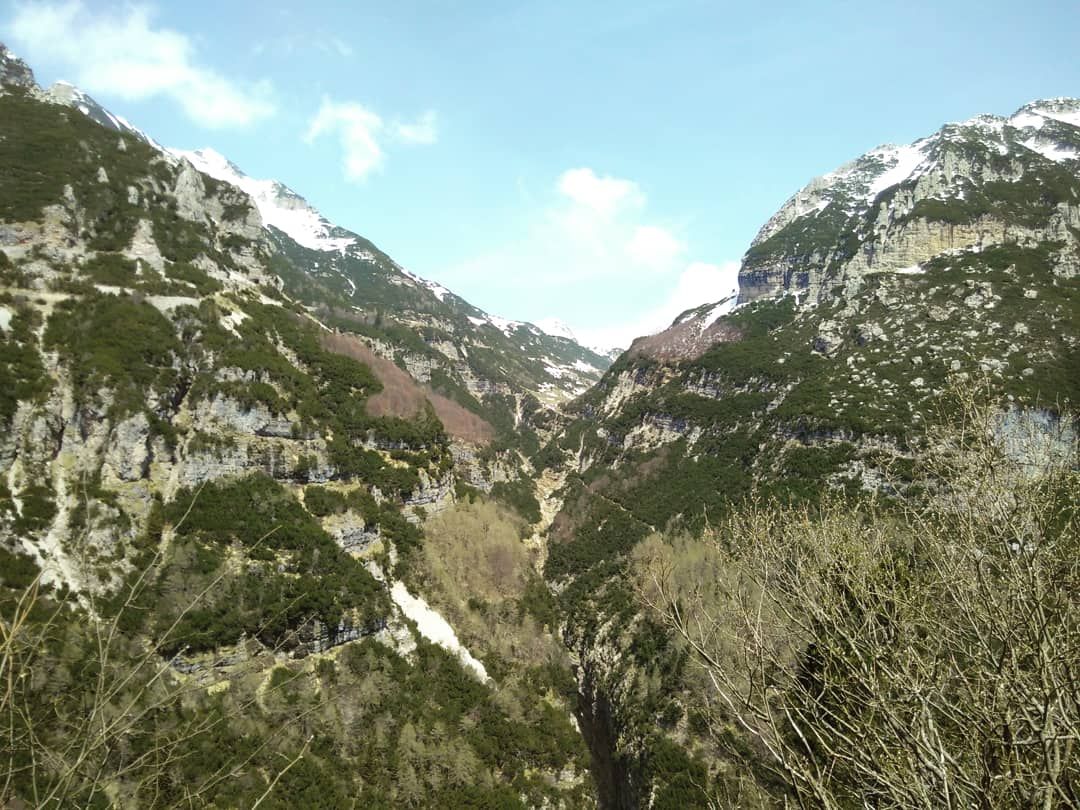
5. Have fun with the locals and your research mates. In the end, you’re not just a researcher but a beautiful human being.
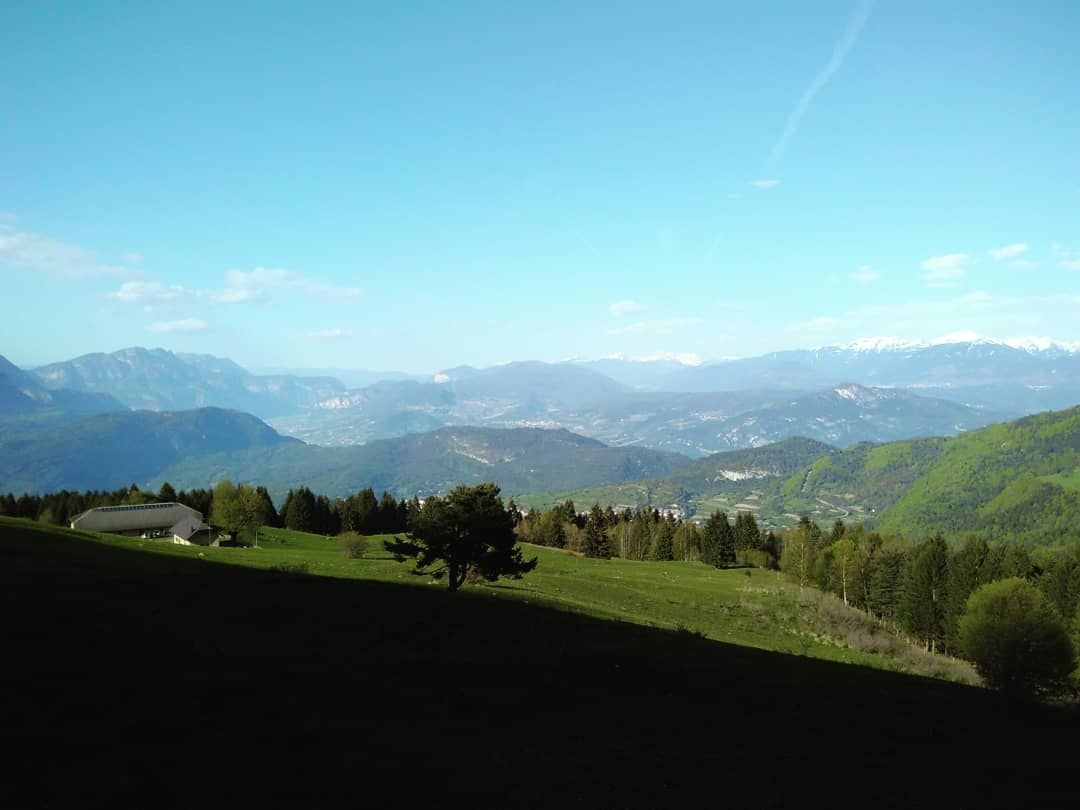
Here a couple of photos of my extraordinary and lifetime-memorable university excursion in Peru.

Purity in the Netherlands’ countryside

English version

Two weeks ago, the countryside close to Zwolle – a city in the north east of the Netherlands – was home again to the third edition of the Living Village Festival. In the beginning of June dozens of volunteers started constructing the village, whereas many more have helped during the fundraiser festival itself.

The festival promotes sustainable living and self-sufficiency by means of music, art, theatre, workshops, education and examples of sustainable innovation. Like-minded people networked, and conveyed knowledge that supports the sustainable transition.

As can be seen in the picture above, the name “The Living Village” is besides its harmonic meaning also meant literal. Initiators of the foundation, Cathelijn and Bob Radstake, are raising funds for a permanent ecological village. Houses then “would be built using Living Tree architecture, an innovative technology that allows […] to build shelter-providing structures through weaving and pleaching live willow. The township will reforest the land it settles on, providing food for its inhabitants, along with housing that will not degrade, but actually grow bigger and stronger over time” (The Living Village, n.d.).

Currently the foundation is looking for a suitable location. In 2021 the new Environmental and Planning Act is expected, that should facilitate this process (Government, 2017).

Dutch version

Aan de oevers van de Vecht bouwden vorige maand honderden vrijwilligers aan een levend dorp. Het platteland vlakbij Zwolle was eind vorige maand namelijk opnieuw decor voor de The Living Village
Festival
. De organisatie van het vijfdaagse benefiet festival promoot zelfvoorzienend leven middels o.a. muziek, kunst, theater, workshops, educatie en voorbeelden van duurzame innovatie.

Het festival zorgt daarnaast voor synergie. Gelijkgestemden vinden elkaar, en dragen waardevolle kennis over die bijdraagt aan de duurzame transitie. Natuurlijk wordt er ook genetwerkt.

Picture Merlin Kater, 2018

De naam “Stichting Het Levende Dorp” is naast harmonieus eveneens letterlijk bedoeld. Initiatiefnemers Cathelijn en Bob Radstake hebben als doel geld in te zamelen voor een permanent ecologisch dorp, met huizen van levende bomen. Daarbij wordt gebruik gemaakt van arborsculpture en treeshaping, ofwel het vergroeien en vormen van bomen. Een combinatie van een food forest en permacultuur moeten in de voedselbehoefte voorzien. Het pioniersproject zal daarmee de eerste in z’n soort worden (Het Levende Dorp, z.d.).

Momenteel is men op zoek naar een geschikte locatie. In 2021 zal een nieuwe omgevingswet van kracht komen die de bouw van alternatieve woningen zal moeten vergemakkelijken (Government, 2017).

Bronnenlijst / References:

Government of The Netherlands (2017, 28 februari). Environment and Planning Act. Geraadpleegd op 1 juni 2019, van https://www.government.nl/documents/reports/2017/02/28/environment-and-planning-act

Kater, M. (2018, augustus). Het levende dorp maquette.Geraadpleegd op 1 juni 2019, van http://www.hetlevendedorp.nl/wp-content/uploads/2018/08/Het-levende-dorp-maquette-Merlin-Kater-NL.jpg

Het Levende Dorp (z.d.). Uniek ecodorp voor een groene en duurzame toekomst. Geraadpleegd op 28 juni 2019, van http://www.hetlevendedorp.nl/

The Living Village (z.d.). About The Living Village. Geraadpleegd op 28 juni 2019, van https://livingvillage.nl/about/

Thanks to Wordreference, Google Translate, Live Transcribe, @transcriber_bot and other similar web services, there’s definitely place for more languages on the internet. Also on GreenMarked’s channel. Welkom nederlands!

Il Nuovo Deal

Per far fronte al cambiamento climatico che, oltre ad avere serie conseguenze sulla salute e sulla vita di ognuno di noi, ha effetti IRREVERSIBILI sul nostro pianeta (migrazioni forzate e significative perdite economiche), un gruppo di studiosi, scienziati e politici, principalmente sostenitori del partito democratico americano, hanno scritto il "Green New Deal",[1]. Ispirato dal New Deal che portò gli Stati Uniti fuori dalla crisi economica del ‘29, questo piano prevede misure per modificare e migliorare radicalmente l’economia e la società americana, attuando politiche economiche che cercano di ridurre al minimo le emissioni di CO2. Considerato come il “First Step”, il Green New Deal cerca di proporre un nuovo modello economico e sociale più sostenibile e a impatto zero per il nostro ambiente.

Guarda il video [2] per scoprire di più su come il cambiamento climatico non è un problema ma solo una grande opportunità per migliorare le nostre vite!

Sitografia:

[1] Wikimedia Foundation. [online] Available at: https://en.wikipedia.org/wiki/Green_New_Deal(Accessed 2019.06.21)

[2] VOX (2019). [online] Available at: https://www.youtube.com/watch?time_continue=3&v=GxIDJWCbk6I(Accessed 2019.06.21)

We Are Imperfect. Just Like Nature

The slogan of GROM, a popular Italian ice-cream chain focused on sustainability and tradition, is the title of this week’s post.

Perfection is not a value of nature. Imperfection is. Just like GROM we strive to achieve the highest quality, but we also embrace imperfection. So, if our traditional Friday post came two days later, it means that we are being coherent to Mother Nature’s imperfection. We are pretty sure Greta would agree.

As a matter of fact, living in a sustainable way is anything but perfect. Environmental actions and solutions are usually complex, inconvenient and easily criticized.

Some people that temporarily quit eating meat for environmental reasons are often questioned with stuff like: “Do you know that your temporary absence at the supermarket’s meat compartment will not change the meat industry?”. Or also: “Do you know that meat consumption is not a big deal? Industry crops for biofuels are much worse. They’re famishing South American populations!”.

Some other people that decide to keep their car in the garage and travel by train to reduce CO2 emissions get laughed about with stuff like: “Do you know that your CO2 reduction is compensated by the CO2 generated by the coffees you drink?”.

These conversations cannot be avoided. Critical thinking is a virtue of mankind that helps evolution and makes environmentalists think twice about their actions. Actually, it makes them stronger. Yet, most of the time these conversations are anything but constructive because they discourage those who are not environmental geeks but try to live more sustainably. These people need support. Environmentalists, environmental scientists and managers should give a couple of guidelines to make sustainable living easier. And we are not talking about scientific papers.

A generic guideline is coherence. For example, one should live sustainably during and after workhours. One should not forget about the environment once the workday is over. If you work as a train driver, you should try to travel by train when you go on holiday and incentive your kids to use it, instead of driving them to school.

Staying local is another guideline. Is it more sustainable to eat a freshly caught local trout or a box of pesticide-full Brazilian soy?

A third guideline is seasonality. Is it better to consume a pack of seasonal raspberries or a kilo of last-year Gala apples, which have been stored for ten months in energy draining cold storage warehouses?

Of course, these cannot be the only guidelines. Once again, environmental solutions are complex. That’s why we need more help from knowledgeable friends, expert, standardized labels (e.g. EU or BIOLAND organic logo), accreditation (e.g. Natura2000 or UNESCO site) and assessment (e.g. Life Cycle Assessments).

yes

Alba, Piedmont (Italy). Can you see here the nice balance between vineyards, nut plantations, forest patches and urban centers? It is hard for an untrained eye, but you can count on the UNESCO. This marvelous cultural landscape has been recognized by the UNESCO as World Heritage

Notwithstanding the guidelines and the support from “helpers”, criticisms will still find an unprotected nerve. One of the most common criticism is that your contribution to sustainability is insignificant. If your contribution, however, is successful, many other contributions will come too. That’s a normal social dynamics pattern. When the overall contribution is sufficiently significant, it will reach the policy and decision-making level, which is the key level to truly affect processes and habits in favor of a more sustainable life. Check this nice articleto know more about it [1].

So all in all, let’s keep on striving for a more sustainable life, because our personal contributions do make a difference. If it makes you feel better and keeps you on track, strive for a perfect sustainable life, but accept and embrace imperfection also.

In ancient times, sailors did not have maps that directed their journey. They used the moon instead and aimed to the Polar Star. Of course, they never reached it but it brought them to their destination.

Sources:

[1] Hackel, L. & Sparkmann, Greg. (2018). [online] Available at: https://slate.com/gdpr?redirect_uri=%2Ftechnology%2F2018%2F10%2Fcarbon-footprint-climate-change-personal-action-collective-action.html%3Fvia%3Dgdpr-consent&redirect_host=https%3A%2F%2Fslate.com (Accessed 2019.06.09)

Let’s talk, strike and vote for the environment

Today’s calls for better climate change policies and actions have been roaring around the globe and have already reached 136 countries. I am happy to have given my contribution to the strike by speaking in Mezzocorona about the new friendship between the environmental movements and the Catholic Church. A friendship that started in 2015, when Pope Francis published the Laudato Si’ enciclica, and continued on April 17, when he met Greta Thunberg in Rome.

These days, the environmental crises is not only discussed in the Laudato Si’ or at the 2nd Global Climate Strike but also in the EU election campaigns. These elections are not only about immigrants. The EU has been one of the greatest leaders and pioneers to set new environmental protection laws and conservation goals. Think about how limited the impact of our environmental measures would be, if they were restricted to our environmental measures would be, if they were restricted to our national borders. How effective would national river pollution measures be, if a river passed through five or six different EU states? And take the EU
Water Framework into account. It’s an outstanding achievement that was obtained only thanks to the EU.
For me, the EU is the most powerful institutionalized protector of the environment.
For me, the EU means that no matter if I’m in Veneto, Trentino, Tyrol or Upper Austria, there will always be some basic environmental protection laws that guarantee my right to have a clean and livable environment.

Veneto – Lessinia. Monte Carega
Trentino. Monte Bondone
Tyrol. Brenner highway
Upper Austria. Linz

Outshining the environment

This week, a blasting UN Report Assessment yelled out that over 1M species are at risk of extinction, but was outshone by the birth of the new royal baby in the UK
We care about kids but we also tremendously care about the survival of animal and plant species. Anyway, we’re glad that the Guardian understood the relevance of such assessment.

It’s worth noting that the assessment reflects on the current conservation strategies, such as the creation of protected areas. [They are] “well-intended but inadequate”.
Instead, [it’s more important to focus on] “a shift in incentives, investments in green infrastructure, accounting for nature deterioration in international trade, addressing population growth and unequal levels of consumption, greater cooperation across sectors, new environmental laws and stronger enforcement”.

So, putting nature in front of everything doesn’t work. We need a more solid and well-integrated ecological culture and society. Religion is not excluded, and that brings us to the next GreenMarked event. Two meetings of ecological catechesis were two environmental scientists, a priest and the community of Mezzocorona discuss about environmentalism in the Bible based on the encyclical Laudato Sii of Pope Francis.

Contact us and swing by on May 24 and 29 if you’re interested

Petition: better waste separation and recycling in Tyrolean students dorms

Greta’s amazing campaign for better policies against climate change has led to some first practical results.
First, the Exctinction Rebellion bursted out in London, then, a Commons motion that declares environment and climate change emergency was passed by UK’s parliament.

This is the power of a well developed environmental #activism.
We want to stick to the same type of activism to face another environmental problem: #waste.

Here’s our petition for better waste separation and recycling in Austrian student dormitories. If you want, sign it and send it back to us.

Text of the petition

Most of our daily household waste can be recycled. Our paper, plastic, glass and metal waste are valuable resources that can be reused to create new materials. All EU countries have learned to recycle waste and reuse its valuable resources. Austria itself recycles more than 1M tons of packaging and waste paper per year. That’s about 90% of the overall packaging waste (ARA, 2018). Such a high recycling rate is only possible thanks to a proper household waste separation.

The packaging recycling rate of student dorms is clearly below the national average. Is this because students don’t care about recycling or because the waste separation system is inefficient? Why are Home4students dorms in Innsbruck separating paper, plastic, glass and metal waste so badly? Why are there only organic and unrecyclable waste bins in our dorms’ kitchens? Wouldn’t it be better to also have paper, plastic, metal and glass bins?

Sources: (ARA) Altstoff Recycling Austria. (2018). Recycling. [online] Available at: www.ara.at/kreislauf-wirtschaft/verpackungsrecycling/ (Accessed 2019.03.13).

If you are in favor of a better waste separation system in your kitchen dorm, which allows you to separate paper, plastic, glass and metal properly, sign the petition. You can also sign it if you don’t live in a student dorm but you want to support the petition. If you are not in favor or you have better ideas to improve waste separation in student dorms’ kitchen drop a comment.

I personally believe that if the system gives us students easy ways to separate waste, we will do it.

PS: The petition for a better waste separation and recycling in Tyrolean students dorms is now online at openpetition.eu/!mxgqp (in English) and at openpetition.eu/!studentrecycling (in German).

Are you paying the real price?

Do you think $4 for a Big Mac is a fair price? Do you think $4 is a fair price knowing that it costs 2,500 gallons of water to produce 1 pound of beef?

Como marketing causes our needs to increase, our incomes not necessarily increase with the same pace. The desires brought to life by marketers could feel like a disease, as they cripple our rational side, allowing our shopping impulses to prevail. Marketers market their products in such way that it is still affordable for us, even without the need to ask our boss for a pay raise. At the same time, this causes consumers to demand bottom-low prices. Of course, this does not come without consequences.

A common example to explain the consequences of bad marketing is the pricing of disposable products made in China. For such products, Western consumers demand prices that are so low, that one could think that they cannot be profitable for the manufacturer. However, these manufacturers have their own solution to maximize profits while maintaining bottom-low prices. They eliminate essential parts of the production process that cause high prices, like the observance of safety and environmental policies. Chinese manufacturers exploit the lack of national legislation to take high advantage on their Western competitors. However, cutting off certain parts of the process only shifts away the invoice while the real transaction takes place somewhere else, in its own separate way. Of course, this is not what is being communicated by marketeers.

During my time as an intern of a German production company in Kunshan, China, I was able to see many production sites of suppliers. When discussing the conditions of these sites with my German colleague, he told me that I saw nothing compared to the ones he saw. I saw only the “good” ones. To explain me how the others were, he told me this story:

“Somewhat a year before I came to Kunshan, a very big explosion was heard near the company’s site. It came out from a near production sites and caused 70 (!) deaths. The accident was not reported on the news, not nationally, nor locally. The government blocks online reporting in such cases”.

Indeed, you will never read anything bad about working conditions in China. Besides, if this already happens in Kunshan – a very typical Chinese village – it surely happens across the whole country on a regular basis.

Now, the example of Chinese disposable products might be too overheard. However, the same consequences of bad marketing apply just as much for less known products, such as the ones of the food industry. David Simon, lawyer and author of “Meatonomics”, claimed in the documentary “Cowspiracy” that the deficit of animal food production is as much as 414$bn. This deficit includes health care, environmental damage, subsidies, damage to fisheries, etc. As a matter of fact, if the food industry had to charge the real price of a Big Mac, it would cost 11$ instead of 4$.

“Whether you eat meat or not, you are paying part of the costs of somebody else consumption”. The same applies for all other industries that do not charge the real price.

To overcome bad marketing and product pricing, the first step is to make more conscious shopping decisions. If we do not wake up from our shopping impulses, only Mother Nature will keep on paying the deficit and a significant number of living beings will keep on being harmed.

Environmental NGOs’ dilemma

GreenMarked and the environmental NGOs’ dilemma

GreenMarked is an NGO that promotes sustainable living. But does it have what it takes to achieve its objectives? Is there a receipt that should be followed to leave a mark?

Let’s start saying one thing: NGOs can and do play a key role in promoting sustainable living, as they are able to successfully tackle social and environmental issues by providing critical goods and services. NGOs do not only advocate for environmental justice; they are also able to collect information, implement policies, co-operate with policymakers, and assess and monitor environmental protection and sustainable development. In other words, they are unique actors that allow constructive participation of the civil society in global environmental governance.

That said, let’s now pay attention to the factors and conditions that influence environmental NGOs’ work and make them achieve their objectives. Are there conditions under which NGOs generally thrive? For example, do big NGOs perform better than small ones?

Predictably, the possible factors are several. Nonetheless, after looking at the literature, possible conditions are the dimension of the NGO, the presence of connections with the government, being engaged with the local community, and co-operating with other NGOs.

Clearly, it would also be interesting to see whether a combination these factors is required for the NGO to succeed: for example, NGOs not only may need a connection with the government, but they may also need to be big in size.

To test these conditions, we could look at the LIFE Program. The LIFE program is an essential instrument used by the EU to protect the environment and promote sustainable development. NGOs that participate in this scheme aim to contribute to the implementation, updating, and development of the EU’s environmental and climate policy. NGOs elaborate a project, apply for EU funds, and if this proposal is coherent with EU’s mission, they get up the money to achieve their objectives. There’s plenty of documents and reports related to this program – it’s great for this investigation.

Let’s look at the already completed projects, then: which ones achieved the objectives they had set?

Interestingly, NGOs with similar characteristics didn’t perform in the same way: some of them failed, while other succeeded. In other words, there is no combination of conditions able to explain either the positive or the negative performance of the NGOs. Indeed, no condition seems to be necessary, sufficient, or a combination of the two. Why?

One possible explanation is that the relations NGOs have with the conditions is what they make of them. The same relationship can be fruitful or dangerous; different context can make the same action problematic or easy to implement. For example, working alone can be great for some NGOs, as the work is streamlined and focused; but if there are sudden problems, maybe having a stable partner to rely on is not a bad idea. Similarly, co-operating with the governments may be great for certain projects; but if the obstacles set by them are too burdensome, it’s a problem for the NGO.

To conclude, a “silver bullet” able to improve the work of NGOs in the environmental field does not exist. This means that there is no “perfect combination” of conditions that can or should be adopted by GreenMarked. To achieve its objective, it must find its own way.

This article is an extract of the paper “Always look at the bright side of LIFE”, Tosoni, J., (2018) (Unpublished Master’s dissertation). KU Leuven, Belgium.

A short COP24 review

COP24 went as expected. And it’s not a great news

On the 14, of December the COP24, the United Nation Convention on Climate Change has come to an end. The big news – or no-news, as it came as a surprise to nobody – is the decision of US representatives not to promote sustainable energy resources, focusing instead on coal. The commitment to invest in coal mines has been described by officials as a necessary, pragmatic move to fight climate change. It should be kept in mind that this is the explanation provided only in international fora: internally, the US administration has always framed it as a way to protect US jobs. After all, President Trump doesn’t believe in climate change, despite the numerous reports provided by numerous panels – even from the US. From this point of view, it would be interesting to understand his administration’s position on nuclear power – a lobby group quite present and vocal in the past COPs.

But what about the rest of the world?

The bright side is that China seems to be willing to insist on renewable energy. The country has invested a significant amount of money in R&D, and it aims to gain a technological lead and create new jobs.  Predictably, Europa is still a driving force in the promotion of environmental policies. We are getting close to the 2020 deadline, and the Continent seems on the right track to meet many of its objectives. Still, many environmental threats, such as the emission of pollutants, need to be addressed.

On the other hand, developing countries still face the challenges they have always faced: to achieve growth without jeopardizing the environment by relying on unsustainable development. The Paris Agreement had promised to find a solution to the matter: unfortunately, the system designed to do so is now politically and economically crippled by the absence of the US. In this sense, the COP24 has been relatively useful for planning new methods and strategies, but the results are only mixed. Besides, a few countries, such as Russia and many oil exporters, have decided not to support the conclusions and the objectives set by the COP24.

All in all, this year’s COP has not been very consequential; but, again, this had to be expected. More than ever, there is a profound divide between the US and the rest of the world. Unfortunately, it seems safe to assume that no big advancements in the fight against climate change can be achieved in the near future. The environment is a common good, and much is at stake: unless all the parties work together, the new policies will always be limited in scope.

The darkside of marketing

Our society is inundated with marketing. Just look around you and count the promotions you see to confirm this. According to a study of media expert John Faasse, an average Dutchman consumes about 1,550 promotions per day, of which the majority in supermarkets (Faasse, 2012).

In one of his shows, the Spanish Dutch cabaret performer Javier Guzman expresses his anger towards the ongoing manipulation in supermarkets. According to him, everything in supermarkets is structured in a way that supports profit maximization, preceded by intensive research. All this hidden marketing influences the decision-making process of consumers. Guzman illustrates this process with a hilarious example (starting at 1.05).

How far is marketing allowed to go to encourage people to buy their products? Neuromarketing is the next marketing frontier and companies are already conducting a lot of research to understand human brain’s decision-making processes (De Vries, 2013; Neuromarketing, 2017). Nevertheless, ethics are not often considered in marketing nor integrated in a Bachelor of Marketing. Speaking from my own experience, marketing students that are not thought such ethics do not understand the purpose of their use. Also, they neither understand the power of marketing nor the responsibility they have. Just like all normal people, they are not aware of the influence of marketing.

On March 15, 1962, John F. Kennedy first presented the Consumer Bill of Rights, covering all basic rights a consumer should have. One of these rights is the right to be informed. This right is becoming more relevant today, as the world is facing a multitude of sustainability challenges and consumers are increasingly demanding companies more information about production processes (Scarborough & Cornwall, 2016).

Now, if we go back to the supermarket, do you feel like you can make a rational choice of which product is best for the environment? Do you think is the best choice for the environment to pick the shiniest and apparently freshest vegetables on the shelf, when you know that they shine so bright because marketers put the perfect light above the shelf? Most of the time, we do not even know what the production process of these veggies is about. How much pesticides or water did the farmer use?

To give an example, avocados consume 2,000L water for just 1KG (Voedingscentrum, n.d.). As a result, whole provinces have no water anymore. In the province of Petorca, Chile, all water available is being illegally taped to produce avocados (Voller, 2017). This, of course, is not what is being told in supermarkets. Marketers neglect their duty to inform consumers about these issues and marketing managers of supermarkets only serve the rule of maximizing profits.

Figure 1: Avocados and oranges in a supermarket (Aharonovitch, 2012).

Because of globalization, European people are spoiled with all kinds of products from around the world. We are so used to bananas that we almost forgot that they do not come from Europe. When buying bananas or other groceries, consumers should first use a little bit of common sense to make environmentally friendly purchases. Yet, some product labels condition such common sense and make uneasy the life of green consumers. For example, a label on a South African red wine, saying the product is sustainably produced, does not necessarily mean that the product is environmental friendly. This because the production process is only one part of the supply chain. The environmental gain can be fully compensated with transportation pollution.

A way to largely overcome these problems is eating locally. Probably this is nothing new for you, but did you know that this is possible also for the inhabitants of major cities? Vertical agriculture allows to farm extensively also in big cities. Instead of using large land areas and one single layer of crops as in conventional agriculture, vertical agriculture uses only one piece of land and multiple layers of crop stacks that grow upwards. On top of that, most stacks are fresh and pesticide-free! (Davis, 2014).

The concept of vertical agriculture is further explained by the Dutch broadcasting organization VPRO in their program Tegenlicht (“Backlight”, in English). The documentary is mainly in English and can be watched at

https://www.vpro.nl/programmas/tegenlicht/kijk/afleveringen/2016-2017/boer-zoekt-voedselflat.html (Rozinga, 2017).

REFERENCIAS:

Aharonovitch, L. (2012, 15 February). Avocado.Retrieved on 15 July 2017, from https://www.flickr.com/photos/hagoleshet/6880914457/

Davis, N. (2014, 6 February). Vertical farming explained: how cities could be food producers of the future.Retrieved on 29 May 2018, from https://www.theguardian.com/science/2014/feb/06/vertical-farming-explained-erik-murchie

Faasse, J. (2012, 8 March). Hoeveel reclame ziet u per dag? Retrieved on 24 July 2017, from http://uitbijter.nl/nl/2012/03/hoeveel-reclame-ziet-u-per-dag/

Rozinga, G. (2017, 23 April). Boer zoekt voedselflat. Retrieved on 14 July 2017, from https://www.vpro.nl/programmas/tegenlicht/kijk/afleveringen/2016-2017/boer-zoekt-voedselflat.html

Voedingscentrum (n.d.). Watergebruik. Retrieved on 14 July 2017, from http://www.voedingscentrum.nl/encyclopedie/watergebruik.aspx

Voller, L. (2017, 19 March). Avocados and stolen water.Retrieved on 15 July 2017, from https://www.danwatch.dk/en/undersogelse/avocados-and-stolen-water/

De Vries (2013). Neuromarketing. Downloaded on 14 July 2017, from http://www.rug.nl/cic/downloads/rugcic_rapport_201301_neuromarketing.pdf

Neuromarketing (2017). In Cambridge dictionary.Retrieved on 13 July 2017, from http://dictionary.cambridge.org/dictionary/english/neuromarketing

Scarborough & Cornwall (2016). Essentials of Entrepreneurship and Small Business Management. Essex: Pearson

No merit for environmental activism under ideal circumstances

In truth, joining the enormous company of Syria and Nicaragua will take time: Why U.S. Can’t Withdraw From Paris Deal for 3 YearsBloomberg New Energy Finance’s Justin Wu discusses the legal fallout from President Donald Trump pulling the U.S. out…www.bloomberg.com And it’s not just a matter of diplomatic and legal issues, it’s also about increasing international and internal divisions.

Honestly, I was glad to hear the reaction of the President of France E. Macron on US withdrawal: Yes, let’s make ours his ironic and intentionally provocative motto “Make the planet great again”. Also, the reaction of former US President Barack Obama, under whose administration the Agreement was signed, should be mentioned. Obama called out for personal activism and spirit of initiative in favor of the environment. “But even in the absence of American leadership; even as this Administration joins a small handful of nations that reject the future; I’m confident that our states, cities, and businesses will step up and do even more to lead the way, and help protect for future generations the one planet we’ve got ”. I guess somebody already listened to him: Elon Musk to Trump: You quit Paris, so I quit you“Am departing presidential councils. Climate change is real. Leaving Paris is not good for America or the world,” Musk…money.cnn.com …and hopefully the Climate Alliance between California, New York and Washington will also gain more members in the future. This whole story should remind all environmental managers and policymakers that the road towards an eco-friendlier future will keep on being difficult. As global environmental awareness will constantly increase and pro-environment decisions will gain more and more consensus, opposition by those against climate change will become more extreme. People, including our own governments in which we should trust, do not always share our ideas and there will never be perfect conditions to carry on the environmental fight. In Isaac Asimov’s Foundation trilogy, Hober Mallow, first merchant prince of the Foundation, affirmed in a very delicate situation

“There’s no merit in discipline under ideal circumstances. I’ll have it in the face of death, or it’s useless”. The real test for environmental activism is in the absence of the ideal.

Climate change – A new way of traveling

Cloud networks as one of the biggest energy consumers in the ICT world. Nevertheless, Cloud technology is particularly handy, when it comes to traveling. In fact, traveling and transportation are key factors in the climate change challenge and that is why I will discuss about it today.


The growing number of people in the world, especially in urban areas, force us to rethink about the way we travel. Soon or later, we won’t be able to use one only type of transportation mean to get to a place. For example, getting out of home, hopping into our car and driving it directly in front of our favorite bar won’t be so easy in the future: traffic, parking, limited traffic zones and pedestrian areas will increasingly make life of car drivers more difficult.

The new way of traveling involves multiple transportation means:

  • Car + metro
  • Train + bus
  • Bike + train
  • Car + walking
  • Ferry + bus
    …

Either we wanted or not, it’s going to happen. It’s definitely less comfortable but fairer and more eco-friendly.

Let’s get prepare for it!

In this sense, technology can help us in the process by making things easier. Here’s a list of some apps and sites that I personally use in my backpacker’s life. They can help you get around in Northern Italy, calmly are instantly plan your trips and chose the best routes.
Maps

  • Google maps
    Either your going far away or for a short trip just ask Google! Big-G is really good at dealing with thousands of possible routes and finding the best one. Also particularly helpful when you don’t know which is the local transportation app. https://www.google.it/maps/
  • Here
    Implemented by Nokia, this app offers a great cartography service. It’s actually better than Google when you’re low with Giga and you want to tour around a foreign city: “Here” is very good for offline satellite navigation. https://wego.here.com/

Local transportation

  • Moovit-app
    By far, my favorite app. Super fast and updated.
    https://moovitapp.com/
  • ATM-Milan
    Imagine to be in a hurry. You don’t have time to go buy a ticket at the tabacchino and the tram is about to leave. Ok, now take your phone out and send a quick message with the word “ATM” to the number 48444. Now jump in the tram, sit down, have a deep breath and relax: your ticket is on your phone. http://www.atm.it/it/AtmNews/AtmInforma/Pagine/bigliettoconSMS.aspx

Railway

  • Trenitalia
    The app is slow and buggy but it’s definitely faster buying a ticket here than waiting for the queue at the machines in the stations.
    http://www.trenitalia.com/tcom-en/Purchase/Mobile-Ticketing
  • Trenit
    Faster and fairer than Trenitalia. All train connections (also regional-regional) are shown.
    https://play.google.com/store/apps/details?id=eu.baroncelli.oraritrenitalia

Road

Car sharing

Bike sharing

Plane

Telegram: @greenmarked
LinkedIn: @greenmarked
Instagram: @greenmarked.it

Facebook:  @greenmarked.it


© GreenMarked.it is managed by ECONTROVERTIA APS — Via Alcide De Gasperi 1, 38015 Lavis (TN), Italy — VAT IT02667560227